
Natural support for the liver: milk thistle, artichoke, and NAC (set)
Milk thistle, artichoke, and NAC for the liver: what clinical studies have really shown, where the evidence ends, and when a doctor is needed instead of a supplement.
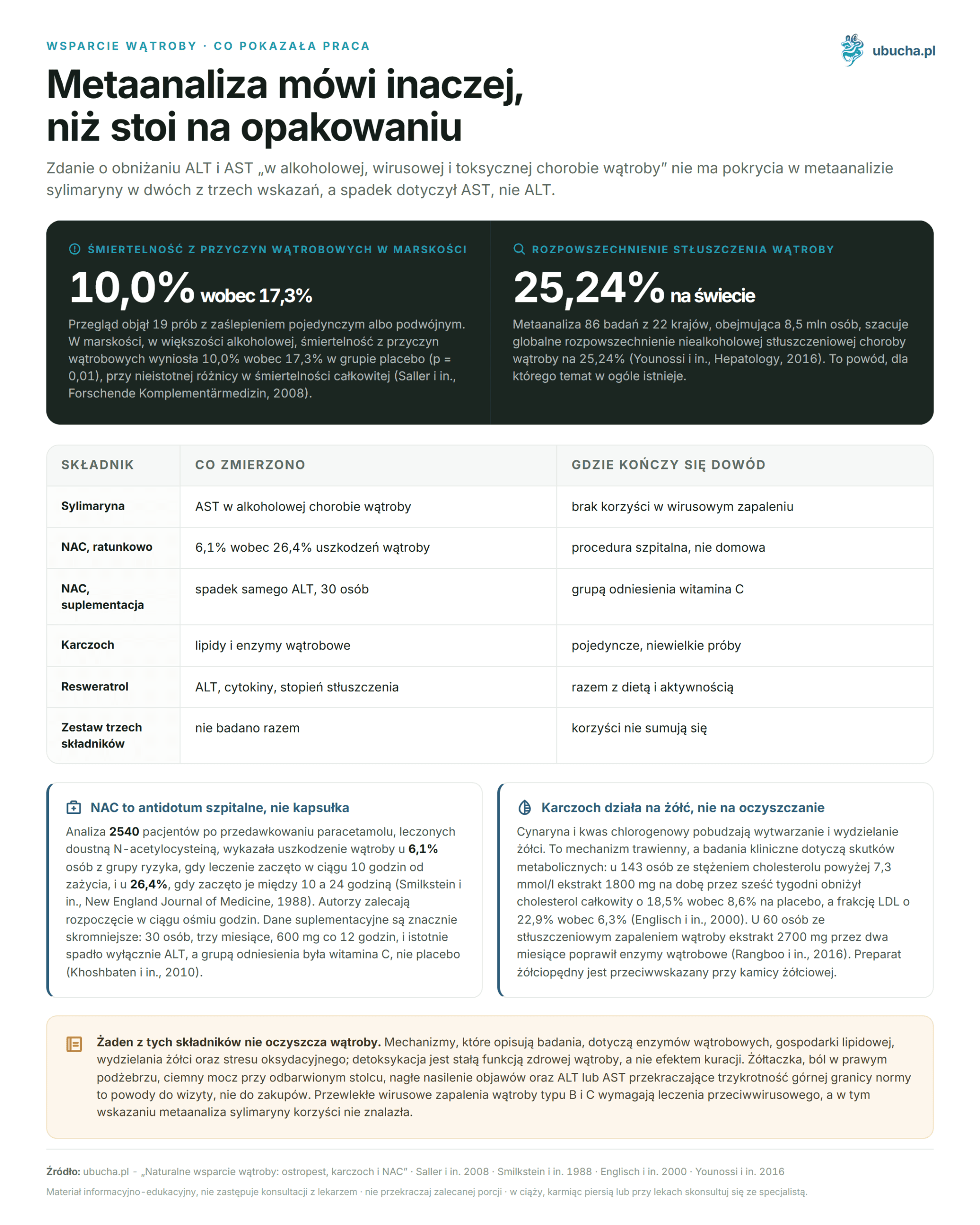
Milk thistle, artichoke, and N-acetylcysteine come up in every conversation about liver support, usually with the promise of cleansing or detoxing. The reason this topic even exists is quantifiable: a meta-analysis of 86 studies from 22 countries, involving 8.5 million people, estimates the global prevalence of non-alcoholic fatty liver disease at 25.24% (Younossi et al., Hepatology 2016). However, the evidence for each of these three ingredients looks different than the label suggests, and the most frequently cited meta-analysis of milk thistle states two points that contradict what is attributed to it. Below you will find what individual studies have shown, how many people participated in them, where the evidence ends, and in which situations a supplement is not the right tool. Each number was read from the work, not from the description on the package.
KEY INFORMATION
• Non-alcoholic fatty liver disease affects about 25% of adults worldwide (Younossi et al., Hepatology 2016).
• The meta-analysis of silymarin did not show benefits in viral hepatitis.
• NAC is a hospital antidote for paracetamol poisoning, not a home remedy.
• Studies on artichoke concern lipids and enzymes, not cleansing.
How did we weigh the evidence for liver supplements?
The market for hepatoprotective preparations is based on slogans that cannot be measured. Therefore, we evaluate each ingredient according to four criteria of varying weight, with the greatest weight given to what is hardest to counterfeit: human studies with a control group.
| Evaluation Criterion | Weight | What we check |
|---|---|---|
| Strength of clinical evidence | 40% | Number and quality of randomized studies in humans, impact on ALT, AST, and steatosis |
| Documented mechanism | 25% | Biochemical pathways confirmed in in vitro and in vivo studies |
| Safety profile | 20% | Drug interactions, side effects, contraindications |
| Bioavailability and standardization | Form of extract, degree of standardization of active substances |
Why do clinical evidence weigh 40%? Because most marketing in this category is based on cell or animal studies, and transferring such results to humans can be unreliable. Preparations without data from human studies do not make it into this comparison at all.
The second caveat concerns sample size. The studies on which this whole topic stands involve from several dozen to a hundred and several dozen people, so they speak about the direction of change, not its repeatability. With such a number of participants, one center and one preparation can determine the result of the entire work. Therefore, for each ingredient, we provide below the group size and observation time, so that it can be weighed independently. A broader overview of ingredients in this category can be found in the post about liver supplements.
What is known about NAC and the liver?
N-acetylcysteine is a precursor of glutathione, an intracellular antioxidant that binds reactive drug metabolites before they damage hepatocytes. The strongest data comes from emergency medicine, not supplementation, and concerns one specific situation: paracetamol poisoning.
An analysis of 2540 patients after paracetamol overdose, treated with oral N-acetylcysteine, showed liver damage in 6.1% of at-risk individuals when treatment was started within 10 hours of ingestion, and in 26.4% when started between 10 and 24 hours (Smilkstein et al., New England Journal of Medicine 1988). The authors recommend starting within eight hours. This is a hospital procedure conducted under supervision, not something done at home with a capsule.
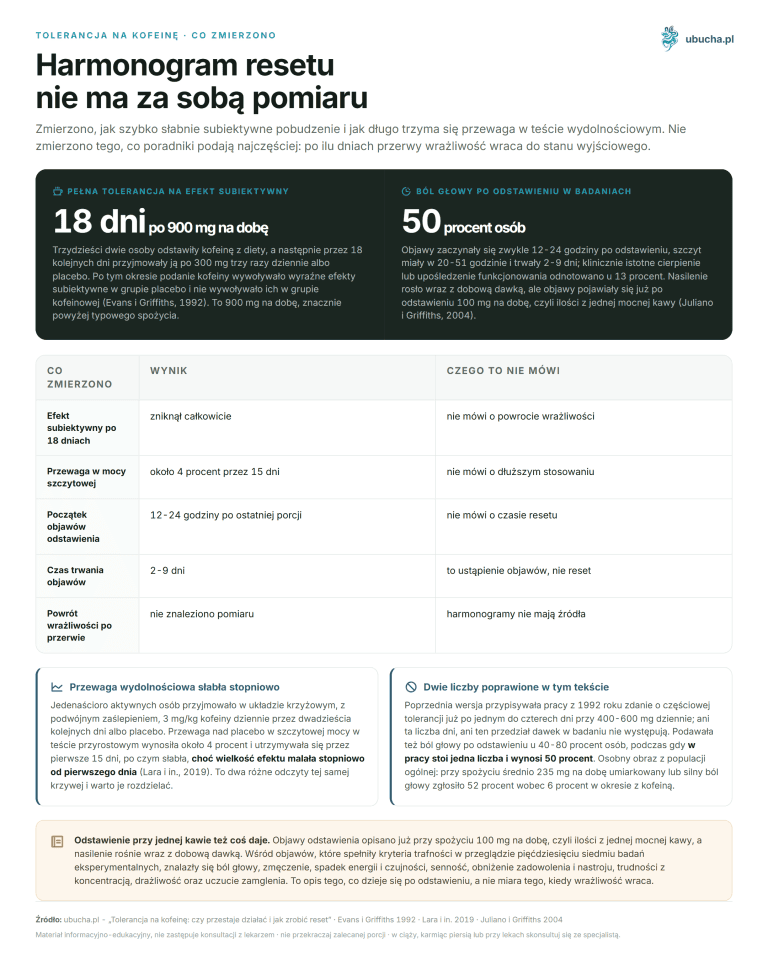
Supplementation data is much more modest. In an Iranian study, 30 people with fatty liver were assigned to N-acetylcysteine at a dose of 600 mg every 12 hours or to vitamin C and observed for three months (Khoshbaten et al., Hepatitis Monthly 2010). ALT significantly decreased. AST and alkaline phosphatase did not change in either group, and the reference group was vitamin C, not placebo. We discuss the ingredient more broadly in the post about N-acetylcysteine, and about glutathione in the text about forms of glutathione.
Does milk thistle really help the liver?
Silymarin, a complex of flavonolignans from milk thistle fruit, is the best-studied ingredient of this trio and at the same time the one attributed with the most untrue claims. A systematic review with meta-analysis included 19 trials with single or double blinding, and its conclusions are much narrower than the advertising suggests.
The authors state that the evidence for the action of silymarin in toxic liver diseases is scant, and that there is no evidence of a beneficial effect in viral hepatitis, particularly in type C hepatitis. In alcoholic liver disease, the activity of aspartate aminotransferase decreased (p = 0.01), while alkaline phosphatase did not. In cirrhosis, mostly alcoholic, liver-related mortality was 10.0% versus 17.3% in the placebo group (p = 0.01), with no significant difference in overall mortality (Saller et al., Forschende Komplementärmedizin 2008).
It is worth comparing this with what is usually on the package. The statement about lowering ALT and AST “in alcoholic, viral, and toxic liver disease” has no support in this work in two of the three indications, and the decrease concerned AST, not ALT. The authors consider the use of silymarin as a supportive element in amanita muscaria poisoning and in alcoholic cirrhosis class A to be justified, and that is where their recommendation ends.
What do studies show about artichoke extract?
The common artichoke (Cynara scolymus) contains cynarin and chlorogenic acid, phenolic compounds that stimulate the production and secretion of bile. This is a digestive mechanism, not a cleansing one, and clinical studies concern metabolic effects, not the removal of any toxins.
In a randomized double-blind study, 143 people with total cholesterol above 7.3 mmol/l received dry artichoke extract at a dose of 1800 mg per day or placebo for six weeks. Total cholesterol decreased by 18.5% versus 8.6% in the placebo group, and LDL fraction by 22.9% versus 6.3% (Englisch et al., Arzneimittel-Forschung 2000). This was a group with clear hypercholesterolemia, not mild.
Closer to the liver is a trial involving 60 people with non-alcoholic steatohepatitis, who were given artichoke extract at a dose of 2700 mg per day or placebo for two months. In the treated group, liver enzymes improved, and triglyceride and cholesterol levels significantly decreased compared to placebo (Rangboo et al., International Journal of Hepatology 2016). So artichoke has data here, but from individual, small trials.
Safety stands apart. A preparation that stimulates bile secretion is contraindicated in gallstones and obstruction of the bile ducts, as it may cause colic. The same caution mechanism applies to other bile-stimulating ingredients, which we detailed in the post about curcumin and gallstones.
Is it worth combining these three ingredients and what else has been studied?
The three discussed substances act through different mechanisms. N-acetylcysteine provides cysteine for glutathione synthesis, silymarin acts at the level of hepatocyte membranes, and artichoke on bile secretion. In the available literature, we did not encounter a description of negative interactions between them, which is not the same as evidence of the safety of the entire set. We also did not find a study that tested these three ingredients given together, so the benefits do not automatically add up.
Dosing and duration of treatment are determined by a doctor or pharmacist, especially if you are taking liver-loading medications. A sensible control point is to measure ALT, AST, GGTP, and bilirubin before starting and after a few months, as without measurement, it is impossible to distinguish improvement from the impression of improvement.
Besides this trio, resveratrol has human data. In a randomized double-blind study, 50 people with fatty liver received 500 mg of resveratrol or placebo for 12 weeks, with both groups simultaneously following a diet and physical activity. In the resveratrol group, ALT, inflammatory cytokines, NF-kappaB activity, and the degree of steatosis significantly decreased (Faghihzadeh et al., Nutrition Research 2014). The authors’ caveat is significant: the supplement itself was not studied without lifestyle change.
When to see a doctor instead of reaching for supplements?
Supplements make sense in mild disorders and in prevention. There are situations where delaying diagnosis costs health, and a plant preparation will not solve anything. Jaundice, pain in the right upper quadrant, dark urine with discolored stool, sudden worsening of symptoms, and ALT or AST exceeding three times the upper limit of normal are reasons for a visit, not for shopping.
Chronic viral hepatitis B and C require antiviral treatment. The meta-analysis of silymarin found no benefits in this indication, so treating milk thistle as a substitute for therapy is a mistake based on poorly read sources. Similarly, autoimmune hepatitis, primary biliary cholangitis, and inherited metabolic diseases require diagnosis and treatment plans that no preparation can replace.
It is also worth naming things as they are: none of the discussed ingredients “cleanses” the liver. The mechanisms described in studies concern liver enzymes, lipid metabolism, bile secretion, and oxidative stress. The greatest documented impact on fatty liver comes from diet and exercise, followed closely by the cessation of burdening substances. A supplement is at best an addition to these three things.
Frequently asked questions
Which liver supplement has the strongest evidence?
The best-documented is N-acetylcysteine, but only as a hospital antidote for paracetamol poisoning (Smilkstein et al., NEJM 1988). In supplementation, the data is modest: 30 people, three months, a decrease in ALT alone. Silymarin has the most trials, but with narrow conclusions. Artichoke has data for lipids and liver enzymes.
Does milk thistle really help the liver?
Partially. A meta-analysis of 19 blinded studies showed a decrease in AST in alcoholic liver disease and lower liver-related mortality in cirrhosis, but found no benefits in viral hepatitis and deemed the evidence in toxic diseases scant (Saller et al., 2008).
Can you take milk thistle, artichoke, and NAC together?
No negative interactions between them have been described, as they act through different mechanisms. However, there is no study that has tested this combination together, so the benefits do not automatically add up. If you are taking liver-loading medications, make the decision to combine with your doctor, not on your own.
How much NAC was used in studies on fatty liver?
In the cited study by Khoshbatena from 2010, participants received 600 mg every 12 hours for three months, and the reference group was vitamin C. This is a description of a research protocol on 30 people, not a recommendation for the reader. The dose in your case is determined by your doctor or pharmacist.
When should you not reach for artichoke extract?
In the case of gallstones and obstruction of the bile ducts. Artichoke stimulates bile secretion, so in a person with stones, it may cause colic. This contraindication applies to any bile-stimulating preparation, including herbal mixtures sold as digestive support.
Do supplements cleanse the liver of toxins?
Not in the sense that advertising uses the word. Studies describe the impact on liver enzymes, lipids, bile secretion, and oxidative stress. Detoxification is a constant function of a healthy liver, not an effect of treatment, and the greatest documented impact comes from diet and the cessation of burdening substances.
The store at Bucha does not currently carry milk thistle, artichoke, or N-acetylcysteine. In the supplements category, other preparations described as liver support are available, as of August 15, 2026.
This article is for informational and educational purposes and does not constitute medical advice. Before starting supplementation, consult your doctor, especially if you are taking medications regularly, are pregnant or breastfeeding, or have chronic illnesses.
Author: Michał Waluk · Published: 2026-08-05 · Updated: 2026-08-15