
Protein Shake with Hemp Protein: Post-Workout
Shake with hemp protein powder, banana, and hemp milk. Recipe in 3 minutes, honest protein calculation, and what studies say about the timing of consumption.
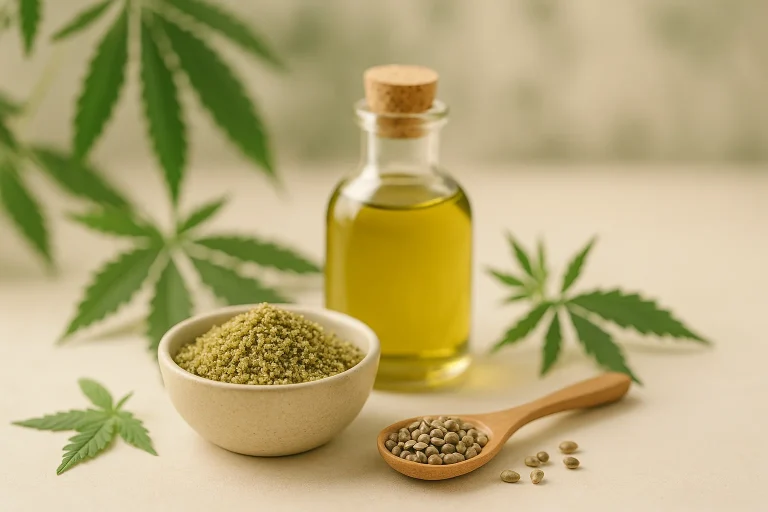
Hemp protein powder is a sensible choice for those avoiding whey, lactose, or soy. In one product, you get plant protein, a lot of fiber, and residual fat from the seeds, which whey isolate does not offer. It has a slightly earthy taste, which banana with cocoa and peanut butter almost completely masks. Below you will find a basic recipe ready in three minutes, flavor variations, and two things rarely presented honestly: how much protein actually ends up in the glass and what studies say about the so-called anabolic window in which this shake must be consumed. Both of these numbers circulate in recipes in inflated versions, and each can be verified in publicly available sources, so we present them along with the calculation.
KEY INFORMATION
• A serving of 30 g of hemp powder contains about 12-15 g of protein, not a dozen plus: branded records in the USDA database indicate 38.7-50 g of protein per 100 g.
• The PDCAAS of hemp cake is 46-51%, as lysine is the first limiting amino acid (House, J Agric Food Chem, 2010).
• A meta-analysis of 49 studies shows that the effect is determined by daily protein intake, not the timing of the shake (Morton, Br J Sports Med, 2018).
Why is hemp protein suitable for a post-workout shake?
Because it digests well, mixes well in liquid, and provides fiber, which whey isolate lacks. Hemp powder is made from ground cake left after pressing oil from the seeds, so it is defatted and mixes with milk without clumping if blended long enough.
The main protein fractions in hemp seeds are edestin and albumin, both of which digest easily, as described by Callaway (Euphytica, 2004). Measurements were added by Wang et al. (Food Chemistry, 2008): in an in vitro digestion model, the digestibility of hemp isolate was 88-91% compared to 71% for soy isolate. However, this same work notes that aside from lysine and sulfur-containing amino acids, the hemp profile meets FAO and WHO standards for children aged 2-5 years, meaning these two positions are exceptions.
It is precisely these that lower the overall rating. House et al. (Journal of Agricultural and Food Chemistry, 2010) measured the PDCAAS of thirty commercial hemp samples: for the cake from which the powder is made, it was 46-51%, for hulled seeds 63-66%. Lysine was the first limiting amino acid in all tested products. In practice, this means that hemp powder is worth combining throughout the day with dairy or legumes, rather than treating it as the sole source of protein.
How much protein does this shake really have?
About 19-22 g with the proportions from this recipe. This is less than most recipes for such shakes declare, and the difference comes from one place: how much protein the hemp powder actually has. Below is a breakdown of the ingredients for verification.
| Ingredient | serving | protein |
|---|---|---|
| hemp protein powder | 30 g | 12-15 g |
| hemp milk from seeds | 250 ml | about 2-3 g |
| banana | 120 g | about 1.3 g |
| peanut butter | 1 tablespoon | about 4 g |
Three branded hemp powders in the USDA FoodData Central database report between 38.7 and 50 g of protein per 100 g (records 2671792, 2409586, 2339119), so a 30 g serving contains between 12 and 15 g. The database does not maintain a reference record for hemp powder, only branded records, so any number given without a product name is a guess. Hulled seeds, from which you make milk, have 31.6 g of protein per 100 g (record 170148), but during straining, most remains in the pulp, and that is how the table counts it. If you do not strain the pulp, the shake comes out a few grams richer.
Does the shake need to be consumed right after the workout?
There is no good evidence that you must. The popular anabolic window, or the supposed 30-60 minutes post-exercise after which protein is said to stop working, is not supported by aggregate data on supplementation. What matters most is how much protein you consume throughout the entire day.
This was shown in a meta-analysis by Morton et al. (British Journal of Sports Medicine, 2018), which gathered 49 randomized studies with 1863 participants, all with resistance training lasting at least six weeks. Protein supplementation increased lean body mass by an average of 0.30 kg and one-repetition maximum by 2.49 kg. The authors also indicated a threshold: above a total intake of about 1.62 g of protein per kilogram of body weight per day, further increases in lean mass ceased to be visible. The effect decreased with the age of participants and increased in already trained individuals. The study did not examine the timing of intake but showed what the outcome depends on: the total for the entire day, not the clock.
A separate issue is the amino acid composition. A review by Stokes et al. (Nutrients, 2018) describes leucine as the main amino acid triggering muscle protein synthesis, and the response to it is dose-dependent. This is an argument for spreading plant protein across several meals instead of relying on one shake, and for combining sources. The practical conclusion: drink the shake when it suits you. The same logic applies to protein pancakes with hemp protein, which you can comfortably eat a few hours after the gym.
What do you need and how to blend it?
Four basic ingredients and a blender. Preparation takes about three minutes, and the only difficulty lies in breaking up the clumps of powder, which clump faster than whey protein when in contact with cold liquid.
- 30 g of hemp protein powder, which is a full scoop or two heaping tablespoons
- 1 ripe banana, preferably frozen, about 120 g
- 250-300 ml of hemp milk or another plant-based milk
- 1 tablespoon of peanut or almond butter
- optional: a tablespoon of natural cocoa, a teaspoon of honey or maple syrup, a pinch of cinnamon
- Pour the hemp powder into the blender cup. Do not pack it in the scoop, as packed portions blend worse.
- Add the banana and peanut butter. The fat from the butter slows the absorption of sugars from the fruit, so the shake keeps you full longer.
- Pour in the hemp milk. If you make it yourself from hulled seeds, do not strain the pulp, as part of the protein remains in it.
- Blend on high for 30-45 seconds. If the shake is too thick, thin it with 50 ml of milk; if too thin, thicken it with half a banana.
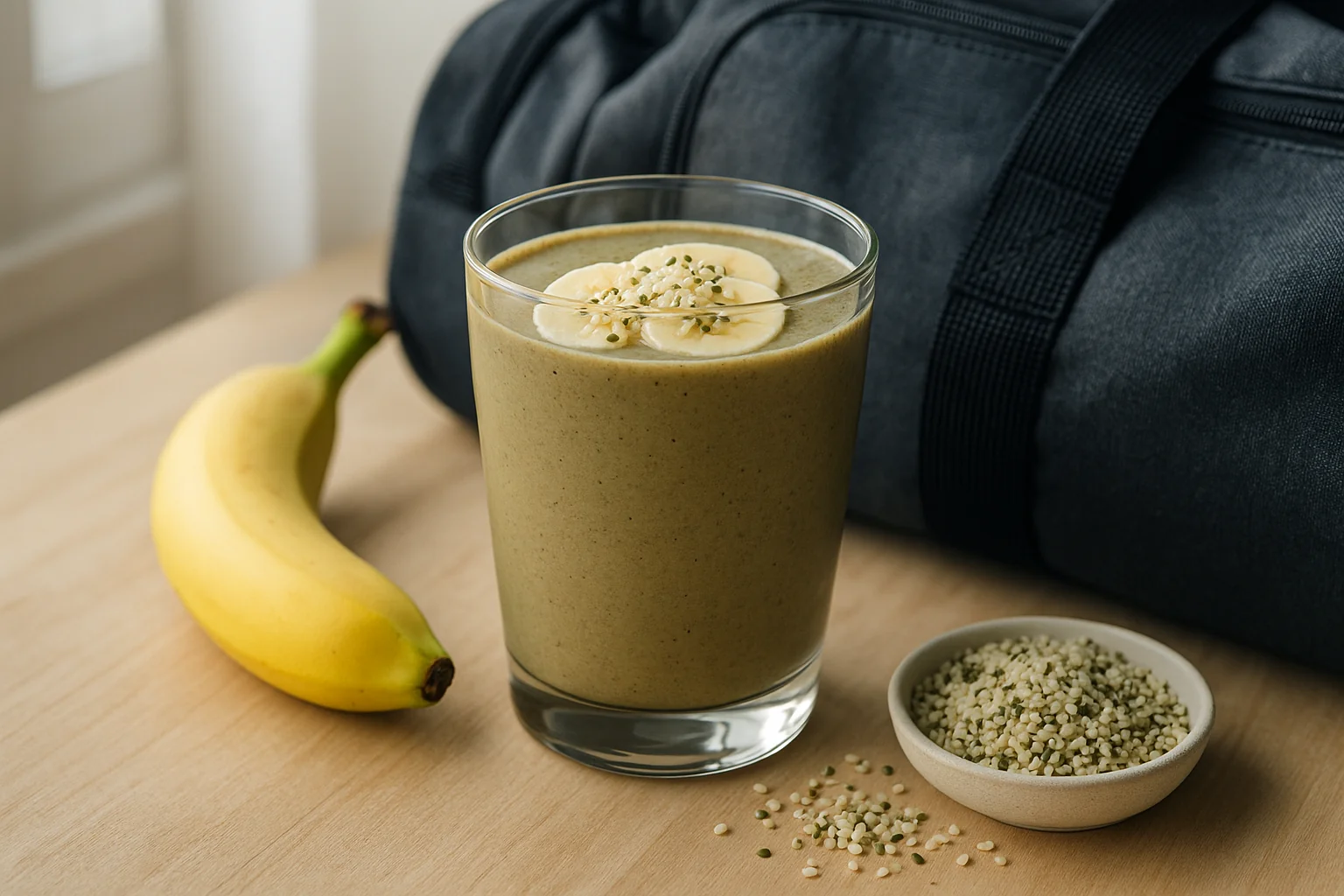
- Pour into a large glass, sprinkle with shelled hemp seeds, and drink immediately before it starts to separate.
How to diversify the hemp shake?
The earthy taste of hemp powder can be balanced in three ways: with sweetness, fat, or a strong aroma. The following variations utilize each of these in turn while keeping the base unchanged.
- Chocolate version: a tablespoon of natural cocoa and a teaspoon of honey. Cocoa covers the earthiness more effectively than any other addition.
- Berry version: instead of banana, 100 g of frozen forest fruits. The shake comes out tart and lighter, though with a surprising gray-purple color.
- Pre-workout version: 15 g of powder instead of 30, but with a tablespoon of oats and a teaspoon of honey, meaning a carbohydrate advantage over protein.
- Vanilla version: vanilla extract or vanilla powder changes the character of the shake to dessert-like.
If hemp powder does not convince you in liquid form, it performs well in thicker bases: check out chia pudding with hemp protein and cocoa or browse the guide to hemp protein in the kitchen, where we have gathered proportions for baking and spreads. The principle is the same everywhere: the thicker the base, the less noticeable the earthiness of the powder, as fat and starch disperse this taste more effectively than milk alone. Therefore, a shake made with water almost always turns out worse than one made with plant milk.
Frequently Asked Questions
How much protein does the hemp protein shake have?
About 19-22 g per serving from this recipe. The powder itself provides 12-15 g, as branded records in the USDA FoodData Central database indicate 38.7-50 g of protein per 100 g of powder. The rest comes from peanut butter, hemp milk, and banana.
Does hemp protein match whey?
Not in terms of PDCAAS rating. House et al. (2010) measured 46-51% for hemp cake, limited by lysine, the first limiting amino acid in all tested hemp products. However, digestion is good: Wang et al. (2008) report 88-91% in vitro digestibility compared to 71% for soy isolate. House places hemp on par with grains, nuts, and some legumes.
When is the best time to drink a post-workout shake?
Whenever is convenient for you. A meta-analysis of 49 studies with 1863 participants (Morton et al., Br J Sports Med, 2018) indicates that the increase in lean mass is determined by total daily protein intake, with a threshold of about 1.62 g per kilogram of body weight. The popular 30-minute window is not supported by this data.
How to improve the taste of the hemp protein shake?
Natural cocoa works most effectively, as its bitterness overlays the earthy note of the powder. Next in line: frozen ripe banana, peanut butter, vanilla, and a teaspoon of honey. The frozen fruit also thickens the shake without ice, which dilutes the flavor.
Can hemp powder be combined with other protein sources?
Yes, and it is recommended, as it complements its weak point. Since lysine limits the amino acid profile of hemp (House et al., 2010), it is wise to consume dairy, legumes, or quinoa throughout the day. It does not have to be the same meal; the balance of the entire day counts.
This article is for informational and educational purposes and does not replace consultation with a doctor. If you are pregnant, breastfeeding, taking medications, or have chronic conditions, consult a specialist before using supplements or herbs.
Author: Michał Waluk · Published: 2026-06-22 · Updated: 2026-08-16