


Chia Pudding with Hemp Protein and Cocoa: Protein Breakfast
Chia pudding with hemp protein and cocoa overnight. Step-by-step recipe, nutritional values from the USDA database, and what measurement says about the digestibility of hemp protein.
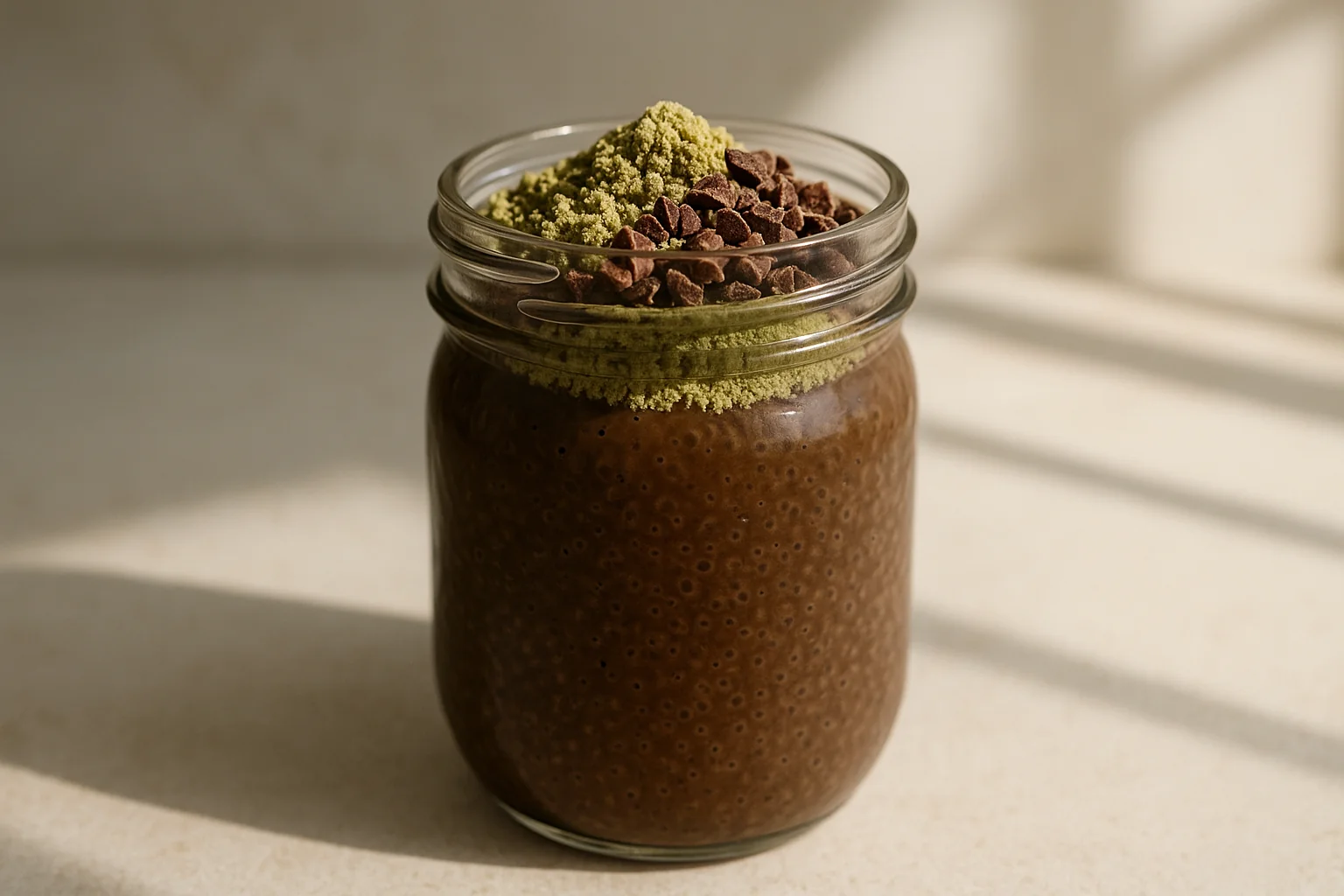
You can prepare chia pudding with hemp protein in five minutes in the evening, and the rest of the work is done by the fridge. Chia seeds bind the milk and create a gel, cocoa adds flavor and magnesium, and hemp powder boosts the protein content. However, before you add this recipe to your regular repertoire, check how many of the common opinions about hemp protein withstand measurement. A study that calculated the digestibility of protein from hemp products using the PDCAAS method gives a less impressive picture than the labels of the powders. Below you will find a step-by-step recipe, nutritional values from the USDA food composition database along with record numbers, and an explanation of why chia and hemp complement each other in the opposite order than is usually written.
KEY INFORMATION
• Hulled hemp seeds have a PDCAAS of 63-66%, and the residue after oil pressing is 46-51% (House et al., 2010).
• Lysine is the first limiting amino acid in all tested hemp products.
• 100 g of chia seeds contains 16.5 g of protein, 34.4 g of fiber, and 17.8 g of alpha-linolenic acid (USDA, record 170554).
• 100 g of unsweetened cocoa provides 499 mg of magnesium (USDA, record 169593).
Is hemp protein complete?
It depends on what you mean by complete. House and colleagues tested thirty samples of hemp products, and for some of them, they measured protein digestibility using the PDCAAS method and obtained results from 46 to 66 percent. In all samples, the first limiting amino acid was lysine, and removing the hull improved both digestibility and the score itself.
The numbers vary by product. Hulled seeds contain 35.9 percent protein and 46.7 percent fat, whole seeds 24.0 and 30.4, and the residue after oil pressing 40.7 and 10.2 (House et al., Journal of Agricultural and Food Chemistry, 2010). Protein powder is made from the residue, which has the lowest PDCAAS in this comparison.
Callaway states that edestin and albumin contain nutritionally significant amounts of all essential amino acids (Callaway, Euphytica, 2004). This statement is about presence, not proportions: amino acids are present, but there is too little lysine compared to the standard adopted in the PDCAAS method.
This leads to the direction that is usually described in recipes in reverse. Hemp does not compensate for lysine with other components because it has the least of it: per gram of protein, USDA records give 41 mg of lysine in hulled hemp seeds (record 170148) compared to 59 mg in chia (record 170554). In this pudding, chia completes the composition for hemp.
What does one serving of this pudding provide?
A serving consists of 200 ml of plant drink, 30 g of hemp powder, 30 g of chia seeds, and a tablespoon of cocoa. The chia seeds alone contribute 146 kcal, 5.0 g of protein, 10.3 g of fiber, and 5.3 g of alpha-linolenic acid, while a tablespoon of cocoa adds 25 mg of magnesium. The rest depends on the powder label.
The USDA database does not have a record for hemp protein powder in the SR Legacy collection, so you read its content from the packaging. If the label declares 50 percent protein, 30 g of powder gives 15 g, and the whole serving with chia and drink amounts to about 21 g. This is a calculation based on the manufacturer’s declaration, not a measurement.
| Ingredient (100 g) | kcal | Protein | Fat | Fiber | Magnesium | USDA Record |
|---|---|---|---|---|---|---|
| Chia seeds | 486 | 16.5 g | 30.7 g | 34.4 g | 335 mg | 170554 |
| Hulled hemp seeds | 553 | 31.6 g | 48.8 g | 4.0 g | 700 mg | 170148 |
| Unsweetened cocoa | 228 | 19.6 g | 13.7 g | 37.0 g | 499 mg | 169593 |
Record 170148 describes hulled seeds, not powder or hemp flour. These three are often confused: seeds have nearly half their mass in fat, while powder is made from the residue after its pressing.
What do you need for the pudding?
There are eight ingredients, and all are on the basic shelf. The proportions are given for two servings, which means two breakfasts or for two people. Choose natural cocoa, not alkalized: the alkalization process changes the composition enough that the USDA database has separate records for both versions, 169593 and 169594.
- 400 ml of plant drink (oat or almond)
- 60 g of hemp protein powder
- 60 g of chia seeds
- 2 tablespoons of natural cocoa
- 1-2 tablespoons of maple syrup or honey
- 1/4 teaspoon of vanilla extract
- pinch of sea salt
- for serving: fresh fruit, crushed cocoa beans, or nuts
Salt and vanilla are not just decorations here. Without a pinch of salt, cocoa tastes flat, and vanilla smooths out the bitterness that the hemp powder does not mask on its own. Add the syrup to the liquid base, before the seeds: after gelling, the mixture accepts sweetness worse and needs to be mixed much longer.
The ratio is simple and easy to calculate: for every 100 ml of drink, there are 15 g of chia seeds and 15 g of powder. One serving is therefore 200 ml of liquid, four servings 800 ml, and the rest of the ingredients scale the same way.
How to prepare chia pudding step by step?
There are five minutes of active work, the rest is waiting. You do everything in one jar, without a blender, although a hand blender will break up the cocoa lumps faster. The six steps below yield two servings for the next morning.
- Mix the base. Pour 400 ml of the drink into a jar, add 60 g of hemp powder and 2 tablespoons of cocoa, then blend until the last lump disappears.
- Sweeten and season. Add syrup, a pinch of salt, and vanilla, mix and taste. Adjust sweetness now, because after gelling the mixture tastes differently.
- Add chia seeds. Pour in 60 g and mix. Wait five minutes and mix again, as the seeds settle at the bottom and clump together.
- Put in the fridge. Cover tightly and leave for 6-8 hours, preferably overnight.
- In the morning, check the thickness. The correct pudding has the consistency of thick yogurt. If too thick, loosen with a few tablespoons of the drink, if too thin, leave for another hour.
- Serve with toppings. Transfer to bowls or eat straight from the jar, sprinkle with fruit, crushed cocoa beans, or nuts.
We noticed that crushed cocoa beans as a topping change the perception of the pudding more than any flavor addition. The hemp powder leaves a slightly gritty texture, which the crunchy bean complements instead of masking.
How to modify this recipe?
Three substitutions change this pudding the most: drink, powder, and flavor addition. The table below collects them together with the effect. The rest of the recipe remains unchanged, including the ratio of seeds to liquid.
| Substitution | What it does to the pudding |
|---|---|
| Canned coconut drink | Thickest consistency, clearly more fat and calories |
| Almond drink | Lightest effect, cocoa flavor comes to the forefront |
| Matcha instead of cocoa | Green pudding with caffeine, without magnesium from cocoa |
| Pea powder instead of hemp | More neutral taste, different amino acid profile |
If you want to reduce bitterness, decrease cocoa to one tablespoon and add half a banana. We have gathered more ideas in the text about how to use hemp protein in the kitchen, and a drinkable variant is protein shake with hemp protein.
We also noticed how easy it is to overestimate cocoa. The statement about lowering blood pressure regularly returns in recipes, and it is backed by a measurement by Grassi from 2005: twenty untreated patients with stage I hypertension ate 100 g of dark chocolate for 15 days. A tablespoon of cocoa in pudding is a different situation.
Frequently Asked Questions
How much protein is in a serving of chia pudding with hemp protein?
About 21 g, most of which comes from the powder. Chia seeds add 5.0 g per 30 g serving (USDA, record 170554), the rest depends on the declaration on the powder packaging, as the USDA database does not have a record for it.
Does chia pudding need to soak overnight?
You don’t have to, but overnight cooling gives the smoothest consistency. After an hour, the mixture is already thick, although the seeds may still be hard inside. With a shortened time, mix the pudding twice in the first quarter hour, otherwise the seeds will settle at the bottom of the jar.
What hemp protein works best in pudding?
Finely ground powder with a mild taste, not whole seeds. The powder is made from the residue after oil pressing, so it has less fat and blends smoothly. Cocoa masks the grassy aftertaste, but with an intense powder, you will still taste it.
Does hemp protein provide a complete set of amino acids?
All essential amino acids are present, but there is too little lysine compared to the PDCAAS method standard, which has a score of 46-66 percent for hemp products (House et al., 2010). Chia seeds have more lysine per gram of protein, and they complete the composition.
How long does chia pudding keep?
Keep the pudding in the fridge, in a sealed jar. The shelf life depends on the plant drink after opening, and the expiration date is indicated on its packaging. Food composition databases answer questions about composition, not storage, so you won’t find a number of days in them.
This article is for informational and educational purposes and does not replace consultation with a doctor. If you are pregnant, breastfeeding, taking medications, or have chronic conditions, consult the use of supplements or herbs with a specialist.
Author: Michał Waluk · Published: 2026-05-19 · Updated: 2026-08-16