
Miso with hemp seeds: Japanese soup in Polish
Miso soup with toasted hemp seeds in 10 minutes. How much protein does a serving provide, why miso paste cannot be boiled, and what studies say about probiotics.
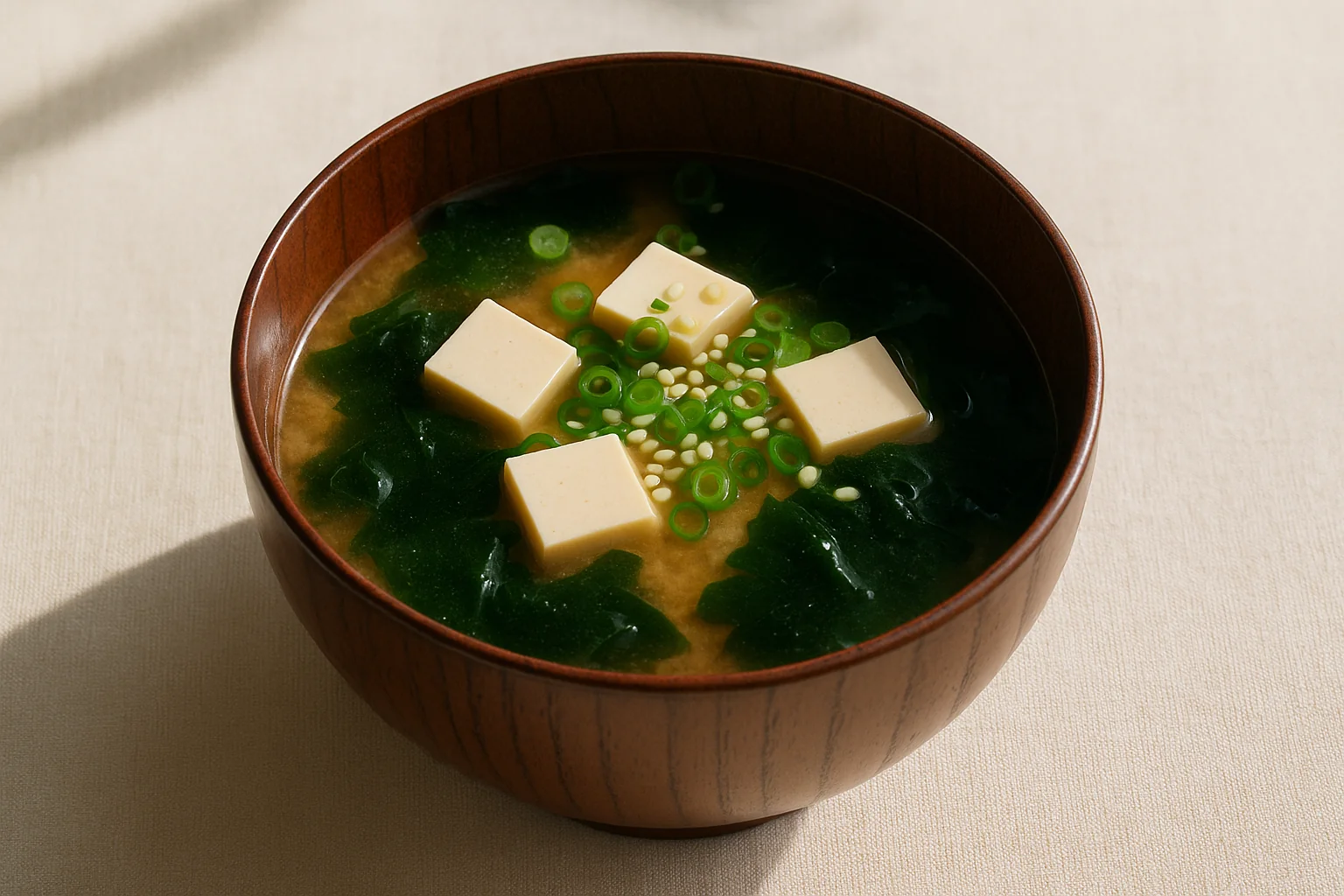
Miso soup takes ten minutes to make and just as long to ruin: simply boil the paste with the water. In Japanese cuisine, miso is a light addition to a meal, not a meal itself. Hemp seeds change that with a flick of the wrist. Three tablespoons of seeds for two bowls provide just under ten grams of protein, 210 milligrams of magnesium, and a nutty contrast to the salty umami. They do not turn miso into complete protein and do not cure anything, but they ensure that half an hour later you do not reach for a sandwich. Below you will find a step-by-step recipe, a table of the composition of three forms of hemp seeds, a list of tested variations, and an honest answer to the question about probiotics in miso.
KEY INFORMATION
• Three tablespoons of hulled hemp seeds equal 30 g: 166 kcal, 9.5 g protein, 14.6 g fat, and 210 mg magnesium (USDA FoodData Central, record 170148).
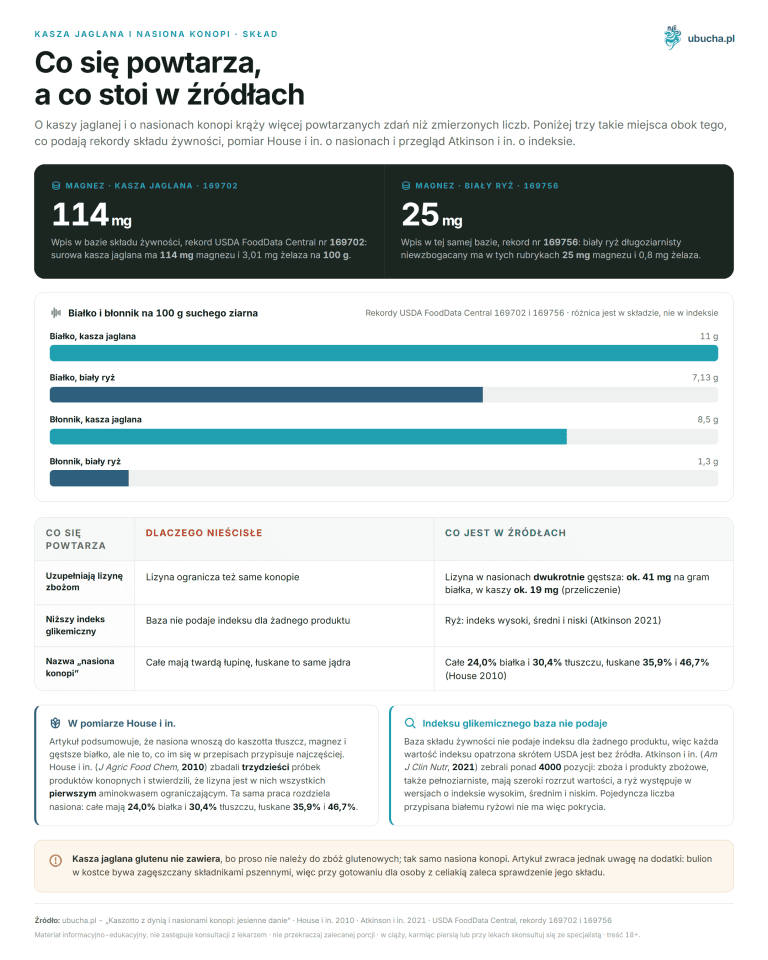
• Lysine is the first limiting amino acid in all tested hemp products, and the PDCAAS of hulled seeds is 63-66% (House et al., 2010).
• The omega-6 to omega-3 ratio in hemp seed oil typically ranges from 2:1 to 3:1 (Callaway, Euphytica, 2004).
• Miso is produced in two stages: first koji mold, then bacteria and yeast (Allwood et al., 2021).
What do hemp seeds bring to miso soup?
Protein, fat, and minerals, which the soup with just tofu lacks. The USDA FoodData Central database under record 170148 (hulled hemp seeds) translates three tablespoons into 30 grams, and in this portion, there are 166 kcal, 9.5 grams of protein, 14.6 grams of fat, and 210 milligrams of magnesium. Magnesium is particularly abundant: 700 mg per 100 grams compared to 197 mg in quinoa, according to records from the same database.
The quality of this protein is a separate issue and can be overhyped. House and colleagues measured it using the PDCAAS method: for hulled seeds, it came out at 63-66 percent, and lysine turned out to be the first limiting amino acid in all tested hemp products (House et al., Journal of Agricultural and Food Chemistry, 2010). Therefore, hemp does not supplement lysine for anyone, as it has the least of it. The authors cautiously summarize: hemp protein ranks at the level of some grains and nuts or better.
Fat looks more interesting. In the USDA record, 48.8 grams of fat contains 38.1 grams of polyunsaturated acids, which is 78 percent. Callaway reports over 80 percent for the oil itself and an omega-6 to omega-3 ratio typically between 2:1 and 3:1 (Callaway, Euphytica, 2004). The author himself calls this range optimal for humans; it is not a recommendation from WHO or FAO, as neither of these institutions recommends a specific omega ratio.
The taste operates independently of the tables. Miso is salty and fermented, toasted nutty seeds, and slightly sweet. Sprinkled on top, rather than thrown into the pot, they remain crunchy until the end of the meal.
Which hemp seeds have the most protein?
Press cake after oil extraction, but it is not the winner. House and colleagues studied thirty samples of hemp products from Western Canada and broke them down into three forms: whole seed, seed after hulling, and press cake. The differences go in two directions at once.
| Seed form | Protein | Fat | Protein digestibility | PDCAAS |
|---|---|---|---|---|
| whole seeds | 24.0% | 30.4% | 84.1-86.2% | 49-53% |
| hulled seeds | 35.9% | 46.7% | 83.5-92.1% | 63-66% |
| press cake after oil extraction | 40.7% | 10.2% | 90.8-97.5% | 46-51% |
Press cake has the most protein and simultaneously the highest digestibility, yet the lowest PDCAAS. Therefore, it is not digestibility that limits it, but the amino acid score. Hulled seeds have the highest PDCAAS of the three, which is why they end up in the soup. House recorded this conclusion directly: removing the hull fraction improves protein digestibility and raises PDCAAS.
Two reliable sources provide different numbers: House measured 35.9 percent protein in hulled seeds, while USDA reports 31.6 percent. The variation depends on the variety and accuracy of hulling, so read such values as approximations.
Is miso soup probiotic?
Miso carries live microorganisms, but that is not the same as proven effects on the gut. A review by Dimidi and colleagues lists miso among fermented products for which no randomized studies have been conducted on their impact on digestive health (Dimidi et al., Nutrients, 2019). There is simply no clinical evidence.
It is also worth correcting one repeated inaccuracy about miso. Aspergillus oryzae is a mold, not a bacterium. Allwood and colleagues describe miso production as a two-step fermentation: first, mold is inoculated on the grain to produce koji, and only then does koji go into the salted soybean mass, where bacteria and yeast work (Allwood et al., Journal of Food Science, 2021). The entire process can take up to two years, and the authors note that the microbiological composition of miso is still poorly described.
The practical conclusion is the same that Japanese cuisine reached long ago: the paste is added after removing the pot from the heat. Boiling water kills microorganisms and flattens the aroma that has developed over months. You do not need to believe this for the sake of probiotics; just compare the taste of soup boiled with unboiled once.
We noticed in tests that the difference is more pronounced with light shiro paste than with dark aka. Dark miso has such a strong profile that cooking takes less from it.
What do you need for two servings?
Six basic ingredients and ten minutes. The amounts below yield two bowls of about 250 ml each. Miso paste is very salty, so do not add more salt to the soup until you taste it.
- 500 ml of water or dashi broth (in the vegan version, just kombu is enough)
- 3 tablespoons of hulled hemp seeds to toast, about 30 g
- 2 tablespoons of miso paste: shiro, aka, or awase
- 100 g of silken or firm tofu
- 1 teaspoon of dried wakame seaweed
- 2 stalks of chives or green onions
- optional: a few drops of sesame oil for the bowl
- optional: slices of shiitake, nori, or mung bean sprouts
Wakame expands several times, so a teaspoon of dried seaweed is enough for two bowls. A handful will turn the soup into a thick seaweed mass. Silken tofu breaks into delicate flakes, while firm tofu holds its cube, so choose what you prefer to chew.
You can skip the dashi, but the soup will come out flat. The simplest vegan shortcut is a piece of dried kombu soaked in cold water for twenty minutes and removed before heating. Keep hemp seeds in the fridge: polyunsaturated fat goes rancid quickly, and you can tell rancid by the smell of old oil.
How to prepare miso soup with hemp seeds step by step?
In five steps, of which only one can be confusing: miso paste goes into the pot after it has been removed from the heat. The rest involves heating the water, toasting the seeds in a dry pan, and assembling the bowl. The whole process takes ten minutes, counting from lighting the burner.
Safety: miso paste carries live microorganisms, so add it after removing the pot from the heat and do not reheat the soup. Do not leave hemp seeds in the pan without stirring, as they go from golden to burnt in a matter of seconds.
- Heat 500 ml of water or dashi until it steams lightly but does not boil. A thermometer is not needed: the first small bubbles at the bottom are a sign to remove the pot.
- Meanwhile, toast the hemp seeds in a dry pan for 3-4 minutes over medium heat, stirring constantly. Once golden and fragrant, immediately transfer to a plate, as the hot pan will continue to toast them.
- Add the chopped tofu and wakame to the hot water. Keep on low heat for 2-3 minutes until the seaweed expands and the tofu heats through.
- Remove the pot from the heat. Mash the miso paste with a few tablespoons of hot water from the pot until lumps disappear, then pour it back in. Gently mix and do not heat again.
- Pour the soup into bowls, add 1.5 tablespoons of toasted hemp seeds to each, sprinkle with chives, and serve immediately.
The soup does not tolerate reheating. If making it for later, store the broth separately, and add the paste and seeds just before eating. Toasted seeds as a topping also return in pumpkin cream with toasted hemp seeds.
What else can you add to this soup?
Three variations that have worked best for us. Each leaves the rule of not boiling miso untouched and none extends the preparation time beyond fifteen minutes.
Add shiitake mushrooms to the water along with the tofu, three or four pieces. They add depth of umami to the soup, which may allow for half a tablespoon less paste. A soft-boiled egg goes into the hot soup before adding the paste and clearly raises the protein content of the bowl.
Hemp protein dissolved in a few tablespoons of water and poured in with the miso thickens the soup without changing the flavor. Wang and colleagues measured the digestibility of hemp protein isolate after digestion with pepsin and trypsin at 88-91 percent compared to 71 percent for soy isolate (Wang et al., Food Chemistry, 2008). The same work notes that the hemp isolate lacks lysine and sulfur-containing amino acids, which aligns with House’s findings.
The most common mistake is tossing the paste straight from the package into the pot: miso will disperse unevenly and leave lumps. The second is using too much paste, as one tablespoon per bowl is sufficient. If you are looking for a heavier version of Japanese broth, check out the recipe for vegan ramen with hemp seeds or cauliflower cream with hemp seeds and curry.
Frequently asked questions
Why do hemp seeds go well with miso soup?
Miso soup with just tofu provides little protein and almost no fat. Three tablespoons of hulled hemp seeds equal 30 grams, which contain 9.5 grams of protein, 14.6 grams of fat, and 210 milligrams of magnesium (USDA FoodData Central, record 170148). The nutty flavor of the toasted seeds balances the salty profile of the paste.
Why should miso paste not be boiled?
Miso paste carries live microorganisms from a two-step fermentation: koji mold, followed by bacteria and yeast (Allwood et al., 2021). Boiling water kills them and flattens the aroma developed over months of aging. Therefore, the paste is dissolved in the pot after it is removed from the heat and the soup is not reheated.
Do hemp seeds in miso provide complete protein?
Not in the sense that the term is used in advertisements. House and colleagues measured the PDCAAS of hulled seeds at 63-66 percent and identified lysine as the first limiting amino acid in all hemp products studied. It is good plant protein, but not equivalent to egg or milk.
Which miso paste should be chosen for soup with hemp seeds?
Shiro, or white miso, has the mildest and slightly sweet profile, so it best releases the nuttiness of the seeds. Aka, or red miso, is much more intense and can overshadow it. Awase is a blend of both and a good choice for first attempts if you are unsure of your preference.
What can replace wakame in miso soup?
Other seaweeds: nori cut into strips, hijiki, or kombu. Without seaweed, the soup is still tasty but loses its marine, mineral aroma. If you have none, toss in a handful of baby spinach or pak choi. They will expand in hot water in two minutes and add color to the soup.
Ready-made hemp food products can be found in the hemp food category in the u Bucha store.
This article is for informational and educational purposes and does not replace consultation with a doctor. If you are pregnant, breastfeeding, taking medications, or have chronic conditions, consult the use of supplements or herbs with a specialist.
Author: Michał Waluk · Published: 2026-06-15 · Updated: 2026-08-16