
How to Make CBD Coffee? Recipes, Dosage, and Science 2026
How much CBD to add to coffee, whether hot drink degrades it, and why fat is added to the cup. Three recipes and numbers directly from studies you can open and verify.
CBD coffee seems like the simplest way to combine a morning ritual with hemp supplementation: a few drops of oil into a cup and done. The pharmacology is less obvious than most guides suggest. Caffeine blocks adenosine receptors, while cannabidiol in preclinical studies acts oppositely by inhibiting the removal of adenosine from the intercellular space. Moreover, a systematic review of cannabidiol pharmacokinetics in humans shows that absolute bioavailability was measured only for the inhalation route. Below you will find what this means for dosing in the kitchen, an explanation of the role of fat, and three recipes with specific proportions. You will also find a simple way to check if such a drink works for you at all, because a single cup provides no basis for conclusions. Every number here has a source you can open and verify yourself.
KEY INFORMATION
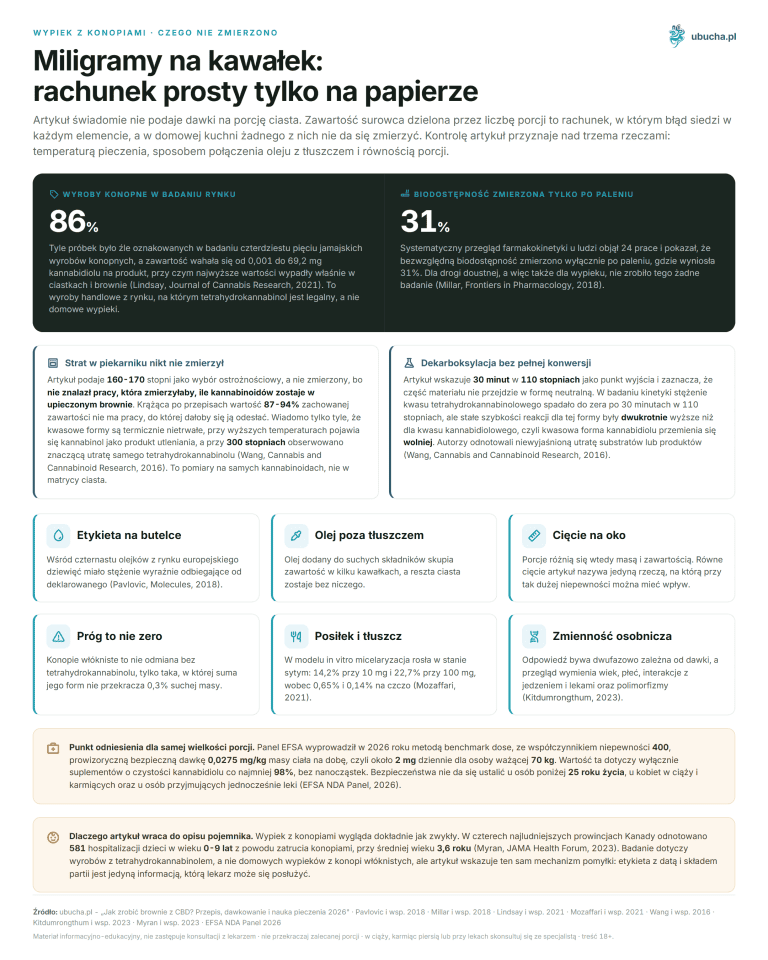
- Absolute bioavailability of CBD was measured in humans only for inhalation, about 31 percent; for oral and sublingual routes, none of the 24 analyzed articles determined it (Millar et al., Frontiers in Pharmacology, 2018).
- A high-fat meal increased the area under the curve for CBD fourfold and the maximum concentration fourteenfold in eight patients (Birnbaum et al., Epilepsia, 2019).
- EFSA considers 400 mg caffeine daily safe for healthy adults and 200 mg for pregnant women (EFSA, 2015).
- Nine of fourteen European CBD oils had content clearly deviating from the declared amount (Pavlovic et al., Molecules, 2018).
Why does CBD coffee act differently than coffee alone?
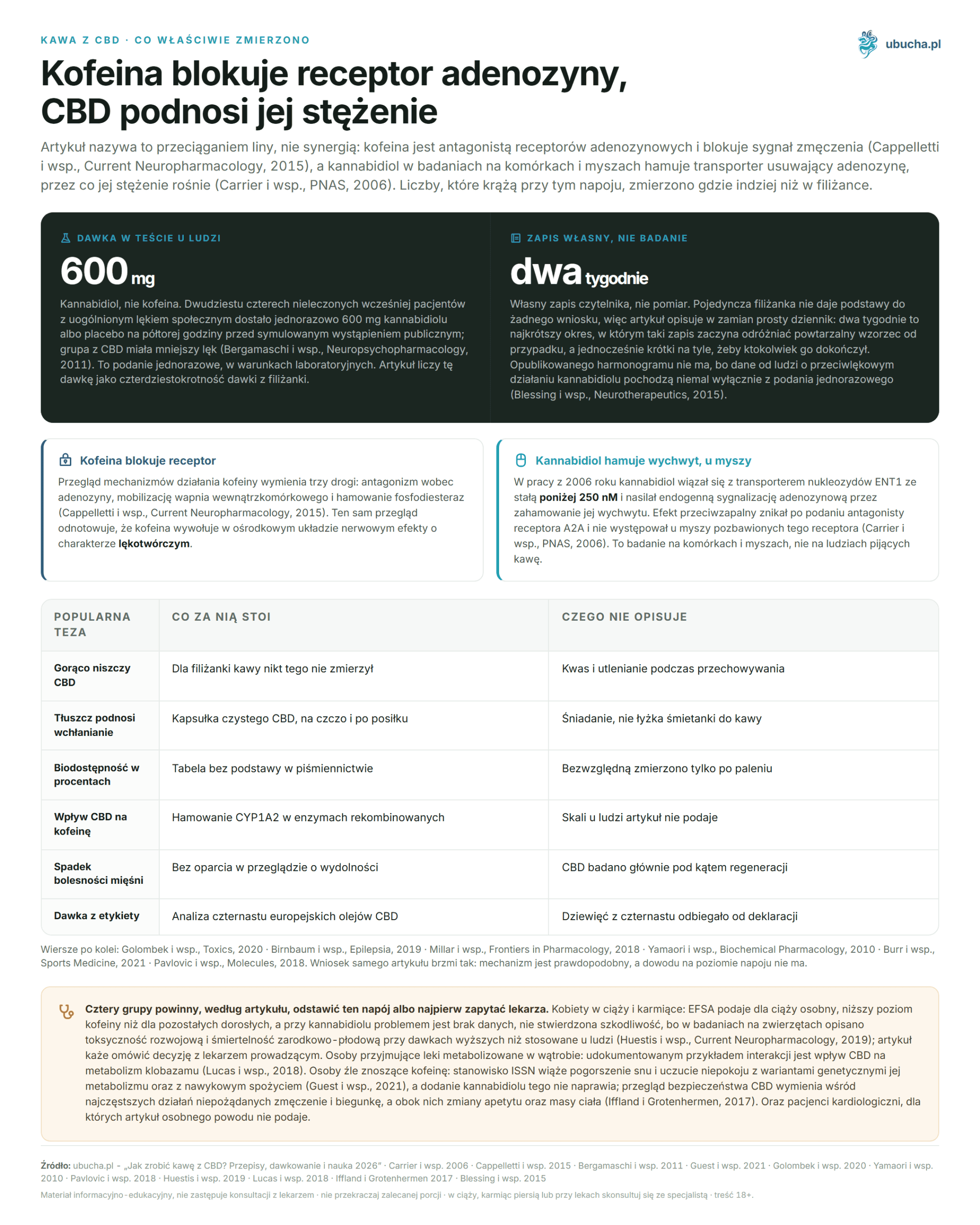
Caffeine and cannabidiol target the same signaling system but from opposite sides. Caffeine is an antagonist of adenosine receptors, blocking the fatigue signal. Cannabidiol in cell and mouse studies inhibits the transporter removing adenosine from the extracellular space, increasing its concentration. This is not cooperation but a tug of war.
A review of caffeine’s mechanisms lists three pathways: adenosine antagonism, intracellular calcium mobilization, and phosphodiesterase inhibition (Cappelletti et al., Current Neuropharmacology, 2015). The same review notes that caffeine causes anxiogenic effects in the central nervous system. This part of coffee’s action bothers people who feel jittery instead of focused after a second cup.
Cannabidiol affects this picture via adenosine itself. A 2006 study showed CBD binding to the nucleoside transporter ENT1 with a constant below 250 nM and enhancing endogenous adenosine signaling by inhibiting its uptake. The anti-inflammatory effect disappeared after administration of an A2A receptor antagonist and was absent in mice lacking this receptor (Carrier et al., PNAS, 2006). This study was on cells and mice, not humans drinking coffee.
What does this mean for a cup? The popular synergy thesis has no support in any published human study where people received caffeine and cannabidiol together. It is known, however, that a single CBD dose reduced anxiety in a controlled human test, while caffeine increased it. The mechanism is thus plausible, but there is no evidence at the beverage level.
This human test deserves a detailed description because it is often cited with a wrong dose. Twenty-four previously untreated patients with generalized social anxiety received a single 600 mg dose of cannabidiol or placebo one and a half hours before a simulated public speaking event. The CBD group had less anxiety, less cognitive impairment, and less discomfort during speaking (Bergamaschi et al., Neuropsychopharmacology, 2011). Six hundred milligrams is, however, forty times the dose in a cup.
A broader picture is given by a review of evidence for cannabidiol’s anxiolytic effects. The authors consider preclinical data strong and human data supportive but limited to single administration and few clinical populations (Blessing et al., Neurotherapeutics, 2015). With daily coffee drinking containing a dozen milligrams of CBD, you are thus outside the range studied.
Does hot coffee destroy CBD?
No one has measured this for a cup of coffee, so every temperature limit given online for the beverage is unsupported. Documented CBD degradation pathways are acidic environment and oxidation during storage, not brief contact with hot liquid. Practical conclusions come from there.
A review on CBD transformations states that in acidic environments cannabidiol definitely converts to psychotropic products, but most studies do not confirm such transformation under physiological conditions. The authors conclude that the stability of commercial preparations during storage requires more attention (Golombek et al., Toxics, 2020). A bottle standing for months on a windowsill is thus a more realistic problem than a drink consumed in fifteen minutes.
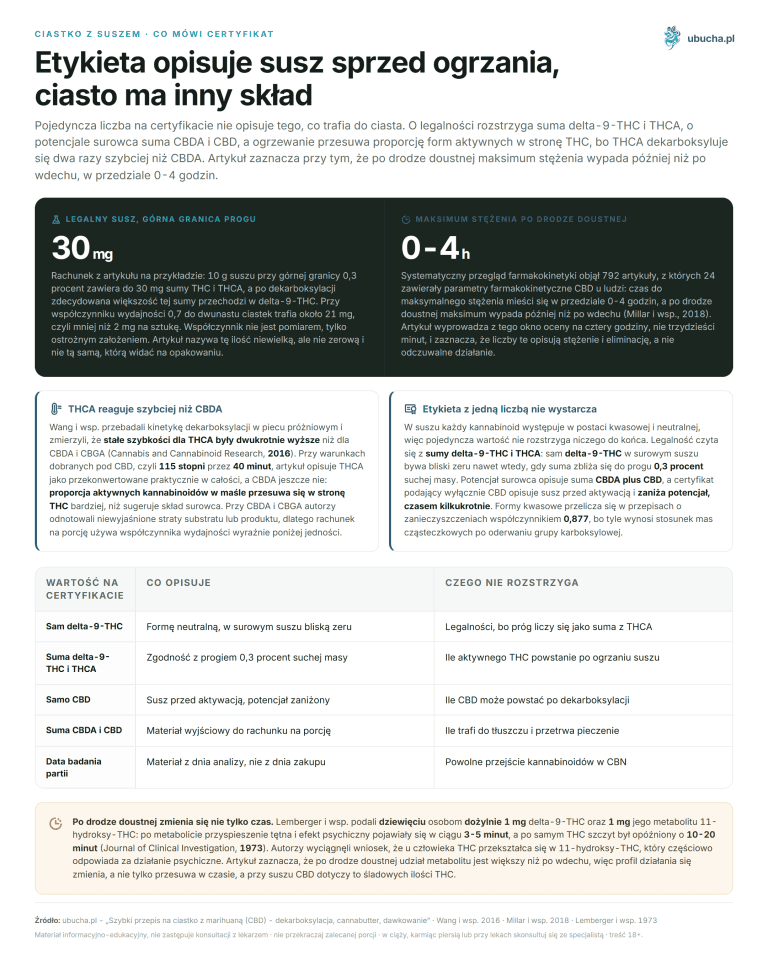
It is also worth separating two different things. Decarboxylation, i.e., conversion of acidic cannabinoid forms to neutral forms, was studied at 80 to 145 degrees Celsius for up to an hour in a vacuum dryer and followed first-order kinetics (Wang et al., Cannabis and Cannabinoid Research, 2016). CBD oil in a cup contains the neutral form already, and the drink cools below 60 degrees within minutes. This is a completely different regime than an oven.
From this come three habits that actually make a difference. Add oil to the drink already poured into the cup, so you control the dose and do not leave fat in the machine. Keep the bottle closed, cool, and away from light. Use opened oil within a reasonable time, as the oxidation product profile is used in studies to assess carrier stability. The same principle applies to infusions: we described it in detail in the post about how to brew hemp tea.
There is another reason why storage matters more than drink temperature. In an analysis of fourteen European CBD oils, researchers assessed not only cannabinoid content but also the oxidation product profile of the carrier as an indicator of raw material quality and preparation stability (Pavlovic et al., 2018). In other words: what happens to the bottle over six months in the kitchen is measurable, but what happens to a drop in hot coffee over fifteen minutes has not been measured yet. Attention should be proportionally divided according to this difference.
How much CBD to add to a cup of coffee?
Start with 10 mg per cup and increase the dose no more often than once a week, observing the reaction. This order is not a marketing invention: a review of cannabinoid pharmacokinetics and pharmacodynamics ends with a direct recommendation to start with a low dose and slowly increase it while carefully observing the patient (Lucas et al., British Journal of Clinical Pharmacology, 2018).
The scheme below does not come from a coffee study, as none exists. It is a practical breakdown of the slow dose increase principle for a typical workday. The caffeine numbers have a solid source: EFSA considers 400 mg daily safe for a healthy adult, roughly corresponding to four cups of drip coffee.
| Stage | CBD per cup | What to watch for |
|---|---|---|
| First week | 10 mg, once daily | Only morning cup to separate CBD effect from caffeine effect |
| Second week | 15 mg, once daily | Increase only if previous dose caused no change |
| Afternoon | 15-20 mg | Count caffeine from the whole day against EFSA’s 400 mg limit |
| Before exercise | 15 mg | Caffeine acts ergogenically at 3-6 mg per kg body weight, usually one hour before start |
| Evening | caffeine-free | Use decaffeinated coffee or herbal infusion for evening drink |
Caffeine data in sports come from the International Society of Sports Nutrition position, which gives a range of 3-6 mg per kg body weight and the most common timing as 60 minutes before exercise (Guest et al., Journal of the International Society of Sports Nutrition, 2021). The same position notes that differences in caffeine response among people relate partly to genetic variants of its metabolism.
One note about drops. Producers define and calibrate drops differently, so the conversion on the label is the only reliable basis. Do not assume a drop of 5% oil is always 5 mg, and do not transfer the conversion from one bottle to another.
Why must CBD be combined with fat in coffee?
Because fat changes absorption so strongly it is visible in human studies. Eight patients took a single dose of pure CBD in a capsule once on an empty stomach and once after a breakfast worth 840-860 kcal. The maximum concentration in the fed state was on average 14 times higher, and the area under the curve 4 times higher than fasting (Birnbaum et al., Epilepsia, 2019).
A systematic review of CBD pharmacokinetics in humans confirms this direction and adds something guides omit. Of 792 reviewed articles, only 24 reported human pharmacokinetic parameters, and absolute bioavailability was determined only after smoking, at about 31 percent. No study determined it for oral or sublingual routes, although intravenous forms exist (Millar et al., 2018). The popular table of four administration routes with nice percentages thus lacks a literature basis.
| Route of administration | What was measured in humans |
|---|---|
| Inhalation (smoking) | Absolute bioavailability 31%; half-life 31 hours |
| Oral | Absolute bioavailability not determined; half-life 2-5 days with chronic administration |
| Sublingual and mucosal | Absolute bioavailability not determined; half-life 1.4-10.9 hours |
| Intravenous | Half-life 24 hours; used as reference form |
How to translate this to the kitchen? A breakfast of 840 kcal is not just a splash of milk in coffee, so do not expect a fourfold increase from a tablespoon of cream. The direction remains the same: a neutral fat carrier helps, and a drink without any fat leaves oil on the walls. Cream, whole milk, or a teaspoon of medium-chain oil suffice, and low-fat plant milks require supplementation. More about the timing of oil intake relative to meals can be found in the post about whether to take CBD oil before or after eating. The idea of coffee with fat has an older version described in the post about bulletproof coffee with hemp oil.
How to make a morning CBD latte for focus?
This is the simplest variant and a good starting point: strong coffee, frothed milk, 15 mg CBD, and a pinch of cinnamon. The whole takes five minutes and requires nothing but a frother or hand blender. The emulsion has a specific task here because without it the first sips carry almost all the oil, and the last none.
For one serving you need the following ingredients:
- Espresso 25-30 ml or 150 ml strong drip coffee
- 150-180 ml hot milk, whole or barista plant-based
- 15 mg CBD in oil, measured according to the label conversion
- A teaspoon of medium-chain oil or a tablespoon of 30% cream
- A pinch of Ceylon cinnamon
Preparation proceeds in five steps:
- Brew coffee by any method and pour it into a cup of about 250 ml capacity.
- In a separate container, mix the measured portion of CBD oil with a teaspoon of carrier fat.
- Heat the milk to about 60 degrees Celsius, without boiling, and froth it to a thick foam.
- Pour the preliminary emulsion into the coffee, stir, then add the milk in a thin stream.
- Sprinkle with cinnamon and drink immediately before the fat separates.
The drink works best between 7 and 10 a.m. You will feel the caffeine effect within minutes because it acts quickly. For any cannabidiol effect, you will wait longer, as after oral administration the maximum concentration usually occurs between zero and four hours. If you prefer a caffeine-free version, the same scheme works with hemp infusion and cinnamon, described in the post about hemp latte with cinnamon and cardamom.
Why so much space for the emulsion? Because without it the drink becomes non-repeatable, and without repeatability you cannot assess any dose. Oil poured into coffee and only stirred with a spoon separates in a minute or two, so the first sips carry almost all of it. A frother or hand blender breaks the fat into droplets fine enough to remain stable throughout drinking. The same device, the same coffee, and the same mixing time give a result that can be repeated the next day.
How to prepare an afternoon CBD coffee with cocoa?
The afternoon version differs in two things: cocoa provides a thicker fat matrix, and a pinch of salt suppresses bitterness. The cannabidiol dose is raised here to 20 mg, but only if the morning 15 mg passed without drowsiness. The drink itself is heavier, so treat it as a small snack, not a top-up.
For one serving you need the following ingredients:
- 200 ml drip coffee or French press coffee
- 100 ml hot oat or coconut milk
- 20 mg CBD in oil, measured according to the label conversion
- A teaspoon of raw cocoa and a teaspoon of carrier fat
- A quarter teaspoon of cinnamon and a pinch of salt
Preparation proceeds in four steps. First, mix cocoa, cinnamon, and salt in a mug, adding two tablespoons of hot milk until a smooth paste forms. Then add cannabidiol oil and carrier fat and rub everything to a uniform consistency. Next, pour in coffee and the rest of the milk, then blend with a frother for several seconds. Finally, taste and optionally sweeten with a teaspoon of honey.
Drinking time is best set between 1 and 4 p.m. The reason is simple and unrelated to cannabidiol: caffeine from this cup enters the daily balance, and EFSA gives 400 mg as a no-concern limit for healthy adults. If you drank two strong coffees in the morning, this third is already borderline.
Cocoa plays a double role here and that is why it is in the recipe. Cocoa butter provides a thicker fat matrix than plant milk alone, and oat and almond milks usually have little fat per 100 ml. The second role is flavor: the pronounced, slightly bitter aroma of cocoa effectively masks the earthy taste of full-spectrum oils, which can be noticeable in black coffee alone. If you use oil with a mild profile, you can halve the cocoa without losing drink consistency.
How to make iced CBD coffee for hot days?
The iced version is more convenient in summer and maintains the emulsion better because cold lipids separate more slowly. The base is cold brew or chilled espresso, coconut water, and 15 mg CBD. A jug blender does more than a frother here because ice forces finer fat breakdown.
For one serving of about 300 ml you need the following ingredients:
- 100 ml cold brew or chilled espresso
- 100 ml coconut water or cold coconut milk
- 15 mg CBD in oil, measured according to the label conversion
- A teaspoon of carrier fat
- 6-8 ice cubes, optionally a mint leaf
Preparation takes three minutes. First, blend cannabidiol oil, carrier fat, and two tablespoons of coconut water for ten seconds to form a preliminary emulsion. Then add coffee and the rest of the liquids, add ice, and blend for another several seconds at high speed. Pour into a tall glass and drink immediately.
One caveat is needed here because sports are often abused in this topic. A review on cannabis in the context of performance states that cannabidiol was mainly studied for recovery, and its effects on sleep, pain, and mild head injuries have not yet been reliably tested in sports populations (Burr et al., Sports Medicine, 2021). Percentages of muscle soreness reduction after CBD circulating online have no basis in this literature. Caffeine is another matter, and its ergogenic effect is well documented.
How to set this cup relative to training? The ISSN position indicates a caffeine dose of 3-6 mg per kg body weight as the range where performance improvement appears most consistently, and the most common timing is one hour before exercise (Guest et al., 2021). For a 70 kg person, this means 210-420 mg, i.e., two to four cups, which practically exhausts the EFSA daily budget. If you train in the afternoon, skip morning coffee or reduce the pre-workout dose. Cannabidiol changes nothing in this calculation.
Who should avoid CBD coffee?
Four groups should stop it or first consult a doctor: pregnant and breastfeeding women, people taking drugs metabolized in the liver, people sensitive to caffeine, and cardiology patients. The reasons differ and are worth separating because not all mean the same.
In pregnancy, the restriction concerns both drink components. EFSA gives 200 mg caffeine daily for pregnant women as a level not raising fetal concerns, half the limit for other adults. For cannabidiol, the problem is lack of data, not proven harm: a review of CBD adverse effects lists developmental toxicity and embryofetal mortality at doses higher than used in humans in animal studies (Huestis et al., Current Neuropharmacology, 2019). With such knowledge, stopping is a cheaper decision than experimenting.
For drugs, the concern is the liver. Cannabidiol is metabolized hepatically, so there is a real possibility of pharmacokinetic interactions via enzyme and transporter inhibition or induction; a documented example is CBD’s effect on clobazam metabolism (Lucas et al., 2018). Separately, it is worth knowing that in recombinant enzyme studies cannabidiol competitively inhibited CYP1A1, CYP1A2, and CYP1B1, strongest on the first (Yamaori et al., Biochemical Pharmacology, 2010). Since caffeine is metabolized by CYP1A2, the theoretical interaction pathway exists. However, no one has measured in humans how much CBD prolongs caffeine clearance, so we do not provide any number here.
What remains is caffeine sensitivity itself. The ISSN position links differences in response, including sleep impairment and anxiety, to genetic variants of caffeine metabolism and habitual consumption (Guest et al., 2021). If you are among people whose afternoon coffee spoils their night, adding cannabidiol will not fix that. The CBD safety review also lists fatigue and diarrhea among the most common adverse effects, alongside appetite and weight changes (Iffland and Grotenhermen, Cannabis and Cannabinoid Research, 2017).
Which CBD oil to choose for coffee?
For coffee, an oil on a flavor-neutral fat carrier with a clear drop-to-dose conversion and a current certificate of analysis works best. The order matters: the carrier determines the drink’s taste, the conversion ensures dose repeatability, and the certificate confirms that the bottle contains what the label says.
The last point is not a formality. In an analysis of fourteen CBD oils available on the European market, nine samples had concentrations clearly deviating from declared, and the other five were within reasonable limits. The authors also examined the terpene fingerprint and carrier oxidation products as indicators of raw material quality and preparation stability (Pavlovic et al., 2018). The conclusion is inconvenient but simple: without a batch certificate, the label declaration is a promise, not a measurement.
What to look for when opening a certificate of analysis:
- Batch number matching the packaging, as a general certificate says nothing about the specific bottle.
- Cannabinoid content given in mg per milliliter or percent, specifying CBD and THC.
- Contaminants, i.e., pesticides, heavy metals, and solvent residues.
- Laboratory and its accreditation, along with the analysis date.
Choose oil concentration according to dose, not vice versa. For 10-15 mg per cup, a weaker oil is more convenient because it is easier to hit the dose with single drops. For 20 mg and more, a stronger oil becomes more sensible, otherwise you pour a lot of carrier fat into coffee. Full-spectrum oils have a more pronounced earthy taste, noticeable in espresso; cinnamon, cocoa, and vanilla mask it best.
The carrier deserves a separate sentence because it is more noticeable in coffee than sublingually. Medium-chain triglyceride oils are rare and almost tasteless, so they do not change the drink profile and act as a fat addition themselves. Oils pressed from hemp seeds have their own nutty-grassy tone, which fits black coffee less well but works quite well in cocoa versions. Sunflower oil is in the middle: flavor-neutral, thicker in mouthfeel. None of these choices changes the dose, only whether the drink can be consumed daily without discouragement.
What mistakes most often spoil CBD coffee?
The most common mistakes are not about product choice but preparation method and patience. The table below collects five situations that practically spoil the effect or make it impossible to assess. Each can be fixed without spending a penny.
| Mistake | Why it harms | What to do instead |
|---|---|---|
| Starting with a high dose | Unknown at what amount effect or drowsiness appears | Start at 10 mg and increase once a week |
| Pouring oil without emulsifying | Oil collects on surface and dose distributes unevenly in the drink | Blend with a frother for at least ten seconds |
| Adding oil to the coffee machine | Lose control over dose per serving and leave fat in the device | Dose into the cup after brewing |
| Bottle on the windowsill | Light and oxygen stress the carrier, and product stability is a weak point of the market | Closed bottle in a cool, dark cabinet |
| Assessment after one day | A single cup provides no basis for any conclusion | Keep a simple journal for two weeks |
The last two rows return most often and share a cause: impatience. A person who feels nothing after the first cup usually doubles the dose the next day instead of waiting a week, encounters drowsiness, and stops everything. Another typical path is changing several things at once: different oil, dose, and time of day in the same week. Then it is unknown what worked and what interfered. Change one variable at a time and leave the rest alone until the next week.
How to check if CBD coffee works for you?
You need two weeks, a fixed dose, and a notebook. A single cup provides no basis for any conclusion because energy and mood fluctuate for ten other reasons. The test is to drink coffee with cannabidiol at a set dose and time for the first week, and the same coffee without it for the second week.
Note three things daily, always at the same hour: energy level around eleven, neck tension, and sleep quality the next night. A scale from one to five is enough because a more detailed one only prolongs noting and discourages after four days. Also record the total number of coffees drunk, as this variable can mask any other effect.
Why two weeks, not three days? Because human data on cannabidiol’s anxiolytic effect come almost exclusively from single administration, and chronic use studies are few (Blessing et al., 2015). There is thus no published schedule to refer to. Two weeks is the shortest period in which your own record begins to distinguish a repeatable pattern from chance, and short enough for anyone to complete.
Read the result cautiously. No difference between weeks is also a result and is not a reason to increase the dose indefinitely. If the difference appears mainly in sleep quality, first examine caffeine, as the ISSN position links sleep impairment and anxiety to individual variants of its metabolism (Guest et al., 2021). And if after two weeks you still do not know your result, it means the effect is too small to guide spending.
Frequently Asked Questions
How much CBD to add to one cup of coffee?
A reasonable start is 10 mg per cup, increased no more often than once a week. A review of cannabinoid pharmacokinetics and pharmacodynamics recommends starting with a low dose and slowly increasing it while carefully observing reactions (Lucas et al., British Journal of Clinical Pharmacology, 2018). Read the number of drops from the label of the specific bottle.
Does hot coffee destroy CBD?
No one has measured this for a cup of coffee, so temperature thresholds circulating online for the beverage are numbers without a source. Documented pathways of cannabidiol degradation are acidic environment and oxidation during storage, and the authors of the review point out the stability of commercial preparations as an area requiring attention (Golombek et al., Toxics, 2020).
Why is fat added to CBD coffee?
Because fat clearly changes absorption. In eight patients taking a pure CBD capsule after a breakfast worth 840-860 kcal, the maximum concentration was on average fourteen times higher, and the area under the curve four times higher than on an empty stomach (Birnbaum et al., Epilepsia, 2019). Cream or whole milk serve the same role in the cup.
Does CBD coffee calm or stimulate?
There is no published study in which people received caffeine and cannabidiol together, so the answer at the beverage level remains open. It is known that caffeine acts by antagonism of adenosine and causes anxiogenic effects (Cappelletti et al., Current Neuropharmacology, 2015), while CBD in preclinical studies enhances adenosine signaling.
How many CBD coffees can you drink daily?
The limit is set by caffeine, not cannabidiol. EFSA considers consumption of up to 400 mg of caffeine daily as not raising concerns for healthy adults, and 200 mg for pregnant women (EFSA, 2015). This corresponds roughly to four cups of drip coffee daily, counting all caffeine sources together.
Does CBD change caffeine metabolism in the liver?
Possible, but no one has measured this in humans. In studies on recombinant enzymes, cannabidiol competitively inhibited CYP1A1, CYP1A2, and CYP1B1, with the strongest effect on CYP1A1 (Yamaori et al., Biochemical Pharmacology, 2010). Caffeine is metabolized by CYP1A2, so the interaction pathway is theoretically open, but its scale is unknown.
Which CBD oil to choose for coffee?
One that has a flavor-neutral carrier, a clear drop-to-dose conversion, and a certificate of analysis for the specific batch. In an analysis of fourteen European CBD oils, nine samples had content clearly deviating from the declared amount (Pavlovic et al., Molecules, 2018), so the batch certificate is the only real verification of the label.
Can you drink CBD coffee during pregnancy?
We do not recommend it. EFSA lowers the safe caffeine level for pregnant women to 200 mg daily, and there is a lack of human data for cannabidiol: animal studies describe developmental toxicity and embryofetal mortality at high doses (Huestis et al., Current Neuropharmacology, 2019). Discuss the decision with your attending physician.
Hemp oils you use for drinks are collected in the hemp oils category.
This article is informational and educational and does not constitute medical advice. Before starting hemp or CBD for therapeutic purposes, consult a doctor, especially if you take other medications, are pregnant, or breastfeeding.
Author: Michał Waluk · Published: 2026-04-27 · Updated: 2026-08-10