
How CBD Affects Sleep and Insomnia? Complete Guide 2026
CBD for sleep without marketing: what doses have really been studied, what polysomnography showed, what AASM guidelines do not recommend, how to combine, and when CBD will not work.
The question “does CBD for sleep work” has received hundreds of commercial answers and a handful of measurable responses. The latter are less impressive. The largest clinical series cited by the entire industry involved 72 patients, was not randomized, and sleep improvement varied over the following months (Shannon et al., 2019). This guide collects what can be defended: mechanisms with reservations, doses actually studied, the result of the only controlled study with polysomnography, guideline positions regarding melatonin and valerian, and situations where CBD will not help and delaying diagnosis is harmful. You will also find a comparison with sleeping pills and a description of cognitive-behavioral therapy, which is ranked higher in the guidelines than any evening preparation. All numbers come from the works we provide with them and have been verified in abstracts or full texts.
KEY INFORMATION
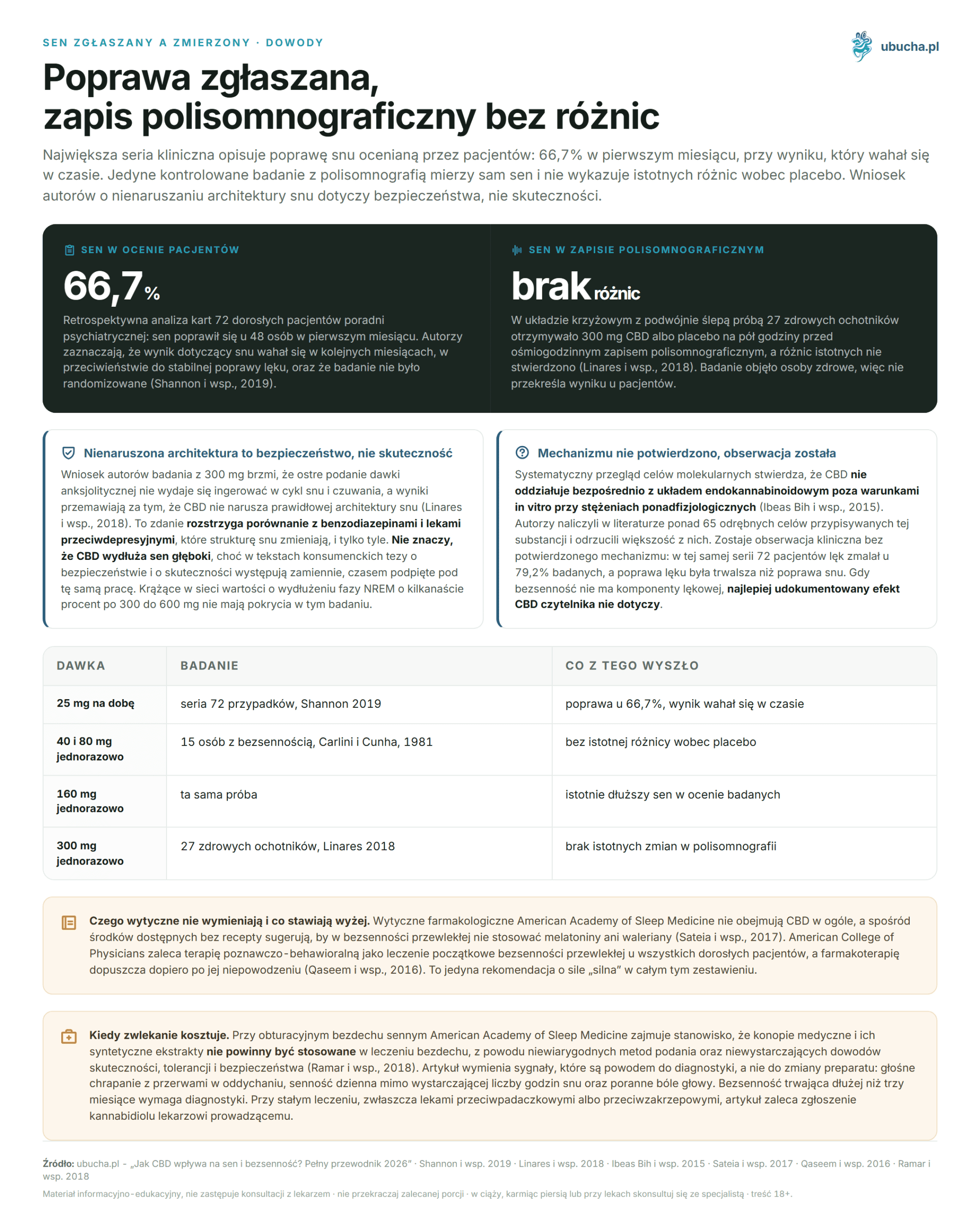
• In a series of 72 patients, sleep improved in 66.7% in the first month, but the result varied over time, and the study was retrospective (Shannon et al., 2019).
• After 300 mg of CBD, the eight-hour polysomnographic recording in 27 volunteers did not differ significantly from placebo (Linares et al., 2018).
• AASM guidelines suggest not using melatonin or valerian in chronic insomnia (Sateia et al., 2017).
• In sleep apnea, AASM takes a position against the use of medical cannabis and its synthetic extracts (Ramar et al., 2018).
• Excluding studies on childhood epilepsy, the only adverse effect significantly associated with CBD was diarrhea (Chesney et al., 2020).
Why is insomnia a health problem, not just an inconvenience?
Because it has its own diagnostic criteria and its own treatment. Chronic insomnia is said to occur when sleep difficulties happen at least three times a week for at least three months and lead to consequences during the day (Drager et al., 2023).
This second condition determines the diagnosis and is often overlooked. Guidelines list among daytime consequences fatigue, decreased energy, poorer attention and memory, and mood changes such as irritability. The mere number of hours is not enough: a person sleeping six hours and functioning well does not have insomnia, while a person sleeping seven and waking up groggy may have it.
The distinction between primary and secondary insomnia changes the entire strategy. Secondary insomnia accompanies another disease: depression, anxiety disorders, chronic pain, sleep apnea, or thyroid disorders. Working on falling asleep alone then gives a superficial effect, and proper diagnosis is delayed by months.
There is also situational insomnia, triggered by a specific event, which usually resolves within a few weeks. This is the only one of the three forms where experimenting with an evening supplement carries little risk, as the problem will pass anyway. In the other cases, delaying costs.
How does CBD affect sleep at the neurobiological level?
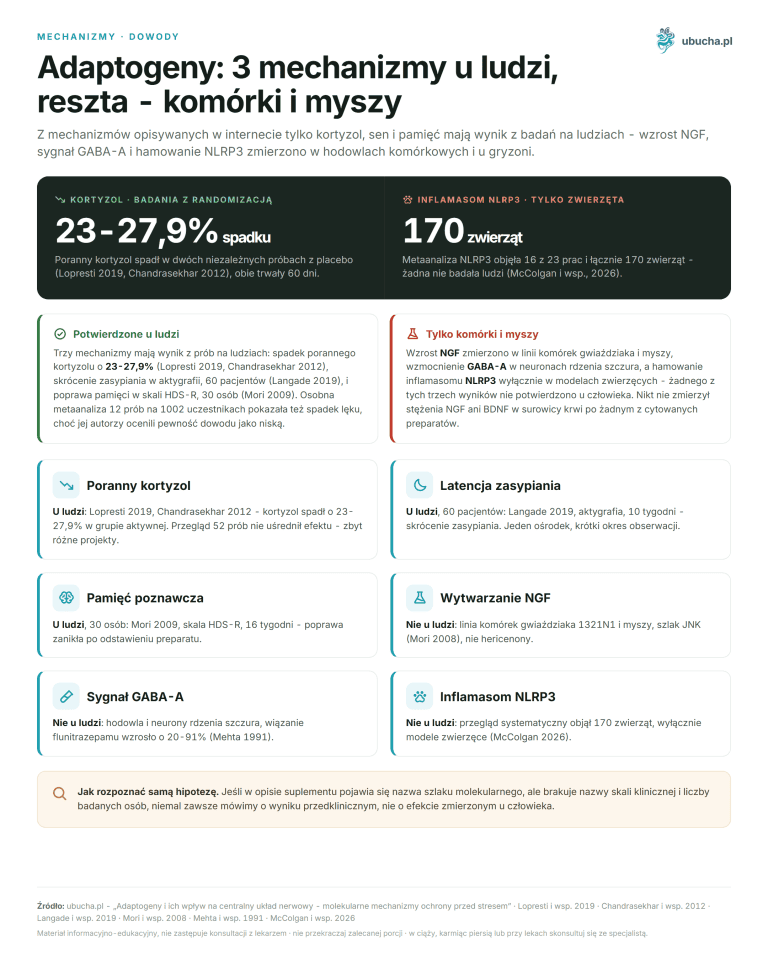
Less unequivocally than product descriptions claim. A systematic review of the molecular targets of cannabidiol states that CBD does not directly interact with the endocannabinoid system outside of in vitro conditions at supraphysiological concentrations (Ibeas Bih et al., 2015).
This statement undermines the most frequently repeated mechanism. The popular version goes: CBD inhibits the FAAH enzyme, raises the level of anandamide, and therefore calms. The authors of the review counted over 65 distinct molecular targets attributed to CBD in the literature and rejected most of them, indicating that some effects were observed only at concentrations unattainable in the body. The final conclusion is firm: the action of CBD in neurological diseases very likely does not occur through the endocannabinoid system.
What remains? Clinical observation without a confirmed mechanism. In a series of 72 patients, anxiety decreased in 79.2% of subjects, and sleep improved in 66.7%, with the improvement in anxiety being more durable (Shannon et al., 2019). If one seeks a hypothesis consistent with this data, the closest is that CBD acts on tension, and sleep improves secondarily.
For the reader, this makes practical sense. If your insomnia does not have an anxiety component, then the best-documented effect of CBD does not apply to you. A literature review on cannabinoids and sleep concludes that the evidence is insufficient for routine use in any sleep disorder (Suraev et al., 2020).
What do clinical studies on CBD and sleep really show?
They show three results that are difficult to reconcile into one advertising sentence. A case series suggests improvement, an older trial in insomnia patients required a very high dose, and a controlled study with polysomnography showed nothing. All three are true.
The most frequently cited is a retrospective analysis of records from 72 adult psychiatric patients, in which sleep improved in 48 individuals in the first month. The authors themselves note that the sleep result varied in subsequent months, unlike the stable improvement in anxiety, and that the study was not randomized (Shannon et al., 2019).
An older work is more interesting in this regard because it had a control group and a comparative drug. Fifteen people with insomnia received 40, 80, or 160 mg of CBD, placebo, or 5 mg of nitrazepam. Only the group taking 160 mg reported longer sleep than the placebo group; at all three doses, participants remembered dreams less frequently (Carlini and Cunha, 1981).
The third result is the most methodologically robust. In a crossover double-blind design, 27 healthy volunteers received 300 mg of CBD or placebo half an hour before an eight-hour polysomnographic recording, and no significant differences were found (Linares et al., 2018). The study involved healthy individuals, so it does not negate the result in patients, but it does negate the thesis that CBD “deepens sleep” in everyone.
Does CBD change REM and NREM sleep phases?
In the available polysomnographic recording, it does not change them in a measurable way. The conclusion of the authors of the study with 300 mg is that acute administration of anxiolytic CBD does not seem to interfere with the sleep-wake cycle, and the results suggest that CBD does not disrupt the normal architecture of sleep (Linares et al., 2018).
This must be read carefully, as the difference is fundamental. “Does not disrupt sleep architecture” is a statement about safety. It resolves the comparison with benzodiazepines and antidepressants, which change the structure of sleep, and that is all. It does not mean, however, that CBD prolongs deep sleep, although both theses appear interchangeably in consumer texts, sometimes linked to the same work.
Circulating numbers online about extending the NREM phase by several percent after 300 to 600 mg of CBD have no support in this study or in the pharmacokinetics review to which they are sometimes attached. If you encounter such a value with a reference, check whether the work under it actually performed polysomnography.
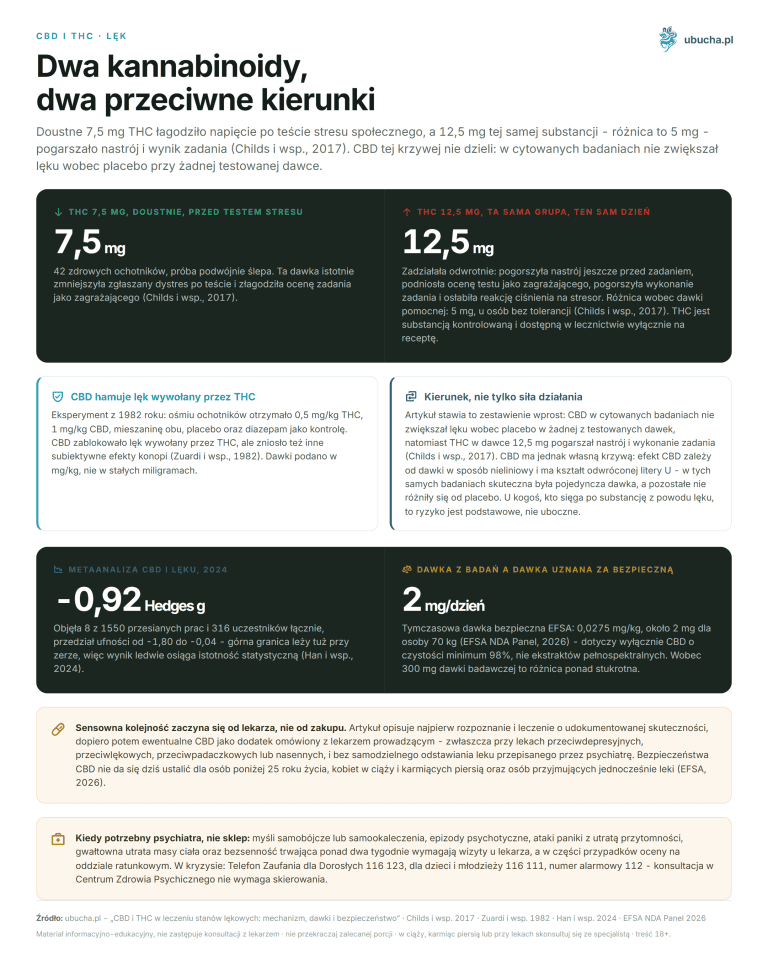
THC behaves differently, and this is a real difference between the two cannabinoids. We develop this topic separately in the entry on the impact of THC on sleep architecture. For the record: a literature review on cannabis and sleep summarizes that THC may shorten sleep latency but long-term may worsen its quality (Babson et al., 2017).
How to dose CBD for sleep and when to take it?
There is no established dose because there are no studies that have established it. The principle provided by the cannabinoid pharmacokinetics review is “start low and go slow,” with careful observation of desired and undesired effects (Lucas et al., 2018).
Instead of an invented schedule, it is worth seeing what doses have actually been studied and what came of them. The table below shows why the popular “25 to 175 mg” is misleading: it is the range between a typical dose and one exception, not a therapeutic range.
| Dose | Study | What came of it |
|---|---|---|
| 25 mg per day, almost all patients | series of 72 cases, Shannon et al., 2019 | sleep improvement in 66.7% in the first month, result varied over time |
| 50 or 75 mg per day, handful of patients | same case series | no separate analysis for these doses |
| 40 and 80 mg at once | 15 people with insomnia, Carlini and Cunha, 1981 | no significant difference compared to placebo |
| 160 mg at once | same trial | significantly longer sleep as reported by participants |
| 300 mg at once | 27 healthy volunteers, Linares et al., 2018 | no significant changes in polysomnography |
The timing of administration depends on the form, and the absorption rate is less well studied than suggested by tables online. A systematic review of CBD pharmacokinetics in humans states that absolute bioavailability has been reliably measured only for the inhalation route, where after smoking it was about 31%; for the oral and sublingual routes, such measurements have not been performed in humans (Millar et al., 2018). The maximum concentration is reached from zero to four hours after administration and increases after a meal, which in practice means that a capsule is taken earlier than drops.
How does CBD compare to melatonin and sleeping pills?
It falls outside the guidelines, which sounds worse than it is in reality. The pharmacological guidelines of the American Academy of Sleep Medicine do not include CBD at all, and among over-the-counter agents, they speak against melatonin and valerian in chronic insomnia (Sateia et al., 2017).
| Agent | AASM 2017 Guidelines Position |
|---|---|
| zolpidem, eszopiclone, temazepam, zaleplon, triazolam | suggested due to lack of treatment, weak recommendation |
| doxepin, ramelteon, suvorexant | suggested in indicated forms of insomnia, weak recommendation |
| melatonin | suggested not to use in chronic insomnia |
| valerian, tryptophan, diphenhydramine, trazodone | suggested not to use |
| CBD | not present in guidelines, lack of sufficient studies |
The recommendation against melatonin concerns chronic insomnia and does not rule out its use in circadian rhythm disorders. A meta-analysis of 19 studies involving 1683 people with primary sleep disorders showed a reduction in sleep onset by 7.06 minutes and an increase in sleep by 8.25 minutes, which is a real but modest effect; the authors note that it does not diminish with continued use (Ferracioli-Oda et al., 2013). We discuss dosing more broadly in the entry on melatonin for sleep.
Above all, there is a recommendation that does not concern any substance. The American College of Physicians recommends cognitive-behavioral therapy as the initial treatment for chronic insomnia in all adult patients, and pharmacotherapy is only allowed after its failure (Qaseem et al., 2016). This is the only recommendation with “strong” strength in this entire set.
Do CBN and full spectrum work better for sleep?
There is no data to confirm this. CBN is formed from the oxidation of THC in aging raw material, and its reputation as a “sleep cannabinoid” comes from observations of aged flower from the 1970s, not from controlled trials in humans.
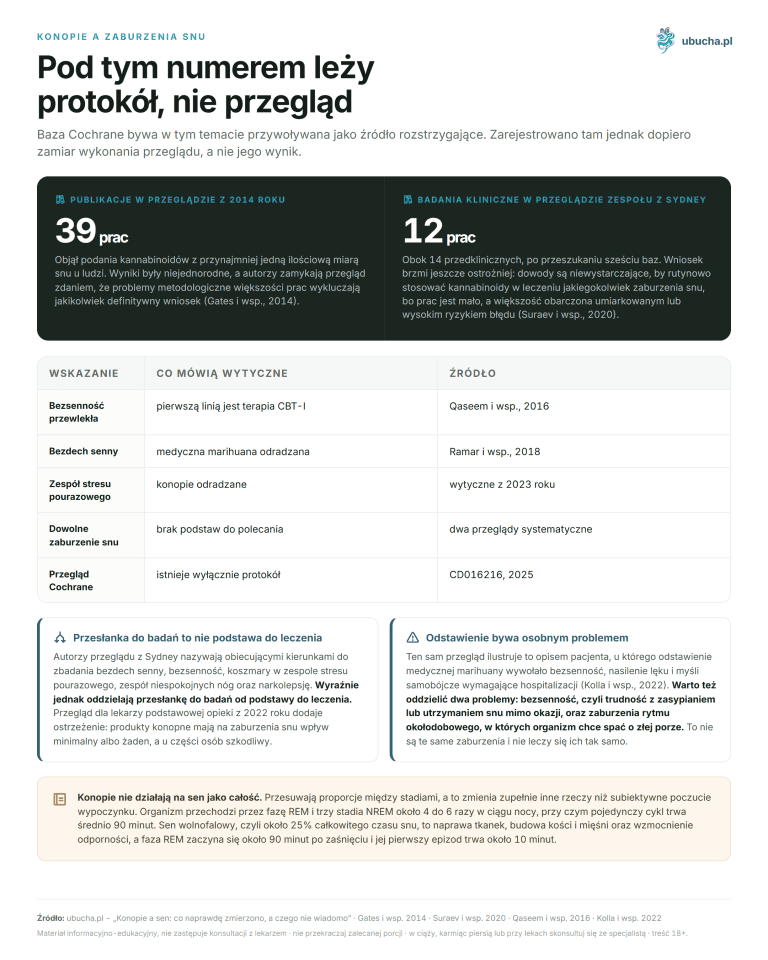
A systematic review of cannabinoids in sleep disorders included 14 preclinical studies and 12 clinical studies, concluding that there is no basis for the routine use of any of these substances, with moderate or high risk of error in most studies (Suraev et al., 2020). CBN does not have a separate, stronger position in this comparison.
With the entourage effect, the matter is more nuanced. Russo’s review describes myrcene, linalool, and beta-caryophyllene as compounds with real pharmacological activity, present in the diet and considered safe, and proposes a hypothesis of synergy with cannabinoids. However, the author writes about synergy “if proven,” formulating a research program rather than a conclusion (Russo, 2011).
The practical consequence is that the choice between isolate and broad spectrum should be based on something other than promised synergy. Sensible criteria include the presence of a certificate of analysis for a given batch, the content stated in milligrams, and information about THC content, which is important for workplace testing. We compare types of preparations in the entry on choosing CBD oil.
How to combine CBD with other sleep supplements?
Carefully and with lower expectations than suggested by sets sold as “sleep stacks.” The two most common ingredients in such sets, melatonin and valerian, have a recommendation against their use in chronic insomnia in AASM guidelines (Sateia et al., 2017).
This does not mean that combining makes no sense in any situation. It means that there are no studies comparing CBD with melatonin against CBD alone and showing the superiority of the combination. Claims of synergy come from product descriptions, not clinical trials, and should be treated as such when making purchasing decisions.
A separate issue is the safety of combining, and here the data is more specific. A pharmacokinetics review warns that administering cannabis together with other central nervous system depressants adds to sedation, and pharmacokinetic interactions may occur through the inhibition of enzymes and transporters (Lucas et al., 2018). Alcohol as an “enhancer” of evening calm is ruled out for the same reason.
If you still want to test combinations, do so methodically. Add one ingredient at a time, leave at least two weeks for evaluation, and keep a sleep diary. Without a record, you will not distinguish the effect of the preparation from the natural variability of the night, which in people with insomnia can be greater than any of these effects.
When will CBD not work and what to do then?
The most important case is obstructive sleep apnea. The American Academy of Sleep Medicine states that medical cannabis and its synthetic extracts should not be used to treat apnea due to unreliable administration methods and insufficient evidence of efficacy, tolerance, and safety (Ramar et al., 2018).
The position goes further than is usually cited. AASM advocates for the removal of apnea from the list of conditions qualifying for medical cannabis programs and points out that the cannabinoid composition in products is variable and unregulated. The only agent with any data here is dronabinol from small pilot studies, where most patients reported drowsiness.
The practical warning signal is simple: loud snoring with pauses in breathing, daytime sleepiness despite sufficient hours of sleep, or morning headaches are reasons for diagnostics, not for changing the preparation. The same applies to unpleasant sensations in the legs before falling asleep and recurring nightmares.
There are also conditions where cannabinoids should not be used regardless of sleep quality. A pharmacokinetics review indicates that cannabis use is contraindicated in significant psychiatric and cardiovascular diseases, as well as in severe kidney or liver diseases, and older individuals, despite possible symptomatic benefits, are at greater risk of adverse effects than the rest of the population (Lucas et al., 2018).
If nothing changes after a few weeks, it is worth reversing the order of actions relative to intuition. First, check if insomnia is not secondary: thyroid, iron deficiency, depression, pain. Then reach for cognitive-behavioral therapy, which the guidelines place first. Increasing the dose of the supplement is the step with the least justification on this list.
What does CBT-I therapy consist of?
It consists of several techniques used together, and it is this multi-component nature that accounts for its effectiveness. The 2023 guidelines call multi-component cognitive-behavioral therapy the gold standard for treating chronic insomnia and indicate it as the first line of action (Drager et al., 2023).
The first component is stimulus control, which means rebuilding the association of the bed with sleep. In practice, this means going to bed only when feeling sleepy, getting out of bed after several minutes of sleepless lying, and removing activities that keep one awake from the bedroom. The second is sleep restriction: temporarily shortening the time spent in bed to the actual sleep time, then gradually extending it as improvement occurs.
The third component concerns thinking about sleep. People with insomnia usually have an elaborate set of beliefs about what will happen after a sleepless night, and these beliefs amplify evening arousal. Working on them is part of the therapy, as are relaxation techniques and education about sleep physiology.
Why is this important in a text about a supplement? Because it changes the order of decisions. The American College of Physicians recommends CBT-I as the initial treatment for all adults with chronic insomnia, and pharmacotherapy is only allowed after its failure and after discussing the benefits and harms with the patient (Qaseem et al., 2016). CBD may lower evening tension enough to make it easier to implement these techniques, but it will not replace them. In Poland, the availability of therapists is limited, so it is worth asking about programs conducted remotely.
What are the side effects and interactions of CBD?
The best-documented symptom is diarrhea. In a meta-analysis of 12 randomized placebo-controlled trials involving 803 participants, excluding trials on childhood epilepsy, the only adverse effect significantly associated with CBD was indeed diarrhea (Chesney et al., 2020).
In the full set, the list is longer: drowsiness, sedation, decreased appetite, more frequent study dropouts, and abnormal liver function test results. The associations regarding drowsiness and abnormal liver function tests were limited to studies on childhood epilepsy, where CBD was administered together with clobazam or valproate. This indicates drug interactions as a source of risk, not CBD itself.
A safety review by Iffland lists fatigue, diarrhea, and changes in appetite and body weight as the most frequently reported symptoms, and notes that CBD’s impact on liver enzymes, drug transporters, and interactions requires further clinical research (Iffland and Grotenhermen, 2017). A WHO report states this similarly: CBD is generally well tolerated, and reported adverse effects may result from interactions with medications already being taken (WHO ECDD, 2018).
This same report resolves the question of addiction: in humans, CBD shows no signs of abuse potential or addiction. If you are taking medications regularly, especially anticonvulsants or anticoagulants, introduce CBD to your treating physician instead of deciding for yourself based on the manufacturer’s leaflet.
Is CBD legal in Poland and which oil to choose?
cannabidiol is not listed in controlled substance lists, so its sale is not prohibited. A separate issue is the raw material: the threshold distinguishing industrial hemp from others is 0.3% dry mass and is counted as the sum of delta-9-THC and tetrahydrocannabinolic acid, rounded to one decimal place.
The basis is Article 4 point 5 of the Act of July 29, 2005 on Counteracting Drug Addiction (Journal of Laws 2023 item 1939), as amended by the Act of March 24, 2022 (Journal of Laws 2022 item 763), effective from May 7, 2022. Until May 6, 2022, the threshold was 0.20%, so older articles provide a different value and are no longer current.
One formulation repeated online requires correction. The national threshold corresponds to the EU threshold of 0.3% from Regulation (EU) 2021/2115, but it does not follow from it: these are two separate regulations with the same numerical value. The regulation often cited in many texts, 1307/2013, established 0.2% and was repealed on January 1, 2023.
When choosing a product, the criteria worth considering are mundane. A certificate of analysis for a specific batch, the content stated in milligrams on the package, not just in percentages, clearly indicated carrier oil, dark glass, and a readable expiration date. Therapeutic claims on the supplement label are a warning signal about the seller, as CBD is not registered as a medicinal product for treating insomnia.
Summary: is CBD for sleep a good choice?
This is a defensible choice for insomnia with an anxiety component and difficult to defend as a general solution. The evidence for efficacy is weak, the evidence for safety of sleep structure is decent, and the guidelines do not mention CBD at all due to a lack of studies of appropriate quality.
Three things are worth remembering from this text. First, in the only controlled study with polysomnography, 300 mg of CBD did not change anything measurable, and the authors’ conclusion concerns not disrupting sleep architecture, not improving it. Second, the recommendation with the greatest strength is cognitive-behavioral therapy, not any preparation. Third, in the case of suspected sleep apnea, the guidelines’ position is directly against the use of cannabis.
If you decide to try, treat it as an experiment with one variable. The lowest dose that can be measured in your preparation, a fixed time of administration, a sleep diary for at least two weeks, and a conversation with your doctor if you are taking anything regularly. Insomnia lasting longer than three months requires diagnostics, not another bottle.
Frequently Asked Questions
Does CBD really help with insomnia?
The data is weak and ambiguous. In a retrospective series of 72 patients, sleep improved in 66.7% in the first month, but the result varied over time (Shannon et al., 2019). A systematic review finds no basis for the routine use of cannabinoids in sleep disorders.
How much CBD should I take for sleep and when should I take it?
There is no established dose. In a series of 72 cases, almost all patients received 25 mg per day, and one person reached 175 mg (Shannon et al., 2019). A pharmacokinetics review recommends starting with the lowest dose and increasing slowly while observing symptoms.
Does CBD affect REM and NREM sleep phases?
In a double-blind study, 300 mg of CBD did not cause significant changes in an eight-hour polysomnographic recording in 27 healthy volunteers (Linares et al., 2018). The authors state that CBD does not disrupt the normal architecture of sleep, which is a conclusion about safety, not efficacy.
Is CBD safer than melatonin and sleeping pills?
AASM guidelines suggest not using melatonin or valerian in chronic insomnia, and recommend sleeping pills only weakly (Sateia et al., 2017). CBD is not present in these guidelines, so the comparison boils down to a lack of data on one side.
Is it worth combining CBD with melatonin or magnesium?
There are no studies comparing such a combination with CBD alone, so the advantage of combining remains a marketing statement. However, the pharmacokinetics review warns that combining cannabis with central nervous system depressants adds to sedation (Lucas et al., 2018).
Does CBN work better for sleep than CBD?
There is a lack of data to confirm this. A systematic review of 14 preclinical studies and 12 clinical studies finds no basis for the routine use of any cannabinoid in sleep disorders (Suraev et al., 2020). The thesis about CBN as a sleep cannabinoid comes from observation, not controlled trials.
Can CBD help with sleep apnea?
No, and it should not be tried there. The American Academy of Sleep Medicine states that medical cannabis and its synthetic extracts should not be used to treat obstructive sleep apnea due to unreliable administration methods and insufficient evidence (Ramar et al., 2018).
Can CBD for sleep cause side effects?
Excluding studies on childhood epilepsy, the only adverse effect significantly associated with CBD in a meta-analysis of 12 studies was diarrhea (Chesney et al., 2020). More serious signals appeared where CBD was combined with other medications, so caution mainly concerns combinations.
If after reading you want to compare available preparations, check the hemp oils section.
This article is for informational and educational purposes and does not constitute medical advice. Before starting to use cannabis or CBD for therapeutic purposes, consult your doctor, especially if you are taking other medications, are pregnant, or breastfeeding.
Author: Michał Waluk · Published: 2026-04-27 · Updated: 2026-08-10