
CBD and Sex - How Cannabidiol Affects Intimate Life? Guide 2026
Does CBD support intimate life? We check what studies say about cannabis, libido, pain during intercourse, and anxiety, and where evidence ends.
Sexual dysfunction is reported by 43% of women and 31% of men aged 18 to 59, according to a representative American study published in JAMA (Laumann, JAMA, 1999). The problem is common, yet discussing it remains difficult. Into this gap, cannabidiol marketing eagerly places itself: oils, gels, and lubricants advertised as libido support or natural aphrodisiacs. This text examines which of these promises can be supported by concrete scientific work and which must be set aside. We reviewed every citation previously used here and retained only existing studies that say exactly what we attribute to them. You will learn what human studies really concerned, where knowledge ends, and when a sexual problem requires a doctor rather than a supplement.
KEY INFORMATION
- Sexual dysfunction is reported by 43% of women and 31% of men in a sample of 1749 women and 1410 men (Laumann, JAMA, 1999).
- There is no randomized clinical trial in which cannabidiol alone was given to humans and libido, erection, or orgasm was measured.
- The two largest survey studies concerned cannabis, not CBD, and found no association between cannabinoid composition and sexual function (Kasman, Sexual Medicine, 2020).
- One minute of contact with mineral oil reduced latex condom strength by about 90% (Voeller, Contraception, 1989).
- CBD safety cannot currently be established for people under 25, pregnant or breastfeeding women, and those taking medications (EFSA, 2026).
What is really known about CBD and sex?
There is not a single randomized clinical trial in which cannabidiol alone was given to humans and libido, erection, or orgasm was measured. This is the starting point for any honest discussion on the topic, as everything else is indirect inference, not a direct result.
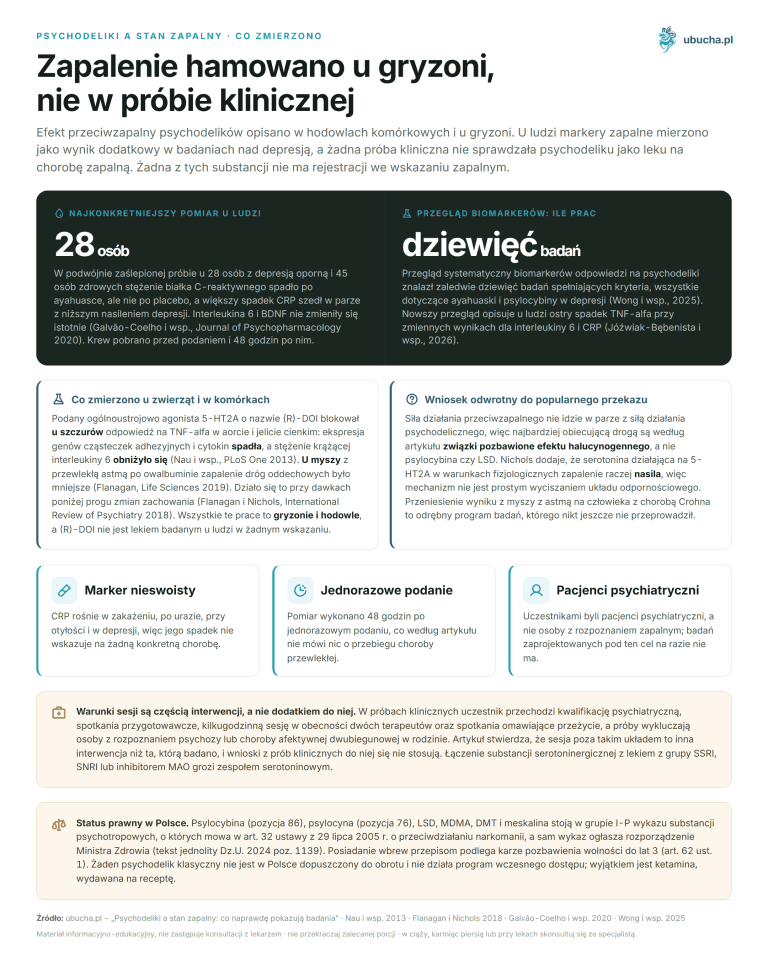
Available data fall into three groups. The first is studies on cannabis as a plant: surveys among dispensary clients and analyses of large population surveys. They do not concern cannabidiol but cannabis use, where THC is the main substance. The second group is studies on CBD itself in other indications, mainly anxiety. They allow inference about mechanism, not bedroom effect. The third group is research on the physiology of the endocannabinoid system, showing that this system participates in sexual response.
Marketing jumps between these groups as if they spoke about the same thing. Survey results from cannabis users end up in descriptions of cannabidiol oil, and receptor mechanism studies turn into clinical promises. The market scale explains the temptation: since nearly half of women and almost a third of men report sexual dysfunction, the promise of a simple solution sells itself.
The honest answer is this: cannabidiol may act on factors that impair sex, namely anxiety and pain, but not on libido itself. This difference is not formal. It determines who the product may help and who will spend money and feel cheated. The rest of the article maintains this boundary with every claim, including where earlier versions did not.
There is also a question rarely asked: why are such studies simply not available? There are several reasons, none concerning efficacy. Sexology studies are methodologically difficult because endpoints are subjective, placebo effect is especially strong, and results depend also on the partner and relationship context. Additionally, the legal status of cannabis hindered research for decades, and no entity was willing to fund costly trials on a non-patentable substance. Lack of evidence is therefore not evidence of lack of effect. It is simply lack of evidence and must be read as such.
How does the endocannabinoid system participate in sexual response?
The strongest evidence of this system’s involvement in human sexual response comes from blood measurements, not surveys. Fuss’s team measured endocannabinoid levels before masturbation to orgasm and after, in two studies, the second being a crossover with single-blind and control condition (Fuss, Journal of Sexual Medicine, 2017).
The result is narrow and thus credible. After orgasm, 2-arachidonoylglycerol (2-AG) levels significantly increased. Anandamide remained unchanged. Oleooylethanolamide and palmitoylethanolamide remained unchanged in the first study, as did arachidonic acid and cortisol. In the second study, 2-AG increase occurred only after orgasm, not in the control condition, ruling out explanation by arousal or time passage.
The authors formulate a hypothesis, not a recommendation. 2-AG release may be part of the rewarding phase of sexual response, similar to eating, physical exercise, and social contact. Knowledge ends here. No one has shown that raising endocannabinoid levels externally reproduces this feeling or that cannabidiol raises 2-AG in humans at all.
This distinction is practically important for reading labels. The statement that the endocannabinoid system participates in sexual pleasure is true and well documented. The statement that cannabidiol oil enhances this pleasure is not true, as no one has measured it. The first is often printed on packaging so the reader adds the second themselves.
What did the study on sexual function in women using cannabis show?
The most cited work on this topic has a different shape than its internet summaries suggest. Kasman’s team invited visitors to a US dispensary network to an anonymous online survey. 452 women responded, and sexual function was measured with the validated FSFI questionnaire (Kasman, Sexual Medicine, 2020).
The variable studied was frequency of cannabis use, not cannabidiol intake. The authors report the association as follows: more frequent cannabis use was linked to higher FSFI scores, with extreme groups scoring 29.0 and 26.7. Each additional use per week was associated with an increase in total score. Desire, arousal, orgasm, and satisfaction subscales also increased. The chance of classification as sexual dysfunction decreased by 21% per intensity level.
However, the most important sentence of this work is different and rarely appears in ads. Neither administration method nor chemotype (THC to CBD ratio) consistently affected FSFI scores or dysfunction risk. In other words, the authors found no advantage of cannabidiol-rich preparations.
Limitations are serious. This is a cross-sectional study without a control group, on people who came to buy cannabis, so selection bias is extreme. Association does not imply causation: women with better sexual function may simply be more likely to use cannabis. An earlier version of this article incorrectly attributed 811 participants and a 68.5% improvement in sexual experience to this study. Neither number is present.
Did men show the same results?
A twin study by the same team included men from the same dispensaries. 325 men with a mean age of 46.7 completed the survey, and sexual function was measured with the IIEF questionnaire. Erectile dysfunction was defined as IIEF-5 below 21 (Bhambhvani, Sexual Medicine, 2020).
The mean IIEF-5 score was 22.3, with 19.4% having erectile dysfunction. In univariate analysis, cannabis users more often had higher total scores and higher erection, orgasm, and satisfaction subscales. In multivariate analysis, the advantage remained for total score and two satisfaction subscales comparing those using cannabis six times a week to non-users.
The authors’ conclusion is more cautious than headlines. Differences were statistically significant but clinically likely small, and sample selection limits generalizability. As with women, administration method and cannabinoid composition were unrelated to sexual function.
For readers seeking help with erection, this means something simple. These two studies show that regular cannabis users score slightly better on sexual function questionnaires than non-users. They do not say cannabis caused this improvement or that cannabidiol is responsible. An earlier version of this article described improvement percentages allegedly from a 2021 Hocaoğlu study, which was not found in Europe PMC; the given identifier led to an article on coagulation disorders in obstetrics.
Is cannabis use associated with more frequent intercourse?
Yes, and this is the best documented observation in the whole area, though it concerns cannabis, not cannabidiol. The analysis included 28,176 women and 22,943 men from the US National Survey of Family Growth, designed to be representative of reproductive-age population (Sun, Journal of Sexual Medicine, 2017).
After adjusting for demographic and socioeconomic factors, women using cannabis monthly, weekly, and daily reported significantly higher intercourse frequency than never-users. In men, significant differences appeared with weekly and daily use. A general trend was visible: the more frequent the cannabis use, the higher the sexual contact frequency, in both sexes and all demographic groups.
The authors summarize: cannabis use is independently associated with higher intercourse frequency and does not appear to impair sexual function. This is a statement of no harm, not therapeutic benefit.
Limitations are the same as above. Data are self-reported, cross-sectional, and do not allow causality inference. People with more active social lives may both use cannabis and have sex more often without causal relation. An earlier version of this article cited the same work as evidence that high THC doses delay orgasm and reduce libido. The work says the opposite, and the assigned identifier led to an article on microRNA genes.
What is a cross-sectional study and why does it change conclusions?
A cross-sectional study measures characteristics of one group at one time point, without random assignment or follow-up. All three studies above have this design, and the only randomized study in this article concerns public speaking anxiety, not sex.
The consequence is serious: such design shows co-occurrence, not sequence. If cannabis users score better on sexual function questionnaires, at least three explanations exist. Cannabis improved sexual function. People with better sexual function use cannabis more. Or both depend on a third factor, e.g., health, age, relationship status, or risk-taking tendency.
Selection bias also applies. Kasman’s and Bhambhvani’s surveys were among people who came to buy cannabis at dispensaries. This group is by definition satisfied with the effect, as dissatisfied stopped buying and did not enter the study. The men’s study authors note selection bias as limiting generalizability.
Why do we write this for readers, not textbooks? Because the whole difference between reliable and unreliable descriptions of these studies lies in one verb. “Is associated with better outcome” is true. “Improves outcome” is not supported and appears almost always in product descriptions. When reading any supplement ad, this one verb test suffices in most cases.
Why does “CBD for libido” not follow from these studies?
For three reasons, each sufficient alone. First: all three studies measured cannabis use, not cannabidiol intake. Smoked or vaporized cannabis contains mainly THC, a substance with a completely different action profile, available in Poland only by prescription under medical supervision.
Second reason is stronger, coming from the studies themselves. Both in women and men, authors separately checked whether chemotype (THC or cannabidiol dominance) affected questionnaire results. It did not. If cannabidiol caused the observed difference, it should have appeared here but did not.
Third reason concerns inference direction. Cross-sectional studies show co-occurrence, not sequence. A person with a successful sexual life and low anxiety is more likely to use recreational substances than a person isolated at home with depression. The same result can be read exactly opposite to advertising claims.
The practical conclusion is that the claim cannabidiol raises libido has no support in any human study today. If you seek ingredients with separate scientific discussion on libido and hormones, more data exist for maca root than cannabis. We collected them in the text on maca properties regarding libido and hormonal balance. This is not a purchase recommendation, just pointing where evidence is stronger.
Does CBD reduce anxiety before intercourse?
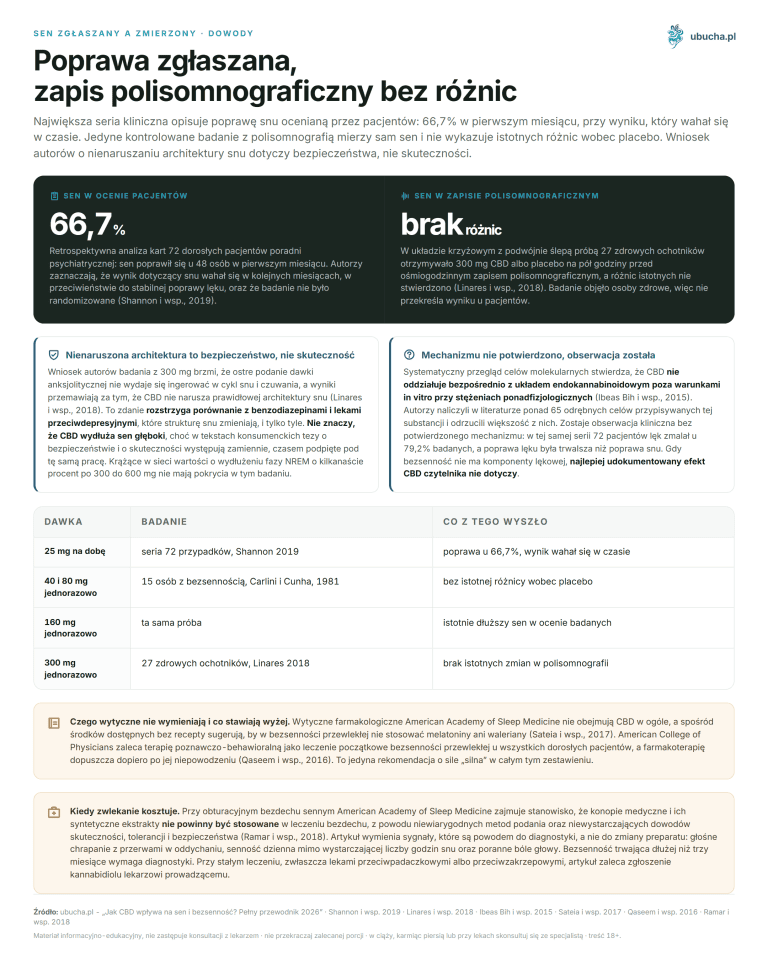
Here evidence finally concerns cannabidiol itself, though not sexual situations. In a randomized double-blind study, 24 untreated patients with social phobia received a single dose of cannabidiol or placebo 1.5 hours before a simulated public speaking test. A separate group of 12 healthy people without medication was included (Bergamaschi, Neuropsychopharmacology, 2011).
Cannabidiol significantly reduced anxiety, cognitive impairment, and discomfort during speech and lowered vigilance before the event. In the placebo group, negative self-assessment scores rose during the test, while in the cannabidiol group the increase was almost abolished. After drug administration, differences between patients and healthy controls disappeared in some measures.
A second study from the same group shows why more is not better. Sixty healthy volunteers were randomized to placebo, clonazepam, or one of three cannabidiol doses before a real public speech. Anxiety reduction occurred only with the intermediate dose. Neither lowest nor highest doses differed from placebo, confirming an inverted U-shaped dose-response curve (Zuardi, Frontiers in Pharmacology, 2017).
Applying this to sexual anxiety is a hypothesis, not a result. The mechanism fits, as performance anxiety in sex acts like stage fright: fear of failure raises sympathetic arousal, hindering physiological response and confirming the fear. However, no one has tested this in the bedroom. We discuss this more in the text on cannabis in anxiety disorders treatment.
Two takeaways for personal use. First: anxiety studies concerned a single dose before a specific stressful event, not daily supplementation for weeks. Second: performance anxiety in sex usually has a history, not just chemistry. Cognitive-behavioral therapy focused on sexuality has stronger evidence than any substance and does not interact with medications. If the problem lasts months and affects relationships, start there, not with a purchase.
Does CBD lower cortisol?
Not in the way sales pages describe. The only direct hormonal study involved 11 healthy volunteers in a double-blind design receiving placebo or oral cannabidiol in two sessions at least a week apart. Prolactin, growth hormone, and cortisol were measured (Zuardi, Braz J Med Biol Res, 1993).
Prolactin and growth hormone did not change. Cortisol behaved unexpectedly. In placebo sessions, its concentration dropped according to normal circadian rhythm from about 11.0 to 7.1 micrograms per deciliter after two hours. After cannabidiol, this physiological drop was significantly weakened, and at the higher dose cortisol after two hours was higher than baseline.
The authors concluded cannabidiol interferes with cortisol secretion. They did not say it lowers it. The observed change direction is opposite to what was attributed to this study in the previous article version, which stated a 30% cortisol reduction after public speaking test. There was no public speaking test in this study.
Why this matters to readers. The popular narrative of cannabidiol as a stress hormone reducer unlocking libido is based on this single study read backwards. The calming effect on subjective scales did occur, but the hormonal explanation added has no support. One study on eleven people is insufficient for any clinical conclusion.
Does CBD affect sex hormones?
There is no data allowing a positive answer, and the few existing data suggest no effect. The hormonal study above measured not only cortisol. Prolactin and growth hormone levels after cannabidiol did not differ from placebo (Zuardi, Braz J Med Biol Res, 1993).
Testosterone and estradiol were not measured in this study, and later human studies have not filled this gap. The claim that cannabidiol raises testosterone by lowering stress is a chain of three unproven links: that it lowers cortisol, which is unproven; that cortisol reduction raises testosterone in this mechanism; and that the effect is large enough to change anything clinically.
Data from the other side exist and are cautionary. The EFSA panel noted hormonal disturbances in animal studies after cannabidiol, including thyroid hormone changes and adrenal histopathology. Reproductive toxicity studies reinforced earlier concerns, and prenatal exposure showed long-term, sex-dependent neurodevelopmental effects (EFSA, 2026).
The practical conclusion for someone suspecting hormonal disorders is clear. Low libido with fatigue, muscle mass loss, or menstrual disturbances requires testing and endocrinologist visit, not supplementation. If deficiency is the cause, only doctor-supervised treatment based on blood test results is proven effective.
Does CBD help with erectile dysfunction?
No study has tested this. There is no randomized clinical trial of cannabidiol in erectile dysfunction, and the only data come from the questionnaire survey above, where cannabinoid composition was unrelated to IIEF results.
Erectile dysfunction is a symptom, not a disease. Causes include vascular, metabolic, neurological, hormonal, and psychogenic factors, and diagnosis changes management. Sudden erectile dysfunction in men over 40 can be the first sign of vascular disease, preceding cardiac symptoms by years. Taking a supplement instead of diagnosis costs time, not money.
First-line pharmacological treatment is based on phosphodiesterase type 5 inhibitors prescribed by a doctor and tailored to comorbidities. We do not provide efficacy percentages here, as numbers circulating in cannabidiol content, including previous article versions, were linked to a non-existent foundation posing as a urology journal. The domain given as European Urology does not resolve.
If you seek ingredients with a separate, better-documented discussion on blood flow and endothelium, we described them in the text on l-arginine and citrulline for erection and blood pressure. The overriding rule applies there too: supplements do not replace diagnosis, and new or sudden symptoms require a doctor visit first, not purchase.
Does CBD relieve pain during intercourse?
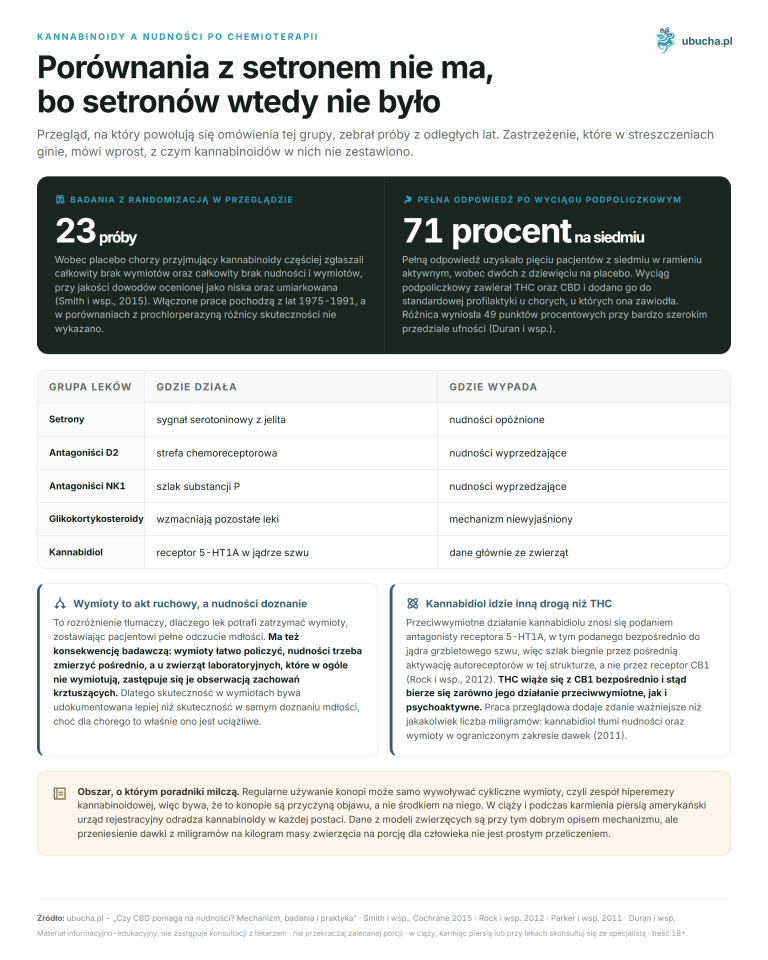
Pain during penetration, dyspareunia, is the most promising area for cannabis in sexology, but here too evidence concerns the whole plant, not cannabidiol. An Australian national survey included 484 women with surgically confirmed endometriosis. 76% used some self-help strategy, and among them 13% used cannabis (Sinclair, JOGC, 2020).
Self-rated pain reduction effectiveness was high at 7.6 out of 10. Over half of cannabis users reduced medication doses by at least half. Greatest improvement was reported in sleep and nausea/vomiting. Side effects occurred in one in ten and were mild.
Earlier article versions attributed a 7.3 out of 10 rating for dyspareunia to the same author. The number is different, and the endpoint too: the survey asked about pain generally, not pain during intercourse. This is a small difference on paper but large in practice, as dyspareunia can be distinct from menstrual pain and responds differently.
The mechanism possibly behind this effect is probable but unproven in humans. It involves pelvic floor muscle relaxation and pain conduction modulation. Note the limitation: none of these studies tested cannabidiol lubricants or gels, and topical forms act differently than oral preparations.
Dyspareunia has many causes, which determine management. Pain at entry is often linked to pelvic floor muscle tension, mucosal atrophy, or chronic vulvar pain. Deep pain is more often associated with endometriosis, adhesions, and pelvic inflammation. Diagnosis is by a gynecologist, and the difference matters practically, as pelvic floor physiotherapy remains the best-documented treatment for muscle tension, which no preparation replaces.
What is known about cannabis in endometriosis?
A second study by the same group analyzed data not obtainable by one-time surveys. They examined archived symptom tracking app entries from 252 people with endometriosis and 16,193 cannabis use sessions recorded from April 2017 to February 2020 (Sinclair, PLoS One, 2021).
The most common administration route was inhalation, used in 67.4% of sessions, and the most common reason for cannabis use was pain, present in 57.3% of entries. However, the greatest self-rated improvement was in gastrointestinal symptoms, though these were a less frequent reason for use. Inhaled forms performed better for pain, oral forms for mood and digestive symptoms.
The THC to cannabidiol ratio had a statistically significant but clinically small effect, dependent on administration route. This is another place where data do not support isolating cannabidiol as the active ingredient. The authors conclude with a call for urgent clinical trials, as all data are retrospective and self-reported.
For someone with endometriosis, the practical consequence is clear. Causal treatment is by a gynecologist, and cannabis preparations remain symptom-relief methods chosen outside healthcare and without dose control. Pain during intercourse persisting despite treatment requires medical reassessment, not supplement dose increase.
It is also worth noting what these two studies say together, though not visible separately. In the 2020 survey, 13% of women with endometriosis used cannabis, a minority, and did so outside healthcare. The app analysis shows how this practice really looks: inhalation dominates, a route requiring prescription in Poland and involving pharmacy dried flower, not store-bought preparations, with self-determined dosing. Applying these results to cannabidiol drops bought in a shop is thus a double shortcut, changing both substance and administration method.
What is vulvodynia and what place does CBD have in it?
Vulvodynia is chronic vulvar pain without identifiable organic cause, lasting over three months and often preventing intercourse. The phenomenon is more common than diagnosis numbers suggest. Population studies in two US regions found symptoms corresponding to vulvodynia reported by 7-8% of women up to age 40 (Harlow, Am J Obstet Gynecol, 2014).
Authors collected questionnaires from 5440 women in Boston area and 13,681 in Minneapolis-Saint Paul, aged 18-40. 48% in one region and 30% in the other never sought help, and among those who did despite healthcare access, over half received no diagnosis. This means the biggest barrier is not lack of medication but lack of diagnosis.
There are no studies on cannabidiol in vulvodynia. There are also no randomized trials on cannabis for this indication. All that can be said today is that neuropathic pain mechanisms may be shared between vulvodynia and other chronic pain syndromes studied with cannabis, which is a rationale for research, not use.
The conclusion for female readers is different from market suggestions. For chronic vulvar pain, the first step is to find a specialist who diagnoses and offers proven treatments, including urogynaecological physiotherapy. Cannabidiol products may at most be an adjunct agreed with the treating doctor, not a symptom solution.
How much CBD is absorbed from sublingual oil?
No one has measured this. A systematic review of cannabidiol pharmacokinetics in humans included 24 studies out of 792 screened and checked what is really known about absorption (Millar, Frontiers in Pharmacology, 2018).
Absolute bioavailability was established only for inhalation at 31%. No other administration route was studied with intravenous comparison, despite injectable preparations being available. Half-life ranged from 1.4 to 10.9 hours after mucosal spray, 2 to 5 days with chronic oral dosing, and 31 hours after smoking. Maximum concentration increased with dose and was higher after meals and in fat-based preparations.
The authors conclude firmly: data are scarce and inconsistent despite widespread human use. Bioavailability tables circulating online with separate values for drops, capsules, and vaporization have no source in this review. An earlier article version linked such a table to a study on terpenes and entourage effect in mood disorders, which contains no absorption data.
The practical consequence concerns product comparison. If a manufacturer promises multiple times higher absorption, ask for the source and check if it concerns humans, not animal models or in vitro studies. With current knowledge on oral cannabidiol absorption, such a claim cannot be reliably justified.
Is there a safe CBD dose?
The European Food Safety Authority updated its position on cannabidiol as novel food in 2026, and the answer is more cautious than most readers expect (EFSA, 2026).
The panel reviewed animal and human studies published up to June 2024 and found previously recognized data gaps remain. Animal studies showed consistent liver toxicity, with liver mass and histopathological changes as sensitive endpoints. Human studies indicated hepatotoxic potential, especially when cannabidiol was used with other drugs. Hormonal disturbances including thyroid hormone changes and prenatal neurodevelopmental effects were also observed.
Based on this, the panel derived a provisional safe dose using benchmark dose method with an uncertainty factor of 400. The value applies only to supplements with at least 98% pure cannabidiol, without nanoparticles, and with excluded genotoxicity. It is not a therapeutic recommendation or a dose for use before intercourse.
The sentence standing independently in this article is: cannabidiol safety cannot currently be established for people under 25, pregnant or breastfeeding women, and those taking medications. Since this text concerns disorders often accompanied by pharmacotherapy, we consciously do not provide any doses here. Dosage is decided by a doctor familiar with your medications and test results.
How does CBD interact with drugs used in sexology?
Caution is based on liver enzyme inhibition. In microsome studies from cells overexpressing specific isoenzymes, cannabidiol competitively inhibited CYP3A4, CYP2B6, CYP2C9, CYP2D6, and CYP2E1, and THC and its metabolites inhibited others (Nasrin, Drug Metabolism and Disposition, 2021).
These are laboratory, not clinical data, and authors describe them as: static modeling suggests possible pharmacokinetic interactions with drugs metabolized mainly by CYP2B6, CYP2C9, and CYP2D6. Practically, inhibition may raise blood drug levels but does not guarantee it in any individual.
Four drug groups are relevant here: erectile dysfunction drugs from phosphodiesterase inhibitor group, antidepressants, anxiolytics, and hormonal contraception. All are fully or partly metabolized by enzymes from the same family. Pathway overlap alone does not determine effect but suffices for the decision to combine to be made by a doctor, not a seller.
It is important to understand why in vitro data do not translate directly to the clinic. Concentrations used in test tubes are often higher than blood levels after taking the preparation, and cannabidiol absorption in humans is poorly measured as above. On the other hand, full-spectrum preparations contain other cannabinoids whose metabolites inhibited other isoenzymes in the same study. Reasonable practice is not to calculate risk but to inform the doctor about everything you take.
A separate note concerns the EFSA position cited above. The panel explicitly states that liver toxicity signals in humans were more pronounced with concomitant drug use. A person taking medications chronically is thus the one with the most hypothetical benefit and best documented risk. If you take anything regularly, consult a doctor or pharmacist before purchase, not after.
Is CBD lubricant safe with condoms?
It depends solely on the product base and is one of the few claims in this article supported by direct measurement with strong effect. Latex condoms were exposed to mineral oil, a common ingredient in balms and products used during intercourse, then tested with standard air burst test (Voeller, Contraception, 1989).
Sixty seconds of contact reduced condom strength by about 90% measured by burst volume. Burst pressure also dropped, though less. Ready products containing mineral oil, including popular baby balms and oils, also compromised condom integrity. For comparison, five minutes contact with glycerol did not significantly affect any parameter, nor did aqueous nonoxynol-9 solution.
The shelf implication is direct. Intimate cannabidiol products often have an oil base, as cannabidiol dissolves well in oil and poorly in water. If you use latex condoms, choose only water- or silicone-based products and check ingredients rather than trusting the word “natural” on the label.
Two final notes. Polyurethane condoms do not have this limitation but do not assume this without checking packaging. Silicone products destroy silicone accessories, so base choice depends on what else is used. Condom manufacturer instructions prevail in case of conflict.
A separate issue is mucosal tolerance. A product that does not damage latex may still irritate if it contains many fragrances or preservatives. Burning, itching, and redness after a new product are reasons to stop use, not increase amount. If symptoms persist after stopping for more than a few days, gynecological evaluation is needed, as irritation can be indistinguishable from infection without examination.
How to read the label of an intimate CBD product?
Start with the base, as it is the only feature with documented safety impact. Look for “water” or “silicone” at the start of the ingredient list if latex condoms are involved. Names like coconut oil, MCT oil, petroleum jelly, liquid paraffin, and mineral oil indicate an oil base. Mineral oil was lab tested, and caution with other oils arises from the same latex physicochemical property.
Second is declared content and administration method. The manufacturer should state cannabidiol amount per package and per serving, not just a high concentration claim. A certificate of analysis with batch number allows verification of the claim and checks for heavy metals, solvent residues, or pesticides.
Third is the rest of the composition. Intimate products are often enriched with essential oils, warming extracts, and fragrances. On mucosa, these often cause irritation, and warming or tingling sensations attributed to cannabidiol usually come from these additives. The shorter the ingredient list, the easier to identify the cause of reaction.
Fourth concerns promises. If the description claims multiple times better absorption, libido increase, or drug-comparable effect, ask the seller for the scientific study supporting it and check if it concerns humans. With current knowledge, none of these three claims can be supported by human studies, and lack of answer is itself an answer.
Is CBD an aphrodisiac?
Not in any meaning defensible by evidence. An aphrodisiac by definition directly increases libido or arousal. No human study has shown such an effect of cannabidiol, and two closest studies found no association between cannabinoid composition and sexual function.
Where does the sense of effectiveness come from? First, from a real anxiolytic effect shown in public speaking studies. Anxiety is one of the strongest inhibitors of sexual response, so its reduction is felt as increased desire, though the mechanism is different. Second, from expectation, which is very strong in sexology as sexual response depends on attention and mood.
Third, from product construction. Intimate products usually contain more than cannabidiol: warming essential oils, plant extracts, moisturizers. The skin effect comes from the whole formulation but is attributed to the single named ingredient.
A practical test for readers is simple. If a product description promises increased desire, ask for a study where cannabidiol alone was given to humans and desire measured. No such study exists, so the promise comes from marketing, not science. This does not mean the product is useless, only that it is sold under an unsupported claim.
There is also a legal reason such claims should not appear on packaging. Products sold as supplements or cosmetics cannot claim medicinal properties or make health claims without approval. Promising libido or erectile function improvement is such a claim. If you see it on a label, you learn not only about the product but also about how the seller treats other label declarations.
When does a sexual problem require a doctor?
Always when it appears suddenly, worsens, or is accompanied by other symptoms. Sudden erectile dysfunction in men over 40 can be an early sign of vascular disease and requires internal medicine or cardiology evaluation, regardless of other test results. Post-coital bleeding in women always requires gynecological assessment.
Other reasons to see a doctor include: vulvar pain lasting over three months, pain during penetration not relieved by lubrication, libido decrease lasting over six months, new orgasm difficulties in previously unaffected persons, and sexual anxiety impairing daily functioning. Each condition has recognizable causes, including diabetes, hormonal disorders, depression, and medication side effects.
A separate group is symptoms appearing after starting a new drug. Sexual dysfunction is a common and well-described side effect of several antidepressant groups, and the solution is changing the drug with a doctor, not adding a supplement. Stopping psychiatric medication independently is risky and may worsen the underlying condition.
We write this for practical reasons. A supplement bought instead of a visit not only does not treat but delays diagnosis by months. For some causes, e.g., vascular, this time has measurable health cost. Cannabidiol may at most accompany doctor-supervised treatment if deemed safe with other medications.
Who to see if unsure where to start? For genital symptoms, urologist for men and gynecologist for women. For libido decrease without local symptoms, a family doctor who orders basic tests and reviews medications. For relationship, anxiety, or trauma difficulties, a sexologist often with couple therapy. None of these paths exclude others, and most sexual problems require more than one.
What does Polish law say about cannabis products?
The legality threshold is based on THC content in plant material and is important to know precisely, as several incorrect versions circulate. Industrial hemp in Polish law is Cannabis plants excluding seeds, containing no more than 0.3% total delta-9-THC and tetrahydrocannabinolic acid in flowering tops, calculated on dry weight.
Three details affect lab test results. First, the threshold concerns the sum of delta-9-THC and THCA, not delta-9-THC alone, so material with low THC and high THCA may exceed the limit. Second, the sum is rounded to one decimal place. Third, the basis is Article 4 point 5 of the Act on Counteracting Drug Addiction as amended by the March 24, 2022 law, published in the 2022 Journal of Laws No. 763, effective May 7, 2022.
The popular claim that the Polish threshold comes from EU regulation is inaccurate. These are two separate regulations with the same numeric value. The national threshold corresponds to the EU threshold introduced by Regulation 2021/2115, effective January 1, 2023, but the Polish law does not cite it as its basis. The August 27, 2026 amendment did not change the threshold, substance classification, or retail rules.
Separately, semi-synthetic substances sometimes added to products sold as intimate. HHC is a controlled substance in Poland and cannot be traded. If the product composition lists abbreviations other than known cannabis cannabinoids, check them before purchase, as the label may be the only disclosure.
Why did seventeen citations disappear from this article?
Because none led to the study described in the text. This version was created after checking all eighteen scientific identifiers from the previous version. Seventeen pointed to existing works but in completely different fields. The only correct identifier led to a study on public speaking anxiety and is retained here.
The scale is not accidental and looks similar in many Polish internet cannabidiol texts. The publication number looks credible, the link opens, but below lies a study on something else: cruciate ligament genetics, coagulation disorders in obstetrics, microRNA, or prosthetic bridge fitting precision. Readers see the link and assume someone opened it.
Four other source types also disappeared. Links to main pages of organizations instead of specific documents, including the WHO page linked to a number the organization does not provide. The domain of a foundation posing as a urology journal, which does not open. Market data from an analytics company without source document. And statistics described as from our store, unverifiable as no such record exists.
We write this in the article, not editorial note, for one reason. Readers cannot distinguish verified from unverified text while both look the same. An explicit list of what was removed and why is the only information giving them this ability.
Summary: what remains
Less than the market promises, and enough to keep the topic non-empty. There is no study where cannabidiol alone was given to humans and libido, erection, or orgasm measured. The three largest works cited by the industry concern cannabis as a plant, and two directly checked cannabinoid composition and found no association with results.
The best documented effect is cannabidiol’s anxiolytic effect shown in public speaking studies and the inverted U-shaped dose-response. Since performance anxiety inhibits sexual response, this is the only physiologically plausible benefit path. It remains a hypothesis.
The second place with real support concerns pain. Women with endometriosis rate cannabis effectiveness in pain reduction highly, but these are self-reported data mostly on inhaled products, not cannabidiol drops. The third place is a warning, not a promise: intimate products with mineral oil weaken latex condoms within a minute.
If after reading you still want to try, do so in reverse order than usual. First diagnosis by a doctor, then check interactions with your medications, only then the product, chosen by composition not slogan. For lasting disorders, this order is the only one that does not worsen anything.
Finally, one note on reading such texts. An article promising a specific percentage improvement from cannabidiol talks about something no one measured and usually cites a link the author did not open. This text has over twenty numerical claims, each read from the abstract of the cited study. This is the only declaration we can reasonably make and the only one you can verify yourself in minutes.
Frequently Asked Questions
Does CBD improve sexual life?
This has not been demonstrated in humans. There is no randomized clinical trial in which cannabidiol alone was given to volunteers and sexual function was measured. The data cited by the industry concern cannabis as a plant and are survey-based, and in the two largest studies the cannabinoid composition of the preparation was not related to the questionnaire outcome.
Does CBD increase libido?
There is no evidence of a direct effect on libido. In a study of sexual function in women using cannabis, desire subscale scores increased, but the variable was frequency of cannabis use, not cannabidiol intake, and chemotype did not affect the result (Kasman, Sexual Medicine, 2020). The study was cross-sectional, so it does not determine causality.
Does CBD help with erectile dysfunction?
This has not been studied. There is no randomized trial of cannabidiol for this indication, and in a questionnaire survey of 325 men, the cannabinoid composition of the preparation was not associated with the IIEF score (Bhambhvani, Sexual Medicine, 2020). Sudden erectile dysfunction requires medical evaluation as it can be an early sign of vascular disease.
Does CBD relieve pain during intercourse?
The data concern cannabis, not cannabidiol. In an Australian survey of 484 women with endometriosis, cannabis users rated pain reduction effectiveness at 7.6 out of 10, and over half reduced medication doses by at least half (Sinclair, JOGC, 2020). The survey asked about pain generally, not pain during penetration.
Can CBD lubricant be used with latex condoms?
Only if it is water- or silicone-based. One minute of contact with mineral oil reduced latex condom strength by about 90% in a standard burst test (Voeller, Contraception, 1989). Cannabidiol products often have an oil base, so check the ingredients, not just the label claim.
Is CBD an aphrodisiac?
No. An aphrodisiac directly increases libido, and such an effect of cannabidiol has not been shown in any human study. The perceived effectiveness comes from a real anxiolytic effect, expectation which is very strong in sexology, and other ingredients in intimate products attributed to a single named compound.
Does CBD affect orgasm?
No one has measured this in humans. It is known that after orgasm the concentration of the endocannabinoid 2-AG increases, shown in two plasma measurement studies including a crossover with control condition (Fuss, Journal of Sexual Medicine, 2017). This proves system involvement, not product efficacy.
Can CBD be combined with erectile dysfunction medications?
This decision is made by a doctor. Cannabidiol inhibits CYP3A4, CYP2C9, CYP2D6, CYP2B6, and CYP2E1 enzymes in laboratory conditions, which are responsible for metabolizing many drugs (Nasrin, Drug Metabolism and Disposition, 2021). EFSA adds that liver damage signals were more pronounced in people taking medications.
If after consulting a doctor you seek an intimate product with known composition and base, a selection of available options can be found in the lubricants category.
This article is informational and educational and does not constitute medical advice. Before starting cannabis or CBD for therapeutic purposes, consult a doctor, especially if you take other medications, are pregnant, or breastfeeding.
Author: Michał Waluk · Published: 2026-05-04 · Updated: 2026-08-10