
Diabetic Cardiomyopathy and CBD: What Was Measured in a Mouse Model and What About Humans
The entire basis for CBD in diabetic cardiomyopathy is one experiment on type 1 diabetic mice. What was measured, by what method, and what is missing in this work.
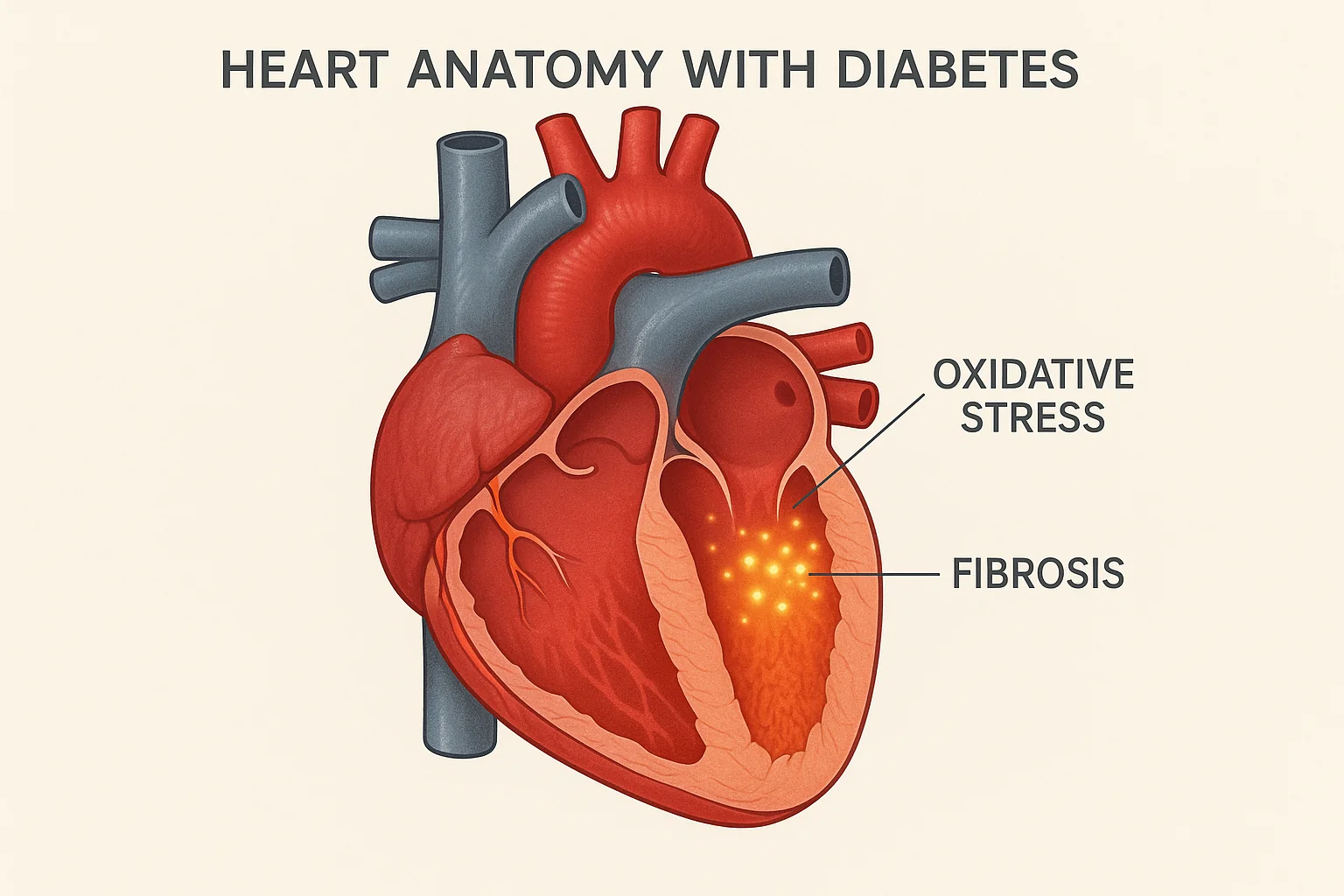
Diabetes damages the heart muscle even when the coronary arteries are patent and blood pressure is normal. This damage is called diabetic cardiomyopathy and usually begins with diastolic dysfunction of the left ventricle. The question of whether CBD can intervene in this process has one honest answer today: it is unknown, as no one has checked this in humans with this diagnosis. The mechanistic basis comes from one experiment on chemically induced type 1 diabetic mice and from cultures of human cardiomyocytes kept in high glucose concentrations. Below, we describe what this experiment measured and how, what was not included in it, and why the widespread belief about CBD as a substance stimulating the CB2 receptor contradicts the studies it cites.
KEY INFORMATION
• There is no clinical trial with CBD in diabetic cardiomyopathy in humans. The entire basis is an animal model and cell culture.
• The model consists of mice with type 1 diabetes induced by streptozotocin, which were administered CBD intraperitoneally for 11 weeks, with 8 to 11 animals in each group (Rajesh et al., Journal of the American College of Cardiology, 2010).
• Left ventricular function was measured using a pressure-volume catheter, not echocardiography. This work does not mention the Nrf2 pathway, catalase, or Smad proteins.
• CBD does not stimulate the CB2 receptor. In experimental systems, it behaves as a reverse agonist and a strong antagonist of its agonists (Thomas et al., British Journal of Pharmacology, 2007).
• Diabetic cardiomyopathy is a complication treated pharmacologically. CBD does not replace any of these medications, and with heart disease and diabetes, any supplementation requires discussion with the attending physician.
What is diabetic cardiomyopathy and how common is it?
Diabetic cardiomyopathy is a disorder of heart muscle function found in individuals with diabetes in the absence of overt coronary artery disease, valvular heart disease, and other classic risk factors such as hypertension and dyslipidemia. It progresses in two stages: first, fibrosis, remodeling of the heart, and diastolic dysfunction appear, followed by impaired systolic function, and finally overt heart failure (Jia et al., Circulation Research, 2018).
It is important to be cautious with the numbers circulating with this diagnosis. The same review states that in clinical studies, the prevalence of heart failure in diabetic patients ranges from 19 to 26 percent. However, this refers to heart failure, which is a different category than diabetic cardiomyopathy, and the review does not provide any percentage for diabetic cardiomyopathy itself. The authors only state that its prevalence increases in parallel with the prevalence of diabetes.
Mechanisms mentioned in this review include impaired insulin signaling in the heart, mitochondrial dysfunction, increased oxidative stress, reduced availability of nitric oxide, accumulation of advanced glycation end products, and stiffening of the collagen-based extracellular matrix. It is these last two processes, along with oxidative stress, that are pointed out as potential targets for an antioxidant substance.
What exactly was measured in Rajesh’s study and by what method?
The work by Rajesh and colleagues from 2010 is the only original study cited in this context, and it is worth breaking it down. Diabetes was induced in C57BL/6J mice by intraperitoneal injections of streptozotocin over five consecutive days, and animals with glucose levels above the threshold were selected for the study. One week after diabetes was induced, some mice received CBD intraperitoneally in three different dosages for 11 weeks. Groups consisted of 8 to 11 animals.
| What was measured | By what method | On what |
|---|---|---|
| Left ventricular function | pressure-volume catheter | type 1 diabetic mouse |
| Lipid peroxidation and protein damage | MDA, 4-HNE, carbonyl group measurements | heart tissue of the mouse |
| Free radicals in cardiac muscle | electron paramagnetic resonance spectroscopy | heart tissue of the mouse |
| Antioxidant defense | superoxide dismutase activity, glutathione pool | heart tissue of the mouse |
| Fibrosis | expression of TGF-beta, CTGF, fibronectin, type 1 collagen, MMP-2, and MMP-9 | heart tissue of the mouse |
| Radical production and cell death at high glucose | cell culture | primary human cardiomyocytes |
In each of these measurements, CBD alleviated changes induced by diabetes, and the authors describe this as alleviation of heart dysfunction, fibrosis, oxidative stress, inflammation, and cell death. However, it is equally important to note what is not included in this work. The full text does not contain a single mention of the word Nrf2, catalase, or Smad, and left ventricular function was not assessed echocardiographically. Descriptions attributing Nrf2 pathway activation, increased catalase activity, inhibition of Smad protein phosphorylation, or echocardiographic measurement to this study have no basis in it, although they circulate in materials citing this work.
Does the result in type 1 diabetic mice say anything about a patient with diabetes?
This must be stated clearly: diabetes induced in mice by streptozotocin, a substance that destroys pancreatic beta cells, is not diabetic cardiomyopathy in a patient. The authors of the study themselves state that CBD was administered after the destruction of beta cells and after the development of full-blown type 1 diabetes. Meanwhile, descriptions of diabetic cardiomyopathy in humans primarily concern type 2 diabetes, where, alongside high blood sugar, hyperinsulinemia and insulin resistance are present, thus representing a different set of metabolic disorders.
Additionally, there are three differences that cannot be overlooked without human studies. The route of administration was intraperitoneal, bypassing the gastrointestinal tract and liver, which provides a different tissue exposure than swallowing a drop. The duration of the experiment, 11 weeks in the life of a mouse, does not correspond to the years of complication development in humans. Finally, the endpoints were hemodynamic parameters and biochemical markers in excised tissue, not events that interest the patient: hospitalization due to heart failure or death.
This does not mean that the work is without value. It means that it is what it is: a preclinical study describing a mechanism and justifying further work. The statement about CBD inhibiting heart fibrosis can be made about mice. About humans, until there is a study in humans, it can only be stated that no one has checked this.
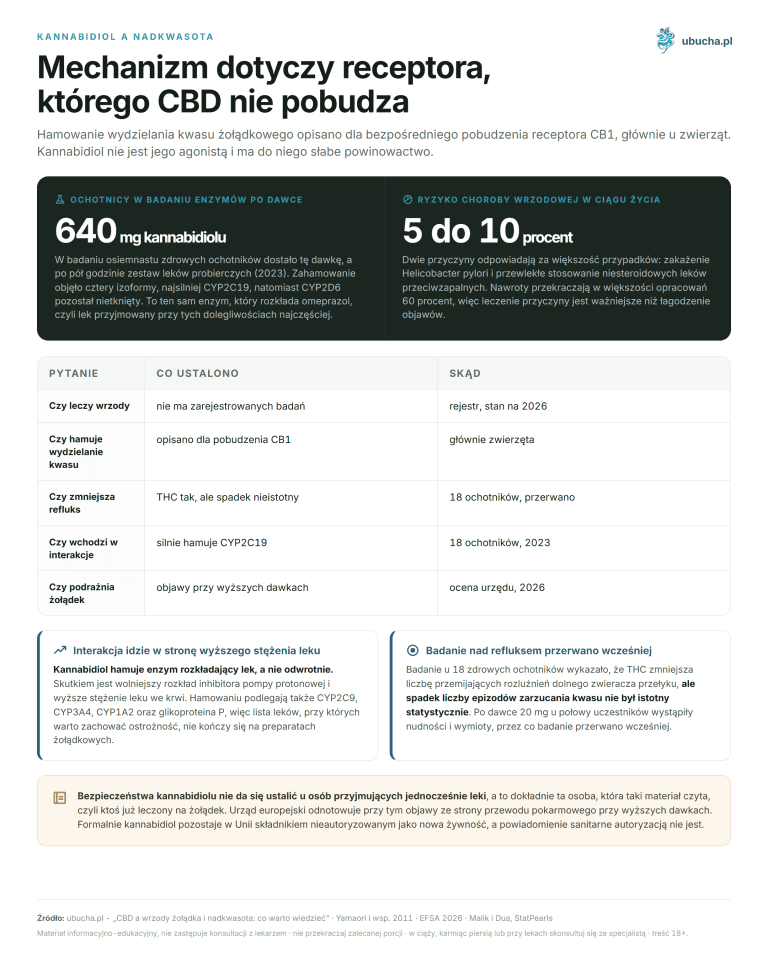
Does CBD stimulate the CB2 receptor or block it?
In descriptions of the cardioprotective action of CBD, the statement returns that it is a partial antagonist of CB1 and at the same time an agonist of CB2, and that this combination leads to heart protection. This sounds coherent, as the CB2 receptor is considered anti-inflammatory. However, the studies that such a description would be based on say something contrary.
In a binding and stimulation study of G proteins conducted on mouse brain membranes and on hamster ovary cells with the human CB2 receptor introduced, CBD behaved towards CB2 as a reverse agonist, meaning it reduced the receptor’s baseline activity, and as an antagonist of its agonists, and this with a strength greater than would be expected from CBD’s weak affinity for both cannabinoid receptors. The authors link this reverse agonism to the described anti-inflammatory action of CBD (Thomas et al., British Journal of Pharmacology, 2007).
The Pertwee review from 2008 summarizes the same for the three main phytocannabinoids: THC is a partial agonist of CB1 and CB2, while CBD unexpectedly shows significant strength as an antagonist of the agonists of both receptors (Pertwee, British Journal of Pharmacology, 2008). The difference is not academic. The statement about stimulating CB2 gives the reader an image of a molecule activating a protective anti-inflammatory pathway, while the measurements describe a molecule extinguishing the signal at this receptor. These are two different biologies and two different directions in which one should seek the effect in the heart.
Are there any data in humans?
There is no clinical trial with CBD in diabetic cardiomyopathy. However, a survey is circulating that is worth describing in detail, as it is sometimes cited as clinical data. Garcia-Romeu and colleagues collected responses from 808 individuals using cannabis for medical purposes, recruited from the patient registry maintained by the Realm of Caring foundation and through social media. Improvement was reported by 77 percent of participants, including less pain by 28 percent, better sleep by 18 percent, and reduction of other medications by 12 percent (Garcia-Romeu et al., Frontiers in Pharmacology, 2022).
Three things must be added regarding this work. It is a survey without a control group and without random assignment, so it does not allow distinguishing the action of the substance from the expectations of the participants. The study was funded by the same foundation from which participants were recruited, and among the authors’ affiliations is a company from the cannabis industry. Most importantly, however, there is not a single occurrence of the English word for heart or any term with the cardio component in the entire text. A survey about the well-being of cannabis users is not a source of knowledge about the heart muscle in diabetes.
The practical conclusion is short. Diabetic cardiomyopathy develops on the basis of chronically high blood sugar, and the only treatment with proven value remains the treatment conducted by a physician: diabetes management and cardiological therapy tailored to the state of the heart. CBD is not a substitute for any of these elements and has no indication in this diagnosis. In the European Union, it remains unauthorized novel food, and health notifications do not change this status. The European Food Safety Authority stated in 2026 that the safety of CBD cannot be established in individuals taking medications simultaneously and pointed to the potential hepatotoxicity revealed precisely with such combinations (EFSA Panel on Nutrition and Novel Foods, EFSA Journal, 2026). A patient with diabetic cardiomyopathy is taking medications by definition. If you are considering its use in diabetes with cardiac complications, discussing it with a diabetologist and cardiologist is a requirement, not a formality. More about how a similar analysis looks for another cardiac issue can be found in the text about CBD, ischemia, and the CB1 receptor, and about the second cannabinoid studied in diabetes in the article about THCV and glucose metabolism.
Frequently Asked Questions
What is diabetic cardiomyopathy?
It is a disorder of heart muscle function in a person with diabetes, diagnosed in the absence of overt coronary artery disease, valvular heart disease, and hypertension. It begins with fibrosis, remodeling of the heart, and diastolic dysfunction, later leading to impaired systolic function, and ultimately heart failure (Jia et al., 2018).
Does CBD treat diabetic cardiomyopathy?
It is unknown, as no clinical trials with CBD in this diagnosis have been conducted. There is one experiment on mice with type 1 diabetes induced by streptozotocin and cultures of human cardiomyocytes. The results in animals do not automatically transfer to patients and do not replace treatment established by a physician.
What exactly did the study on mice show?
CBD administered intraperitoneally for 11 weeks alleviated left ventricular dysfunction, oxidative stress, inflammation, fibrosis, and cardiac cell death in diabetic mice. Cardiac function was assessed using a pressure-volume catheter, and groups consisted of 8 to 11 animals (Rajesh et al., 2010).
Does CBD stimulate the CB2 receptor?
No. In studies on mouse brain membranes and on cells with human CB2 receptors, CBD behaves as a reverse agonist and a strong antagonist of its agonists. The widespread description of CBD as a CB2 agonist contradicts these measurements (Thomas et al., 2007).
Can CBD be combined with heart and diabetes medications?
Such combinations have not been studied in patients with diabetic cardiomyopathy, so there is no safety data. A person taking heart or antidiabetic medications should discuss any supplementation with their physician before starting it.
This article is for informational and educational purposes only and does not constitute medical advice. Before starting the use of cannabis or CBD for therapeutic purposes, consult with a physician, especially if you are taking other medications, are pregnant, or breastfeeding.
Author: Michał Waluk · Published: 2026-08-09 · Updated: 2026-08-16