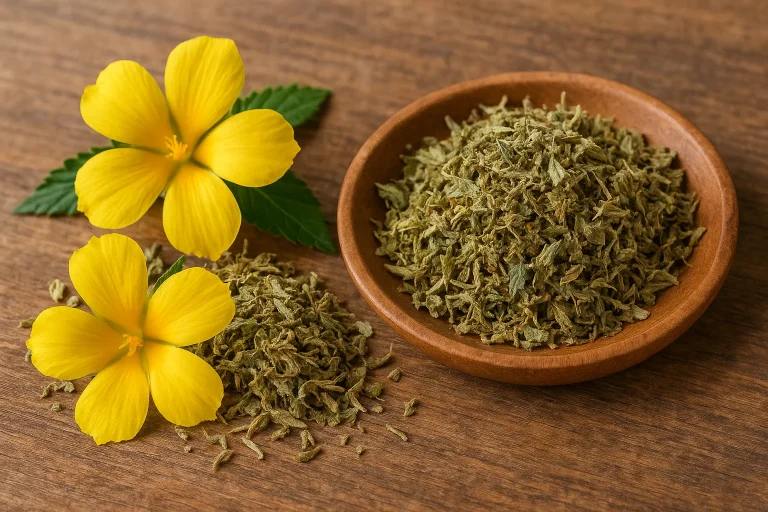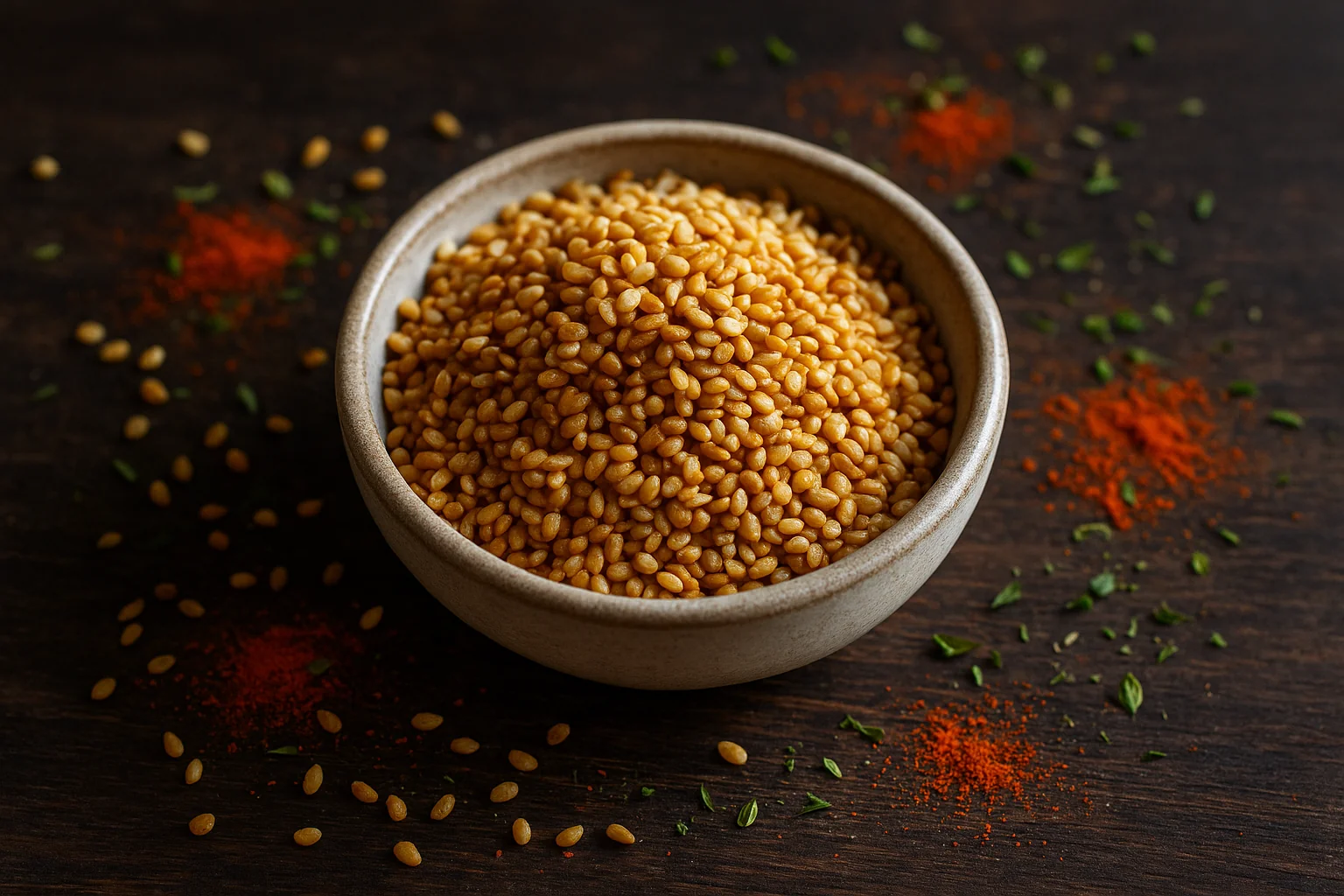

Roasted hemp seeds with spices: snack instead of chips
Roasted hemp seeds in 10 minutes on a dry pan. Four flavor versions, a composition comparison with chips, and what high temperature does to fat.
Chips and roasted hemp seeds have almost identical caloric content, and besides that, they have nothing in common. In the same serving, seeds provide five times more protein, eleven times more magnesium, and one hundred times less sodium. They are made in ten minutes on a dry pan, without deep frying and without reading the ingredient list on the package, because you have the entire composition in front of you. The biggest difference concerns salt: in a ready package, it is already added, while when roasting yourself, you decide on it yourself. Below you will find the basic recipe, four flavor versions, a comparison with chips based on USDA data, and what high temperature really does to the fat contained in the seeds.
KEY INFORMATION
• Three tablespoons of hulled hemp seeds is 30 g: 166 kcal, 9.5 g of protein, and 14.6 g of fat (USDA FoodData Central, record 170148).
• The same serving of salted potato chips has 1.9 g of protein and 158 mg of sodium compared to 1.5 mg in the seeds (record 169677).
• Roasting reduces tocopherol content while increasing phenolic compound content and antioxidant activity (Özdemir et al., 2021).
• Roast dry, and add fat and spices only after removing from heat.
What do roasted hemp seeds beat chips in?
Everything except caloric content, as it is almost the same. The USDA FoodData Central database lists hulled hemp seeds at 553 kcal per 100 grams, and for classic salted potato chips at 532 kcal. The whole difference lies in what these calories carry with them.
| Per 100 g | Hulled hemp seeds | Salted potato chips |
|---|---|---|
| Energy | 553 kcal | 532 kcal |
| Protein | 31.6 g | 6.4 g |
| Polyunsaturated fat | 38.1 g | 8.3 g |
| Carbohydrates | 8.7 g | 53.8 g |
| Magnesium | 700 mg | 63 mg |
| Sodium | 5 mg | 527 mg |
The last row is the most practical. Sodium in the seeds comes from the raw material itself, in chips from salting, so when roasting yourself, you decide on it. If you add a quarter teaspoon of salt to the seeds per 100 grams, you will still be several times lower than in a ready package.
The quality of protein is a separate matter and is worth stating honestly. House and colleagues measured the PDCAAS of hulled hemp seeds at 63-66 percent and indicated lysine as the first limiting amino acid in all tested hemp products (House et al., Journal of Agricultural and Food Chemistry, 2010). It is good plant protein, but not quite the equivalent of an egg as it is often presented.
What does roasting do to hemp seeds?
It takes one away, adds another. Özdemir and colleagues roasted hemp seeds at 140, 160, and 180 degrees for up to an hour and tracked what happens to the oil inside. Tocopherol isomers decreased with time and temperature, while the content of phenolic compounds and antioxidant activity increased (Özdemir et al., Journal of Food Science and Technology, 2021).
This same work provides the composition of the oil from the studied seeds: 54.85 percent linoleic acid, 18.13 percent alpha-linolenic, and 707.47 mg gamma-tocopherol per kilogram of oil. Based on peroxide and anisidine values, the authors recommended roasting at 140-160 degrees for 35 minutes or at 180 degrees for 15 minutes to achieve good quality roasted seeds.
Our times are shorter because the method is different. In a dry pan, heat travels through direct contact with the bottom, and the seeds reach doneness in three or four minutes. Therefore, remove them based on color and smell, not the clock, and keep the temperature around medium heat. Burnt seeds become bitter, and that taste cannot be masked with spices.
One conclusion from this work translates directly into the recipe: since the fat in the seeds oxidizes during roasting, there is no reason to add another to the pan. Oil is added after removing from heat, when it only serves as a glue for the spices.
What do you need for one batch?
One hundred grams of seeds, one teaspoon of fat, and a chosen set of spices. This amount gives about three servings of three tablespoons each. All flavor versions start from the same base, so you can make one batch and divide it right after removing from heat.
- 100 g hulled hemp seeds
- 1 teaspoon cold-pressed hemp oil or olive oil, added after roasting
- 1/4 teaspoon sea salt
- spicy version: 1/4 teaspoon smoked paprika, a pinch of cayenne, and a pinch of garlic powder
- curry version: 1/2 teaspoon curry, 1/4 teaspoon cumin, a pinch of turmeric
- sweet version: 1/4 teaspoon cinnamon, 1 teaspoon maple syrup, a pinch of salt
- sesame version: 50 g hemp seeds and 50 g sesame, and after roasting a few drops of soy sauce and 1/2 teaspoon toasted sesame oil
- classic version: sea salt and freshly ground pepper
The equipment is one dry pan or a baking sheet with parchment paper. The pan is faster, the oven roasts more evenly and forgives a moment of inattention. For storage, prepare a glass jar with a lid, as the seeds absorb moisture from the air and soften in an open bowl within a day.
Buy hulled seeds, not whole ones. Whole seeds have a hard shell that gets stuck in your teeth and requires a completely different roasting time. Store them in the fridge until roasting, as polyunsaturated fat goes rancid quickly. Rancid seeds can be recognized by the smell of old oil even before pouring them into the pan.
How to roast hemp seeds step by step?
In six steps, two of which determine the outcome: you roast dry and remove from heat based on color. The rest is cooling and storage. The active working time is ten minutes, and for most of it, you stand by the pan.
Safety: hemp seeds go from golden to burnt in just a few seconds, so do not leave the pan and stir continuously. Do not roast them in oil: heated fat splatters, and adding oil would oxidize along with the fat already in the seeds.
- Heat a dry pan over medium heat for one minute. For the oven version, preheat the oven to 150 degrees and line a baking sheet with paper.
- Pour 100 g of seeds into the dry pan and roast for 3-4 minutes, stirring continuously or shaking the pan every half minute. In the oven, roast for 7-8 minutes and stir once halfway through.
- Watch the color and smell. The seeds are ready when they turn from greenish to golden brown and start to smell nutty. Remove them from heat immediately, as the hot pan continues to roast.
- Pour a teaspoon of oil over the hot seeds and sprinkle with spices. Mix for half a minute: warm seeds bind spices better than cooled ones.
- Transfer everything to a plate lined with paper and spread in a thin layer. In a pile, the seeds steam and lose crunchiness. Cool for 5-10 minutes uncovered.
- Once cooled, transfer to a glass jar with a lid and keep away from cooking steam.
We noticed in tests that dry roasted seeds stay crunchy noticeably longer than those roasted with oil. A homemade alternative to chips in another form is described with kale chips with hemp seeds.
Which flavor versions work best?
Four, plus the classic version with just salt and pepper for those who do not want to experiment. You season all of them after removing from heat, so prepare the spices in advance and have them ready by the pan.
The spicy version includes olive oil, smoked paprika, a pinch of cayenne, and garlic powder. The spiciness brings out the nuttiness of the seeds and creates a snack that pairs well with drinks. The curry version with cumin and turmeric works well as a topping for creamy soups instead of croutons; turmeric gives it an intense yellow color.
The sweet version includes a teaspoon of maple syrup, cinnamon, and a pinch of salt. Mix it on the heat for an extra minute until the syrup coats the seeds, and cool on parchment paper, as it hardens into crunchy clumps. The sesame version, with half hemp seeds and half sesame, gets a few drops of soy sauce and toasted sesame oil after roasting.
Roasted seeds also work well as an addition, not just as a snack on their own. Sprinkled on a finished soup or pasta, they replace croutons and do not soften as quickly as their size would suggest; we tested this in guacamole with hemp seeds and in pumpkin cream with roasted hemp seeds.
Frequently asked questions
Does roasting destroy the nutritional value of hemp seeds?
It partially changes them. In the study by Özdemir and colleagues, roasting reduced the content of tocopherol isomers the longer and at higher temperatures it lasted, while simultaneously increasing the content of phenolic compounds and antioxidant activity. Short roasting over medium heat is a compromise between taste and losses.
At what temperature should hemp seeds be roasted?
Özdemir and colleagues, based on peroxide and anisidine values, recommended 140-160 degrees for 35 minutes or 180 degrees for 15 minutes. In a pan, heat acts differently, and 3-4 minutes over medium heat is sufficient, so rely on color and smell, not the clock.
Can hemp seeds be roasted in oil?
It’s not worth it. The fat in the seeds oxidizes during roasting, so adding another only speeds up this process and does not improve the taste. Add hemp oil after removing the pan from heat, when it only serves as a binder for the spices.
How much protein do roasted hemp seeds have?
A 30-gram serving, or three tablespoons, contains 9.5 grams of protein and 166 kcal (USDA FoodData Central, record 170148). The same serving of potato chips provides 1.9 grams of protein with 160 kcal. The difference in protein is over five times with practically the same caloric content.
How long can roasted hemp seeds be stored?
In an airtight jar, at room temperature and away from steam, crunchiness lasts for several days. The seeds absorb moisture from the air, so in an open container, they soften much faster. If softened, refresh them on a dry pan for two minutes over low heat, stirring.
Ready hemp food products can be found in the hemp food category in the u Bucha store.
This article is for informational and educational purposes and does not replace consultation with a doctor. If you are pregnant, breastfeeding, taking medications, or have chronic conditions, consult the use of supplements or herbs with a specialist.
Author: Michał Waluk · Published: 2026-06-22 · Updated: 2026-08-16