
CBD Flower: what it is, how to use it and how it differs from marijuana
CBD flower is flower clusters of industrial hemp below the 0.3% THC threshold. How does it differ from marijuana, how to brew it, and how much cannabidiol reaches from it.
CBD flower is dried flower clusters of industrial hemp, which is the same plant as marijuana, but grown in the opposite direction: high in cannabidiol, trace amounts of THC. It looks similar and smells similar, and that raises the most questions. Is it legal? Do you feel anything from it? How much cannabidiol really gets into a cup of infusion, and how much escapes with the vapor? Answers online vary more here than with any other cannabis product, because many texts conflate two separate things: how much substance leaves the plant and how much of it reaches the bloodstream. Below, I separate these two stages, show what the THC threshold says according to the law, and explain what to look for when buying.
KEY INFORMATION
• The review by Blessing et al. (Neurotherapeutics, 2015) included 49 studies; preclinical evidence for the anxiolytic effect of cannabidiol is strong, human data is limited to single doses.
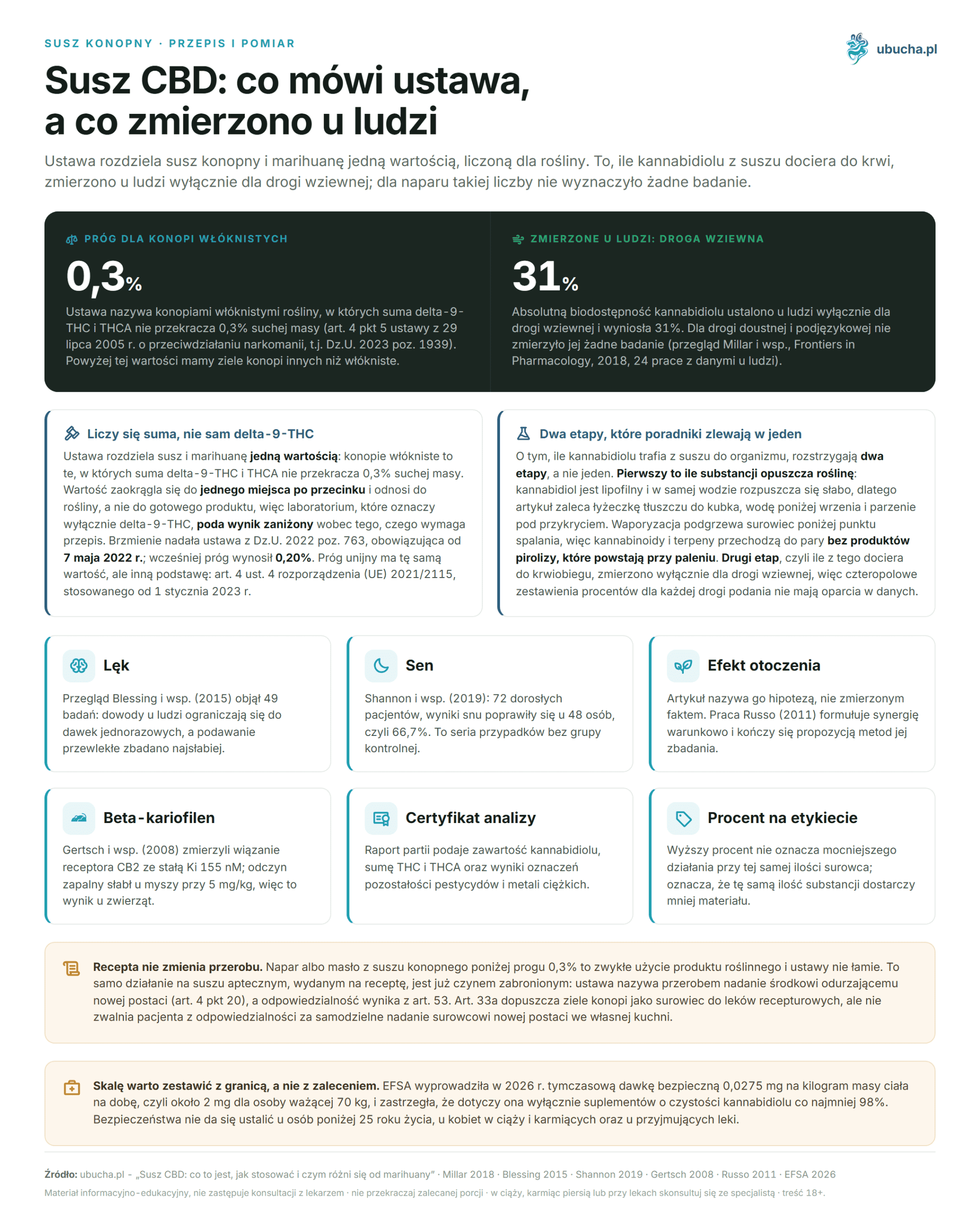
• The threshold for industrial hemp is 0.3% calculated as the sum of delta-9-THC and THCA, not just delta-9-THC.
• Absolute bioavailability of cannabidiol has been measured in humans only for the inhalation route and was 31% (Millar et al., Frontiers in Pharmacology, 2018).
• EFSA provides a temporary safe dose of 0.0275 mg/kg body weight per day, which is about 2 mg for a person weighing 70 kg.
What is CBD flower and where does it come from?
CBD flower is dried flower clusters and leaves of industrial hemp, the variety Cannabis sativa L. cultivated for high cannabidiol content and low THC content. It is sold as a botanical product for brewing or for aromatherapy. It is distinguished from marijuana by the genetics of the variety, not the method of drying or processing.
Varieties allowed for cultivation in the EU are listed in the common catalog of agricultural plant varieties; in Poland, you will most often encounter varieties such as Fedora or Futura. Cultivation itself requires registration in the register maintained by the director of the KOWR regional branch, in accordance with art. 47a sec. 2 and art. 47b sec. 1 of the Act on Counteracting Drug Addiction. Material from a legal source can therefore be traced back to a specific field and specific batch.
The plant produces, in addition to cannabinoids, also terpenes and phenolic compounds. The review by Andre et al. (Frontiers in Plant Science, 2016) describes their biosynthetic pathways and the trichomes in which these substances are produced. In technical varieties, cannabidiol predominates, while THC remains at trace levels.
Terpenes distinguish the flower from oil more clearly than the cannabidiol content itself. An isolate is purified and stripped of most volatile components, while full-spectrum flower retains them in full: linalool, myrcene, and beta-caryophyllene. Whether this translates to stronger effects is a separate question, and I will return to it regarding the entourage effect.
How does CBD flower differ from marijuana?
The difference is legal and genetic, not botanical. Both plants are Cannabis sativa L. The law separates them by one value: industrial hemp is defined as those in which the sum of delta-9-THC and tetrahydrocannabinolic acid (THCA) does not exceed 0.3% when calculated on dry mass. Above this value, we have cannabis other than industrial hemp.
The definition is provided in art. 4 point 5 of the Act of July 29, 2005 on Counteracting Drug Addiction (consolidated text Journal of Laws 2023 item 1939), as amended by the Act of March 24, 2022 (Journal of Laws 2022 item 763), effective from May 7, 2022. Previously, the threshold was 0.20%. Two things are worth remembering from this. First, the threshold applies to the plant, not the finished product. Second, the sum of delta-9-THC and THCA is what counts, rounded to one decimal place. A laboratory that measures only delta-9-THC will provide a result that is lower than what the regulation requires.
The EU threshold has the same value but a different basis: art. 4 sec. 4 of Regulation (EU) 2021/2115, applicable from January 1, 2023. The previous Regulation 1307/2013 established 0.2% and has been repealed. The national threshold therefore corresponds to the EU one, but does not derive from it. These are two separate regulations that coincided on the same number.
Is it allowed to process flower into tea or butter at home?
It depends on what flower. Brewing an infusion or making butter from hemp flower below the 0.3% threshold is ordinary use of a plant product and does not violate the law. The same action performed on pharmaceutical flower, issued on prescription, is already a prohibited act, and the difference comes from one definition.
The law defines processing as giving a narcotic a new form (art. 4 point 20). Making butter, cookies, or an infusion from cannabis other than industrial hemp is exactly that: giving a new form. Responsibility for processing arises from art. 53 of the Act.
A prescription does not change this, and this is the most common misunderstanding in culinary texts. Art. 33a of the Act allows cannabis flower as a raw material for the preparation of prescription medications, i.e., prepared in a pharmacy by a pharmacist. The law does not contain a provision exempting the patient from responsibility for independently giving the raw material a new form in their own kitchen. So if a recipe online promises that an active prescription legalizes home baking with pharmaceutical flower, the recipe is mistaken, and the cost of that mistake is borne by the reader.
For flower from industrial hemp, none of these provisions apply, as it is not a narcotic. Cannabidiol is not listed in the register of controlled substances. It is worth keeping proof of origin with the product along with the batch test result, as after brewing or grinding, it is no longer visible from which plant the material comes.
How to use CBD flower and how much cannabidiol reaches from it?
Hemp flower is mainly used in two ways: as an infusion and through vaporization. How much cannabidiol you get from it is determined by two independent stages, which are usually conflated into one in guides. The first is how much substance leaves the plant, the second is how much of that reaches the bloodstream.
In the case of infusion, the first stage is limited by chemistry. Cannabidiol is lipophilic and dissolves poorly in water alone, which is why a teaspoon of fat is added to the cup: hemp oil, butter, or whole milk. The composition of the hemp infusion was quantitatively measured by Hazekamp et al. (Journal of Ethnopharmacology, 2007), checking how preparation, storage, and processing conditions change it. Water below boiling and steeping covered limit the loss of volatile terpenes; I have outlined a practical protocol in the text about brewing CBD flower tea.
Vaporization heats the material below the combustion point, so cannabinoids and terpenes pass into the vapor without pyrolysis products that occur when smoking. The choice of temperature depends on the equipment and the material, not on one universal number; I discuss the equipment in the guide to vaporizers.
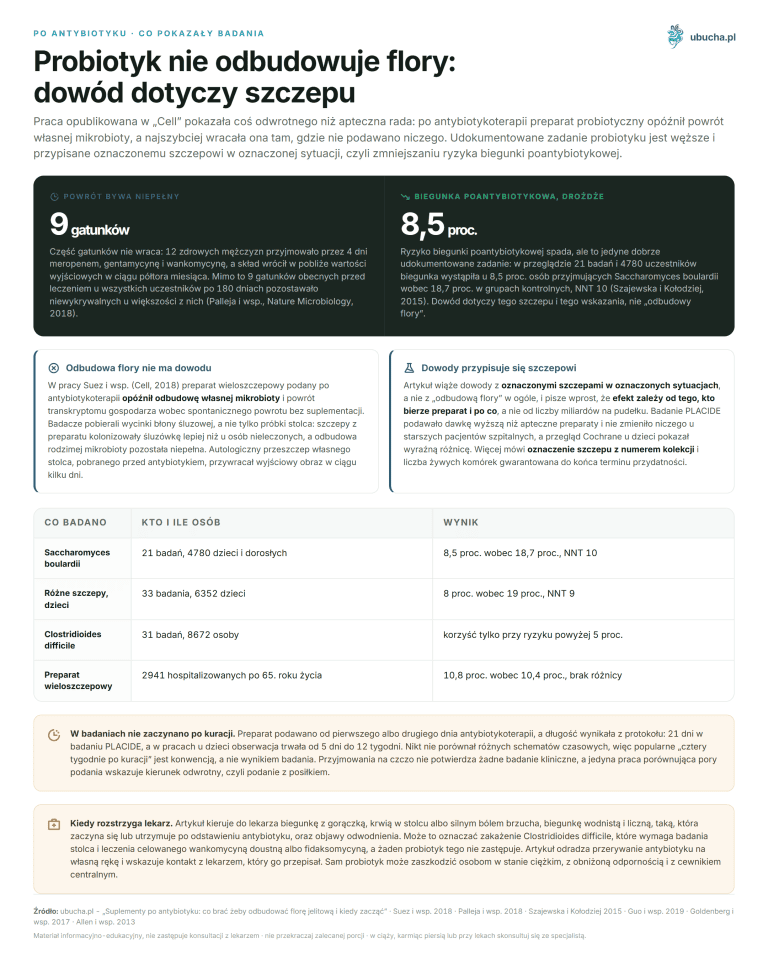
The second stage has been measured better, and the result is more modest than popular tables suggest. The review by Millar et al. (Frontiers in Pharmacology, 2018) gathered 24 works with pharmacokinetic data in humans and found that absolute bioavailability of cannabidiol was established only for the inhalation route, where it was 31%. For oral and sublingual routes, no study has measured it. Therefore, the four-way comparisons of percentages for each route of administration that circulate in guides have no basis in data. The same study notes that peak concentration increases after a meal and with fatty forms.
It is worth comparing the scale with the threshold, not with the recommendation. EFSA derived a temporary safe dose of 0.0275 mg per kilogram of body weight per day in 2026, which is about 2 mg for a person weighing 70 kg, and stipulated that it applies only to supplements with a purity of cannabidiol of at least 98%. Safety cannot be established in individuals under 25 years of age, in pregnant and breastfeeding women, and in those taking medications.
What do studies say about the properties of CBD flower?
The best-studied direction is the anxiolytic effect, and the strongest statement that can be made here is more cautious than the promises in product descriptions. The review by Blessing et al. (Neurotherapeutics, 2015) included 49 preclinical, clinical, and epidemiological studies.
The authors’ conclusion separates two levels of evidence. Preclinical data strongly support cannabidiol in several anxiety disorders, from generalized anxiety to post-traumatic stress disorder, but they concern single doses. Human evidence also supports the anxiolytic effect and is also limited to single doses, with a small number of studies in clinical populations. Chronic administration, which is exactly how flower is used, has been studied the least. The doses in the trials described there in humans were also an order of magnitude higher than what a cup of infusion carries.
The second direction is sleep. Shannon et al. (The Permanente Journal, 2019) described a series of 72 adult patients from a psychiatric clinic who were given cannabidiol as an adjunct to standard treatment. Anxiety scores improved in the first month for 57 individuals, or 79.2%, and that level was maintained. Sleep scores improved for 48 individuals, or 66.7%, but fluctuated in subsequent months. This is a retrospective case series without a control group, so it shows direction, not effectiveness.
We have noticed in store conversations that people who switched from infusion to vaporization most often describe the difference not in strength, but in pace: infusion acts more gently and longer, vapor acts faster and shorter. This is an observation from conversations, not a measurement, but it aligns with what pharmacokinetics says about both routes of administration.
Why does full spectrum matter?
The entourage effect is a hypothesis, not a measured fact, and should be read as such. It assumes that cannabinoids and terpenes work together differently than each alone. The most frequently cited work in this regard, Russo (British Journal of Pharmacology, 2011), formulates synergy conditionally and ends with a proposal for methods to study it, not proof that it occurs.
One element of this puzzle has, however, been measured firmly. Gertsch et al. (PNAS, 2008) demonstrated that beta-caryophyllene, a common component of spice oils and one of the main terpenes in cannabis, selectively binds to the CB2 receptor with a Ki value of 155 nM and acts as its agonist. Administered orally to mice at a dose of 5 mg/kg, it clearly weakened the inflammatory response induced by carrageenan, and in mice lacking the CB2 receptor, it did not, indicating a mechanism. This is a result in animals and at a dose that a cup of infusion does not provide, so it speaks to the properties of the molecule, not the effectiveness of tea.
The review by Ferber et al. (Current Neuropharmacology, 2020) discusses whether adding terpenes to cannabinoids could enhance effects in mood and anxiety disorders and describes possible mechanisms. The authors present this as a direction worth investigating. There is no comparison there that would indicate that the same amount of cannabidiol from flower works stronger than from an isolate.
A fair summary would therefore be: full-spectrum flower provides a richer composition and a more pronounced aroma, while the advantage in effect remains a hypothesis for now.
Two threads that this text consciously does not develop have their own elaborations. The full definition of the raw material, along with composition, THC threshold, and methods of use, stands in the encyclopedic guide to CBD flower, and the history of the government project that aimed to classify this flower as a drug is in the text about how the ban project ended.
How to choose good CBD flower?
One thing determines it, which is not visible either in the photo or through the foil: the laboratory test result of a specific batch. The certificate of analysis (COA) provides the content of cannabidiol, the sum of THC and THCA, and the results of pesticide and heavy metal residue tests. Without it, the declaration on the label remains just a declaration.
| What to look for | Good signal | Warning signal |
|---|---|---|
| Certificate of analysis | report from an independent laboratory for the batch number | “we will send it by email” or a certificate issued by the manufacturer |
| Variety and origin | specified variety and country of cultivation | lack of any information about the origin |
| Smell | intense, herbal-floral | smell of hay or mustiness |
| Consistency | elastic, does not crumble in fingers | crumbles upon touch |
| Flavoring | no added fragrances | artificial aroma masking the raw material |
One last note concerns concentration. Flower is an agricultural product, so the content of cannabidiol varies between batches of the same variety. A higher percentage on the label does not mean stronger effects with the same amount of raw material; it means that the same amount of substance will be delivered by less material. When choosing, it makes more sense to look at the current certificate than at the highest number on the package.
Frequently Asked Questions
Is CBD flower legal in Poland?
Yes, if it comes from industrial hemp, meaning plants in which the sum of delta-9-THC and THCA does not exceed 0.3% of dry mass (art. 4 point 5 of the Act on Counteracting Drug Addiction, consolidated text Journal of Laws 2023 item 1939). Cannabidiol is not listed in the register of controlled substances. Above the threshold, the material is cannabis other than industrial hemp.
How does CBD flower differ from marijuana?
The species is the same, it differs in variety and THC content. CBD flower comes from technical varieties in which the sum of delta-9-THC and THCA does not exceed 0.3%, so it does not cause intoxication. Marijuana is grown in the opposite direction, for high THC, which is responsible for the psychoactive effect.
Does CBD flower have a calming effect?
The evidence points in that direction, but is weaker than marketing suggests. The review by Blessing et al. (Neurotherapeutics, 2015) included 49 studies: preclinical data strongly support the anxiolytic effect of cannabidiol, human evidence is limited to single doses, and chronic use has been studied the least.
How to brew tea from CBD flower?
Add a teaspoon of fat to the cup, such as hemp oil, butter, or whole milk, because cannabidiol is lipophilic and dissolves poorly in water alone. Pour water below boiling and steep covered to limit the loss of volatile terpenes. I describe the details in the text about CBD hemp tea.
Is vaporization different from smoking flower?
Yes. A vaporizer heats the material below the combustion point, so cannabinoids and terpenes pass into the vapor without pyrolysis products. The inhalation route is also the only one for which absolute bioavailability of cannabidiol has been measured in humans: it was 31% (Millar et al., Frontiers in Pharmacology, 2018).
How much cannabidiol gets into the body from the flower?
No one has measured an exact number for the infusion. The review by Millar et al. (2018) established absolute bioavailability only for the inhalation route, which was 31%; no study has determined it for oral administration. It is known, however, that peak concentration increases after a meal and with fatty forms.
How to store CBD flower?
In a sealed glass jar, in a dark and cool place, away from moisture. Light and heat degrade cannabinoids and volatilize terpenes, so a ziplock bag on the windowsill is the worst possible solution. The smell is a good indicator here: when it weakens, the composition weakens too.
CBD flower with a current batch certificate can be found in the hemp flower category.
This article is for informational and educational purposes and does not replace consultation with a doctor. If you are pregnant, breastfeeding, taking medications, or have chronic conditions, consult the use of supplements or herbs with a specialist.
Author: Michał Waluk · Published: 2026-06-22 · Updated: 2026-08-24