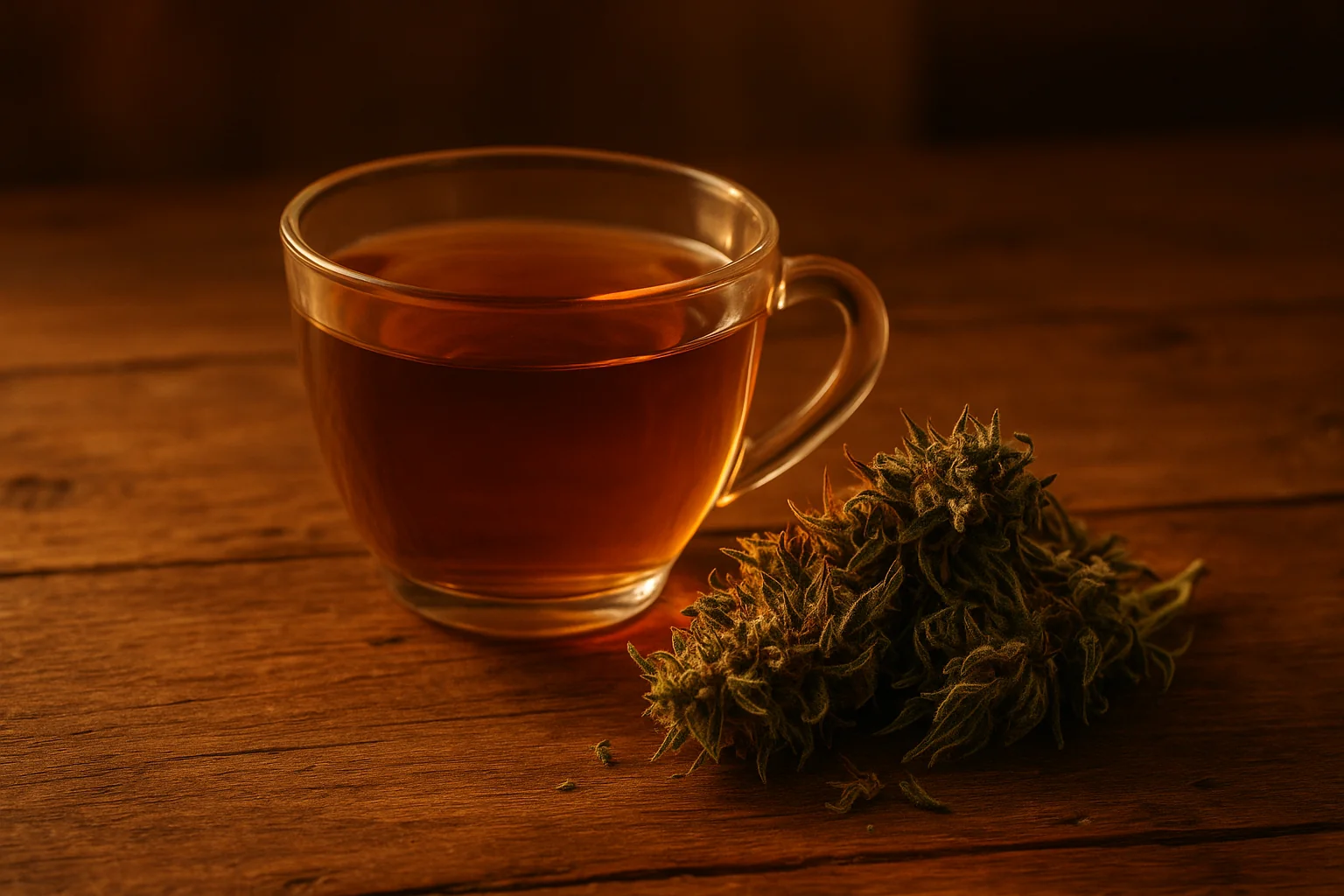

CBD Hemp Tea: Effects, How to Brew and When to Drink Before Sleep
How to brew hemp tea from CBD herb: temperature, time, and the role of fat. What studies say about CBD, sleep, and anxiety, and what the legal state in Poland looks like.
Hemp infusion has been consumed for centuries, but the evening cup of hemp tea has only recently regained popularity along with the herb from industrial strains. A lot of numbers have accumulated around this infusion rather than facts. A set of very precise percentages of extraction, attributed to a work that says not a word about brewing tea, and tables of bioavailability for routes of administration that have never been measured in humans circulate online. Just looking at the publications themselves shows how little of this remains. This article separates craftsmanship from promises. It shows how to brew hemp herb to extract its aroma and fat-soluble ingredients, when to reach for a cup in the evening, what really comes from research on CBD and sleep, and what the legal state in Poland looks like.
KEY INFORMATION
• In a retrospective series of 72 patients, sleep improvement in the first month was noted in 48 individuals, or 66.7%, and a decrease in anxiety in 57 individuals, or 79.2% (Shannon et al., The Permanente Journal, 2019).
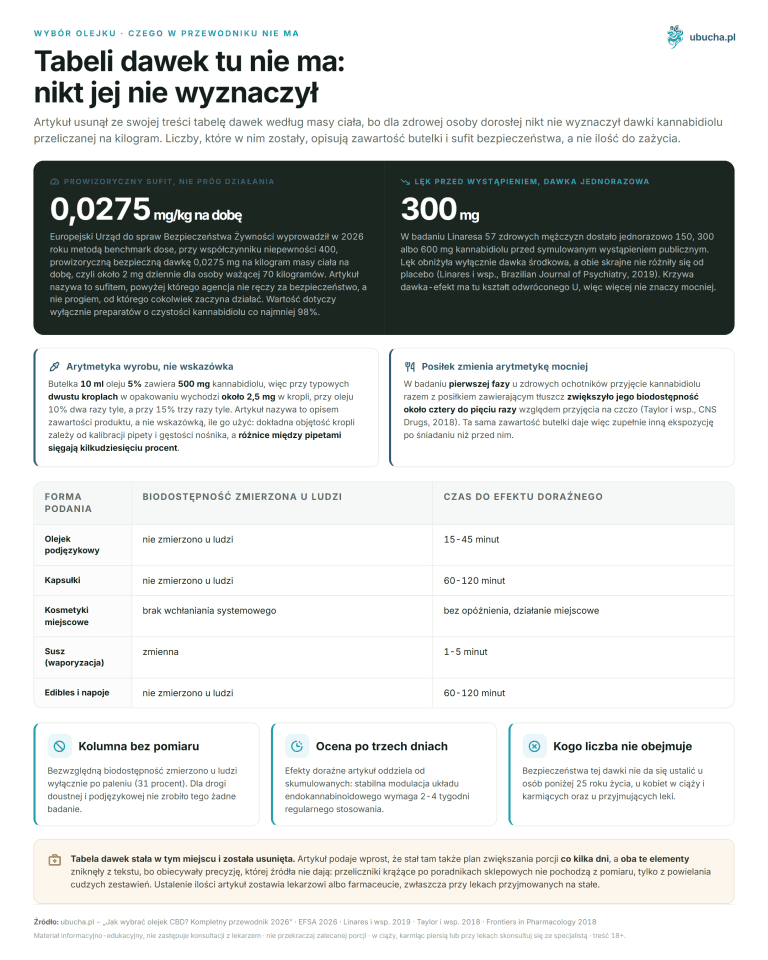
• The bioavailability of CBD in humans has only been measured for the inhalation route and was 31%; no study has established it for infusions, capsules, or oils (Millar et al., Frontiers in Pharmacology, 2018).
• The maximum concentration of CBD in the blood increases after a meal and with a fat carrier, which is why fat in the cup makes sense.
• The threshold of 0.3% THC is counted as the sum of delta-9-THC and THCA, not as delta-9-THC alone.
How does hemp tea from CBD herb work?
Hemp tea provides a mixture of ingredients from the herb, not a single substance. The infusion primarily extracts terpenes, which are responsible for the aroma and flavor, as well as some cannabinoids, including CBD. The infusion does not intoxicate because the herb from industrial strains contains negligible amounts of THC.
Terpenes are the layer that is felt most strongly in the infusion. Russo (British Journal of Pharmacology, 2011) described eight cannabis terpenoids, including linalool and beta-caryophyllene, and noted that these are aromatic substances present in the daily diet, recognized as safe by the American food agency. The author emphasizes that terpenoids are quite potent and can influence the behavior of animals and humans even at serum concentrations of single nanograms per milliliter.
The best-described single mechanism here is beta-caryophyllene. Gertsch et al. (PNAS, 2008) demonstrated that it selectively binds to the cannabinoid receptor CB2 with a constant affinity of 155 nM and acts as its functional agonist. When administered orally to mice, it reduced the inflammatory response, but the effect disappeared in animals lacking the CB2 receptor. This shows that the aromatic component of cannabis has its own measurable biological activity.
The limit of this knowledge must be set immediately. Russo speaks of the synergy of cannabinoids with terpenoids conditionally, as a hypothesis requiring proof, not as a proven fact. The popular phrase about the entourage effect thus describes the direction of research, not an established fact.
Why is fat in hemp tea mandatory?
CBD and terpenes are lipophilic, meaning they dissolve in fats, not in water. Boiling water alone mainly washes out water-soluble substances from the herb, so a teaspoon of fat in the cup changes what you actually drink. This is the artisanal basis for brewing cannabis, not a marketing gimmick.
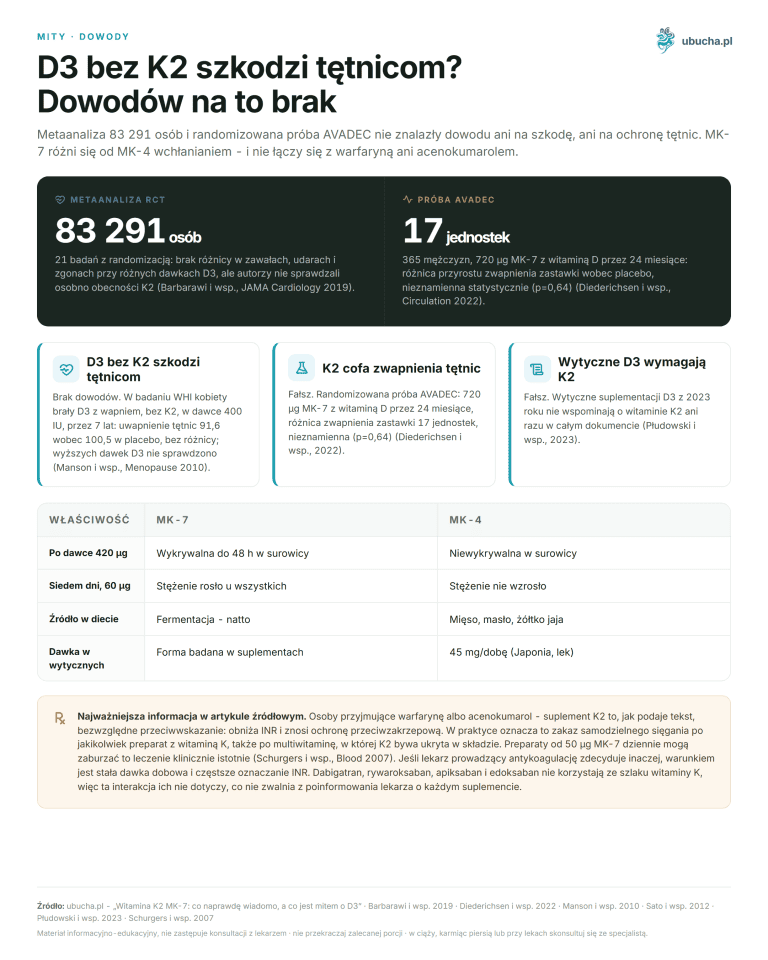
However, it must be stated clearly what we do not know here. A set of very specific numbers circulates online: that without fat, 1-3% of CBD passes into the infusion, with milk 10-18%, and with cream 15-25%. We have not found a study that provides these figures. They are usually attributed to Leson’s publication from 2001 in the Journal of Analytical Toxicology, but that work concerns something entirely different: it checked whether eating products from hemp seeds distorts the result of a drug test at work. There is not a word about brewing tea in it.
What can be said honestly comes from pharmacokinetics. Millar et al. (Frontiers in Pharmacology, 2018) gathered 24 studies involving humans and found that the maximum concentration of CBD in the blood increases after a meal and with lipid formulations. Similarly, the EFSA panel summarized in 2026 that the bioavailability of CBD is variable and depends on the carrier matrix and the food consumed. The direction is thus confirmed, although no one has measured how many milligrams end up in a specific cup.
What to add to the infusion:
- a teaspoon of hemp seed oil - neutral aroma, pairs well with the herb;
- a teaspoon of coconut oil - slightly sweet, clearly changes the consistency of the infusion;
- two tablespoons of whole milk or cream - the simplest solution, available in every kitchen;
- a small teaspoon of butter or ghee - traditional method, gives a thicker, heavier infusion.
More about how meals change cannabinoid absorption can be found in the post CBD Oil Before or After Eating.
How to brew hemp tea step by step?
Brewing hemp herb differs from pouring boiling water over a tea bag in three ways: lower water temperature, longer time, and the presence of fat. The table below summarizes the parameters that affect the aroma of the infusion.
| Parameter | Setting | Why this way |
|---|---|---|
| Water temperature | 85-90 degrees | Boiling water rapidly evaporates terpenes, which carry the aroma |
| Steeping time | 10-15 minutes | Above 20 minutes, the infusion becomes bitter without gaining flavor |
| Covering | Mandatory | Keeps volatile components in the cup instead of in the air |
| Infuser | Metal or mesh | Paper filters absorb the fat you just added |
| Fat | A teaspoon, in the cup | Carrier for water-insoluble ingredients |
The procedure itself is short:
- heat the water to 88 degrees, preferably with a kettle with regulation or a kitchen thermometer;
- grind the herb and pour it into the infuser;
- add fat directly to the cup, before pouring;
- pour the herb and steep for 12 minutes under a plate;
- remove the infuser, stir, and drink while the infusion is hot.
We have noticed that complaints about lack of effect almost always boil down to two things: brewing without fat or shortening the time to five minutes, as with regular instant tea. Changing these two habits with the same herb gives a distinctly different infusion, primarily in taste and aroma.
When to drink hemp tea before sleep?
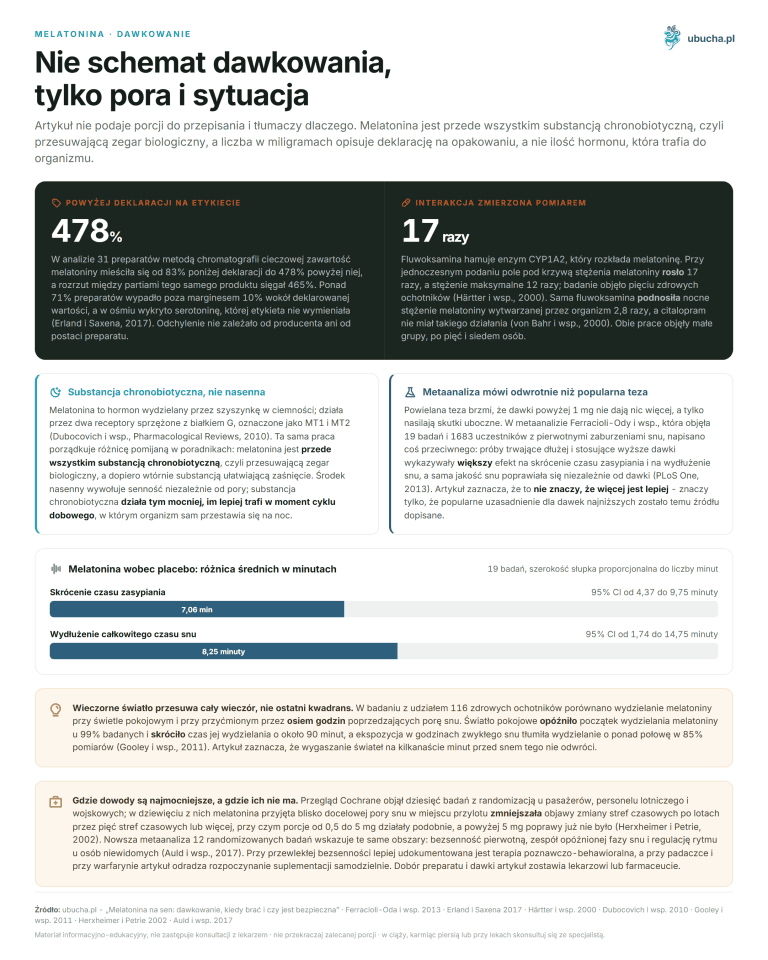
After oral administration, the concentration of CBD in the blood rises slowly. Millar et al. state that the time to maximum concentration ranges from zero to four hours, depending on the form and study. A cup drunk just before lying down acts more as a ritual than as a substance.
In practice, this means that the infusion is worth drinking in advance, about an hour before planned sleep. There is no single correct number here, as the time to peak varies widely in studies, and tea is the least predictable form of all. Drinking a cup in the middle of the evening simply gives more margin than drinking it at the bedroom door.
Separately, the repetition itself works. A warm drink at a regular time is a signal to close the day and an element of sleep hygiene that does not depend on any active ingredient. This layer of ritual is predictable, unlike the pharmacokinetics of the infusion, and it provides the most stable effect. If you are looking for an evening drink with a similar role, we described it in the post Golden Milk with CBD.
It is also worth keeping in mind a simple thing: a cup of hot liquid an hour before sleep means for some people one more visit to the bathroom at night. With continuity sleep issues, it is better to move the infusion to an earlier evening time.
What do studies say about CBD, sleep, and anxiety?
The most frequently cited work on this topic is Shannon et al. (The Permanente Journal, 2019). This is a retrospective review of psychiatric clinic documentation: the records of 103 adults were analyzed, and the final sample consisted of 72 patients mainly reporting anxiety or poor sleep.
Results after the first month: anxiety scores decreased in 57 individuals, or 79.2% of the sample, and remained at a lower level throughout the observation period. Sleep scores improved in 48 individuals, or 66.7%, but the authors note that in subsequent months it fluctuated. CBD was well tolerated by all except three patients. Doses ranged from 25 to 175 mg per day, with almost everyone receiving 25 mg daily in capsules.
These numbers should be read with the caveat set by the authors themselves: it is a case series, without a control group and without placebo, and the final conclusion is that controlled clinical trials are needed. This cannot be directly translated to the infusion from the herb, as patients were taking measured capsules, not tea.
What herbs are worth combining with hemp tea?
Hemp herb tolerates the company of other herbs well, and this is the simplest way to improve the taste of the evening infusion. The best-documented addition is lemon balm, while the others are mainly based on herbal tradition.
Lemon balm has a study with a placebo control. Kennedy et al. (Psychosomatic Medicine, 2004) administered standardized lemon balm extract in two doses and placebo to 18 healthy volunteers, in an alternating arrangement with a week-long break. After the higher dose, participants rated themselves as calmer and less agitated during a laboratory stress task. The authors cautiously conclude that lemon balm’s ability to alleviate stress effects deserves further research.
Linden flower and peppermint are additions with culinary and herbal roots. Linden gives a mild, honey-like flavor and has been part of evening blends for generations, while peppermint refreshes and is often chosen after a heavy dinner. We do not have studies that would allow us to attribute specific effects to them, so we treat them as a matter of taste rather than action. A comparison of herbs used in the evening is gathered in the post Teas for Sleep: Lemon Balm, Lavender, Hops, and CBD.
On the other side of the list: green tea and guarana do not fit into the evening infusion because they contain caffeine. Ready-made blends can sneak it into the composition, so it is worth reading the label to the end.
Is hemp tea from CBD herb legal in Poland?
Yes, as long as the herb comes from industrial hemp. Polish law defines them as plants of the species Cannabis sativa L., in which the total content of delta-9-THC and tetrahydrocannabinolic acid, i.e., THCA, does not exceed 0.3% when calculated on a dry mass basis, and the result is rounded to one decimal place.
This definition has two details that often get lost in texts about cannabis. First, the threshold is counted as the sum of delta-9-THC and THCA, not as delta-9-THC alone. For the result of a laboratory test, this is a decisive difference, as the acidic form predominates in raw herb. Second, the Polish threshold results from national law, not from EU regulation. The basis is Article 4 point 5 of the Act of July 29, 2005 on Counteracting Drug Addiction (t.j. Dz.U. 2023 poz. 1939), as amended by the Act of March 24, 2022 (Dz.U. 2022 poz. 763), effective from May 7, 2022.
EU law has its own threshold of the same value, and this is a coincidence, not a dependency. From January 1, 2023, cannabis varieties eligible for support under the Common Agricultural Policy may contain up to 0.3% THC based on Article 4 paragraph 4 of Regulation (EU) 2021/2115. The previous EU threshold was 0.2%, introduced by Regulation 1307/2013, which was repealed on January 1, 2023. Attributing the 0.3% threshold to that older regulation is therefore a double error: both in terms of value and in terms of the state of validity.
CBD itself does not appear in any lists of controlled substances. The situation is different for HHC, which remains a controlled substance in Poland.
What won’t hemp tea do?
The infusion from the herb is a pleasant evening habit, not a sleeping aid. It does not induce sleep on demand, does not replace treatment for insomnia, and you cannot measure a dose from it, as no one has measured how many active ingredients pass into the cup.
It is also important to remember the reference point set by the regulator today. The EFSA panel in 2026 derived a provisional safe dose of CBD at a level of 0.0275 mg per kilogram of body weight per day, which for a person weighing 70 kg gives about 2 mg daily, with an uncertainty factor of 400. This value applies only to supplements with a purity of CBD of at least 98% and without nanoparticles, so it does not cover the infusion, but shows how cautiously the safety of cannabidiol is assessed today.
The most important EFSA caveat, however, concerns not the number but the groups: the safety of CBD cannot be established in individuals under 25 years of age, in pregnant and breastfeeding women, and in individuals taking medications simultaneously. The latter group also relates to the World Health Organization’s note from the 2018 review: CBD is usually well tolerated, and reported adverse effects may result from interactions with medications taken by the patient.
Ready-made brewing blends can be found in the teas category.
Frequently Asked Questions
How to brew hemp tea to have a full aroma?
Pour the herb with water at a temperature of 85-90 degrees and steep for 10-15 minutes covered, adding fat directly to the cup before pouring. Boiling water evaporates terpenes, paper filters absorb fat, and steeping for more than 20 minutes only results in bitterness.
Does fat in hemp tea really make a difference?
The direction is confirmed, the scale is not. Millar et al. (Frontiers in Pharmacology, 2018) state that the maximum concentration of CBD increases after a meal and with a fat carrier. The circulating percentages of extraction from the infusion attributed to Leson’s work from 2001 do not come from any study.
When to drink hemp tea before sleep?
About an hour before planned sleep. The time to maximum CBD concentration, according to Millar’s review, ranges from zero to four hours, depending on the form, so a cup drunk at the bedroom door mainly acts as a ritual. If you wake up at night, move the infusion earlier.
Does hemp tea cause intoxication?
No. The herb from industrial hemp contains no more than 0.3% of the sum of delta-9-THC and THCA, which is too little for the infusion to be intoxicating. The World Health Organization stated in a 2018 review that CBD does not show effects indicating potential for abuse or dependence in humans.
How much CBD does a cup of hemp tea provide?
It is unknown, and no study has measured this. Millar et al. established the bioavailability of CBD in humans only for the inhalation route, which was 31%; no study has established it for oral routes. Any number of milligrams given for the infusion is an unsupported estimate.
Is hemp tea legal in Poland?
Yes, if it comes from industrial hemp. The threshold of 0.3% comes from Article 4 point 5 of the Act on Counteracting Drug Addiction (t.j. Dz.U. 2023 poz. 1939) and is counted as the sum of delta-9-THC and THCA. The national threshold corresponds to the EU one from Regulation 2021/2115, but it does not derive from it.
This article is for informational and educational purposes and does not replace consultation with a doctor. If you are pregnant, breastfeeding, taking medications, or have chronic conditions, consult the use of supplements or herbs with a specialist.
Author: Michał Waluk · Published: 2026-05-20 · Updated: 2026-08-11