
CBD and Cold and Immunity: Is It Worth Reaching for CBD Oil in Autumn
Does CBD strengthen immunity? In preclinical studies, it acts immunosuppressively, not stimulatively. What does this mean in practice and where can it realistically help in autumn.
In autumn, inquiries about “natural immune support” increase, along with the number of texts presenting CBD oil as a part of this puzzle. It is worth stating right away something that contradicts most of such articles: in studies on the immune system, cannabidiol behaves like a substance that suppresses the immune response, not stimulates it. The authors of the most comprehensive review on this matter write that the data overwhelmingly supports this. This does not mean that the oil is useless in autumn, but the slogan about strengthening immunity reverses the direction of its action. Below, we separate one from the other: first the mechanism, then what has really not been studied, and finally the only autumn application that can be defended by data.
KEY INFORMATION
• In preclinical studies, CBD inhibits lymphocyte proliferation and the secretion of pro-inflammatory cytokines (Nichols and Kaplan, 2020).
• Neither the literature database nor the clinical trial registry knows of a CBD trial for colds (as of August 15, 2026).
• Less than seven hours of sleep increased the risk of catching a cold by 2.94 times (Cohen et al., 2009).
• The real autumn application concerns sleep and tension, not protection against infection.
• During fever, suppressing the inflammatory response may not be beneficial.
Does CBD strengthen immunity?
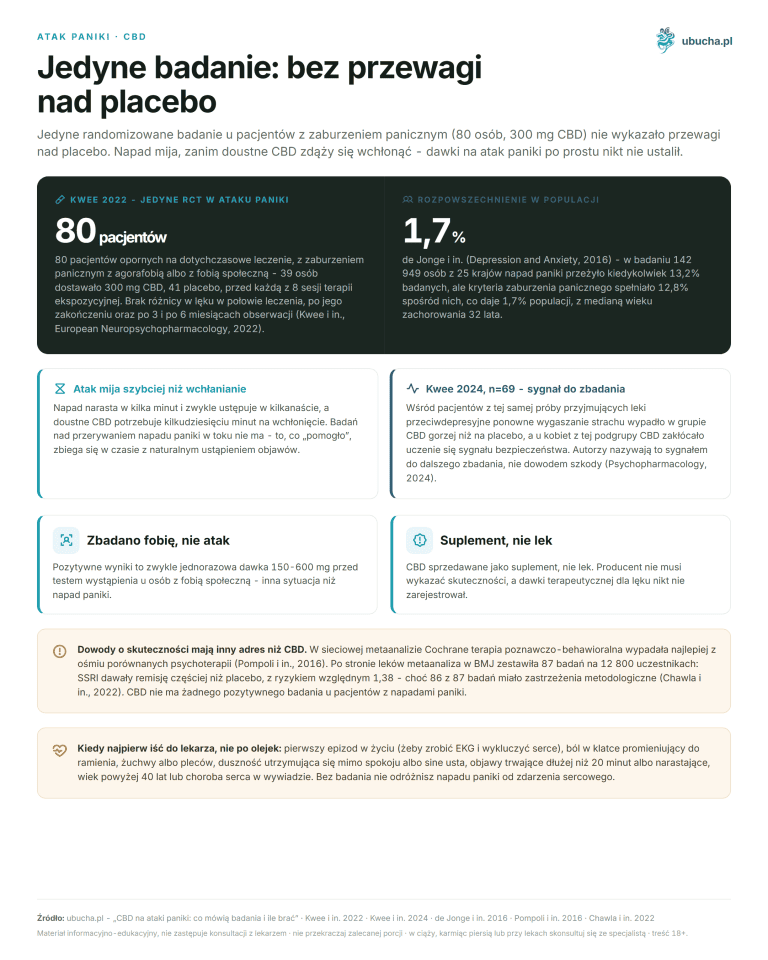
No, not in the sense that it is understood on the supplement shelf. The review by Nichols and Kaplan (Cannabis and Cannabinoid Research, 2020) gathered available studies on the impact of cannabidiol on immune cells, and the conclusion is consistent: CBD inhibits lymphocyte proliferation, limits the secretion of pro-inflammatory cytokines, and suppresses the activity of some immune system cells.
This is the exact opposite of “strengthening immunity”. An immunosuppressive substance reduces the reactivity of the system, which may be desirable in autoimmune diseases and chronic inflammatory states, but not necessarily when the body needs to fight a virus.
So where did the opposite belief come from? From the misuse of the word “regulates”. In popular texts, it is said that CBD “regulates the immune system”, which sounds neutral and suggests restoring balance in both directions. However, the data indicates a clear direction, and the term “modulation” can sometimes be a polite form of the word “suppression”.
It is worth adding that immunosuppression is not inherently a bad feature. The entire class of drugs for autoimmune diseases is based on this mechanism because the problem there is the immune system attacking its own tissues. Interest in cannabidiol in immunology comes from this, not from hopes for fewer colds.
The misunderstanding only begins when this is transferred to autumn prevention. A healthy person who wants to get sick less often needs an immune system that reacts efficiently, not one that is suppressed. Selling an immunosuppressive substance under the slogan of strengthening immunity is therefore not a minor linguistic inaccuracy.
How does the endocannabinoid system regulate immunity?
Primarily through CB2 receptors, which are densest on immune cells, not in the central nervous system, where CB1 predominates. This distribution in itself indicates that the endocannabinoid system participates in regulating the immune response.
B and T lymphocytes, macrophages, NK cells, and microglia have CB2 receptors, and their stimulation usually suppresses the activity of these cells: it reduces migration to the site of inflammation, limits cytokine production, and inhibits antigen presentation. Endocannabinoids thus serve as a brake that prevents excessive and prolonged inflammatory response.
CBD complicates this picture because it is not a classical CB2 agonist. Its effect on immune cells occurs partly independently of cannabinoid receptors, through antioxidant action and by influencing transcription factors that control the expression of inflammatory genes. The final effect, however, remains similar: less inflammation, less immune activity.
This duality explains why results can be inconsistent between studies. Some effects depend on the dose: at low concentrations, the opposite effect is sometimes observed compared to high concentrations, which is not uncommon in pharmacology but effectively complicates formulating simple conclusions. Additionally, there is context: stimulated cells behave differently than resting ones, and an organism fighting an infection behaves differently than a healthy one.
The practical consequence concerns concentrations, and it is worth showing it with numbers because the authors of the review themselves raise this issue. In the study on which the registration of cannabidiol in epilepsy was based, a dose of 20 mg per kilogram of body weight for 22 days resulted in about 400 ng/ml in the blood, which is approximately 1.2 micromoles, and this is the concentration typically used in cell experiments. For a person weighing 70 kg, this means over one thousand four hundred milligrams of cannabidiol per day, which is about two orders of magnitude more than a few drops of oil would provide. The immunological effects described in this review are therefore real for therapeutic doses and remain untransferred to doses from the supplement shelf.
Does CBD help with colds?
There is no data to support this, and it is worth stating how we checked this. On August 15, 2026, we searched the European PMC with title queries linking cannabidiol with colds and respiratory infections, and then the clinical trial registry clinicaltrials.gov. There is not a single clinical publication on this application in the literature database, and there is not even a registered protocol in the registry. The latter means more than the former: no one is conducting such a trial today, so there will be no answers in a few years either.
Claims of antiviral action that sometimes appear in sales materials stem from studies on cell lines, at concentrations unattainable after oral administration of the product. Many of them were created during the pandemic, and none have progressed to clinical phases with positive results, although they are sometimes quoted in advertisements without this context. The distance between “inhibits virus replication in vitro” and “shortens a cold” is enormous in this field, and few substances have crossed it.
At the same time, it is important to separate two things. The lack of evidence for anti-infective action does not mean that someone using CBD gets sick more often. It only means that if you are buying oil to avoid catching an autumn infection, you are buying something that this product does not do.
If you are looking for something with documented effects on the frequency of upper respiratory infections, the list is short, boring, and shorter than commonly believed: adequate length of sleep, exercise, handwashing, and vaccination against influenza. Supplements from the autumn shelf perform worse in this comparison than their sales suggest, which we discuss separately in NAC in respiratory infections.
Is suppressing inflammation during an infection beneficial?
Not always, and this question deserves more attention than it usually receives. Fever, swelling of the mucous membrane, and the feeling of malaise are not damages caused by the virus, but elements of the body’s defense response. Elevated temperature limits the replication of some pathogens and speeds up the work of immune cells.
A substance that suppresses the inflammatory response can therefore alleviate symptoms while simultaneously slowing down what is supposed to remove them. This same doubt applies to antipyretic drugs and has been a subject of debate for decades.
The practical conclusion is cautious, not alarming. There is no data indicating that CBD prolongs the course of an infection, and there is no reason to panic and stop using the oil when experiencing a cold. However, there is a reason not to increase the dose “for reinforcement” during illness, as the pharmacological action of this substance goes in the opposite direction to the intention.
Let us distinguish two situations, as they are often confused. A short, acute infection is a moment when the inflammatory response is needed. Chronic low-grade inflammation, accompanying autoimmune diseases or prolonged stress, is a different phenomenon, and there, dampening the response can be a therapeutic goal. CBD is mainly studied in this second context, and most of the promising results come from there, and transferring them to a cold reverses the meaning of this data.
How do sleep and stress affect immunity in autumn?
Here lies the only place where autumn use of CBD can be sensibly justified, although not through its effect on the immune system itself. The relationship between sleep and susceptibility to colds has been experimentally measured, not just inferred from mechanisms, and this on people infected with rhinovirus under control.
Cohen et al. (Archives of Internal Medicine, 2009) observed the sleep of 153 healthy individuals for two weeks, after which they administered rhinovirus in nasal drops and isolated them for five days. Those sleeping less than seven hours got sick 2.94 times more often than those sleeping at least eight. Prather et al. (Sleep, 2015) repeated this setup on 164 individuals, measuring sleep with an actigraph instead of a diary, and obtained the same direction: with sleep below five hours, the odds ratio of getting sick was 4.50. Both results held after accounting for baseline antibody levels, season, body weight, and health habits.
Additionally, there is stress. Chronically elevated cortisol suppresses the activity of lymphocytes and NK cells, and in autumn, both factors intensify simultaneously: shorter days disrupt the circadian rhythm, and the return to a more intense work mode increases tension.
If CBD improves someone’s sleep or reduces tension, it may indirectly benefit immunity, but through a completely different pathway than suggested by the term “natural immune support”. This difference is not academic: it determines whether you will reach for the oil regularly in the evening or only when you feel a scratch in your throat. We have detailed the neurobiology of this action in the text about the effect of CBD on the brain.
The last link in this chain has not been measured, and it is worth stating this directly. It is known that short sleep increases the risk of catching a cold, and it is known that some people sleep better after CBD. However, no study has been conducted to check whether the improvement in sleep obtained in this way translates into fewer infections. The first two links have data, the third is a guess.
Is it worth taking CBD preventively in autumn?
It depends on the purpose. As protection against infections, it has no basis. As an element of organizing sleep and coping with tension in a worse season, yes, while maintaining realistic expectations about the scale of the effect.
| Reason for reaching for CBD | Basis in data | Notes |
|---|---|---|
| Sleep problems | clinical observations | regular use, in the evening |
| Tension and stress | studies on acute anxiety | doses studied were very high |
| Protection against colds | none | no clinical study |
| Shortening infections | none | mechanism works in the opposite direction |
What actually has documented significance for immunity in autumn are less flashy things: vaccination against influenza, sleep at regular times and of sufficient length, and exercise. It is worth correcting the slogan that has been on this list by default for years. The updated meta-analysis by Jolliffe et al. (The Lancet Diabetes and Endocrinology, 2025), covering 40 randomized studies and 61,589 participants, found no statistically significant effect of vitamin D supplementation on the risk of acute respiratory infections (odds ratio 0.94 with a confidence interval from 0.88 to 1.00). Subgroup analyses found no difference either by baseline vitamin D level or by dose. An earlier version of the same work from 2021 yielded a significant result, so the studies repeating it today are not lies, but are four years late. None of these things excludes the use of CBD, but none of them can be replaced by CBD either. We have detailed the method of use separately in the text about dosing CBD.
Who should ask a doctor about CBD?
Primarily those who are already taking medications that affect the immune system or are metabolized in the liver, as the mechanism of cannabidiol overlaps with treatment. The rest of the comments in this section concern rarer situations, but in which the cost of a mistake is high.
A separate note concerns individuals taking immunosuppressive medications or being treated for autoimmune diseases. Since CBD itself acts in this direction, the combination requires a conversation with a doctor, especially since cannabidiol inhibits liver enzymes through which many drugs pass. In studies on human liver microsomes and recombinant enzymes, CBD has proven to be the strongest of the three main cannabinoids inhibiting the CYP3A isoform (Yamaori et al., Life Sciences, 2011) and a strong inhibitor of CYP2C19 (Jiang et al., Drug Metabolism and Pharmacokinetics, 2013). These are measurements outside the body, not in patients, but the direction is clear enough that with drugs that have a narrow therapeutic window, the decision is made by the doctor, not the seller.
Similar caution should be exercised by individuals post-transplant and those undergoing cancer treatment, especially immunotherapy. The mechanism of action of modern cancer drugs is to unblock the immune response against the tumor, so a substance that suppresses this response theoretically works against the treatment goal. There is practically no clinical data on this topic, which is an argument for discussing it with an oncologist rather than making independent decisions.
For a healthy person, the conclusion is calm. There is no indication that typical doses from the oil have a measurable impact on immunity in either direction, and the mechanisms described above concern concentrations and conditions far from everyday use. The risk is therefore small, but the benefit is also not what the immunity supplement shelf promises.
Frequently Asked Questions
Does CBD strengthen immunity?
No, in the common understanding. In preclinical studies, it acts rather immunosuppressively: it inhibits lymphocyte proliferation and the secretion of pro-inflammatory cytokines (Nichols and Kaplan, 2020). This is the opposite of stimulating the immune system.
Does CBD help with colds?
There are no studies that demonstrate this. A search of the literature database and the clinical trial registry as of August 15, 2026, returns neither a published paper nor a registered protocol. Claims of antiviral action come from cell cultures and concentrations unattainable orally.
How much CBD should be taken in autumn for immunity?
There is no such dose because there is no indication to which it could be related. Not a single clinical study of CBD in respiratory infections has been published, and none is registered. If you are reaching for the oil due to sleep or tension, discuss the method of use with your doctor or pharmacist.
Does CBD work like immune supplements?
No, and it should not be treated as such. Vitamin D or zinc have documented roles in the functioning of the immune system, although their impact on the frequency of infections is weaker than advertised. CBD is not a nutrient, does not supplement anything, and acts on a different system.
Can CBD be taken preventively in autumn?
Yes, if the reason is sleep or tension. Treating the oil as a shield against infections has no basis, and during fever, it is worth remembering that suppressing the inflammatory response does not necessarily work in your favor.
The oils available in the store can be found in the hemp oils category.
This article is for informational and educational purposes and does not constitute medical advice. Before starting to use cannabis or CBD for therapeutic purposes, consult your doctor, especially if you are taking other medications, are pregnant, or breastfeeding.
Author: Michał Waluk · Published: 2026-06-22 · Updated: 2026-08-15