
B Vitamins (B Complex): What They Do and Who Needs Them
B vitamins without marketing: functions of the eight vitamins, why B12 causes trouble, how much metformin takes away, and where EFSA set the limit for vitamin B6.
Eight vitamins, one team. Vitamins B1, B2, B3, B5, B6, B7, B9, and B12 are water-soluble, not stored in larger reserves, and participate in energy production, the functioning of the nervous system, and the copying of genetic material. Preparations combining all of them are sold as a remedy for fatigue, but the real indications for supplementation are narrower and well described. This article explains what each of the eight is responsible for, why B12 causes the most diagnostic trouble, how much of this vitamin is taken by those chronically using metformin, and where the European authority has set the safe intake limit for vitamin B6, as this limit is significantly lower than the doses suggested on many packages.
KEY INFORMATION
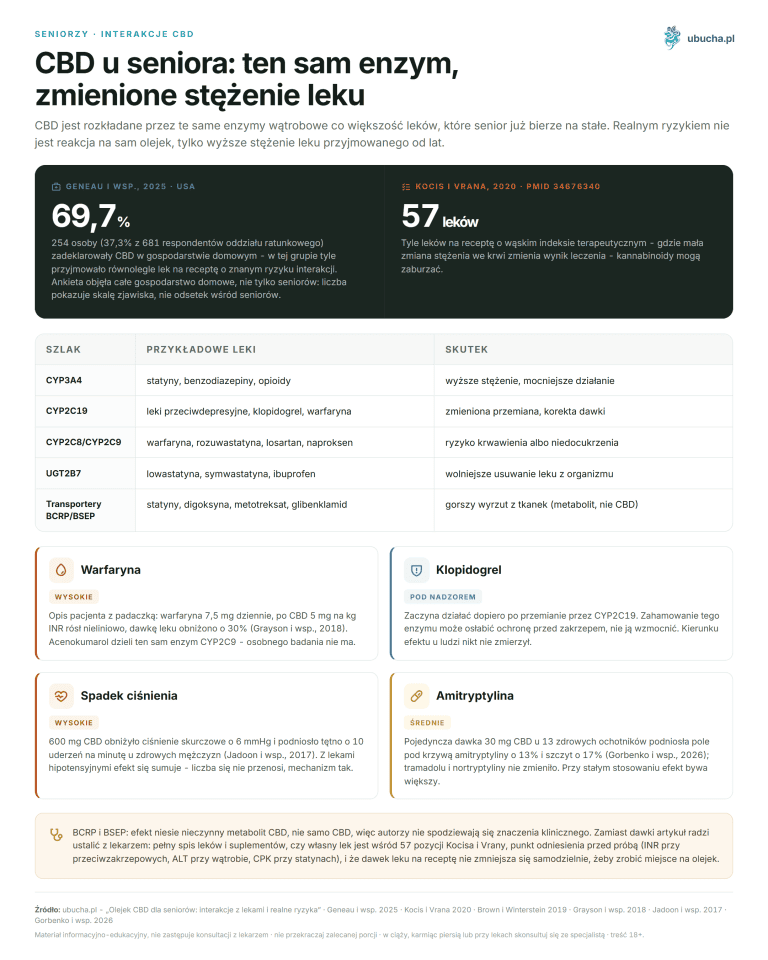
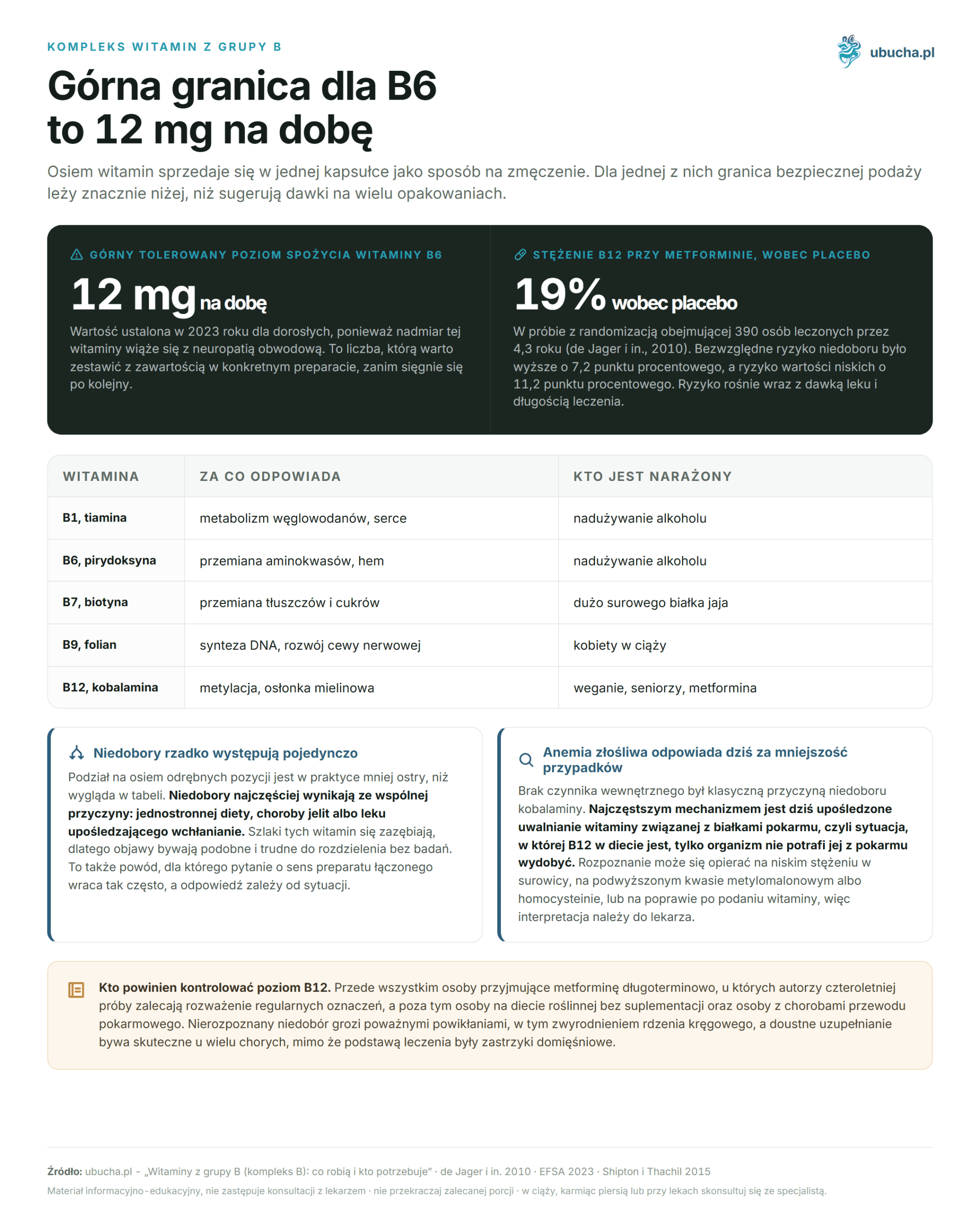
• Metformin lowered B12 levels by an average of 19% in a four-year randomized trial (de Jager et al., BMJ 2010).
• EFSA established in 2023 the upper tolerable intake level for vitamin B6 at 12 mg per day for adults.
• B12 deficiency today most often results from impaired release of the vitamin from food, not from pernicious anemia.
• In vegans, a better-studied problem than B12 is iodine.
What does each of the eight B vitamins do?
Each performs distinct functions, but their pathways overlap, which is why deficiency symptoms can be similar and difficult to distinguish without tests. The table below summarizes the basic roles, dietary sources, and groups at risk of deficiency.
| Vitamin | Main Functions | Dietary Sources | At-Risk Groups for Deficiency |
|---|---|---|---|
| B1, thiamine | carbohydrate metabolism, heart and nervous system function | whole grains, legumes, pork | alcohol abusers, highly processed diet |
| B2, riboflavin | mitochondrial respiratory chain, fat and amino acid metabolism | dairy, eggs, meat, green vegetables | vegans, absorption disorders |
| B3, niacin | NAD synthesis, DNA repair, energy metabolism | meat, fish, nuts, seeds | diet low in tryptophan |
| B5, pantothenic acid | coenzyme A synthesis, fatty acid metabolism | liver, mushrooms, eggs, avocado | rare deficiency with a normal diet |
| B6, pyridoxine | amino acid metabolism, neurotransmitter synthesis, heme production | poultry, fish, potatoes, bananas | alcohol abusers |
| B7, biotin | fat and sugar metabolism, skin and hair condition | egg yolk, nuts, soy, liver | people eating a lot of raw egg white |
| B9, folate | DNA synthesis, erythrocyte production, fetal neural tube development | leafy green vegetables, legumes, liver | pregnant women, individuals with MTHFR variant |
| B12, cobalamin | DNA synthesis, methylation, myelin sheath of nerves | only animal products | vegans, seniors, individuals on metformin |
However, the division into eight distinct items is less sharp in practice than it appears in the table. Deficiencies rarely occur in isolation, as they most often result from a common cause: a one-sided diet, bowel disease, or a drug impairing absorption. This is also why the question of the sense of a combined preparation arises so often, and the answer depends on the situation, which we expand upon in the text about whether a multivitamin has an advantage over single vitamins.
Why does B12 cause the most trouble?
Because its deficiency is common, symptoms are nonspecific, and diagnosis can be difficult even with tests performed. A review published in Clinical Medicine describes B12 deficiency as a common condition, presenting a range from mild and nonspecific to neurological and hematological disorders (Shipton and Thachil, Clinical Medicine, 2015).
It is worth correcting a widespread simplification at this point. Pernicious anemia, or lack of intrinsic factor, was a classic cause of deficiency, but today it accounts for a minority of cases. The most common mechanism is impaired release of the vitamin bound to food proteins, meaning that B12 is present in the diet, but the body cannot extract it from food. The same work notes that undiagnosed deficiency poses serious complications, including degeneration of the spinal cord, and that oral supplementation can be effective in many patients, even though the basis of treatment was intramuscular injections.
The second difficulty concerns the interpretation of results. A review from Mayo Clinic Proceedings describes cobalamin deficiency as a condition with a very varied picture, from neurological to psychiatric symptoms, which in clinical practice can be overlooked or misdiagnosed. Diagnosis is based on three possible grounds: low serum B12 concentration, elevation of markers such as methylmalonic acid or homocysteine, or improvement of symptoms after parenteral vitamin administration (Wolffenbuttel et al., Mayo Clinic Proceedings: Innovations, Quality and Outcomes, 2019). Therefore, a serum measurement does not close the case in either direction. The symptoms attributed to this vitamin are examined separately in the text about vitamin B12 and fatigue.
Does metformin really lower B12 levels?
Yes, and this is one of the better-documented side effects of this drug. The magnitude of the phenomenon was measured in a randomized trial conducted over more than four years, so it is not a single observation or a conclusion from a case description.
The study included 390 individuals with type 2 diabetes treated with insulin, who received metformin at a dose of 850 mg three times a day or placebo for 4.3 years. In the metformin group, the concentration of vitamin B12 decreased by an average of 19%, with a confidence interval from 24% to 14%. The absolute risk of deficiency, understood as a concentration below 150 pmol/l, was higher by 7.2 percentage points at the end of the study, and the risk of low values, ranging between 150 and 220 pmol/l, was higher by 11.2 points. The authors calculated this to the number of individuals for whom treatment must cause one additional case of deficiency, resulting in 13.8 over 4.3 years (de Jager et al., BMJ, 2010).
Earlier work from Archives of Internal Medicine showed what this risk depends on. In a case-control study, 155 individuals with metformin-related B12 deficiency were compared with 310 individuals taking the drug without deficiency. Each increase in dose by 1 g per day was associated with an odds ratio of 2.88, and using the drug for three years or longer with an odds ratio of 2.39 compared to a shorter period (Ting et al., Archives of Internal Medicine, 2006). Therefore, both the dose and time matter, not just the fact of taking the drug. The authors of the BMJ work directly recommend considering regular B12 measurements in individuals treated with metformin long-term, as this is a deficiency that can be prevented.
Is methylfolate better with the MTHFR variant?
The gene variant itself is real and well described, while the superiority of methylfolate over folic acid is a conclusion drawn from the mechanism, not from studies comparing both forms in terms of health outcomes. It is worth separating these two things, as they usually appear together in sales materials.
The MTHFR enzyme is involved in the conversion of folates, necessary for the methylation of DNA, RNA, and proteins. The C677T polymorphism involves the substitution of one amino acid at position 222 and lowers the activity of this enzyme. Individuals with two copies of the variant have higher homocysteine levels, and those with one copy have moderately elevated levels compared to individuals without the mutation. The frequency of this variant varies significantly depending on the region and ethnic background, so a single percentage number for all of Europe would be an oversimplification (Liew and Gupta, European Journal of Medical Genetics, 2015).
The authors of this review indicate that the approach to lower homocysteine is supplementation with vitamin B12 and folic acid, not switching folic acid for its methylated form. This is not an argument against methylfolate, but an indication of where the evidence ends. The comparison of both forms is discussed more broadly in the text about which form of folate is better. Women planning pregnancy should establish a course of action with their healthcare provider, as this concerns a period when folate deficiency has consequences for the development of the fetal neural tube.
Who really needs supplementation, and who is at risk of excess?
Water solubility is sometimes read as a guarantee of safety, and this is a misunderstanding. In 2023, the European Food Safety Authority reassessed vitamin B6 and established its upper tolerable intake level at 12 mg per day for adults, including pregnant and breastfeeding women. The basis is a well-documented association of excess of this vitamin with peripheral neuropathy, and the reference point was set at 50 mg per day with a fourfold uncertainty factor applied. For children and adolescents, the values are correspondingly lower. The authority noted that residents of the Union are unlikely to exceed this level from diet, except for those regularly using supplements with high B6 content (EFSA, EFSA Journal, 2023).
On the side of real indications, it is worth looking at the data, not intuition. A German cross-sectional study compared 36 vegans with 36 individuals on a traditional diet, with eighteen women and eighteen men in each group, aged 30 to 60 years. The nutritional status indicators for vitamin B12 turned out to be similarly good in both groups, despite very low intake of this vitamin from food among vegans. The authors explain this by the high percentage of individuals taking supplements (Weikert et al., Deutsches Ärzteblatt International, 2020).
More interesting is what came out poorly in this study. Iodine excretion in urine was significantly lower in vegans, and one-third of them fell below the threshold of 20 µg/l, which the World Health Organization considers an indicator of severe iodine deficiency. Supplementation aimed at B12 worked, while the component that is less frequently discussed remained neglected. Attention is also required on the other side of the scale. A review from Clinical Medicine notes that high serum concentrations of vitamin B12 are associated with hematological and liver disorders, particularly with neoplastic diseases (Shipton and Thachil, Clinical Medicine, 2015). A result significantly above the norm also requires clarification from a doctor.
Frequently Asked Questions
Can B vitamin complex be taken daily?
Water solubility does not mean there is no limit. The European Food Safety Authority established in 2023 the upper tolerable intake level for vitamin B6 at 12 mg per day for adults, as excess is associated with peripheral neuropathy. Check the B6 content in the product.
Who should monitor their vitamin B12 levels?
Primarily those taking metformin long-term, for whom the authors of a four-year randomized trial recommend considering regular measurements. The risk increases with the dose of the drug and the duration of treatment. Additionally, individuals on a plant-based diet without supplementation and those with gastrointestinal diseases.
By how much does metformin lower B12 levels?
In a randomized trial involving 390 people treated for 4.3 years, the concentration of vitamin B12 decreased by an average of 19% compared to placebo. The absolute risk of deficiency was higher by 7.2 percentage points, and the risk of low values by 11.2 percentage points.
Does a low B12 value always indicate a deficiency?
No, and vice versa is also not true. A review from Mayo Clinic Proceedings indicates that diagnosis can be based on low serum concentration, elevated methylmalonic acid or homocysteine, or improvement after vitamin administration. Interpretation is up to the doctor.
Do vegans always have a B12 deficiency?
No. In a study comparing 36 vegans with 36 individuals on a traditional diet, the B12 nutritional status indicators were similarly good in both groups, which the authors attributed to widespread supplementation among vegans. In the same group, iodine turned out to be the neglected component.
Is methylfolate better than folic acid?
The MTHFR C677T variant indeed lowers the activity of the enzyme converting folates and raises homocysteine levels. However, a review discussing this polymorphism indicates that the approach to lower homocysteine is supplementation with folic acid and vitamin B12, not switching the form of folate.
Preparations with B vitamins can be found in the supplements category.
This article is for informational and educational purposes and does not constitute medical advice. Before starting supplementation, consult your doctor, especially if you are taking medications regularly, are pregnant or breastfeeding, or have chronic illnesses.
Author: Michał Waluk · Published: 2026-08-09 · Updated: 2026-08-11