
Cannabis and Antidepressants: Escitalopram and Sertraline
CBD raises escitalopram and sertraline levels by up to 35%. Trade names from Polish pharmacies, serotonin syndrome symptoms, and when it is dangerous.
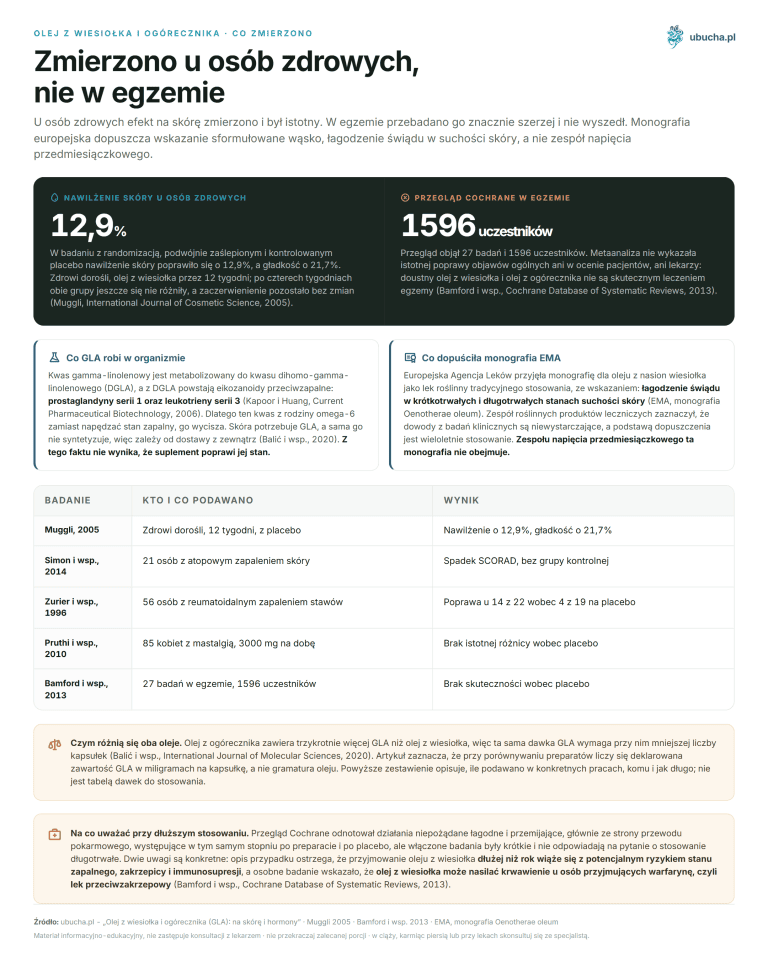
Escitalopram and sertraline are the two drugs most frequently asked about in the context of cannabis, and both react the same way: CBD inhibits liver enzymes, so their blood levels increase, in described cases even by 35 percent. The decision to combine is made by the treating psychiatrist, not the patient. Cannabis and antidepressants are among the most frequently asked about yet pharmacologically risky combinations encountered by Polish psychiatrists. CBD inhibits liver enzymes CYP2D6, CYP3A4, and CYP2C19, which realistically raises blood levels of sertraline, escitalopram, and other SSRIs, while THC in some patients increases the risk of manic episodes and anxiety intensification. The number of people combining antidepressants with cannabis products in Poland grows yearly, yet the topic rarely arises in conversations with the treating doctor despite real clinical risk for therapy course. In this extensive article, we break down pharmacokinetics, pharmacodynamics, and serotonin syndrome mechanisms, indicate when to monitor drug levels and ECG, and provide concrete, practical safe-use guidelines for patients and their families.
KEY INFORMATION
• CBD inhibits liver enzymes CYP2D6, CYP3A4, and CYP2C19, increasing sertraline and escitalopram levels by 25-35% (Vaughn et al., PMC, 2021).
• THC can trigger manic episodes in people with bipolar disorder, even when taking mood stabilizers.
• Combining cannabis with SSRIs, tramadol, or triptans raises serotonin syndrome risk.
• Never stop antidepressants independently - consult a psychiatrist and pharmacist for every combination.
Can cannabis be combined with antidepressants?
Before proceeding, one practical note: pharmacy packaging rarely shows the international nonproprietary name used here. Escitalopram is sold in Poland under names like Escitil, Elicea, Lexapro, Depralin, Mozarin, and Pramatis. Sertraline as Zoloft, Asentra, and Setaloft. Amitriptyline as Amitriptylinum VP, and clomipramine as Anafranil. Everything said below about the substance applies to any preparation containing it, regardless of box name.
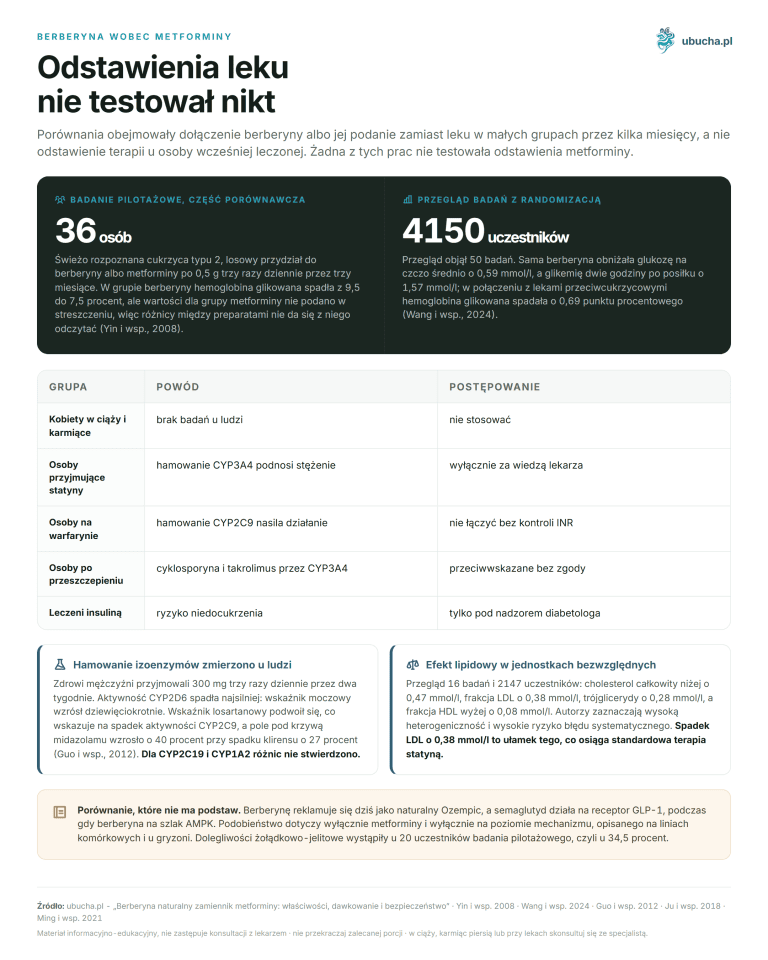
There is no simple yes or no answer; the default recommendation is: not without psychiatric supervision. An in vitro study by Bansal et al. (Drug Metabolism and Disposition, 2020) showed that CBD and THC inhibit five main cytochrome P450 isoforms metabolizing most antidepressants. A full list of CBD interactions with popular drugs is described in our guide on CBD and drug interactions.
Depression affects millions in Poland, with a significant portion untreated fully. In this gap, CBD supplements, hemp oils, CBD flower, and medical marijuana appear. Patients often use them independently without informing their psychiatrist.
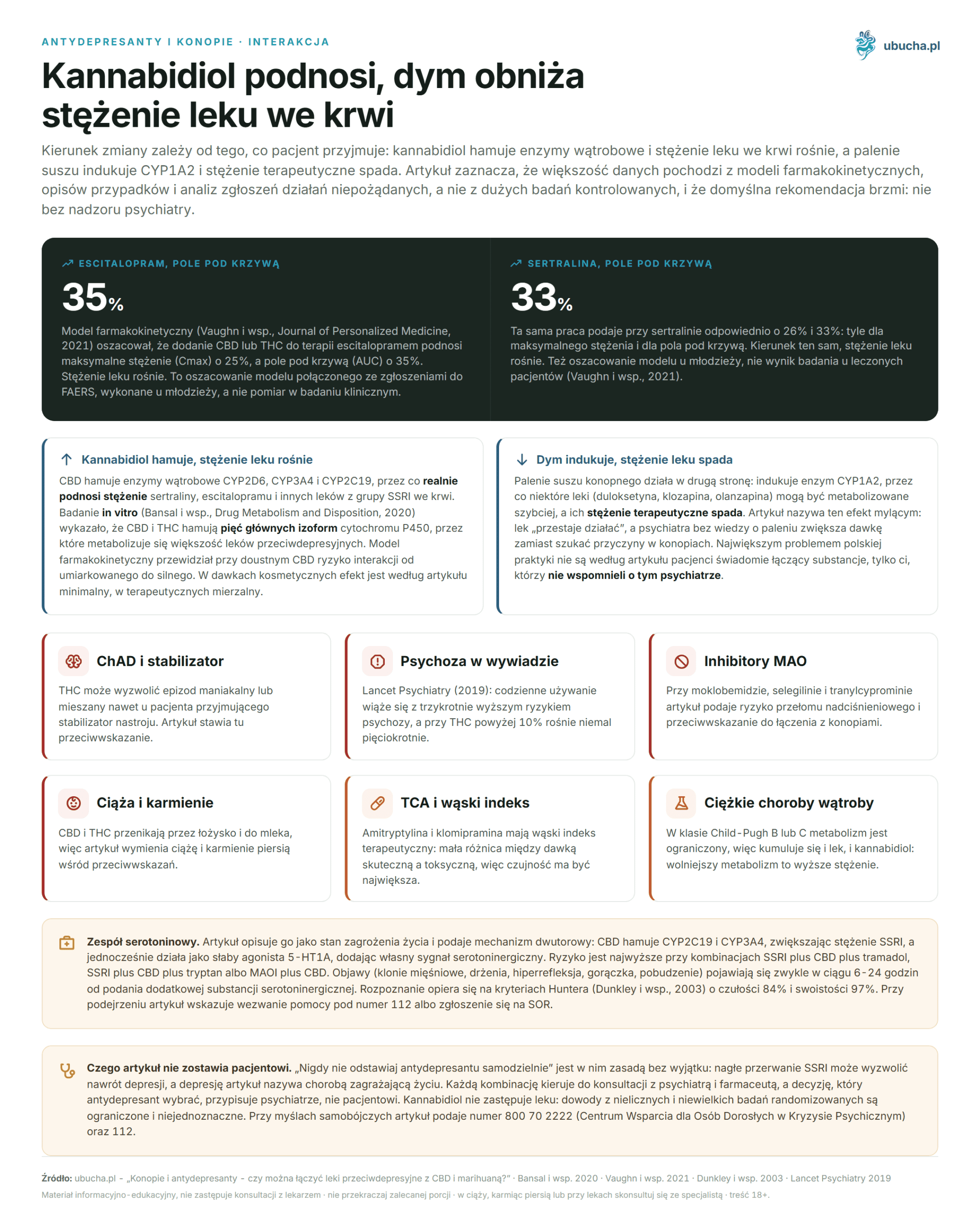
The clinical answer to “can they be combined” is threefold. At low oral CBD doses up to 25 mg/day, interaction with most SSRIs is clinically insignificant in healthy adults. At therapeutic doses (100-600 mg/day), CYP450 inhibition is measurable and may require antidepressant dose reduction. Simultaneous vaporization of high-THC marijuana alters both drug metabolism and serotonin action.
Risk does not increase evenly: it depends on the drug, dose, and patient condition. The table below shows situations requiring highest vigilance.
| Situation | Example | Trade name in Polish pharmacy | Why risk exists |
|---|---|---|---|
| Narrow therapeutic index | TCA (amitriptyline, clomipramine), MAOI (moclobemide, selegiline) | Anafranil, Amitriptylinum VP | Small difference between effective and toxic dose |
| Bipolar disorder | Patient on mood stabilizer | Depends on stabilizer | THC can trigger manic episode |
| Polypharmacy | 3 or more psychotropic drugs simultaneously | Not applicable to single drug | Interaction accumulation, harder to identify culprit |
| Age and liver failure | Patients over 65, liver diseases | Not applicable to single drug | Slower metabolism, higher concentration at same dose |
In Polish clinical practice, the biggest problem is not patients consciously combining substances. Most therapeutic failures occur in people who started CBD supplementation believing it to be a “natural cosmetic” and did not mention it to their psychiatrist. The effect is the same: unexplained sedation, nausea, or lack of response to a previously well-chosen drug.
An in vitro study by Bansal et al. (Drug Metabolism and Disposition, 2020, PMC7543485) showed that CBD and THC inhibit CYP1A2, CYP2C9, CYP2C19, CYP2D6, CYP3A isoforms - pathways metabolizing most antidepressants. The pharmacokinetic model predicted moderate to strong interaction risk with oral CBD.
How do antidepressants work neurochemically?
Antidepressants increase neurotransmitter availability in brain synapses, mainly serotonin, noradrenaline, and dopamine. According to NICE guidelines (NG222, 2022), full clinical response appears after 4-6 weeks of treatment, and 30-40% of patients find the first drug ineffective and require switching.
Different classes vary in mechanism and metabolic pathway, directly affecting interaction strength with CBD and THC.
| Class | Examples | Main metabolic pathway | Clinical note |
|---|---|---|---|
| SSRI | sertraline, escitalopram, citalopram, fluoxetine, paroxetine, fluvoxamine | CYP2C19, CYP2D6, CYP3A4 | Over 65% of antidepressant prescriptions in Poland |
| SNRI | venlafaxine, duloxetine | CYP2D6, CYP1A2 | Block SERT and NET simultaneously |
| TCA | amitriptyline, clomipramine, nortriptyline, doxepin | CYP2D6, CYP1A2, CYP3A4 | Narrow therapeutic index |
| MAOI | moclobemide, selegiline, tranylcypromine | monoamine oxidase | Absolute contraindication with cannabis |
| Newer molecules | bupropion, mirtazapine, vortioxetine | CYP2B6 (bupropion), CYP3A4/2D6/1A2 (mirtazapine), CYP2D6 (vortioxetine) | Bupropion lowers seizure threshold; high THC may lower it further |
In all cases, there is a specific metabolic pathway CBD can block. For patients, this means no antidepressant is completely interaction-proof or exempt from doctor consultation before adding cannabidiol.
Genetics is an additional variable. Some people are slow metabolizers of CYP2D6 or CYP2C19, who achieve higher drug levels without CBD than average. Adding cannabidiol may raise drug levels faster and stronger than in fast metabolizers. Without genetic testing, psychiatrists usually rely on symptom observation and, if possible, blood drug level measurement.
NICE Guideline NG222 (2022) recommends SSRIs combined with cognitive-behavioral therapy as first-line treatment for major depression. Full clinical response appears after 4-6 weeks; 30-40% require drug switching or augmentation, increasing pharmacotherapy complexity and interaction risk.
How does CBD inhibit cytochrome P450 and alter antidepressant levels?
CBD is one of the strongest plant-based cytochrome P450 inhibitors known pharmacologically. Vaughn et al.’s pharmacokinetic model (Journal of Personalized Medicine, 2021, Cincinnati Children’s Hospital Medical Center team) estimated that adding CBD or THC to escitalopram therapy raises its maximum concentration (Cmax) by 25% and area under the curve (AUC) by 35%, and for sertraline by 26% and 33%, respectively.
Cytochrome P450 is a liver enzyme family responsible for metabolizing most prescription drugs. CBD interacts by binding the enzyme’s active site, blocking other molecules, and with long-term use may alter gene expression coding these enzymes. The strongest inhibition affects CYP3A4, CYP2D6, CYP2C19, and CYP2C9 - those metabolizing most SSRIs. Cosmetic doses (5-15 mg CBD) have minimal effect. Therapeutic doses similar to Epidiolex use in pediatric epilepsy (10-20 mg/kg/day) strongly block CYP3A4 and CYP2C19.
Higher plasma levels of sertraline, escitalopram, citalopram, or fluoxetine intensify expected side effects: nausea, diarrhea, headache, insomnia, muscle tremors, excessive sweating, and sedation. In extreme cases, serotonin syndrome occurs, discussed later. Smoking cannabis flower acts oppositely: it induces CYP1A2, causing faster metabolism of some drugs (e.g., duloxetine, clozapine, olanzapine), lowering therapeutic levels. Clinically, this may appear as “drug stops working,” and psychiatrists unaware of cannabis use may increase dose instead of investigating cannabis as cause. The effect is dose-dependent: occasional CBD drops rarely cause clinically significant changes, but daily doses in hundreds of milligrams over weeks accumulate inhibition and gradually raise drug levels even without dose changes.
Vaughn et al.’s pharmacokinetic model, developed by Cincinnati Children’s Hospital Medical Center and published in Journal of Personalized Medicine (2021), combined pharmacokinetic data with FDA adverse event reports (FAERS) to estimate THC and CBD impact on escitalopram and sertraline levels in youth. Result: Cmax increase by 25-26% and AUC by 33-35%, with more reports of cough, diarrhea, dizziness, and fatigue.
What are the pharmacodynamic interactions of cannabis with antidepressants?
Pharmacodynamics describes how substances act on the same receptors. CBD binds serotonin receptor 5-HT1A as a weak partial agonist (Russo et al., Neurochemical Research, 2005), which theoretically may synergize with SSRI action but practically accumulates risk of excessive serotonergic stimulation. This binding mechanism is detailed in our article on CBD and serotonin receptor 5-HT1A.
Receptor 5-HT1A controls anxiety, mood, and stress response - the same receptor buspirone targets for anxiolytic effect. When a patient takes SSRIs (raising serotonin) and adds CBD (stimulating 5-HT1A), total serotonergic activation may approach safety threshold. At low CBD doses (up to 50 mg), effect is subtle; at clinical doses (300-800 mg, as in refractory epilepsy studies), it becomes clinically significant.
THC acts differently: it binds CB1 receptors in prefrontal cortex, hippocampus, amygdala, and striatum, increasing dopamine release in the mesolimbic pathway. In healthy people, this causes euphoria; in those predisposed to psychosis, it may cause dissociation, paranoia, and anxiety. In patients on SSRIs or SNRIs, THC alters dopamine-serotonin balance, and in bipolar disorder remission may “break down” mood stabilizer protection, triggering manic episodes.
Another aspect is endogenous endocannabinoids, mainly anandamide (AEA), which is lower in depressed people than healthy controls. CBD raises AEA levels, but not via FAAH enzyme inhibition: human FAAH is not inhibited by cannabidiol; the increase is explained by competition for intracellular FABP transport proteins delivering AEA to FAAH (Elmes, J Biol Chem, 2015). Theoretically, this could support SSRI action, but no large randomized trial has yet shown that adding CBD to SSRIs accelerates depression remission statistically significantly.
Russo et al. (Neurochemical Research, 2005) demonstrated cannabidiol acts as a partial agonist of serotonin receptor 5-HT1A with micromolar affinity. At clinical doses used in refractory epilepsy, this activation sums with SSRI action on the same receptor, increasing risk of excessive serotonergic stimulation when used together.
What do scientific studies say about combining CBD and marijuana with SSRIs?
The evidence base is limited and uneven. Most data come from pharmacokinetic models, case reports, and adverse event analyses, not large controlled trials - so conclusions must be read cautiously.
Brown and Winterstein’s review in Journal of Clinical Medicine (2019) analyzed available data on CBD drug interactions, identifying CYP3A4 and CYP2C19 as main risk pathways, recommending pharmacological vigilance when using CBD with drugs metabolized by these enzymes, including some antidepressants.
A self-reported observational study in Frontiers in Psychiatry (2021) included 538 people reporting anxiety or depression, 368 using medical marijuana. Authors noted lower reported depression levels among cannabis users, but the method relied on self-assessment and did not control for concurrent pharmacotherapy - showing correlation, not efficacy. Vaughn et al.’s model, partly based on FAERS reports, identified cough, diarrhea, dizziness, and fatigue as symptoms more frequently reported with combined CBD and CYP2C19-metabolized drugs.
Randomized clinical trials of CBD in depression are few and inconsistent: some show slight antidepressant effect at ~300 mg/day doses; others find no difference from placebo. Large controlled trials are difficult due to product diversity, blinding challenges (patients usually sense CBD vs placebo), and cost of long-term psychiatric observation. Available evidence remains too limited and heterogeneous to recommend CBD as standard antidepressant adjunct.
Brown and Winterstein (Journal of Clinical Medicine, 2019) reviewed literature on CBD adverse effects and drug interactions, highlighting CYP3A4 and CYP2C19 as main risk points. They recommended clinical vigilance and symptom monitoring in patients taking CBD with drugs metabolized by these pathways, including some antidepressants.
What research says about cannabidiol and depression is summarized separately in the article on CBD and depression.
When can cannabis help or harm in depression?
The boundary between potential benefit and harm depends on patient profile and dose. According to the Polish Psychiatric Association, medical marijuana remains a last-resort drug for refractory cancer pain, chronic spasticity, and chemotherapy-induced nausea, not for depression per se. We separately described whether CBD helps treat depression and how cannabis can support depression treatment and why it does not replace it.
Scenarios where psychiatrists may accept low CBD doses include:
- Depression with generalized anxiety, stable on low SSRI dose. CBD 25-50 mg/day may support anxiolytic effect, assessed every 4 weeks.
- Depression with primary insomnia. Evening CBD 25-75 mg shortens sleep latency if it does not increase morning sedation.
- Depression with chronic pain. Broad-spectrum CBD oil may aid pain control with less risk than opioids.
- Depression remission, no current episode. CBD as a supplement during occasional stress can be safe with careful monitoring.
The contraindication list is longer and more categorical. Bipolar disorder deserves special attention: regular marijuana use is linked to more frequent mania relapses and harder mood stabilization, even with mood stabilizers (lithium, valproate, lamotrigine). Sometimes first mania appears only after THC exposure, before diagnosis.
| Contraindication | Reason |
|---|---|
| Bipolar disorder | THC can trigger manic or mixed episode |
| Schizophrenia or psychotic episode history | Daily cannabis use triples psychosis risk; THC >10% nearly quintuples it |
| Pregnancy and breastfeeding | CBD and THC cross placenta and into milk |
| MAO inhibitor treatment | Risk of hypertensive crisis |
| Recent suicide attempt or active suicidal thoughts | THC may increase impulsivity |
| Severe liver disease (Child-Pugh B or C) | Reduced metabolism, CBD and drug accumulation |
| Children and adolescents under 18 (except refractory epilepsy) | Immature brain, higher risk of lasting THC effects |
A Lancet Psychiatry review (2019) indicates daily cannabis use triples psychosis risk, and THC strains >10% nearly quintuple it compared to non-users. For patients with psychotic episode history or bipolar disorder, this is one of the strongest documented reasons against high-THC cannabis use.
What are serotonin syndrome symptoms and when to seek help?
Serotonin syndrome is life-threatening and requires immediate intervention. Full syndrome mortality is several percent untreated but drops below 1% with prompt diagnosis and serotonin drug discontinuation.
Diagnosis is based on Hunter criteria (Dunkley et al., 2003), with 84% sensitivity and 97% specificity. The patient must be on a serotonergic drug and present at least one of five symptom sets:
- spontaneous muscle clonus;
- induced clonus plus agitation or sweating;
- ocular clonus plus agitation or sweating;
- hypertonia plus fever above 38°C plus clonus;
- tremor plus hyperreflexia.
Additional symptoms include tachycardia over 100/min, dilated pupils, diarrhea, sweating, motor agitation, and disorientation. Symptoms usually appear within 6-24 hours after adding a serotonergic substance. The mechanism by which CBD and THC increase risk is twofold: CBD inhibits CYP2C19 and CYP3A4, raising SSRI levels, and acts as a weak 5-HT1A agonist, adding serotonergic signaling independently. Risk is highest with SSRI plus CBD plus tramadol, SSRI plus CBD plus triptan, or MAOI plus CBD combinations.
Serotonin syndrome is often confused with neuroleptic malignant syndrome, as both cause fever and muscle rigidity. They differ in symptom onset speed (hours for serotonin syndrome, days for neuroleptic) and presence of muscle clonus typical for serotonin excess. This difference matters practically, as treatments differ.
If serotonin syndrome is suspected, time is critical: do not wait, call emergency number 112 or go to ER, stop all serotonergic drugs (including CBD and THC), and inform doctors about all substances taken, including supplements and herbs. Hospital treatment includes external cooling, benzodiazepines for agitation, and in severe cases cyproheptadine as serotonin antagonist. Most patients recover within 24-72 hours after drug discontinuation.
Hunter diagnostic criteria (Dunkley et al., 2003) have 84% sensitivity and 97% specificity for serotonin syndrome diagnosis. They include muscle clonus, hyperreflexia, tremor, hyperthermia, and agitation, typically appearing 6-24 hours after dose increase or adding a second serotonergic substance, including CBD and some medical marijuana strains.
How to monitor therapy when patient uses CBD and antidepressants?
Monitoring relies on four pillars: clinical interview, blood drug level measurement (TDM), ECG, and liver function tests. The AGNP working group recommends therapeutic drug monitoring for patients taking antidepressants with strong CYP inhibitors, including clinical-dose CBD.
| Test | When to perform | What to watch for |
|---|---|---|
| TDM (drug level) | 2 weeks after adding CBD at doses ≥100 mg/day | Sertraline 10-150 ng/ml, escitalopram 15-80 ng/ml, citalopram 50-110 ng/ml, venlafaxine 100-400 ng/ml |
| ECG (QTc interval) | Baseline, after 2 weeks, then every 3-6 months | QTc >470 ms in men and >480 ms in women requires cardiology consult |
| Liver function tests (ALT, AST, GGT, bilirubin) | Baseline, after 4 weeks, then every 3-6 months | ALT or AST elevation >3x normal with CBD >300 mg/day |
TDM measures serum drug concentration just before next dose, assessing if patient is within therapeutic window. Sample is usually taken in the morning before dose to get reliable trough level. If level rises above window after adding CBD, doctor reduces SSRI dose by 25-50% or stops CBD depending on indication. Testing is available in Polish university and some private labs, usually costing several hundred PLN, with results in a few business days. Ask your psychiatrist about telemedicine visits dedicated to TDM result discussion, as some centers offer this without travel. Keep results in paper or electronic form for future visits, especially if changing doctors, as single measurement without reference points is less informative than trends from multiple tests.
The AGNP working group recommends therapeutic drug monitoring (TDM) for patients combining antidepressants with strong cytochrome P450 inhibitors, including CBD at doses above 100 mg/day. Approximate therapeutic windows: sertraline 10-150 ng/ml, escitalopram 15-80 ng/ml, citalopram 50-110 ng/ml, venlafaxine 100-400 ng/ml.
Practical recommendations for patients in Poland
Polish realities are specific: medical marijuana available on prescription (RPW) since 2017, CBD supplements freely sold since 2018, and limited public access to TDM. Many psychiatrists rarely ask directly about cannabis use, making early interaction detection difficult. For patients considering combining CBD with antidepressants, a clear procedure exists:
- Do not stop antidepressants independently - sudden SSRI discontinuation may trigger depression relapse.
- Schedule a psychiatrist visit and disclose any CBD or marijuana products used or considered.
- Assess dose: cosmetic 5-15 mg daily is a different risk level than therapeutic 100-600 mg.
- Perform baseline tests: liver function, ECG, possibly antidepressant TDM.
- Start at lowest CBD dose, 10-25 mg/day, observe for 2 weeks, then increase gradually.
- Keep a diary of doses and physical and mental symptoms.
- Monitor effects every 4-6 weeks with psychiatrist.
- Never mix with alcohol, tramadol, or triptans.
CBD product quality matters pharmacologically. Johns Hopkins study (JAMA Network Open, 2022) tested 105 topical CBD products and found only 24% had label-accurate CBD content, and 35% contained THC, many without label disclosure. Selection criteria are specific: broad-spectrum (THC-free) is pharmacokinetically safer than full-spectrum; a certificate of analysis (COA) from an independent lab confirms composition; THC content must be below national threshold 0.3% calculated as sum of delta-9-THC and THCA.
The first contact point should be the treating psychiatrist; if uncertain, ask for referral to a clinical pharmacologist or medical marijuana clinic. For patients interested in oils and other cannabinoid products, one experienced Polish store is sklep konopny u Bucha, where every product has a lab certificate and medical questions are directed to a doctor.
Johns Hopkins study (JAMA Network Open, 2022) tested 105 topical CBD products sold online and found only 24% had label-accurate CBD content, and 35% contained undeclared tetrahydrocannabinol. For patients on antidepressants, only broad-spectrum products with independent lab certification and clear production date are recommended.
What alternatives to cannabis exist for depression treatment?
Before patients turn to CBD or marijuana as antidepressant support, it is worth knowing the spectrum of recognized, effective alternatives. Cipriani et al.’s meta-analysis in Lancet (2018), covering 522 randomized clinical trials and 116,477 patients, compared 21 antidepressants and remains the largest such work - CBD and medical marijuana were not evaluated due to lack of large qualifying studies.
| Alternative | Evidence of efficacy | Practical note |
|---|---|---|
| Psychotherapy (CBT, IPT, ACT) | Efficacy comparable to SSRIs in mild and moderate depression | NFZ reimburses in mental health clinics; waiting lists can be long |
| Physical activity | Meta-analysis by Noetel et al. (BMJ, 2024, 218 studies) - effect comparable to SSRIs in mild and moderate depression | 3-5 times weekly, 30-60 minutes, any type of exercise |
| Light therapy | First-line treatment for seasonal depression, support for non-seasonal depression | 10,000 lux, 30 minutes in the morning |
| Omega-3 and vitamin D | Documented supportive effect in deficiency | Dose depends on baseline levels |
| Ketamine and esketamine | Rapid action in treatment-resistant depression, often within hours | Available in drug programs and some private centers, high cost |
None of these methods work as well in isolation as combined with pharmacological treatment: psychotherapy added to antidepressants usually yields better results than either alone, and physical activity also improves drug tolerance, limiting weight gain and fatigue. Before choosing any option as adjunct, discuss the plan with a psychiatrist to avoid overlapping side effects, e.g., excessive sedation with simultaneous CBD, ketamine, and hypnotics.
Cipriani et al.’s meta-analysis in Lancet (2018), covering 522 randomized clinical trials and 116,477 patients, compared 21 antidepressants and showed all outperform placebo, with highest efficacy for amitriptyline (OR 2.13), mirtazapine (OR 1.89), and paroxetine (OR 1.75). CBD and medical marijuana were not included due to lack of qualifying large studies.
Frequently Asked Questions
Can I take CBD oil if I am on sertraline or escitalopram?
Theoretically yes, but only after consulting a psychiatrist. CBD inhibits CYP2C19 and CYP2D6, increasing sertraline and escitalopram levels by 25-35% (Vaughn et al., PMC, 2021). At CBD doses up to 25 mg/day, the effect is usually subtle. Above 100 mg, consider measuring drug blood levels and ECG monitoring.
Is smoking marijuana safe while taking antidepressants?
No. Smoking marijuana simultaneously inhibits metabolism of some drugs via CBD in the plant and induces other pathways via CYP1A2 from smoke, making the effect unpredictable. THC can also increase anxiety, trigger manic episodes in people with bipolar disorder, and disrupt SSRI action at the synapse level. Do not combine without psychiatric consultation.
Can CBD replace antidepressants?
No. Evidence from few and small randomized studies is limited and inconclusive, so it does not justify replacing SSRIs with cannabidiol. Depression is life-threatening; stopping antidepressants independently and switching to CBD may cause episode relapse, suicidal thoughts, and hospitalization.
Does CBD cause serotonin syndrome?
CBD alone at moderate doses probably does not, but it increases risk when combined with SSRIs, SNRIs, tramadol, triptans, MDMA, or St. John’s wort. The mechanism is dual: CYP inhibition and weak 5-HT1A agonism. Risk mainly concerns high CBD doses above 300 mg/day and polypharmacy. Serotonin syndrome symptoms require urgent medical help.
Do I have to tell my doctor I use CBD?
Yes, absolutely. Lack of this information is one of the most common causes of unexplained therapeutic failures. Many patients do not spontaneously report CBD use, treating it as a supplement without clinical significance. Talking to your doctor allows safe dosing and monitoring planning.
Does CBD help with anxiety accompanying depression?
There is evidence of CBD’s anxiolytic effect at doses of 25-600 mg/day (meta-analysis in Journal of Clinical Medicine, 2022). In patients with depression and comorbid anxiety, a psychiatrist may approve low CBD doses as support for SSRI therapy after risk assessment. This requires monitoring and does not replace psychotherapy.
Can THC trigger mania in people with bipolar disorder?
Yes. Regular marijuana use is associated with more frequent manic episode relapses in people with bipolar disorder, even when taking mood stabilizers. The risk concerns smoking, vaporizing, and THC edibles. For people with bipolar disorder or suspected bipolar disorder, THC cannabis is absolutely contraindicated.
What are the safest antidepressants to combine with low-dose CBD?
There are no completely risk-free options. Relatively lower pharmacokinetic risk is attributed to bupropion, metabolized by CYP2B6, which CBD affects less, and mirtazapine. Every combination requires psychiatric consultation, dose adjustment, and monitoring - the choice of antidepressant is the psychiatrist’s decision, not the patient’s.
Summary: what to do with this knowledge?
Cannabis and antidepressants form a high-risk pharmacological combination requiring awareness, great caution, and constant psychiatric supervision. Available data allow several firm conclusions: CBD at therapeutic doses above 100 mg/day measurably increases sertraline, escitalopram, citalopram, and fluoxetine levels; THC poses a real relapse risk in bipolar disorder or schizophrenia; SSRI combined with CBD, tramadol, and triptans raises serotonin syndrome risk.
What to do? Never stop antidepressants without psychiatrist consultation, regardless of CBD advertising claims. Always inform your doctor about cannabidiol use, even “cosmetic” sublingual drops. Choose CBD products with independent lab certification, broad-spectrum, THC-free. Start at lowest doses, increase gradually, and keep a diary. Monitor liver tests, ECG, and if possible, antidepressant blood levels.
Good depression pharmacotherapy cannot be left to chance. If CBD can support treatment, it is only within conscious cooperation between patient, psychiatrist, and clinical pharmacist, with a clear monitoring plan and contact point for concerning symptoms. Without this cooperation, any attempt to combine CBD, THC, or cannabis flower with antidepressants is a risk not worth potential benefit, especially since CBD’s efficacy in depression treatment remains scientifically unconfirmed.
If you seek CBD oil with known, certified composition, browse the CBD oils section at sklep konopny u Bucha and consult your psychiatrist about your choice.
This article is informational and educational and does not replace consultation with a psychiatrist or clinical pharmacist. Depression is life-threatening: independent antidepressant discontinuation or modification may lead to relapse, suicidal thoughts, and hospitalization. CBD products and medical marijuana are not recognized first-line depression treatments in Poland, and during pregnancy, breastfeeding, under 18 years old, or in patients with bipolar disorder, schizophrenia, severe liver disease, or on MAO inhibitors, cannabis products are contraindicated. If you have suicidal thoughts, call 800 70 2222 (Adult Mental Health Crisis Support Center) or 112.
Author: Michał Waluk · Published: 2026-05-04 · Updated: 2026-08-24