
Turmeric and Curcumin: Anti-Inflammatory Properties and How to Increase Absorption
How much curcumin is in the spice, under what conditions the famous 2000% increase after piperine was measured, what meta-analyses show about joint pain, and what risks have been described.
Curcumin is one of the most studied plant compounds and at the same time one of the most controversial. There are thousands of works, but in 2017, a team of medicinal chemists described it as a substance that interferes with screening tests and generates false positive results. Additionally, there is the absorption problem: standard powder passes through the intestine almost without a trace in the plasma. This text separates three things that are usually conflated in guides, namely the spice, the standardized extract, and the results of clinical trials. You will see under what conditions the famous 2000% increase after piperine was measured, what meta-analyses on joint pain really show, and why the American liver damage monitoring network began recording cases after turmeric preparations.
KEY INFORMATION
• A meta-analysis of 15 studies involving 1621 people showed less joint pain, and the quality of evidence on the GRADE scale was rated from moderate to high (Zeng et al., Bioscience Reports, 2021).
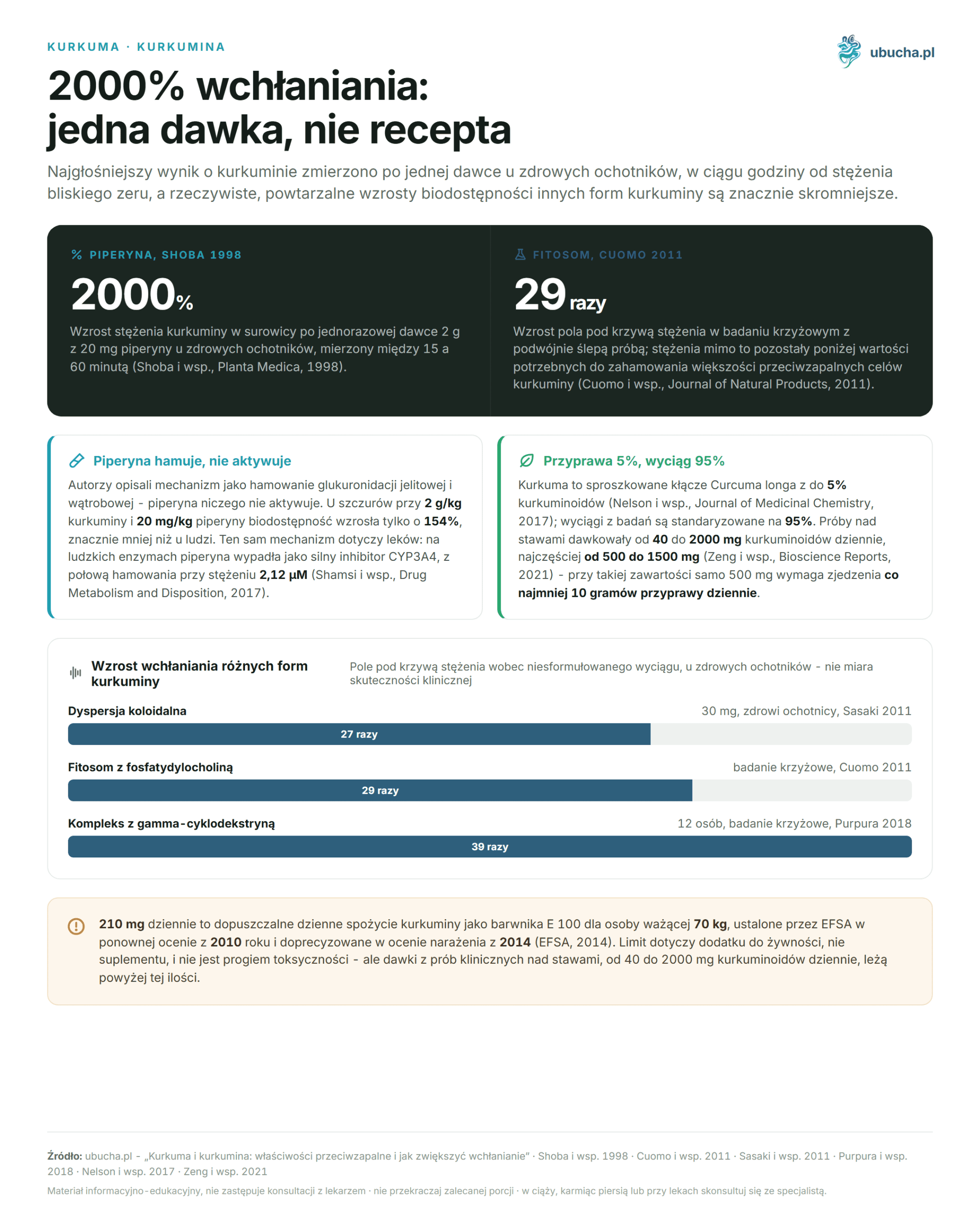
• A 2000% increase after piperine was measured after a single dose of 2 g in healthy volunteers, within a window of 15 to 60 minutes (Shoba et al., 1998).
• The spice contains up to 5% curcuminoids, while the standardized extract contains 95%.
• The DILIN network reported 10 cases of liver damage after turmeric, including one death.
What is the difference between turmeric as a spice and standardized extract?
Turmeric is the powdered rhizome of the Curcuma longa plant and contains up to about 5% curcuminoids. Supplements are based on a standardized extract of 95%, which is roughly twenty times stronger. The doses at which curcumin was studied in clinical trials are measured in hundreds of milligrams of pure curcuminoids, so a teaspoon of spice in curry will not replace them.
The content of up to 5% is reported in a review of the medicinal chemistry of curcumin in Journal of Medicinal Chemistry (Nelson et al., 2017). The curcuminoid fraction itself is not homogeneous: it consists of curcumin, demethoxycurcumin, and bisdemethoxycurcumin, and the proportions depend on the variety and drying method. Clinical trials on joints collected by the meta-analysis by Zeng and colleagues used doses from 40 to 2000 mg of curcuminoids daily, most often from 500 to 1500 mg. With a content of up to 5%, to get 500 mg, one would need to consume at least 10 grams of spice daily.
Additionally, there is a regulatory filter that guides are silent about. The acceptable daily intake of curcumin as food color E 100 is 3 mg per kilogram of body weight, which is about 210 mg for a person weighing 70 kg. This value was established by the EFSA panel in a re-evaluation from 2010, and it is reiterated in a refined exposure assessment from 2014 (EFSA, 2014). The limit applies to food additives, not supplements, and is not a toxicity threshold. However, it shows that the doses used in clinical trials exceed the amount that the regulator considered routinely safe in the daily diet. This is a good reason not to treat a supplement as a spice in a larger package.
Does piperine really increase curcumin absorption by 2000%?
This number comes from a single study from 1998 and describes a very specific measurement. A single dose of 2 g of curcumin with 20 mg of piperine in healthy volunteers, with serum concentrations measured between 15 and 60 minutes. This is not the result of long-term supplementation or any health effect.
Shoba et al. (Planta Medica, 1998) checked this in parallel in rats and humans. In rats, with 2 g/kg of curcumin and 20 mg/kg of piperine, bioavailability increased by 154%. In humans, after 2 g of curcumin alone, serum concentrations were undetectable or very low, and after adding piperine, the increase was 2000%. The authors described the mechanism as inhibition of intestinal and hepatic glucuronidation, meaning slowing down degradation. Piperine does not activate anything.
We noticed when comparing labels that two things are lost when quoting this number. First, the 2000% is calculated from a base close to zero, so absolute concentrations remain low. Second, the same enzyme inhibition applies to drugs. In comparison on human recombinant enzymes, piperine was found to be a strong inhibitor of CYP3A4, with half-maximal inhibition at a concentration of 2.12 µM, and CYP1A2; it acted weakly against CYP2C9 and CYP2D6 (Shamsi et al., Drug Metabolism and Disposition, 2017). Inhibition of enzymes in this family slows down the breakdown of drugs that are their substrates, and a significant portion of prescription preparations passes through CYP3A4. If you are taking anything regularly, this is a moment to talk to a pharmacist, not to reach for a capsule with pepper in the composition.
Which forms of curcumin have measured higher bioavailability?
Three forms have published measurements in humans: phytosome with phosphatidylcholine about 29 times, colloidal dispersion 27 times, complex with gamma-cyclodextrin 39 times. All these numbers are comparisons of the area under the curve of concentration against unformulated extract, not measures of clinical efficacy.
Cuomo et al. (Journal of Natural Products, 2011) compared a phytosome with a corresponding mixture of curcuminoids in a crossover study with a double-blind trial. Absorption was about 29 times higher, but the authors added a caveat that rarely makes it to packaging: only phase 2 metabolites were detected in plasma, and concentrations remained below the values needed to inhibit most anti-inflammatory targets of curcumin.
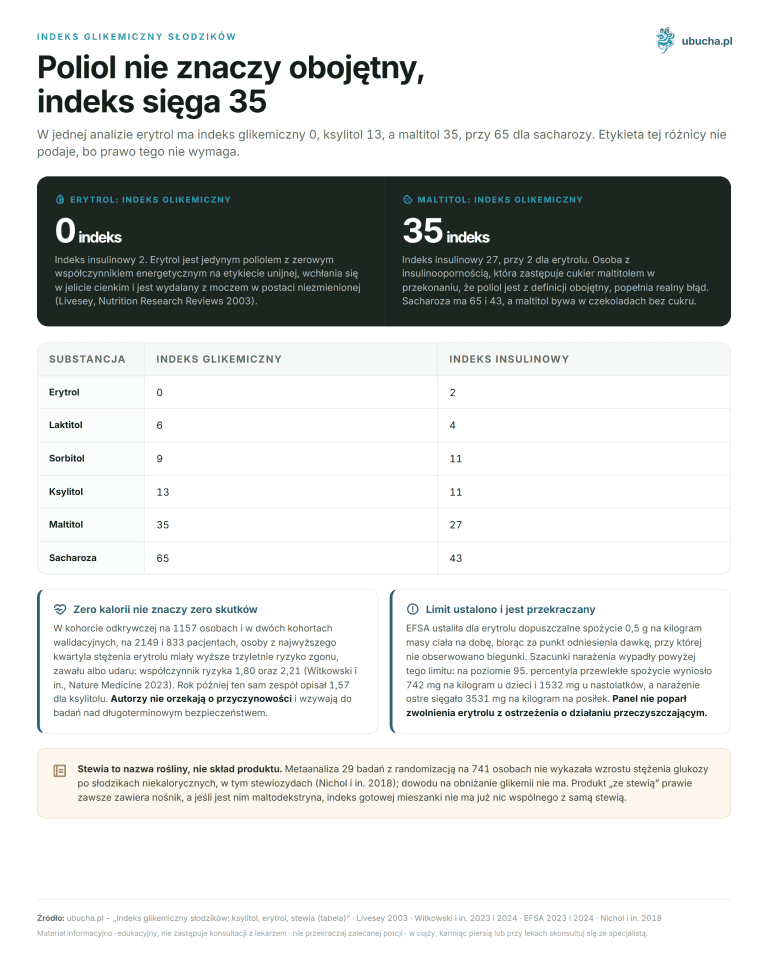
| Form | Measured Increase | Measurement Conditions |
|---|---|---|
| 95% extract with piperine | by 2000% | 2 g once, healthy volunteers, Shoba 1998 |
| Phytosome with phosphatidylcholine | about 29 times | crossover study, only phase 2 metabolites, Cuomo 2011 |
| Colloidal dispersion | 27 times | 30 mg, healthy volunteers, Sasaki 2011 |
| Complex with gamma-cyclodextrin | 39 times | 12 people, crossover study, Purpura 2018 |
Sasaki et al. (Biological and Pharmaceutical Bulletin, 2011) measured a 27-fold increase after 30 mg, and Purpura et al. (European Journal of Nutrition, 2018) a 39-fold increase for gamma-cyclodextrin in 12 people. Multipliers of a hundred or more, circulating in commercial materials, have no equivalent in these publications.
What do meta-analyses on curcumin and joint pain show?
Several meta-analyses consistently find less pain, but with caveats. A review of 15 studies involving 1621 people rated the quality of evidence on the GRADE scale as high for pain and stiffness measured on the WOMAC scale and moderate for joint function and adverse events. The heterogeneity of some results was high.
Zeng et al. (Bioscience Reports, 2021) report an I2 of 69% for comparison with placebo on the VAS scale and 75% for function on the WOMAC scale. The authors indicate the twelfth week as an important time point, as only then did pain, function, and stiffness improve simultaneously. The frequency of adverse events did not differ from placebo. Bideshki et al. (Phytotherapy Research, 2024) compiled 11 meta-analyses in an umbrella review and confirmed a decrease in both scales. Hsiao et al. (Complementary Therapies in Medicine, 2021) compared high and low doses among 1258 participants and found no difference between them, which weakens the thinking that “more means better”.
Separately, it is worth reading two works by Belcaro, which are repeatedly cited in Polish internet. The number of 58% reduction in the total WOMAC scale and the increase in walking distance from 76 to 332 meters come from a product registry on 50 people conducted over 3 months (Panminerva Medica, 2010), and not from an eight-month study on 100 patients published in Alternative Medicine Review. Neither of them is a double-blind trial, and both concern one proprietary preparation. This is support, not a resolution.
Does curcumin lower inflammatory markers?
For C-reactive protein, the evidence is quite consistent, but for interleukin 6, it is not. A meta-analysis of 21 studies involving 1705 people with knee osteoarthritis showed a significant decrease in CRP and TNF-alpha, but no significant difference for ESR, IL-1beta, IL-6, or PGE2.
Hsueh et al. (BMC Complementary Medicine and Therapies, 2025) report a standardized mean difference for CRP of -0.906, and for TNF-alpha of -0.921. For TNF-alpha, it is worth looking at the end of the confidence interval: it reaches -0.026, which is almost zero, and the sensitivity test showed that the result is not as stable as that for CRP. The other four markers did not achieve statistical significance. An earlier meta-analysis covering 9 studies on CRP and 23 on hs-CRP in various inflammatory conditions found a decrease in both, with a decrease in CRP seen at doses up to 1000 mg daily and with interventions longer than 10 weeks, and a decrease in hs-CRP at the same doses but interventions not exceeding 10 weeks (Gorabi et al., Phytotherapy Research, 2022).
For IL-6, the picture is mixed. Derosa et al. (Pharmacological Research, 2016) in 9 randomized studies found a decrease of 0.60 pg/ml, more pronounced in individuals with high baseline levels. Four years and several studies later, in a narrower group with knee degeneration, this same effect was not confirmed. The practical conclusion is cautiously: curcumin lowers one marker fairly consistently, while for the others, the result depends on whom is being studied.
Why do chemists call curcumin a test-interfering compound?
Because in screening tests, it gives false positive results regardless of the target being studied. In 2017, Nelson’s team classified curcumin simultaneously as a PAINS, meaning a test-interfering compound, and as an IMPS, meaning a putative metabolic panacea. This is one of the most important things to know about it.
The work was published in the Journal of Medicinal Chemistry (Nelson et al., 2017). The authors point out several mechanisms of apparent activity: curcumin fluoresces and disrupts optical readings, chelates metals, reacts with proteins, and degrades under test conditions. The practical effect is significant. Some basic literature describes not the action of curcumin on a given target, but a measurement artifact. The authors also summarized that despite over 120 clinical trials, no double-blind study with placebo control had succeeded at that time.
The text sparked a sharp debate, to which the same authors responded in ACS Medicinal Chemistry Letters. The conclusion for the reader does not sound like “curcumin does not work”. It sounds different: evidence from the test tube is in this case an exceptionally weak argument, and what matters is what studies on humans with a hard endpoint have shown.
What do studies say about curcumin outside of joints?
Outside of joints, the evidence is weaker and based on single, unreplicated studies. The strongest results concern prediabetes and memory in non-demented individuals, but each of these studies was conducted in a single center, with groups ranging from several dozen to a couple of hundred participants.
Chuengsamarn et al. (Diabetes Care, 2012) administered curcumin extract to 240 people with prediabetes for 9 months. In the placebo group, type 2 diabetes was diagnosed in 16.4% of participants, while in the curcumin group, in none. The result comes from a single center in Thailand and has not been replicated in an independent trial of that size. Small et al. (American Journal of Geriatric Psychiatry, 2018) administered a colloidal dispersion corresponding to 90 mg of curcumin twice daily to 40 non-demented individuals for 18 months and noted an improvement in verbal memory with an effect size of 0.63.
Sometimes it is weaker than summaries report. In a depression study, 60 people were assigned to curcumin, fluoxetine, or both, for 6 weeks. The response rates did not differ significantly between groups (Sanmukhani et al., Phytotherapy Research, 2014), so the statement about effectiveness comparable to the drug is too strong with this number of participants. In oncology, a phase one study on 25 people with precancerous lesions, at doses up to 8 g daily, showed histological improvement in some patients, but in one of four with cervical dysplasia and one of seven with leukoplakia, the lesions progressed to cancer despite treatment (Cheng et al., Anticancer Research, 2001).
What are the real risks and interactions of curcumin?
Three are documented: drug-induced liver damage from preparations with increased bioavailability, reduced effectiveness of drugs metabolized by CYP3A4, and decreased iron absorption. The American DILIN network reported 10 cases of liver damage, five of which required hospitalization, and one resulted in death due to acute failure.
Halegoua-DeMarzio et al. (The American Journal of Medicine, 2023) note the distribution over time: all events were reported since 2011, six since 2017. Seven out of ten patients had the HLA-B*35:01 allele, whose frequency in this group was 0.450 compared to 0.056-0.069 in the control population, and three of the seven tested preparations contained piperine. The absolute risk from case series cannot be calculated, but the pattern is clear: with jaundice, dark urine, or itching, stop the preparation and consult a doctor.
Separately, there is an interaction that guides confuse regarding direction. With immunosuppressive drugs, the risk is not overdose, but loss of effectiveness. Hsieh et al. (Scientific Reports, 2014) administered everolimus to rats alone and together with curcumin at doses of 50 or 100 mg/kg. Exposure to the drug decreased by 70.6% and 71.5%, and the maximum concentration by 76.7%. The mechanism turned out to be a clear activation of CYP3A4 by curcumin metabolites, stronger than its inhibitory effect on P-glycoprotein. This is an animal study, not in humans, but the direction is opposite to that with piperine and for the transplant recipient, it means a risk of too low drug concentration.
Iron is the third issue. Smith and Ashar (Cureus, 2019) described iron deficiency anemia in a 66-year-old doctor who took six capsules of turmeric extract daily. Blood tests returned to normal two weeks after discontinuation. Curcumin binds iron in the intestine, so when treating deficiency, maintain a several-hour interval. With anticoagulants, the picture is calmer than is repeated: in a clinical trial in patients taking warfarin or dabigatran, ten-day supplementation with curcumin phytosome did not change INR values, and in people on acetylsalicylic acid, ticlopidine, or clopidogrel, it did not change bleeding time (Hu et al., European Review for Medical and Pharmacological Sciences, 2018). However, this was a short study of one preparation, so monitoring INR after changing supplementation remains a reasonable minimum. Caution also applies to gallstones and during pregnancy and breastfeeding.
Frequently Asked Questions
Below are answers to questions that frequently arise regarding turmeric and curcumin.
How much curcuminoids does the spice contain, and how much does the standardized extract contain?
Powdered turmeric rhizome contains up to about 5% curcuminoids, while extracts used in studies are standardized to 95%. The difference is roughly twentyfold. Doses in the hundreds of milligrams of curcuminoids used in clinical trials are unattainable for the spice in a reasonable amount of food.
Is piperine necessary for curcumin to work?
It is not necessary, as measurable increases in absorption are also provided by phytosome with phosphatidylcholine, colloidal dispersion, and complex with gamma-cyclodextrin. Piperine strongly inhibits the CYP3A4 enzyme, through which many drugs pass, so if you are taking medications regularly, it is advisable to consult a pharmacist before combining.
What doses of curcumin were used in studies on joints?
In the trials included in the meta-analysis by Zeng and colleagues from 2021, doses ranged from 40 to 2000 mg of curcuminoids daily, most often from 500 to 1500 mg. A comparison of high and low doses among 1258 participants showed no difference in pain relief (Hsiao et al., 2021).
How long did it take for differences to appear in studies?
The authors of the meta-analysis of 15 studies involving 1621 people indicate the twelfth week as an important time point, as only then did pain, function, and stiffness improve simultaneously. For this reason, they recommend using the extract for more than 12 weeks if it is to be evaluated at all.
Can curcumin damage the liver?
Such cases have been reported. The American DILIN network collected 10 liver damage events associated with turmeric, five of which required hospitalization, and one resulted in death due to acute failure (Halegoua-DeMarzio et al., The American Journal of Medicine, 2023). Seven out of ten patients had the HLA-B*35:01 allele.
Who should exercise caution?
People with gallstones and bile duct obstruction, those taking anticoagulants or immunosuppressants, undergoing cancer treatment, supplementing iron due to deficiency, as well as pregnant and breastfeeding women. The spice in the kitchen is on a different scale than the standardized extract in a capsule.
Capsules with turmeric and black pepper and other herbal preparations can be found in the supplements category. We also wrote about collagen and resveratrol.
This article is for informational and educational purposes and does not constitute medical advice. Before starting supplementation, consult a doctor, especially if you are taking medications regularly, are pregnant or breastfeeding, or have chronic illnesses.
Author: Michał Waluk · Published: 2026-06-15 · Updated: 2026-08-11