
Tabbouleh with Quinoa and Hemp Seeds: Fresh Main Salad
Tabbouleh with quinoa instead of bulgur and hulled hemp seeds. Step-by-step recipe and measured data on the protein content of both ingredients.
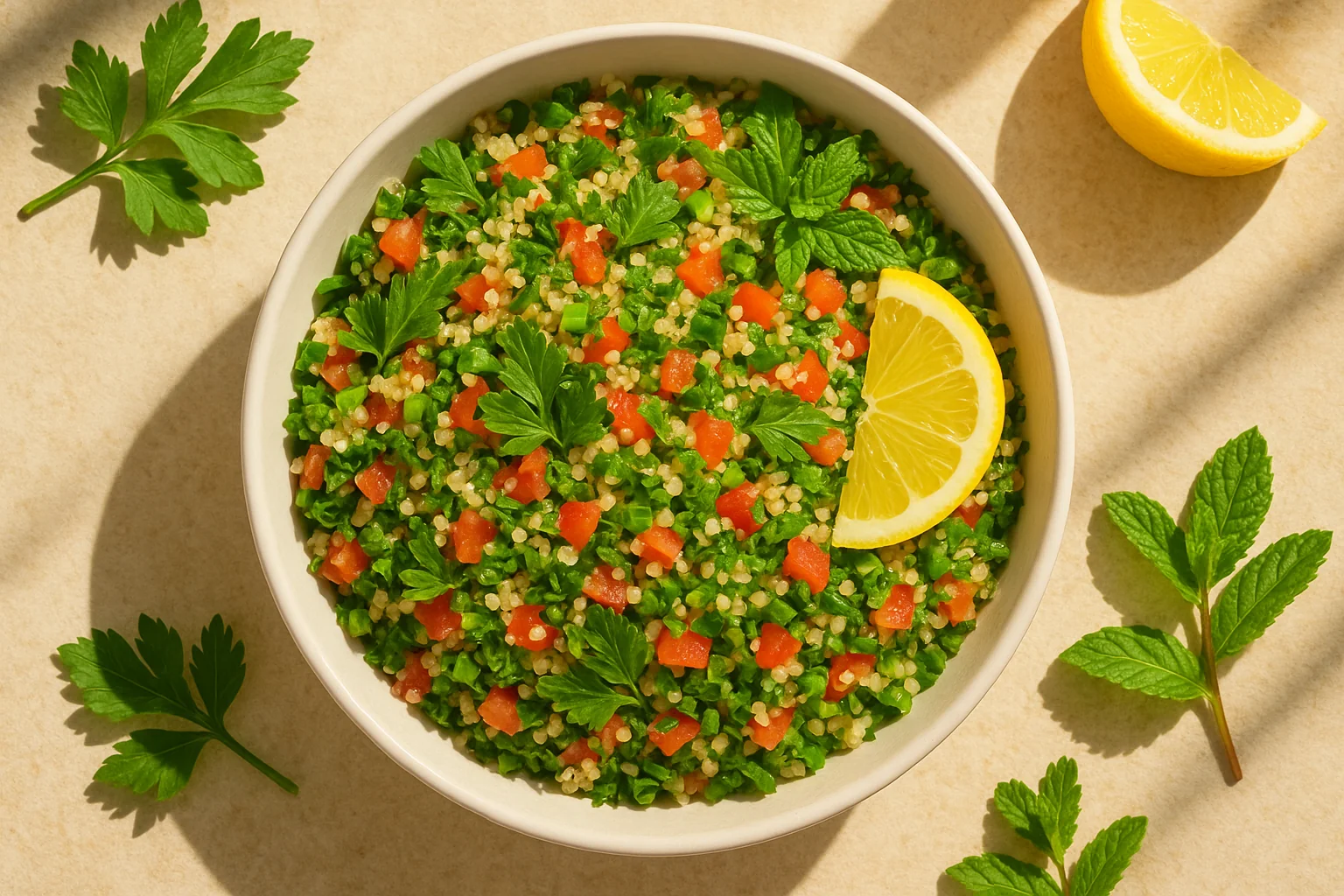
Tabbouleh is one of those salads where the herbs are the star, and the grain is just a backdrop. The classic Lebanese version is based on bulgur, which is cracked wheat. Here we replace it with quinoa, which is gluten-free and has a different, fluffier texture. Hulled hemp seeds take the place of pine nuts: they add a nutty background and fat that carries the flavor of the dressing. The result is a light, intensely green salad that works well as a standalone main dish. It tastes best after an hour or two in the fridge, when the lemon juice has had time to infuse the herbs. Below you will find a step-by-step recipe and measured data on the protein content of quinoa and hemp seeds, as there are two myths circulating about it at once.
KEY INFORMATION
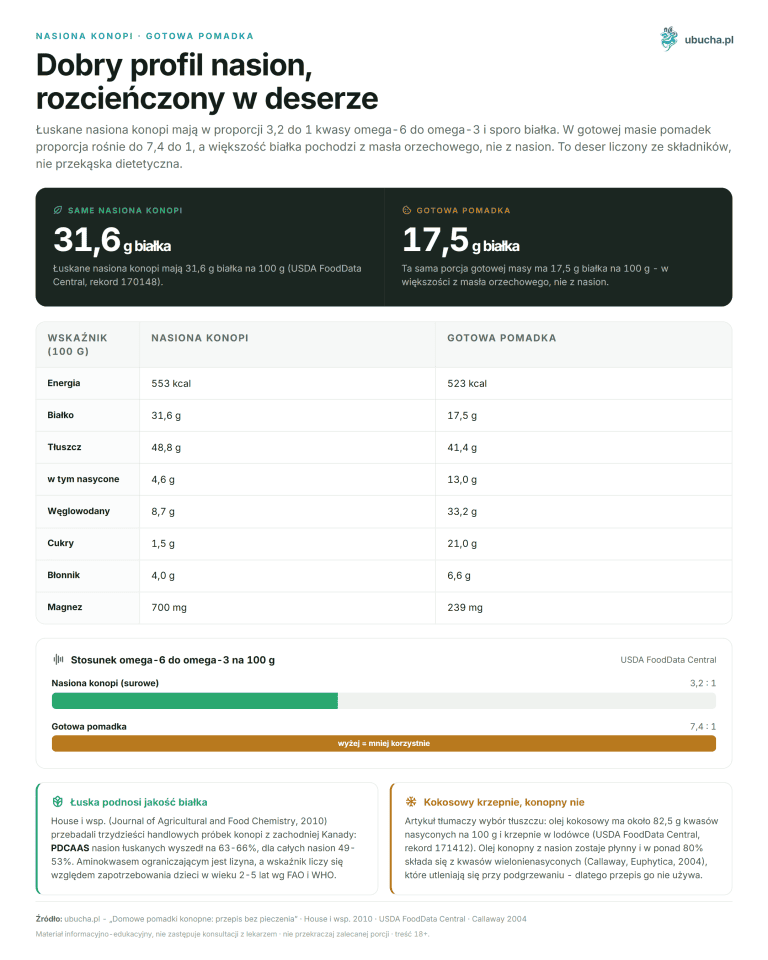
• One hundred grams of hulled hemp seeds contain 31.6 g of protein and 48.8 g of fat, while one hundred grams of quinoa contain 14.1 g of protein (USDA FoodData Central, records 170148 and 168874).
• The PDCAAS of hulled hemp seeds is 63-66%, and the first limiting amino acid is lysine (House et al., 2010).
• Per gram of protein, quinoa has more lysine than hulled hemp seeds (USDA FoodData Central, records 168874 and 170148).
• Fresh parsley contains 1640 µg of vitamin K and 133 mg of vitamin C per 100 g (USDA FoodData Central, record 170416).
What do hemp seeds change in tabbouleh?
They add fat, nutty flavor, and a good amount of protein. One hundred grams of hulled hemp seeds contain 31.6 g of protein and 48.8 g of fat, so four tablespoons, or about 40 g for the whole bowl, contribute roughly 13 g of protein from this ratio. Traditional tabbouleh with bulgur and oil does not provide this much.
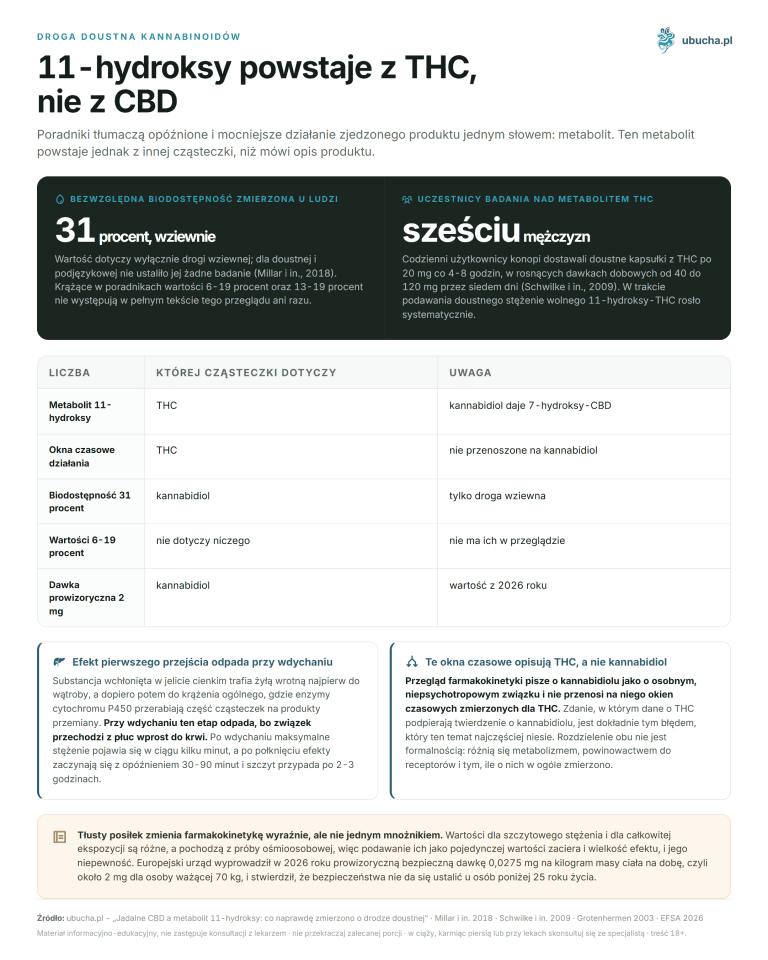
The numbers come from the USDA FoodData Central database, record 170148 for hulled hemp seeds. An independent measurement by House et al. (Journal of Agricultural and Food Chemistry, 2010) on thirty commercial samples found hulled seeds to have 35.9% protein and 46.7% fat, while whole seeds had 24.0% and 30.4%. For the salad, we take hulled seeds because they are soft and do not require biting through a hard shell.
The fat here does a second, less obvious job. Hemp seed oil is over 80% polyunsaturated fatty acids, and the ratio of omega-6 to omega-3 in it ranges from 2:1 to 3:1 (Callaway, Euphytica, 2004). In practical cooking terms, this means one thing: the seeds spread the aroma of mint and lemon zest throughout the entire bowl.
Is quinoa with hemp seeds a complete protein?
Be cautious, as the popular shorthand suggests. Hemp seeds do not correct the amino acid profile of quinoa because per gram of protein, they have less lysine than quinoa itself. However, they do add their own portion of protein and fat, and in this salad, this changes more than the theory of amino acid complementarity.
One hundred grams of quinoa contains 14.1 g of protein and 0.766 g of lysine, while one hundred grams of hulled hemp seeds contain 31.6 g of protein and 1.28 g of lysine (USDA FoodData Central, records 168874 and 170148). When calculated per gram of protein, this results in about 54 mg of lysine in quinoa compared to about 41 mg in hemp seeds, meaning the direction of complementarity is the opposite of what is commonly described. Mattila et al. (Plant Foods for Human Nutrition, 2018) studied both ingredients using the same method and reported that the total of essential amino acids ranged from 25.8 g on 16 g of nitrogen in hemp hulls to 41.5 g in pearl quinoa.
The second myth concerns the hemp seeds themselves. Callaway (Euphytica, 2004) states that the proteins in hemp seeds contain nutritionally significant amounts of all essential amino acids, but presence is not the same as quality. House et al. report a PDCAAS of 63-66% for hulled seeds compared to the FAO and WHO amino acid reference for children aged 2-5 years, with lysine being the first limiting amino acid in all tested hemp products.
From our experience, tabbouleh with quinoa tastes best about two hours after mixing. Freshly made, it is too sharp from the raw onion and parsley, and after a whole day, the herbs are already sitting in the tomato juice and losing their crispness. Two hours in the fridge is enough for the lemon juice to infuse the grain, and the hemp seeds to soften enough to stop crunching separately.
What do you need for tabbouleh?
Two large bunches of flat-leaf parsley, a handful of mint, quinoa, tomatoes, and a dressing of oil and lemon juice. The proportions are enough for three or four servings. Preparation takes 20 minutes, and then the salad matures in the fridge for 30 to 120 minutes.
- 150 g of quinoa
- 4 tablespoons of hulled hemp seeds (about 40 g)
- 2 large bunches of flat-leaf parsley (about 80 g of leaves)
- 1 handful of fresh mint (about 20 g of leaves)
- 3 Roma tomatoes or 200 g of cherry tomatoes
- 2 spring onions or half a small red onion
- 4 tablespoons of extra virgin olive oil
- 4 tablespoons of lemon juice (about 1.5 lemons)
- half a teaspoon of salt
- quarter teaspoon of white pepper
- optional: quarter teaspoon of ground cumin
- optional: half a cucumber diced
The proportions of herbs to grain are more important here than the ingredients themselves. The herbs should make up more than half the volume of the bowl because tabbouleh is a herb salad with added grain, not a grain salad with a sprinkle of greens. The parsley must be fresh, and this is the only ingredient without a substitute. Dried will not provide any flavor, color, or texture, so if you don’t have fresh, it’s better to make something else.
How to prepare tabbouleh step by step?
First, cook and cool the quinoa, then chop the herbs, and finally mix everything with the dressing and place it in the fridge. The most common mistake is rushing two steps at once: hot grain steams the parsley, and too short marinating leaves the flavors separate.
- Rinse quinoa under cold water for one minute to wash away the bitter saponin coating. Pour 300 ml of water over it and cook covered for 15 minutes on low heat until it absorbs the liquid. Spread the cooked quinoa on a plate or tray and cool to room temperature.
- Pluck parsley leaves from the stems. Chop them finely into pieces about 3-4 mm in size, but do not grind them into a paste. Chop the mint in the same way.
- Dice tomatoes into centimeter cubes and drain excess juice, otherwise the salad will become watery. Cut the onion into thin rings.
- In a bowl, mix oil with lemon juice. Season with salt and pepper, and if you like, add a quarter teaspoon of ground cumin. Taste: the dressing should be distinctly sour, as the acidity of the lemon is the signature flavor of tabbouleh.
- Add hemp seeds to cooled quinoa and mix. Add the herbs, tomatoes, and onion, drizzle with dressing, and mix with a spoon, not by hand. Cover the bowl and place it in the fridge for at least 30 minutes, preferably for two hours. Before serving, season to taste.
What variations of tabbouleh are worth trying?
Three, and each changes only one ingredient. Pomegranate adds sweetness, avocado creaminess, and sun-dried tomatoes save the recipe in winter when fresh ones are not worth buying. The base of quinoa, herbs, and hemp seeds remains unchanged in every variation.
The version with pomegranate involves adding a handful of seeds just before serving. The sweet-sour seeds contrast with the sharpness of parsley and the nutty background of hemp seeds, and they also look good on the plate. This is a popular Middle Eastern variant.
The avocado version requires one caveat: add diced avocado directly before serving, as it darkens in the marinade. The winter version is made with 60 g of sun-dried tomatoes in oil, chopped into small pieces. The intense umami compensates for the lack of freshness of greenhouse tomatoes.
Hemp seeds are added to salads without heat treatment, just before mixing. If you are looking for similarly light dishes with the same seeds, check out the recipes for orange and arugula salad, buckwheat salad, and buddha bowl with hemp dressing.
Frequently Asked Questions
What is the difference between tabbouleh with quinoa and traditional tabbouleh?
Instead of bulgur, which is cracked wheat, the bowl contains quinoa. This means the salad is gluten-free, and the grain is fluffier and less sticky. Hulled hemp seeds replace pine nuts and add fat that spreads the flavor of mint throughout the dish.
Is quinoa with hemp seeds a complete protein?
This is an oversimplification. Per gram of protein, quinoa has more lysine than hulled hemp seeds (USDA FoodData Central, records 168874 and 170148), so hemp does not correct its amino acid profile. However, they do add their own portion of protein, which has a PDCAAS of 63-66% (House et al., 2010).
How long can tabbouleh be stored?
In a sealed container in the fridge for up to three days. After the first day, the herbs lose their crispness and darken from the tomato juice, although the flavor deepens. Before serving the stored salad, add a fresh portion of lemon juice and a few parsley leaves to restore its sharpness.
Can dried parsley be used instead of fresh?
No, and this is the only ingredient without a substitute. Fresh parsley contains 1640 µg of vitamin K and 133 mg of vitamin C per 100 g (USDA FoodData Central, record 170416), and in the salad, it also contributes to color and texture. Dried will not provide any of these things.
How long should tabbouleh mature in the fridge?
At least 30 minutes, but preferably two hours. Less than half an hour keeps the flavors separate, and the raw onion is noticeable. Longer than a day, the herbs become overly soft in the tomato juice. Serve the salad chilled or at room temperature, but never heat it up.
If you are looking for ready-made food products, check out the food category in the Bucha store.
This article is for informational and educational purposes and does not replace consultation with a doctor. If you are pregnant, breastfeeding, taking medications, or have chronic conditions, consult the use of supplements or herbs with a specialist.
Author: Michał Waluk · Published: 2026-06-08 · Updated: 2026-08-16