
Spermidine — autophagy and longevity: dosage (table)
Spermidine: table, how much, when, and how. A guide from u Bucha.
Clinical study published in Wiener Klinische Wochenschrift showed that three months of spermidine supplementation improved memory in seniors with mild dementia and was associated with the induction of autophagy (Wirth et al., 2021). For a substance classified as a "longevity supplement", this is rare — most remain at the level of mouse studies. Spermidine is a polyamine naturally present in every human cell and in many food products. This article explains how it works, how much you need, and why longevity researchers take it seriously.
KEY INFORMATION
• Spermidine induces autophagy — the cellular recycling of worn-out proteins and organelles — which is a mechanism associated with longevity.
• A clinical study (Wirth et al., 2021) showed improvement in memory in seniors after 3 months of supplementation.
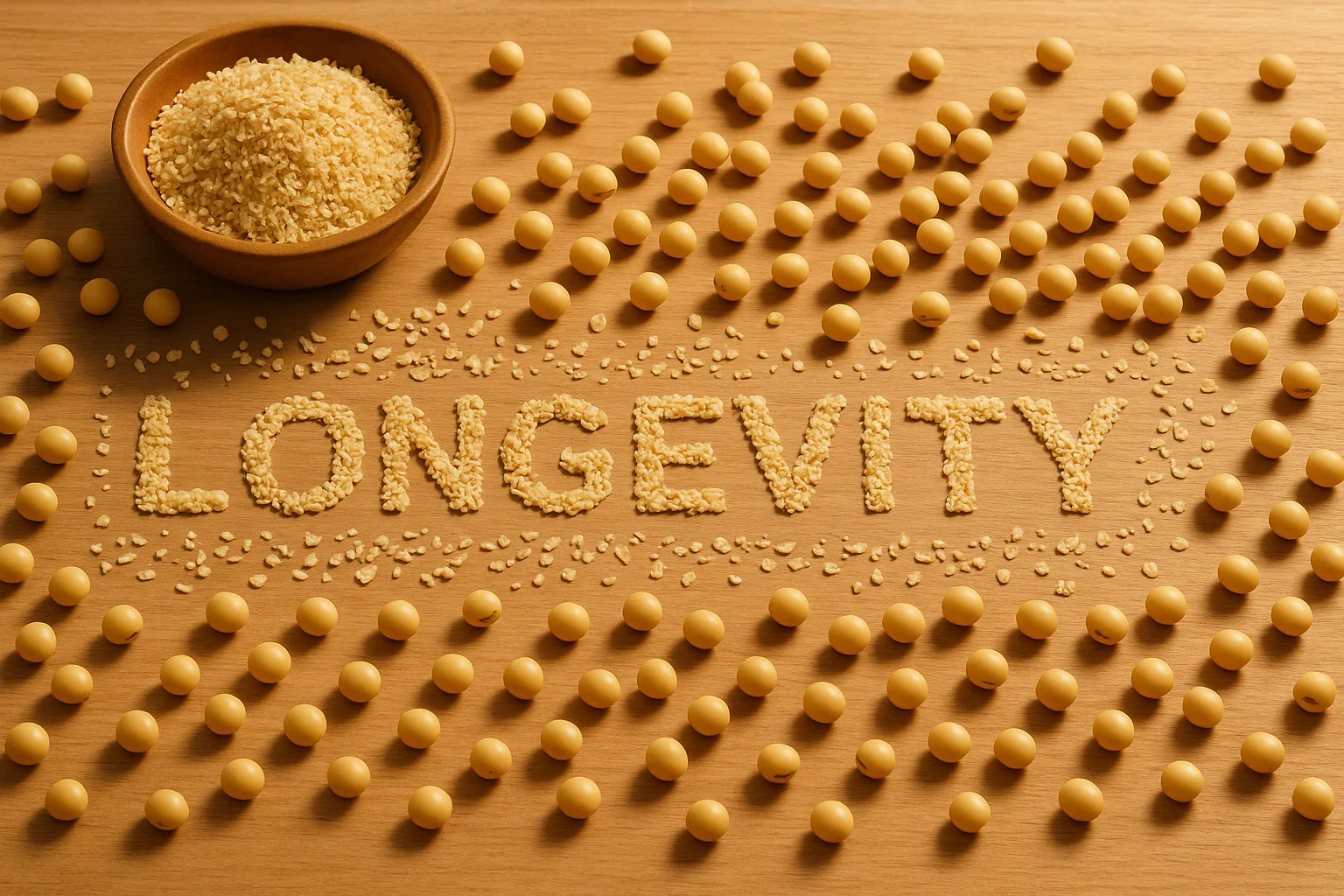
• Wheat sprouts and fermented soy products are the richest dietary sources of spermidine.
• Spermidine levels in the body decrease with age — supplementation can compensate for this natural deficit.
• A safe starting dose from supplements is 1–1.2 mg/day; higher doses (3–6 mg) are used in some longevity protocols.
What is spermidine and why do levels decrease with age?
Spermidine is a polyamine — an organic cation synthesized in every mammalian cell and obtained from the diet. It belongs to the same family as putrescine and spermine. The name comes from its historical discovery in semen, although the substance is present in all tissues and cells. In cell biology, spermidine performs many functions: it stabilizes DNA and RNA, regulates protein synthesis, and — most importantly from a longevity perspective — activates autophagy.
Spermidine concentrations in tissues clearly decline with age. Tissue analyses in mice show a 50–60% decrease between adulthood and old age. Epidemiological studies indicate a similar trend in humans — in populations consuming more spermidine in their diet (Japan, Mediterranean region), lower rates of neurodegenerative and cardiovascular diseases are observed (PMC5061201). The causal relationship is not proven, but the correlation is consistent across several independent cohorts.
The longevity mechanism is linked to autophagy. This is a process in which a cell "eats" its own damaged proteins, worn-out mitochondria, and other organelles, reclaiming amino acids and lipids for new synthesis. Autophagy is so crucial for health that its discoverer, Yoshinori Ohsumi, received the Nobel Prize in Physiology or Medicine in 2016. Spermidine activates autophagy by inhibiting acetyltransferase EP300 — an enzyme that normally suppresses this process.
Spermidine dosage table
Clinical studies mainly used doses from food or wheat supplements (1–1.8 mg/day), although new preparations offer higher concentrations. A review published in Ageing Research Reviews (2021) indicates that biological effects in humans have been confirmed at doses of 1–3 mg/day, while higher doses used in animal studies (converted to humans: 10–20 mg/day) have not been tested in long-term clinical trials (PMC8460544).
| Protocol / goal | Starting Dose | Target Dose | Duration of use | Form / Notes |
|---|---|---|---|---|
| Longevity / autophagy induction | 1 mg/day | 1.2–3 mg/day | Min. 3 months; cyclically | Wheat germ extract; in the morning with a meal |
| Support for cognitive functions (seniors) | 1.2 mg/day | 1.2–1.8 mg/day | 3 months (according to the Nature Aging protocol) | Capsules with standardized content; evening or morning |
| Cardiovascular support | 1 mg/day | 1–2 mg/day | Min. 3 months | Best combined with a Mediterranean diet |
| Diet (without supplements) | — | 1–2 mg/day from food | Daily | Wheat sprouts 30 g + mushrooms + fermented soy products |
| Longevity protocols (advanced) | 2 mg/day | 4–6 mg/day | Cyclically; medical consultation | Premium preparations; lack of long-term clinical data |
Price update: May 4, 2026
When to take spermidine? The Nature Aging study did not specify the timing of administration. From a pharmacokinetic perspective, spermidine is absorbed from the small intestine and is partially metabolized by the gut microbiota — taking it with a meal may gently slow absorption but does not negatively affect biological effects. Many longevity experts prefer morning administration to avoid disrupting the nighttime fasting window, which in itself activates autophagy.
Spermidine in food — dietary sources table
Spermidine is available from a normal diet — it is not a substance that can be obtained solely from supplements. In countries with traditionally high spermidine intake (Japan, Italy, Mediterranean region), total daily intake is estimated at 1.5–2.5 mg per day. In Poland and Central Europe, it is lower — a highly processed diet provides fewer polyamines than traditional fermented and whole grain products.
| Product | Spermidine content | Notes |
|---|---|---|
| Wheat sprouts | ~243 nmol/g (approx. 0.026 mg/g) | The richest known source; 30 g = ~0.8 mg of spermidine |
| Natto (fermented soy) | ~207 nmol/g | Japanese source; hard to find in Poland |
| Mushrooms (Agaricus bisporus) | ~89 nmol/g | Easily available; 100 g = ~0.2 mg of spermidine |
| Aged cheese (parmesan, cheddar) | ~63–89 nmol/g | Aging increases polyamine content |
| Green peas (raw) | ~60 nmol/g | Cooking reduces content by 30–50% |
| Soy (cooked) | ~42 nmol/g | A good vegetarian addition |
Practical tip: 2 tablespoons of wheat sprouts (30 g) + 100 g of mushrooms + 30 g of parmesan throughout the day provides about 1–1.5 mg of spermidine — which meets the typical dietary supplementation goal. Supplements become justified when you don't like the mentioned products or want to precisely control the dosage.
Spermidine and the heart and circulatory system — what epidemiological studies say
One of the largest epidemiological cohorts studying spermidine is the Austrian Bruneck Study, which observed over 800 participants for 20 years. Results published in Nature Medicine (2018) showed that higher dietary spermidine intake was independently associated with lower overall and cardiovascular mortality — even after adjusting for other dietary and lifestyle factors (Nature Medicine, 2018). Individuals in the highest quartile of spermidine intake lived on average 5.7 years longer than those in the lowest quartile. This is one of the strongest epidemiological links between a single dietary component and longevity.
The cardioprotective mechanism is multifaceted. Spermidine induces autophagy in cardiac muscle cells — "cleaning up" accumulated collagen and damaged mitochondria, which are causes of stiffness in the heart muscle in older individuals. In mouse models, spermidine supplementation reversed age-dependent changes in heart elasticity and improved left ventricular diastolic function. Translating this to humans: spermidine may potentially delay age-related cardiomyopathy — one of the most common causes of heart failure in seniors.
An additional mechanism is the effect on blood pressure. Studies on mice have shown that spermidine lowered systolic blood pressure by reducing vascular stiffness. In humans, this effect has not yet been well studied in randomized trials, but the epidemiological correlation is clear: populations consuming more spermidine (Japan, Mediterranean region) have lower rates of cardiovascular diseases regardless of other dietary factors.
Spermidine and the Immune System — Autophagy of Lymphocytes
The immune system in older age undergoes a process called immunosenescence — a gradual weakening of both innate and acquired immunity. One of the mechanisms is the accumulation of "old" T lymphocytes, which are not effectively removed by autophagy. Spermidine, by inducing autophagy, may support the "rejuvenation" of the immune system — eliminating dysfunctional immune cells and replacing them with efficient clones.
Clinical study published in Cell Reports Medicine (2022) showed that spermidine supplementation in older volunteers improved the immune response to the flu vaccine compared to the control group (Cell Rep Med, 2022). Seniors after spermidine produced more neutralizing antibodies and had a higher percentage of activated helper T lymphocytes. For individuals over 65, whose vaccinations are less effective than in younger people, this is practically a significant effect.
Spermidine in the Diet — Practical Sources and Estimated Daily Intake
Before deciding on a supplement, it is worth knowing that spermidine is naturally present in many food products. A regular diet rich in these products provides biologically active amounts. Wheat germ (wheat embryos) is one of the richest sources — containing up to 600 nmol of spermidine per gram, which translates to several milligrams in a 50 g serving. Aged cheeses (especially cheddar, gouda, camembert) contain polyamines generated by fermentative bacteria during aging. Shiitake mushrooms, soy, and lentils are other valuable plant sources.
Epidemiological estimates suggest that Europeans consume an average of 10–15 mg of polyamines daily from their diet (the sum of putrescine, spermidine, and spermine). The Bruneck Study, which observed the correlation between spermidine intake and longevity, identified the highest quartile of intake at above 80 µmol/day — translating to about 9–10 mg of spermidine daily from the diet. Spermidine supplements typically provide 1–5 mg per dose, complementing the diet rather than replacing it. The optimal strategy is to combine a diet rich in natural sources with a supplement as a "booster" — this is how the Austrian intervention studies were structured.
Frequently Asked Questions
How much spermidine should I take daily?
Clinical studies have used doses of 1.2–1.8 mg/day from wheat supplements. A dose of 1 mg/day is a safe starting point. Longevity protocols sometimes use 3–6 mg per capsule — start with a lower dose and gradually increase. Dietary intake (wheat germ, mushrooms, fermented soy products) can cover 1–2 mg/day without supplements (Ageing Research Reviews, 2021).
Does spermidine really activate autophagy in humans?
Yes — a clinical study from 2020 showed that 3 months of spermidine supplementation improved cognitive performance in older individuals with mild dementia, and the mechanism of action involves the induction of autophagy by dissolving amyloid deposits (Wirth et al., Wiener Klinische Wochenschrift, 2021). The mechanism is the inhibition of the EP300 acetyltransferase, which normally blocks autophagy.
In which products is spermidine most abundant?
Wheat germ (about 0.026 mg/g) and natto are the richest sources. Also significant are: mushrooms, aged cheeses (parmesan, cheddar), green peas, and corn. 30 g of wheat germ provides about 0.8 mg of spermidine. A Mediterranean diet rich in whole grains and fermented products naturally provides 1.5–2 mg/day.
Are spermidine supplements safe?
Short-term studies (up to 6 months) at doses up to 6 mg/day have not shown significant adverse effects. Spermidine is a natural component of the diet and a polyamine synthesized by the body. There is a lack of long-term data from supplements — use cyclically and consult with a doctor if you have chronic diseases.
How does spermidine differ from resveratrol and NMN as a longevity supplement?
Spermidine induces autophagy (cellular cleaning), resveratrol activates sirtuins (SIRT1), NMN replenishes NAD+ levels. The mechanisms complement each other. Spermidine has the strongest clinical evidence from human studies among these three substances. Combining them in a longevity stack is not contraindicated, but synergy has not been well studied clinically.
This article is for informational and educational purposes and does not replace consultation with a doctor. If you are pregnant, breastfeeding, taking medications, or have chronic conditions, consult the use of supplements or herbs with a specialist.
Author: Michał Waluk · Published: 2026-05-04 · Updated: 2026-05-04