
Longevity supplements: 5 ingredients for longevity according to the latest science 2026
NMN, resveratrol, curcumin, omega-3, and vitamin D3 with K2: what has really been shown in humans, what doses were used in studies, and which medications they interact with.
Longevity supplements are sold based on studies mostly conducted on yeast, nematodes, and mice. No over-the-counter preparation has evidence of extending human life, and some of the most publicized results have not been replicated in independent replications. This does not mean that these ingredients are worthless. Some of them improve measurable health parameters, but at a completely different level than the label promises. We have gone through the five best-selling longevity ingredients: NMN and NR, resveratrol, curcumin, omega-3 acids, and vitamin D3 with K2. For each, we provide what has been shown in humans, what has not been shown, what doses were used in studies, and with which medications the given preparation should not be found in the same pharmacy.
KEY INFORMATION
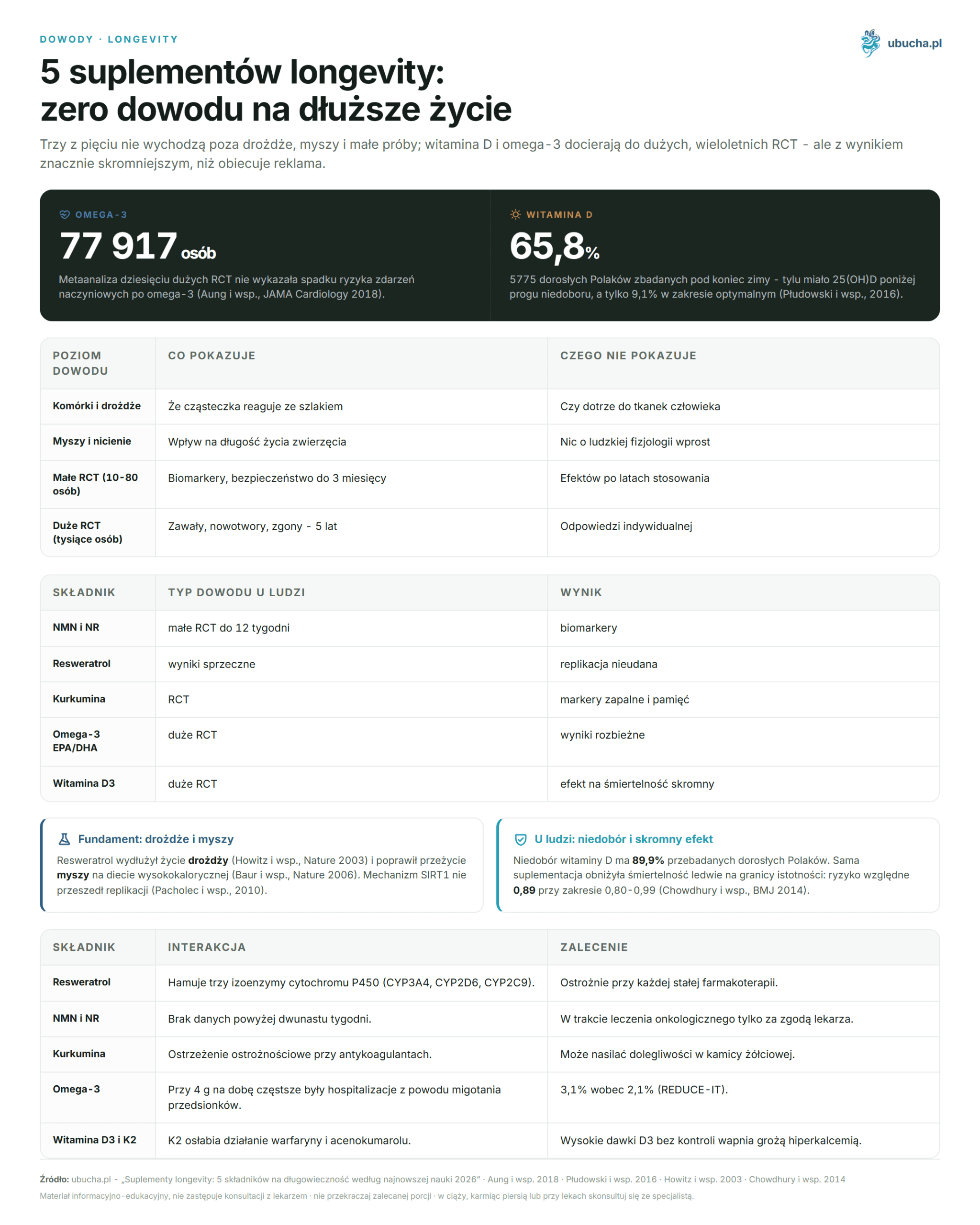
• A meta-analysis of ten large studies involving 77,917 people did not show a decrease in the risk of vascular events after omega-3 supplements (Aung et al., JAMA Cardiology 2018).
• NMN raises NAD+ levels, but in older adults, it did not improve grip strength or walking speed.
• Resveratrol has not been shown to be a direct activator of the SIRT1 sirtuin.
• Vitamin D deficiency affects 89.9% of tested adult Poles, and this is the best-documented problem among this group.
What are longevity supplements and how to assess the strength of their evidence?
These are preparations targeting the biological mechanisms of aging described as hallmarks of aging: genomic instability, telomere shortening, mitochondrial dysfunction, cellular senescence, and several others (López-Otín et al., Cell 2013, list expanded to twelve items in 2023). Hitting a mechanism is one thing, but proving an effect on human health is another.
The difference is only visible when you check who was studied, for how long, and what was measured. Longevity marketing usually omits all three pieces of information.
| Level of evidence | What it actually shows | What it does not show |
|---|---|---|
| Cells and yeast | That the molecule interacts with the pathway | Whether it reaches human tissues |
| Mice and nematodes | Impact on the lifespan of the animal | Nothing about human physiology directly |
| Small RCT (10-80 people, up to 3 months) | Changes in biomarkers, short-term safety | Effects after years of use |
| Large RCT (thousands of people, 5 years) | Heart attacks, cancers, deaths | Individual responses |
All five described below fall into the two middle rows or, in the case of vitamin D and omega-3, reach the last row with results much more modest than the advertising claims. We noticed while organizing this category that the more expensive the preparation, the more often the product description refers to studies on rodents.
Do NMN and NR slow aging in humans?
There is no evidence for this. NMN and NR consistently raise NAD+ levels in the blood, but a systematic review of randomized studies in older adults did not show improvement in muscle mass, grip strength, or walking speed (Prokopidis et al., Journal of Cachexia, Sarcopenia and Muscle 2025).
The starting point for the entire category is the observation that NAD+ concentration in human tissues decreases with age, which has been documented in skin samples taken from donors aged from 0 to over 70 years (Massudi et al., PLoS ONE 2012). NAD+ is needed for mitochondria, DNA repair, and sirtuins, so replenishing it makes biological sense.
What studies have shown in humans. Yoshino et al. (Science, 2021) administered 250 mg of NMN daily for 10 weeks to 25 postmenopausal women with prediabetes and achieved an improvement in muscle insulin sensitivity. Yi et al. (GeroScience, 2023) administered 300, 600, or 900 mg to 80 healthy middle-aged individuals for 60 days and noted a dose-dependent increase in NAD+ and a longer distance in the six-minute walk test. Aerobic capacity improved in 48 amateur runners training 5-6 times a week, although maximum oxygen uptake did not change in any group (Liao et al., 2021). Igarashi et al. (npj Aging, 2022) achieved borderline significant improvement in walking speed in older men, but they themselves noted that it requires confirmation in larger trials.
The longest of these trials lasted twelve weeks, so nothing is known about the safety of long-term use. None measured a hard endpoint. Details in a separate text about NMN after forty.
Does resveratrol really extend life?
There is no data on this in humans, and the foundation of this hypothesis has turned out to be weaker than previously thought. Resveratrol extended the life of yeast (Howitz et al., Nature 2003) and improved the survival of mice fed a high-calorie diet (Baur et al., Nature, 2006). Later, it turned out that SIRT1 activation was an artifact of the method.
A team from Pfizer repeated the original test and showed that neither resveratrol nor synthetic activators directly stimulate SIRT1: the effect only appeared when the peptide used in the test was labeled with a fluorescent dye (Pacholec et al., Journal of Biological Chemistry 2010). The mechanism on which the entire narrative about the “red wine molecule” was built did not pass replication.
In humans, results vary depending on who is studied. Timmers et al. (Cell Metabolism, 2011) administered 150 mg daily for 30 days to obese men and saw an improvement in metabolic profile. A year later, Yoshino et al. (Cell Metabolism, 2012) administered 75 mg for 12 weeks to lean women after menopause with normal glycemia and found no improvement. In 27 inactive men around sixty-five years old, 250 mg daily for eight weeks actually weakened the benefits of high-intensity training (Gliemann et al., Journal of Physiology, 2013). A meta-analysis Hausenblas et al. (Molecular Nutrition and Food Research, 2015) showed glycemic effects only in patients with type 2 diabetes treated pharmacologically.
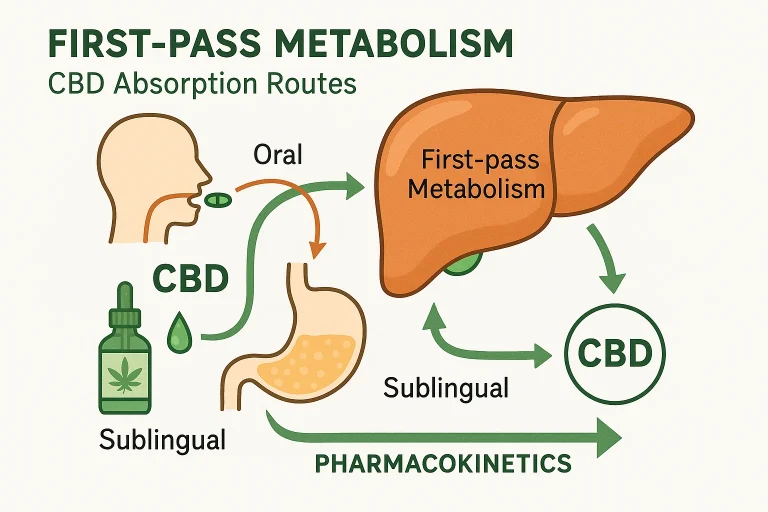
Additionally, there is poor bioavailability: first-pass metabolism takes most of the dose before it reaches the tissues. Note that the doses in these three trials ranged from 75 to 250 mg and did not establish any relationship based on portion size, only based on who was studied. More in the text about resveratrol and slowing aging.
What does curcumin do to inflammation and how to improve its absorption?
It lowers markers of chronic inflammation, and this is its best-documented effect. A meta-analysis of eight randomized studies showed a decrease in TNF-alpha levels by 4.69 pg/ml (Sahebkar et al., Pharmacological Research 2016), and a separate meta-analysis of ten therapeutic arms showed a decrease in interleukin 6 by 0.60 pg/ml (Derosa et al., Pharmacological Research, 2016).
It is worth remembering that these are markers, not endpoints. Lower TNF-alpha does not automatically mean a lower risk of heart attack or dementia. The most interesting functional data comes from an eighteen-month randomized study involving 40 individuals without dementia: a bioavailable form of curcumin improved verbal memory and attention compared to placebo, and in a PET study, it reduced amyloid and tau signals in the amygdala (Small et al., American Journal of Geriatric Psychiatry, 2018). This is a single, small trial, in which imaging included only fifteen individuals from each group.
The problem remains absorption: curcumin itself is absorbed to a small extent and quickly undergoes conjugation in the intestine and liver. A classic study on volunteers showed that after administering 2 g of curcumin, its serum concentration was barely detectable, and adding 20 mg of piperine increased bioavailability by 2000% (Shoba et al., Planta Medica, 1998). Phospholipid and liposomal forms solve this same problem differently: in Small’s study, a preparation containing 90 mg of curcumin was administered twice daily. More in the text about turmeric and curcumin absorption.
How strong is the evidence for omega-3 EPA and DHA?
Significantly weaker than the packaging suggests. A meta-analysis of ten large randomized studies involving 77,917 participants did not show a decrease in the risk of coronary death, non-fatal heart attack, or serious vascular events after omega-3 supplements (Aung et al., JAMA Cardiology 2018, risk ratio 0.97).
This was confirmed by the largest primary prevention study. In the VITAL trial, 25,871 individuals took 1 g of omega-3 acids daily for a median of 5.3 years, and the difference in cardiovascular events and cancer incidence did not reach statistical significance (Manson et al., New England Journal of Medicine 2019).
So where does the loud 25% risk reduction come from? From the REDUCE-IT study, in which 8179 patients with hypertriglyceridemia received 4 g of icosapent ethyl, a prescription drug with pure EPA, not fish oil from the pharmacy (Bhatt et al., New England Journal of Medicine, 2019). When in the STRENGTH study, 13,078 patients were given 4 g of a mixture of EPA and DHA, the trial was stopped early due to a low likelihood of benefit (Nicholls et al., JAMA, 2020). The cognitive benefit was also not confirmed: fish and omega-3 intake were not associated with dementia risk over 9.6 years of follow-up (Devore et al., American Journal of Clinical Nutrition, 2009).
What remains from the hard findings: lowering triglycerides and supplementing a diet low in fish. The difference between these trials does not lie in the dose size but in the composition of the preparation: 1 g of a mixture in VITAL and 4 g of a mixture in STRENGTH did not work, while 4 g of pure icosapent ethyl in REDUCE-IT did. Fish oil from the pharmacy is a mixture, not pure EPA.
Why combine vitamin D3 with vitamin K2 MK-7?
The reason is mechanistic, not evidential, and these two things need to be distinguished. Supplementation of vitamin D in Poland is justified by correcting deficiency, not by preventing heart disease: in the VITAL study, 2000 IU of D3 daily for 5.3 years did not lower the risk of heart attack, stroke, or cardiovascular death (Manson et al., NEJM 2019).
The scale of deficiency is well measured. In a cross-sectional study of 5775 adult residents of 22 Polish cities, conducted at the end of winter and spring, the average concentration of 25(OH)D was 18.0 ng/ml. Below 20 ng/ml had 65.8% of respondents, and only 9.1% were within the optimal range of 30-50 ng/ml (Płudowski et al., Polish Archives of Internal Medicine 2016). In the randomized arm of Chowdhury’s review, which included 22 trials and 30,716 participants, cholecalciferol was associated with lower overall mortality, but the upper end of the confidence interval approached one: relative risk 0.89 with a range of 0.80-0.99. Ergocalciferol showed no effect (Chowdhury et al., BMJ, 2014).
The role of vitamin K2 is based on the MGP protein, which inhibits calcium deposition in the arterial wall and requires vitamin K-dependent carboxylation (Maresz, Integrative Medicine, 2015). Support for this hypothesis is observational: in the Rotterdam study, the highest tertile of menaquinone intake was associated with a 57% lower risk of coronary death and a 52% lower risk of severe aortic calcification (Geleijnse et al., Journal of Nutrition 2004). This is diet, not capsules, and correlation, not causation. Both forms of menaquinone differ radically: after a single dose of 420 µg MK-7, it was detectable in serum for up to 48 hours, while MK-4 at the same dose was not detected at any measurement point (Sato et al., Nutrition Journal, 2012). There are no national dosage recommendations for vitamin K2, so the numbers on labels are based on individual trials. More in the text about combining D3 with K2.
What medications do these supplements interact with?
Resveratrol causes the most problems. In a study on healthy volunteers, 1 g daily for 4 weeks inhibited the activity of CYP3A4, CYP2D6, and CYP2C9 and induced CYP1A2 (Chow et al., Cancer Prevention Research 2010). These enzymes metabolize a significant portion of prescription medications, from statins to antiarrhythmics.
The following table organizes situations where the supplement requires a conversation with a doctor before purchase, not after the first package.
| Ingredient | Safety note |
|---|---|
| Resveratrol | Inhibits three cytochrome P450 isoenzymes (CYP3A4, CYP2D6, CYP2C9). Caution with any ongoing pharmacotherapy. |
| NMN and NR | No data beyond twelve weeks. During oncological treatment only with a doctor’s consent. |
| Curcumin | Caution warning with anticoagulants; may exacerbate symptoms in gallstone disease. |
| Omega-3 | At 4 g per day in the REDUCE-IT study, there were more hospitalizations due to atrial fibrillation, 3.1% vs 2.1%. |
| Vitamin D3 and K2 | K2 weakens the effect of warfarin and acenocoumarol. High doses of D3 without calcium control risk hypercalcemia. |
From our experience with product descriptions in this category, information about interactions appears on the label the least often of all data. This is precisely the position whose absence should be a deterrent.
How to structure a protocol and how to recognize misleading advertising?
The order of expenses is the reverse of the marketing order. First, correct what is truly lacking in the Polish population, namely vitamin D, confirmed by blood testing. Then supply omega-3 acids, preferably from fatty fish twice a week. NMN and resveratrol are at the end of this list, not at the beginning.
| Stage | Content | What it stands on |
|---|---|---|
| Foundation | Vitamin D3 after checking 25(OH)D, omega-3 from fish | Measured deficiency in the Polish population and large, long-term randomized trials |
| Expansion | Curcumin in a form with enhanced absorption | Meta-analyses of inflammatory markers and one small cognitive study |
| Experiment | NMN, possibly resveratrol | Trials up to twelve weeks on surrogate endpoints, conflicting results |
Red flags in advertising are repetitive. The promise of “reversing aging” without indicating a study in humans. Presenting results from mice as recommendations for humans. Numbers like “lowers biological age by 8 years” without stating how that age was measured. Doses many times higher than in studies, without justification. Lack of information about interactions with medications. The phrase “activates sirtuins” presented as a fact, even though that mechanism has not passed replication. An honest manufacturer will provide the dose of the active ingredient, not just the extract, the specific chemical form, and a purity certificate for the batch.
How much of longevity depends on supplements, and how much on lifestyle?
The proportion is unfavorable for capsules. The PREDIMED study, in which 7447 individuals at high cardiovascular risk were randomly assigned to a Mediterranean diet with extra virgin olive oil or nuts, showed about a 30% lower risk of cardiovascular events compared to the control group (Estruch et al., NEJM 2018, version after reanalysis and republication).
This is a result with hard endpoints, which no supplement from this group has achieved. Similarly, physical activity, sleep, and not smoking have greater, cheaper, and better-documented effects. Regions with a high percentage of centenarians, described as Blue Zones, also do not have a common denominator in the form of supplementation, and some demographic data from these areas is now questioned regarding the quality of records.
The sensible role of supplements is to fill specific gaps, not to replace the foundation. If the level of 25(OH)D is 14 ng/ml, a capsule solves a real problem. If the diet lacks fish, fish oil makes sense. Once the foundation is laid, additional preparations shift biomarkers by values that no study has yet linked to longer life. Monitor effects objectively: 25(OH)D, fasting glucose, HbA1c, lipid profile, and high-sensitivity CRP every 6-12 months.
Frequently asked questions
Does any longevity supplement extend human life?
There is no such preparation. No randomized study has shown that an over-the-counter supplement extends human life. Data on lifespan comes from yeast, nematodes, and rodents. In humans, intermediate parameters are measured: NAD+ levels, inflammatory markers, insulin sensitivity. This is not the same as longer life.
Does NMN really work in humans?
NMN consistently raises NAD+ levels in the blood, as confirmed by a dosing study on 80 people (Yi et al., GeroScience, 2023). However, a systematic review of studies in older adults did not show improvement in muscle mass, grip strength, or walking speed (Prokopidis et al., Journal of Cachexia, Sarcopenia and Muscle, 2025). The biochemical effect is there, but the functional effect has not been confirmed.
What level of vitamin D is considered optimal in Poland?
Polish guidelines consider 30-50 ng/ml 25(OH)D as the optimal range. In a study of 5775 adult Poles at the end of winter, the average concentration was 18.0 ng/ml, and only 9.1% were within the optimal range (Płudowski et al., Pol Arch Med Wewn 2016). The level is checked by blood testing, not by feel.
Which of these supplements interact with medications?
Resveratrol at a dose of 1 g per day for four weeks inhibited three cytochrome P450 isoenzymes in 42 healthy volunteers (Chow et al., Cancer Prevention Research, 2010), which applies to a large portion of prescription medications. At 4 g of omega-3 acids, more hospitalizations due to atrial fibrillation were noted, and vitamin K2 weakens warfarin. Each of these cases requires a conversation with a doctor.
Where to start if the budget is limited?
Start with testing 25(OH)D and correcting vitamin D deficiency, as this is the only point on this list with documented widespread deficiency in the Polish population. Then fatty fish twice a week instead of capsules. NMN and resveratrol should be the last items on the shopping list.
You can find vitamin D3 with K2, omega-3 acids, and curcumin in the supplements category, where we provide the composition directly on the product card. NMN and resveratrol are not included in this offer.
This article is for informational and educational purposes and does not constitute medical advice. Before starting supplementation, consult your doctor, especially if you are on regular medication, pregnant, breastfeeding, or have a chronic illness.
Author: Michał Waluk · Published: 2026-06-02 · Updated: 2026-08-11