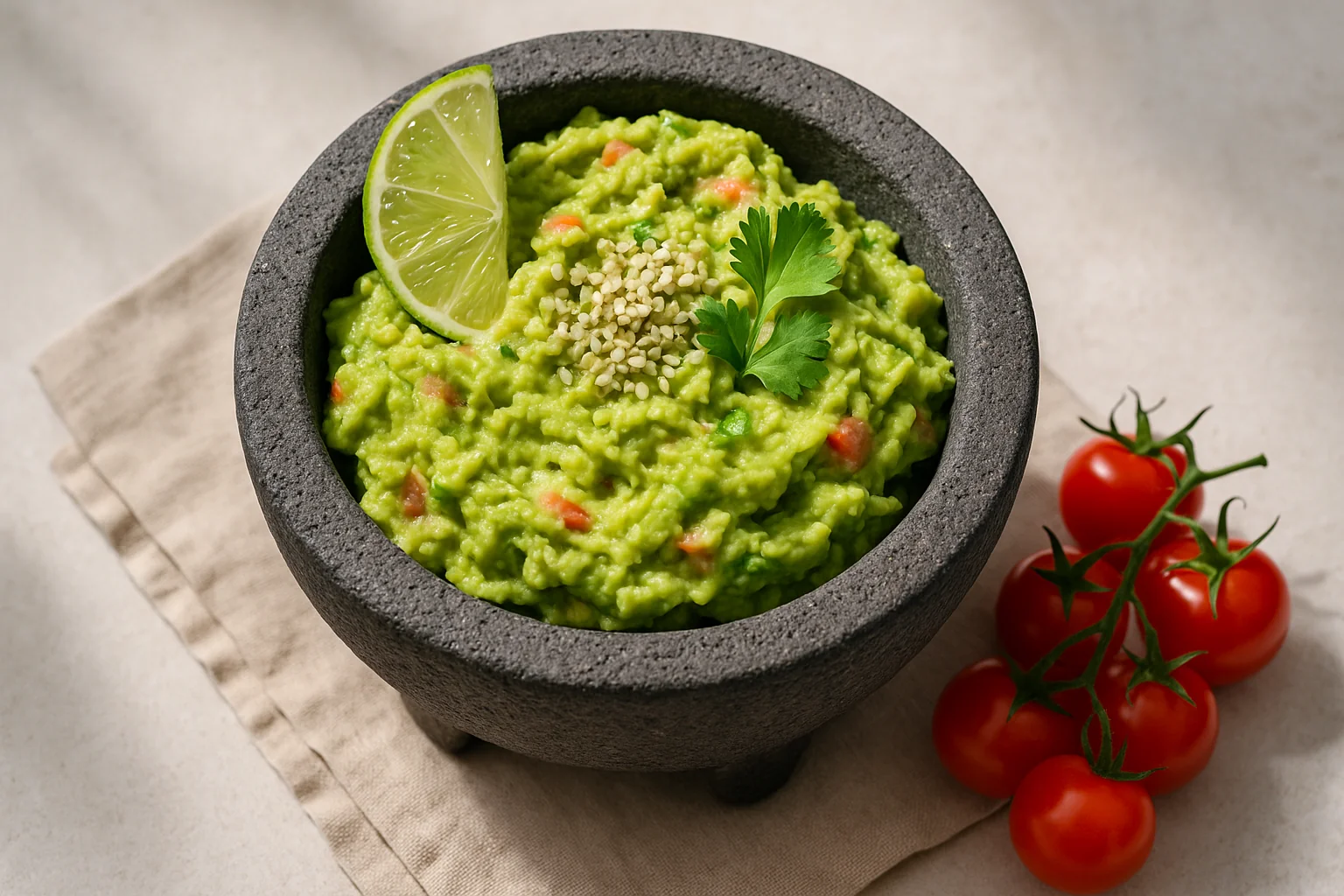

Guacamole with hemp seeds: a Mexican classic with a hemp twist
Guacamole with hulled hemp seeds in 10 minutes. Step-by-step recipe, calculated nutritional values from the USDA database, and what hemp protein does not address here.
Two tablespoons of hulled hemp seeds added to a bowl of mashed avocado transform guacamole into a snack with a different nutritional profile. Avocado provides monounsaturated fats, potassium, and fiber, but has little protein. Hemp seeds reverse this ratio: they contain 31.6 g of protein per 100 grams compared to 2 g in avocado. Additionally, they add crunch that contrasts with the creamy mixture and a nutty flavor that pairs well with lime. The entire dish is ready in ten minutes, without cooking and without a blender. You also do not need any ingredient outside of a regular store, except for the seeds themselves. Below you will find a step-by-step recipe, nutritional values calculated based on this recipe, and an explanation of what hemp protein does not address in this dish, despite what is often claimed.
KEY INFORMATION
• Hulled hemp seeds: 31.6 g of protein and 48.8 g of fat per 100 g (USDA FoodData Central, record 170148).
• The omega-6 to omega-3 ratio in these seeds is about 3:1 in this record.
• Hemp protein contains all essential amino acids, but the first limiting one is lysine (House et al., 2010).
• The fiber in this dip comes from avocado, not from the seeds.
What do hemp seeds add to guacamole?
Primarily protein and polyunsaturated fatty acids. Classic guacamole mainly consists of monounsaturated fats from avocado, potassium, and fiber, with about 2 g of protein per 100 g. Hulled hemp seeds contain 31.6 g of protein per 100 g, which is fifteen times more (USDA FoodData Central, record 170148).
The fat profile of both ingredients appears similar at first glance. Avocado predominantly contains monounsaturated fats, while hemp seeds are rich in polyunsaturated fats: 27.4 g of linoleic acid and 8.68 g of alpha-linolenic acid per 100 g. This gives an omega-6 to omega-3 ratio close to 3:1. Callaway (Euphytica, 2004) states that for hemp oil, the ratio ranges from 2:1 to 3:1 and calls it optimal for human health, but this is his own assessment, not a recommendation from WHO or FAO. A review by Farinon et al. (Nutrients, 2020) states that there is no consensus in the literature regarding the ideal ratio of both families of acids.
It is also important to know what hemp seeds do not do. House et al. (Journal of Agricultural and Food Chemistry, 2010) examined thirty samples of hemp products and found that lysine is the first limiting amino acid in all of them without exception. The PDCAAS score for hulled seeds was 63-66%. Therefore, hemp protein contains a complete set of essential amino acids, but in terms of lysine, it ranks alongside grains. The statement that hemp seeds complement the lysine missing from another ingredient in the dish reverses the factual state. The same procedure and the same caveat apply to hummus with hemp seeds.
How much protein and fat is in a serving of this guacamole?
A serving of about 75 g, or one-fifth of the recipe, provides approximately 3 g of protein, 12 g of fat, and 4 g of fiber. This calculation is based on the proportions from this recipe and USDA records: a serving contains about 60 g of avocado flesh and 6 g of hulled hemp seeds, which is just under a tablespoon.
The seeds account for about 1.9 g of the 3 g of protein, even though they make up less than one-tenth of the serving’s mass. The rest of the nutritional values come from avocado: potassium 291 mg, folate 49 µg, and almost all the fiber. Hemp seeds contribute virtually no fiber, as they contain 4 g per 100 g compared to 6.7 g in avocado. The situation is reversed for magnesium: 6 g of seeds provide 42 mg, while 60 g of avocado only provide 17 mg.
The practical conclusion is simple. The seeds add protein and magnesium, while fiber and potassium are provided by the avocado in this dish. If you are looking for fiber, it is better to add vegetables for dipping rather than another spoonful of seeds.
What do you need for guacamole with hemp seeds?
Proportions for about 370 g of finished dip, which is four to five servings. Preparation time is ten minutes. Divide the hemp seeds into two parts: two tablespoons go into the mixture, and one is reserved for topping.
- 2 ripe Hass avocados (about 300 g of flesh)
- 3 tablespoons of hulled hemp seeds (2 for the mixture, 1 for topping)
- juice of 1 lime, about 2 tablespoons
- 1/4 small red onion
- 1 clove of garlic
- a handful of fresh cilantro, about 10 g of leaves
- 1/2 jalapeño without seeds, optional
- 1 cherry tomato, optional
- sea salt to taste
The Hass variety works best because it has a dense, fatty flesh. Watery avocados break down into mush and do not maintain texture. Jalapeño and tomato are optional, but salt and lime are not: without them, guacamole tastes flat, regardless of the quality of the avocado.
Buy hulled seeds, not whole ones. The shell is hard and will dominate the texture of the dip, and whole seeds have significantly less protein: House et al. measured 24.0% in them compared to 35.9% in hulled seeds. Squeeze juice from a fresh lime, as bottled juice can be diluted, and you need to add much more to achieve the same acidity.
How to make guacamole with hemp seeds step by step?
In five moves and without equipment. Cut the avocado, scoop out the flesh, mash with a fork, mix in the lime and the remaining ingredients, and finally add the seeds. The whole process takes ten minutes, and the only moment you can mess it up is by adding the lime juice too late.
- Prepare the avocado. Cut the fruit in half, remove the pit, scoop the flesh into a large bowl with a spoon. The flesh should be light or dark yellow; cut out small brown spots with a knife.
- Mash with a fork. Mexican guacamole is thicker, with visible chunks. A potato masher will give a smoother consistency, but a blender turns the dip into puree.
- Squeeze lime juice immediately. The acid lowers the pH and slows down the enzymatic browning of the flesh. The longer the avocado waits without lime, the faster it turns gray.
- Add the remaining ingredients. Finely chop the onion, press the garlic through a press, chop the cilantro, remove the seeds from the jalapeño. Add two tablespoons of hemp seeds and mix gently.
- Season and finish. Guacamole needs significantly more salt than it seems. Taste after each adjustment of salt, acidity, and spiciness. Transfer to a bowl and sprinkle with a third tablespoon of seeds.
We noticed in our kitchen that seeds sprinkled on top of the finished dip retain their crunch much longer than those mixed into the mixture, as they have nothing to absorb moisture from. Therefore, when serving to a larger group, it is better to sprinkle each portion separately rather than the whole bowl at once. We did not measure this with a timer, so consider it a kitchen tip, not a research result.
What variations of guacamole work best?
Three that change the character of the dip, not just add an ingredient. Mango for sweetness, feta for salt and acidity, and a version without cilantro for everyone who hates it. Hemp seeds fit well with each of them, as their nuttiness is neutral to the other flavors.
Diced mango, about half of a small fruit, contrasts with lime and the spiciness of jalapeño. This is a classic combination in Mexican cuisine and the safest way to soften the dip without diluting it. Crumbled feta on top, about 30 g, works the opposite way: it adds salt and acidity, so you use less salt in the mixture itself.
A version without cilantro is a one-to-one swap for parsley, chives, or basil. Some people perceive cilantro as soapy, and no preparation technique changes that, so it is better to simply replace it. If you are looking for more ideas for the table, check out the list of five hemp dips for a party. A spicier topping can be made with the recipe for roasted hemp seeds with spices.
Frequently asked questions
How to prevent guacamole from browning?
Lime juice lowers the pH of the mixture and slows down the enzymatic browning of the flesh, which is why you squeeze it immediately after mashing the avocado. The second method is to cover it with plastic wrap directly on the surface of the dip, without an air pocket underneath. Hemp seeds do not affect the color in any way.
How much protein is in a serving of guacamole with hemp seeds?
A serving of about 75 g provides approximately 3 g of protein, of which 1.9 g comes from the seeds. Hulled hemp seeds contain 31.6 g of protein per 100 g, while avocado has 2 g (USDA FoodData Central). The seeds roughly double the protein content of the dip.
How to choose a ripe avocado?
A ripe Hass variety has dark green or almost black skin and yields to gentle pressure from your fingertips, like butter taken out of the fridge an hour earlier. Leave a hard fruit at room temperature for a day or two. Do not buy hard avocados for guacamole, as no technique can replace the flavor.
Can guacamole with hemp seeds be made in advance?
Prepare the mixture without the seeds no more than a few hours in advance and keep it covered with plastic wrap directly on the surface. Add the hemp seeds just before serving, as they soften in the moist mixture and lose the contrast in texture that they are meant to provide.
What can replace cilantro in guacamole?
Parsley gives the closest effect to the original, chives are milder, and basil shifts the dip towards sweetness. The substitution is one-to-one, with no changes to the rest of the recipe. The nutty flavor of hemp seeds pairs well with each of these herbs just as effectively.
Neither hemp seeds nor hemp flour are sold at Bucha. The hemp food section today consists of hemp teas and herbal blends, as of August 16, 2026.
This article is for informational and educational purposes and does not replace consultation with a doctor. If you are pregnant, breastfeeding, taking medications, or have chronic conditions, consult the use of supplements or herbs with a specialist.
Author: Michał Waluk · Published: 2026-06-22 · Updated: 2026-08-16