
CBD for Endometriosis - Can It Help in Treatment? 2026 Guide
CBD and endometriosis: what tissue and animal studies showed, what a survey of 484 women really says, and why ESHRE does not mention cannabinoids.
Endometriosis affects about 10% of women of reproductive age, roughly 190 million people worldwide, and there is still no causal treatment (WHO, accessed 2026-08-10). The average time to diagnosis ranges from 4 to 12 years. Into this gap steps cannabidiol, promoted as a remedy for pelvic pain and painful menstruation. This article examines what lies behind this promise: where research on tissues and animals ends, what surveys among patients really show, and why the European Society of Human Reproduction and Embryology guidelines do not mention cannabinoids in any recommendation. You will also see why animal data point in two opposite directions and where the 7.6 rating, now repeated in hundreds of reprints, comes from. Finally, you will find an explanation of why we do not provide a dose.
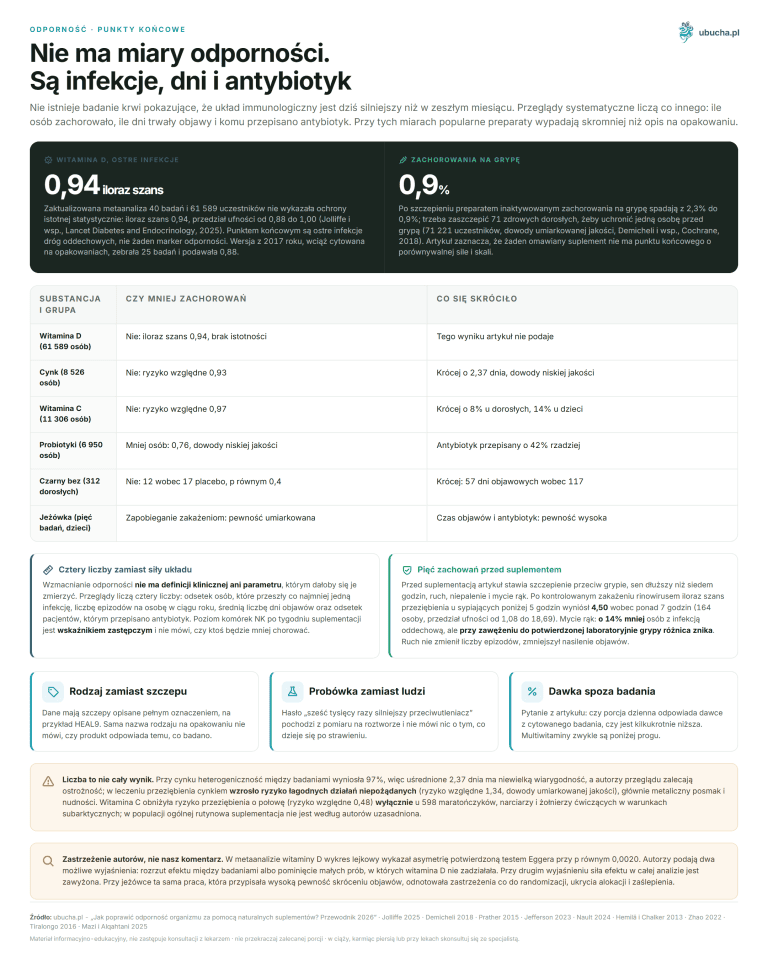
KEY INFORMATION
• Endometriosis affects about 190 million women, or 10% of the reproductive-age population, and there is no causal treatment (WHO, accessed 2026-08-10).
• CB1 receptor expression in the endometrium of women with endometriosis was minimal regardless of cycle phase (Fertility and Sterility, 2012).
• In a survey of 484 responses, 13% of women using self-help methods used cannabis, rating pain relief effectiveness at 7.6 out of 10 (Journal of Obstetrics and Gynaecology Canada, 2020).
• The 2022 ESHRE guidelines challenged laparoscopy as the gold standard for diagnosis and do not mention cannabinoids (ESHRE, 2022).
• EFSA could not establish cannabidiol safety in pregnant, breastfeeding women, and those taking medications (EFSA Journal, 2026).
What is endometriosis and who does it affect?
Endometriosis is a chronic inflammatory disease in which tissue similar to the uterine lining grows outside the uterine cavity, most often on the pelvic peritoneum and ovaries. According to WHO, it affects about 10% of women of reproductive age worldwide, roughly 190 million people, and there is still no causal treatment (WHO, accessed 2026-08-10).
Symptoms are subtle and this is part of the problem. Painful menstruation, chronic pelvic pain, pain during intercourse, painful urination or defecation during bleeding, heavy bleeding, and difficulty conceiving create a picture easily confused with irritable bowel syndrome or urinary tract infection. Contemporary studies indicate a multifactorial basis: immunological, genetic, and epigenetic (New England Journal of Medicine, 2020).
One symptom worth noting is often treated separately from the disease. Heavy menstrual bleeding depletes iron stores, and fatigue can persist even before anemia is detected in blood tests. This topic is developed in a separate post on iron and fatigue in women without anemia. In endometriosis, this is practically important because fatigue is often attributed to pain rather than iron metabolism.
Why does endometriosis diagnosis take so long?
Because symptoms are often dismissed and the confirmation path was invasive until recently. WHO states the average time from first symptoms to diagnosis is 4 to 12 years (WHO, accessed 2026-08-10). Painful menstruation is often considered normal, and referrals often go to gastroenterologists or urologists before endometriosis is considered.
The second reason has just ceased to apply and many consumer contents have not noted this. The 2022 ESHRE guidelines challenged laparoscopy with histological examination as the gold standard for diagnosis (ESHRE, 2022). Surgery is now recommended when imaging shows no lesions or empirical treatment has failed or is contraindicated.
This change has a direct effect for patients. Diagnosis is based on symptoms and imaging, primarily transvaginal ultrasound and MRI, so waiting for “surgical confirmation” is no longer a condition to start treatment. The guideline authors justify this by the risk of complications and cost of surgery, not convenience.
What does the endocannabinoid system have to do with endometriosis?
It is dysregulated in this disease, and this is the best-documented element of the hypothesis. In endometrial tissue from women with endometriosis, CB1 receptor expression was minimal regardless of cycle phase, whereas in healthy women it increased in the progesterone-dependent secretory phase (Fertility and Sterility, 2012). The same study showed that progesterone receptor blockade and dioxin exposure abolished CB1 expression increase.
A review compiling cellular and animal studies adds a second element: CB1 and CB2 receptors and enzymes regulating anandamide were detected in deep endometrial nodules and in sensory and sympathetic nerves innervating these lesions (Molecular Human Reproduction, 2012). The ovarian lesion picture is sometimes opposite. In ovarian lesions, CB1 and CB2 expression in epithelial cells was strong and higher than in stroma (Journal of Immunology Research, 2022).
| what was studied | result | study |
|---|---|---|
| CB1 receptor expression in endometrium | highest in secretory phase in healthy women, minimal in women with endometriosis regardless of cycle phase | Resuehr 2012 |
| presence of system elements in lesions | CB1 and CB2 receptors and FAAH and NAPE-PLD enzymes detected in deep endometrial nodules and innervating nerves | Sanchez 2012 |
| ovarian lesions | strong CB1 and CB2 expression in epithelial cells of lesions, higher than in stroma | Allam 2022 |
| system sensitivity to hormones | progesterone stimulates CB1 expression, its blockade and dioxin exposure abolish it | Resuehr 2012 |
The summary shows that “endocannabinoid deficiency” is a shorthand, not a finding. The direction of changes depends on the tissue studied. Physiology of this system in a normal cycle is described in a separate post on anandamide and ovulation.
Do cannabinoids reduce lesions in animal studies?
In two models, yes, but the substance studied was not cannabidiol. In a 2010 study, the synthetic cannabinoid receptor agonist WIN 55212-2 reduced proliferation of stromal cells from endometrial lesions, reactive oxygen species production, and smooth muscle actin expression by inhibiting the Akt pathway in cell culture. In mice with implanted human deeply infiltrating nodules, the same compound inhibited tissue growth (The American Journal of Pathology, 2010).
The second study concerns pain, not lesion mass. In a rat model, CB1 receptors were detected on cell bodies and fibers of sensory and sympathetic neurons innervating lesions, and CB1 agonists reduced, while antagonists increased, endometriosis-associated pain hypersensitivity (Pain, 2010). This is an analgesic mechanism, not antiproliferative.
The difference between these two sentences determines what can be expected. Animal data indicate reduced pain hypersensitivity and inhibited tissue growth after CB1 receptor agonist. Cannabidiol does not directly stimulate CB1 and was not used in either study.
Does CB1 receptor stimulation always reduce lesions?
No, and this is the most important caveat in all preclinical material. In a randomized mouse model study, animals receiving the CB1 receptor agonist methanandamide developed lesions with significantly larger volume than animals receiving vehicle. Lesions also showed increased expression of genes related to cell survival and migration, including survivin, N-cadherin, beta-1 integrin, and interleukin 6 (Human Reproduction, 2017).
The second part of the same study closes the issue from the other side. Mice lacking functional CB1 receptor developed smaller lesions with lower expression of the same genes, regardless of whether the receptor was absent in the tissue donor, recipient, or both. In other words, removing CB1 signaling inhibited disease development, and enhancing it worsened it.
Combined with the previous section, this gives a picture that cannot be summarized simply. The same receptor mediated pain hypersensitivity reduction in one model, inhibited implanted tissue growth in another, and promoted growth in a third. The 2017 study authors note that translating results to humans requires further research. Until then, the promise “cannabinoids reverse lesions” lacks support even in animal data.
Where does pain in endometriosis come from?
From a combination of inflammation and abnormal lesion innervation, not from the lesions themselves. In a rat disease model, sensory and sympathetic nerve fibers began to appear in implanted cysts within two weeks, grew denser into the cyst wall after four weeks, and matured after six weeks. Pain hypersensitivity became significant between the fourth and fifth week, i.e., after active fibers appeared (PLOS ONE, 2012).
The sequence matters for evidence. Removing cysts before they developed active innervation prevented hypersensitivity development, while sham surgery did not. Authors conclude that painful endometriosis can be classified as a mixed inflammatory-neuropathic state. This opens other pain treatment avenues than anti-inflammatory drugs alone.
CB1 receptors were detected on cell bodies and fibers of sensory and sympathetic neurons in these lesions, and CB1 agonists reduced disease-associated hypersensitivity (Pain, 2010). This explains interest in cannabinoids for this symptom. Data on neuropathic and other pain origins are collected in a separate post on cannabis in neuropathic pain.
What do preclinical studies not show?
They do not show a unidirectional effect. The same review describing inhibition of cell proliferation by cannabinoid receptor agonists states the opposite regarding another feature: endometrial cell migration can be stimulated by agonists (Molecular Human Reproduction, 2012). Migration allows lesions to colonize new sites, so the signal is not entirely beneficial.
They also do not show that concentrations used in culture can be achieved in the body. Cell studies use concentrations selected in vitro, not those resulting from oral administration. A review of cannabidiol pharmacokinetics in humans states that absolute bioavailability was measured only for inhalation (31%), and no study established it for oral or sublingual routes (Frontiers in Pharmacology, 2018).
Finally, they do not show that animal results translate to humans. A review of endocannabinoid signaling in female reproduction highlights contradictory results between species in some areas (Progress in Lipid Research, 2020). This justifies treating preclinical material as a rationale for clinical trials, not as their substitute.
What do studies involving women with endometriosis say?
They say what can be said from surveys, which is less than often cited. An Australian cross-sectional online study conducted at the end of 2017 included women aged 18-45 with surgically confirmed endometriosis. 484 responses qualified for analysis (Journal of Obstetrics and Gynaecology Canada, 2020).
Numbers should be read in order because they circulate mixed in media. 76% of respondents used any self-help methods in the last six months, and 13% of those used cannabis. This minority rated cannabis effectiveness in pain relief at 7.6 out of 10, and 56% reduced medications by at least half. The greatest improvements were reported in sleep and nausea/vomiting, and adverse effects occurred in 10%, described as mild.
| reported in abstract | value |
|---|---|
| number of responses analyzed | 484 |
| percentage using any self-help methods in last 6 months | 76% |
| percentage of those using cannabis | 13% |
| declared pain relief effectiveness | 7.6 out of 10 |
| percentage who reduced medications by at least half | 56% |
| percentage reporting adverse effects | 10%, described as mild |
Authors conclude, rarely quoted, that further clinical studies are needed to assess cannabis effectiveness in endometriosis symptoms, as even where medical cannabis is available, evidence of efficacy in this disease is lacking.
Where does the 7.6 rating come from and what does it refer to?
From the same survey described in a second publication, and it refers to cannabis, not cannabidiol oil. The study reviewing all self-help methods among these 484 women lists the most common as heat (used by 70%), rest (68%), and meditation or breathing exercises (47%) (BMC Complementary and Alternative Medicine, 2019).
Pain relief effectiveness was rated on a ten-point scale, and here the distinction often lost in reprints appears. Cannabis scored highest at 7.6, followed by heat at 6.52, dietary changes at 6.39, and hemp or cannabidiol oil at 6.33. Physical exercises, yoga, and pilates scored lower. The 7.6 number describes cannabis as a whole, not cannabidiol product, and is an effectiveness rating, not a measured pain intensity reduction.
The same study notes that adverse events were frequent with some methods: 53.8% reported them with alcohol, 34.2% with exercise. Authors note women with endometriosis differ from those with primary dysmenorrhea, so physical methods should be chosen carefully due to risk of exacerbations.
Did a second independent survey yield similar results?
It yielded a directionally similar result, though in a different population and with a different question. A cross-sectional internet survey conducted in New Zealand between May and July 2019 included people using cannabis for health reasons. The subgroup with endometriosis or polycystic ovary syndrome included 213 responses, average age 32, and 79.8% were currently using cannabis (Journal of Women’s Health, 2021).
The most frequently cited goals were pain relief and sleep improvement, each reported by 95.5%. The symptom was rated “much better” by 81% for pain, 79% for sleep, and 61% for nausea/vomiting. 81.4% reported reducing regular medication use, and 59% were able to completely stop some medication, most often analgesics.
One number deserves a separate mention. Among discontinued analgesics, opioids were the most common class, indicated by 40%. Authors mention a possible opioid substitution effect, not proven. This survey concerned illegally used cannabis, so product composition was uncontrolled and no conclusions about cannabidiol alone can be drawn.
What did the symptom tracking app-based study show?
It showed how women actually use cannabis, not whether it works. A cohort study based on app records included 252 people reporting endometriosis, who logged 16,193 use sessions between April 2017 and February 2020 (PLOS ONE, 2021). These are retrospective data self-reported by users without a control group.
The most common administration route was inhalation, chosen in 67.4% of sessions, and the most treated symptom was pain, indicated in 57.3% of entries. More interesting is the result for gastrointestinal symptoms: they were a less frequent reason for use (15.2% of sessions) but showed the greatest declared improvement.
A practical observation from this study concerns administration route. Inhaled forms performed better for pain, oral forms for mood and gastrointestinal symptoms, explained by authors as due to onset speed. The THC to cannabidiol ratio had a statistically significant but clinically small effect. Authors emphasize urgent need for clinical trials in this indication.
A limitation is inherent in the method. Data were entered by users rating symptoms before and after sessions, so it is impossible to separate product effect from expectations or natural pain fluctuations. Also, users for whom the product did not help tend to stop using the app and thus drop out.
Does CBD reduce pelvic pain in endometriosis?
There is no study demonstrating this. All human data come from surveys and app records, both assessing cannabis as a whole, not cannabidiol alone. There is no placebo arm, so it is impossible to separate product effect from natural pain fluctuations and participant expectations.
Mechanistically, the hypothesis is coherent. Pelvic pain in endometriosis has inflammatory and neuropathic components, and CB1 receptors were detected on nerves innervating lesions (Pain, 2010). However, mechanistic coherence can be misleading, as CB1 receptor stimulation increased lesion growth in a mouse model (Human Reproduction, 2017).
Coherent hypothesis is not the same as demonstrated effect. The 2022 ESHRE guidelines describing pharmacological and surgical treatment of endometriosis do not mention cannabinoids in any recommendation (ESHRE, 2022). Lack of mention is not a ban but information that evidence was insufficient to formulate a recommendation. If you consider cannabidiol as an adjunct, discuss it with your gynecologist, not a shelf decision.
How does CBD differ from NSAIDs, hormones, and surgery?
Primarily in evidence status, then mechanism. Standard endometriosis management includes analgesics, hormone therapy suppressing the cycle, and lesion removal surgery, each included in guidelines with described adverse effect profiles (ESHRE, 2022). Cannabidiol has no such place.
| method | what it acts on | status in 2022 ESHRE guidelines |
|---|---|---|
| nonsteroidal anti-inflammatory drugs | acute, cyclic pain | part of standard management |
| hormonal contraception and progestogens | cycle and lesion growth suppression | part of standard management |
| laparoscopic surgery | lesion removal, infertility, cysts | part of standard management |
| cannabidiol | symptomatic, based solely on survey data | not included in guidelines |
They also differ in target. Hormone therapy and surgery act on the disease itself: the first suppresses cyclic lesion stimulation, the second removes lesions. Cannabidiol, if effective, acts on symptom perception, so it does not replace either. It does not reverse adhesions, reduce cysts, or affect hormonal disease background.
Thus, the only sensible positioning is as an adjunct for women who still experience pain despite treatment or cannot take hormones. In both cases, the decision belongs to the doctor, as it requires reviewing the medication list.
Remember that in surveys, women compared cannabis not to nothing but to the full set of self-help methods. In the Australian study, the most common were simple and cheap: heat used by 70%, rest 68% (BMC Complementary and Alternative Medicine, 2019). Cannabis scored highest on the same scale, but the difference from heat was just over one point out of ten, which is not a chasm for a declared rating.
Why does this article not provide a CBD dose?
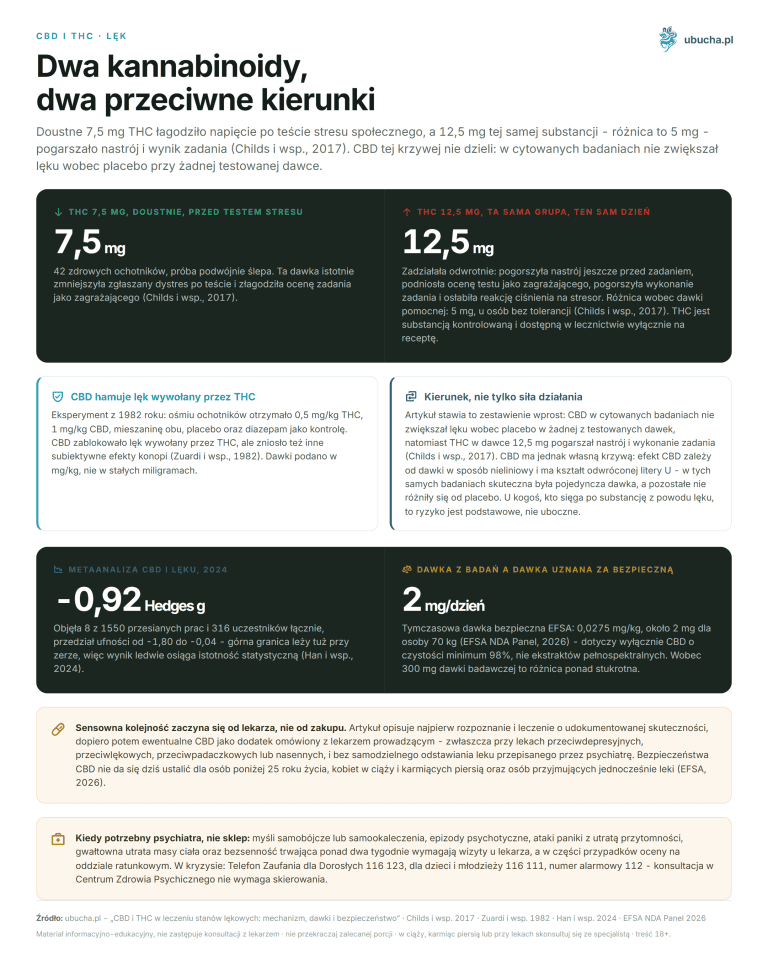
Because it concerns diagnosed disease, not general well-being. EFSA in a 2026 opinion derived a provisional safe dose by benchmark dose method of 0.0275 mg per kilogram of body weight per day, about 2 mg per day for a 70 kg person, with an uncertainty factor of 400 (EFSA Journal, 2026). This is a safety ceiling, not a therapeutic recommendation.
The value applies only to supplements with cannabidiol purity of at least 98%, without nanoparticles. More important for the reader is the next sentence: the panel stated that cannabidiol safety cannot be established in people under 25, pregnant and breastfeeding women, and those taking medications. Women treated for endometriosis usually take hormonal or analgesic drugs.
The panel also lists missing data: animal studies showed liver damage, human data indicated hepatotoxic potential especially with concomitant drug use, and reproductive toxicity data reinforced earlier concerns. For gynecological disease, this is not a footnote but a reason for dose determination by the attending physician.
How does CBD interact with contraception and other drugs?
Via the same enzymes that metabolize hormones. A review of registration data and literature indicates cannabidiol affects CYP3A4 and CYP2C19 enzymes and P-glycoprotein, pathways used by most chronically taken drugs (Journal of Clinical Medicine, 2019). Authors report adverse effects in nearly half of cannabidiol users, dose-dependent.
Most commonly described are elevated aminotransferase activity, sedation, sleep disturbances, infections, and anemia. Authors recommend dose reduction of substrate drugs with narrow therapeutic index, monitoring adverse effects, or changing treatment. Cannabidiol is described as both a cause and victim of interactions.
In endometriosis, this has concrete implications. Combined hormonal contraception, progestogens, anticoagulants, and antiepileptics are groups where blood concentration changes are clinically significant. There is no reason to stop them independently or start supplementation without showing the medication list to a doctor or pharmacist.
Separately, EFSA’s statement on the liver is worth noting. The panel stated that animal studies consistently showed cannabidiol’s toxic effect on the liver, and in humans hepatotoxic potential was especially evident with concomitant drug use (EFSA Journal, 2026). With long-term hormone therapy, this is not a footnote but a reason for periodic medical monitoring.
Is CBD safe when trying to conceive?
There is no basis to claim so. EFSA in a 2026 opinion stated directly that cannabidiol safety cannot be established in pregnant and breastfeeding women, noting placental transfer and observed prenatal neurodevelopmental effects (EFSA Journal, 2026). The panel also noted hormonal disturbances, including thyroid hormone level changes.
Separately is the question of conception itself. A review of endocannabinoid signaling in female reproduction describes involvement in follicle and oocyte maturation, fertilization, tubal transport, and implantation, while noting contradictory results between species (Progress in Lipid Research, 2020). Authors also point to possible epigenetic effects during pregnancy.
Practically, this means one thing. A woman with endometriosis planning pregnancy should discuss cannabidiol use with her doctor before trying, not afterward. Pelvic pain in this period is managed with methods agreed with a gynecologist, as endometriosis and infertility treatment are intertwined.
What to look for when choosing a product?
What can be verified, not what the label promises. A certificate of analysis should provide cannabinoid profile, heavy metal test results, pesticide residues, microorganisms, and batch test date. Lack of a published certificate is a warning sign, as declared content cannot be verified without it.
Be skeptical of bioavailability tables circulating in product descriptions. A review of 24 human cannabidiol pharmacokinetic studies showed absolute bioavailability was measured only for inhalation (31%). No study established it for oral or sublingual routes (Frontiers in Pharmacology, 2018).
The direction of drug form development confirms the problem rather than solving it. A review of cannabinoid delivery systems describes low oral bioavailability as a reason for studying transdermal, nasal, mucosal routes, and nanotechnology carriers (Molecules, 2018). This should be considered alongside EFSA’s caveat that the provisional safe dose does not cover nanoparticle-containing products.
When should you not rely on CBD?
Always when the clinical picture changes or worsens. Sudden pain increase, fever, bleeding outside menstruation, pain preventing daily functioning, and symptoms suggesting bowel obstruction require urgent medical evaluation and imaging, not increasing any over-the-counter dose.
Planned situations also require caution. Surgery, pregnancy and attempts to conceive, serious liver disease, and treatment with drugs with narrow therapeutic index are circumstances where the cannabidiol decision is not the patient’s alone. EFSA’s position on inability to establish safety in these groups is the basis (EFSA Journal, 2026).
There is also a risk not immediately visible. A woman who relieves pain with supplements for a year instead of diagnosing the cause loses a year in which the disease progresses and cysts and adhesions grow. Since diagnosis no longer requires surgery, delaying a visit has lost its last argument (ESHRE, 2022).
It is also good to prepare for a doctor conversation if you already use a cannabis product. A medication list, product form and frequency, and notes on which symptom you use it for help turn the supplement discussion into part of the treatment plan rather than leaving it undocumented.
Summary: what is known today about CBD and endometriosis
It is known that the endocannabinoid system is dysregulated in this disease, based on tissue from patients (Fertility and Sterility, 2012). It is known that in animal models, cannabinoid receptor agonists reduced pain hypersensitivity and inhibited implanted nodule growth (Pain, 2010; The American Journal of Pathology, 2010). However, cannabidiol was not used.
It is also known where human data end. The Australian survey of 484 responses showed 13% used cannabis among self-help methods, rating pain relief at 7.6 out of 10 (Journal of Obstetrics and Gynaecology Canada, 2020). The app-based study described 252 people and 16,193 sessions without a control group (PLOS ONE, 2021). There is no placebo-controlled cannabidiol study in endometriosis.
Practically, this means three things. Diagnosis today is based on symptoms and imaging, so do not wait for surgery (ESHRE, 2022). Primary treatment is led by a gynecologist and cannabidiol does not replace it. If you consider it as an adjunct, discuss with your doctor, as EFSA could not establish safety in people taking medications (EFSA Journal, 2026).
Frequently Asked Questions
Can CBD help in treating endometriosis?
It does not cure endometriosis and there is no controlled study confirming the effect of cannabidiol alone on its symptoms. Data comes from surveys. In an Australian study of 484 women with surgically confirmed endometriosis, those who used cannabis rated its effectiveness in reducing pain at 7.6 out of 10 (Journal of Obstetrics and Gynaecology Canada, 2020).
What exactly did the Australian survey study show?
That only a minority of respondents used cannabis. Out of 484 responses, 76% of women used any self-help methods, and among them, 13% used cannabis. This group rated pain relief effectiveness at 7.6 out of 10, and 56% reduced medications by at least half. Adverse effects were reported by 10% (Journal of Obstetrics and Gynaecology Canada, 2020).
Is laparoscopy still the gold standard for diagnosis?
No. The 2022 ESHRE guidelines directly challenged laparoscopy and histological examination in this role. Diagnosis today is based on symptoms and imaging, and surgery is recommended when imaging shows no lesions or empirical treatment has failed (ESHRE, 2022). This is a change from previous practice.
Can CBD be combined with hormonal contraception?
Not without consulting a doctor. Cannabidiol affects enzymes CYP3A4 and CYP2C19 as well as P-glycoprotein, pathways involved in the metabolism of most chronically taken drugs (Journal of Clinical Medicine, 2019). Adverse effects occurred in nearly half of cannabidiol users and were dose-dependent.
How much CBD should be used for endometriosis?
This article does not provide a dose because it concerns diagnosed disease. EFSA in 2026 derived a provisional safe dose of 0.0275 mg per kilogram of body weight per day, about 2 mg for a 70 kg person, and stated that safety cannot be established for people taking medications (EFSA Journal, 2026). The dose is determined by the attending physician.
Does CBD affect fertility?
It is unknown, which is not reassuring. A review of endocannabinoid signaling in female reproduction describes effects on follicle maturation, fertilization, tubal transport, and implantation, but results vary between species (Progress in Lipid Research, 2020). The decision during pregnancy attempts is made by a doctor.
Do studies concern cannabis or CBD alone?
Cannabis as a whole, and this is an important distinction. In a survey of 484 women, cannabis and hemp oil or cannabidiol oil were assessed separately: the former scored 7.6 out of 10 for pain relief, the latter 6.33 (BMC Complementary and Alternative Medicine, 2019). A New Zealand survey of 213 people concerned illegally used cannabis, so product composition was uncontrolled (Journal of Women’s Health, 2021).
Do ESHRE guidelines recommend cannabinoids?
They do not mention them at all. The 2022 European Society of Human Reproduction and Embryology guidelines describe pharmacological, hormonal, and surgical treatment of endometriosis, and cannabinoids do not appear in any recommendation (ESHRE, 2022). The lack of mention is not a ban but information on the state of evidence.
This article is for informational and educational purposes and does not constitute medical advice. Before starting cannabis or CBD for therapeutic purposes, consult a doctor, especially if you take other medications, are pregnant, or breastfeeding.
Author: Michał Waluk · Published: 2026-04-27 · Updated: 2026-08-10