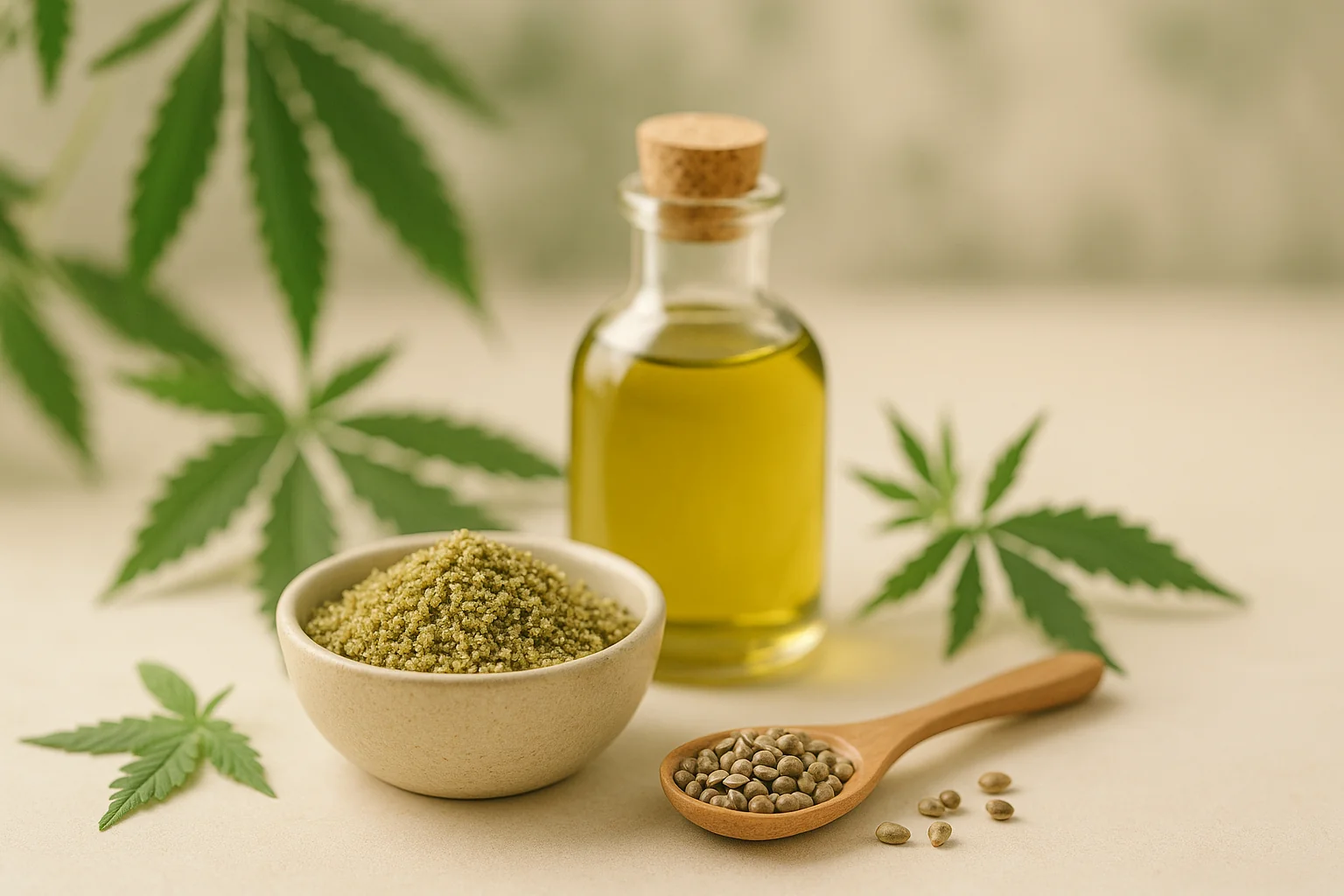

Hemp Pollen: What It Is and How to Use It in the Kitchen
Hemp pollen (kif) is sieved trichomes from hemp flowers. What has really been measured about its composition, decomposition temperature, and absorption with fat.
Hemp pollen, also known as kif, is a fine powder collected from hemp flowers by sieving the dried material. It mainly contains what smells the strongest: resin glands, or trichomes, along with cannabinoids and terpenes. In the kitchen, it is treated as an aromatic spice rather than a structural ingredient, as even a pinch changes the aroma of the dish. However, a lot of numbers have accumulated around this product without any measurement backing: about cannabinoid content, the temperature at which it decomposes, and how quickly something happens after eating. This article separates what has been measured from what sales descriptions repeat and shows what this means at the table.
KEY INFORMATION
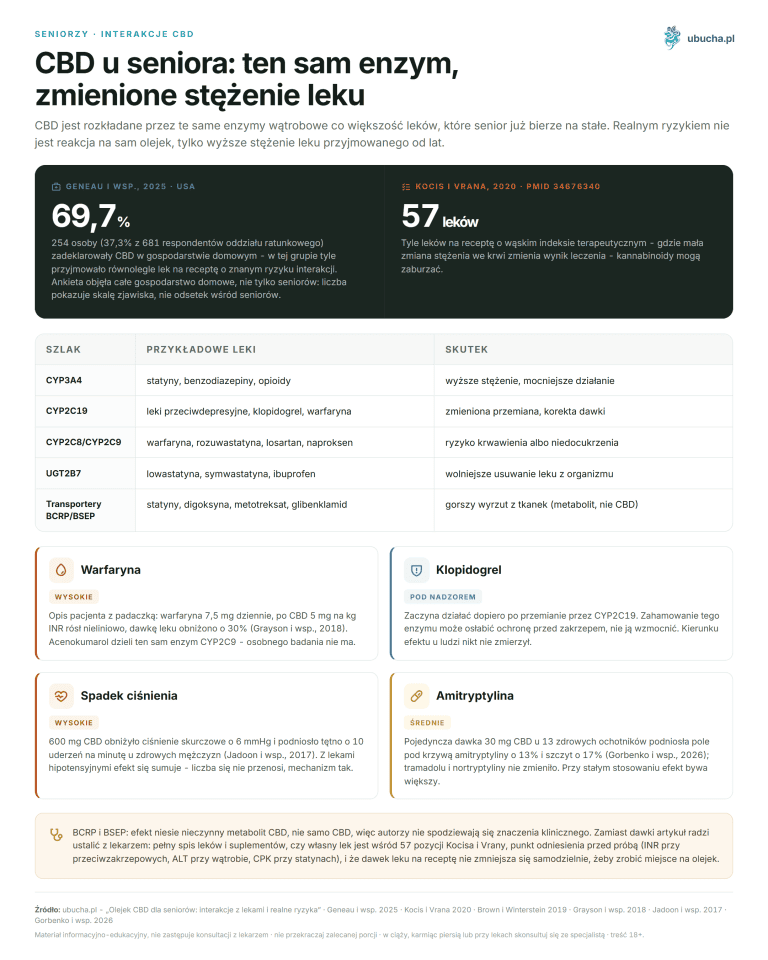
• A high-fat meal increased exposure to cannabidiol nearly tenfold in 11 healthy volunteers (Saals et al., Scientific Reports 2025).
• Acidic cannabinoids transform at 80 degrees Celsius (Wang et al., Cannabis and Cannabinoid Research 2016).
• Cannabidiol does not have authorization as a novel food in the EU.
• Hemp can be an allergen with reactions ranging from mild to life-threatening (Decuyper et al., Allergy 2017).
What is hemp pollen and how is it made?
It is a resin fraction mechanically separated from hemp dried material. The dried material is sieved: the plant material remains on top, while the fine powder composed mainly of trichomes, or secretory glands covering the flower tips, passes through the mesh. Hence the second name of the product, kif.
Trichomes are where the plant produces cannabinoids and terpenes, so sieving concentrates these compounds while rejecting fiber and chlorophyll. This distinguishes pollen from all seed products. Hemp flour, oil pressed from seeds, and protein powder come from seeds that do not produce cannabinoids; EU law sets limits for them at the milligram level per kilogram precisely because traces of resin end up there during harvesting.
As for how much more concentrated pollen is than dried material, it cannot be stated honestly today. Sales descriptions provide ready percentage ranges, but there is no publication comparing dried material with the sieved fraction. The result depends on the strain, how fine the sieve was, and how much plant material passed along with the resin. Without exaggeration, it can be said that the powder is richer in resin than the raw material from which it was made, and its composition is determined solely by testing a specific batch. Terms from this family are developed in the hemp gourmet dictionary.
What does the law say about hemp pollen in the kitchen?
Legality is determined on two levels simultaneously. The first concerns the status of the plant raw material and depends on the THC content. The second concerns the status of the food ingredient, that is, whether it is allowed to be marketed in food in the EU. Omitting the second level is a rule in product descriptions.
Fiber hemp refers to plants in which the sum of delta-9-THC and tetrahydrocannabinolic acid does not exceed 0.3% when calculated on dry mass, measured in flowering or fruiting tips from which resin has not been removed, and rounded to one decimal place. The basis is art. 4 point 5 of the Act of July 29, 2005 on Counteracting Drug Addiction (t.j. Dz.U. 2023 poz. 1939), as amended by the Act of March 24, 2022 (Dz.U. 2022 poz. 763), effective from May 7, 2022. Summation has practical significance: a laboratory result counting only delta-9-THC comes out lower than a result compliant with the law. Above the threshold, the above-ground part of the plant is considered cannabis other than fiber (art. 4 point 37). The national threshold corresponds to the EU threshold from regulation 2021/2115, but it does not follow from it: these are two separate regulations of the same value.
The second level looks different. Cannabidiol does not have authorization as a novel food in the EU, and the European Food Safety Authority in 2026 maintained that for part of the population, safety cannot be established (EFSA, EFSA Journal 2026). A sanitary notification of the introduction of a product into circulation does not replace this authorization.
A separate issue is the name: hashish means compressed resin and speaks of form, not legal status.
Why does fat change the absorption of cannabinoids?
Because cannabidiol is lipophilic, and a fatty meal changes its fate in the digestive tract. This has been measured in humans. Eleven healthy volunteers, five men and six women, received a single oral dose of hemp extract corresponding to 70 mg of cannabidiol: once on an empty stomach, once after a standardized high-fat meal, in a crossover design with random order (Saals et al., Scientific Reports 2025).
After the meal, the maximum concentration in plasma was higher, with a geometric mean ratio of 17.4 with a 90% confidence interval from 12.4 to 24.2. Total exposure, calculated as the area under the curve, was higher with a ratio of 9.7 with a range from 7.7 to 12.3.
This same work undermines the popular notion of how quickly anything happens. The median time to maximum concentration after the meal was 10 hours with a range from 1.5 to 12 hours, and the curve had two peaks: the first around five hours after the meal, the second about five hours later. The authors link this to lymphatic transport and enterohepatic circulation.
Two things need to be stated directly regarding this work. Plasma concentration was measured, not sensations, so this is not a measurement of when the reader will feel anything. The study was funded by Wageningen University and Becanex GmbH, the supplier of the extract; two co-authors were or are employees of this company, and another works in an analytical laboratory. The authors declare that the company did not influence the design or course of the study.
What happens to hemp pollen when heated?
The composition of cannabinoids changes, and this begins at significantly lower temperatures than baking temperatures. Decarboxylation of acidic cannabinoids in extracts from Cannabis sativa has been studied at 80, 95, 110, 130, and 145 degrees Celsius, for times up to 60 minutes, in a vacuum dryer (Wang et al., Cannabis and Cannabinoid Research 2016). The transformation proceeded like a first-order reaction, and the rate constant for tetrahydrocannabinolic acid was twice as high as for cannabidiol acid.
The second measurement concerns resin, which is the material closest to pollen. The degradation of cannabidiol and delta-9-THC and the formation of cannabinol in dried resin have been studied at 50, 60, 70, and 80 degrees, and in solutions additionally at pH from 2 to 12 and temperatures from 40 to 70 degrees. The rate of transformation increased with temperature, most strongly at 70 degrees and pH equal to 2; the greatest stability of cannabidiol was recorded at pH from 4 to 6 (Jaidee et al., Cannabis and Cannabinoid Research 2022).
The circulating limit of 160 degrees in product descriptions does not come from any of these studies. The first ends measurement at 145 degrees, the second at 80, and both show the same: change does not switch on at a single threshold, but increases with temperature and time. Neither measured terpenes, so statements about at what degrees they evaporate from pollen also have no backing here.
How to use hemp pollen in the kitchen?
As an aromatic spice added at the end, to something fatty and already removed from heat. Both rules stem directly from the measurements described above: fat changes absorption, and heat changes composition. The rest is a matter of taste, as the powder is resinous and bitter, and its aroma can easily dominate a delicate dish.
- Aromatic butter with a pinch of sea salt, mixed cold and chilled, for bread or vegetables after cooking.
- Honey as a carrier of aroma, served with yogurt or cheeses; the liquid consistency allows for even distribution of the powder.
- Power balls made from dates, hemp seeds, and bitter cocoa, blended without baking; the resinous note works well with them.
- Saturated fat with aroma: coconut oil melted at low temperature, mixed and chilled in a jar.
- Bitter chocolate melted and cooled before mixing, poured thinly and chilled.
Safety: add pollen to ingredients that are already cooled and do not fry or bake with it. Saturate fat at the lowest temperature at which the fat is liquid.
How much to sprinkle, this article will not say. Pollen is concentrated resin, not a neutral spice, so any weight given here would be a dosage recommendation, not a culinary guideline. What the reader is dealing with is determined by laboratory testing of a specific batch provided by the seller, not a conversion from the article. More about combining cannabinoids with fat in dishes has been gathered in the text about CBD in food.
Who should be cautious with hemp pollen?
First of all, people allergic to hemp. Allergy to Cannabis sativa is IgE-dependent, and its symptoms range from mild to life-threatening. Sensitization leads to cross-allergies to plant products, described as the cannabis-fruit-vegetable syndrome and based on nsLTP proteins and proteins similar to thaumatin (Decuyper et al., Allergy 2017). Diagnosis is based on history and tests with native extracts, and the only course of action is avoidance (Decuyper et al., Expert Review of Clinical Immunology 2019).
The second group is people taking medications, pregnant and breastfeeding women, and individuals under 25 years of age. For them, the safety of cannabidiol cannot be established based on available data (EFSA, EFSA Journal 2026). The same document provides a provisional safe dose of 0.0275 mg per kilogram of body weight per day, or about 2 mg for a person weighing 70 kg, derived with an uncertainty factor of 400. This is not a recommendation, just a ceiling, and applies only to supplements with a purity of cannabidiol of at least 98% without nanoparticles, so sieved plant resin is not covered at all.
Frequently Asked Questions
What is hemp pollen?
It is a fine powder separated from hemp dried material by sieving, composed mainly of trichomes, which are resin glands from the flower tips. It is also called kif. It concentrates cannabinoids and terpenes, as they are produced in trichomes, while rejecting fiber and chlorophyll.
Is hemp pollen legal in Poland?
The raw material is legal if the sum of delta-9-THC and tetrahydrocannabinolic acid in the plant tips does not exceed 0.3% dry mass (art. 4 point 5 of the Act on Counteracting Drug Addiction). Food law applies separately: cannabidiol does not have authorization as a novel food in the EU.
Is hemp pollen the same as hashish?
Hashish means compressed hemp resin, so it describes a form, not a legal status. The status is determined by the THC content in the raw material. Material exceeding the threshold of 0.3% is considered cannabis other than fiber in the sense of art. 4 point 37 of the Act.
At what temperature do cannabinoids from pollen change?
There is no single threshold. Decarboxylation of acidic cannabinoids has been measured from 80 to 145 degrees (Wang 2016), and the degradation of cannabidiol in resin from 50 to 80 degrees (Jaidee 2022). The rate increases with temperature and time, and the 160-degree limit from product descriptions does not come from these studies.
How does hemp pollen differ from hemp flour?
Flour is made from seeds and carries protein and fiber, while it contains at most traces of contamination with resin during harvesting. Pollen comes from flower tips and is a resin fraction without protein value. These are two different raw materials with different uses in the kitchen.
The store ubucha.pl does not sell hemp pollen. The raw material from which it is sieved, that is, dried material, can be found in the dried category, and we have gathered an overview of all hemp kitchen ingredients in the complete guide to hemp in the kitchen.
This article is for informational and educational purposes and does not constitute medical advice. Before starting to use hemp or CBD for therapeutic purposes, consult a doctor, especially if you are taking other medications, are pregnant, or breastfeeding.
Author: Michał Waluk · Published: 2026-05-29 · Updated: 2026-08-16