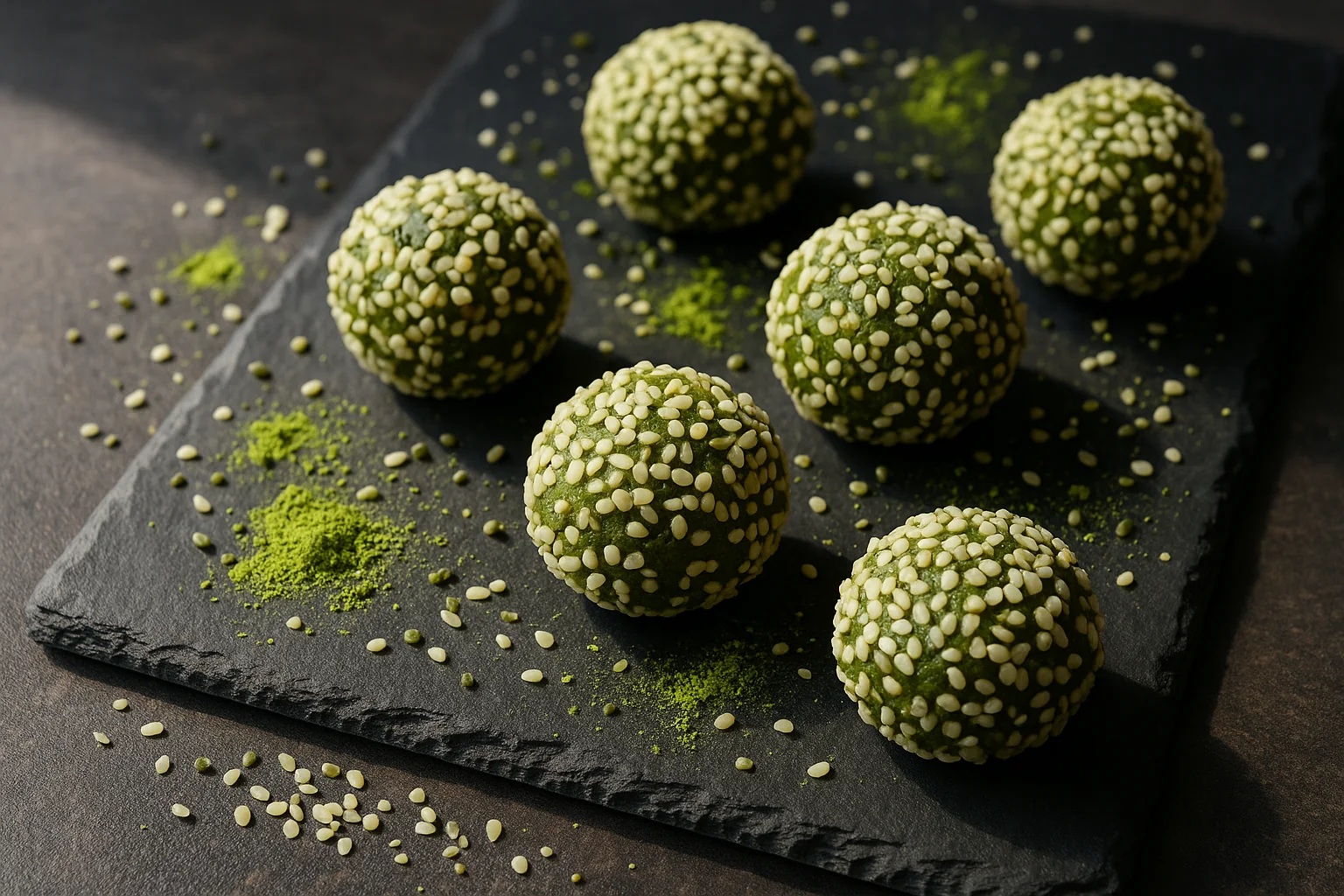

Energy balls with hemp seeds and matcha: green power balls
Green energy balls without baking, with hulled hemp seeds and matcha. Step-by-step recipe and how much caffeine is really in one ball.
A green snack that looks complicated but can be made in fifteen minutes without turning on the oven. Dates bind the mixture, peanut butter smooths it out, matcha provides color and bitterness, and hulled hemp seeds bring what the rest lacks: protein and fat. They contain 31.6 g and 48.8 g per 100 grams (USDA FoodData Central, record 170148). After chilling, the balls hold their shape and do not dirty your hands, making them suitable for a backpack or gym bag. The whole process takes fifteen minutes of work and twenty minutes in the fridge. Below you will find a step-by-step recipe, a shopping list, and a caffeine calculation that turns out quite differently than most matcha recipes suggest.
KEY INFORMATION
• Hulled hemp seeds: 31.6 g of protein and 48.8 g of fat per 100 g (USDA FoodData Central, record 170148).
• Three tablespoons of seeds (30 g) for a batch of 12 balls provide about 9.5 g of protein, 15 g of fat, and 210 mg of magnesium.
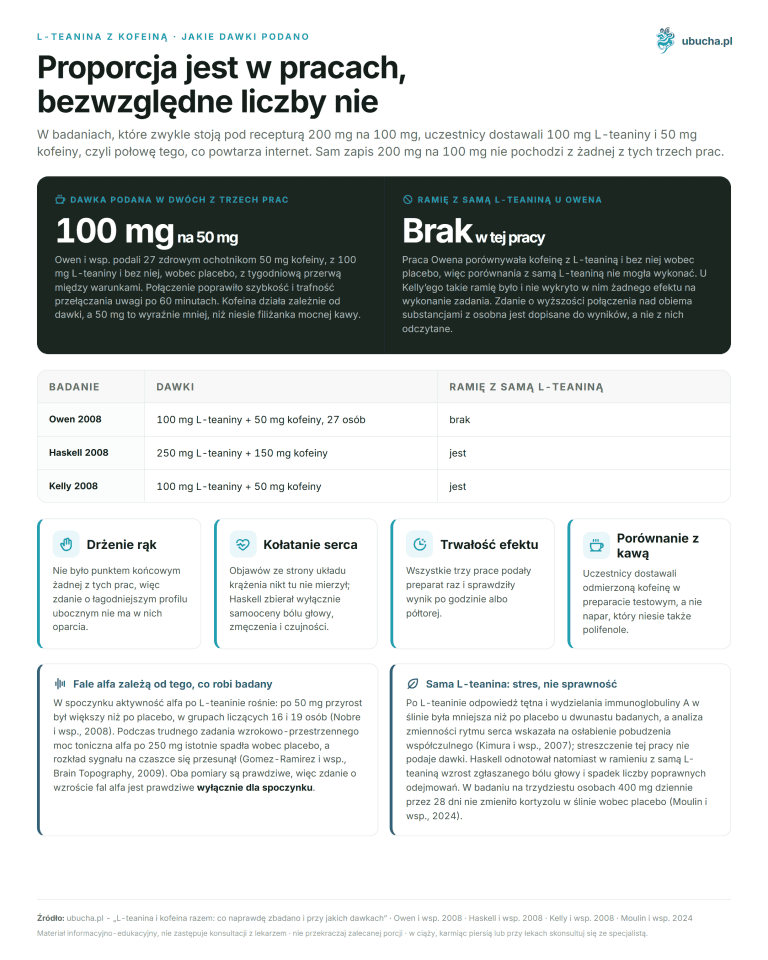
• Caffeine measurements in matcha vary from 2.2 to 34.1 mg per gram of powder (compiled by Kika et al., Foods, 2024).
• The calming effect of L-theanine has been described from a dose of 200 mg, and these balls do not contain that much.
Why do matcha and hemp seeds go well together?
The reason is primarily flavor-related, not nutritional. Matcha has a grassy bitterness that can be overwhelming on its own, while the nuttiness of hemp seeds dulls it. Additionally, both ingredients are green, so the ball looks cohesive, and the topping does not clash with the mixture.
It is worth breaking down the contribution of each separately, as they can be confused. Hemp seeds are responsible for the macronutrients in this recipe: three tablespoons, or about 30 grams for the entire batch, contribute roughly 9.5 g of protein and 15 g of fat. Additionally, magnesium, which hulled seeds contain 700 mg per 100 g, translates to 210 mg in the portion used for the mixture. This last number circulates in recipes as the supposed content in one hundred grams and is then underestimated by more than three times.
However, the quality of the protein itself has a ceiling that recipes often overlook. In measurements of thirty commercial batches of hemp products, lysine was found to be the first limiting amino acid in all tested products, and the PDCAAS score for hulled seeds was 63-66% (House et al., Journal of Agricultural and Food Chemistry, 2010). Essential amino acids are present in nutritionally significant amounts (Callaway, Euphytica, 2004), but calling this protein complete is a simplification.
Matcha, on the other hand, contributes almost nothing to the nutritional balance, although in recipe descriptions it appears as the main nutritional attraction. The powder is nutritionally dense: 17.3 g of protein, 56.1 g of fiber, and 7.3 g of fat per 100 g (Kika et al., Foods, 2024). The thing is, for twelve balls, two teaspoons are used, which is about four grams, so when divided into portions, only tenths of a gram remain. Matcha is here for color, bitterness, and caffeine, not nutrition.
How much caffeine is really in these balls?
The honest answer is: it cannot be given as a single number, as caffeine content measurements in matcha vary by several times. A study that measured the composition of matcha powder chromatographically found 2213 micrograms per gram, or about 2.2 mg. An earlier measurement, cited by the same authors, gave 14.4-34.1 mg per gram.
Let’s translate this into the recipe. Two teaspoons of powder weigh about four grams, so the entire batch of twelve balls contains somewhere between 9 and 136 mg of caffeine, and one ball between a fraction of a milligram and eleven. The quality and origin of the specific powder determine this, which you usually cannot read from the packaging. Therefore, you will not find a specific number of milligrams stated as a fact in this recipe.
Separately, it is worth debunking another myth that accompanies matcha in every recipe. A review of 49 studies involving humans found that L-theanine improves reported relaxation from a dose of 200 mg, while caffeine has an effect from 40 mg (Dietz and Dekker, Current Pharmaceutical Design, 2017). The same review confirms that L-theanine mitigates the stimulation caused by caffeine. The issue is the scale: for a portion of two balls, there is about 0.7 g of matcha powder, so to extract 200 mg of theanine from it, it would need to constitute nearly one-third of the powder’s mass. It does not. The promise of calm energy from two balls thus lacks support in dosage, although the balls remain a good, dense snack.
What do you need for a batch of balls?
Proportions for 12-14 balls. Equipment includes a food processor or a strong blender, and the working time is fifteen minutes plus twenty minutes of chilling.
- 180 g of pitted dates, preferably Medjool variety
- 3 tablespoons of almond or cashew butter, unsweetened
- 3 tablespoons of hulled hemp seeds for the mixture
- 3 tablespoons of rolled oats
- 2 teaspoons of matcha powder
- 1 tablespoon of unrefined coconut oil
- 1 teaspoon of honey or maple syrup
- pinch of sea salt
- for topping: 2 tablespoons of hemp seeds mixed with 1 teaspoon of matcha
There is no point in overpaying for matcha. The culinary variety is cheaper and noticeably more bitter than the ceremonial one, and in a mixture with dates, this is an advantage: the delicate ceremonial powder simply gets lost under the sweetness of the fruits. Choose soft and sticky dates. Hard ones can be salvaged by soaking, but the mixture will turn out grainy.
Peanut butter must be unsweetened and free of palm oil; otherwise, the balls will turn out blandly sweet, and palm oil will change their texture to waxy. Use rolled oats, not instant ones: the latter break down in the mixture and take away its texture. Store hemp seeds in the fridge, as with nearly half of the mass being fat, they quickly develop a rancid taste. A blender can replace a food processor at the cost of a few pauses to push the mixture down from the walls.
How to prepare energy balls step by step?
The only moment when it is easy to spoil the effect is blending after adding the seeds. The mixture should retain texture, so work in pulses and stop before it becomes smooth.
- Pour warm water over the dates and let them sit for 5 minutes. Drain, keeping a tablespoon of the soaking water.
- Transfer the dates to a food processor, add peanut butter, coconut oil, and salt. Blend for 45-60 seconds until the mixture becomes sticky and smooth.
- Add matcha, hemp seeds, oats, and honey. Blend in pulses, with three or four short bursts, so that the seeds and flakes remain visible.
- Form a test ball. A well-bound mixture should not stick to your hands. If too dry, add a tablespoon of soaking water; if too wet, add a tablespoon of flakes. Also, taste the mixture and add more matcha if the bitterness is barely noticeable.
- Wet your hands with cold water and take portions of about 25 g, quickly rolling them between your hands. Wet your hands every three balls.
- Mix hemp seeds with matcha in a bowl and coat each ball in this mixture.
- Place the balls on parchment paper and refrigerate for at least 20 minutes. Store in a sealed container in the fridge for up to two weeks.
Chilling is not a formality. Coconut oil only solidifies in the fridge, and it is what holds the ball together, so one straight from the counter will fall apart in a lunchbox after an hour. If you prefer a chocolate flavor and more protein per serving, the same technique works in the version with energy balls with hemp protein and dates.
What variations are worth trying?
The date-based mixture can withstand many modifications, as long as you do not change the moisture proportions. Three variations we have tested, and one to avoid.
The citrus version includes the zest of one lime and a tablespoon of juice. The acidity enhances the plant aroma of matcha and brings out the nuttiness of the seeds, but more than a tablespoon loosens the mixture enough that the balls stop holding their shape. The version with white chocolate involves mixing 30 g of grated chocolate into the finished mixture and rolling in coconut flakes instead of the green topping. The sweetness of the chocolate suppresses the bitterness of the matcha, so honey is omitted then.
The caffeine-free version replaces matcha with two tablespoons of raw cocoa or two teaspoons of cinnamon. The color changes, but the consistency and method remain the same. We advise against spirulina: the color comes out more intense, but the sea flavor clashes with the dates.
If you are looking for a green snack with a completely different texture, the same principle of contrasting flavors applies to kale chips with hemp seeds. And if you were looking for matcha itself, rather than a snack, a simpler solution is matcha latte with hemp milk.
Frequently asked questions
How much caffeine do energy balls with matcha have?
It is not possible to provide a single number. Kika et al. (Foods, 2024) measured 2.2 mg of caffeine per gram of powder and cite earlier measurements of 14.4-34.1 mg per gram. Two teaspoons per batch of twelve balls thus yield between 9 and 136 mg for the entire batch, depending on the powder.
Does matcha go well with hemp seeds?
Yes, mainly for flavor reasons. The nuttiness of the seeds dulls the grassy bitterness of the matcha, and both ingredients share the same green color, making the mixture and topping look cohesive. The seeds provide protein and fat in this recipe, while matcha adds color and bitterness.
How many hemp seeds should be added to energy balls?
Three tablespoons, or about 30 g, for the mixture for twelve balls, plus two tablespoons for the topping. The three tablespoons in the mixture contribute about 9.5 g of protein, 15 g of fat, and 210 mg of magnesium (USDA FoodData Central, record 170148), and the topping adds roughly two-thirds more.
Are energy balls with matcha suitable for children?
Balls with matcha contain caffeine, and its amounts cannot be reliably estimated for a specific package of powder, so it is better to opt for a version without matcha for children. Substitute the powder with raw cocoa or cinnamon. The hemp seeds themselves are a regular food ingredient.
What can replace matcha?
Raw cocoa in the amount of two tablespoons gives a different color and similar bitterness. Cinnamon, two teaspoons, shifts the whole towards a spiced flavor and removes caffeine. Spirulina retains the green color but adds a sea flavor that clashes with the dates. Each of these alternatives works well with hemp seeds.
How long can energy balls be stored?
Up to two weeks in a sealed container in the fridge. At room temperature, coconut oil softens, and the balls lose their shape after a few hours. They can also be frozen for up to three months and thawed individually overnight in the fridge.
This article is for informational and educational purposes and does not replace consultation with a doctor. If you are pregnant, breastfeeding, taking medications, or have chronic conditions, consult the use of supplements or herbs with a specialist.
Author: Michał Waluk · Published: 2026-06-02 · Updated: 2026-08-16