
PEA: endogenous relative of CBD, PPAR-alpha mechanism and mast cells (dosage)
PEA (palmitoylethanolamide): how it works through the PPAR-alpha receptor, what meta-analyses have shown in chronic pain, and what is still unknown about its safety.
Palmitoylethanolamide, or PEA, is a substance that the body produces, especially in areas affected by inflammation. It is sometimes referred to as the endogenous relative of CBD because it belongs to the same chemical family as anandamide, although it acts through a different receptor. In chronic pain, it has been the subject of two independent meta-analyses and a safety review, making it one of the few supplements that can be discussed based on data from randomized studies rather than just theory. Below you will find a description of the mechanism, a summary of what has actually been studied and on what sample, and what is still unknown about the long-term safety of PEA. Separately, we explain the source of the buzz around the ultramicronized form and why this article does not provide doses for self-administration.
KEY INFORMATION
• PEA acts through the nuclear receptor PPAR-alpha. In the Lo Verme study, it activated it at a half-maximal concentration of 3.1 micromoles, and its anti-inflammatory effect disappeared in mice lacking this receptor (Lo Verme et al., Molecular Pharmacology, 2005).
• The meta-analysis by Artukoglu included 10 randomized studies, 786 patients taking PEA and 512 in control groups; PEA significantly reduced pain more than inactive control (Artukoglu et al., Pain Physician, 2017).
• The pooled data analysis from 12 studies showed a decrease in pain intensity of 1.04 points over two weeks compared to 0.20 points in control groups (Paladini et al., Pain Physician, 2016).
• Safety data extend to therapies lasting up to 49 days. For treatment longer than 60 days, the number of studied patients is too small to exclude rarer adverse effects (Gabrielsson et al., British Journal of Clinical Pharmacology, 2016).
• This article does not provide doses for self-administration. Decide on supplementation with your doctor, especially when taking medications.
What is PEA and why is it called a relative of CBD?
PEA is an endogenous lipid from the N-acylethanolamide group, which is the same chemical family as anandamide. The body produces it on its own, and production increases in response to tissue damage and inflammation. The relationship with CBD is therefore chemical and functional, not literal: CBD comes from a plant, while PEA is produced in the human body.
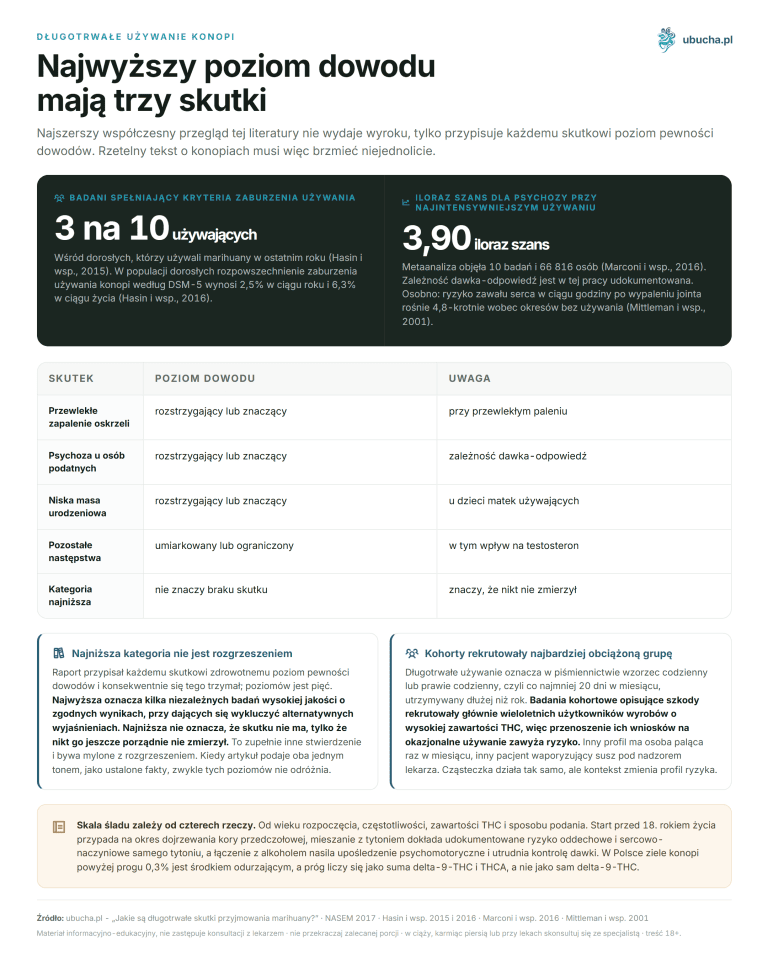
However, calling PEA natural CBD is misleading because the mechanisms of both compounds diverge. PEA does not bind to cannabinoid receptors CB1 and CB2 with high affinity. Its main molecular target is the nuclear receptor PPAR-alpha, a transcription factor that regulates the expression of genes related to inflammation and lipid metabolism. This is a completely different pathway than that taken by non-steroidal anti-inflammatory drugs, which block cyclooxygenase enzymes.
The practical consequence of this difference is that PEA is considered a supplement rather than a substitute for plant cannabinoids. A broader discussion of this entire group of compounds, along with the related OEA, can be found in a separate text about endocannabinoids and compounds outside of anandamide.
How does PEA work at the cellular level?
The best-documented element of this mechanism is the dependence on PPAR-alpha. Lo Verme and colleagues demonstrated that PEA selectively activates this receptor under laboratory conditions, achieving a half-maximal concentration of 3.1 micromoles, and increases the expression of its mRNA after topical administration in mice. However, the decisive result comes from two models of inflammation in animals: PEA alleviated paw swelling induced by carrageenan and ear swelling induced by phorbol ester in healthy mice, but did not work in mice lacking the PPAR-alpha gene (Lo Verme et al., Molecular Pharmacology, 2005).
This second result is stronger than merely stating a correlation, as it shows that without the receptor, the effect disappears. Other known substances that stimulate PPAR-alpha behaved similarly, further indicating a common pathway of action. It is worth noting that these are studies in animals and cell cultures, not in humans.
Mast cells appear in descriptions of PEA because they are one of the first links in the inflammatory response and release mediators that sustain pain. Meta-analyses of PEA effectiveness refer to the inhibition of their activation and the influence on glial cells as a proposed explanation for the observed analgesic effect. This is therefore a mechanistic hypothesis consistent with clinical data, not separately proven in humans. A separate text discusses another pathway of pain modulation, leading through the TRPV1 receptor and capsaicin.
What exactly has been studied and on what sample?
Instead of a dosage table that would suggest a ready recommendation, below is a summary of the studies themselves: who conducted them, what type they were, how many works and people they included, and what the results were. This allows for an assessment of the strength of evidence before anyone starts talking about use.
| Study | Type | Scope | Result |
|---|---|---|---|
| Artukoglu et al., 2017 | Meta-analysis of randomized studies | 10 works, 786 people on PEA and 512 in control | Significantly greater pain reduction than in inactive control |
| Paladini et al., 2016 | Pooled raw data analysis | 12 works, including 3 with double-blind trials | Pain reduction of 1.04 points over 2 weeks compared to 0.20 in control |
| Paladini et al., 2016 | Survival analysis using Kaplan-Meier method | Assessment on day 60 of treatment | Pain at level 3 or lower in 81% vs 40.9% in control |
| Gabrielsson et al., 2016 | Review of pharmacokinetics and safety | 16 clinical studies and 6 case reports | No evidence of serious adverse effects up to 49 days |
| Lo Verme et al., 2005 | Mechanism study in animals | Two models of inflammation in mice | Anti-inflammatory effect disappears without PPAR-alpha receptor |
| Petrosino et al., 2018 | Pharmacokinetics in rats | Oral administration of ultramicronized and regular forms | Higher plasma concentrations for the ultramicronized form |
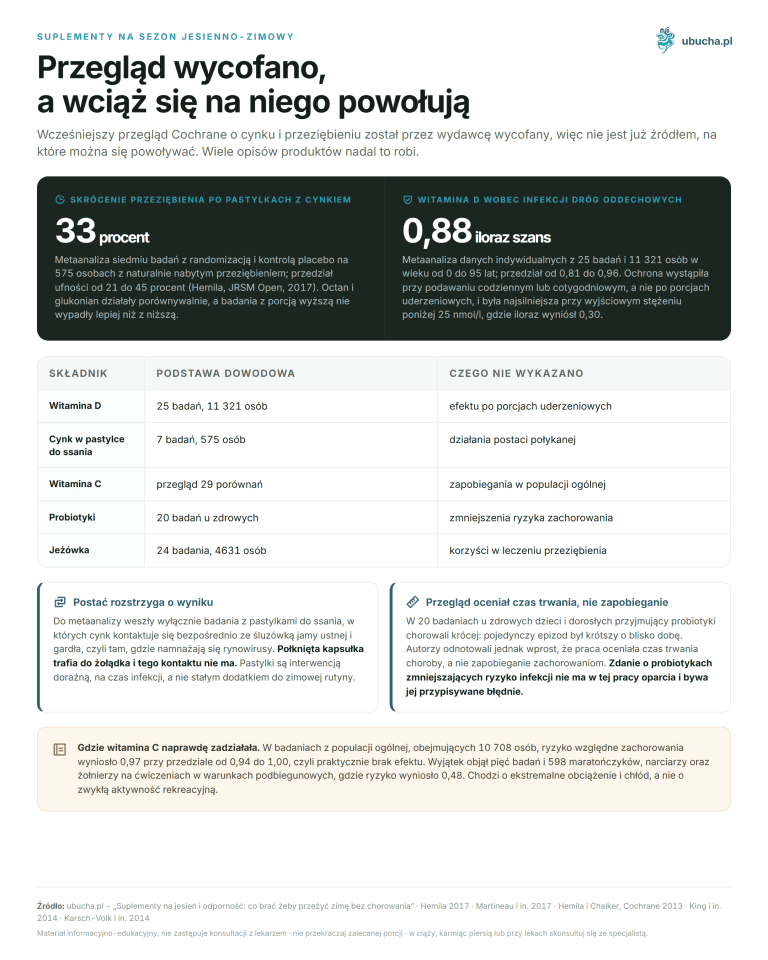
Note the last row. The superiority of the ultramicronized form was demonstrated in rats that were given a radiolabeled compound orally (Petrosino et al., Frontiers in Pharmacology, 2018). In humans, the situation is different: the Gabrielsson review states that direct comparisons of the micronized form with the regular one in patients have not been conducted, so there is currently no evidence of superiority of either. The label declaration thus speaks of the manufacturing technology, not of clinically confirmed superiority.
What do meta-analyses of PEA effectiveness show?
Two independent meta-analyses provide a consistent direction of results. Artukoglu and colleagues identified 10 randomized studies involving 786 patients taking PEA and 512 people in control groups; eight works with inactive control were included in the proper analysis. PEA was associated with a significantly greater reduction in pain intensity on a visual analog scale than control, with a weighted mean difference of 2.03 points and a confidence interval from 1.19 to 2.87 (Artukoglu et al., Pain Physician, 2017).
Paladini and colleagues pooled raw data from 12 studies, including three with double-blind placebo trials, two open-label with standard therapy, and seven open-label without a control group. Pain intensity decreased by 1.04 points every two weeks, while in control groups it decreased by 0.20 points. On day 60, pain at level 3 or lower was recorded in 81% of people taking PEA compared to 40.9% in control, and the effect did not depend on the age or gender of the patients (Paladini et al., Pain Physician, 2016).
Both papers also point out limitations that should not be overlooked. The number of studies is small, they concern different causes of pain, and the quality of some of them is assessed as poor, especially regarding the reporting of adverse effects. In Paladini’s analysis, seven out of twelve works were open-label studies without a control group, which weakens the inference. A cautious conclusion is therefore: the signal of effectiveness is repeatable, but the evidence base remains narrow.
Can PEA be combined with CBD?
There are practically no clinical studies on such a combination, and that is the most honest answer. Both compounds are described as acting through different, partially overlapping pathways: PEA mainly through PPAR-alpha, CBD through a broader set of molecular targets. However, the fact that the mechanisms complement each other does not imply that the clinical effect sums up. No one has measured the presumed synergy in humans.
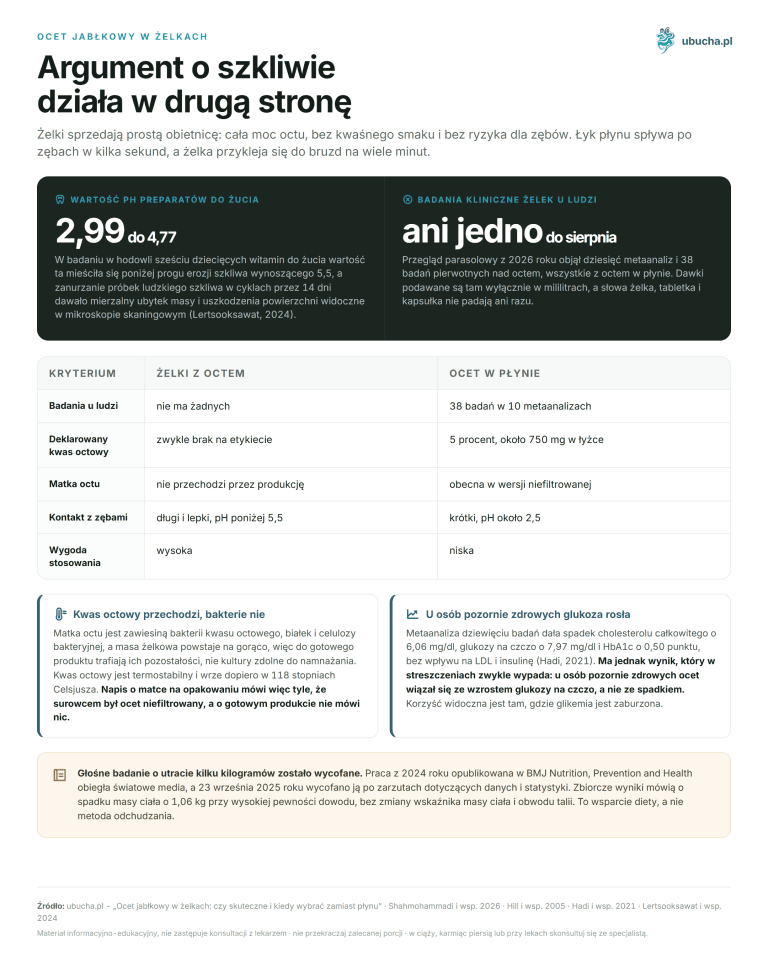
A separate issue is the safety of CBD itself in such a combination. EFSA states that the safety of cannabidiol cannot be established in individuals under 25 years of age, in pregnant and breastfeeding women, and in people taking medications, and the provisional safe dose derived in this assessment is 0.0275 mg per kilogram of body weight per day, which is about 2 mg for a person weighing 70 kg (EFSA, EFSA Journal, 2026). Combining two preparations without a doctor’s knowledge is therefore a decision fraught with risks that no one has assessed for you.
This especially applies to individuals who turn to PEA precisely because non-steroidal anti-inflammatory drugs are contraindicated for them. The contraindication usually arises from a comorbid condition or from medications taken, which are exactly the circumstances in which safety assessment becomes difficult. The context of inflammatory diseases is discussed more broadly in the text about CBD and autoimmune diseases.
Frequently Asked Questions
What is PEA and why is it called a relative of CBD?
PEA is palmitoylethanolamide, an endogenous lipid from the N-acylethanolamide family, which also includes anandamide. The body produces it in response to tissue damage. The relationship with CBD concerns the chemical class and area of action, not the mechanism, as PEA mainly acts through the PPAR-alpha receptor, not through cannabinoid receptors.
Is the effectiveness of PEA confirmed by studies?
Two meta-analyses provide a consistent direction of results in chronic and neuropathic pain. However, the basis is narrow: 10 randomized studies by Artukoglu and 12 works in the pooled data analysis by Paladini, of which seven were open-label studies without a control group. The authors of both papers call for further, better-designed studies.
What is known about the safety of long-term use of PEA?
The Gabrielsson review includes therapies lasting up to 49 days and for such a period finds no evidence of serious adverse effects occurring more frequently than in one in two hundred people. For treatment longer than 60 days, the number of studied patients is too small to exclude rarer adverse effects.
Does PEA interact with medications?
There is little reliable data on PEA interactions with medications, so the absence of described interactions is not the same as proof of their absence. If you are taking prescription medications, especially anti-inflammatory, anticoagulant, or steroid medications, discuss the decision to supplement with your doctor or pharmacist before starting.
What is the difference between ultramicronized PEA and regular PEA?
Ultramicronization reduces particle size, which is supposed to improve the absorption of substances poorly soluble in water. Higher concentrations in plasma for this form have been shown in rats. In humans, direct comparisons of both forms have not been conducted, so there is currently no evidence of clinical superiority of either.
Such preparations can be found in the supplements category.
This article is for informational and educational purposes only and does not constitute medical advice. Before starting the use of cannabis or CBD for therapeutic purposes, consult your doctor, especially if you are taking other medications, are pregnant, or breastfeeding.
Author: Michał Waluk · Published: 2026-07-10 · Updated: 2026-08-11