
Electrolytes: when, how much and does everyone need them (table)
Who really needs electrolytes, how much sodium do you lose in sweat according to Baker's review 2017, and why muscle cramps do not prove deficiency. Situation table.
The shelves of sports stores are filled with powders, tablets, and electrolyte drinks, and marketing suggests that everyone who moves needs them. Research indicates something narrower. The position of the American College of Sports Medicine includes a statement that negates universal recommendations: the rate of sweating and the electrolyte content in sweat vary so significantly between individuals that hydration plans must be tailored individually. This article shows who has data-backed supplementation needs, who does not, and why the most popular argument for electrolytes, namely muscle cramps, does not hold up in the study that examined it. You will also find a table of situations with a reference to the document on which the assessment of each is based, as well as what WHO says today about sodium and potassium.
KEY INFORMATION
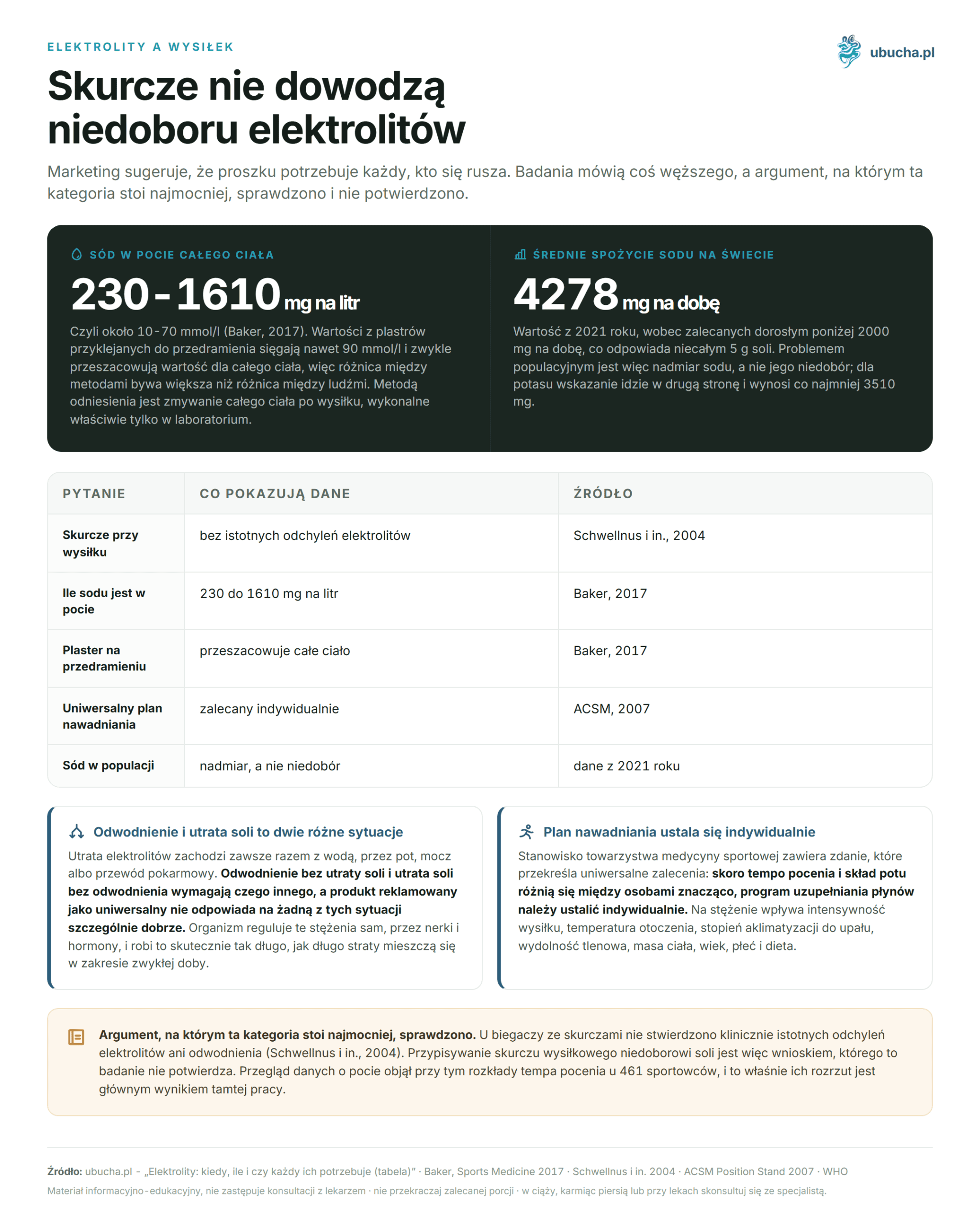
• The sodium concentration in sweat from the whole body ranges from about 10-70 mmol/l, which is roughly 230-1610 mg per liter (Baker, Sports Medicine, 2017).
• In runners with cramps, no clinically significant electrolyte deviations or dehydration were found (Schwellnus et al., British Journal of Sports Medicine, 2004).
• WHO recommends adults consume less than 2000 mg of sodium per day, which corresponds to just under 5 g of salt, and for potassium, at least 3510 mg.
• The population problem is excess sodium, not its deficiency: the average intake worldwide in 2021 was 4278 mg per day.
What are electrolytes and what do they do in the body?
They are minerals that, when dissolved in water, break down into ions that conduct electricity. Sodium, potassium, magnesium, chlorides, calcium, and phosphates maintain the osmotic pressure of body fluids, conduct nerve impulses, and trigger muscle contraction. Without them, a cell cannot distinguish its interior from the exterior, as the entire difference is a difference in ion concentrations.
Each has a different role. Sodium governs the volume of extracellular fluid and determines where water will be in the body. Potassium is responsible for the resting membrane potential, and its fluctuations are most quickly seen in heart function. Magnesium participates in hundreds of enzymatic reactions and is involved in muscle relaxation, while chlorides accompany sodium in extracellular fluids.
Loss of electrolytes is always a loss along with water, through sweat, urine, or the digestive tract. This distinction has practical consequences. Dehydration without salt loss and salt loss without dehydration require different approaches, and a product marketed as universal does not particularly well address either of these situations. It is also worth remembering that the body regulates these concentrations itself, through the kidneys and hormones, and does so effectively as long as losses are within the range of a normal day.
How much sodium do you really lose in sweat?
Significantly less than labels suggest, and primarily very differently. Baker collected data on sweating rates and sweat composition in a review for Sports Medicine, including distributions of sweating rates among 461 athletes, and states that the sodium concentration in sweat from the whole body is about 10-70 mmol/l. When converted to milligrams, this gives roughly 230-1610 mg per liter of sweat.
This same review explains why numbers circulating on the internet can be inflated. Measurement from a patch stuck to the forearm usually overestimates the value for the whole body, and the reference method is washing the entire body after exercise, which is practically only feasible in a laboratory (Baker, Sports Medicine, 2017). Values from local patches can reach even 90 mmol/l, so the difference between methods can be greater than the difference between individuals.
Concentration is also influenced by exercise intensity, ambient temperature, degree of acclimatization to heat, aerobic capacity, body mass, age, sex, and diet. Therefore, the American College of Sports Medicine formulates its recommendation as it does: since sweating rates and sweat composition differ significantly between individuals, fluid replacement programs should be established individually (ACSM Position Stand, Medicine and Science in Sports and Exercise, 2007). Their reference point is not milligrams, but weight: the goal is not to lose more than 2% of body mass during exercise.
Who really needs electrolytes in supplements?
People in specific situations, not people of a specific age or fitness level. The determining factors are the duration and conditions of exertion or illness that depletes fluids in another way. The table below compares situations with what physiologically changes in them and with the document on which this assessment is based.
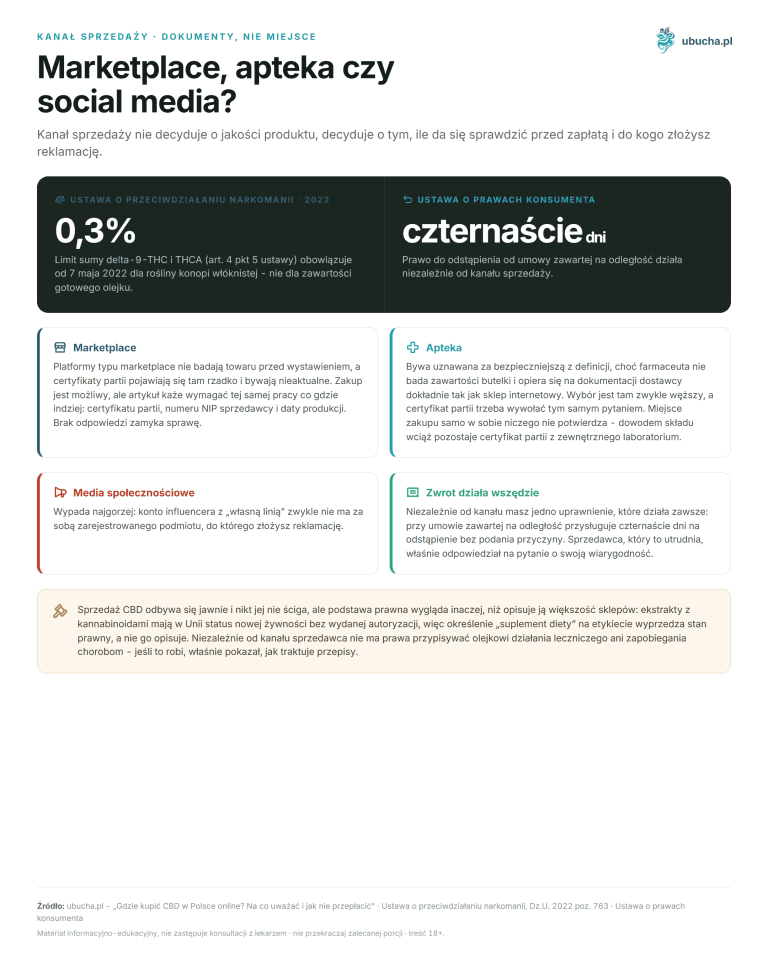
| Situation | What changes | Assessment basis |
|---|---|---|
| Training up to an hour, moderate | Sweat losses are small, balance returns to normal with meals | ACSM 2007: the goal is to prevent losing more than 2% of body mass, and the advantage of an electrolyte drink over water is linked to specific conditions |
| Effort over an hour or in heat | Water and sodium losses increase, highly variable between individuals | ACSM 2007: a drink with electrolytes and carbohydrates may be better than water alone in these conditions, and the plan should be individualized |
| Ultra running, several hours or longer | Drinking only water dilutes sodium in the blood | Third International Consensus Conference on Exercise Hyponatremia (Hew-Butler et al., 2015) |
| Diarrhea or vomiting | Water and electrolytes are lost through the digestive tract, quickly and together | Oral rehydration solution from the pharmacy, tailored by a pharmacist, not a sports drink |
| Ketogenic diet, active phase | Decreased insulin increases sodium and water excretion in urine | Muscogiuri et al. 2019: possible hyponatremia and hypomagnesemia, with laboratory monitoring under medical supervision |
| Inactive person, regular diet | Nothing changes that food does not cover | WHO: the population problem is excess sodium, not its deficiency |
Note what is missing from this table. There is no column with milligrams to take, as none of these documents contain such a column for the reader without measurement. ACSM directly refers to weighing oneself before and after exercise as a way to estimate one’s own losses. This is the only number that can be established without a laboratory.
Do muscle cramps indicate a deficiency of electrolytes?
No, at least not in the study that directly examined this in runners. Exercise-induced cramps are the most frequently repeated argument for supplementation and simultaneously the least well-documented. The work that compared runners with and without cramps in the same ultra race did not confirm the electrolyte hypothesis.
Schwellnus observed 72 participants in an ultra race and compared 21 individuals who experienced cramps with 22 individuals without cramps. Sodium in serum just after the race was indeed lower in the group with cramps, but we are talking about a difference between 139.8 and 142.3 mmol/l, which is within the normal range. Magnesium was the opposite, as those with cramps had higher, not lower, levels. Body mass, blood volume, and plasma volume did not differ at all. The authors’ conclusion is unequivocal: in runners with cramps, there are no clinically significant deviations in electrolyte concentrations or changes in hydration status (Schwellnus et al., British Journal of Sports Medicine, 2004).
The practical consequence is inconvenient for the supplement industry. If you experience a cramp in the second half of a race, adding magnesium or salt may not help, as the cause likely lies elsewhere: in muscle fatigue and impaired neuromuscular control. Instead of selecting a supplement, it is worth checking the pace, preparation for the distance, and stretching the fatigued muscle group. If cramps recur outside of exertion or are accompanied by heart rhythm disturbances, that is a signal for blood tests, not for purchasing. More about what a real deficiency of one of these minerals looks like and how it is diagnosed can be found in the post about potassium deficiency and its symptoms.
How much sodium and potassium does WHO recommend?
Less than 2000 mg of sodium per day, and at least 3510 mg of potassium, which is 90 mmol. The first number is an upper limit, not a target to achieve. The second is described more cautiously by WHO as a level that may be beneficial for adults (WHO, fact sheet on healthy diet). Both refer to the entire diet, not just supplements, and both pertain to a healthy person in a normal lifestyle.
The scale of the discrepancy between recommendations and reality is large. The average sodium intake among adults worldwide in 2021 was 4278 mg per day, which corresponds to 11 g of salt, more than double the recommendation (WHO, Guideline: sodium intake for adults and children, 2012). It is important to watch the units here, as the most common misunderstanding is confusing salt with sodium. Salt is a compound of sodium and chlorine, so one gram of salt provides 388 mg of sodium (USDA FoodData Central, record 173468). The limit of 5 g refers to salt, while the limit of 2000 mg refers to sodium, and these two numbers convey the same message.
With potassium, the problem is the opposite, as this element is often lacking in a typical diet rather than being in excess. Sources are vegetables and fruits, not tablets: 100 g of banana contains 358 mg of potassium (USDA, record 173944). However, individuals with kidney disease, hypertension, or those taking diuretics must discuss any potassium supplementation with a doctor, as excess can be more dangerous than deficiency. Magnesium and potassium in capsules can be found in the supplements category, but if you are experiencing chronic fatigue, start with diagnostics, as we discuss in relation to vitamin B12 and fatigue.
Why does the ketogenic diet change electrolyte balance?
Because it lowers insulin, and insulin is the hormone that tells the kidneys to retain sodium. When its level drops, the kidneys start to excrete sodium, and along with it, water. This natriuresis and diuresis are responsible for the rapid weight loss in the first days of a low-carbohydrate diet.
The review by Muscogiuri and colleagues describes this mechanism and lists its consequences. In the active phase of a very low-calorie ketogenic diet, electrolyte disturbances, including hyponatremia and hypomagnesemia, may occur due to dehydration, excretion of ketone bodies in urine, and low intake of micronutrients (Muscogiuri et al., Journal of Translational Medicine, 2019). The authors therefore recommend monitoring sodium and potassium levels as well as magnesium and phosphates before, during, and after the diet.
This is, however, a medical protocol, not internet advice. The same document lists contraindications for such a diet: kidney failure, chronic kidney disease of moderate or severe degree, liver failure, pregnancy, and breastfeeding. Symptoms commonly referred to as keto flu, such as headaches and cramps in the first week, are indeed associated with this restructuring of water-electrolyte balance. The answer is not to blindly add salt, but to conduct the diet under the supervision of a doctor who will order tests.
Frequently Asked Questions
Who really needs electrolyte supplements?
People exercising for more than an hour, especially in the heat, working physically in hot conditions, suffering from diarrhea or vomiting, and those on a ketogenic diet under medical supervision. Outside of these situations, a regular diet covers the demand, and WHO indicates excess sodium as a population problem, not its deficiency.
How much sodium do I lose during training?
The sodium concentration in sweat from the whole body is about 10-70 mmol/l, which is roughly 230-1610 mg per liter (Baker, Sports Medicine, 2017). The variation between individuals is large, and measurements from local patches usually overestimate the value for the whole body. You can estimate your own losses by weighing yourself before and after exercise.
Do calf cramps mean I lack magnesium?
Not necessarily. In a study of 72 ultra runners, those with cramps had higher serum magnesium than those without cramps, and the authors found no clinically significant deviations in electrolytes or dehydration (Schwellnus et al., 2004). Recurring cramps outside of exercise should be examined by a doctor.
How much sodium and potassium does WHO recommend daily?
Adults should consume less than 2000 mg of sodium per day, which corresponds to just under 5 g of salt. For potassium, WHO indicates at least 3510 mg daily as a level that may be beneficial. The average sodium intake worldwide in 2021 was 4278 mg per day, which is more than twice the recommended norm.
Can an electrolyte drink be made at home?
Water with a pinch of salt and lemon juice is a reasonable homemade drink after a long workout, and you can adjust the proportions to taste. However, in cases of diarrhea or vomiting, reach for an oral rehydration solution from the pharmacy, as it has a defined composition that a kitchen version cannot replicate.
This article is for informational and educational purposes and does not constitute medical advice. Before starting supplementation, consult a doctor, especially if you are taking medications regularly, are pregnant or breastfeeding, or have chronic illnesses.
Author: Michał Waluk · Published: 2026-08-09 · Updated: 2026-08-16