
Does self-medication with cannabis increase paranoia levels? Reality, myths, and research analysis
Does self-medication with cannabis increase paranoia levels? Data from studies on THC and CBD, risk groups, debunked myths, and principles of reducing the risk of paranoid reactions.
The question of the relationship between cannabis and paranoia regularly resurfaces in headlines, usually simplified to one sentence. The data looks different: intravenous studies show that THC can induce transient paranoid thoughts even in individuals without a psychiatric diagnosis, and a large survey study from 2025 links higher levels of paranoia specifically to the motivation for using cannabis that sounds the most innocent, namely self-medication. Below, we break down this evidence: what exactly was measured, at what doses, in whom, and what cannot be inferred from these studies. Separately, we indicate which popular claims have turned out to be fabricated or attributed to studies that say something entirely different.
KEY INFORMATION
• In a randomized intravenous study, 1.5 mg of THC in 121 individuals prone to paranoid thinking significantly increased paranoia (Freeman et al., 2015).
• The increase in paranoia was attributed to negative affect and atypical experiences, not working memory impairments; the authors explicitly ruled out the latter mechanism.
• A meta-analysis of 10 studies involving 66,816 individuals showed an odds ratio for psychosis of 3.90 (95% CI 2.84 to 5.34) for those using cannabis most intensively compared to non-users (Marconi et al., 2016).
• Premedication with 600 mg of cannabidiol before THC administration reduced the severity of paranoia on the SSPS scale and protected episodic memory (Englund et al., 2013).
• In a survey study of 3389 individuals, using cannabis for anxiety, depression, pain, or psychotic symptoms was associated with higher paranoia scores than using it out of curiosity (Spinazzola et al., 2025).
• Genetic susceptibility matters: carriers of the valine 158 allele in the COMT gene were more likely to develop psychotic symptoms after using cannabis during adolescence (Caspi et al., 2005).
What is paranoia after cannabis and how does it differ from clinical paranoia?
Paranoia associated with THC is a transient state of paranoid thinking: an unfounded feeling of being watched, attributing bad intentions to the environment, increased suspicion. It subsides with the metabolism of the substance and does not leave lasting symptoms. Paranoia in the course of schizophrenia is something different: a symptom of a chronic disorder that requires treatment and is not temporally related to the intake of any substance.
This distinction makes practical sense, as three different phenomena are often mixed in casual conversations. The first is ordinary psychological discomfort and heightened anxiety that is not delusional in nature. The second is transient paranoia after THC, in which the person maintains contact with reality and usually notices that their thoughts are exaggerated. The third is acute psychosis, a state requiring medical assistance.
The symptoms of the transient reaction form a recognizable pattern: the belief that the environment knows about the state of intoxication, hypersensitivity to sounds, misreading the facial expressions of others, and a sense of time stretching. They are accompanied by an increased heart rate and sweating, which in itself heightens anxiety through feedback. The signals that indicate the need for help are different: symptoms persisting for more than a day, visual or auditory hallucinations, disorganized speech, suicidal thoughts. In such a situation, one should call emergency services or go to a psychiatric emergency room. More about the milder end of this spectrum is discussed in the text about paranoia and anxiety after THC.
How does THC induce paranoia?
THC stimulates cannabinoid receptors CB1, which are densely located in the prefrontal cortex, hippocampus, and amygdala, structures responsible for threat assessment and emotional regulation. Stimulation of these receptors alters the balance of inhibition in cortical networks and affects how the brain interprets stimuli from the environment.
The best-documented description of this effect remains the work of D’Souza and colleagues (D’Souza et al., 2004). In a three-day double-blind study, 22 healthy individuals were administered intravenously 0, 2.5, and 5 mg of THC. The substance induced positive and negative symptoms resembling schizophrenia, altered perception, increased anxiety, impaired immediate and delayed word recall, and worsened working memory test results. Participants had no prior diagnosis of cannabis use disorders, which is significant in this study: the reaction did not require any prior pathology.
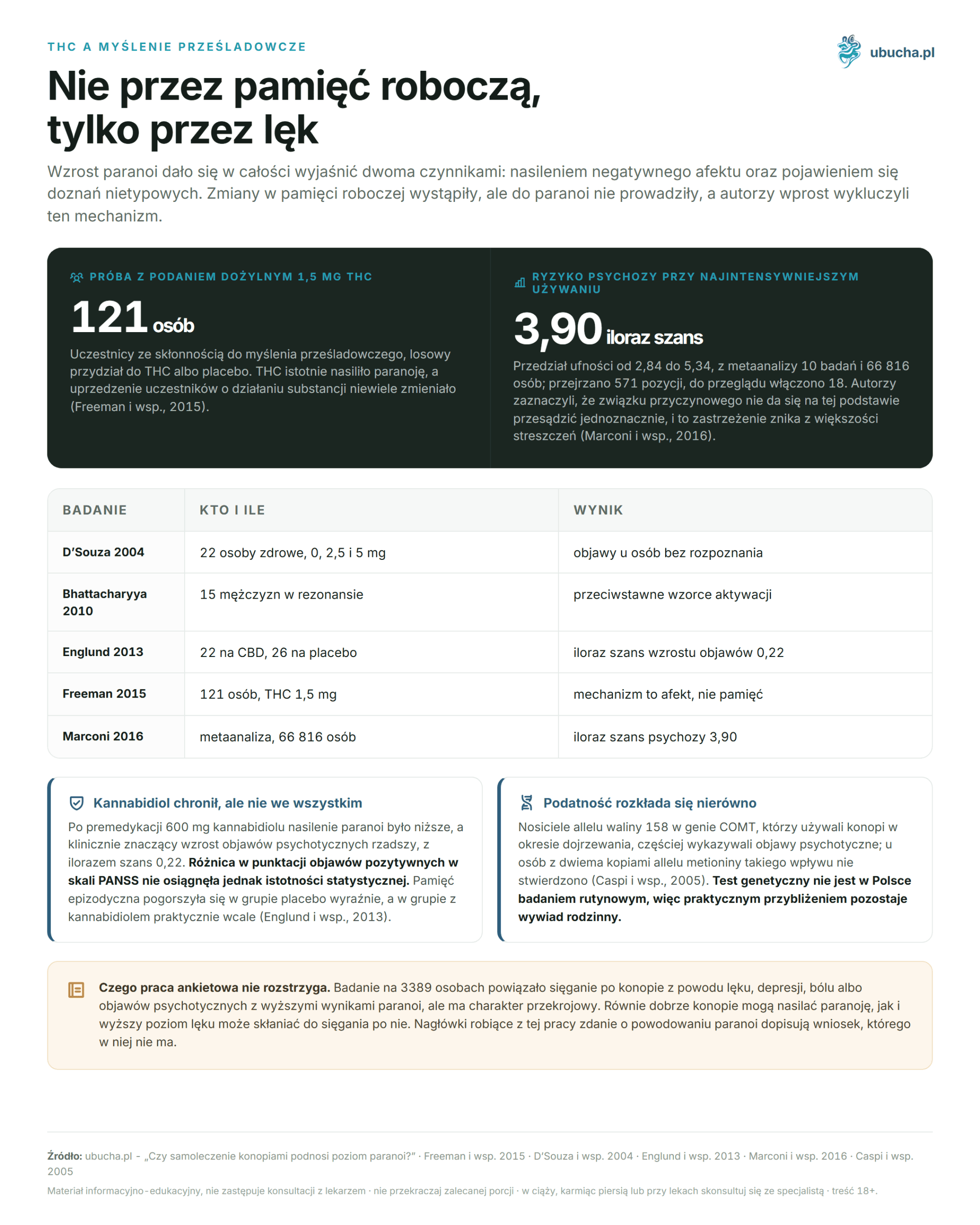
A 2015 study added to this picture an answer to the question of how exactly this reaction occurs. In a randomized placebo-controlled trial, 121 individuals prone to paranoid thinking were administered intravenously 1.5 mg of THC (Freeman et al., 2015). The increase in paranoia could be fully explained by two factors: the intensification of negative affect, i.e., anxiety, worry, and negative thoughts about oneself, and the emergence of atypical experiences. Changes in working memory, although they occurred, did not lead to paranoia. Informing participants about the substance’s effects did not change much.
What do studies really say about THC and paranoia?
Five studies currently define the state of knowledge, but their results are often misrepresented in popular texts, most commonly by raising the dose or changing the studied group. The following summary presents what is found in the publications themselves.
| Study | Who and how much | Result |
|---|---|---|
| D’Souza 2004 | 22 healthy individuals, THC intravenously 0, 2.5, and 5 mg | Positive and negative symptoms resembling schizophrenia, increased anxiety, memory deficits |
| Bhattacharyya 2010 | 15 men in fMRI, second part on 6 individuals | THC and CBD produce opposing activation patterns; CBD prevented psychotic symptoms after THC |
| Englund 2013 | 22 individuals on 600 mg CBD, 26 on placebo, then THC 1.5 mg | Less paranoia on the SSPS scale, odds ratio for significant symptom increase 0.22 |
| Freeman 2015 | 121 individuals prone to paranoid thinking, THC 1.5 mg | Significant increase in paranoia; mechanism is negative affect and atypical experiences |
| Marconi 2016 | Meta-analysis of 10 studies, 66,816 individuals | Odds ratio for psychosis 3.90 (95% CI 2.84 to 5.34) with most intensive use |
The meta-analysis by Marconi et al. (Marconi et al., 2016) deserves a separate mention, as it is often cited and most carelessly. The authors reviewed 571 items, included 18 studies in the review, and 10 in the meta-analysis. They demonstrated a dependence on the level of use: the more intensive the use, the higher the risk of psychosis. They also noted that a causal relationship cannot be definitively established based on this, although there is enough evidence to justify harm reduction programs. This caveat disappears from most summaries.
Does self-medication with cannabis correlate with higher levels of paranoia?
Yes, such a correlation has been described, but it is a statistical correlation, not proof of causation. The closest to this question is a paper published in 2025 in BMJ Mental Health (Spinazzola et al., 2025), based on the Cannabis&Me survey conducted from March 2022 to July 2024 among 2573 current cannabis users and 816 who had used it in the past.
The authors asked about the reason for the first use of cannabis and compared it with later patterns of use and the severity of symptoms. Individuals who started using cannabis for anxiety, depression, physical ailments, pain, or mild psychotic symptoms had higher scores on paranoia scales. Starting due to anxiety or depression was additionally associated with higher weekly THC consumption. Those who used cannabis for fun or out of curiosity had lower paranoia and anxiety scores than average.
A limitation of this study is fundamental, and the authors themselves acknowledge it. The study is cross-sectional, so it does not determine the direction of the relationship. Cannabis may increase paranoia, or a higher level of anxiety and suspicion may lead to cannabis use for self-medication. Headlines that draw the conclusion “cannabis causes paranoia” from this study add a conclusion that is not present in it. The practical advice from the authors is different and more useful: simply asking why someone started using cannabis may serve as a cheap screening tool.
Who is most at risk for paranoia after cannabis use?
The risk is unevenly distributed and depends on factors, some of which are immutable. The influence of genotype is best documented. In a cohort study conducted from birth to adulthood (Caspi et al., 2005), carriers of the valine 158 allele in the COMT gene who used cannabis during adolescence were more likely to exhibit psychotic symptoms and more frequently developed schizophrenia-like disorders. No such influence was found in individuals with two copies of the methionine allele.
The COMT gene encodes an enzyme that breaks down dopamine in the prefrontal cortex, and the valine variant breaks it down faster. A genetic test in this regard is not a routine examination in Poland, so a practical approximation remains family history. A diagnosed case of schizophrenia, schizoaffective disorder, or depression with psychotic symptoms in the family is information that must be taken into account.
The second group consists of young individuals whose prefrontal cortex maturation is not yet complete, and the endocannabinoid system is involved in the remodeling of neural connections. The third group includes individuals with diagnosed anxiety disorders, where the mechanism works both ways: anxiety lowers the threshold for interpreting stimuli as threatening, and THC exacerbates this hypersensitivity. The fourth group includes individuals without tolerance using high-THC products. A dose that falls within the range of normal experience for a regular user may trigger an acute reaction in an unaccustomed individual. We discuss the distant consequences of regular use separately in the text about long-term effects of cannabis use.
Does CBD protect against the psychotic effects of THC?
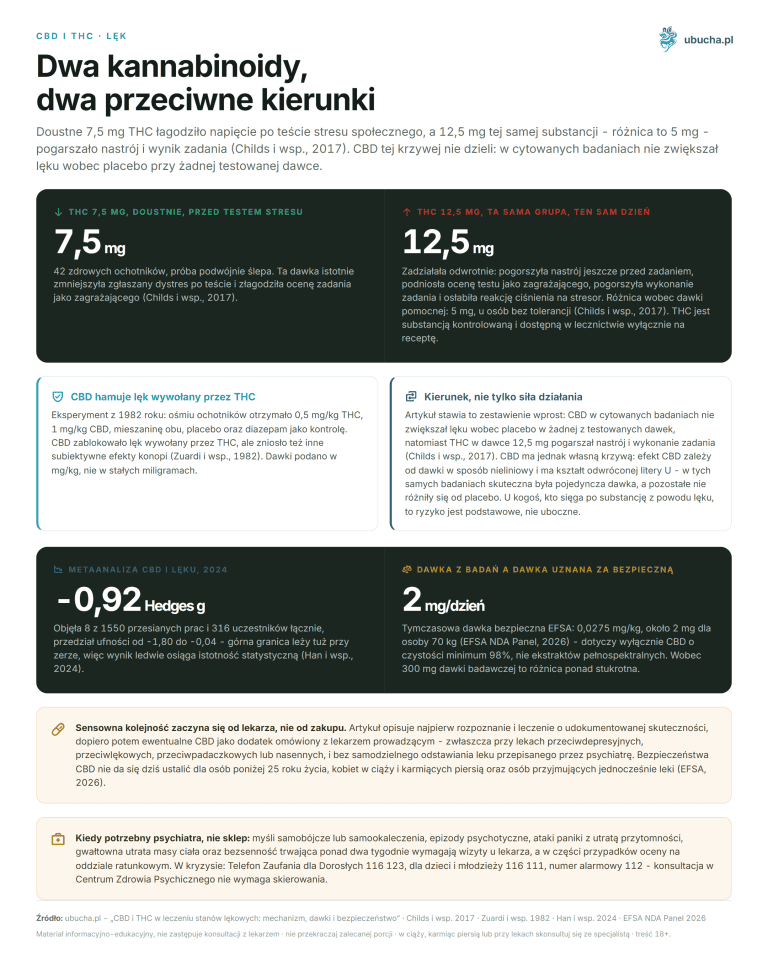
Data indicate a protective effect, although not a complete blockade. In a double-blind study (Englund et al., 2013), 22 individuals received 600 mg of cannabidiol orally, and 26 received placebo, after which both groups were administered 1.5 mg of THC intravenously. The result is more nuanced than popular summaries suggest.
The difference in positive symptom scores on the PANSS scale favored the group with cannabidiol, but did not reach statistical significance. However, two other results were significant. Clinically significant increases in psychotic symptoms occurred less frequently in the group with cannabidiol, with an odds ratio of 0.22. The severity of paranoia after THC administration, measured by the State Social Paranoia Scale, was lower in this group. Episodic memory worsened significantly in the placebo group, while in the cannabidiol group, it hardly worsened at all.
The neuroimaging picture aligns with this conclusion. In a study using functional magnetic resonance imaging (Bhattacharyya et al., 2010), 15 men with minimal prior contact with cannabis were scanned after administration of THC, cannabidiol, or placebo. Both substances produced opposing activation patterns: in the striatum during word recall, in the hippocampus during response inhibition, in the amygdala while viewing faces expressing fear, and also in the temporal and occipital cortices. In the second part of the study, on six individuals, prior administration of cannabidiol prevented acute psychotic symptoms induced by THC. It is important to remember the scale: these are very small groups, not conclusive evidence.
Which popular beliefs about cannabis and paranoia are false?
Some claims circulating in the media and forums do not withstand comparison with the publications they allegedly reference. Below are six of the most common, with a brief assessment.
| Belief | Assessment |
|---|---|
| Cannabis always induces paranoia | False. The reaction depends on the dose, cannabinoid ratios, individual susceptibility, and circumstances of use |
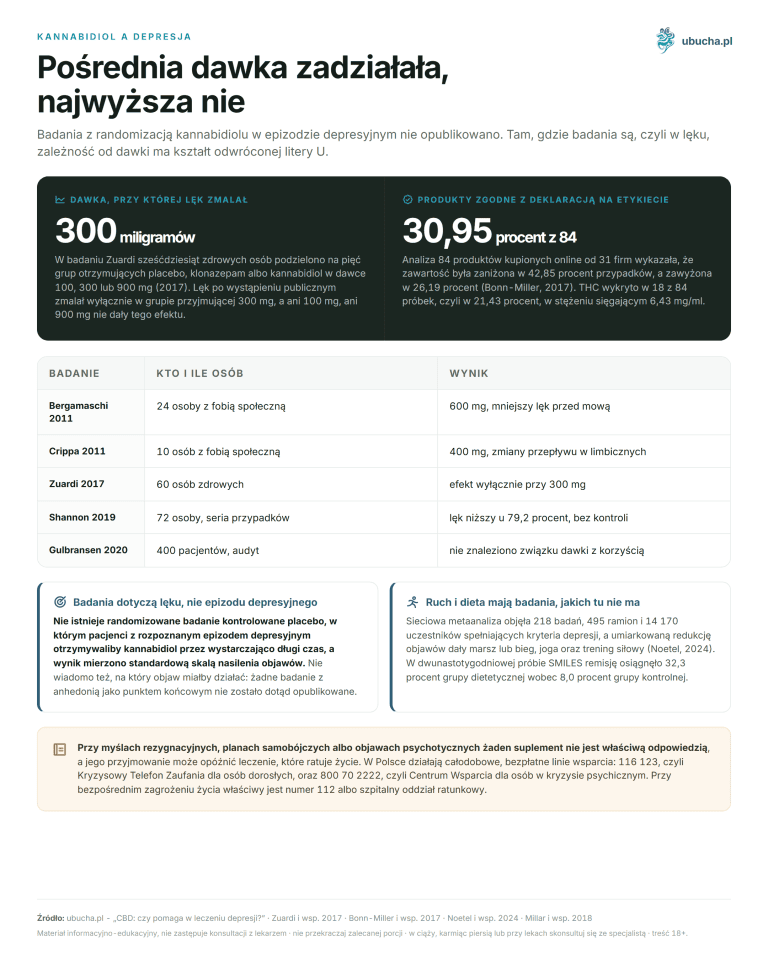
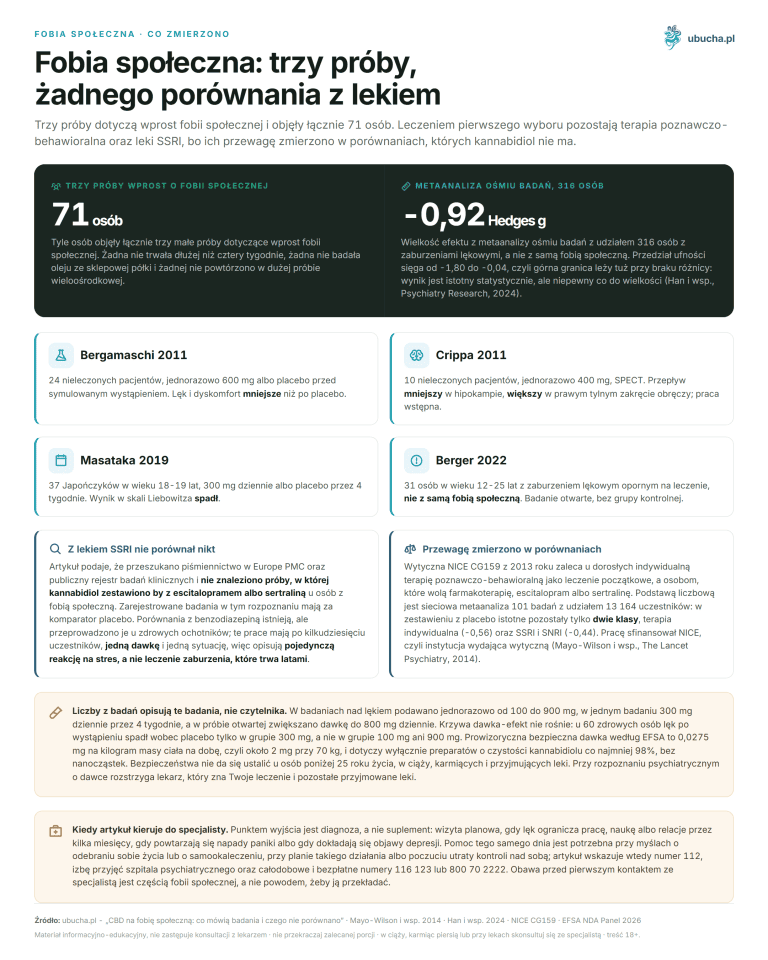
| CBD does not affect anxiety | False. In 10 individuals with social phobia, 400 mg of cannabidiol reduced subjective anxiety and altered blood flow in limbic areas |
| A small dose is always safe | An oversimplification. In intravenous studies, symptoms were induced with doses ranging from 1.5 to 5 mg of THC |
| Paranoia after cannabis always passes quickly | Partially true. It usually subsides with the metabolism of the substance, but acute psychosis can last longer and require assistance |
| Medical marijuana is always safe | False. Supervision and dose control reduce risk but do not eliminate it |
| Only mentally ill individuals experience paranoia after THC | False. In the D’Souza study, symptoms occurred in healthy individuals without a psychiatric diagnosis |
A separate comment is required regarding the belief about cannabidiol and anxiety, as its source is often cited with the wrong year and with an added comparison. The study in question is by Crippa et al. (Crippa et al., 2011), described by the authors as a preliminary report. It involved ten previously untreated individuals with generalized social phobia who were administered 400 mg of cannabidiol or placebo, measuring regional blood flow using SPECT. Subjective anxiety significantly decreased, and changes involved the parahippocampal gyrus, hippocampus, and inferior temporal gyrus. No anxiolytic medication was administered in this study, so the statement about effectiveness comparable to anxiolytics is added.
Why is self-medication with cannabis without supervision risky?
The difference between therapy conducted by a physician and self-medication boils down to four things, none of which concern the substance itself. The first is dose control. With inhalation of dried cannabis, the actual dose taken depends on technique, depth of inhalation, and duration of breath-holding, so the same portion of material can produce a mild effect one time and a significantly stronger one another. A measured preparation or capsule provides predictability that inhalation does not.
The second is knowledge of cannabinoid ratios. A product without a certificate of analysis says nothing about the content of THC, cannabidiol, or terpenes, and it is precisely the ratio that determines the direction of action. Material with a predominance of THC and trace amounts of cannabidiol affects the central nervous system differently than material with a ratio close to one-to-one, as shown by the studies described above with premedication with cannabidiol.
The third is interactions. Alcohol enhances the psychoactive effects of THC, benzodiazepines add their sedative effects, and SSRIs interact in ways that are difficult to predict without knowledge of doses. The fourth is the lack of observation. In physician-led therapy, it is standard to record symptoms, anxiety levels, and sleep quality, allowing for deterioration to be noticed before it becomes serious. Self-medication usually lacks this discipline, and here the result of the 2025 study returns: it is precisely those who use cannabis for anxiety or depression who reported the highest levels of paranoia.
Is physician-led therapy safer than self-medication?
No study has directly compared these two paths in a randomized setup, and it is fair to say this outright. The difference that can be pointed out does not concern the substance but the conditions under which it is taken. All the variables that modified the risk of paranoid reactions in the studies described above are known in physician-led therapy, while in self-medication, they usually are not.
The dose is the first of these. In laboratory studies, it was administered intravenously, with precision to the milligram, and only thanks to this was it possible to see the difference between one level and another. A pharmaceutical preparation does not provide such precision, but it does provide known content and a scheme established by a physician, which material purchased outside the medical system does not ensure. The second variable is the cannabinoid ratio, which determines whether the protective effect of cannabidiol described by Englund et al. is involved.
The third is the interview. A physician asks about psychiatric diagnoses in the family, previous psychotic episodes, and medications taken, which are precisely the factors that distinguished individuals reacting to cannabis from those resistant in the cohort study by Caspi et al. The fourth is observation over time. The result of the 2025 study on self-medication should be read in this light: the very motivation for using cannabis is not the cause of paranoia, but it well indicates individuals who would benefit most from observation.
How to reduce the risk of paranoia when using cannabis?
Six principles arise directly from the studies described above and from harm reduction practice. They do not eliminate risk but shift it towards a milder and more manageable reaction.
- Start with the lowest dose. Symptoms in intravenous studies were induced with doses ranging from 1.5 to 5 mg of THC, so the threshold for reaction may be lower than common intuition suggests.
- Choose material with cannabidiol content. Premedication with 600 mg of cannabidiol reduced the severity of paranoia after THC, and a ratio close to equal provides a milder course than pure THC.
- Pay attention to the circumstances. A familiar environment, lack of time pressure, and trusted company reduce the likelihood of anxiety reactions. If in a bad mood, it is better to postpone.
- Avoid material with very high THC content. Strains selected for maximum psychoactive effect have not been selected for safety.
- Check the certificate of analysis. Without it, you do not know how much THC you are taking, and without that number, none of the other principles can be applied.
- Do not start alone. The presence of someone who knows what is happening shortens the response time when the state exceeds the self-limiting boundary.
The third principle has a separate conceptual history. The influence of mindset and environment on the experience with a psychoactive substance is described by a theory called “set and setting,” which Hartogsohn presented in a contemporary discussion (Hartogsohn, 2016). This is a theoretical work comparing this theory with the theory of placebo response, not a study measuring the contribution of these factors to the outcome. It is presented here as a conceptual framework, not as a source of numbers.
What does Polish law say about THC, cannabidiol, and medical marijuana?
Polish regulations divide cannabis according to THC content, with the boundary defined by the definition of industrial hemp. According to Article 4 point 5 of the Act on Counteracting Drug Addiction (t.j. Journal of Laws 2023 item 1939), as amended by the Act of March 24, 2022 (Journal of Laws 2022 item 763), industrial hemp is defined as plants in which the total content of delta-9-THC and tetrahydrocannabinolic acid does not exceed 0.3 percent when calculated on a dry weight basis.
This distinction is not a formality. The threshold concerns the sum of two compounds, not just delta-9-THC, and the result is rounded to one decimal place. Material that exceeds this threshold is cannabis other than industrial hemp and is subject to regulations on narcotic substances. Cannabidiol does not appear in any list of controlled substances, so products from industrial hemp are available without a prescription.
Medical marijuana is available only by prescription (Rpw). Cannabis other than industrial hemp and extracts from such cannabis are pharmaceutical raw materials intended for the preparation of prescription medications, based on Article 33a of the Act, added by the Act of July 7, 2017 (Journal of Laws 2017 item 1458). From November 7, 2024, a prescription for such a preparation will be issued after a personal examination of the patient; an exception applies to the primary care physician continuing treatment under a contract with the National Health Fund (Journal of Laws 2024 item 1600). Therefore, the first prescription after a teleconsultation is not currently possible.
What to do when paranoia occurs?
The first minutes determine the course of the entire episode, as anxiety escalates through feedback: an increased heart rate heightens anxiety, and anxiety accelerates the heart rate. Breaking this loop is more important than anything else. Changing the location to a familiar and quiet place, the presence of a trusted person, and consciously slowing down breathing help.
Practical things that work are simple and non-specialized: water, fresh air, something to eat, calm music, a semi-reclined position. It also helps to name the state directly, as the awareness that the cause is the substance and not a real threat lowers tension in itself. However, adding more doses, alcohol, or caffeine does not help. Staying alone and waiting in the dark also does not help, although this may be the first reflex.
It is worth establishing in advance what to expect regarding the duration. With inhalation, the peak effect occurs within a few minutes, while with oral administration, it occurs much later, so the same episode experienced after consuming a THC product lasts longer and causes more anxiety. Awareness of this difference reduces the tendency to add a dose in the belief that the first one did not work, and this very mistake is behind some of the most severe reactions described in emergency rooms.
The boundary beyond which self-help ends is clear. Symptoms persisting for more than a day, visual or auditory hallucinations, disorganized speech, and suicidal thoughts indicate that medical help is needed: call 112 or go to a psychiatric emergency room. Individuals taking psychiatric medications should not discontinue them on their own in such situations. More about the course of such an episode and first aid is discussed in the text about bad trips after cannabis. If you are looking for products without psychoactive effects, you can find them in the category of cannabis oils.
Frequently Asked Questions
Does everyone who uses cannabis experience paranoia?
No. The reaction depends on the dose, the ratio of THC to cannabidiol, genetic susceptibility, and the circumstances of use. In intravenous studies, THC significantly increased paranoia, but these studies were conducted in laboratory conditions and on selected groups, so they do not describe the average experience outside the laboratory.
Does cannabidiol protect against THC-induced paranoia?
Partially. After premedication with 600 mg of cannabidiol, the severity of paranoia on the SSPS scale was lower, and clinically significant increases in psychotic symptoms were rarer, with an odds ratio of 0.22 (Englund et al., 2013). However, the difference in positive symptom scores on the PANSS scale did not reach statistical significance.
How long does paranoia last after cannabis use?
The transient episode subsides with the metabolism of THC, usually within a few hours. Acute psychosis after cannabis can last longer. Symptoms persisting for more than a day, hallucinations, disorganized speech, or suicidal thoughts require urgent contact with emergency services or a psychiatric emergency room.
Does self-medication with cannabis increase paranoia levels?
A survey study of 3389 people linked using cannabis for anxiety, depression, pain, or psychotic symptoms with higher paranoia scores (Spinazzola et al., 2025). The study is cross-sectional, so it does not determine whether cannabis increases paranoia or whether paranoia leads to cannabis use.
Who is at the highest risk of paranoia after THC?
Individuals with the valine 158 allele in the COMT gene who used cannabis during adolescence (Caspi et al., 2005), young people, individuals with a history of anxiety disorders, and those without tolerance using high-THC material. The overlap of these factors significantly increases the risk.
Can cannabidiol itself induce paranoia?
There is no data for this. Cannabidiol does not directly stimulate the CB1 receptor and has been shown to reduce anxiety rather than increase it in studies. High doses have been associated with drowsiness and gastrointestinal discomfort, but no clinically defined paranoid reactions have been recorded in these studies.
Can cannabis be combined with psychiatric medications?
Only after consulting with the attending physician. Cannabinoids alter the metabolism of many drugs through cytochrome P450 enzymes, and combining them with benzodiazepines enhances the sedative effect. Psychiatric medications should not be discontinued independently, even when planning to start cannabis therapy.
This article is for informational and educational purposes and does not constitute medical advice. Before starting to use cannabis or CBD for therapeutic purposes, consult with a physician, especially if you are taking other medications, are pregnant, or are breastfeeding.
Author: Michał Waluk · Published: 2026-05-11 · Updated: 2026-08-10