
CBD and Depression - What Scientific Research Says 2026
CBD is not a medicine for depression. We check what really stands in the cited works, how cannabidiol interacts with drugs, and where to seek help.
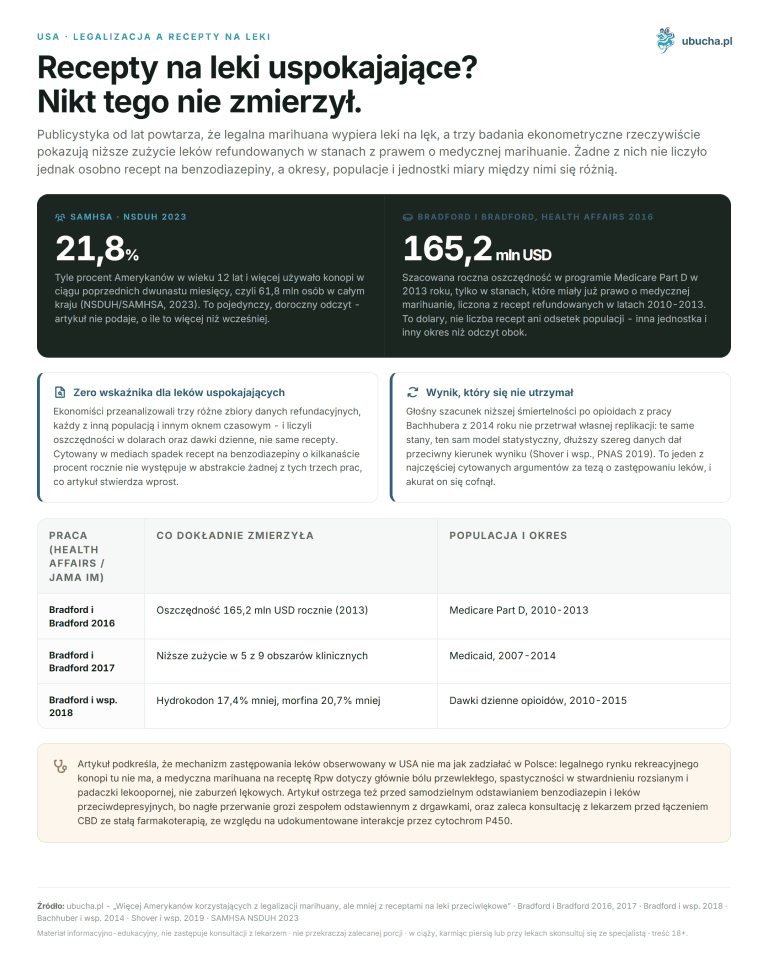
About 332 million people worldwide live with depressive disorder, and in high-income countries roughly one third receive treatment (WHO, GBD 2021 data). With such a care gap, the temptation grows to seek help outside the clinic, and the question about cannabidiol returns most often in this context. This article is not an advertisement and deliberately does not provide any dosage. We go through what really stands in the cited works: mechanisms described in rodents, a handful of human data collected outside depression, interactions with antidepressants, and EFSA’s 2026 position. At the end you will find numbers worth calling sooner than for the oil.
KEY INFORMATION
- Depressive disorder affects about 332 million people, and roughly one third receive treatment in wealthy countries (WHO, GBD 2021).
- Antidepressant effect of CBD was described in rodents (Linge 2016, Sales 2019). There is no equivalent in humans diagnosed with depression.
- The most cited human study concerned anxiety and sleep, not depression, and was retrospective without placebo (Shannon 2019).
- CBD affects CYP3A4, CYP2C19, and P-glycoprotein, so combining with drugs requires a doctor’s decision (Brown and Winterstein 2019).
- EFSA in 2026 stated that CBD safety cannot be established in people taking medications.
- In crisis call 800 70 2222 (24/7) or 112.
What is depression in DSM-5 and ICD-11 classifications?
Depression is a clinical diagnosis, not a temporary mood drop. DSM-5 classification requires at least five of nine symptoms persisting for two weeks for a major depressive episode, one of which must be low mood or anhedonia (APA, DSM-5). ICD-11 describes depressive disorders under codes 6A70-6A7Z (WHO ICD-11).
The symptom list from which a psychiatrist makes a diagnosis looks like this:
- low mood most of the day,
- anhedonia, i.e. loss of ability to feel pleasure,
- insomnia or hypersomnia,
- change in appetite and body weight,
- psychomotor retardation or agitation,
- fatigue and loss of energy,
- feelings of guilt or worthlessness,
- difficulty concentrating and making decisions,
- recurrent thoughts of death or suicide.
Episode severity can be mild, moderate, or severe, and psychotic symptoms may join in severe cases. The scale of the phenomenon is large: WHO reports that in 2021 about 727 thousand people died by suicide, which is the third leading cause of death in the 15-29 age group. Depression has no single cause. It includes family burden, life events, somatic diseases, and medications taken. The monoamine hypothesis, which for decades explained the disease by serotonin deficiency, is now only one model among inflammatory and neuroplastic ones. Diagnosis is made by a doctor, not an internet questionnaire or a store.
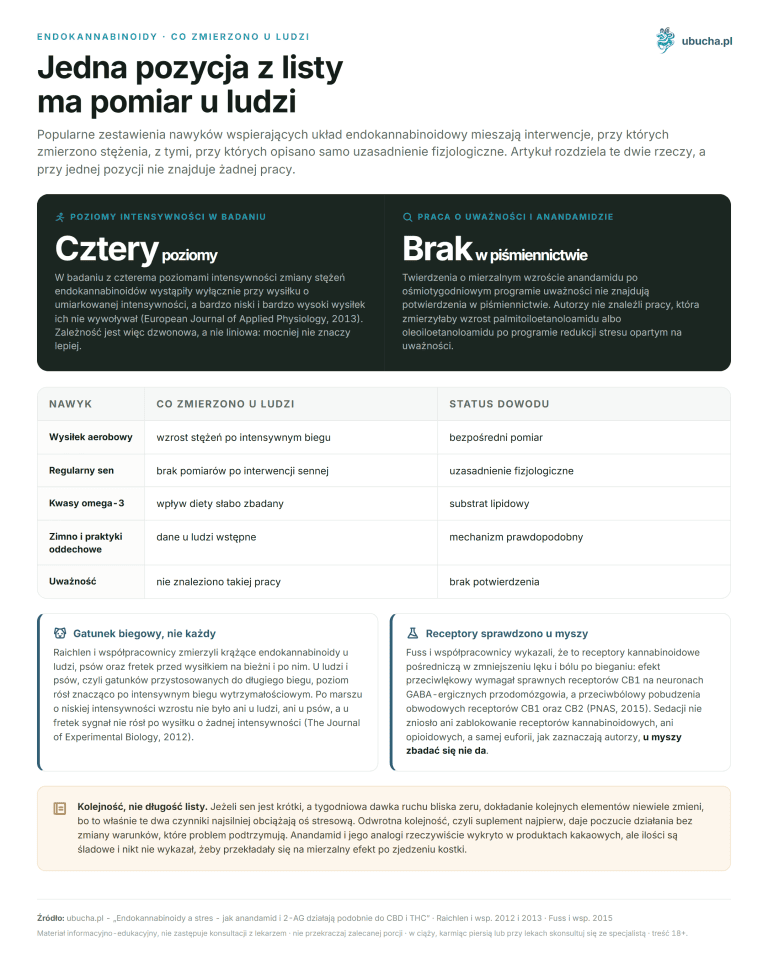
How is the endocannabinoid system linked to mood?
A link exists but is less documented than marketing suggests. The endocannabinoid system consists of CB1 and CB2 receptors and two endogenous ligands: anandamide and 2-arachidonoylglycerol. The CB1 receptor is densely located among others in the prefrontal cortex and hippocampus, structures that function differently in depression. This is a premise for research, not proof of mechanism.
The most cited human measurement is the work of Hill et al. from 2008 (Pharmacopsychiatry). In serum of women diagnosed with major depression, 2-AG concentration was significantly reduced, more so the longer the episode lasted. Anandamide behaved differently than many articles repeat: it was not associated with major depression itself, and its lower concentration correlated with anxiety severity on the Hamilton scale. In mild depression, anandamide was elevated. Authors described this as preliminary report from a small single-sex group.
It is worth separating from this the clinical endocannabinoid deficiency hypothesis summarized by Russo in 2016 (Cannabis and Cannabinoid Research). This theory concerns migraine, fibromyalgia, and irritable bowel syndrome, and for psychiatric disorders the author cites data on reduced endocannabinoid system function in post-traumatic stress disorder. Depression is not on this list, and attributing this hypothesis to it is an abuse circulating in the Polish internet for years.
How is CBD supposed to affect mood at the receptor level?
Cannabidiol does not strongly stimulate CB1 or CB2 receptors. Three independent pathways have been described through which it could influence mood: indirect action on serotonin receptor 5-HT1A, inhibition of anandamide breakdown, and stimulation of BDNF signaling. The first and third were measured in rodents, the second also in humans but in a different diagnosis.
Linge et al. showed in 2016 that the antidepressant effect of CBD in a mouse olfactory bulbectomy model disappeared after blocking the 5-HT1A receptor (Neuropharmacology). Microdialysis showed increased serotonin and glutamate in the ventromedial prefrontal cortex of these animals. The anandamide pathway has a rare feature: measurement in humans. In a randomized study by Leweke et al. in 2012, cannabidiol treatment in patients with acute schizophrenia was associated with a significant increase in serum anandamide concentration linked to clinical improvement (Translational Psychiatry). This is a different diagnosis than depression, but the mechanism was measured in humans, not assumed.
| Pathway | What was shown | In whom |
|---|---|---|
| 5-HT1A receptor | Antidepressant effect abolished by receptor blockade, increase of serotonin and glutamate in cortex | Mice, OBX model (Linge 2016) |
| Anandamide and its breakdown | Increase in serum anandamide linked to clinical improvement | Humans with acute schizophrenia (Leweke 2012) |
| BDNF and synaptogenesis | Increase in BDNF, synaptophysin, and PSD95 in prefrontal cortex, effect abolished by TrkB antagonist | Mice and rats (Sales 2019) |
Three pathways at once is not an advantage but a reason for caution. A drug with one well-described target is easier to study and predict side effects. A detailed description of the serotonin pathway can be found in a separate blog post.
What did rodent studies show and not show?
They showed a reproducible behavioral effect in several models and indicated a mechanism. They showed nothing about humans diagnosed with depression, because such an animal does not exist. The olfactory bulbectomy model, forced swim test, and learned helplessness paradigm measure locomotor activity and sweet preference, not mood.
Sales et al. described in 2019 in Molecular Neurobiology that a single CBD dose produced an antidepressant effect in mice both after half an hour and after a week, with effect strength depending on dose (Sales et al., Molecular Neurobiology). The same result repeated in Flinders rats and learned helplessness model. After half an hour, authors measured increased synaptophysin and PSD95 in prefrontal cortex and increased BDNF in cortex and hippocampus. Dendritic spine density increased after half an hour but not after a week. Administration of TrkB receptor antagonist or rapamycin abolished behavioral effect, indicating BDNF-TrkB and mTOR pathway.
Two things that appear incorrectly in Polish summaries of this work. First, it does not measure neurogenesis but dendritic spines and synaptic proteins. Second, converting rodent doses to human portions is an estimate, not a reading from the work. Therefore, this article does not include such conversions.
What did human studies on anxiety and sleep show?
The most cited human study did not concern depression. Shannon et al. reviewed psychiatric clinic records in 2019 and described 72 adults who presented for anxiety (47) or poor sleep (25), selected from 103 analyzed charts (The Permanente Journal).
Results sound good and that is why they must be read carefully. Anxiety scores dropped in the first month in 57 people (79.2%) and remained lowered throughout observation. Sleep scores improved in the first month in 48 people (66.7%) but fluctuated in following months. The preparation was well tolerated except in three patients. The study design does not allow conclusions about efficacy: it was a retrospective chart review without randomization, placebo, or a group with depression as main problem.
A 2020 systematic review by Skelley et al. collected all available literature on CBD in anxiety disorders and found eight works: six small randomized studies, one case series, and one case report (Journal of the American Pharmacists Association). Included works concerned anxiety response in healthy volunteers, generalized anxiety disorder, social phobia, and anxiety component of PTSD. None concerned panic disorder, specific phobia, separation anxiety, or OCD. Cannabidiol was administered orally in capsules or sublingual spray, sometimes alone, sometimes as adjunct. Most common side effects were fatigue and sedation, and authors concluded that dosing and place of CBD in therapy remain undetermined. A 2018 review by Crippa et al. published in Frontiers in Immunology mentions depression among directions studied, not confirmed applications (Frontiers in Immunology).
Does hemp flower relieve depression symptoms acutely?
The largest published study of acute relief concerned flower, not oil, and its result contradicts CBD marketing. Li et al. observed 1819 people in 5876 sessions recorded in an app and measured symptom severity change in real time (The Yale Journal of Biology and Medicine, 2020).
Relief was reported by 95.8% of users, with an average symptom severity drop of 3.76 points on a 0-10 scale. The result did not differ between varieties described as indica, sativa, or hybrids, nor between consumption methods. Crucially, the strongest independent predictor of relief was THC level, and CBD level was unrelated to symptom change. Up to 20% of users reported adverse effects corresponding to worsening depression, e.g. loss of motivation.
This is where the cannabis text corpus most often stumbles. A result obtained with a psychoactive substance is attributed to a product that is not psychoactive, leading readers to believe that CBD-predominant oil has proven acute effect. It does not. Li’s study says the opposite and reminds that some participants noted symptoms they wanted to eliminate after cannabis. The material used had THC content well above 0.3% threshold, thus in Poland available only by prescription.
Where do false statements about CBD and depression come from?
From unchecked citations. During editing this text, we checked every source to the abstract and four sentences that have circulated in the Polish internet for years did not survive this check. It is worth knowing them because they return in other articles and product descriptions.
First is stretching the clinical endocannabinoid deficiency hypothesis to depression. The cited work concerns migraine, fibromyalgia, and irritable bowel syndrome and does not mention depression. Second is the number given as a safe daily cannabidiol intake limit set by WHO. The document these texts refer to is now unavailable at its address, and EFSA’s 2026 position gives a value hundreds of times lower.
Third concerns interactions. Skelley’s 2020 review is cited as a source on cytochrome P450 enzyme inhibition by CBD, though it is a review of anxiety disorder studies and does not discuss drug metabolism. The proper source is Brown and Winterstein’s work. Fourth is reversing Li’s 2020 study result: THC level predicted relief, not cannabidiol level, so this result cannot justify buying CBD-predominant oil.
The practical conclusion for the reader is short and applies beyond this article. Before believing a statement with a citation, check two things: whether the cited work concerns depression at all and whether it concerns humans. This filters out most promises circulating around cannabidiol and mood.
What CBD definitely will not do in depression?
The list of unconfirmed things is longer than confirmed ones. Cannabidiol is not registered as an antidepressant drug in the European Union or the United States. The only FDA-approved indication for purified CBD in 2018 covered two rare childhood epilepsies: Dravet syndrome and Lennox-Gastaut syndrome (FDA, 2018).
CBD does not replace treatment. NICE guidelines for adult depression recommend psychotherapy and pharmacotherapy tailored to episode severity as first-line treatment (NICE NG222, 2022). Cannabidiol is not included in any treatment line. There is also no data on CBD’s effect on suicidal thoughts, so treating it as crisis protection is mere delay.
It also does not replace psychotherapy. Cognitive-behavioral therapy teaches recognizing and changing thought patterns, which oil cannot do. Another matter is the slogan about a natural equivalent of a known antidepressant. Fluoxetine has decades of registration studies, described indications, and side effects. CBD has three pathways described mainly in rodents and one large observational study attributing relief to something else. Comparing these two in advertising is misleading.
There is also a formal layer rarely mentioned by sellers. Cannabidiol has not been approved in the EU as novel food, and the sanitary notification used by some companies is not authorization and does not change ingredient status. The simple conclusion for the reader: a product promising mood disorder treatment breaks regulations regardless of quality.
Why does this guide not provide any dosage?
Because there is no dose that can be given to a person with depression without misleading them. Medical indication means a reader who most often takes medications, and for such a person the European food safety authority refused to establish a safe intake level.
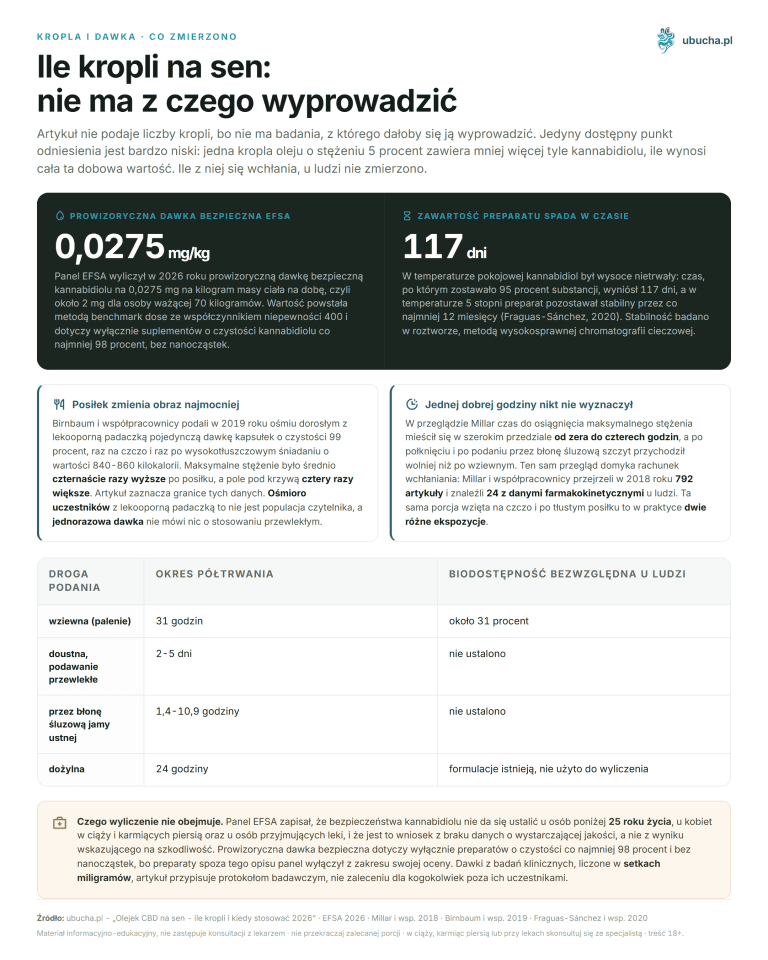
EFSA’s 2026 updated position is unequivocal (EFSA Journal). The panel derived a provisional safe dose by benchmark dose method with uncertainty factor 400, thus at a level orders of magnitude lower than portions described in online guides. It stipulated that this number applies only to supplements with cannabidiol purity at least 98%, without nanoparticles, with safe production process and excluded genotoxicity. Animal studies showed consistent liver toxicity, and human data indicated hepatotoxic potential, especially when taken with other drugs. Placental transfer and hormonal disorders, including altered thyroid hormone levels, were also noted. The panel also noted that data gaps reported in 2022 remain open: new studies have non-standardized protocols, short observation times, and concomitant treatment, and no one has studied immunotoxicity.
Hence the sentence that should stand in every text touching dosing: CBD safety cannot be established in people under 25 years old, pregnant and breastfeeding women, and people taking medications simultaneously. The number seen online as a safe daily limit set by WHO comes from a document whose address no longer works and is hundreds of times higher than EFSA’s position.
What are CBD interactions with antidepressant drugs?
This is the most practical part of this text. Brown and Winterstein reviewed in 2019 the characteristics of medicinal products containing cannabidiol and described both its own adverse effect profile and interaction potential (Journal of Clinical Medicine).
The conclusions are concrete. Adverse effects occurred in nearly half of people taking CBD and depended on dose size. Most common were elevated aminotransferase activity, sedation, sleep disorders, infections, and anemia. Cannabidiol affects biological targets responsible for drug metabolism, listed by authors as CYP3A4 and CYP2C19, and P-glycoprotein responsible for excretion. Authors assess interaction potential with commonly used drugs as high and recommend dose reduction of substrates, monitoring adverse effects, or choosing another therapy, especially in patients with multiple diseases. CBD can be both the cause and victim of interactions, as its own concentration depends on what else the patient takes. EFSA’s position adds that hepatotoxic potential in humans was especially revealed when the preparation was taken with other drugs.
For a person treated for depression, the practical conclusion is simple. Do not stop medication or add anything without a psychiatrist, as sudden therapy interruption risks withdrawal syndrome and episode relapse. Inform your doctor about every supplement, including those bought as cosmetics or food products. A separate text on combining cannabis with antidepressants discusses this topic in more detail.
When is CBD considered and when must it not be considered?
It is considered only as an adjunct in a person who has diagnosis, treatment, and contact with a psychiatrist. Most often it concerns anxiety or poor sleep accompanying stable therapy, not depression itself. This is a narrow situation, not a general recommendation.
| Situation | Implication |
|---|---|
| Stable treatment for several months, good response, persistent anxiety or poor sleep | Topic for discussion with psychiatrist, not self-decision |
| Newly diagnosed depression or no diagnosis | First diagnosis and treatment |
| Resignation or suicidal thoughts | Immediate contact with help, see crisis section |
| Bipolar disorder in manic or mixed phase | Decision only by treating psychiatrist |
| Pregnancy, breastfeeding, under 25 years old | EFSA has not established safety for these groups |
| Chronic medication use, especially multiple drugs | EFSA has not established safety, high interaction risk |
| Liver disease or elevated aminotransferases | Liver toxicity noted, assessment belongs to doctor |
Red flags when you should not postpone a visit: low mood lasting more than two weeks, loss of ability to feel pleasure, sleep rhythm breakdown, marked weight change, guilt feelings, thoughts of death. If you recognize several of these in yourself, make an appointment with a family doctor or psychiatrist. A broader review of what cannabis can and cannot do in depression is described in a separate post.
Does product quality matter in psychiatric treatment?
It matters more than in any other use because a drug is involved. The scale of discrepancy between label and content has been measured: Bonn-Miller et al. tested 84 products bought online from 31 companies and published results in JAMA (JAMA, 2017).
Content matching declaration within accepted tolerance was found in 30.95% of products. 26.19% of samples contained less cannabidiol than declared, and 42.85% contained more. Separately, authors detected tetrahydrocannabinol in 18 of 84 samples (21.43%) and noted such concentrations may cause psychoactive effect.
For a person treated psychiatrically, this is not a matter of price per milliliter. Unexpected psychoactive substance content in someone with mood disorder introduces a variable uncontrolled by patient or doctor, and Li’s study showed that even one in five users reports symptoms corresponding to worsening depression after cannabis. EFSA’s position applies its provisional safety assessment only to preparations with cannabidiol purity at least 98%, without nanoparticles. Without an independent lab report for a specific batch, it is impossible to say if the product belongs to this category.
Bonn-Miller’s study comes from the US market years ago and does not directly describe today’s European offer. Treat it as a measure of how large the discrepancy between label and content can be when unchecked, not as a description of a specific store. The practical conclusion remains the same: ask for a batch report for what you buy.
What to monitor if the doctor allows supplementation?
The starting point is a full list of medications given to the doctor, not the product itself. Only after that does monitoring make sense. EFSA data and Brown’s review indicate the liver as the organ to watch first.
Before starting, the doctor usually wants to know baseline liver status and a list of all preparations, including those bought without prescription. Also important are formally non-drugs: herbs, sports supplements, and products bought as cosmetics also enter liver metabolism. During treatment, observation of what the base drug does is important. Increased sedation, nausea, or change in treatment efficacy are signals to contact the treating doctor, not to increase anything on your own.
After a few months comes the question rarely asked in practice: does supplementation provide anything that treatment alone did not? If the answer is no, continuing it only maintains interaction risk without benefit. The decision to stop should also be discussed with the doctor, as changing liver enzyme load may shift base drug concentration the other way.
Keeping a simple note helps more than you think. Record start date, product name, batch number, and what you notice in mood and sleep. The psychiatrist then gets data instead of impressions, and you see if change really happened or just coincided with a better week.
Where to seek help in a mental crisis?
If you have resignation or suicidal thoughts, stop reading and call. In Poland, free and anonymous support lines operate, and the emergency number accepts calls 24/7. Talking is faster and more effective than any supplement.
- 800 70 2222 - Support Center for Adults in Mental Crisis. Free, 24/7, seven days a week. Funded by the Minister of Health.
- 116 123 - nationwide telephone counseling for adults in emotional crisis, run by the Institute of Health Psychology PTP. Calls are free and anonymous. Duty hours are posted by the operator on their website.
- 116 111 - Trust Phone for Children and Youth run by the Foundation We Give Children Strength. Open daily, 24/7, conversations are confidential.
- 112 - emergency number in immediate life threat. Alternatively, go to the nearest hospital emergency room.
Outside crisis, the path is usual: family doctor or mental health clinic. Waiting times can be long, but signing up today shortens it more than postponing decision by a month. If condition worsens faster than queue progresses, report it to the facility as urgency changes the appointment.
If you call about someone close, consultants also talk with family and surrounding persons. You do not need a ready diagnosis or to know what to say. Just describe what you see and since when, and the person on the other side will ask the rest.
What do we really know about CBD and depression?
We know there is a coherent biological hypothesis mainly verified in rodents. We know that cannabidiol’s effect on anandamide signaling was measured in humans but in a different diagnosis. We also know the most cited human study concerned anxiety and sleep, was retrospective, and had no control group.
Finally, we know something that most contradicts store messaging: in the only large study of acute symptom relief in depression, THC level predicted effect, and cannabidiol level was unrelated. Added to this is EFSA’s 2026 position refusing to establish safety in people taking medications, i.e. the typical reader of such an article.
The conclusion is not surprising. Depression is a disease that is treated, and treatment has proven efficacy and requires consistency. Cannabidiol can at most be an adjunct considered by a psychiatrist in a stable patient, and not for depression itself but for anxiety or sleep. A supplement store is not a place where mood disorder treatment begins, and we do not pretend it is.
If one sentence remains with you after this text, let it be this: the question is not “which oil for depression” but “do I have a diagnosis and am I treated,” and the answer is given in the clinic. The rest, including cannabidiol, is a conversation only after this resolution and only with a doctor who knows your full medication list.
Frequently Asked Questions
Does CBD cure depression?
No. Cannabidiol is not registered as an antidepressant and does not replace pharmacotherapy or psychotherapy. NICE guidelines for adult depression do not list it in any line of treatment (NICE NG222, 2022). Evidence for antidepressant effects comes mainly from animal models.
How is CBD supposed to affect mood?
Three pathways have been described: indirect action on the 5-HT1A receptor, inhibition of anandamide breakdown, and stimulation of BDNF signaling. The first and third were measured in rodents (Linge 2016, Sales 2019), the second in humans but in schizophrenia, not depression (Leweke 2012). This is a mechanistic hypothesis, not proof of efficacy.
Can antidepressants be stopped and replaced with CBD?
This must not be done independently. Sudden discontinuation risks withdrawal syndrome and relapse of depressive episode. Cannabidiol also affects enzymes metabolizing drugs, so combining changes therapy conditions (Brown and Winterstein, 2019). Any change should be planned by the treating psychiatrist.
Does CBD interact with antidepressant drugs?
The potential for interactions is high. Brown and Winterstein list CYP3A4 and CYP2C19 among cannabidiol targets and P-glycoprotein in excretion, and adverse effects were reported in nearly half of people taking CBD (Journal of Clinical Medicine, 2019). Inform your doctor about every preparation you take.
Did human studies concern depression?
The most cited study concerned anxiety and sleep. Shannon et al. described 72 adults from a psychiatric clinic: anxiety scores dropped in the first month in 79.2% of people, sleep scores improved in 66.7%, but then fluctuated (The Permanente Journal, 2019). The study was retrospective and without placebo.
Can CBD worsen well-being?
In some people, yes. The most commonly reported adverse effects are fatigue, diarrhea, and changes in appetite and body weight (Iffland and Grotenhermen, 2017). Sedation in a person in a depressive episode deepens withdrawal and hinders activity, so constant contact with the treating doctor is needed.
When to see a psychiatrist instead of reaching for the oil?
Always when low mood lasts more than two weeks, the ability to feel pleasure disappears, sleep breaks down, or resignation thoughts appear. About one in three people with depression in wealthy countries receive treatment (WHO, GBD 2021), and delay worsens prognosis.
Where to call in a mental crisis?
At 800 70 2222 there is a free Support Center for Adults in Mental Crisis, open 24/7. People under 18 can call 116 111. In immediate life threat call 112 or go to the emergency room.
Scientific Sources
Each item was checked at source for work identity and abstract content.
- Linge R. et al. (2016). Cannabidiol induces rapid-acting antidepressant-like effects. Neuropharmacology.
- Sales A.J. et al. (2019). Cannabidiol Induces Rapid and Sustained Antidepressant-Like Effects Through Increased BDNF Signaling. Molecular Neurobiology.
- Shannon S. et al. (2019). Cannabidiol in Anxiety and Sleep: A Large Case Series. The Permanente Journal.
- Skelley J.W. et al. (2020). Use of cannabidiol in anxiety and anxiety-related disorders. JAPhA.
- Crippa J.A. et al. (2018). Translational Investigation of the Therapeutic Potential of Cannabidiol. Frontiers in Immunology.
- Li X. et al. (2020). The Effectiveness of Cannabis Flower for Immediate Relief from Symptoms of Depression. Yale Journal of Biology and Medicine.
- Leweke F.M. et al. (2012). Cannabidiol enhances anandamide signaling. Translational Psychiatry.
- Hill M.N. et al. (2008). Serum endocannabinoid content is altered in females with depressive disorders. Pharmacopsychiatry.
- Russo E.B. (2016). Clinical Endocannabinoid Deficiency Reconsidered. Cannabis and Cannabinoid Research.
- Brown J.D., Winterstein A.G. (2019). Potential Adverse Drug Events and Drug-Drug Interactions with Cannabidiol Use. Journal of Clinical Medicine.
- Iffland K., Grotenhermen F. (2017). An Update on Safety and Side Effects of Cannabidiol. Cannabis and Cannabinoid Research.
- Bonn-Miller M.O. et al. (2017). Labeling Accuracy of Cannabidiol Extracts Sold Online. JAMA.
- EFSA NDA Panel (2026). Update of the statement on safety of cannabidiol as a novel food. EFSA Journal.
- WHO. Depressive disorder, Global Burden of Disease 2021 data. World Health Organization.
- NICE (2022). Depression in adults: treatment and management, NG222. NICE.
This article is for informational and educational purposes and does not constitute medical advice. Before starting cannabis or CBD for therapeutic purposes, consult a doctor, especially if you take other medications, are pregnant, or breastfeeding.
Author: Michał Waluk · Published: 2026-05-11 · Updated: 2026-08-10