
Lion’s Mane Benefits: 9 Proven Actions of Hericium 2026
Hericium erinaceus in human studies: five randomized trials, MMSE improvement of 1.17 points, and a mechanism that turned out to be different than descriptions repeat.
Lion’s mane, in Polish known as Hericium erinaceus, has transitioned in the last decade from Asian cuisine to neurobiological laboratories. However, the evidence base in humans is much more modest than commercial descriptions suggest: a systematic review from 2025 gathered five randomized controlled trials and three pilot studies. This text goes through them one by one, showing what exactly was measured, correcting a mechanism that has been repeated for several years against the work it cites, and explaining why one of the popular arguments about Parkinson’s disease cannot be used at all today. You will also find an account of nine declared health benefits, divided according to what has human research, what is solely animal model, and what has nothing but repetition.
KEY INFORMATION
• The systematic review by Menon et al. (Frontiers in Nutrition, 2025) included five randomized trials and three pilot studies. The improvement on the MMSE scale was an average of 1.17 points in the intervention group.
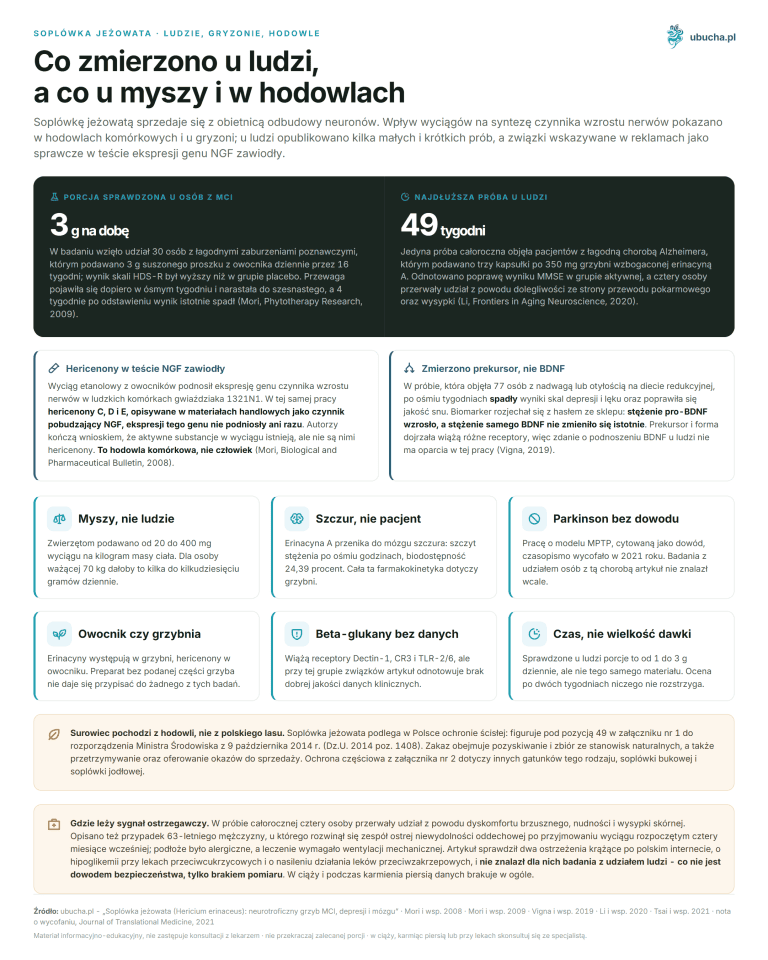
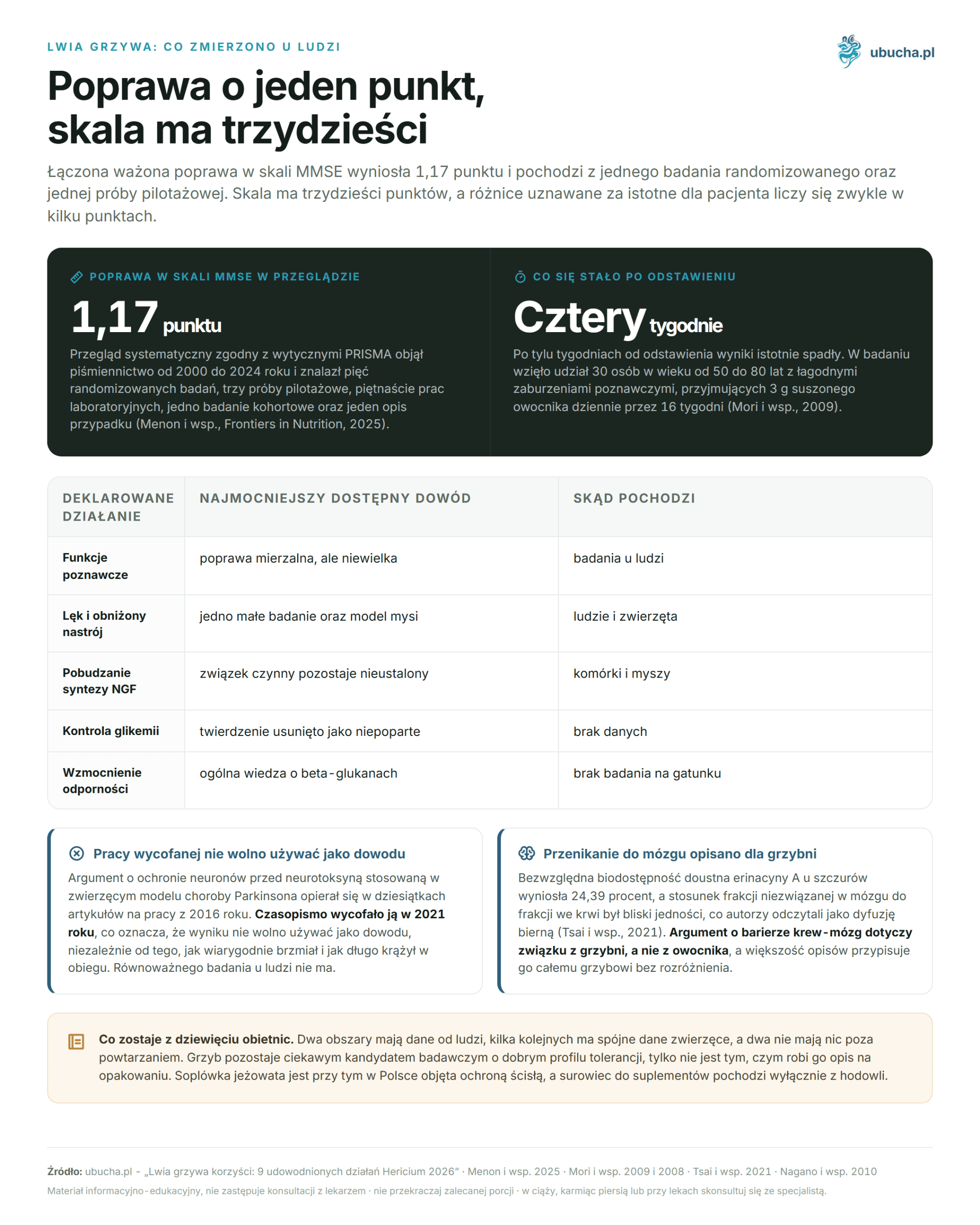
• The study by Mori et al. from 2009: 30 people aged 50 to 80 with mild cognitive impairment, 3 g of dried fruiting body daily for 16 weeks, improvement on the HDS-R scale. Four weeks after discontinuation, results significantly dropped.
• Contrary to common descriptions, hericenones C, D, and E did not stimulate NGF gene expression in the study by Mori et al. from 2008. The authors stated directly that the active compounds are not hericenones.
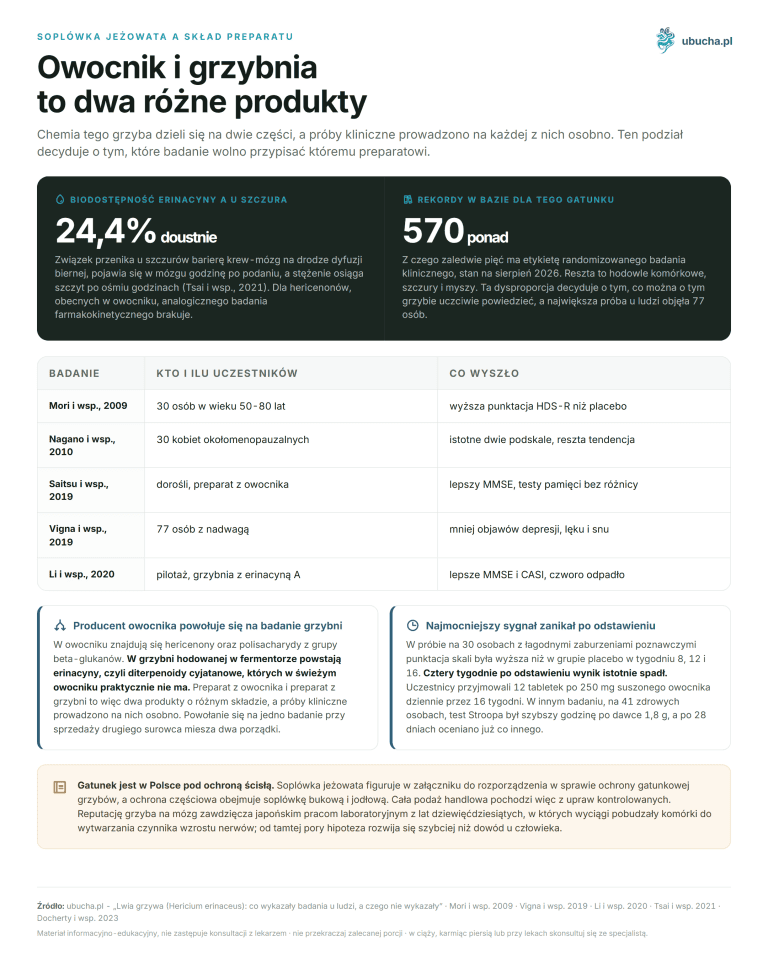
• Erinacine A penetrates the blood-brain barrier in rats via passive diffusion, with an oral bioavailability of about 24% (Tsai et al., Molecules, 2021).
• The 2016 study on protection against a model of Parkinson’s disease, repeated in dozens of texts, was retracted by the journal in 2021. It is not a source that can be cited.
• Hericium erinaceus is strictly protected in Poland, not partially. The raw material for supplements comes exclusively from cultivation.
What is lion’s mane and where does its reputation come from?
Hericium erinaceus is a mushroom from the family of Hericiaceae, growing on decaying hardwood, mainly beech and oak, in the temperate climate of Asia, Europe, and North America. The fruiting body forms a cascading mass of white spines, hence the names referring to a lion’s mane or a hedgehog. In Japan, it is called yamabushitake, after the name of wandering monks of the Shugendo sect, and in China, hou tou gu, meaning monkey head.
The neurotrophic reputation comes from one specific discovery. Hericenones were isolated from the fruiting body, and erinacines from the mycelium, and both groups were attributed with the ability to stimulate the synthesis of nerve growth factor. This is why the culinary mushroom became the subject of neurobiological research, not just mycological. As you will see later, part of this story does not withstand the collision with the work that is commonly cited in its support.
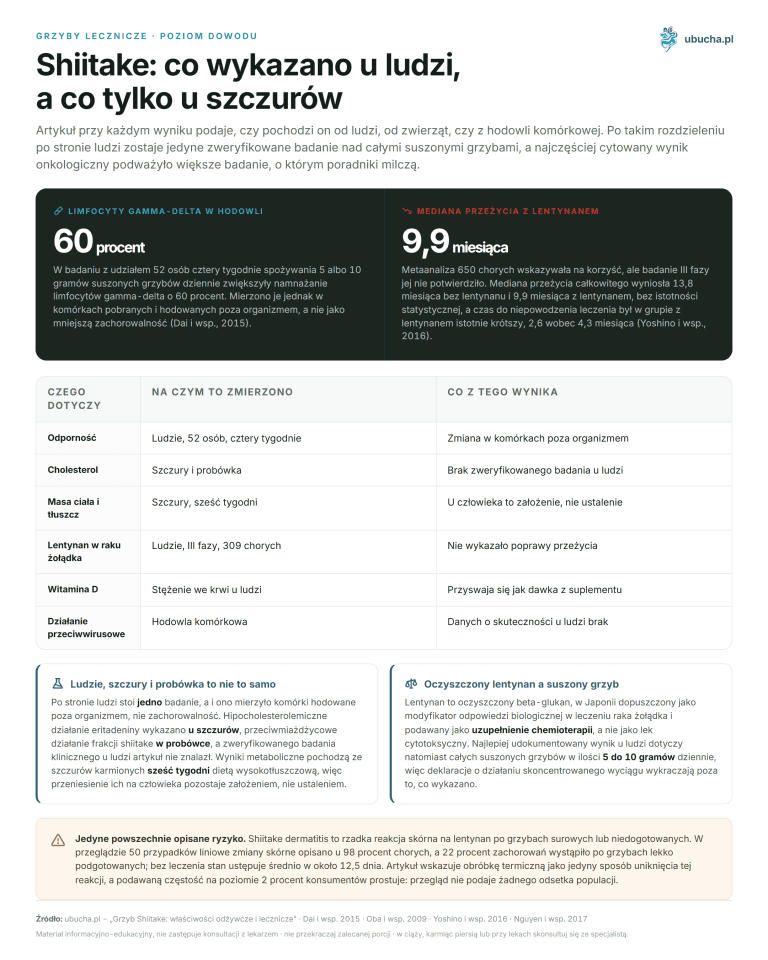
It is worth setting the scale right away. Lion’s mane is not a medicine and has not been registered for the treatment of any disease. It is an edible mushroom with a taste compared to shrimp meat, sold as a dietary supplement and as a culinary product. Everything below concerns what has been measured in studies, not what one might expect in a specific case. The broader context of bioactive mushrooms is described in the text about medicinal mushrooms and their clinical studies.
What have human studies shown, and what have they not shown?
The evidence base in humans is small, and it is worth seeing it in its entirety rather than reading about it in headlines. Menon et al. conducted a systematic review following PRISMA guidelines, registered in the PROSPERO database, searching the literature from January 2000 to June 2024 (Frontiers in Nutrition, 2025). They found five randomized controlled trials, three pilot studies, fifteen laboratory works, one cohort study, and one case report.
| Study | Who and for how long | What came out |
|---|---|---|
| Mori et al., Phytotherapy Research, 2009 | 30 people aged 50 to 80 with mild cognitive impairment, 16 weeks, 3 g of dried fruiting body daily | Higher scores on the HDS-R scale at weeks 8, 12, and 16. Four weeks after discontinuation, results significantly dropped |
| Saitsu et al., Biomedical Research, 2019 | Randomized placebo-controlled study, 12 weeks, fruiting body supplement | Of the three tests used, only the MMSE showed improvement. The Benton test and paired associate test showed no difference |
| Nagano et al., Biomedical Research, 2010 | 30 women, cookies with mushroom or placebo cookies, 4 weeks | Lower scores on the CES-D depression scale and in the unspecified complaints scale after the intake period |
| Menon et al., Frontiers in Nutrition, 2025 | Systematic review, literature from 2000 to 2024 | Total weighted improvement in MMSE of 1.17 points, calculated from one randomized trial and one pilot study |
The number 1.17 points deserves a moment of attention, as it is the most honest summary of this entire field. The MMSE scale has thirty points, and differences considered significant for the patient are usually counted in several points. An improvement of just over one point is real and measurable, but small, and comes from two studies, not twenty. This is not a basis for promises of memory restoration.
Do hericenones and erinacines really stimulate NGF?
Here lies the most commonly repeated error in texts about lion’s mane, including an earlier version of this article. The statement that hericenones stimulate the synthesis of nerve growth factor contradicts the work that is most often cited in its support. Mori et al. examined in 2008 the effects of ethanol extracts from four edible mushrooms on the expression of the NGF gene in human astrocytoma cells 1321N1 (Biological and Pharmaceutical Bulletin, 2008).
The extract from lion’s mane was the only one of the four that stimulated NGF expression, and that was dose-dependent. The secretion of the NGF protein itself also increased, and the medium above those cells stimulated neurite growth in PC12 cells. Mice fed a diet with a five percent addition of dried mushroom for seven days had higher NGF expression in the hippocampus. The effect went through the JNK kinase pathway, as it was abolished by a specific inhibitor of that kinase.
And now the statement that changes the entire narrative: hericenones C, D, and E, studied separately, did not stimulate NGF gene expression. The authors concluded that lion’s mane contains compounds that stimulate NGF synthesis, but those compounds are not hericenones. In other words, the active substance is present in the extract, but it is still unknown which one it is. Repeating that hericenones stimulate NGF is attributing a claim to the work that this work directly refutes.
With erinacines, the situation is different. Spangenberg et al. systematically reviewed studies on this group of cyathane diterpenes and described dose-dependent effects in cell and rodent models, including motor, cognitive, and depressive behaviors (Frontiers in Pharmacology, 2025). Erinacines A and C were the only ones that led to the accumulation of the transcription factor Nrf2, the main regulator of the antioxidant response. This is still animal models, not humans.
Which compounds from lion’s mane reach the brain?
The question of penetration into the brain is more important in this field than activity in a petri dish, as a compound that does not reach the central nervous system will not explain the cognitive effect. The answer exists for one molecule and comes from a study in rats.
Tsai et al. administered erinacine A orally and intravenously to rats and tracked its fate in the body (Molecules, 2021). The absolute oral bioavailability was 24.39%. Erinacine A appeared in the brain one hour after oral administration and reached its maximum there after eight hours. The ratio of the unbound fraction in the brain to the unbound fraction in the blood was close to one, which the authors interpreted as evidence of passive diffusion, not active transport. The main route of excretion turned out to be feces.
The practical conclusion from this is twofold. First, penetration into the brain is documented for erinacine A, which is a compound from the mycelium, not from the fruiting body. Second, this was a study in rats, so transferring the twenty-four percent figure to humans is an overinterpretation. This is important when choosing a product: the argument about the blood-brain barrier concerns the mycelium, while most descriptions attribute it to the whole mushroom without distinction.
What is known about lion’s mane in anxiety and depression?
The only clinical study in this area comes from 2010 and is small. Nagano et al. divided thirty women into a group receiving cookies with added lion’s mane and a group receiving cookies without it, for four weeks (Biomedical Research, 2010). After this period, scores on the CES-D depression scale and in the unspecified complaints scale were significantly lower in the group with the mushroom than before the start. In two specific items of the second scale, the difference compared to placebo was also significant.
The authors added a sentence that disappears in popular discussions. They stated that the result suggests a mechanism different from stimulating NGF synthesis. Thus, attributing the anxiolytic effect to nerve growth factor is added against the conclusion of the work itself.
The mechanism that currently has the best experimental support was described by Chong et al. in a mouse model subjected to chronic immobilization stress (Chinese Medicine, 2021). Four weeks of administration of the extract alleviated depressive behaviors, increased BDNF expression and TrkB receptor, and increased the number of newly formed cells in the dentate gyrus of the hippocampus. It was decisive that the administration of a neurogenesis blocker completely abolished the antidepressant effect. This is a strong experimental setup, but conducted on mice.
Does lion’s mane protect against Alzheimer’s and Parkinson’s?
The answer is: it is unknown, and in the part concerning Parkinson’s disease, it is necessary to additionally retract what has been repeated for years. There is no large study involving patients diagnosed with Alzheimer’s disease. The study by Mori from 2009 included individuals with mild cognitive impairment, which is a condition that can be a precursor to dementia but is not, and the improvement disappeared after discontinuation.
With Parkinson’s disease, there is a separate problem that requires clear positioning. The argument about protecting neurons from a neurotoxin used in an animal model of this disease was based in dozens of articles, including in an earlier version of this text, on a study from 2016. The journal retracted this work in 2021. Retraction means that the result cannot be used as evidence, regardless of how credible it sounded and how long it circulated. We have removed it from the article and do not replace it with another, as there is no equivalent study in humans.
What remains is more cautious but true. The review by Menon et al. notes neuroprotective effects and improvement in cognitive functions, but mainly based on cell and animal models. The review by Spangenberg et al. shows the activation of antioxidant pathways by erinacines, also in animal models. The practical conclusion is cognitive prevention understood as support, not therapy, and absolute neurological consultation in the case of diagnosed neurodegenerative disease.
Which of the nine declared benefits are supported by data?
The title of this entry promises nine proven actions. After going through the sources, the promise turns out to be too bold, so below you will find an honest account: what has human research, what has only animal or cellular models, and what has nothing but repetition.
| Declared action | Strongest available evidence |
|---|---|
| Support for cognitive functions | Human studies. Measurable improvement, but small and reversible after discontinuation |
| Alleviation of anxiety and low mood symptoms | One small human study and a mouse model with a resolved mechanism |
| Stimulation of NGF synthesis | Cell and mouse model. The active compound remains undetermined, hericenones do not induce it |
| Support for peripheral nerve regeneration | Rat model after peroneal nerve crush. No data in humans |
| Impact on gut microbiota | Systematic review notes increased diversity and abundance of bacteria producing short-chain fatty acids |
| Anti-inflammatory and antioxidant effects | Cell and animal models, with described involvement of Nrf2 |
| Inhibition of cancer cell invasiveness | Only in vitro studies on cell lines. No translation to treatment |
| Glycemic control and metabolic support | No data in humans. Claim removed from this article as unsupported |
| Immune system enhancement | General knowledge about fungal beta-glucans, without studies on this species in humans |
The conclusion from this table is simple and does not invalidate the sense of supplementation. Two areas have data from humans, several others have consistent animal data, and two have nothing. The mushroom remains an interesting research candidate with a good tolerance profile, just not what its packaging description makes it out to be. A comparison of this list with another of our studies can be found in the text about what studies have shown about lion’s mane in humans, and what they have not.
What has been shown outside the central nervous system?
Three items from the above table deserve elaboration, as they look stronger in commercial descriptions than they do in the sources. The first is peripheral nerve regeneration. Wong et al. administered an aqueous extract from fresh fruiting bodies orally to rats after peroneal nerve crush and assessed the return of function by analyzing gait traces (Evidence-Based Complementary and Alternative Medicine, 2011). Limb function returned earlier than in the control group, and histological examination showed better axon regeneration and reinnervation of motor plates. The result is consistent, but it concerns rats and experimentally induced damage, not neuropathy in humans.
The second is the gut, and here the data is more interesting than is usually written. A systematic review notes that administering lion’s mane increased the diversity of gut microbiota and the abundance of bacteria producing short-chain fatty acids, which nourish the intestinal epithelium and suppress inflammation. This direction is also significant for the cognitive thread, as the gut-brain axis is one of the probable pathways through which the mushroom could act on mood. However, this does not change the fundamental limitation: observations mainly come from animal models, not human studies.
The third item is the cancer thread, which lives its own life on the internet. A systematic review notes that erinacine A isolated from the mycelium inhibited the invasiveness of two lines of gastric cancer cells and activated caspase pathways, i.e., programmed cell death. This is an observation from cell culture. There is no study in humans that would check the effect of lion’s mane on the course of cancer, and no preparation from this mushroom is an anti-cancer therapy or its complement agreed upon with oncology.
What does the safety profile and interactions look like?
Tolerance is good, and this is consistent with common belief. In the study by Mori from 2009, laboratory tests did not show adverse effects after sixteen weeks of intake. A systematic review from 2025 lists possible gastrointestinal complaints, headaches, and allergic reactions, noting that side effects may simply be underreported in studies on this mushroom.
This caveat about underreporting is more significant than it appears. Lack of reports is not the same as lack of events, and with a small number of studies and short observation periods, it is impossible to describe long-term safety. People with mushroom allergies should avoid lion’s mane, as allergic reactions are the only well-documented risk here.
Regarding interactions with drugs, it must be stated clearly that data is lacking. Claims circulating on the internet about effects on blood clotting or lack of inhibition of specific cytochrome P450 isoenzymes have no basis in studies on this species and have been removed from this text. If you are taking anticoagulants, glucose-lowering drugs, or immunosuppressive medications, make the decision to supplement with your doctor or pharmacist. The same caution applies to pregnancy, breastfeeding, children, and autoimmune diseases.
Separately about doses. In this article, you will not find a recommended number of milligrams, and this is a conscious decision. We provide numbers only as a description of specific studies, as supplementation taken with a disease or alongside pharmacotherapy requires individual assessment, which no text on the internet can replace.
Extract, powder, or fresh mushroom, what are the differences?
The difference comes down to what is actually in the product, not what sounds better on the label. The distinction between the fruiting body and mycelium is substantively important, as hericenones come from the fruiting body, and erinacines from the mycelium, and it is erinacine A that has been shown to penetrate the brain.
An extract marked by a ratio, for example, eight to one, is created by concentrating the raw material, thus providing a higher concentration of compounds in a smaller portion and longer shelf life. Double extraction, both water and alcohol, extracts both polysaccharides and terpenoids, i.e., both groups of compounds that interest researchers in this mushroom. Powdered fruiting body is simply a dried and ground mushroom: a full natural profile, but lower concentration and a larger required portion.
Fresh fruiting body is primarily a culinary product. It tastes similar to shrimp meat, withstands frying in butter well, and is suitable for soups and pasta dishes. However, the content of active compounds in a meal portion is incomparably lower than in a preparation, so treat it as a dietary element, not as a form of supplementation. It is also worth remembering that human studies were conducted on dried fruiting bodies and on preparations from the fruiting body, not on dishes.
How to recognize a good lion’s mane product?
The biggest trap in this market hides on the label under the English term myceliated grain, meaning grain overgrown with mycelium. Such raw material is mostly grain substrate with a small share of the mycelium itself, sold as if it were the mushroom. The label should clearly state whether it contains the fruiting body, mycelium, or both, and should not list grain fillers.
The second thing is standardization. A reputable manufacturer provides the content of polysaccharides, preferably specifying beta-glucans, as the mere declaration of polysaccharides can be inflated by sugars from the substrate. The absence of any standardization on the packaging is a warning sign, as are declarations expressed in slogans instead of numbers.
The third thing is documentation. A certificate of analysis from an independent laboratory should cover heavy metals, pesticide residues, and mycotoxins, as mushrooms accumulate elements from the substrate well. A reliable manufacturer provides such a document for the batch, not a vague scan from years ago. The same quality assessment principles apply to other bioactive mushrooms, which we discuss in the text about the properties of shiitake mushrooms.
What does Polish law say about Hericium erinaceus?
Here we correct a mistake that is repeated in Polish descriptions of this species, including an earlier version of this article. Hericium erinaceus is not partially protected in Poland. It is strictly protected.
The basis is the regulation of the Minister of the Environment from October 9, 2014, regarding the protection of mushroom species (Journal of Laws 2014, item 1408), an act still in force. The species is listed in the first annex, covering mushrooms under strict protection, in position forty-nine, with a designation indicating the need for active protection. In contrast, two other species from the same genus, beech lion’s mane and fir lion’s mane, are listed under partial protection in the second annex.
The practical consequence is clear. Fruiting bodies of Hericium erinaceus cannot be collected in Polish forests, and a find is a natural curiosity, not a raw material. All raw material present on the market comes from controlled cultivation conducted on lignocellulosic substrates, and this is the only legal way to obtain it.
A separate layer concerns the status of the product. Lion’s mane is sold in Poland as a dietary supplement, and the manufacturer cannot attribute health claims to it that have not been approved under EU food law. For this species, no health claims have been approved, so the packaging cannot promise either treatment or memory improvement. Cautious language on labels is not a marketing ploy but a boundary set by regulations, and an overly bold slogan is a signal that the manufacturer does not respect this boundary.
Is it worth combining lion’s mane with CBD?
The combination is sometimes proposed because both substances are described as acting on the nervous system in different ways. However, it must be stated that there is no study that has tested such a combination in humans. Everything that can be written about this topic is a comparison of two separate data sets, not a description of studied synergy.
On the CBD side, the state of knowledge changed in 2026. The EFSA panel published an update on the safety of cannabidiol as a novel food, deriving a provisional safe dose of 0.0275 mg per kilogram of body weight per day, which for a person weighing 70 kg gives about 2 mg (EFSA, 2026). This value applies to supplements with a purity of cannabidiol of at least 98%, without nanoparticles.
From the same document comes a caveat that must be stated directly in every text touching on dosing: the safety of cannabidiol cannot be established in individuals under 25 years of age, in pregnant and breastfeeding women, and in individuals taking medications. Since the reader of the text about cognitive support may indeed be someone taking medications, combining both preparations on one’s own is a bad idea. The mechanisms of interaction of adaptogens are detailed in the text about the synergy of CBD and adaptogens.
For whom does lion’s mane make sense, and for whom does it not?
The most honest answer is: for a healthy person, curious, willing to give the preparation several weeks, and treating the effect as possible, not certain. Human studies mainly involved older individuals with mild cognitive impairment, and the improvement was small and reversed after discontinuation. If someone expects a noticeable change after a week, they will be disappointed for reasons embedded in the design of these studies, not in the quality of the product.
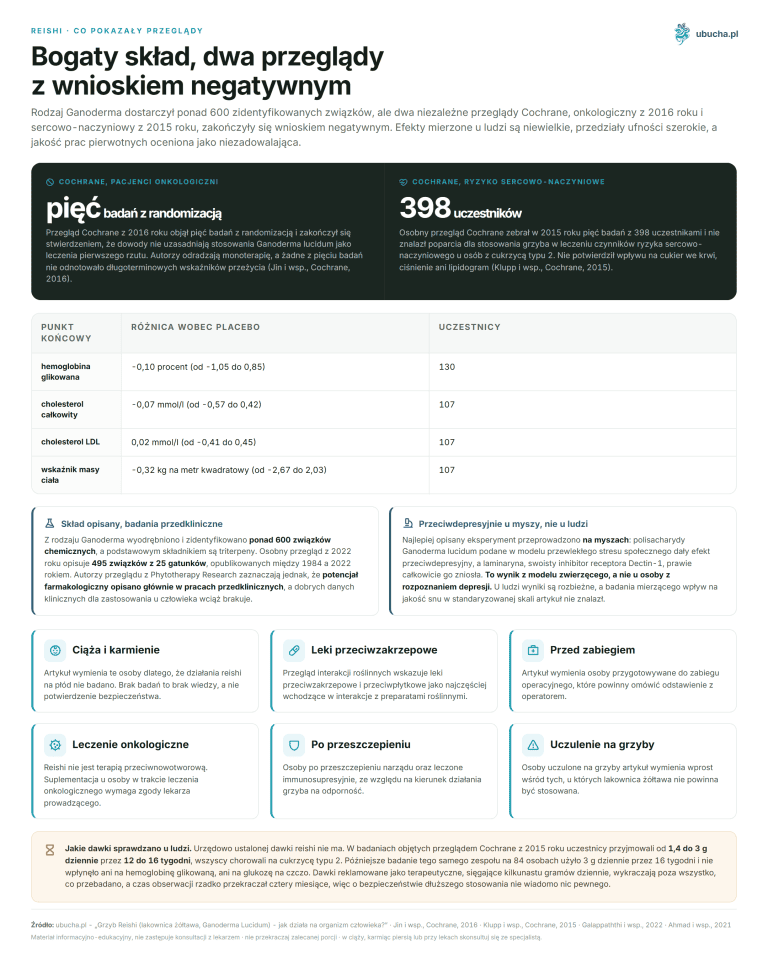
It should be advised against in several situations, and these are not precautionary formulas. An allergy to mushrooms excludes supplementation. Pregnancy, breastfeeding, and childhood mean a lack of data, and a lack of data is not evidence of safety. In the case of autoimmune disease, anticoagulant treatment, and diabetes, the decision is made with a doctor, precisely because it is unknown how the mushroom interacts in these situations.
Finally, a word about expectations. Lion’s mane does not replace sleep, exercise, or treatment. It is not equivalent to medications used in dementia or depression and has not been tested for these purposes in a way that would allow such a comparison. It is a supplement with decent tolerance, with one well-documented and small cognitive effect and several promising directions studied in animals. Thus, it should be treated as such.
Frequently Asked Questions
What is lion’s mane and what does it contain?
Lion’s mane, or Hericium erinaceus, is an edible mushroom containing two characteristic groups of compounds: hericenones in the fruiting body and erinacines in the mycelium. Erinacines are cyathane diterpenes, and erinacine A has been shown in rats to cross the blood-brain barrier via passive diffusion. The Polish names for this species are lion’s mane and Hericium erinaceus.
Does lion’s mane improve memory and concentration?
In human studies, the improvement is measurable but small. A systematic review from 2025 reports a total improvement in the MMSE scale of 1.17 points out of thirty possible. In the study by Saitsu et al., of the three cognitive tests used, only the MMSE showed a difference, while the other two did not.
Do hericenones stimulate nerve growth factor?
No, contrary to what most descriptions repeat. In the study by Mori et al. from 2008, hericenones C, D, and E did not stimulate the expression of the NGF gene in human astrocytoma cells. The extract from the whole mushroom stimulated it, and the authors stated directly that the compounds responsible for this effect are not hericenones.
Does lion’s mane help with anxiety and low mood?
There is one small study in humans: thirty women taking cookies with added mushroom for four weeks had lower scores on the CES-D depression scale. The authors noted that the mechanism is likely different from stimulating NGF. Mouse data indicate neurogenesis in the hippocampus.
Does lion’s mane help with Parkinson’s disease?
There is no basis to claim that. A 2016 study on neuroprotection in an animal model of this disease, repeated in dozens of articles, was retracted by the journal in 2021. Retraction means that the result cannot be used as evidence, and there is no equivalent study in humans.
Is lion’s mane safe and what are its side effects?
Tolerance is good. A systematic review from 2025 lists gastrointestinal complaints, headaches, and allergic reactions, noting that side effects may be underreported. People with mushroom allergies should avoid supplementation. There is a lack of data on long-term safety and drug interactions.
Fruiting body or mycelium, what to choose?
It depends on which compound is concerned. Hericenones come from the fruiting body, and erinacines from the mycelium, and it is erinacine A that has been shown to penetrate the brain in a rat study. Products combining both raw materials cover a broader spectrum. Avoid preparations based on grain overgrown with mycelium, as it is mainly grain substrate.
Can Hericium erinaceus be collected in Polish forests?
No. The species is strictly protected in Poland under the regulation of the Minister of the Environment from October 9, 2014, regarding the protection of mushroom species, with a designation indicating the need for active protection. All raw material available on the market comes from controlled cultivation, and this is the only legal way to obtain it.
Preparations with bioactive mushrooms can be found in the adaptogens section.
This article is for informational and educational purposes and does not constitute medical advice. Before starting supplementation, consult your doctor, especially if you are taking medications regularly, are pregnant or breastfeeding, or have chronic illnesses.
Author: Michał Waluk · Published: 2026-05-11 · Updated: 2026-08-10