
710 (dabbing day): what is it and how does it differ from 420 (definition)
710 is an unofficial day of concentrate culture. Where did this number come from, what can be confirmed in its origin, how it differs from 420, and what it looks like in Poland.
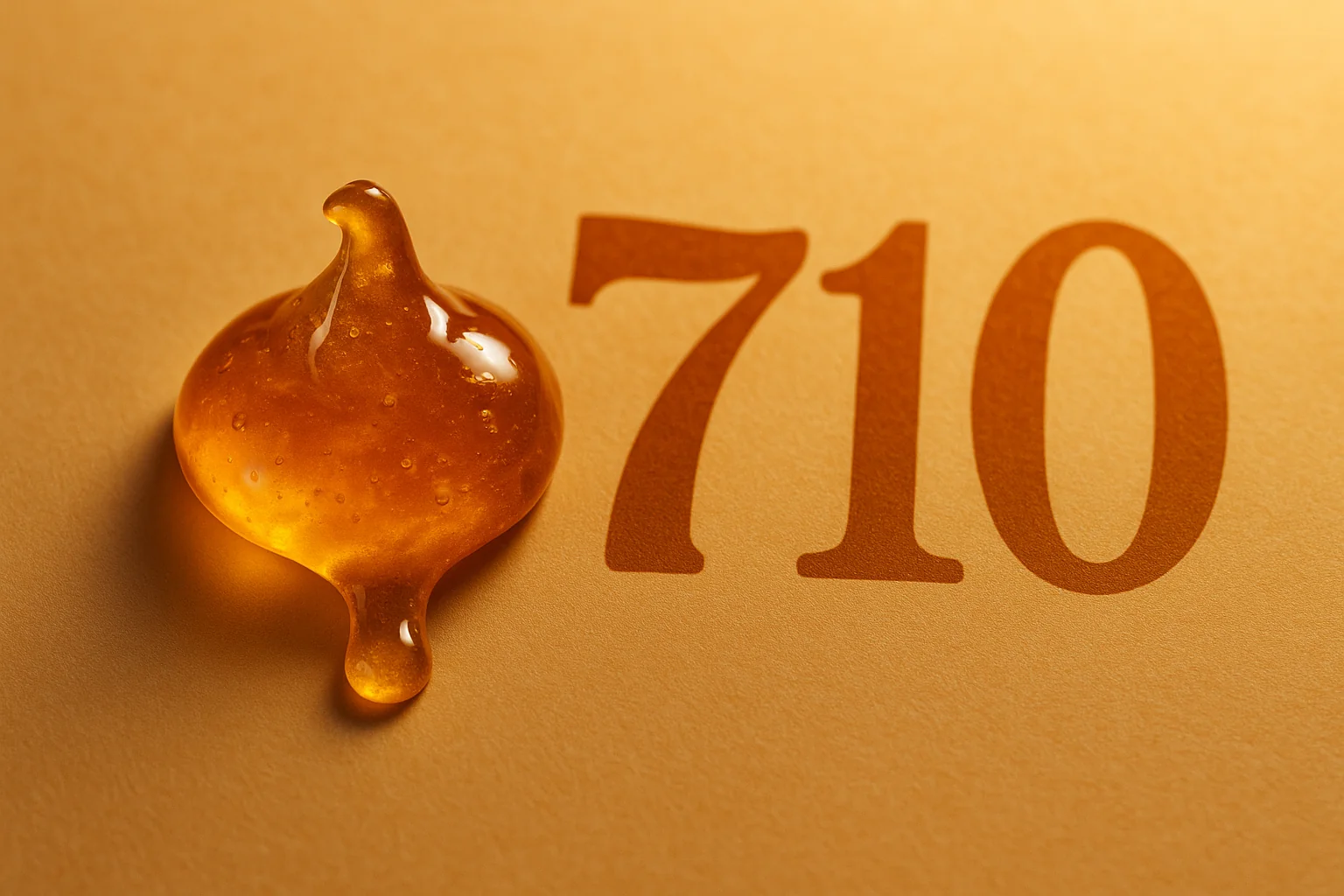
710 flipped 180 degrees spells the word OIL. This one association has grown into an unofficial holiday of cannabis concentrate culture, celebrated on July 10, in American notation 7/10. This is what the legend says, and this is what can actually be seen with one’s own eyes. The rest of the history of this date, like the history of the older 420, circulates in versions that are not confirmed by any verifiable source, and so we present it here. Below you will find what can be established: what this number means, how it differs from 420, how strong the concentrates at the center of this culture are, what has been measured in conjunction with dabbing, and why in Poland this is a holiday without a legal subject.
KEY INFORMATION
• The number 710 read upside down looks like OIL, hence the date July 10 in the notation 7/10. This is the only element of the origin that the reader can verify themselves.
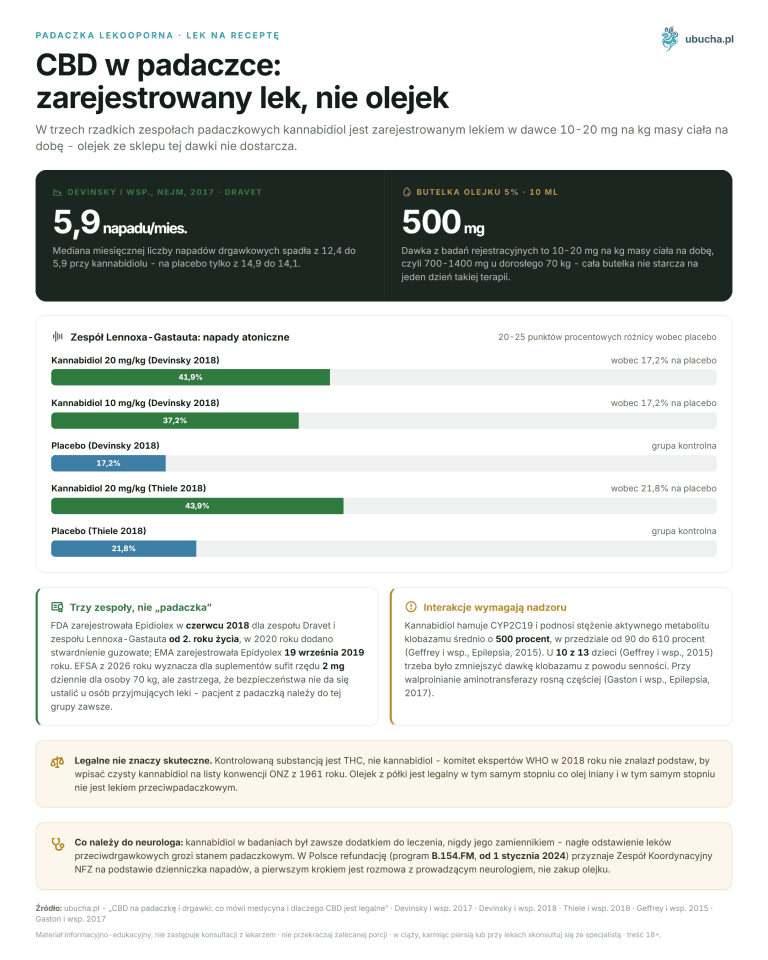
• In the legal market of Washington state, inhalation extracts averaged 68.7 percent THC compared to 20.6 percent in flower (Smart et al., Addiction 2017).
• A study on dabbing notes that users of e-nails report a preferred temperature of about 710 degrees Fahrenheit, or 378 degrees Celsius (Meehan-Atrash et al., ACS Omega 2017).
• 420 is older and measured: the risk of fatal accidents on April 20 was 12 percent higher (Staples and Redelmeier, JAMA Internal Medicine 2018).
• The store at Bucha does not carry concentrates or dabbing equipment because the material of this culture is a controlled substance in Poland.
What is 710 and where did this number come from?
710 is an unofficial holiday of cannabis concentrate culture, celebrated on July 10. The name comes from a visual trick: the numbers 7, 1, and 0 placed next to each other and flipped 180 degrees form a shape read as OIL. In American notation, the month before the day gives the date 7/10.
Unlike 420, which encompasses the entire cannabis culture, 710 has always referred to one family of products: oils, resins, and waxes, as well as the method of inhalation called dabbing. This is a technical holiday, grown around the equipment and extraction process, rather than around legalization activism.
There is a coincidence in this story worth noting without drawing a conclusion. A paper describing the chemistry of dabbing states that users of electronic temperature controllers report a preferred value of about 710 degrees Fahrenheit, or 378 degrees Celsius, within a range of 340-482 degrees (Meehan-Atrash et al., ACS Omega, 2017). The same number in two roles, as a date and as a thermometer setting, tempts a story of common origin. We have not found a source that demonstrates such a connection, so we do not assert it here.
Can the origins of 710 and 420 be confirmed?
Not to the extent that guides repeat. 710 is said to have spread through social media around 2012, and 420 is said to have originated from a group of students in San Rafael, California in 1971. Both versions have circulated for years, and we have not been able to confirm either with a verifiable source.
However, one statement about 420 can be confirmed, and that is in a peer-reviewed paper. Staples and Redelmeier, studying traffic accidents, begin their observation period in 1992, describing it as the first full year after the popularization of 4/20 by High Times magazine. This indicates a channel of dissemination but does not resolve who and when the number itself was invented.
The same goes for the year of the first edition of the “710 Cup” event in Denver, which many studies date to a specific year. Such events do take place, but we have not found a specific starting date in a source that could be verified, so we do not provide it here. A legend described as a legend is fair; the same legend presented as a historical fact is not. The history of the older date is laid out separately in the text about the history of 420.
How does 710 differ from 420?
By date, scope, and subject. 420 encompasses the entire cannabis culture and is recognized beyond it, while 710 pertains solely to concentrates and dabbing and remains an environmental term. The difference is also evident in that only one of these holidays has been measured in population data.
| Feature | 420 | 710 |
|---|---|---|
| Date | April 20 (4/20) | July 10 (7/10) |
| Subject | cannabis and cannabis culture in general | concentrates and dabbing equipment |
| Origin of the name | origin told, without confirmation | 710 flipped reads as OIL |
| Trace in literature | yes: 12% increase in accident risk (Staples 2018) | we have not found a work on the date itself |
| Recognition | massive | environmental |
The measurement on the 420 side is specific. Staples and Redelmeier reviewed 25 consecutive years, from January 1992 to December 2016, covering 1.3 million drivers involved in 882,483 accidents. They compared the number of drivers in fatal accidents between 4:20 PM and 11:59 PM on April 20 with the same hours a week earlier and a week later. The risk was 12 percent higher, with a confidence interval from 5 to 19 percent, and the increase was more pronounced among younger drivers (JAMA Internal Medicine, 2018).
What is dabbing, around which 710 has grown?
Dabbing is placing a portion of concentrate on a surface heated to several hundred degrees and inhaling the vapor through a glass base with a water chamber. The portion is called a dab, from the English word meaning a little bit, and the heated bowl is called a nail or a banger. We elaborate on this method in the text about dabbing.
| Term | What it means |
|---|---|
| dab | a portion of concentrate placed on a heated surface |
| nail, banger | a bowl made of quartz, titanium, or ceramic where the dab lands |
| carb cap | a cap that lowers the pressure above the bowl during inhalation, allowing for lower evaporation |
| e-nail | an electronic controller that maintains a set temperature instead of a torch |
| cold start dab | an inverted technique: the dab goes onto a cold bowl, which then heats up |
| reclaim | residue that accumulates in glass elements after multiple uses |
The division of concentrates itself is based on the method of obtaining them. Shatter, wax, and budder are made from butane extraction, live resin from material frozen immediately after harvest, and rosin from pressing under pressure, without a solvent. We have detailed the consistencies and their origins in the guide to shatter, wax, and budder, and the names from cannabis culture are collected in the cannabis connoisseur’s dictionary.
How strong are concentrates and what has been measured in conjunction?
Stronger than flower by over three times. In the legal market of Washington state, based on over 44 million transactions from July 2014 to September 2016, inhalation extracts averaged 68.7 percent THC compared to 20.6 percent in flower (Smart et al., Addiction, 2017).
This same work shows how quickly this part of the market grew: the share of inhalation extracts increased by 145.8 percent over two years and reached 21.2 percent of sales, although flower still accounted for 66.6 percent of expenditures. These are numbers from one state and one period, so they do not describe the European market or today’s situation.
On the chemistry side of vapor, the measurement is equally specific. Methacrolein was not detected at a median of 322 degrees Celsius, at 403 degrees it was 131 ppb per dab, at 455 degrees 157 ppb, and at 526 degrees 185 ppb; benzene appeared only at the highest tested range. A 2019 paper adds vinyl methyl ketone and isoprene to the list and notes that adding terpenes to pure THC raises the level of gas products (Meehan-Atrash et al., ACS Omega, 2019). In quantitative terms, they came out significantly lower than when smoking cannabis, which the authors advise reading cautiously due to the variability of usage patterns.
Can 710 be celebrated in Poland?
The date itself is not regulated, but the subject of this holiday is. Concentrates with THC content in the range of several dozen percent do not fit within the Polish definition of hemp, for which the limit is 0.3 percent of the sum of delta-9-THC and THCA, calculated from the plant.
The threshold arises from Article 4 point 5 of the Act of July 29, 2005 on Counteracting Drug Addiction, in the consolidated text Journal of Laws 2023 item 1939, as amended by the Act of March 24, 2022 (Journal of Laws 2022 item 763), effective from May 7, 2022. The sum is calculated in flowering or fruiting tops from which resin has not been removed, converted to dry mass, and rounded to one decimal place. Since the threshold describes the plant and not the finished product, there is no such thing as a legal concentrate with a content of 0.3 percent.
Material above the threshold is referred to by the law as cannabis other than hemp (Article 4 point 37), and its possession is a crime under Article 62 of the same law. This also applies to extracts from such material, which is exactly what the 710 culture calls a concentrate.
The practical conclusion is simple and does not require a lawyer: in Poland, 710 remains a cultural curiosity. The store at Bucha does not carry concentrates or dabbing equipment, and this is not a purchasing decision but a consequence of the legal status of this material.
Frequently asked questions
What does 710 mean in cannabis culture?
710 flipped 180 degrees spells the word OIL, which means oil. Hence, July 10, in American notation 7/10, has become the unofficial day of concentrate and dabbing culture. This is the only element of the origin of this date that the reader can verify themselves by looking at the numbers.
Is it known who invented 710?
No. There is a version that it spread through social media around 2012, but we have not found a verifiable source for it. The same goes for the origin of 420: it can only be confirmed that the date was popularized by High Times magazine before 1992 (Staples and Redelmeier, JAMA Internal Medicine 2018).
How does 710 differ from 420?
In scope and age. 420 encompasses the entire cannabis culture, is widely recognized, and has a trace in scientific literature. 710 pertains solely to concentrates and dabbing, remaining an environmental term, and we have not found a work dedicated to the date itself.
How strong are concentrates for dabbing?
In the legal market of Washington state, inhalation extracts averaged 68.7 percent THC compared to 20.6 percent in flower, which is over three times more (Smart et al., Addiction 2017). The data comes from over 44 million transactions from 2014-2016 and describes one market, not all.
Is dabbing safer than smoking?
Aerosol gas products were significantly lower in dabbing than in smoking cannabis, but the authors advise reading this result cautiously due to the variability of usage patterns and the higher concentration of THC in the aerosol (Meehan-Atrash et al., ACS Omega 2019). Methacrolein and benzene appear at higher temperatures.
Are concentrates legal in Poland?
No. The Polish definition of hemp includes plants with a content of up to 0.3 percent of the sum of delta-9-THC and THCA. Material above this threshold is referred to as cannabis other than hemp, and its possession is a crime under Article 62 of the Act on Counteracting Drug Addiction.
If you are looking for an inhalation device that is legal to buy in Poland, check out the vaporizers category.
This article is for informational and educational purposes only and does not constitute legal advice. The legal status described in the article is valid as of the date of publication: regulations regarding cannabis may change. Before making a decision, consult a lawyer or current legal acts.
Author: Michał Waluk · Published: 2026-08-09 · Updated: 2026-08-16