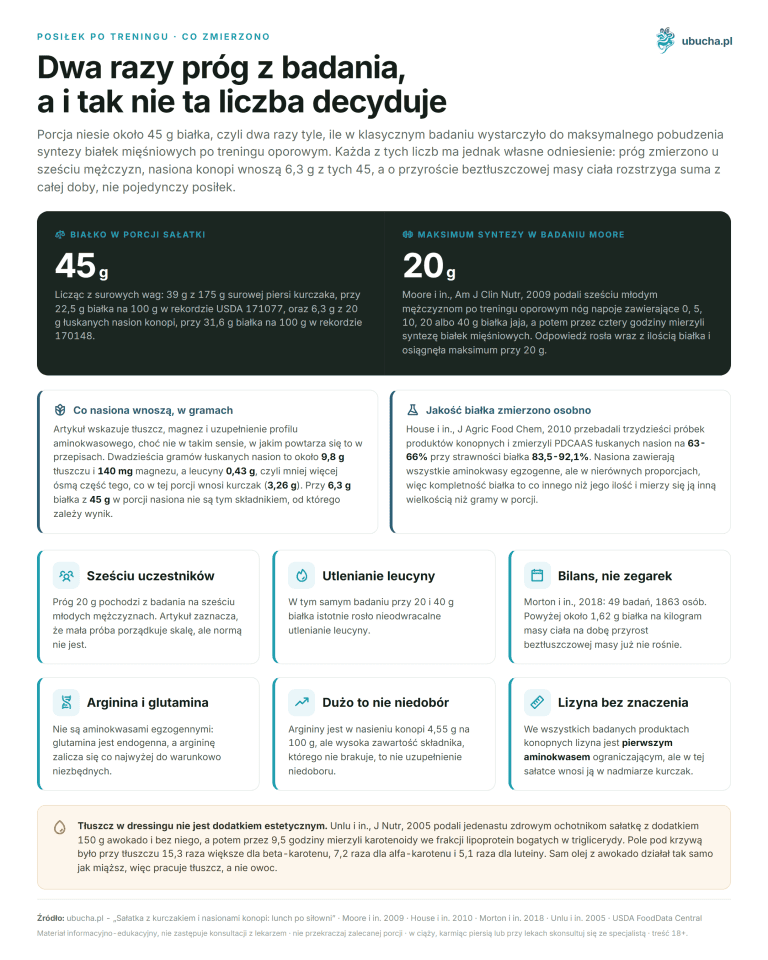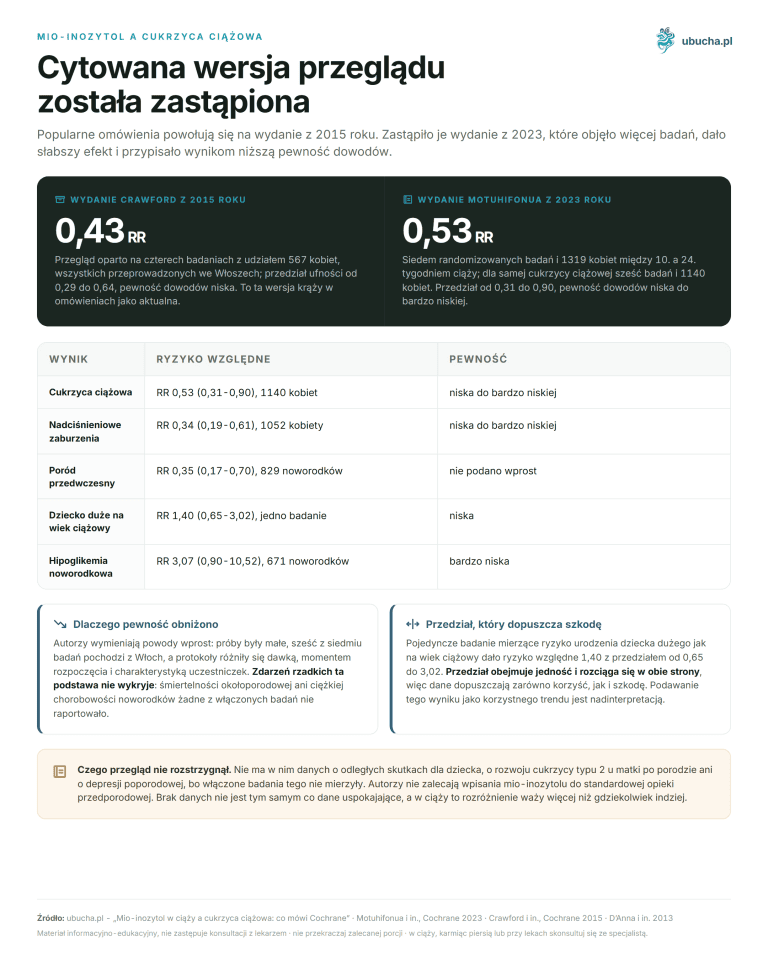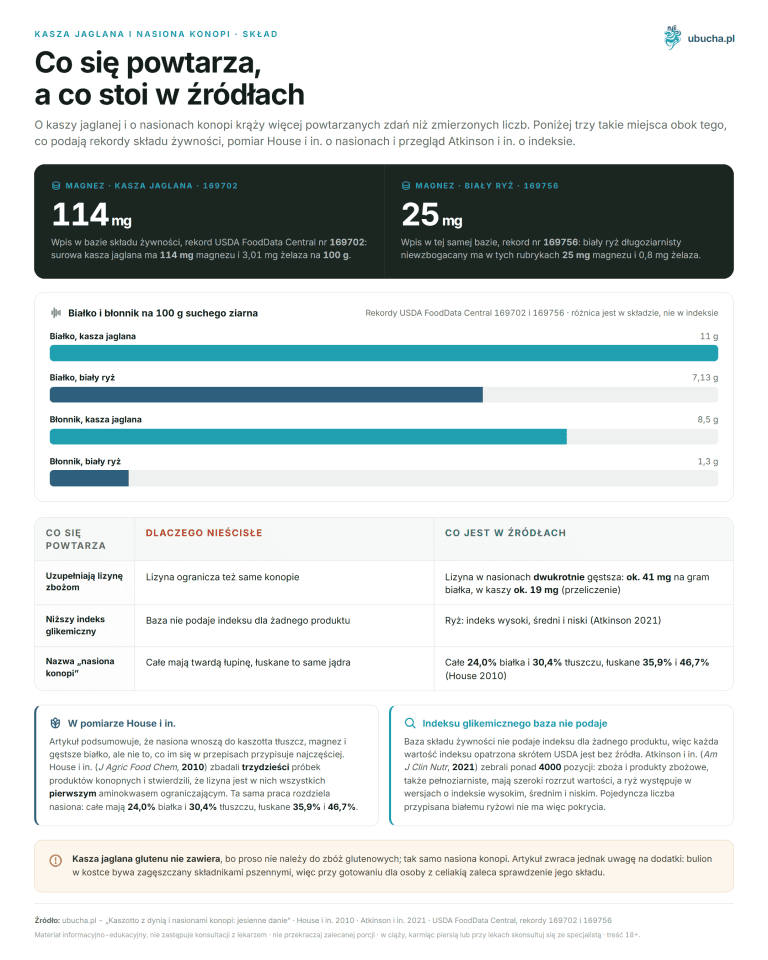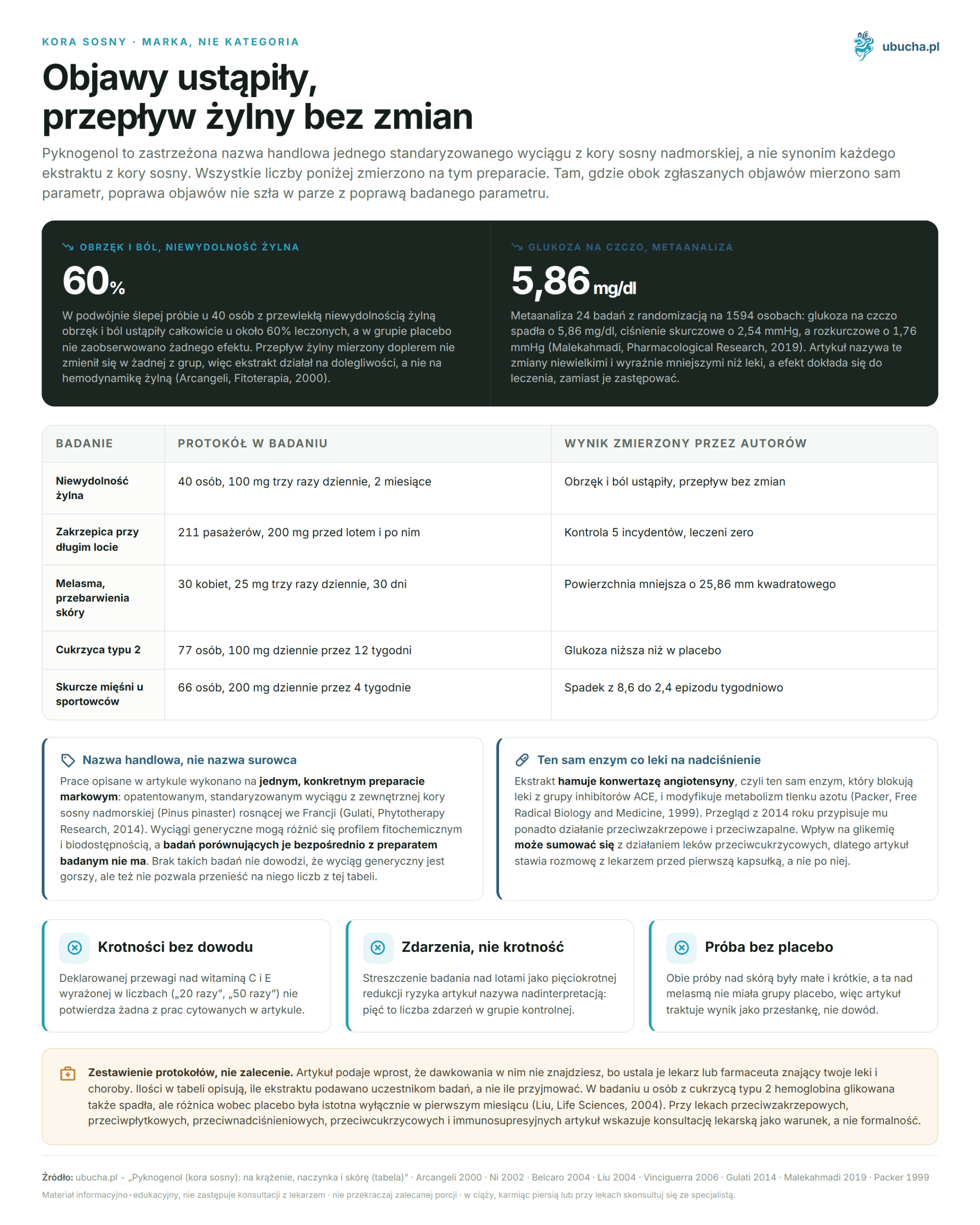

Pycnogenol (pine bark): for circulation, blood vessels and skin (table)
Pycnogenol (extract from maritime pine bark) in clinical studies: venous circulation, skin, glycemia, and blood pressure. What has been confirmed and what has not.
Pycnogenol is a trademarked name for a standardized extract from the bark of the maritime pine (Pinus pinaster Ait. subsp. atlantica). It contains a mixture of flavonoids, mainly proanthocyanidins and phenolic acids. A review published in Phytotherapy Research summarizes clinical studies on this extract in chronic venous insufficiency, deep vein thrombosis, post-thrombotic syndrome, swelling after long flights, and venous ulcers (Gulati, Phytotherapy Research, 2014). There are many numbers surrounding this extract that do not appear in scientific works but have circulated in commercial descriptions for years. Below you will find what studies actually measured: how many participants there were, how long supplementation lasted, how much extract was administered, and whether the difference compared to placebo was significant. You will also find instances where the result was negative or where symptom improvement did not correlate with improvement in the measured parameter. You will not find dosing here, as it is determined by a doctor or pharmacist who knows your medications.
KEY INFORMATION
• Pycnogenol comes from the bark of the maritime pine; the name is a trademark, not a synonym for any “pine bark extract” (Gulati, Phytotherapy Research, 2014).
• A meta-analysis of 24 randomized studies involving 1594 participants showed a decrease in fasting glucose by 5.86 mg/dl and systolic blood pressure by 2.54 mmHg (Malekahmadi, Pharmacological Research, 2019).
• In a study on chronic venous insufficiency, swelling and pain completely resolved in about 60% of treated individuals, but venous flow did not change in either group (Arcangeli, Phytotherapy, 2000).
• The extract inhibits angiotensin-converting enzyme and affects nitric oxide metabolism, so with hypertension, diabetes, and coagulation medications, a discussion with a doctor is required.
• The claimed superiority over vitamins C and E in numbers (“20 times”, “50 times”) is not confirmed by any of the cited works.
What is pycnogenol and what does it really contain?
Pycnogenol is a patented, standardized extract from the outer bark of the maritime pine growing in France. Chemically, it is a mixture of flavonoids: proanthocyanidins dominate, alongside phenolic acids. A review by Lester Packer describes an important feature of this mixture: the whole is more effective than its purified components taken separately, suggesting interaction among them (Packer, Free Radical Biology and Medicine, 1999).
The mechanisms described in the same work are well documented in laboratory studies. The extract scavenges reactive oxygen and nitrogen species. It regenerates ascorbyl radical, allowing vitamin C to return to its active form, and protects endogenous vitamin E and glutathione from depletion during oxidative stress. It modifies nitric oxide metabolism in activated macrophages. It exhibits vasodilatory activity and inhibits angiotensin-converting enzyme, which is the same enzyme blocked by ACE inhibitor medications. A 2014 review adds anti-inflammatory, anticoagulant, and collagen-stabilizing effects to this.
It is important to distinguish two things that sales often like to merge into one. “Pycnogenol” is a brand from one manufacturer, and it is this preparation that was studied in the works cited in this article. Generic “pine bark extract” may have a different composition and degree of standardization, and there are no comparative studies between it and the branded preparation. The popular claim of superiority over vitamin C and vitamin E expressed in multiples does not appear in any of the works on which this text is based.
What doses and how long were used in clinical studies?
The table below is not a recommendation. It is a summary of protocols: who participated in the study, how long it lasted, how much extract was administered, and what was measured. Whether and how much supplement to take is determined by a doctor or pharmacist who knows your medications and diseases.
| Study | Participants | Protocol | Result measured by authors |
|---|---|---|---|
| Arcangeli, Phytotherapy, 2000 | 40 people with chronic venous insufficiency and varicose veins | 100 mg three times daily for 2 months, double-blind trial | Swelling and pain completely resolved in about 60%; venous flow unchanged in both groups |
| Belcaro, Clinical and Applied Thrombosis/Hemostasis, 2004 | 211 passengers at moderate and high risk of thrombosis | 200 mg 2-3 hours before flight, 200 mg after 6 hours, 100 mg the next day | 5 thrombotic incidents in the control group, zero in the treated group (p below 0.025) |
| Ni, Phytotherapy Research, 2002 | 30 women with melasma | 25 mg three times daily for 30 days | Area of pigmentation reduced by 25.86 mm squared; overall effectiveness 80% |
| Liu, Life Sciences, 2004 | 77 people with type 2 diabetes on standard treatment | 100 mg daily for 12 weeks | Plasma glucose lower than in placebo; HbA1c significantly lower only in the first month |
| Ryan, Journal of Psychopharmacology, 2008 | 101 people aged 60-85 | 150 mg daily for 3 months | Better working memory and lower levels of F2 isoprostanes |
| Vinciguerra, Angiology, 2006 | 66 healthy individuals, separately venous patients and athletes | 200 mg daily for 4 weeks | Cramps in athletes reduced from 8.6 to 2.4 episodes per week (p below 0.05) |
Does pycnogenol help with chronic venous insufficiency?
Partially. Symptoms reported by patients improved significantly, but blood flow in the veins did not budge. In a double-blind trial involving 40 people with chronic venous insufficiency and varicose veins, the extract or placebo was administered for two months. Subcutaneous swelling, heaviness, and leg pain significantly decreased both after 30 and 60 days (Arcangeli, Phytotherapy, 2000).
It is worth going into details, as they change the picture. Swelling was the symptom that resolved the fastest: in about 60% of treated individuals, it completely disappeared, as did pain. The feeling of heaviness in the legs eased in almost everyone, and disappeared in about one-third. No effect was observed in the placebo group. And now the statement that usually appears in commercial descriptions: venous flow measured by Doppler did not change in either group.
This distinction has practical significance. The extract acted on discomfort, not on venous hemodynamics, so it does not replace compression therapy or surgical treatment where indicated. A review from Phytotherapy Research positions it as a support alongside primary treatment, mentioning alongside venous insufficiency also post-thrombotic syndrome, venous ulcers, and hemorrhoidal episodes. If you are looking for a broader vascular context, a comparison regarding vitamin K2 MK-7 and arterial health can also be useful.
Does pycnogenol protect against thrombosis during long flights?
In one study, the number of thrombotic incidents dropped to zero, but the entire difference was based on five events in the control group. 211 passengers at moderate and high risk of deep vein thrombosis participated, and 198 completed it. Flights lasted an average of 8 hours and 15 minutes. All were examined ultrasonographically before takeoff and after landing (Belcaro, Clinical and Applied Thrombosis/Hemostasis, 2004).
In the control group, five thrombotic events occurred: one deep vein thrombosis and four superficial thromboses, totaling 5.15% of those studied. In the group taking the extract, no thrombotic events were recorded, only local vein inflammation without thrombosis. The difference was statistically significant with p below 0.025. No adverse effects were reported.
This work is often summarized as “fivefold reduction in risk”. This is an overinterpretation: five is the number of events in the control group, not the multiplicity of reduction, which cannot be calculated with zero in the other arm. A 2014 review attributes anticoagulant effects to this extract, so for individuals taking antiplatelet or anticoagulant medications, combining requires the approval of the attending physician, not a decision made before check-in.
What do studies say about the effects of pycnogenol on the skin?
Two studies measured different things and both yielded positive results. The first involved 20 healthy postmenopausal women supplemented for 12 weeks. Skin hydration and elasticity significantly improved, most notably in women who had dry skin before starting. Biopsies showed a significant increase in mRNA expression of hyaluronic acid synthase type 1 and a noticeable increase in collagen synthesis gene expression (Marini, Skin Pharmacology and Physiology, 2012).
The second study concerned melasma, or chloasma: pigmentation appearing mainly on sun-exposed skin. Thirty women took 25 mg three times daily for 30 days. The average area of pigmentation decreased by 25.86 mm squared, and pigmentation intensity by 0.47 units, both changes with p below 0.001. The authors determined overall effectiveness at 80%, with no adverse effects reported (Ni, Phytotherapy Research, 2002).
Both trials were small and short, and the one concerning melasma did not have a placebo group, so treat the results as suggestive, not as proof. If you are interested in how other plant extracts perform in similar studies on skin and oxidative stress, a comparison can be found in the text about astaxanthin and its dosing.
Does pycnogenol lower glycemia and blood pressure?
It lowers, but the values are small and clearly less than medications. The broadest summary included 24 randomized studies and 1594 participants. Fasting glucose decreased on average by 5.86 mg/dl (95% confidence interval from -9.56 to -2.15), hemoglobin A1c by 0.29 percentage points (from -0.56 to -0.01), systolic blood pressure by 2.54 mmHg (from -4.08 to -0.99), and diastolic by 1.76 mmHg (from -3.12 to -0.41). LDL cholesterol decreased, while HDL increased (Malekahmadi, Pharmacological Research, 2019).
A separate meta-analysis focused on blood pressure, involving 12 studies and 922 individuals, yielded very similar numbers: systolic down by 3.22 mmHg (from -5.52 to -0.92), diastolic by 1.91 mmHg (from -3.64 to -0.18). The authors noted that the beneficial effect on diastolic pressure appeared only in studies lasting longer than 12 weeks (Pourmasoumi, Phytotherapy Research, 2020).
A single study involving 77 individuals with type 2 diabetes, continuing standard treatment, showed significantly lower plasma glucose after 12 weeks. Hemoglobin A1c also decreased, but the difference compared to placebo was significant only in the first month (Liu, Life Sciences, 2004). The effect adds to treatment, does not replace it, and with metformin, sulfonylurea derivatives, insulin, or ACE inhibitors, it may sum with them. This is why supplementation is determined with the attending physician.
Does pycnogenol affect memory, menopausal symptoms, and muscle cramps?
In three separate, small studies, the result was positive, although they measured completely different things. In a double-blind trial involving 101 individuals aged 60 to 85, three months of supplementation improved working memory and lowered levels of F2 isoprostanes, a marker of lipid peroxidation. Statistically significant were the memory variables and lipid peroxidation products, not the entire set of cognitive tests (Ryan, Journal of Psychopharmacology, 2008).
In a study on perimenopausal women, 38 women took the extract for eight weeks, while 32 formed the comparison group. The severity of the six most common symptoms, including hot flashes and night sweats, decreased from an average of 2.67 on a 4-point scale to 1.45 on a 4-point scale, while in the control group it remained unchanged (Errichi, Panminerva Medica, 2011).
The third study concerned cramps and muscle pain. In 66 healthy individuals, the number of episodes dropped from 4.8 to 1.3 weekly, in patients with venous disease from 6.3 to 2.6, and in athletes from 8.6 to 2.4, all with p below 0.05 and maintaining the effect a week after discontinuation (Vinciguerra, Angiology, 2006). A comparison of other ways to support recovery after exercise can be found in the text about CBD for athletes.
How to distinguish the studied extract from a regular pine bark extract?
By the name on the label and whether the manufacturer provides standardization. The works described in this article were conducted on one specific branded preparation. Generic extracts from maritime pine bark may differ in phytochemical profile and bioavailability, and there are simply no studies directly comparing them with the studied preparation. The lack of such studies does not prove that the generic extract is inferior, but it also does not allow transferring the results described above to it.
Before purchasing, check three things. Does the label indicate the source of the raw material, namely the bark of Pinus pinaster, and not a vague “pine extract”? Is the content of proanthocyanidins provided, not just the mass of the extract? Does the manufacturer provide a certificate of analysis upon request? The form of capsules and tablets does not differ significantly for this substance.
A separate issue is interactions, as they determine whether the supplement is even an option. The extract is attributed with anticoagulant effects and inhibition of angiotensin-converting enzyme, and with diabetes, its effect on glycemia may add up with the action of medications. With anticoagulant, antiplatelet, antihypertensive, antidiabetic, and immunosuppressive medications, a conversation with a doctor precedes the first capsule, not follows it.
Frequently asked questions
How much pycnogenol was used in clinical studies?
Protocols varied depending on the research question: 300 mg daily for two months for venous insufficiency, 100 mg for 12 weeks for type 2 diabetes, 75 mg for 30 days for melasma, 150 mg for three months in older adults. This is a description of studies, not a recommendation. The dose is determined by a doctor or pharmacist.
What confirmed effects does pycnogenol have?
The best-documented effects are symptoms of chronic venous insufficiency, swelling, and thrombosis during long flights, as well as a slight reduction in fasting glucose and blood pressure. A meta-analysis of 24 randomized studies confirmed these latter effects, but their scale is moderate (Malekahmadi, Pharmacological Research, 2019).
Does pycnogenol improve blood flow in veins?
In Arcangeli’s study, venous flow measured by Doppler did not change in either the treated or placebo group, despite clear symptom relief. Therefore, the improvement was related to discomfort, not hemodynamics. The supplement does not replace compression therapy or surgical treatment.
Does pycnogenol interact with medications?
Yes. It is attributed with anticoagulant effects, so it may enhance the effects of antiplatelet and anticoagulant medications. It inhibits angiotensin-converting enzyme, which is the same enzyme targeted by hypertension medications. It also lowers fasting glucose, so its effect may add up with antidiabetic medications. Consultation with a doctor is necessary for each of these groups.
Is pycnogenol a stronger antioxidant than vitamin C?
No studies cited in this article confirm numbers like “20 times stronger”. Packer’s review describes a different mechanism: the extract regenerates ascorbyl radical and protects endogenous vitamin E and glutathione, meaning it works alongside these antioxidants rather than replacing them.
Does generic pine bark extract work the same?
It is unknown, as there are no direct comparative studies. All studies described in this text were conducted on one branded preparation with a specific standardization. A generic extract may have a different phytochemical profile, so transferring these results to it is not justified.
Plant preparations with declared standardization are collected in the category of plant extracts; before purchasing, compare the declared raw material and the content of the active substance.
This article is for informational and educational purposes and does not constitute medical advice. Before starting supplementation, consult a doctor, especially if you are taking medications regularly, are pregnant or breastfeeding, or have chronic illnesses.
Author: Michał Waluk · Published: 2026-08-05 · Updated: 2026-08-11