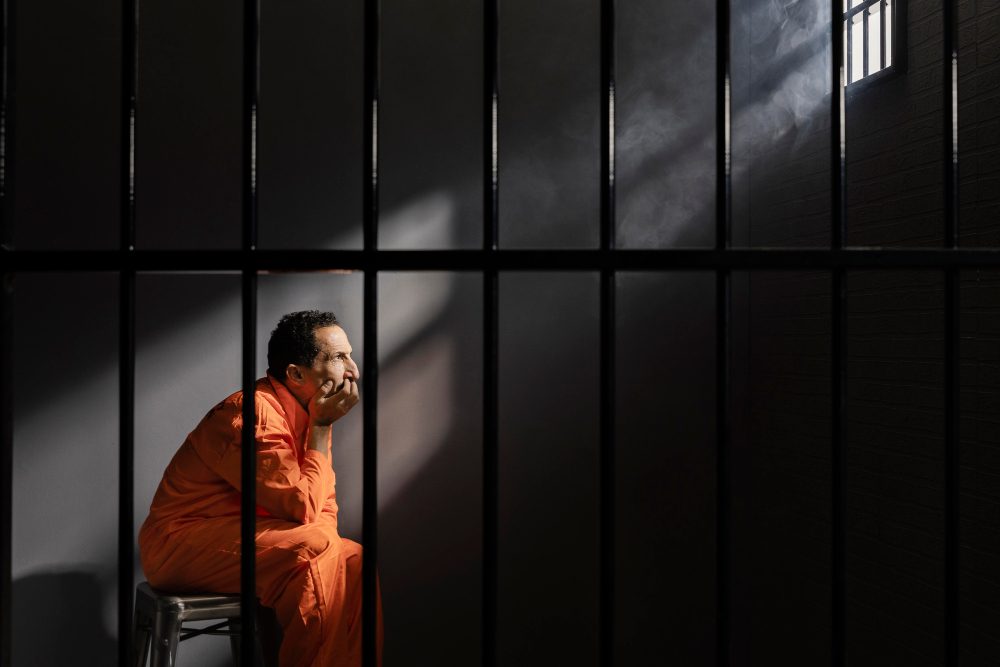

How much marijuana can you have in your possession? Regulations and penalties
The Polish law does not recognize a gram threshold: possession is a crime from the first gram. Art. 62, art. 62a and where the three grams came from.
Possession of marijuana in Poland is a crime. The basis is art. 62 of the Act of July 29, 2005 on Counteracting Drug Addiction (consolidated text: Journal of Laws 2023, item 1939), which provides for a penalty of imprisonment for up to 3 years for possession of narcotic substances. The law does not recognize the defense of “personal use” and does not set any gram limit below which the act ceases to be a crime. However, the same law states in art. 62a that it allows for the dismissal of proceedings against minor consumers, even before an investigation begins. These two provisions must be read together, as only together do they describe what really happens after an arrest. Below you will find the wording of each of them, the difference between possession and cultivation, the path to legal access to pharmaceutical raw material, and where the law draws the line between marijuana and fiber hemp.
KEY INFORMATION
• Art. 62 sec. 1 of the Act on Counteracting Drug Addiction (consolidated text: Journal of Laws 2023, item 1939): possession of narcotic substances in violation of the provisions of the Act is punishable by imprisonment for up to 3 years.
• A significant amount (sec. 2) is punishable by 1 to 10 years. A case of lesser weight (sec. 3) is punishable by a fine, restriction of freedom, or imprisonment for up to 1 year.
• Art. 62a allows for the dismissal of proceedings for an act under sec. 1 or sec. 3 in the case of a small amount for personal use, even before the issuance of a decision to initiate an investigation.
• The forfeiture of the cannabis is mandatory, even when the proceedings are dismissed (art. 70 sec. 2).
• The threshold is determined by the sum of delta-9-THC and THCA: up to 0.3% is fiber hemp, above 0.3% is cannabis other than fiber (art. 4 point 5 and point 37).
What does art. 62 of the Act on Counteracting Drug Addiction say exactly?
How much marijuana can you have in your possession in Poland? Zero. The law does not specify any amount below which possession ceases to be a crime, so the threshold is neither three grams, nor ten, nor any other number circulating on the internet. The number three grams comes from a misunderstanding: art. 62a allows for the dismissal of proceedings for a small amount for personal use, but a small amount is not defined numerically in the law, and dismissal is a possibility for the prosecutor, not a right for the possessor. The act remains a crime even if the case is dismissed.
Art. 62 of the Act of July 29, 2005 on Counteracting Drug Addiction creates three separate thresholds of liability for mere possession. The basic type under sec. 1 is punishable by imprisonment for up to 3 years. The qualified type under sec. 2, i.e., a significant amount, is punishable by 1 to 10 years. The privileged type under sec. 3 covers cases of lesser weight.
These three numbers are worth remembering in their exact wording, as they are often mixed up in public discourse. The most common mistake is to state the penalty from sec. 2 as “up to 10 years.” The provision states “from 1 to 10 years,” which means that the court cannot go below 1 year without resorting to extraordinary leniency. The difference between “up to 10 years” and “from 1 to 10 years” determines whether suspension of the execution of the penalty is even an option.
| Provision | What it concerns | Statutory threat |
|---|---|---|
| art. 62 sec. 1 | possession of narcotic or psychotropic substances in violation of the provisions of the Act | imprisonment for up to 3 years |
| art. 62 sec. 2 | the act involves a significant amount | imprisonment from 1 to 10 years |
| art. 62 sec. 3 | case of lesser weight | fine, restriction of freedom, or imprisonment for up to 1 year |
| art. 62b sec. 1 | possession of a new psychoactive substance | fine |
| art. 62b sec. 2 | significant amount of a new psychoactive substance | fine, restriction of freedom, or imprisonment for up to 3 years |
| art. 62a | small amount for personal use in the case of an act under sec. 1 or sec. 3 | possibility of dismissing the proceedings |
The law does not differentiate penalties based on the type of substance. The same art. 62 covers cannabis, amphetamine, and ecstasy pills. The type of substance only affects the assessment of the degree of social harmfulness of the act, and thus the penalty in a specific case, not which provision applies.
What does criminal law understand by “possession” and how is the amount measured?
Possession in the understanding of art. 62 is actual control over the substance, regardless of whose it is and how long it lasts. The provision simply states “who possesses,” without any additional qualification. Holding someone else’s bag for fifteen minutes fulfills the criteria just as much as keeping your own stash at home.
The law does not provide a single number that separates a small amount from a significant one. Both categories have been filled with content only in jurisprudence. The Supreme Court in its judgment of May 7, 2013 (case no. III KK 25/13) accepted that a significant amount is one that is sufficient for the intoxication of at least several dozen people, and that for the assessment of “significance,” only the quantitative aspect matters. The type of substance, its value, and its intended use for personal consumption are relevant for assessing the harmfulness of the act and for determining the penalty, not for whether the threshold has been exceeded.
On the flip side, no number has been established as clearly. Jurisprudence uses a functional description: a small amount is a portion corresponding to the immediate need of one consumer. The popular “up to 3 grams” circulating on the internet has no basis in any provision or resolution, so it does not guarantee anything. If you are looking for a threshold that automatically changes the qualification, there is none in Polish law.
The practical conclusion is uncomfortable but simple. Since the boundaries are determined by the court’s assessment, not by weight, the outcome of the case depends on the circumstances: where the arrest took place, how the substance was packaged, whether scales and zip bags were found nearby, and whether the perpetrator had a prior criminal record.
When does art. 62a allow for the dismissal of proceedings?
Art. 62a allows for the dismissal of proceedings for possession if three conditions are met simultaneously: the act involves a small amount, it is intended for the perpetrator’s own use, and the imposition of a penalty would be pointless due to the circumstances of the act and the degree of its social harmfulness. The absence of even one condition closes this path.
Two details of the wording of the provision are often misrepresented. First, art. 62a refers only to the act under art. 62 sec. 1 or sec. 3. In the case of a significant amount under sec. 2, this provision does not apply at all. Second, dismissal is permissible “also before the issuance of a decision to initiate an investigation or inquiry,” not only before the indictment is filed. This is the earliest possible moment: the case can be closed before it formally begins.
The provision states “can be dismissed,” so it is a right, not an obligation. The prosecutor assesses all circumstances, and their decision is subject to appeal under general rules. There is no automatism like “first time always dismissal,” although such a version circulates in conversations.
It is also worth noting the difference between art. 62a and conditional dismissal under the Penal Code. Art. 62a ends the case without a finding of guilt and without a probation period. Conditional dismissal is determined by the court, involves a probation period, and is subject to entry in the National Criminal Register. These are two different institutions, despite the similar name.
Does dismissal of the case mean that there is no trace left?
No. Even with the dismissal of proceedings, the court is obliged to order the forfeiture of the substance. Art. 70 sec. 2 of the Act states that in the case of a conviction for a crime under art. 62 and in the case of dismissal or conditional dismissal of criminal proceedings, the forfeiture of the narcotic is ordered, even if it was not the property of the perpetrator. The court may order its destruction, for which a protocol is drawn up.
This structure surprises many people, as the word “dismissal” suggests a return to the state before the arrest. This is not the case. The substance is always forfeited, and the case materials remain in the prosecutor’s files. Dismissal under art. 62a means no conviction and no entry in the criminal register, but it does not mean that the proceedings never existed.
Separately, it is worth noting the scope of the forfeiture of tools. Art. 70 sec. 1 allows for the forfeiture of items and tools used to commit a crime in cases under art. 53-61, 63, and 64. Art. 62 is not on this list, so the forfeiture of equipment is not a typical consequence there. This is different in the case of cultivation under art. 63, where lamps, tents, and irrigation systems fall into this category.
For many people, the practical significance of something else is also important. The mere fact of being detained and charged may be recorded in official documentation, and the proceedings take time and require attendance. The absence of a judgment is not the same as the absence of consequences.
What penalties are imposed for possession of marijuana in practice?
The actual penalty depends on which paragraph of art. 62 is applied, and in the case of a fine, on the rules of the Penal Code. Fines are imposed in daily rates: the court determines the number of rates and the amount of one of them. According to art. 33 of the Penal Code (consolidated text: Journal of Laws 2025, item 383), the number of rates ranges from 10 to 540, and the daily rate cannot be lower than 10 PLN or higher than 2000 PLN.
In the case of a lesser weight under art. 62 sec. 3, the rule from art. 33 sec. 1a of the Penal Code also applies. When the crime is punishable by both a fine and imprisonment not exceeding one year, the fine cannot be imposed in a number lower than 50 rates. Therefore, the lower limit of the actual fine for such an act is 50 rates of 10 PLN each, while the upper limit is much higher, as the amount of the rate is determined based on the perpetrator’s income, personal conditions, and earning potential.
The penalty of restriction of freedom lasts from one month to 2 years (art. 34 of the Penal Code) and consists of unpaid, controlled work for social purposes or a deduction of 10% to 25% of the salary for a social purpose indicated by the court. This is a real sanction, although it does not deprive freedom.
Prior criminality changes the picture. Art. 64 sec. 1 of the Penal Code requires the court to impose a penalty above the lower limit of the statutory threat if the perpetrator, convicted of an intentional crime with a penalty of imprisonment, commits a similar intentional crime within 5 years after serving at least 6 months of the penalty. The upper limit can then be raised by half. Recidivism is therefore not a matter of discretion but a statutory rule.
What is the difference between possession of marijuana and cultivation of hemp?
Cultivation is governed by art. 63, not art. 62, and has its own scale of penalties. Art. 63 sec. 1 punishes the cultivation of cannabis other than fiber with imprisonment for up to 3 years. Sec. 2 provides for the same penalty for collecting resin or flowers of cannabis other than fiber. Sec. 3 raises the threat to a range of 6 months to 8 years.
The characteristic from sec. 3 is worth reading literally, as it appears distorted in guides. The provision does not mention a “significant number of plants” and does not provide any threshold in terms of quantity. It speaks of cultivation “capable of providing a significant amount” of poppy straw, coca leaves, resin, or cannabis other than fiber. Therefore, the potential yield of the cultivation is assessed, not the number of pots, and all circulating numbers like “above 20 plants” are added to the provision from the outside.
Fiber hemp is excluded from art. 63 sec. 1, as the provision explicitly excludes it. Its cultivation is legal but regulated: it requires registration in the register of fiber hemp producers maintained by the director of the local branch of KOWR (art. 47a sec. 2 and art. 47b sec. 1), and cultivation for personal use cannot exceed 1 hectare per year (art. 45 sec. 6). If you plan to cultivate your own, a separate guide on the legal cultivation of fiber hemp outlines this procedure step by step.
Seeds themselves represent yet another situation. Seeds are excluded from the definition of cannabis other than fiber in art. 4 point 37, so they are not considered a narcotic in the understanding of the Act. Responsibility begins only when cultivation is undertaken.
What can a dependent person do instead of serving a sentence?
The law provides a separate path for dependent individuals and those using substances harmfully, based on treatment instead of repression. Art. 72 sec. 1 allows the prosecutor to suspend proceedings until the completion of treatment, rehabilitation, or participation in an educational and preventive program if the alleged act is related to substance use and is punishable by a penalty not exceeding 5 years of imprisonment. Art. 62 falls entirely within this threshold.
After the proceedings are resumed, the prosecutor assesses the results of the treatment and either continues the case or applies to the court for a conditional dismissal of the proceedings. Art. 72 sec. 4 contains an exception that is hard to find elsewhere: conditional dismissal can also be applied to a perpetrator of a crime punishable by up to 5 years, and prior criminality does not stand in the way.
Art. 73 extends this structure to the court stage. The provisions of art. 72 apply accordingly in court proceedings until the closure of the court proceedings, so this path can also be used when the indictment has already reached the court.
Separately, art. 71 operates. When suspending the execution of a sentence against a dependent person, the court obliges them to undergo treatment or rehabilitation in a medical entity and places them under supervision. Failure to comply with this obligation may result in the execution of the suspended sentence. The duration of stay is not predetermined but cannot exceed 2 years.
How to legally obtain medical marijuana in Poland?
The legal path leads through a pharmacy and a prescription, based on art. 33a of the Act on Counteracting Drug Addiction, added by the Act of July 7, 2017 (Journal of Laws 2017, item 1458), in force since November 1, 2017. Cannabis other than fiber and pharmaceutical extracts, tinctures, and resin can constitute pharmaceutical raw material intended for the preparation of prescription drugs.
The condition, which is rarely mentioned, is formal and strict: the raw material must have a marketing authorization issued by the President of the Office for Registration of Medicinal Products, Medical Devices, and Biocidal Products. The permit is issued for 5 years (art. 33a sec. 3). Raw material without such a permit is not a pharmaceutical raw material, regardless of how the packaging looks.
Art. 33b sec. 4 states that a prescription drug from this raw material receives a category of availability reserved for narcotics, and the prescription cannot be issued by a veterinarian. The realization takes place in a pharmacy, on a prescription marked as Rpw.
For the patient, practical significance lies in documentation. The legality of possession derives from the pharmacy, so packaging with a label and proof of purchase are what distinguishes a drug from cannabis from an unknown source during a check. A guide on patient documents during police checks discusses this scenario in detail, and a separate text on medical marijuana explains the procedure for obtaining a prescription.
Where is the boundary between marijuana and fiber hemp?
The boundary is determined by one numerical value and one method of calculation. According to art. 4 point 5 of the Act on Counteracting Drug Addiction, fiber hemp is defined as plants of the species Cannabis sativa L., in which the sum of the content of delta-9-tetrahydrocannabinol and tetrahydrocannabinolic acid does not exceed 0.3% in relation to dry mass. The sum is rounded to one decimal place.
The most important word in this definition is “sum.” The threshold does not apply to delta-9-THC alone, but to the sum of delta-9-THC and THCA, i.e., delta-9-THC-2-carboxylic acid. This distinction changes the result of laboratory testing, as in fresh and dried plant material, most of the cannabinoid occurs in acidic form. A sample that “has 0.1% THC” in common understanding, when summed with the acidic form, may exceed the statutory threshold.
A mirror definition stands in art. 4 point 37: cannabis other than fiber is any above-ground part of the cannabis plant, excluding seeds, containing more than 0.3% of the same sum. Therefore, plant material does not have two thresholds or a separate value for processed products. There is one value and one method of counting.
This wording has been in effect since May 7, 2022, as established by the Act of March 24, 2022 (Journal of Laws 2022, item 763). Previously, the national threshold was 0.20%, so older texts and older test results describe a different legal state. The national threshold now corresponds to the EU threshold in art. 4 sec. 4 of Regulation (EU) 2021/2115, but these are two separate regulations with the same value, not one resulting from the other. Dried material meeting this condition can be found in the category of cannabis flower.
Do CBD and HHC fall under the same regulations as marijuana?
No, and the difference is qualitative, not quantitative. Cannabidiol does not appear in any list of controlled substances: the word “cannabidiol” does not appear even once in the regulation of the Minister of Health leading these lists (consolidated text: Journal of Laws 2024, item 1139). Therefore, art. 62 does not apply to CBD and never has.
HHC, or hexahydrocannabinol, is on the opposite side. It is a controlled substance in Poland, and the regulation of the Minister of Health of July 7, 2026 (Journal of Laws 2026, item 934), effective from July 28, 2026, moved it between groups in the list. Moving between groups is not legalization. Possession of HHC in violation of the provisions of the Act remains prohibited, as art. 62 sec. 1 covers all psychotropic substances regardless of the group to which they have been assigned.
The third category is delineated by the law to a separate art. 62b. Possession of a new psychoactive substance in violation of the provisions of the Act is punishable by a fine, and in the case of a significant amount, by a fine, restriction of freedom, or imprisonment for up to 3 years. Art. 62b sec. 3 contains its own equivalent of art. 62a: in the case of a small amount intended for personal use, proceedings can also be dismissed before the investigation is initiated.
For the buyer, the conclusion is simple and uncomfortable: the trade name on the packaging does not determine anything. The legal status is determined by what substance is actually in the product and whether its name appears on the list. A product advertised as a “legal alternative” may contain an ingredient from the list, and then liability arises from art. 62 or art. 62b, depending on how that specific substance has been classified.
The consequences, outlined in the form of questions and answers, have been gathered in a text about what threatens for possession of marijuana.
What to do in case of police control and detention?
The Code of Criminal Procedure (consolidated text: Journal of Laws 2026, item 490) grants the detained three rights that are worth knowing before, not after. The right to remain silent, the right to contact a defender, and the right to appeal the detention itself. None of these requires justification or the consent of the officer.
Art. 175 sec. 1 states that the accused has the right to provide explanations but may refuse to answer specific questions or refuse to provide explanations in full without giving reasons. This right must be communicated to them. Art. 300 sec. 1 imposes an obligation to inform the suspect of their rights before the first interrogation, including the right to use the assistance of a defender.
Art. 245 sec. 1 is the most practical provision here: the detained person must be immediately allowed to contact a lawyer or legal advisor upon their request, as well as to have a direct conversation with them. The presence of the detaining officer during this conversation is only permissible in exceptional cases justified by special circumstances. However, contact must be explicitly requested, as the provision states “upon their request.”
Art. 246 sec. 1 gives the detained person the right to appeal to the court, where they can demand an examination of the justification, legality, and correctness of the detention. A separate note concerns behavior at the scene: violence or threats against an officer is a separate crime under art. 224 of the Penal Code, and insulting an officer during and in connection with the performance of their duties is art. 226 of the Penal Code. Both add a charge that was not there before.
Summary: what is worth remembering about possession of marijuana in 2026?
The legal state as of August 10, 2026, is unequivocal. Possession of marijuana remains a crime under art. 62 of the Act on Counteracting Drug Addiction, with the basic type punishable by imprisonment for up to 3 years, with a significant amount from 1 to 10 years, and in the case of lesser weight, a fine, restriction of freedom, or imprisonment for up to 1 year. The amendment coming into force on August 27, 2026, does not change either these penalties or the 0.3% threshold.
The law does not contain any number of grams that would determine the qualification. Instead of a threshold, two evaluative mechanisms operate: art. 62a, allowing for the dismissal of a case for a small amount for personal use even before the investigation begins, and art. 72, opening the path to treatment instead of punishment for dependent individuals. Both are discretionary and both require activity on the part of the suspect.
The third thing worth remembering concerns the boundary between marijuana and fiber hemp. It is determined by the sum of delta-9-THC and THCA at the level of 0.3% dry mass, rounded to one decimal place, and not by delta-9-THC alone. Products below this threshold remain outside the scope of art. 62, and it is this definition, not the seller’s declaration, that determines the legal status of a specific batch.
Frequently Asked Questions
What penalty is imposed for possession of marijuana in Poland in 2026?
Art. 62 sec. 1 of the Act on Counteracting Drug Addiction provides for a penalty of imprisonment for up to 3 years. If the act involves a significant amount, sec. 2 provides for a penalty of 1 to 10 years. In the case of lesser weight, sec. 3 provides for a fine, restriction of freedom, or imprisonment for up to 1 year.
What is art. 62a and when can the prosecutor dismiss the case?
Art. 62a allows for the dismissal of proceedings for an act under art. 62 sec. 1 or sec. 3 if the act involves a small amount intended for the perpetrator’s own use, and the imposition of a penalty would be pointless due to the circumstances of the act and the degree of its social harmfulness. Dismissal is also possible before the issuance of a decision to initiate an investigation or inquiry.
How many grams of marijuana is considered a small amount according to Polish courts?
The law does not specify any number of grams, nor has any resolution of the Supreme Court done so. The amount is assessed by the court in a specific case. For the opposite threshold, the Supreme Court in its judgment of May 7, 2013 (III KK 25/13) accepted that a significant amount is sufficient for the intoxication of at least several dozen people.
Is possession of marijuana seeds punishable in Poland?
Seeds are excluded from the definition of cannabis other than fiber contained in art. 4 point 37 of the Act, so they are not considered a narcotic in its understanding. However, the cultivation of cannabis other than fiber is punishable under art. 63 sec. 1 with a penalty of imprisonment for up to 3 years.
Does dismissal under art. 62a mean that the cannabis will be returned?
No. Art. 70 sec. 2 of the Act mandates the forfeiture of the narcotic both in the case of a conviction for an act under art. 62 and in the case of dismissal and conditional dismissal of the proceedings, even if the substance was not the property of the perpetrator. The court may also order its destruction.
Is medical marijuana on prescription legal in Poland?
Yes. Art. 33a of the Act, added by the Act of July 7, 2017, and in force since November 1, 2017, allows for the treatment of cannabis other than fiber and extracts and tinctures as a pharmaceutical raw material for prescription drugs. The condition is a permit from the President of the Office for Registration, issued for 5 years.
What rights does a person detained by the police have?
A detainee may refuse to provide explanations without giving reasons (art. 175 sec. 1 of the Code of Criminal Procedure), request immediate contact and a direct conversation with a lawyer or legal advisor (art. 245 sec. 1 of the Code of Criminal Procedure), and file a complaint with the court regarding the justification, legality, and correctness of the detention (art. 246 sec. 1 of the Code of Criminal Procedure).
What THC threshold separates fiber hemp from marijuana?
The threshold is 0.3% and is calculated as the sum of delta-9-THC and tetrahydrocannabinolic acid in relation to dry mass, rounded to one decimal place (art. 4 point 5 of the Act). Above this value, the plant material is considered cannabis other than fiber in the understanding of art. 4 point 37.
The article is for informational and educational purposes and does not constitute legal advice. The legal state described in the article is valid as of the date of publication: regulations regarding cannabis may change. Before making a decision, consult a lawyer or current legal acts.
Author: Michał Waluk · Published: 2026-05-11 · Updated: 2026-08-24