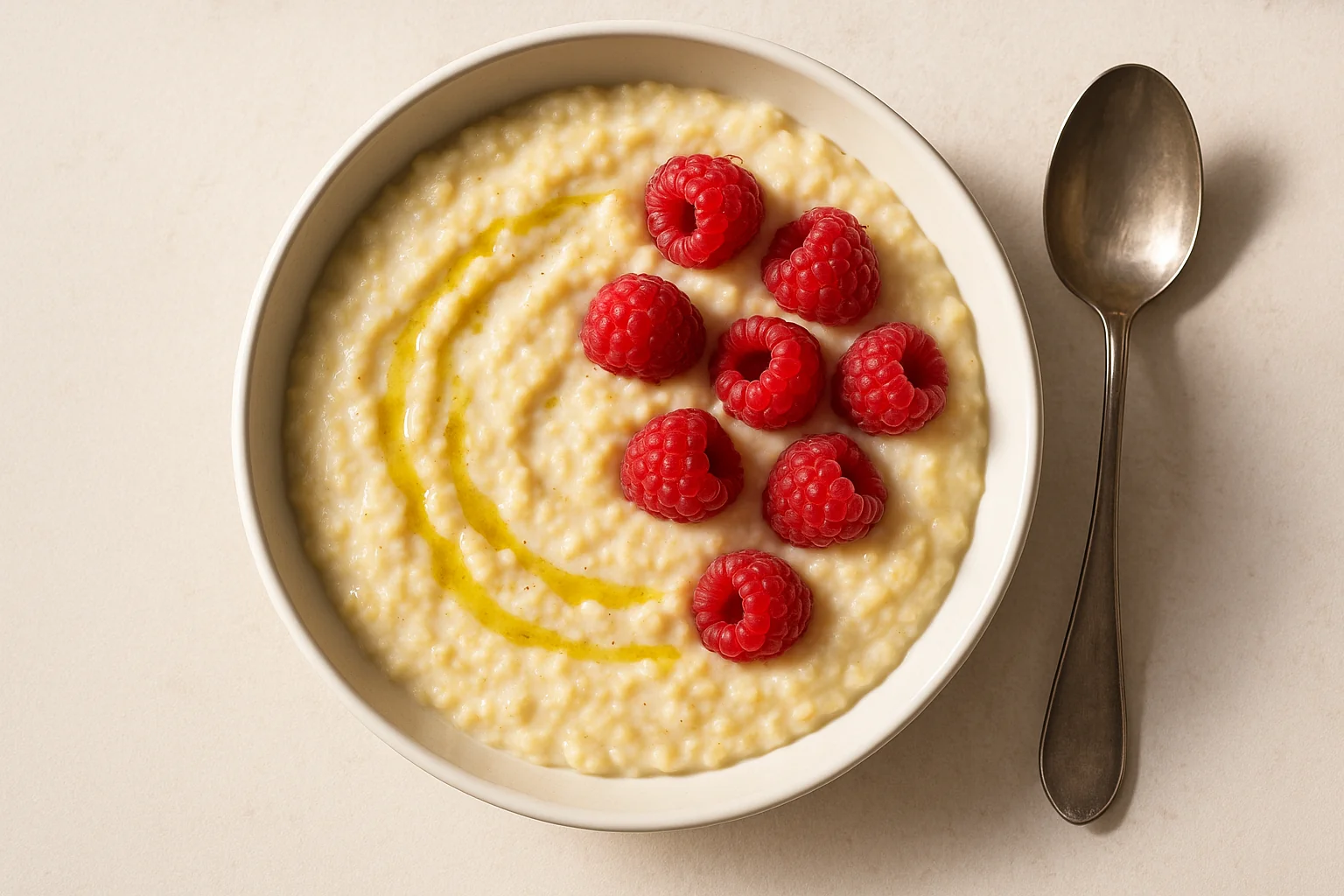

Millet Porridge with Hemp Oil and Raspberries: Creamy Gluten-Free Breakfast
Millet porridge with hemp oil and raspberries: 20 minutes, two servings, about 8 g of fiber. Proportions, a way to remedy the bitter taste of millet, and a choice of milk that changes calories.
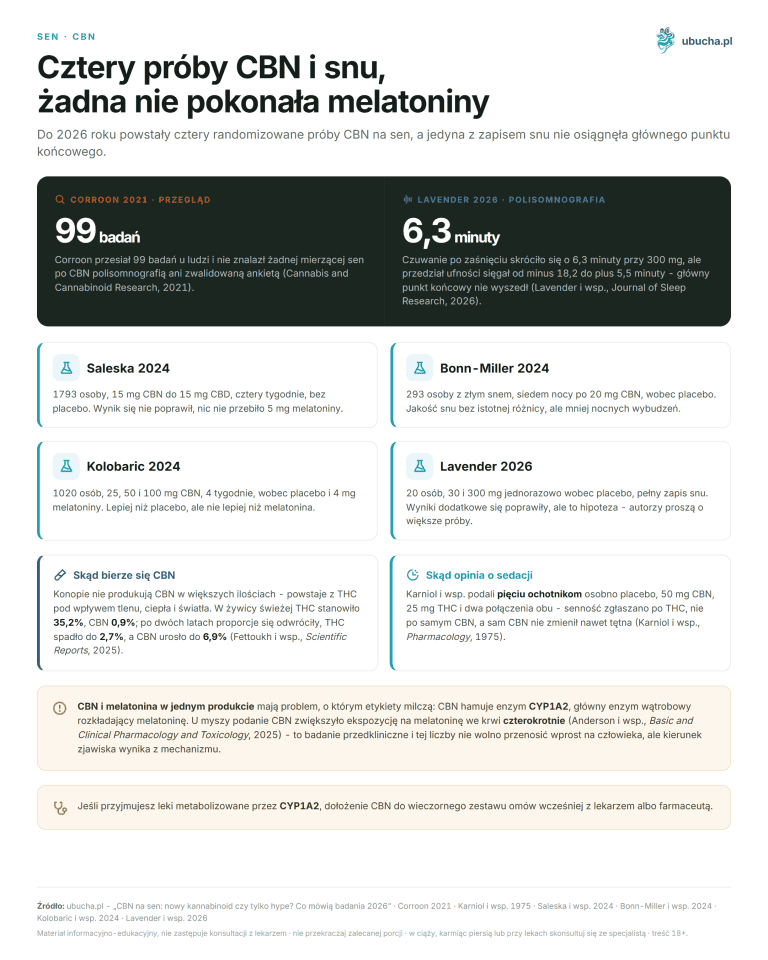
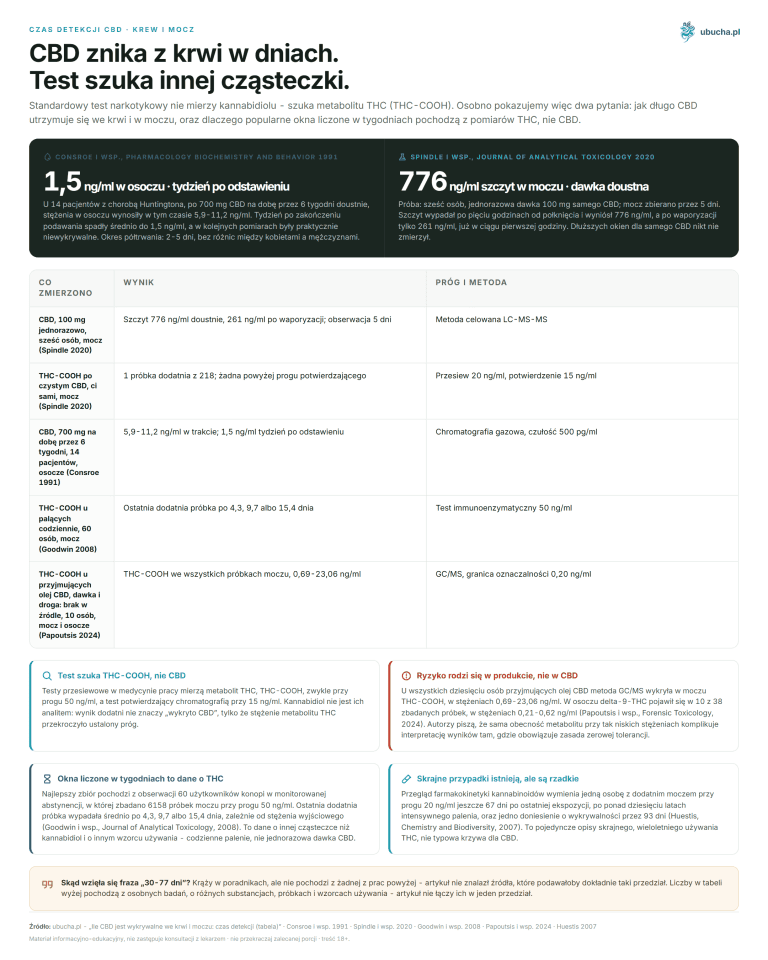
Millet is naturally gluten-free and contains 11 g of protein and 8.5 g of fiber per 100 g of dry grain (USDA FoodData Central, record 169702). Cooked in plant-based milk, it becomes creamy without cream and without flour. A teaspoon of hemp oil added after removing from heat changes the fat profile of the entire bowl, as hemp oil is over 80 percent composed of polyunsaturated fatty acids. Raspberries add acidity and 6.5 g of fiber per 100 g. Below you will find proportions for two servings, a way to remedy the bitter taste of millet, and one purchasing decision that can double the calorie content of this breakfast. I will also show you when to add the oil to the bowl, as this determines whether it is worth using it at all.
KEY INFORMATION
• Dry millet: 11 g of protein, 8.5 g of fiber, and 114 mg of magnesium per 100 g (USDA FoodData Central, record 169702).
• Hemp oil is over 80 percent polyunsaturated fatty acids, with an omega-6 to omega-3 ratio usually from 2:1 to 3:1 (Callaway, Euphytica, 2004).
• One serving provides about 8 g of fiber, mainly from millet and raspberries.
• The choice of milk weighs more than anything else: from about 300 to about 650 kcal per serving.
Why is millet porridge with hemp oil a good gluten-free breakfast?
Millet does not contain gluten because millet is not a gluten grain, and it has a more favorable composition than its price suggests. Record 169702 in the USDA FoodData Central database lists for dry grain 11 g of protein, 8.5 g of fiber, 114 mg of magnesium, and 3.01 mg of iron per 100 g.
However, millet has a weak point that recipes do not mention: it contains little lysine, about 19 mg per gram of protein. Millet and hemp share this weakness, so millet porridge with hemp oil is not a meal that meets the daily protein requirement. Treat it as a carbohydrate-fat breakfast with added fiber, and choose protein from the rest of the day.
Hemp oil brings to this bowl what millet lacks. Callaway (Euphytica, 2004) states that hemp seed oil contains over 80 percent polyunsaturated fatty acids and is exceptionally rich in two essential fatty acids: linoleic and alpha-linolenic. The omega-6 to omega-3 ratio typically falls between 2:1 and 3:1, which the author calls the optimal range for human health. This is his assessment, not a recommendation from WHO or FAO, as neither of these organizations recommends a specific ratio.
This same feature determines the method of use. Polyunsaturated fatty acids oxidize faster than monounsaturated and saturated fats, which is why hemp oil is cold-pressed and added to the finished dish. For frying or boiling, coconut oil is suitable, not hemp oil.
We noticed in tests that the calorie content of this bowl is determined by the milk, not the oil or honey. Two hundred milliliters of unsweetened almond milk is about 38 kcal, the same amount of canned coconut milk is about 394 kcal (USDA FoodData Central, records 2257045 and 170173). With the same other ingredients, the serving thus ranges from about 300 to about 650 kcal. Coconut gives a creamier consistency, while almond leaves the taste of hemp oil in the foreground.
How much does one serving of millet porridge with hemp oil provide?
A serving with 50 g of dry millet, 60 g of raspberries, and a teaspoon of hemp oil provides about 8 g of fiber, 6 g of protein, and approximately 260 kcal before adding milk. Most of the fiber comes from the millet (4.25 g) and raspberries (3.9 g), and raspberries also add about 16 mg of vitamin C.
Eight grams of fiber in one meal is a quantity worth comparing with epidemiological data. Threapleton et al. (BMJ, 2013) collected 22 publications from cohort studies and calculated that each additional 7 g of fiber per day is associated with a 9 percent lower risk of cardiovascular disease, with a confidence interval from 6 to 12 percent. One bowl of millet porridge thus covers roughly this one step.
What do you need for two servings of millet porridge?
The proportions below yield two bowls. The working time at the pot is about five minutes, the rest of the twenty is for cooking covered. The entire list is gluten-free, but if you are cooking for someone with celiac disease, check the millet package for processing facility notes.
- 100 g of dry millet
- 400 ml of plant-based milk: coconut from a can for a creamy version, almond for a lighter one
- a pinch of sea salt
- 1 teaspoon of honey or maple syrup
- a pinch of ground cinnamon
- 2 teaspoons of cold-pressed hemp oil, one for each serving
- 120 g of fresh or frozen raspberries
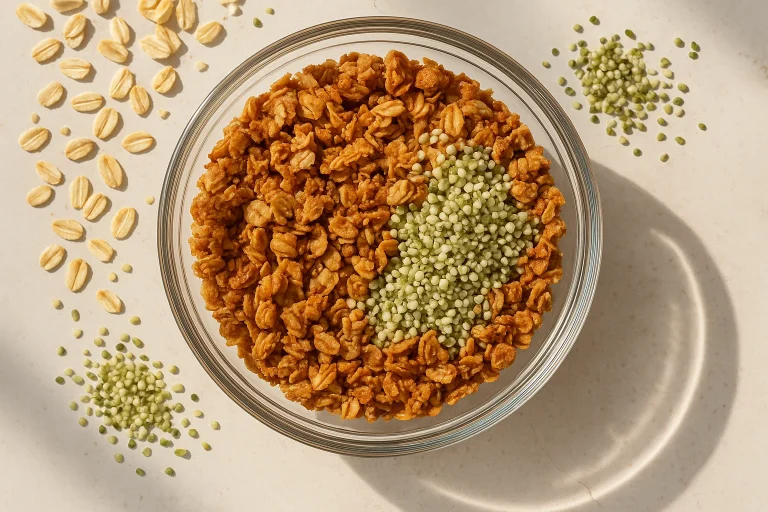
- optional: a teaspoon of hulled hemp seeds, coconut flakes, grated lemon zest
Buy hemp oil in a dark bottle and keep it in the fridge after opening, as fat with such a high content of polyunsaturated fatty acids is sensitive to light and heat. Frozen raspberries work just as well as fresh ones here, although after thawing they are more watery and release juice faster. Add honey only after removing the pot from the heat, just like the oil. You can replace cinnamon with cardamom or omit it, as it takes a back seat with the sour raspberries.
How to cook millet porridge step by step?
The most important actions happen before cooking and after: rinsing the millet at the beginning, adding hemp oil at the end. The cooking stage itself is hands-off, requiring only stirring every few minutes and a pot larger than it seems necessary.
- Pour 100 g of millet into a sieve and rinse under cold running water for a full minute, rubbing the grains with your hand. The water will first drain cloudy, then clear. If you want a stronger effect, you can also scald the millet with boiling water and drain it.
- Pour 400 ml of plant-based milk into a pot with a pinch of salt and bring to a boil over medium heat. Use a pot larger than the volume of the ingredients suggests, as the millet swells significantly.
- Add the rinsed millet to the boiling milk, reduce the heat to low, and cover with a lid. Cook for 15 minutes, stirring every 3-4 minutes. The millet is ready when it has absorbed almost all the milk and has a thick creamy consistency.
- Remove the pot from the heat. Add a teaspoon of honey or maple syrup and a pinch of cinnamon, and mix. If the mixture is too thick, add 2-3 tablespoons of warm milk. The proper consistency is a thick cream, not a mush or soup.
- Divide the millet porridge into two bowls. On the hot porridge, place a handful of raspberries, about 60 g per serving. The fruit will warm up from the heat of the porridge and release juice, which will color the top red.
- Drizzle each serving with a teaspoon of hemp oil just before serving. Do not mix immediately: the oil sitting on top gradually reaches the spoon and its nutty aroma is felt longer. Finally, you can sprinkle the bowl with hulled hemp seeds.
What variations of millet porridge are worth trying?
The base of millet and plant-based milk allows for substitutions without recalculating the liquid proportions. The four variations below change one element each time: fruit, spice, fat addition, or preparation moment. Hemp oil remains in each of them and is always added after removing the pot from the heat.
| Variant | Change | Effect |
|---|---|---|
| Vanilla-Pear | diced pear cooked with millet, a drop of vanilla extract | the pear breaks down and sweetens the millet, making honey unnecessary |
| Golden Millet | half a teaspoon of turmeric and a pinch of black pepper added to the cooking millet | golden color and spicy flavor; pepper is not just a decoration here |
| Nutty | a handful of chopped walnuts added after removing from heat | more fat and crunchiness, noticeably longer satiety |
| Overnight | cooked millet cools in a jar overnight | in the morning, dilute with milk and heat for a minute, then add oil and fruit |
In the golden millet, black pepper does more than add spiciness: piperine increases the bioavailability of curcumin by inhibiting the enzymes that deactivate it. The mechanism has been described in rats and cell lines (Zeng et al., Biopharmaceutics and Drug Disposition, 2017), so for humans, it is a suggestion, not a measurement. If you are looking for another warm breakfast with hemp oil, check out our banana oatmeal with hemp oil. You can also stay gluten-free with gluten-free hemp flour pancakes, and the same oil in the cold version goes well with cold brew with hemp oil.
Frequently Asked Questions
Why can millet porridge be bitter and how to remedy it?
Bitterness is usually a matter of grain freshness, not the recipe. Millet has 4.22 g of fat per 100 g, more than most grains, and the fat can go rancid over time. Rinse the grains for a minute in cold water, optionally scald with boiling water, and buy small packages with a distant expiration date.
When to add hemp oil to the millet porridge?
Always after removing the pot from the heat, on warm, not boiling, porridge. Hemp oil is over 80 percent polyunsaturated fatty acids (Callaway, Euphytica, 2004), which are the fraction of fat most susceptible to oxidation. For cooking and frying, use coconut oil or clarified butter.
How much fiber is in a serving of millet porridge with raspberries?
About 8 g: 4.25 g comes from 50 g of dry millet, 3.9 g from 60 g of raspberries (USDA FoodData Central, records 169702 and 167755). This is roughly equivalent to what in a meta-analysis by BMJ corresponded to one step of 7 g per day, associated with a 9 percent lower risk of cardiovascular disease.
Can millet porridge be cooked in water instead of milk?
Yes, it will be lighter and more neutral in taste. Cooking it solely in canned coconut milk makes it creamy, but the serving then rises to about 650 kcal compared to about 300 kcal with almond milk. A compromise is 200 ml of plant-based milk and 200 ml of water.
What can replace raspberries in millet porridge?
Blueberries, strawberries, blackberries, or diced pear. Frozen fruits are a good substitute, although they release more juice and lose some vitamin C, which is sensitive to storage, after thawing. Dried apricots or figs will sweeten the porridge enough that honey becomes unnecessary.
This article is for informational and educational purposes and does not replace consultation with a doctor. If you are pregnant, breastfeeding, taking medications, or have chronic conditions, consult the use of supplements or herbs with a specialist.
Author: Michał Waluk · Published: 2026-06-08 · Updated: 2026-08-16