

Manual Vaporizer: how a battery-free vaporizer works and who it is for

Manual vaporizer without a battery: how flame and induction heating works, what the click means, how it differs from electric, and what to buy to start.
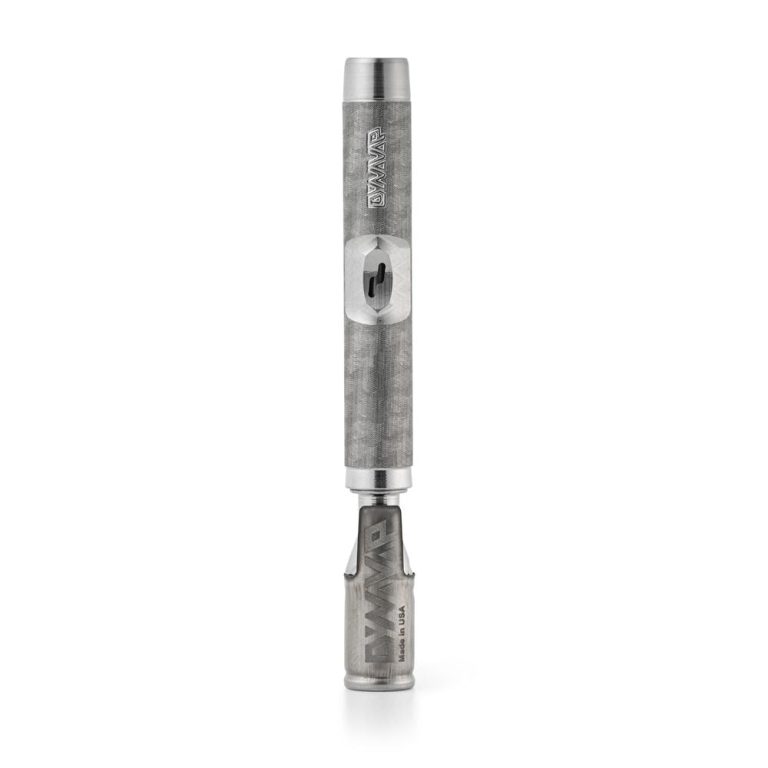
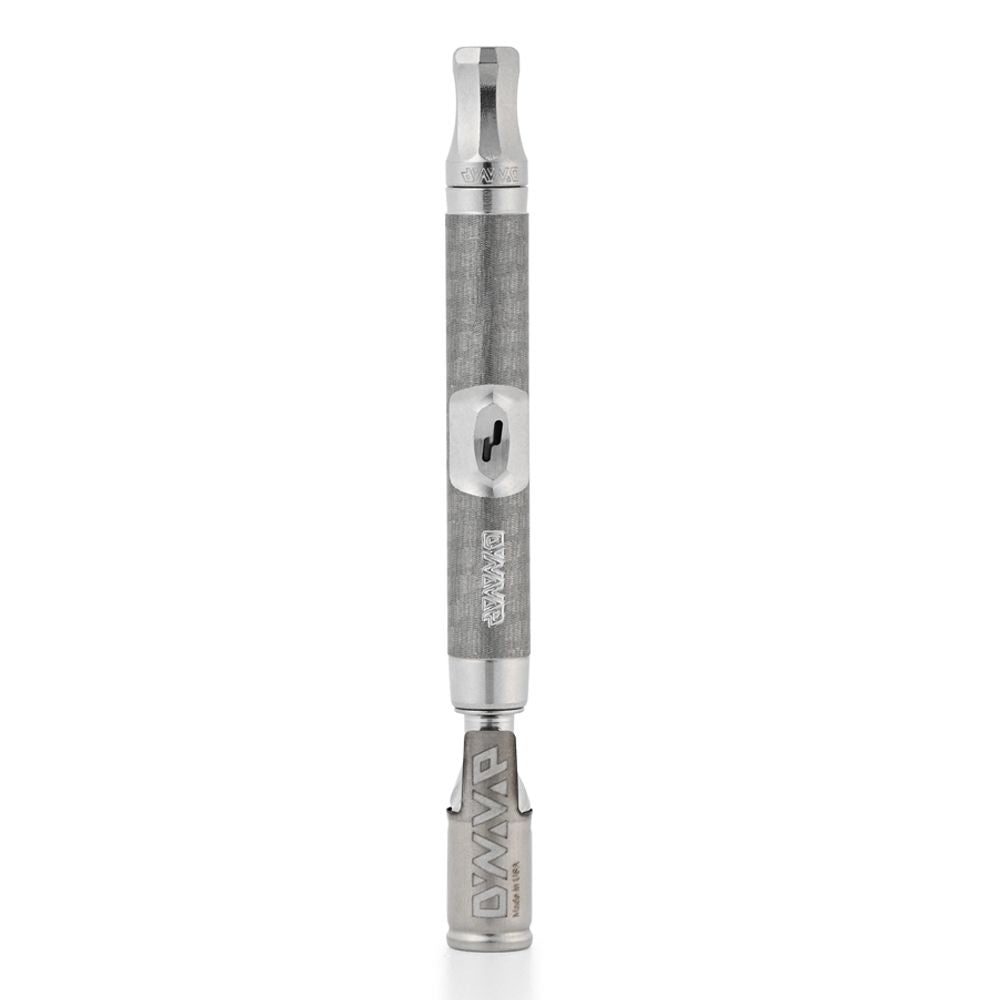
A manual vaporizer has no battery or electronics. You heat the herb chamber from the outside, with a lighter flame or an induction heater, and readiness is usually signaled by a click of the metal cap. The most well-known example is DynaVap The M7: a steel tube with a chamber for 0.1 g of herb, priced at 89 dollars from the manufacturer (DynaVap, October 2026). Such equipment fits in your pocket and does not require charging. However, it requires skill, as you control the temperature yourself. No one has independently measured what temperatures popular models reach. This guide compiles data from DynaVap and the seller INHALE, as well as the only study of a flame device that has been found. You will learn how such a vaporizer heats up, how to know when it is ready, how it differs from a battery model, and what to start shopping for.
KEY INFORMATION
• DynaVap The M7 holds 0.1 g of herb and costs 89 dollars from the manufacturer (DynaVap, October 2026).
• You heat it with a torch or induction heater until the cap clicks.
• No one has independently measured the clicking temperatures.
• According to DynaVap, induction heats consistently and is better suited for beginners.
• After clicking, stop heating and wait for the second click before the next cycle.
What is a manual vaporizer?
A manual vaporizer is a vaporizer without a battery and without electronics. You heat the herb in the chamber from the outside, with a flame or an induction heater, and you decide when to stop. The portion is small: the chamber of DynaVap The M7 holds 0.1 g of herb (DynaVap). This equipment is also called a battery-free vaporizer or a lighter vaporizer.
DynaVap describes this difference as freedom: the user determines how hot, how long, and how hard it should be for each inhale. In practice, this means no buttons and no display. You do not select temperatures from a menu. You monitor it by the length of heating and the readiness signal.
The construction is simple. DynaVap is a steel tube with a mouthpiece on one end and a tip with a chamber on the other. You place a metal cap on the tip and heat it. The Vapman Click has a body made of wood or metal and a metal bowl heated by a torch. The seller INHALE calls it a purely mechanical construction and attributes its creator, René, with inventing the first flame vaporizer. The Lotus is larger, made of wood and steel, comes with a glass pipe, and according to INHALE heats the herb convectionally.
Vapor is produced just like in an electric model: the herb heats up, but it should not burn. The only difference is who monitors the temperature. The principle of operation and types of devices are described in the guide how a vaporizer works. Models available in the store can be found in the category manual vaporizers.
How does a manual vaporizer differ from a battery vaporizer?
You heat a manual vaporizer yourself, to the signal. A battery vaporizer heats to the temperature you set with a button or in an app. The manual also has a small chamber: 0.1 g in DynaVap The M7 (DynaVap) and 0.3 g in the Lotus (INHALE). It does not require charging, but needs a lighter or an induction heater.
| Feature | Manual Vaporizer | Battery Vaporizer |
|---|---|---|
| Heat Source | butane torch, regular lighter, or induction heater (DynaVap) | battery-powered heater |
| Temperature Control | length of heating and distance of the flame; in Vapman, the length of the flame (INHALE) | setting with a button or in an app |
| Readiness Signal | click of the cap (DynaVap, Vapman); Lotus has no signal | device signal, e.g., LED or vibration |
| Charging | you do not charge the vaporizer itself; you charge the induction heater | regular battery charging |
| Portion | 0.1 g in M7, up to 0.2 g in Vapman, 0.3 g in Lotus | depends on the model |
| Learning Curve | according to DynaVap requires a learning period; induction makes it easier to start | according to DynaVap minimal |
| Durability | no electronics; M series with a lifetime warranty on defects (DynaVap) | depends on electronics and battery condition (according to DynaVap) |
| Price (October 2026) | M7: 89 dollars from DynaVap, in Poland about 360-440 PLN; plus heat source | in the store at u Bucha 374-639 PLN (X-Max, Fenix, XLUX) |
Part of this table comes from a comparison published by DynaVap, the manufacturer of manual vaporizers, so it is promotional material. According to DynaVap, the manual device does not require charging or waiting. The electric one depends on electronics and battery condition, and over time may require replacement. DynaVap admits that manual equipment requires a learning period, while electric requires almost none.
Is the manual cheaper? DynaVap claims that electric vaporizers usually cost more upfront. In u Bucha’s prices, this difference is narrowing. DynaVap The M7 costs 399 PLN at u Bucha, while the electric X-Max V3 PRO+ in the same store is 374 PLN (October 2026). The M7 also requires a heat source (unless the torch is included, see below). The YLL 3.0 induction heater costs 139 dollars from DynaVap, which is more than the M7 itself from the manufacturer. Battery models are in the category vaporizers.
How does a manual vaporizer heat up: flame or induction?
You heat a manual vaporizer with a flame or in an induction heater. The DynaVap manual instructs to hold the torch flame about 2.5 cm from the cap, aim at the letter N in the logo, and rotate the device until it clicks. A regular lighter will also work, just slower: according to DynaVap, the click comes after about 15 seconds.
A torch, or butane lighter, provides a narrow, strong flame. DynaVap’s FAQ lists two common mistakes. The first is heating just the end of the cap instead of its center. The second is heating without rotating the device.
How many seconds to heat? DynaVap’s pages provide different times. The M7 manual states about 7 seconds with a torch. The FAQ states 3-6 seconds for the titanium tip and longer heating for the steel one, and the M7 is entirely made of steel. Therefore, a better measure is the click, not the clock.
The induction heater heats the metal cap with an electromagnetic field, without a flame. DynaVap sells two such heaters: YLL 3.0 for 139 dollars (October 2026) and Ispire Wand. The Orion v2 does not come from DynaVap, but from DynaTec. According to the seller’s description, it heats for about 4-6 seconds and interrupts the cycle no later than after 10 seconds. It charges via USB-C, and the warranty is 12 months.
You heat the Vapman and Lotus only with a torch (INHALE). In the Vapman, you regulate the temperature by the length of the flame, and the bowl heats up in about 5-6 seconds. For the Lotus, INHALE instructs to set the flame so that its inner part reaches the flower icon. Then you heat the chamber for about 3 seconds and move the flame in circles, even during inhalation.
How do you know when the manual vaporizer is ready?
In DynaVap and Vapman, readiness is signaled by a click. The bimetal cap of DynaVap clicks once or twice when heated and again when cooling, usually after about 30 seconds (DynaVap). The Lotus gives no signal: according to INHALE, the temperature is controlled by the speed of inhalation.
A session with DynaVap The M7 according to the manufacturer’s instructions looks like this:
- Remove the cap and fill the tip with herb.
- Put the cap back on.
- Heat the cap with a torch from a distance of about 2.5 cm and rotate the device.
- After clicking, stop heating.
- Inhale for 20-30 seconds.
- Wait for the cap to cool and click again.
- Repeat heating: one portion is sufficient for 2-4 cycles.
After clicking, do not heat further, as according to DynaVap, just a few seconds beyond the signal can permanently damage the cap. And if the click is not heard for a long time? Stop and cool the cap. DynaVap’s pages provide different time thresholds here, so do not treat any number as certain.
The Vapman has a disc that clicks when the bowl reaches vaporization temperature according to INHALE. When cooling, it clicks back at 180 °C, and only then does INHALE recommend heating again. The temperature of the first click is not provided by the seller.
At what temperature does DynaVap click? The manufacturer’s pages provide different numbers that cannot be verified, so we do not quote them here. No independent temperature measurement of DynaVap, Vapman, or Lotus has been found. Detailed operation of the M and M7 models is described in the guide DynaVap: how to use step by step.
What manual vaporizers are available and how do they differ?
From official sources, two have been verified: DynaVap about its models and the seller INHALE about Vapman and Lotus. DynaVap The M7 is a model from 2024, the seventh version of the M series, with a 0.1 g chamber and a price of 89 dollars (DynaVap, October 2026). The Vapman Click holds up to 0.2 g, and the Lotus 0.3 g (INHALE).
| Model | Source of Data | Heating | Readiness Signal | Chamber | Material | Price (October 2026) |
|---|---|---|---|---|---|---|
| DynaVap The M7 | DynaVap | torch, lighter, or induction | click of the cap | 0.1 g; Adjust-a-Bowl reduces it by half | stainless steel, made in the USA | 89 dollars |
| Vapman Click | INHALE | torch; temperature by flame length | click of the disc; returns at 180 °C | up to 0.2 g; micro portion 0.05 g | wood, steel, gold-plated copper, brass, mica; handmade in Italy | 99-199 euros, depending on version and promotion |
| Lotus | INHALE | torch; convection heating | none | 0.3 g | wood and steel | 149-179 euros |
The M7 has a tip without ribs, which according to DynaVap transmits up to 20% less heat to the stem. The manufacturer does not provide dimensions or weight. The M7 XL version has a longer mouthpiece with airflow adjustment and costs 109 dollars at the catalog price (October 2026). The predecessor, “M” Plus from 2023, is sold out at the manufacturer.
The Vapman Click according to INHALE measures 45 x 70 mm and weighs 50 g. The Lotus is a larger device, invented by Steven Levin from California: 160 x 120 x 55 mm and 180 g with a glass pipe included. INHALE does not provide a warranty for either of them, and for the Lotus, it mentions a 14-day return policy.
Of this trio, the store only sells the M7; Vapman and Lotus are not available in the offer. You can see and discuss DynaVap The M7 with staff in three u Bucha stores in Warsaw. Other brands, such as Sticky Brick or Toss Pipes, are not described here, as their official sites could not be verified.
Is a lighter vaporizer safe?
With a lighter vaporizer, there are two risks: overheating the herb to the point of burning and burning yourself with hot metal or flame. Manufacturers describe how to avoid them, but no one has independently measured how hot popular models get. DynaVap instructs to stop heating after the click and wait for the second click before the next cycle, usually after about 30 seconds.
The rules from DynaVap’s instructions and FAQ and from the Vapman seller:
- After clicking, stop heating, as further heating may permanently damage the cap (DynaVap).
- Heat the center of the cap and rotate the device instead of holding the flame in one place (DynaVap).
- Do not soak the cap; if it gets wet, wait 24 hours before heating (DynaVap).
- In Vapman, wait for the click at 180 °C before the next heating (INHALE).
- If the herb catches fire, do not inhale the smoke: dump the portion and wait for the tip to cool (DynaVap).
The second risk is hot metal. The cap and tip heat up in the flame to the temperature at which the herb vaporizes. Do not touch the cap or tip until they are completely cool: the click when cooling does not mean the metal is cool. Do not put the hot tip in your mouth (DynaVap).
A separate issue is the torch itself. INHALE states that the brass nozzles in the Vapman protect against inhaling gas from the lighter. However, none of the manufacturers whose sites were checked while writing this text provide rules for filling and storing the torch. Therefore, stick to the instructions of the lighter itself and keep it out of reach of children.
What does the only study of a flame device say?
Independent data is almost non-existent. The only found study of a flame-heated device is the work of Lanz et al. (PLOS ONE, 2016) from Bern. The researchers compared one gas device, Vape-or-Smoke, with four electric ones. The gas device yielded 55.9% total THC and 45.9% total CBD from the sample, and the researchers observed burning of the herb.
The measurement conditions matter. The Vape-or-Smoke was heated with a butane flame in cycles of 3 seconds, 6 times a minute. Its temperatures could not be controlled or monitored. The researchers recognized burning by the ash and visible smoke.
The second number concerns decarboxylation, which is the transformation of acidic forms of cannabinoids into active forms. In the gas device, it was 87.7-93.3%. In electric devices, it was at least 97.3% for THC and at least 94.6% for CBD.
The authors wrote that gas devices cannot be recommended for therapeutic purposes. What does this imply for DynaVap? Not much directly. The conclusion is based on one older device of a different design, whose temperatures no one could track. It does not transfer to DynaVap, Vapman, or Lotus, as no one has independently studied these models. In this one device, without temperature control, the herb burned.
Who is a manual vaporizer for, and who is it not for?
A manual vaporizer suits people who want small equipment without charging and use small portions. The M7 chamber holds 0.1 g of herb, and one portion is sufficient for 2-4 heating cycles (DynaVap). It is equipment for a short session for one person, not for long evenings in a group. You also need to want to learn how to heat, as DynaVap itself admits that it requires a learning period.
What speaks for it? Small size and construction without electronics, so there is no battery that wears out. For M series devices, DynaVap offers a lifetime warranty on defects. However, it only covers the device itself, excluding seals and accessories. If you like to have equipment in your pocket and do not want to remember a charger, the manual will fulfill that task.
What speaks against it? The click only indicates that the cap has reached its threshold, and no one has independently measured its temperatures. The heating time depends on the flame and the material of the tip, which is evident from the different numbers on DynaVap’s pages. The Cannigma (2023) also notes that clouds from DynaVap are smaller than smoke. Additionally, you need a torch or heater, which means carrying another item.
If you care about a known, repeatable temperature, for example, when you want to compare sessions with each other, it is wiser to choose an electric model with settings. This is our recommendation, not a research result. How to match both types to your own needs is described in the guide how to choose a vaporizer for herb.
What to buy to start: a torch or an induction heater?
To start, you need two things: a vaporizer and a heat source. DynaVap states that a torch provides more control but requires technique, while an induction heater heats consistently and is better suited for beginners. However, induction costs more: YLL 3.0 is 139 dollars from DynaVap, which is more than the M7 at 89 dollars (October 2026).
| Heat Source | What DynaVap states | What to watch out for |
|---|---|---|
| Butane Torch | more control; about 7 s to click according to the M7 manual | requires technique: heat the center of the cap and rotate |
| Regular Lighter | works, about 15 s to click | slower heating |
| Induction Heater | consistent heating, better for beginners | needs to be charged; YLL 3.0 costs 139 dollars |
In the American M7 kit, there is an empty DynaTorch lighter that you fill with gas (DynaVap). The contents of the kit in Poland may differ, so check it when purchasing.
A grinder will be useful, as according to DynaVap’s FAQ, finely ground herb works better. A loosely packed chamber allows for freer airflow, while a tightly packed one provides fuller flavor but a harder inhale. Ready grinders are available in the category grinders.
For cleaning, DynaVap allows warm water with dish soap, a short soak in isopropyl alcohol with rinsing, or a dishwasher, but only for metal parts. Before using alcohol, remove the O-ring seals, as alcohol dries them out. Do not soak the cap; just wipe it with a cotton swab. General tips before the first session are collected in the text vaporizer for beginners: a few tips.
Frequently Asked Questions
Does a manual vaporizer need a battery?
The manual vaporizer itself does not have a battery. DynaVap The M7 is a steel tube that you heat with a flame from a torch or in an induction heater (DynaVap). The heater requires power: the Orion v2 from DynaTec, for example, charges via USB-C. You heat the Vapman and Lotus exclusively with a butane torch flame (INHALE).
How much herb does a manual vaporizer hold?
It depends on the model, but the portions are small. The chamber of DynaVap The M7 holds 0.1 g of herb, and the Adjust-a-Bowl function reduces it by half (DynaVap). The Vapman Click holds up to 0.2 g, and the smallest portion is 0.05 g. The Lotus holds 0.3 g (INHALE). One portion in the M7 is sufficient for 2-4 heating cycles according to DynaVap.
How long to heat DynaVap until it clicks?
DynaVap’s pages provide different times. The M7 manual states about 7 seconds with a torch, while the FAQ mentions 3-6 seconds for the titanium tip and longer heating for the steel one. A regular lighter takes about 15 seconds. Therefore, wait for the click, and do not count seconds. After the click, stop heating, as overheating can damage the cap.
At what temperature does DynaVap click?
This cannot be reliably stated today. Different DynaVap pages provide different numbers, and no independent measurement has been found. For comparison, the Vapman clicks at cooling at 180 °C according to the seller INHALE, but it does not provide the clicking temperature during heating. It is safer to rely on the signal than on the number.
Can you heat DynaVap with a regular lighter?
Yes. DynaVap states that a regular lighter with a soft flame brings the cap to click in about 15 seconds, which is slower than a torch. The principle is the same: heat the center of the cap, not its end, and rotate the device. The M7 manual describes heating with a torch from a distance of about 2.5 cm.
What warranty does DynaVap The M7 have?
DynaVap offers a lifetime warranty on defects for M series devices. It does not cover, among other things, screens, O-ring seals, accessories, or cosmetic defects after 90 days. When purchased from a store other than DynaVap, the manufacturer directs complaints first to the seller. A separate 90-day warranty applies only to purchases on the DynaVap website.
How much does a manual vaporizer cost?
DynaVap The M7 costs 89 dollars from the manufacturer, and in Polish stores, it is around 360-440 PLN, at u Bucha 399 PLN (October 2026). The Vapman Click costs at INHALE from 99 euros on promotion to 199 euros at regular price, and the Lotus 149-179 euros. Additionally, there is a heat source, e.g., the YLL 3.0 induction heater for 139 dollars (October 2026).
This article is for informational and educational purposes. It contains internal links to product categories available in the u Bucha store. Prices and specifications may change: check the current data on the product page before purchasing.
Author: Michał Waluk · Published: 2026-10-27 · Updated: 2026-10-27