
Insomnia in Adults: Natural Ways to Sleep Without Pills
Natural ways to combat insomnia in light of research: what AASM recommends, where melatonin works, and where magnesium and valerian performed worse than claimed.
Insomnia affects about 30% of the general population, and a review by a Japanese team studying glycine starts with this number (Bannai, Frontiers in Neurology, 2012). The scale drives the supplement market, and the market drives simplifications. Three of them frequently recur in Polish texts about sleep: that sleep hygiene is the first choice method, that melatonin works best in the lowest amounts, and that magnesium prolongs sleep. All three diverge from what the guidelines and meta-analyses say. This article goes through the nine most commonly recommended methods and provides what exactly was measured, in whom, and with what result, even when the result was negative.
KEY INFORMATION
• The guidelines from the American Academy of Sleep Medicine from 2021 suggest not to use sleep hygiene alone as the only method for treating chronic insomnia (Edinger, Journal of Clinical Sleep Medicine, 2021).
• A strongly recommended method is multi-component cognitive-behavioral therapy for insomnia; in a meta-analysis of 20 studies, it shortened sleep onset by 19 minutes and improved sleep efficiency by 9.91 percentage points (Trauer, Annals of Internal Medicine, 2015).
• In a meta-analysis of 19 studies, larger amounts of melatonin had a greater effect, not a smaller one (Ferracioli-Oda, PLoS ONE, 2013).
• In a study on magnesium, sleep quality improved equally in the supplemented group and in the placebo group (Nielsen, Magnesium Research, 2010).
• The article does not provide milligram amounts; a doctor determines them in case of sleep disorders, knowing your medications and diseases.
What is the starting point for treating insomnia and is sleep hygiene enough?
It starts with cognitive-behavioral therapy, and sleep hygiene used alone is the only method that the guidelines explicitly warn against. The American Academy of Sleep Medicine in its clinical guidelines from 2021 granted a strong recommendation to multi-component cognitive-behavioral therapy for insomnia. Conditional recommendations were given to shortened therapies, stimulus control, sleep restriction, and relaxation techniques. The sixth recommendation is the opposite of the others: the authors suggest that clinicians should not use sleep hygiene as a single-component therapy for chronic insomnia (Edinger, Journal of Clinical Sleep Medicine, 2021).
This does not mean that darkening the bedroom or a fixed wake-up time are useless. It means that as a package of recommendations given instead of therapy, they are insufficient and even distract from the method that works. In the guidelines, sleep hygiene remains one of the components of multi-component therapy.
The scale of the therapy itself is measured. A meta-analysis of twenty randomized studies, involving 1162 people with an average age of 56 years, showed a reduction in sleep onset time by 19.03 minutes, a reduction in wakefulness after sleep onset by 26 minutes, and an improvement in sleep efficiency by 9.91 percentage points. Total sleep time increased by 7.61 minutes, but this particular result was not significant, as the confidence interval included zero. The effects were maintained in later measurements, and no adverse events were recorded (Trauer, Annals of Internal Medicine, 2015).
When does melatonin really help and does less mean better?
It helps primarily in shortening sleep onset, and the claim about the advantage of the lowest amounts does not hold up when compared with the data. A meta-analysis of twelve randomized placebo-controlled studies indicated the strongest evidence for shortening sleep latency in primary insomnia, for delayed sleep phase syndrome, and for regulating the sleep-wake rhythm in blind individuals (Auld, Sleep Medicine Reviews, 2017).
The second comparison, involving nineteen studies and 1683 participants, measured the effect size. Sleep onset was shortened by an average of 7.06 minutes, total sleep time increased by 8.25 minutes, and overall sleep quality improved significantly statistically. The authors conducted a meta-regression and stated directly: longer studies using higher amounts of melatonin showed a greater impact on shortening latency and extending sleep (Ferracioli-Oda, PLoS ONE, 2013).
This reverses the popular advice to choose the weakest preparations. However, it only partially reverses it, as the same work emphasizes that the absolute benefit of melatonin is smaller than that of sleeping pills, while the profile of side effects is milder, and the effect does not diminish with prolonged use. Melatonin is available in Poland without a prescription in several strengths, and it is the pharmacist or doctor who selects the appropriate one, taking into account the timing of administration, which in the case of a chronobiotic is as important as the amount.
Does magnesium improve sleep?
The most frequently cited study on magnesium and sleep did not show its superiority over placebo. It involved 100 individuals over the age of 51 with poor sleep quality, confirmed by a score above five points on the Pittsburgh Sleep Quality Index. For seven weeks, one group received magnesium citrate, while the other received sodium citrate as a placebo; 96 individuals completed the study (Nielsen, Magnesium Research, 2010).
The result was unequivocal and different from how it is summarized. The sleep quality score improved from 10.4 to 6.6 points, but regardless of whether the participant received magnesium or placebo. The authors wrote that some other factor, most likely the placebo effect, improved sleep quality in both groups and prevented determining whether magnesium deficiency contributes to poor sleep at all.
Magnesium has one confirmed effect in this work: in individuals who started with C-reactive protein levels indicating chronic inflammation, supplementation lowered it compared to placebo. This result pertains to inflammation, not sleep. Numbers like a 16% increase in sleep time do not come from this work. We discuss the differences between magnesium salts more broadly in the text about forms of magnesium.
What have studies shown about ashwagandha and L-theanine?
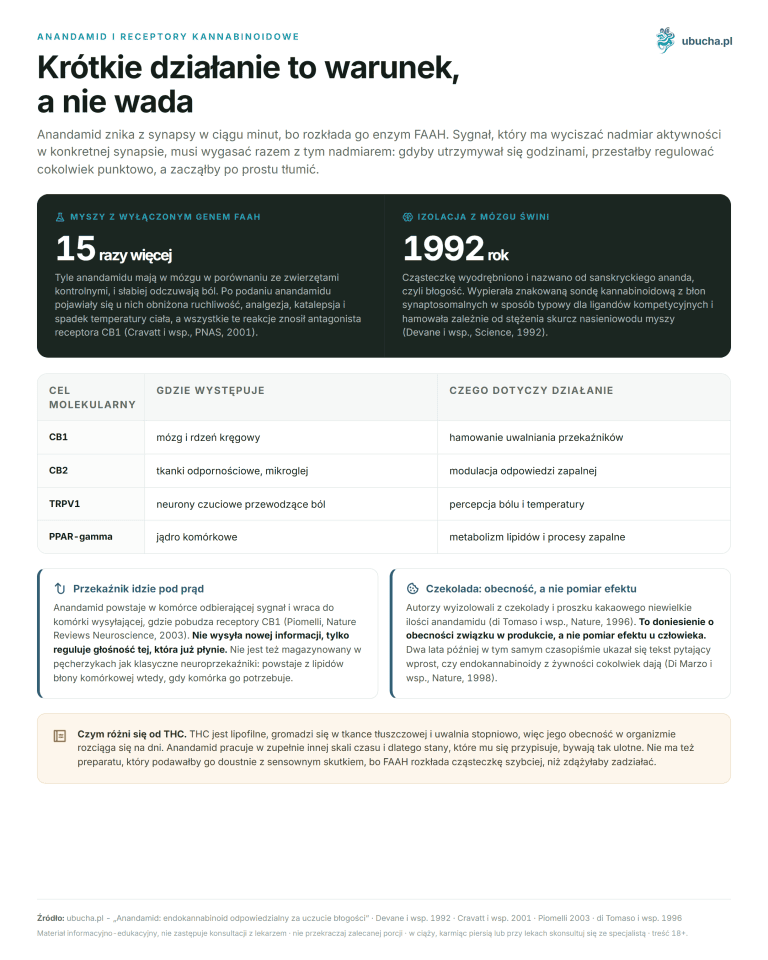
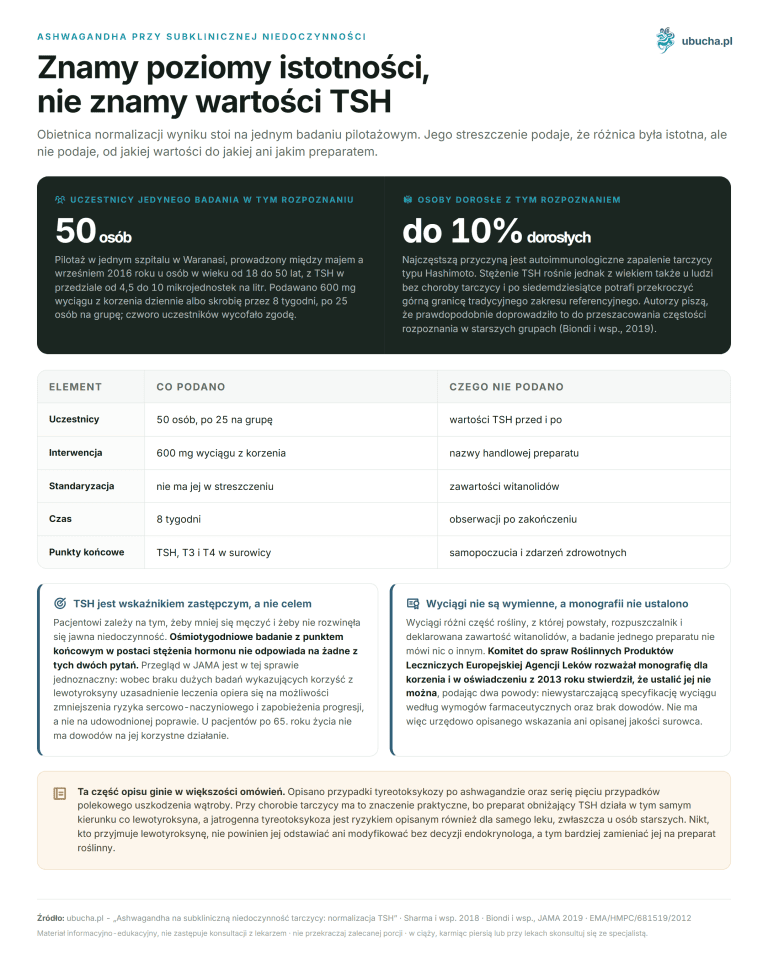
Ashwagandha performed best among the adaptogens discussed here in insomnia, while L-theanine turned out to be something different than its description suggests. In a randomized double-blind study, 60 patients with insomnia and anxiety took either ashwagandha root extract or starch for ten weeks. The sleep onset time after ten weeks was 29.00 minutes in the study group compared to 33.94 minutes in the placebo group, with a p value of 0.019. Sleep efficiency increased from 75.63% to 83.48%, compared to a change from 75.14% to 79.68% in placebo (Langade, Cureus, 2019).
L-theanine is mainly studied for its response to stress, not sleep. In a laboratory study involving twelve individuals subjected to an arithmetic task as a stressor, the amino acid reduced heart rate and immunoglobulin A secretion in saliva compared to placebo, which the authors attributed to a weakening of sympathetic nervous system activation (Kimura, Biological Psychology, 2007).
A sleep study with L-theanine that actually used actigraphy involved 98 boys with attention-deficit hyperactivity disorder. The percentage of sleep and sleep efficiency improved significantly, while sleep latency and other parameters remained unchanged (Lyon, Alternative Medicine Review, 2011). The claim that L-theanine shortens sleep onset has no support in this work.
Do valerian and lavender have confirmed effects?
Valerian has weak evidence and is burdened by publication bias, while lavender has stronger evidence, but for a different indication. A systematic review involving sixteen studies and 1093 patients found that most studies had serious methodological issues, and the doses, preparations, and treatment duration varied significantly. Six studies reported sleep quality as a binary outcome: the relative risk of improvement was 1.8 with a confidence interval from 1.2 to 2.9, but in this very comparison, the authors noted the presence of publication bias (Bent, The American Journal of Medicine, 2006).
Lavender in the form of a standardized oral preparation underwent a larger study, but the endpoint was anxiety, not sleep. It involved 170 patients with restlessness and disturbed sleep, treated for ten weeks. The score on the Hamilton anxiety scale dropped by an average of 12.0 points in the treatment group compared to 9.3 points in placebo, with a p value of 0.03. The treatment response was achieved by 48.8% compared to 33.3% (Kasper, European Neuropsychopharmacology, 2015).
Aromatherapy with a diffuser is yet another intervention than an oral preparation and does not inherit its results. It is simple and safe, but the strength of evidence is clearly lower. We discuss the plant itself more broadly in the text about lavender for sleep and stress.
Does CBD and glycine help with sleep?
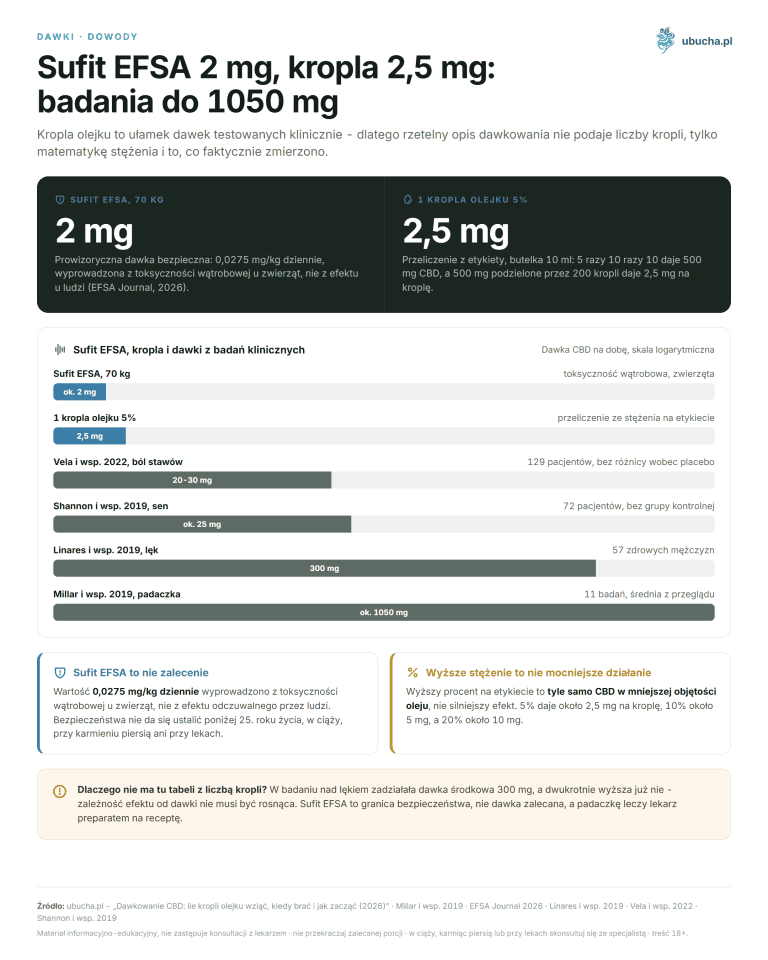
Regarding CBD, the data primarily concern anxiety, and the result for sleep was unstable. A retrospective analysis of documentation from a psychiatric clinic included 103 records, and the final sample consisted of 72 adults: 47 reported mainly anxiety, 25 poor sleep. Anxiety scores dropped in the first month for 57 individuals, or 79.2%, and remained at a lower level throughout the observation period. Sleep scores improved in the first month for 48 individuals, or 66.7%, but fluctuated in subsequent months (Shannon, The Permanente Journal, 2019).
This was a case series without a control group and without blinding, so it constitutes a premise, not evidence. There is also a separate caveat regarding CBD: the European Food Safety Authority stated that safety cannot be established in individuals under 25 years of age, in pregnant and nursing women, and in those taking medications. A reader seeking help for insomnia often belongs to the latter group.
Glycine has a different type of evidence behind it. A review by a Japanese team describes that taken before sleep significantly improved subjective sleep quality in individuals prone to insomnia, and the mechanism is explained by a decrease in deep body temperature with an increase in skin blood flow, mimicking the change that naturally precedes sleep onset (Bannai and Kawai, Journal of Pharmacological Sciences, 2012). In a separate study involving individuals with limited sleep, it reduced next-day fatigue and improved psychomotor vigilance test scores.
Why are sleeping pills not a long-term solution?
Besides tolerance and the risk of addiction, they have another, less frequently described drawback: they change the structure of sleep itself. In a double-blind study with a crossover design, sixteen healthy individuals aged 55 to 64 received extended-release melatonin, temazepam, zolpidem, and placebo in succession, and sleep was assessed polysomnographically with spectral analysis of the electroencephalographic recording (Arbon, Journal of Psychopharmacology, 2015).
Temazepam and zolpidem significantly reduced slow wave activity compared to placebo, and temazepam also reduced it compared to melatonin. Extended-release melatonin did not affect slow wave activity in the overnight analysis, only in the first third of the night. The authors concluded that its impact on the overnight sleep record is minimal and different from the impact of both sleeping medications.
Slow waves correspond to deep sleep phase, so the reduction in their activity explains the phenomenon that patients describe as long and non-restorative sleep. Discontinuation of sleeping pills is conducted under medical supervision, as sudden cessation can trigger rebound insomnia, more severe than the initial condition.
How does short sleep affect immunity and how much is needed?
The strongest evidence comes from an experiment in which participants were given a virus. One hundred sixty-four healthy individuals aged 18 to 55 wore an actigraph measuring sleep for a week, after which they were quarantined and given rhinovirus intranasally, observing the development of a cold over five days (Prather, Sleep, 2015).
Individuals sleeping less than five hours had an odds ratio of 4.50 with a confidence interval from 1.08 to 18.69, and those sleeping five to six hours had an odds ratio of 4.24 with a confidence interval from 1.08 to 16.71, compared to those sleeping more than seven hours. The group sleeping six to seven hours did not have an increased risk. Sleep fragmentation was not associated with susceptibility to infection.
The joint position of the American Academy of Sleep Medicine and the Sleep Research Society states briefly: adults should regularly sleep for seven hours or more to maintain optimal health (Watson, Sleep, 2015). The panel adds that sleep longer than nine hours may be justified in young adults, those recovering from sleep deficits, and the sick.
How to set up your own trial and when to see a doctor?
Start with one change at a time and give it two weeks before assessing the effect. Sleep is inherently variable, so a single bad night after introducing a supplement proves nothing, and decisions are best based on trends. A simple diary with the time of falling asleep, the number of awakenings, and an assessment of restfulness on a scale from one to ten provides data that memory cannot supply.
Choosing a method for the problem makes sense, although it is less precise than suggested by tables. For delayed sleep phase syndrome and for circadian rhythm disorders in blind individuals, melatonin has the best evidence, which also shortens sleep onset in primary insomnia. For insomnia with a clear anxiety component, lavender preparation and ashwagandha come into play. For difficulties with falling asleep, studies on glycine indicate a thermal mechanism. You will not find dosage sizes in this text intentionally, as in the case of sleep disorders, they are determined by a doctor or pharmacist who knows your medications and diseases.
There are situations in which self-trials should be stopped. Insomnia lasting more than three months, coexisting depression or anxiety disorders, suspected sleep apnea with loud snoring and feelings of unrefreshing sleep, and restless legs syndrome require diagnostics. This is also the moment to refer to cognitive-behavioral therapy, which the guidelines place first. A practical summary of evening habits can be found in the text about evening supplementation protocol.
Frequently Asked Questions
Is sleep hygiene the first choice method for insomnia?
No. The guidelines from the American Academy of Sleep Medicine from 2021 suggest not to use sleep hygiene alone as the only therapy for chronic insomnia. A strong recommendation is given to multi-component cognitive-behavioral therapy, and sleep hygiene remains one of its components, not a substitute.
Does melatonin work better in smaller amounts?
A meta-analysis of nineteen studies showed the opposite: longer studies using higher amounts of melatonin had a greater effect on reducing sleep onset and increasing sleep duration. However, the absolute benefit remains smaller than with sleeping pills. The appropriate strength of the preparation is determined by a doctor or pharmacist.
Does magnesium prolong sleep?
In the most frequently cited study, sleep quality improved equally in the magnesium group and the placebo group, and the authors attributed this to the placebo effect. Magnesium did lower C-reactive protein levels in individuals with elevated baseline results, which relates to inflammation, not sleep.
Does CBD help with insomnia?
In a series of 72 cases, anxiety scores improved in 79.2% of patients and were maintained, while sleep scores improved in 66.7%, but fluctuated in subsequent months. This is an observation without a control group. EFSA states that the safety of CBD cannot be established in individuals under 25 years of age, pregnant women, nursing mothers, and those taking medications.
Does diet affect sleep quality?
Tryptophan from turkey, nuts, seeds, and bananas is a precursor to serotonin and melatonin, and complex carbohydrates help it cross the blood-brain barrier. A diet based on processed products and sugar promotes fluctuations in blood sugar at night. However, this is support, not treatment for insomnia.
How many hours of sleep does an adult need?
The joint position of the American Academy of Sleep Medicine and the Sleep Research Society recommends that adults regularly sleep for seven hours or more. Sleep exceeding nine hours may be justified in young adults, those recovering from sleep deficits, and the sick.
If after talking to a doctor you decide to try a sleep-supporting preparation, their summary can be found in the supplements category; none of them replaces cognitive-behavioral therapy for chronic insomnia.
This article is for informational and educational purposes and does not constitute medical advice. Before starting supplementation, consult a doctor, especially if you are taking medications regularly, are pregnant or nursing, or have chronic illnesses.
Author: Michał Waluk · Published: 2026-06-22 · Updated: 2026-08-11