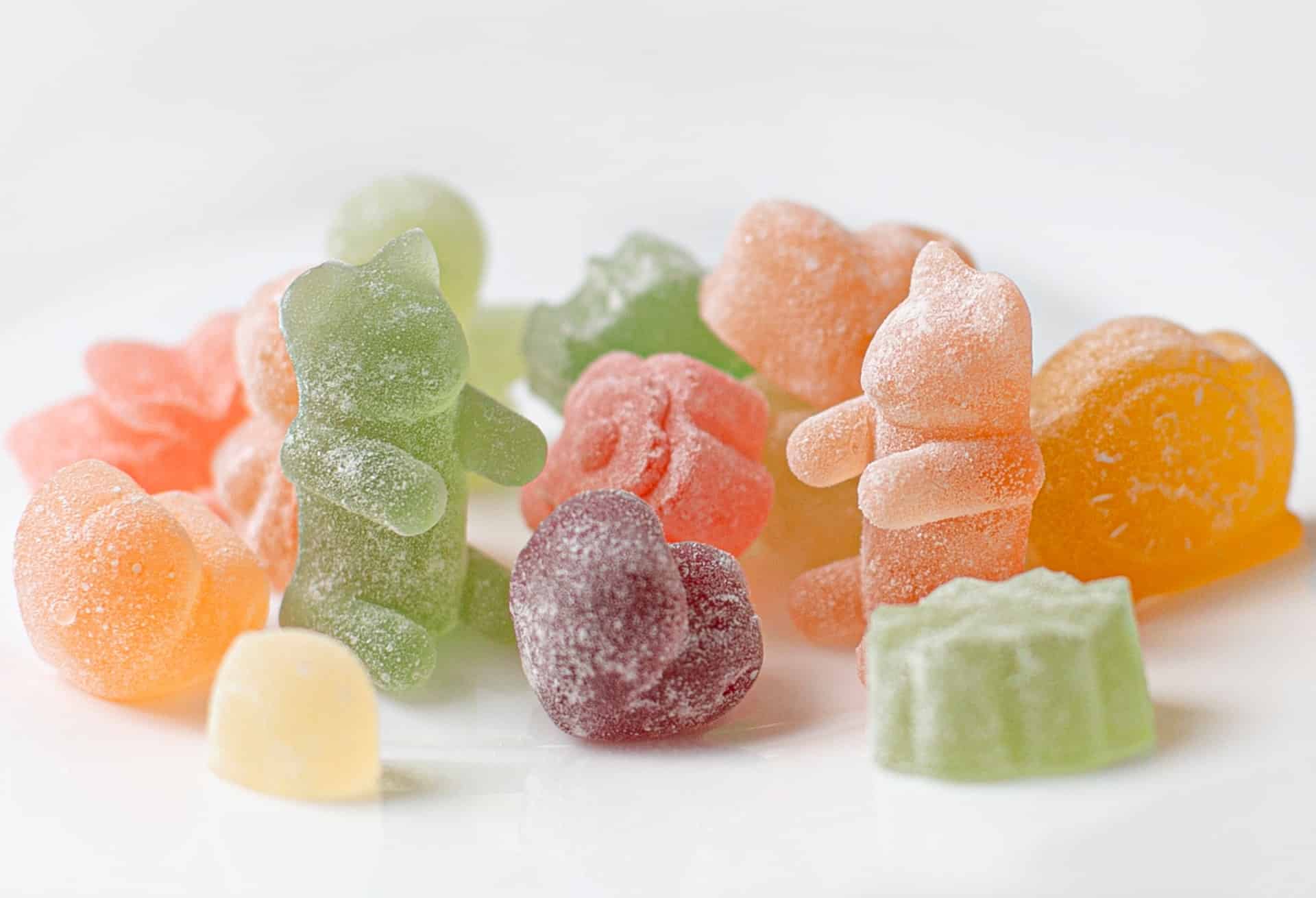

How to Make CBD Gummies? Step-by-Step Recipe 2026
Homemade CBD gummies step by step: ingredients, oil addition temperature, dose calculation per piece, and what cannabidiol research does not tell.
Homemade CBD gummies take less than an hour of work plus cooling time, and the whole challenge boils down to three things: even distribution of oil in the water mass, temperature at the moment of adding it, and knowing how much cannabidiol really ends up in one piece. This recipe has undergone editorial review, where we checked every citation at the source. Some numbers circulating in gummy recipes have no research backing and were removed along with the sentences carrying them. This applies to tables comparing gummy and drop absorption as well as temperature thresholds given to the degree. Below you will find the recipe in eight steps, a calculation to determine the content of one piece, vegan and sugar-free variants, and clearly marked places where data simply ends.
KEY INFORMATION
- There is no recommended cannabidiol dose per gummy. The only reference point is the provisional safe dose by EFSA from 2026: about 2 mg per day for a person weighing 70 kilograms.
- Cannabidiol safety cannot be established for persons under 25 years old, pregnant and breastfeeding women, and people taking medications.
- Add oil to the mass after removing the pot from heat, as temperature is one of the strongest factors in cannabidiol degradation.
- Lecithin binds the oil phase with the water phase and determines whether each gummy in the batch has a similar content.
- Store finished gummies in the fridge, in a dark and sealed container, out of children’s reach.
Why homemade gummies instead of sublingual oil?
| Criterion | Homemade batch | Store-bought gummies |
|---|---|---|
| Input cost | oil 65-240 PLN per bottle, other ingredients pennies | 10-95 PLN per package |
| Batch testing | none, unless you order it yourself | depends on manufacturer, certificate recommended |
| Declared shelf life | usually a few days in the fridge | months, thanks to preservation and packaging |
| Dosage control per piece | yours, depending on oil distribution | manufacturer’s, declared on packaging |
Price ranges come from the u Bucha store catalog, status as of August 10, 2026. The assortment changes faster than the article, so treat them as order of magnitude.
There are two practical reasons: taste and repeatable portion in one piece. Hemp oil has an earthy, bitter profile that bothers some people enough to quit after a few days. A gummy has a fixed weight, so the portion does not depend on how big a drop the pipette releases.
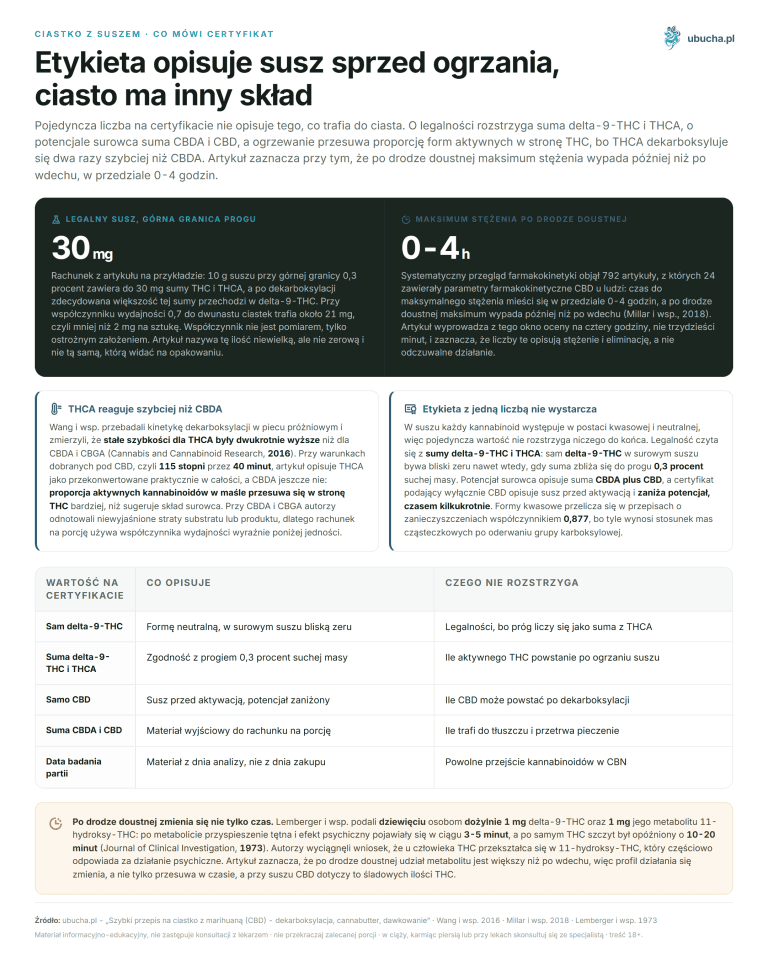
However, it must be said immediately what we do not know about the edible form. Millar et al. reviewed 792 articles in 2018 and found 24 with human pharmacokinetic data. Absolute bioavailability was reported only for inhalation, about 31 percent. No study established such a value for oral or sublingual routes (Frontiers in Pharmacology, 2018).
Therefore, all sentences comparing gummies with drops in percentages were removed from this entry: 6-12 percent for edible form versus 13-19 percent for sublingual, as well as claims about effects lasting 6-8 instead of 4-6 hours. The work cited as source was a review on terpenes and entourage effect in mood disorders, containing no pharmacokinetic data. These numbers have no correct version, so they were removed rather than corrected.
One comparison is supported by data. Birnbaum et al. gave eight adults a single cannabidiol dose once fasting and once after a high-fat breakfast of 840-860 kcal in 2019. Maximum concentration was on average fourteen times higher after the meal, and area under the curve four times larger (Epilepsia, 2019). A gummy eaten after dinner and the same gummy eaten fasting are thus two different situations. We detailed the comparison of both forms in the text comparing gummies with oil.
How much cannabidiol should be in one gummy?
There is no recommended dose that can be honestly given here. The only reference point for a supplement is the provisional safe dose calculated by the EFSA panel in 2026: 0.0275 mg per kilogram of body weight per day, about 2 mg for a person weighing 70 kilograms (EFSA, 2026).
The value was derived by benchmark dose method with an uncertainty factor of 400 and applies only to preparations with cannabidiol purity of at least 98 percent, without nanoparticles. The panel adds a sentence that never appears in culinary recipes but should: cannabidiol safety cannot be established for persons under 25 years old, pregnant and breastfeeding women, and people taking medications.
You calculate the content of one piece to know what you are consuming, not to hit a recommendation that does not exist. You need two numbers from the oil label and one from the recipe.
- Content per milliliter: percentage concentration times ten. 5 percent oil is 50 mg per milliliter, 10 percent oil is 100 mg per milliliter.
- Batch content: milliliters of oil times content per milliliter.
- Content per piece: batch content divided by the number of pieces actually obtained from the batch.
- Example: 4.8 ml of 5 percent oil is 240 mg in the batch, i.e., 6 mg per each of 40 pieces.
- Example: 6 ml of 10 percent oil is 600 mg in the batch, i.e., 15 mg per each of 40 pieces.
Count pieces after pouring, not before, as their number depends on your molds’ capacity. Compare these examples with EFSA values, and you will see why a homemade gummy is not a neutral product. The dose table by purpose that was previously in this entry had no research backing and was removed entirely. Also removed was a sentence about 1500 mg per day attributed to WHO: the source document does not correspond, and the value differs from EFSA calculation by three orders of magnitude. The same calculation for baked goods is detailed in a separate guide on dose calculation in the kitchen.
The same oil is also suitable for other fat carriers; we break them down in the recipe for hemp butter.
What ingredients do you need?
Six items are enough for one batch. From 200 ml of liquid, you get about 40 pieces of 5 ml capacity, so with smaller molds, the number will be correspondingly higher. Three ingredients build the structure, two ensure the oil does not separate from the mass, and one for flavor. The table below gives amounts for 200 ml of liquid.
| Ingredient | Role in recipe | Amount per 200 ml liquid |
|---|---|---|
| broad-spectrum CBD oil | cannabidiol carrier | as per your calculation |
| pork gelatin or agar | hydrocolloid giving structure | 20 g gelatin or 4 g agar |
| MCT oil | distributes CBD oil and aids emulsification | 2-3 ml |
| sunflower lecithin | emulsifier binding oil and water phases | one quarter teaspoon |
| fruit juice or herbal infusion | liquid base, flavor and color | 200 ml |
| honey, maple syrup, or erythritol | sweetening and consistency | 2-3 tablespoons |
Lecithin is the ingredient most often omitted in homemade recipes, without which the batch comes out uneven. Oil and water mass do not mix on their own, so without an emulsifier, fat collects on the surface and the first poured molds get less than the last. Producers of ready gummies do not have this problem because emulsifier is a standard in their formula.
The sentence about lecithin increasing absorption by 15-25 percent, previously in this entry, was removed. It was supported by the same terpene review that contains no bioavailability data. Lecithin remains in the recipe for a reason verifiable in the kitchen: without it, portions differ among themselves.
How to recognize CBD oil suitable for cooking?
By the certificate of analysis for a specific batch, issued by an independent laboratory. This is the only document where declared cannabidiol content meets measured content. For oil you put in food, this difference directly affects the content of each piece in the batch, as the whole calculation is based on the label number.
Purity gained additional importance after EFSA assessment. The provisional safe dose applies only to preparations with cannabidiol content of at least 98 percent and without nanoparticles, and the panel explicitly excluded the rest from its assessment scope. Preparations outside this description have no reference point to compare to.
In the certificate itself, check four things: cannabidiol content compliance with label, THC content, heavy metals, and residues of pesticides and solvents used in extraction. If you undergo drug tests at work, full-spectrum oil carries real risk due to trace THC. Broad spectrum does not have this problem and is therefore the default choice in culinary recipes.
Treat an open bottle as carefully as finished gummies. Stability studies described below show cannabidiol in oil solution is less stable than in dry form, and room temperature and light act against it throughout storage. A bottle standing on the counter next to the stove loses content faster than the same bottle in a cool, dark place.
How to make CBD gummies step by step?
The whole recipe is eight steps, only two require attention: the moment of removing the pot from heat and the moment of pouring the emulsion. The rest is mechanical. Active work takes about 40 minutes, cooling another hour.
- Prepare the workstation. Measure all ingredients and set silicone molds on a tray so they can be moved in one motion. Prepare the kitchen thermometer and syringe or pipette for pouring the mass.
- Soak the gelatin. Pour 20 g gelatin into 60 ml cold juice and set aside for 8-10 minutes until swollen. Skip this step with agar, as agar is added to hot liquid.
- Heat the liquid. Pour the remaining 140 ml juice into a pot with a thick bottom, add sweetener, and heat on low, stirring until dissolved. Stir in swollen gelatin and continue until fully dissolved.
- Remove from heat and cool. Remove the pot from the stove and wait a few minutes, monitoring temperature with the thermometer. The mass should be clearly below boiling but still liquid.
- Make the emulsion. In a separate bowl, combine CBD oil, MCT oil, and lecithin. Whisk or use a mini mixer for about a minute until the mixture is uniform and slightly creamy.
- Combine the masses. Pour the emulsion into the gelatin mass in a thin stream, stirring constantly. Stir for another half minute until no separated oil is visible on the surface.
- Pour into molds. Transfer the mass into a syringe or pipette and fill the molds. Work quickly as the mass begins to thicken. Tap the tray on the counter to release air bubbles.
- Chill and transfer. Place the tray in the fridge for 45-60 minutes. Remove gummies from molds and transfer to a sealed, opaque container. Store in the fridge and label the container.
Two places deserve careful handling. Prepare the emulsion before the mass starts cooling, because after removing the pot from heat, the mixing window is short: hot mass spoils the oil, too cool mass no longer mixes. Fill molds without breaks, in one go, so all pieces have the same content.
If you are doing this for the first time, make a batch without CBD oil first. You will see how quickly the mass thickens in your pot and on your stove, and you will not waste oil learning the pace. The same rule applies to changing the hydrocolloid: agar behaves differently than gelatin and forgives less.
At what temperature to add CBD oil to the mass?
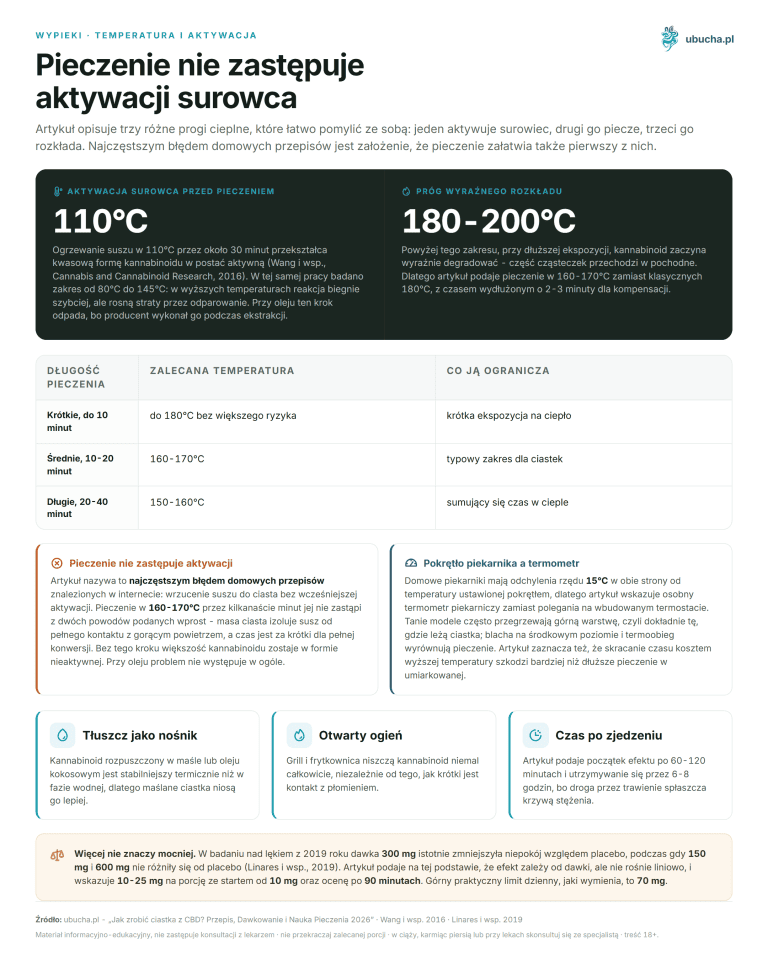
Always after removing the pot from heat and as cool as still allows the mass to be liquid. The reason is measured, though not on gummies. Fraguas-Sánchez et al. studied cannabidiol stability in solution in 2020 and indicated temperature as one of the most critical parameters, with activation energy of 92.19 kilojoules per mole (Journal of Chromatography B, 2020).
The same work gives numbers worth keeping in mind when working with oil. At room temperature, cannabidiol was highly unstable, with 95 percent remaining after 117 days. At 5 degrees, the preparation remained stable for at least 12 months. The substance was sensitive to oxidation and light, and in aqueous environment degraded faster than in ethanol. Under physiological-like conditions, at pH 7.4 and 37 degrees, 10 percent decomposed within a day.
Kosović et al. added in 2021 an observation from a stress test conducted according to ICH guidelines: cannabidiol in powder form was significantly more stable than dissolved in sunflower oil (Pharmaceutics, 2021). Gummy mass is an aqueous, warm, and aerated environment, combining three factors that in both studies acted against cannabidiol simultaneously.
It must be said clearly what is missing. Numbers previously in this entry, i.e., stability up to 60-70 degrees, degradation above 90 degrees, and 15-25 percent activity loss in half an hour, came from no study: they were supported by a link to the journal homepage. We removed them along with a story about a company control test with chromatographic measurement that no one conducted.
Vegan and sugar-free versions
Both changes concern one ingredient and both change the mass behavior. In the vegan version, gelatin is replaced by agar; in the sugar-free version, honey is replaced by erythritol. The rest of the recipe remains unchanged, including the emulsion and the moment of adding it.
Agar is a polysaccharide from red algae. In the recipe, it behaves differently than gelatin: you sprinkle it into hot liquid, boil, and keep boiling for about two minutes; the mass sets faster and already at room temperature. The window for pouring into molds is shorter, so have them ready earlier. The texture is firmer and more glassy than with gelatin.
From a safety perspective, agar is a well-described food additive. The EFSA panel reassessed it in 2016 under number E 406 and concluded there is no need to set a numerical acceptable daily intake or cause for concern at reported uses (EFSA, 2016). The sentence about an eighty percent calorie difference compared to gelatin was removed because it was supported by a link to the journal homepage, not a specific study.
Erythritol dissolves worse than honey, so add it early and stir until fully dissolved. It does not hydrate the mass like sugars, so gummies come out drier; one teaspoon of food-grade glycerol compensates. It also has a cooling aftertaste some perceive as minty, which can be masked with vanilla extract drops. Declarations of specific calories per piece disappeared because they depend on your proportions, not the recipe.
What changes with THC version and why is it not here?
It changes the legal status of the entire batch, not just the effect. This recipe is based on broad-spectrum oil, i.e., one with no THC at all, precisely because a product from cannabis other than fiber hemp is outside legal circulation in Poland, and its homemade production falls under Article 53 of the Anti-Drug Act.
From a kitchen perspective, the difference is secondary: THC and CBD are fat-soluble and behave similarly in the gel mass. From a dosing perspective, the difference is fundamental, as THC is psychoactive and after ingestion enters with a delay of 30 to 90 minutes, which with a homemade batch with uneven oil distribution easily results in overdosing one piece.
Therefore, we do not describe the THC version or provide a conversion for it. Those seeking full spectrum should know that legal full-spectrum oil contains THC only below the threshold, so the difference compared to broad spectrum is practically negligible.
What to add to gummies besides cannabidiol?
The homemade recipe allows adding ingredients you won’t find in one ready product. However, two things must be separated: that something can be added and that the combination has been studied. Very few combinations with cannabidiol have been studied, and none of those popular in gummy recipes.
The sentence about a 2023 study where cannabidiol with melatonin improved sleep quality in 74 percent of participants versus 52 percent in the comparison group was removed. It had no identifier, led to the journal homepage, and in the FAQ section the same result was given as 67 percent versus 52 percent. Two different numbers for one alleged study is reason enough to leave none.
Additives people most often introduce are melatonin for evening, L-theanine for calming, magnesium and vitamin C for workday version, and caffeine for morning version. Calculate each separately per piece, just like cannabidiol, and note the proportion on the container. Melatonin and caffeine change the time when such a gummy can be eaten, so keeping them in one box with the neutral version invites mistakes.
Two practical taste notes. Melatonin and pure caffeine are distinctly bitter, so versions with them require stronger juice or an extra spoon of sweetener. Magnesium citrate leaves a metallic taste best covered by juices with an intense profile, e.g., blackcurrant or cherry. Similar dependencies were described in homemade hemp chocolate.
How to store homemade gummies?
In the fridge, in a sealed and opaque container, out of children’s reach. The cold requirement is not an exaggeration: in the cannabidiol stability study in solution, the substance was highly unstable at room temperature and stable for at least a year at 5 degrees. Light and oxygen acted against it regardless of temperature.
The second variable is the food itself. Homemade gummies on juice and hydrocolloid have no preservatives, so they spoil like any fresh kitchen product. Eat them within a few days of making, not weeks, and do not leave the container open. Sprinkling finished pieces with a bit of potato starch prevents sticking and absorbs excess moisture.
Signs at which you discard the batch without hesitation are the same as with other homemade products. White or greenish coating is mold. Slippery surface indicates bacterial growth. Sour smell instead of fruity is fermentation. Browning and dulling alone indicate oxidation but usually accompany batch aging.
The sentence about cannabidiol activity dropping 3-5 percent monthly, previously in this entry, was removed. It came from the same erroneous bioavailability link as the rest of the numbers. Existing data refer to conditions other than a home fridge and cannot be used to derive a monthly percentage for gummies.
Are homemade gummies cheaper than store-bought?
Usually yes, but the calculation depends almost exclusively on oil price, not other ingredients. Gelatin, juice, and sweetener cost pennies compared to cannabidiol cost, so the comparison boils down to how much you pay per milligram in the bottle and how many milligrams you put in one piece.
For order of magnitude: in the gummy category at u Bucha store, prices ranged on August 10, 2026, from 10 to 95 PLN per package, and in the oil category from 65 to 240 PLN per bottle, with various concentrations and volumes. The assortment changes faster than the article, so treat these ranges as reference points, not price lists.
Specific per-piece amounts previously in this entry were removed. The 76 PLN price for 5 percent oil did not match the catalog, and calculations like two PLN for homemade gummy versus eight for store gummy had no basis beyond assumption. The single product price in the article text remains a pattern we abandoned.
Besides money, two things matter that the calculation does not cover. Ready product has batch lab testing and declared shelf life in months, homemade has neither. Homemade gives full control over composition and the possibility to make a version no producer will release because a small series is not profitable.
Who should not eat CBD gummies?
The answer is broader than usually given and comes directly from EFSA assessment. Cannabidiol safety cannot be established for persons under 25 years old, pregnant and breastfeeding women, and people taking medications. This conclusion is due to lack of sufficient quality data, not a direct indication of harm.
The medication aspect has separate grounding. Nasrin et al. checked in 2021 in lab conditions how cannabinoids inhibit liver cytochrome P450 enzymes. Cannabidiol competitively inhibited CYP3A4, CYP2B6, CYP2C9, CYP2D6, and CYP2E1 (Drug Metabolism and Disposition, 2021). This is an ex vivo measurement, so it does not set a dose threshold in humans but indicates where to look for interactions.
The link previously supporting this paragraph led to a study on adiponectin gene polymorphism and anterior cruciate ligament injury risk. The study exists and has nothing to do with cytochrome P450. Along with this link disappeared the sentence that interactions concern about half of drugs on the market, as no cited source gives that number.
A separate problem is the product shape itself. A gummy looks like candy, so a child may eat several pieces without knowing what they are. Keep the batch in a labeled container out of children’s reach, do not call it candy around children, and choose neutral mold shapes instead of bears. This entry is not intended for persons under 18 years old.
Should side effects be expected?
Yes, and the list comes from regulatory assessment, not a survey. The EFSA panel noted reported gastrointestinal effects at higher doses and hepatotoxic potential observed in human studies, especially with concurrent use of other drugs.
Animal studies showed consistent liver toxicity, with liver mass and histopathological changes as the most sensitive endpoints. Concerns were also noted about reproductive toxicity, neurodevelopmental effects after prenatal exposure, and hormonal disturbances including altered thyroid hormone levels. Immunotoxicity has not been studied.
The percentage summary of adverse effects previously in this entry was removed. It was supported by a link to the WHO homepage, not a document, and went along with a sentence about safe use up to 1500 mg per day. The document address does not correspond, and the value differs from EFSA calculation by three orders of magnitude.
The practical consequence for homemade gummies is simple. Since one piece from a typical recipe contains multiples of the provisional reference value, treating them as snacks is a misunderstanding. If you take prescription drugs, consulting a doctor is a prerequisite, not a formality.
Summary: what determines a successful batch of gummies
Technically, three things decide, all in your hands. The emulsifier ensures portions in the batch are similar. The moment of adding oil, after removing the pot from heat, limits cannabidiol degradation. Cool, dark, and sealed storage slows both oxidation and food spoilage.
Substantively, one thing decides: awareness of how much cannabidiol you really put in one piece and what you compare it to. The provisional safe dose by EFSA, about 2 mg per day for a 70 kg person, is well below the content of a typical homemade gummy. This does not mean homemade gummies are forbidden, only that they are not neutral treats and are not made in advance for the whole household.
The rest is a matter of practice. The first batch usually comes out uneven, the second well, and after the third you know how quickly the mass thickens on your stove. If you take medications, are pregnant, breastfeeding, or under 25, decide on cannabidiol in any form with a doctor, as data to base it on independently simply do not exist.
Frequently Asked Questions
How much CBD to add to one serving of gummies?
There is no recommended dose that can be given here, as no study derives it. Calculate the batch content from the oil label and divide by the number of molds to know what you are consuming. The only reference point is the provisional safe dose by EFSA: about 2 mg per day for a person weighing 70 kilograms.
Does CBD degrade during gummy making?
Temperature is one of the strongest factors in its degradation, as shown by a 2020 cannabidiol stability study in solution. Exact thresholds for gummy mass have not been measured, so always add the oil after removing the pot from heat, when the mass is still liquid but clearly cooled.
What is the difference between agar gummies and gelatin gummies?
You sprinkle agar into hot liquid and boil for about two minutes; the mass sets faster and already at room temperature. Gelatin is soaked in cold liquid and dissolved in warmth, and the mass sets only in the fridge. Agar gives a firmer and more glassy texture, gelatin is more elastic.
How long do homemade CBD gummies last?
Short, because they have no preservatives. Keep them in the fridge, in a sealed and opaque container, and consume within a few days of making. Mold, slippery surface, or sour smell instead of fruity means you discard the entire batch without trying to save it.
Why add lecithin to CBD gummies?
Lecithin binds the oil phase with the water phase. Without it, the oil collects on the surface of the mass and the first poured molds get less than the last ones, so portions in the batch differ. One quarter teaspoon per 200 ml of mixture, thoroughly mixed with oil before adding to the mass, is enough.
Do gummies work the same as sublingual oil?
It cannot be honestly compared in percentages. A 2018 pharmacokinetic review found absolute bioavailability measured only for the inhalation route. For oral and sublingual routes, no study established such a value, so previous percentage comparisons were removed from this entry.
Can children eat CBD gummies?
No. The EFSA panel stated in 2026 that cannabidiol safety cannot be established for persons under 25 years old. Additionally, the risk comes from appearance: a gummy looks like candy, so keep the batch in a labeled container out of children’s reach.
Finished products and current stock can be found in the hemp gummies category, as the assortment changes continuously.
This article is informational and educational and does not constitute medical advice. Before starting cannabis or CBD for therapeutic purposes, consult a doctor, especially if you take other medications, are pregnant, or breastfeeding.
Author: Michał Waluk · Published: 2026-05-04 · Updated: 2026-08-24