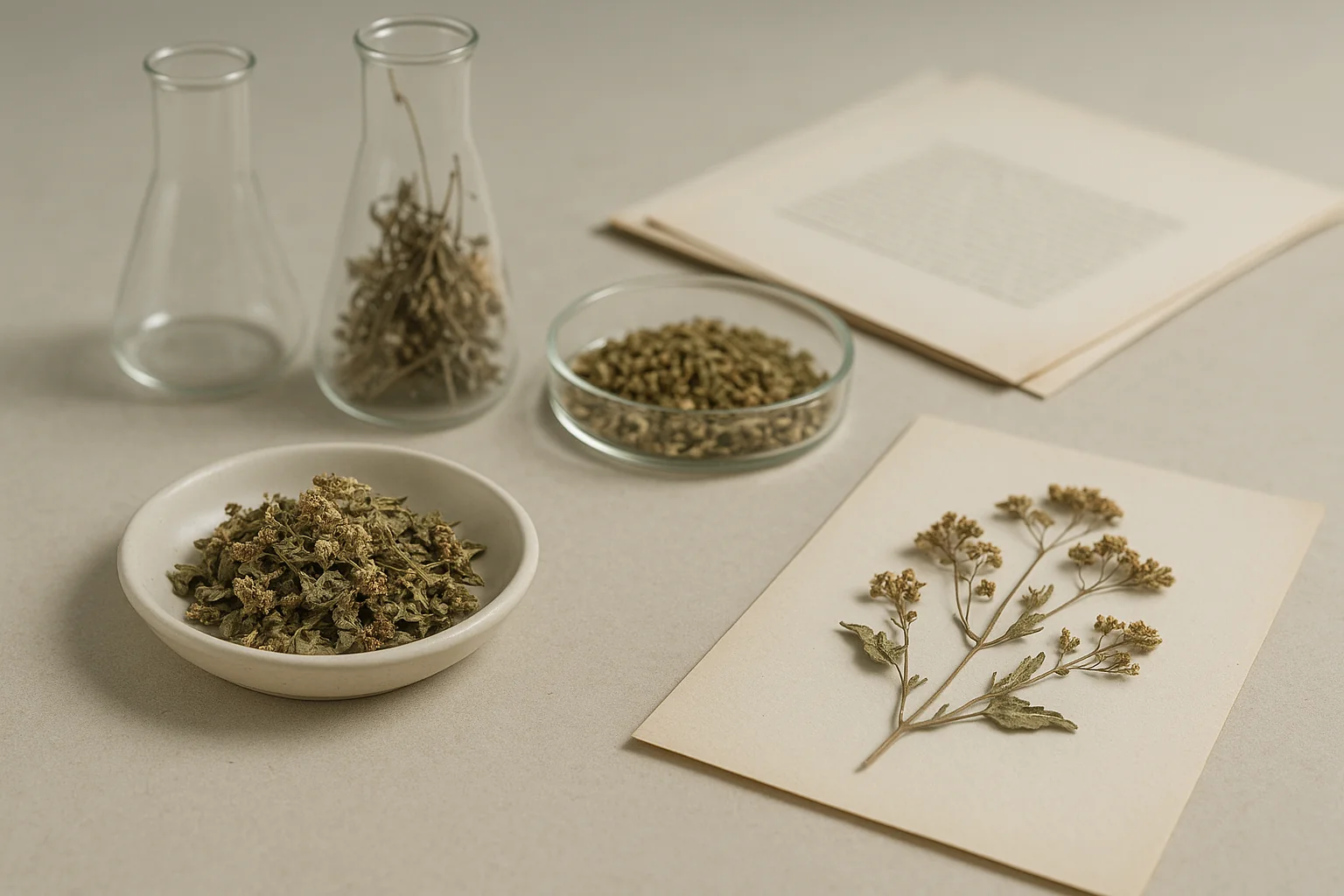

Galaxy Walker OG (S-LAB, Synoptis Pharma, Tilray): nerolidol at the forefront of the profile
The pedigree from Skywalker OG and OG Kush, four pharmaceutical entries from three responsible entities, and the terpene composition, which looks different in two Polish databases. Collected separately: what has been shown, and what has not been shown.
What is Galaxy Walker OG and where does it come from?
Galaxy Walker OG is a cannabis strain described as a cross between Skywalker OG and OG Kush. Its lineage comes from two industry sources specifically describing the Tilray T22 batch sold in Poland. The manufacturer's website with such information could not be found, so the origin is confirmed commercially rather than by the producer.
This difference matters for the strain that reaches the pharmacy. The breeder's declaration can be the only proof of lineage, as no one publishes genetic testing results with the dried flower. When the declaration is missing and only the store description remains, the lineage is a claim repeated by the market, not a record from a registry. This is the case here, and that is how we record it.
The second parent additionally breaks the trace. OG Kush appears in this context as a separate pharmaceutical entry, supplied by Bliss Pharma, and has a lineage described as unknown. Thus, the branch ends with a name whose own origin has not been established. Skywalker OG is not available in Polish pharmacies at all, which quickly closes the other side of the tree.
The subtype affiliation is sometimes provided in two versions. One database describes all four entries as indica, while the other uses the term hybrid for the Tilray entry and sticks to indica for the S-LAB entry. Choosing one label would imply a quiet resolution of the dispute between sources, so we note both and indicate that they do not agree with each other.
Which manufacturers supply this strain to Polish pharmacies?
Three entities: S-LAB, Synoptis Pharma, and Tilray. Together, they account for four pharmaceutical entries of this strain, differing in declared potency and responsible entity. S-LAB has two entries, while the others have one each. The profile composition has been recorded in the commercial database identically for all four, which, when it comes to separate batches of raw material, looks like a copy of an entry, not a measurement.
| Responsible entity | Pharmacy listings | Content after tolerance | How does the entry differ |
|---|---|---|---|
| S-LAB | two | THC 16.2-19.8% and THC 19.8-24.2% | the only manufacturer with two potency levels of the same strain |
| Synoptis Pharma | one | THC 19.8-24.2% | in the aroma description, a peppery note instead of spicy |
| Tilray | one | THC 16.2-19.8% | the only entry for which sources provide the batch lineage |
The ranges in the table are not the result of testing a given batch. The manufacturer declares a nominal value, and regulations allow for a ten percent deviation in either direction, so a nominal eighteen percent entry falls between 16.2 and 19.8 percent, and a twenty-two percent entry falls between 19.8 and 24.2 percent. Therefore, two packages with different numbers on the label may contain raw material with the same actual content.
This list describes registrations, not the contents of the pharmacy shelf. At the time of data collection, three out of four entries had a status of out of stock in the commercial database, while one version of S-LAB had a status of high availability. Permits expire after five years, batches come and go, and the responsible entity can change without changing the strain name. Thus, the column with differences refers to the label and the supplier, as no one has separately characterized the material under them: the composition entry is the same in the database for all four registrations. The current state holds a compilation of currently available strains, and it is there, not here, that the information changes from month to month.
What does this dried flower smell and taste like?
Commercial descriptions agree on four notes: spicy, minty, pine, and sharp. The last one is recorded differently depending on the source: for the Synoptis Pharma and Tilray versions, it is described as peppery, while for both S-LAB versions, it is labeled as spicy. These are catalog labels, not the result of a sensory evaluation conducted on a sample.
The peppery layer can be linked to the composition, as this is how the compound beta-caryophyllene is described in fragrance catalogs. The resinous note is attributed to pinene, the floral to linalool, and nerolidol has a woody scent with floral and apple undertones. The combination sounds coherent until one checks the origin of each element.
And here the coherence ends. Pinene is mentioned by only one of the two bases, while the pine note appears in the description of every entry. Therefore, the scent description and the composition list do not have a common confirmation: the first is a catalog description, the second a taxonomy transcribed from the same catalog. Neither of these sources provides a method by which anything was measured.
A separate issue is the difference between the smell of the dried flower and the taste of the vapor. Crushing the flower releases the entire mixture at once, while the vaporizer extracts compounds with lower boiling points first. The aroma from the bag and what the patient feels upon the first inhale are thus two different things, although they are usually described with the same adjectives.
How long does it take to take effect and how long does the effect last?
There are no measurements made for this strain. The available numbers describe the route of administration, not the cultivar: with vaporization, the effect begins within 0-10 minutes and lasts 2-4 hours, while with oral administration, the onset occurs at 1-3 hours, and the effect lasts 6-12 hours (review in The Permanente Journal, 2024).
The difference arises from the location where the substance enters the bloodstream. Inhaled, it passes through the lungs and bypasses the first pass through the liver. Swallowed, it goes to the liver first and is converted into 11-hydroxy-THC, a metabolite with stronger central effects. Hence, the bioavailability of THC is 10-35% with vaporization compared to 4-12% after ingestion, along with a simultaneous elongation and flattening of the entire course.
The practical consequence concerns dose recognition. When inhaling, the patient sees the effect within a few minutes and can stop. With oral administration, those same few minutes say nothing, as the peak has not yet arrived, and overdose is usually recognized after the fact. This asymmetry results from the pharmacokinetics of the compound itself, not from the choice of strain.
None of the above numbers are properties of Galaxy Walker OG. The strain determines what is inhaled, while the rate at which the substance crosses the alveolar barrier is the same for every dried flower. The promise of a faster onset or longer-lasting effect attributed to a specific cultivar has no basis in measurement.
What has been demonstrated and what has not been demonstrated regarding the effects of this strain?
Very little has been demonstrated, and not on humans. There is no clinical work for the strain itself. Two studies are available regarding nerolidol, the leading terpene in this profile, both on mice. The rest of what circulates in descriptions are catalog labels such as relaxing effects, without backing in the form of measurement.
The older of the studies, published in 2016 in Fundamental & Clinical Pharmacology (PMID:26791997), involved mice receiving nerolidol in doses of 200-400 mg/kg. The animals performed fewer abdominal contractions induced by acetic acid, and the concentrations of pro-inflammatory cytokines TNF-alpha and IL-1beta also decreased, which the authors attributed to the GABAergic system, not the opioid mechanism. A newer study, from 2026 in Arquivos de Neuro-Psiquiatria (PMID:42447923), involved oral administration in doses of 25-100 mg/kg: the latency to seizures induced by pentylene tetrazole was prolonged, and markers of oxidative stress in the brain decreased.
The limit of these studies must be set clearly. It has not been demonstrated that nerolidol alleviates anxiety or insomnia in humans; both available studies concern rodents and describe analgesic, anticonvulsant, and antioxidant effects, not sleep or mood.
The profile composition itself is also not a single record. The first database lists eight entries and arranges them from the most abundantly represented: nerolidol, caryophyllene, bisabolol, limonene, dalej linalool razem z humulenem, at the end myrcene and pinene. The second provides a shorter list, which does not include humulene or linalool, and also lacks pinene. The discrepancy goes deeper than just a set of names: for the S-LAB entry, the second database prioritizes myrcene, while the first organizes the shares so that nerolidol leads. Therefore, the sources differ in what they list and what they consider most important for this strain.
None of these names are accompanied by a number, and this is not an editorial caution. The sums of shares listed by Polish databases for the same entries resulted in measurements of 46, 73, and 83 percent for this project, so the denominator is different in each source and remains unknown. A fraction without a denominator reads like the result of a laboratory test, and in the case of a prescription medication, this is a difference that cannot be obscured.
What side effects have been reported for this strain?
None that have been specifically attributed to it. Reports of side effects are sent to supervision categorized by medicinal product and responsible entity, not by cultivar, so publicly available statistics for Galaxy Walker OG simply do not exist. This is a gap in the data collection method, not evidence of safety.
The reactions listed for dried flower describe the material as a class: dry mouth, dizziness, drowsiness, increased heart rate, and excessive stimulation after too large a dose. Frequencies from such a list cannot be transferred to a single strain, as they were collected from mixed populations of patients using various materials, through different routes of administration, and in different doses.
For this strain, there are user reports from forums and catalog descriptions, and these are not official reports. No one counts them, compares them with the dose, or knows how many people reported nothing. The existence of two potency levels further complicates the picture: part of what is described as a strain's property is a result of a stronger position, not the cultivar itself.
The caution mentioned by supervision pertains to the route of administration and dose size, not the name on the package. Dried flower is dispensed by a doctor's prescription in category Rpw precisely because dose selection requires guidance, not self-experimentation. The symptoms described above occur when the dose is exceeded, regardless of which strain the patient received.
How to select the vaporization temperature for this profile?
Without a reference point for the leading terpene. The public database lists one entry for nerolidol, 275-277 degrees Celsius, and that is without the pressure at which it was measured. Such a number cannot be compared with the others, and it lies above the temperature at which the dried flower begins to burn.
| Terpene from the profile | Entry in the public database | Can it be compared |
|---|---|---|
| pinene | 156.2 degrees, atmospheric pressure | Yes |
| myrcene | 166.8 degrees, atmospheric pressure | Yes |
| limonene | 177.8 degrees, atmospheric pressure | Yes |
| linalool | 195.5 degrees, atmospheric pressure | Yes |
| caryophyllene | 257.5 degrees, atmospheric pressure | Yes |
| humulene | 99.5 degrees at 3 mmHg | no, measurement under reduced pressure |
| nerolidol | 275-277 degrees, pressure not specified | no, unknown measurement conditions |
| bisabolol | no record | NO |
Of the eight names in this profile, only five have records made at atmospheric pressure, meaning they can be freely placed next to others on the same scale. The remaining three come from measurements under reduced pressure, with records lacking specified conditions or are not present in the database at all. Temperature tables circulating in stores and forums usually mix these cases, causing them to contradict each other, and the difference is not visible from the number alone.
Moreover, the value set on the vaporizer is not the temperature of the dried flower. The equipment shows the temperature of the heater or the incoming air, and the material in the chamber reaches a lower and variable temperature over time. The comparison of boiling records with the panel setting is therefore a comparison of two different quantities, although both are given in degrees.
The practical conclusion is modest. The settings used for inhalation do not reach the values given for nerolidol, and at the same time, compounds also transition to vapor below their boiling point, so from this number alone, it is unclear how much actually reaches the lungs. What is known is that the leading terpene in the list has the highest value in the entire profile, while the lowest are those whose one of the bases is not mentioned.
Which strains from Polish pharmacies are related to it?
None. The pedigree chart of this comparison does not indicate any siblings for Galaxy Walker OG among the strains available in Polish pharmacies, and this is not a gap in the data. This is due to what its parents are: OG Kush represents a broad family of style, and Skywalker OG has no other offspring here.
The name OG Kush also appears in the pedigrees of several other cultivars from this set. Cataract Kush has parents la confidential and og kush, Girl Scout Cookies og kush and durban poison, while Chemango Kush lists og kush among four names. A common ancestor of this rank does not make them siblings, as it refers to a breeding category, not a single established strain.
The similarity of names does not provide a resolution either. The OG component is carried in this set by entries of completely different origins, and OG Kush appears here as a separate pharmacy entry with a pedigree described as unknown. A parent whose own parents have not been established ends the branch instead of extending it. Adding siblings by intuition would create a connection that does not exist in any source.
Those looking for strains with a similar composition instead of kinship should follow the terpene, not the family name. Nerolidol leads in the profile of several other entries from Polish pharmacies, including Pink Kush, and works concerning the compound itself are collected separately discussion of this terpene. This is a summary based on composition, not origin, and it should be read as such.
Frequently Asked Questions about Galaxy Walker OG
Is Galaxy Walker OG an indica or a hybrid?
Sources are not consistent. One Polish database describes all four pharmacy entries of this strain as indica, while another uses the term hybrid for the Tilray entry, and remains with indica for the S-LAB entry. We do not resolve this dispute, only note it.
How many entries of this strain are registered in Poland?
Four, from three responsible entities. S-LAB is responsible for two of them, while Synoptis Pharma and Tilray each have one. The number of entries changes over time along with permits and availability of batches.
Why is the content given as a range instead of a single number?
The manufacturer declares a nominal value, and the allowable deviation is ten percent in either direction. Therefore, we describe nominally eighteen percent entries as THC 16.2-19.8%, and a nominally twenty-two percent entry as THC 19.8-24.2%.
Does nerolidol from this strain have a sedative effect?
This has not been demonstrated. Both available studies on nerolidol were conducted on mice and describe its analgesic, anticonvulsant effects, and reduction of oxidative stress markers, but not its impact on sleep.
How do we know who the parents of this strain are?
From two industry services describing the Tilray T22 batch sold in Poland. The manufacturer's pages with this information could not be found, so the pedigree is based on commercial sources, not on the manufacturer's document.
Does this strain have siblings among strains from Polish pharmacies?
No. One of its parents is a broad breeding family, not a single established strain, and the other has no other offspring in Polish pharmacies. A common name component does not indicate kinship in any direction.
Can the dried flower of this strain be purchased without a prescription?
No. Dried flower is issued in Poland exclusively by prescription in the Rpw category, and the choice of strain and dosage is determined by the treating physician.
Dried flower is a pharmaceutical raw material issued by a doctor's prescription in the Rpw category. This material is for informational purposes only and does not replace medical consultations or product documentation.
Editorial text: u Bucha editorial.