
Sativa vs. Indica: What's the Difference? Botany, Chemistry, and Criticism 2026
Sativa vs Indica - botany, chemistry, terpenes, and McPartland's critique 2018. Traditional division vs chemovars. Polish legal context 2026 (Act 29.07.2005).
Key information
- Traditional classification sativa (tall, narrow leaves, flowering 10-16 weeks, equatorial climate) and indica (short, broad leaves, flowering 7-9 weeks, mountainous climate) dates back to 1785, when Lamarck distinguished Cannabis indica as a separate species (Russo, 2007).
- Contemporary science questions the classic classification. McPartland, in a 2018 review, showed that the names sativa and indica used in cannabis commerce do not correspond to biological categories (McPartland, 2018).
- A better classification proposal is provided by the chemovar system chemovars: type I (THC-dominant), type II (balanced 1:1), and type III (CBD-dominant), based on the plant's chemistry (Lewis et al., 2018).
- Terpenes, such as myrcene, limonene, pinene, and beta-caryophyllene, modulate cannabinoid effects more strongly than strain labels. They create the entourage effect (Russo, 2011).
- In Poland, cannabis with THC above 0.3% is illegal under the Act of July 29, 2005, regardless of the name sativa or indica. Legal are CBD flowers with THC below 0.3% (ISAP, 2005).
Disclaimer: in Poland, cannabis containing THC above 0.3% remains illegal under the Act of July 29, 2005, on counteracting drug addiction. This article is purely botanical-scientific and educational. Legal CBD flowers and extracts with THC content below 0.3% are available in cannabis shops in Poland. The effectiveness and safety of CBD have been confirmed by WHO in the ECDD review from 2018 (WHO ECDD, 2018).
The question of “sativa vs indica” is one that everyone asks when they first delve into the world of cannabis. The classic division reigns in stores, on flower packaging, and in mobile apps. Sativa is said to stimulate and promote creativity, while indica is said to induce sleep and relax muscles. Meanwhile, a review of 297 scientific publications by John McPartland from the University of Vermont showed that this division is largely marketing-driven rather than biological (McPartland, 2018).
In this article, we will examine both layers of the topic. First, the classic one, which you will find in 99% of texts about cannabis. Then the modern one, which has been changing the thinking of researchers and clinicians for several years. We will show the history of names from Lamarck and Linnaeus, morphological, chemical, and terpene differences, criticism of contemporary taxonomy, and the Polish legal context. At the end, you will find practical tips on how to choose a CBD product legal in 2026.
Before reading, it is worth remembering that “sativa” and “indica” are today commercial labels. Botanically, both belong to the same species Cannabis sativa L. The differences we will describe refer to subspecies or varieties, not to separate biological species. This distinction is crucial for understanding the topic.
Where did the names sativa and indica come from?
The names sativa and indica date back to the 18th century when European botanists tried to catalog the plant world. Carl Linnaeus described Cannabis sativa in 1753 as European hemp, used for making ropes and fabrics. Thirty-two years later, Jean-Baptiste Lamarck distinguished Cannabis indica as a separate species from India, citing research in his work Encyclopédie méthodique (Russo, 2007).
Lamarck noted several differences. Indian hemp was shorter and stockier, had broader leaves, a more intense smell, and, crucially, much stronger psychoactive effects. European hemp sativa was mainly cultivated for fibers and seeds, and its THC content was minimal. This distinction made practical sense for 18th-century Europe.
In 1924, Russian botanist Dmitry Janischewski described a third type of cannabis: Cannabis ruderalis. It occurs in Eastern Europe, Siberia, and Central Asia. It is a low, wild plant with low THC content and a unique autoflowering trait, meaning it flowers independently of day length. Modern breeding uses ruderalis to create autoflowering strains, popular among home growers.
The taxonomic status of Cannabis has been a subject of debate for two centuries. Some botanists consider sativa, indica, and ruderalis to be three separate species. Most contemporary systematists treat them as subspecies of one species, Cannabis sativa L. The work of McPartland and Small from 2020 summarizes 50 years of this discussion, showing that the biological boundaries between these forms are blurred.
Linnaeus and European fiber hemp
Linnaeus, the father of modern taxonomy, developed binomial nomenclature for species in his work Species Plantarum from 1753. Cannabis sativa L. (the letter L. indicates the author of the description) was for him an economic plant known since antiquity. Fibers from the stems were used to produce marine ropes, fishing nets, and coarse fabrics. Seeds provided food and oil.
The European sativa of Linnaeus was a fiber plant, not psychoactive. The Central European climate favored the selection of varieties with high fiber mass and low resin concentration. Hence the discrepancy between the botanical meaning of the name “sativa” (cultivated) and the modern jargon of breeders, for whom sativa means a psychoactive variety with energizing effects.
Lamarck and Indian psychoactive hemp
In 1785, Lamarck described cannabis samples brought from India by French travelers. They were significantly different morphologically from European varieties. Shorter height, denser branching, darker leaves, more intense resin smell. The Indian tradition of using cannabis (charas, bhang, ganja) dates back millennia.
Contemporary ethnobotanists estimate that psychoactive cannabis varieties spread from the Hindu Kush and Pakistan about 5000-3000 years ago, initially for ritual purposes. Lamarck inadvertently solidified a division that had ecological justification (mountain climate vs. temperate), but was loosely related to pharmacological effects.
Janischewski and ruderalis
Cannabis ruderalis, described in 1924, is a wild form that grows spontaneously in Eastern Europe. It is characterized by low height (50-80 cm), small leaves, a short life cycle (10-12 weeks from germination to seeds), and very low THC content (below 1%). Its main unique feature is autoflowering, meaning flowering is independent of the photoperiod.
In commercial breeding, ruderalis has one application: crossing with indica and sativa produces autoflowering hybrids. These varieties flower 3-4 weeks after germination, regardless of the light-dark cycle. This allows for 3-4 harvests per year in indoor conditions and makes cultivation easier for beginners. Classic sativas and indicas are photoperiodic, flowering only after the day is shortened to 12 hours.
Cannabis sativa was described by Carl Linnaeus in 1753 as European fiber hemp, and Jean-Baptiste Lamarck distinguished Cannabis indica in 1785 as a separate species from India with stronger psychoactive effects (Russo, History of Cannabis, Chem Biodivers, 2007).
What are the morphological differences between sativa and indica?
Sativa and indica differ in height, leaf shape, flowering duration, and climatic requirements. Sativa reaches 2-4 meters in height, has narrow, light green leaves, and flowers for 10-16 weeks in an equatorial climate. Indica is shorter (1-2 m), stocky, has broad dark green leaves, and flowers faster, 7-9 weeks, in the mountainous climate of the Hindu Kush (McPartland, 2018).
These differences evolved as adaptations to geographical conditions. Sativa originates from equatorial regions: Thailand, Colombia, Mexico, Jamaica, Sub-Saharan Africa. There, the length of the day changes seasonally very little, about 12-13 hours throughout the year. The plant can grow and flower slowly, at a steady pace, taking advantage of the long and warm growth phase.
Indica evolved in harsher conditions. The Hindu Kush range, Afghanistan, Pakistan, northern India. Short growing seasons forced rapid flowering. Cold nights and intense UV in the mountains favored the production of protective resin. The stocky structure with dense buds protects against the cold, and the broad leaves maximize photosynthesis in a short season.
Appearance of the sativa plant
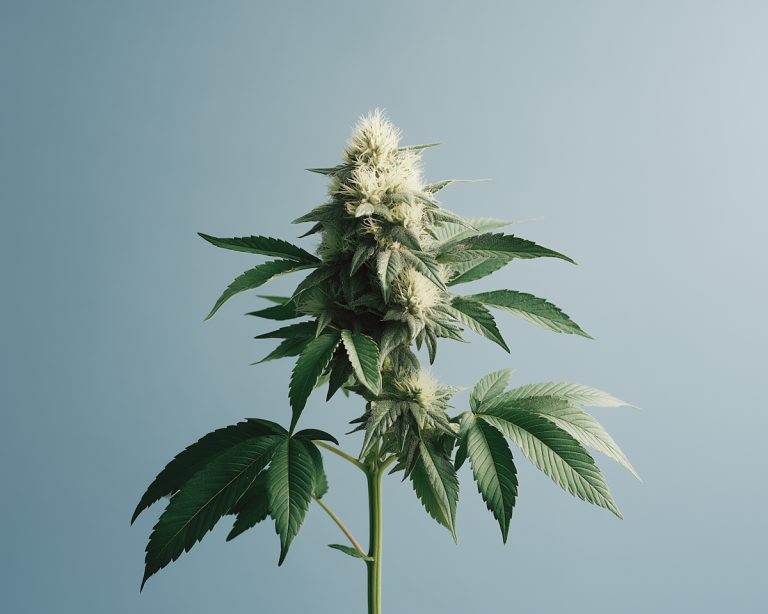
Sativa is a tall, slender plant with vertical growth. The stems are long, internodes are sparse, and branches grow at sharp angles. The leaves have 7-13 narrow leaflets up to 15 cm long. The color of the leaves is lighter, green-yellow. The buds develop less frequently, are longer and fluffy, less compact than in indica.
In indoor conditions, growing sativa is demanding. The plant needs a high room (at least 2 meters) and intense lighting. Many growers use bending techniques (LST, low-stress training) or topping to control growth. Harvest occurs after a long flowering period, reaching up to 16 weeks for pure Jamaican or Thai sativas.
Appearance of the indica plant
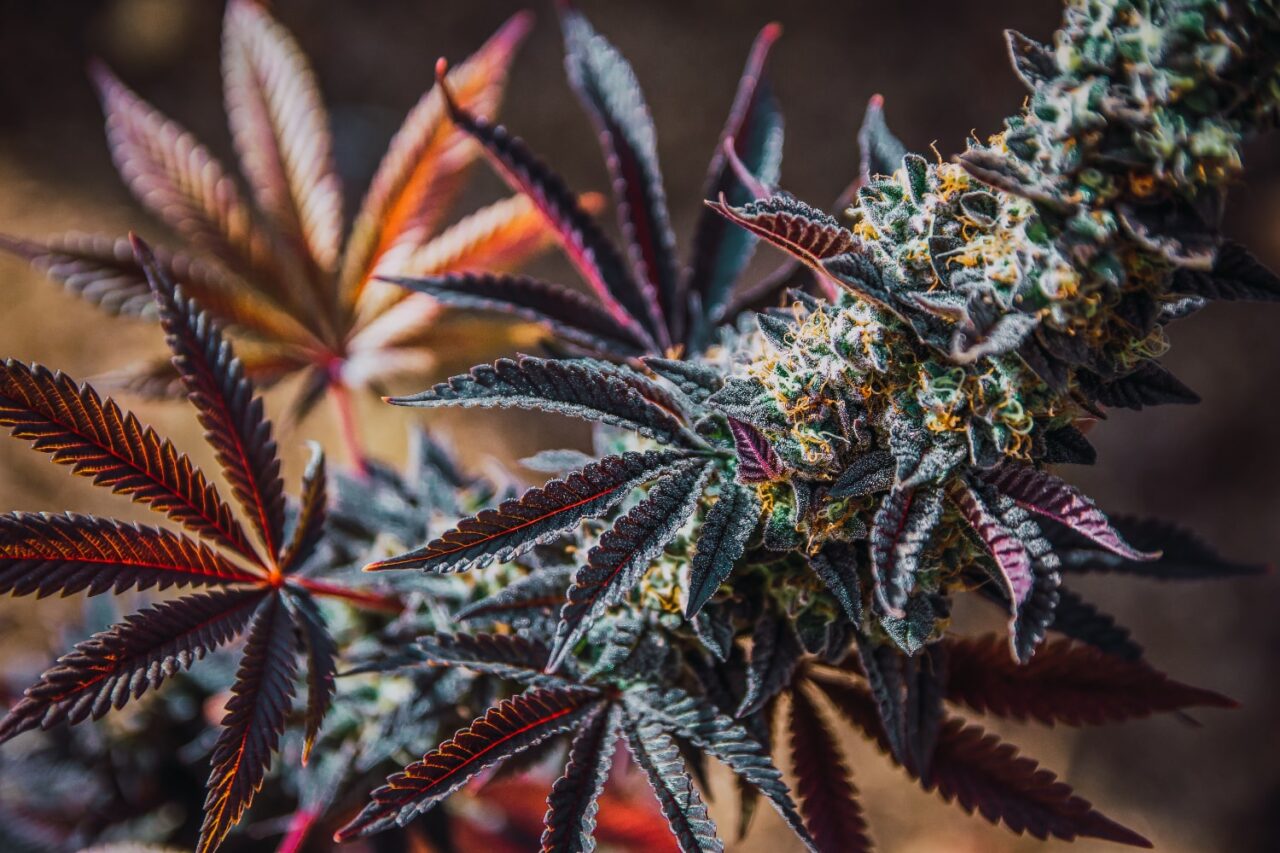
Indica is short, stocky, and wide. The stem is thick, internodes are close together, and branches grow at straight angles. The leaves have 7-9 broad leaflets, dark green, sometimes with a purple hue in low temperatures. The buds are compact, short, densely covered with resinous trichomes. The whole plant resembles a bush or small tree.
For indoor growers, indica is easier to cultivate. It fits in lower rooms (1-1.5 m is sufficient). The shorter flowering cycle (7-9 weeks) allows for more harvests per year. The compact buds are efficient in terms of mass but require good ventilation to avoid mold. Classic indicas include Hindu Kush, Afghan, Northern Lights.
Climate and geography
Sativa is a plant of tropical and subtropical climates. High temperature, high humidity, long growing season. In these conditions, 14-16 weeks of flowering is natural. Sativa does not tolerate cold, short days, and frost well. Classic locations include Thailand, Colombia, Jamaica, South Africa, equatorial Andes.
Indica does better in mountainous and continental climates. Shorter growing season, greater temperature fluctuations, less moisture. The Hindu Kush and Tibetan Plateau are classic ecosystems. Indica also withstands cold European nights. Hence its popularity among amateur outdoor growers in Poland, Germany, or the Netherlands.
In conversations with Polish growers, we often hear that indica is "safer" in our climate. Shorter flowering allows for harvest before autumn rains and the first frosts, which can destroy fluffy, still immature sativa buds.
What effects are traditionally attributed to sativa?
Sativa is traditionally attributed with stimulating, energizing effects that support creativity. The cannabis community has described it for decades as “head high,” meaning a head effect. According to a survey by Sexton et al. from 2016 involving 2451 cannabis users, 73% of respondents chose sativa for daytime activities, creative work, and social interactions. Indica dominated evening use and pain therapy.
Classic effects of sativa include increased energy, improved mood, mental stimulation, and greater talkativeness. Users also report increased creativity and unconventional associations. Sativa is often chosen by musicians, artists, and programmers. This effect has been solidified in pop culture, although contemporary science shows that it is only partially chemically justified.
Sativa is also chosen for social activities. Increased confidence, openness, and laughter are typical reports. In a clinical context, medical cannabis patients reach for sativa for depression, chronic fatigue, migraine headaches (low doses), and some attention disorders. It is also popular in the treatment of eating disorders, where appetite stimulation is desired.
Typical sativa strains
Classic sativas include Durban Poison (South Africa), Jamaican Lambs Bread, Acapulco Gold (Mexico), Thai Stick, Colombian Gold. All originate from equatorial regions. Nowadays, pure sativas are rare in the commercial market, as long flowering makes them unprofitable for indoor cultivation. Most “sativas” in stores are hybrids with sativa dominance.
Pseudo-sativas with names like Sour Diesel, Jack Herer, Green Crack are actually sativa-dominant hybrids with some indica mixed in to shorten flowering time. This is the first hint that “sativa” in the store is rarely sativa in the botanical sense. The label is marketing-driven.
Terpene profile of sativas
Sativas are traditionally characterized by high levels of limonene (citrus scent), pinene (pine scent), and terpinolene (floral, fruity). These terpenes have documented energizing effects. Limonene improves mood and exhibits weak antidepressant effects (Russo, 2011). Pinene improves concentration and may alleviate memory disturbances caused by THC.
It is these terpenes that may explain the “sativa” effect more than the botanical classification itself. Russo, in a 2011 paper on the entourage effect, suggested predicting cannabis effects based on the cannabinoid and terpene profile, rather than the sativa/indica label. This is a chemovar approach, which we will return to later in the article.
Stimulation and attention: is it a myth?
A study by Sznitman et al. from 2020 involving 282 medical marijuana users showed that the subjective effects of sativa and indica in a blind test (without knowledge of the label) were significantly less different than in open tests. In other words, part of the “energizing” effect of sativa may be a placebo effect resulting from user expectations.
This does not mean that sativas do not stimulate at all. The terpene profile and cannabinoid ratio (e.g., THCV present in some African sativas) can indeed provide a clearer, less sedative effect. But the simple label “sativa = stimulation, indica = sleep” is an oversimplification that is insufficient for the informed consumer.
What effects are traditionally attributed to indica?
Indica is traditionally attributed with relaxing, sedative, pain-relieving effects and facilitating sleep. The cannabis community refers to this effect as “body high” or jokingly “in-da-couch,” which conveys a feeling of heaviness and a desire to stay on the couch. In Russo's 2014 survey of 953 medical marijuana patients, 78% chose indica for treating insomnia, chronic pain, and muscle tension.
Typical reported effects of indica include deep muscle relaxation, a feeling of body heaviness, slowed thinking, drowsiness, and reduction of pain and anxiety. Indica is classically chosen in the evening, before sleep, or during leisure time. Patients with chronic pain (arthritic, neuropathic), muscle spasticity, and sleep disorders often prefer indica.
Indica also has applications in the therapy of some mental disorders, where the sedative effect is desired. Patients with PTSD often report improved sleep and reduced nightmares after evening use of indica. In the treatment of generalized anxiety, indica may lower psychophysiological tension, although high doses of THC regardless of strain type can paradoxically increase anxiety.
Typical indica strains
Classic indicas include Hindu Kush, Afghan, Northern Lights, Granddaddy Purple, Bubba Kush. Most come from the genetics of the Hindu Kush and Afghanistan, although Western selection (mainly Dutch and American) has created many hybrids. Pure indicas are more present in the market than pure sativas, as the shorter flowering cycle makes them commercially viable.
Pseudo-indicas with names like OG Kush, Wedding Cake, or Gelato are actually hybrids with varying contributions from both types. Genetic analysis of many commercial “indicas” shows that they often have more sativa genes than the label suggests. This is another example of how commercial names diverge from botany.
Terpene profile of indicas
Indicas are traditionally attributed with the dominance of myrcene, a terpene with an earthy-musky scent, known from mango, hops, and thyme. Myrcene in laboratory studies exhibits sedative, pain-relieving, and calming effects, likely through modulation of GABA receptors (Russo, 2011). Hence the folk saying that eating mango before smoking enhances the effect.
Other typical terpenes in indicas include beta-caryophyllene (spicy, peppery scent, activates the CB2 receptor and has anti-inflammatory effects) and linalool (floral, lavender scent, has anxiolytic and sedative effects). The combination of myrcene, caryophyllene, and linalool in classic indicas like Hindu Kush provides a strong relaxing and sedative effect, likely stronger than the action of THC in isolation.
Sleep and relaxation: clinical support
The study by Sznitman et al. from 2020 on over 400 patients with insomnia showed that strains associated with "indica" indeed provided better subjective sleep quality. The average improvement was 25% on the Pittsburgh insomnia scale. This is one of the few areas where the traditional sativa/indica division has some clinical support.
The mechanism likely results from the combination of THC in higher doses (sedative when used in the evening) with myrcene and linalool (synergistic sedation). This shows that even if the botanical classification is inconsistent, some chemical patterns associated with "indica" have real pharmacological foundations.
Why does contemporary science question the sativa/indica division?
Contemporary botany and pharmacology of cannabis question the binary sativa/indica division as overly simplified and misleading for consumers. The most extensive critique was presented by John McPartland in a 2018 review, where he analyzed 297 scientific publications and showed that the names sativa and indica used in cannabis commerce do not correspond to biological taxa (McPartland, Cannabis Cannabinoid Res, 2018).
McPartland showed that what stores call "sativa" often has genetically more indica traits than botanical sativa. Conversely, true botanical Cannabis indica is now nearly extinct, a collector's genetic material from the slopes of the Hindu Kush. Commercial strains are all hybrids, where the trade name is solely marketing based on the expected effect profile.
The second argument is internal variability. Two different sativas can have extremely different chemical profiles despite the same label. Durban Poison (sativa) has a terpene profile completely different from Acapulco Gold (sativa). Granddaddy Purple (indica) differs chemically from Hindu Kush (indica) more than from some "sativas". Thus, the label is useless as a predictor of effect.
McPartland 2018: key review
In his 2018 work Cannabis Systematics at the Levels of Family, Genus, and Species, McPartland analyzed nearly 300 publications on cannabis classification. The main conclusion: in cannabis biology, we talk about one species, Cannabis sativa L., with three subspecies (sativa, indica, ruderalis), but the commercial names "sativa" and "indica" in stores are semantically disconnected from botany.
McPartland's second observation: hybridization in the last 50 years has been so intense that pure genetic lines have practically disappeared from the commercial market. Every strain today is a mosaic of genes. Without DNA analysis, it is impossible to say whether a particular plant is "more sativa" or "more indica" in a genetic sense, regardless of its appearance.
McPartland proposed to withdraw the names sativa and indica from commerce and replace them with a chemical description (chemovars) plus a morphological description (NLD – narrow leaf drug, BLD – broad leaf drug, NLH – narrow leaf hemp, BLH – broad leaf hemp). These acronyms are more precise, but have not been adopted in retail.
Russo 2007: historical perspective
Ethan Russo, one of the most respected researchers in medical cannabis, published a paper in 2007 titled History of Cannabis and Its Preparations in Saga, Science, and Sobriquet. He showed that already in the 19th century there was awareness of the differences between Indian and European cannabis, but these differences mainly concerned resin content, not biological species identity.
In later works (including 2011 and 2016), Russo consistently argued that classification based on the chemical profile of the plant (chemovars) is scientifically and practically better than the simple sativa/indica label. It better predicts therapeutic effect and allows patients to select products according to their needs. This approach is gradually entering modern cannabis pharmacy.
Genetic analysis of commercial strains
Sawler et al. conducted a genetic analysis of 81 commercial cannabis strains from the American market in 2015. The result was surprising: the correlation between the label "sativa" or "indica" and the genetic profile was only moderate. Many "sativas" had genetically more indica traits and vice versa.
Interestingly, the correlation between the strain name (e.g., "OG Kush" in different stores) and its genetic profile was also weak. In other words, the same "OG Kush" in two different dispensaries could be genetically different plants. This fundamentally undermines the standardization of the medical marijuana market based on trade names.
John McPartland, in a review of 297 publications on cannabis classification from 2018, showed that the names sativa and indica used in cannabis commerce do not correspond to biological categories. Commercial strains are all hybrids, and the label "sativa" or "indica" is marketing, not botany (McPartland, Cannabis Cannabinoid Res, 2018).
What are chemovars and why are they better?
Chemovars are a classification of cannabis based on the chemical profile of the plant, not on morphology or genetics. Lewis et al. in a 2018 paper proposed a system of three main types of chemovars: type I dominates THC (THC above 0.5%, CBD below 0.5%), type II is balanced (THC and CBD in similar proportions), type III dominates CBD (CBD above 0.5%, THC below 0.5%) (Lewis et al., Molecules, 2018).
The chemovar system has three advantages over the traditional division. First, it is based on laboratory data, not on marketing name. Second, it provides a more precise prediction of pharmacological effects. Third, it is neutral to the country of origin of the plant and the culture of cultivation. Any producer with a good certificate of analysis can classify their products into type I, II, or III.
The system is evolving further. Type IV includes strains with CBG dominance (cannabigerol, precursor to THC and CBD). Type V refers to cannabis practically devoid of cannabinoids, used solely for fiber production. In the future, further development of the system with terpene profiles can be expected, as proposed by Russo.
Type I: THC-dominant (classic marijuana)
Chemovar type I is classic psychoactive marijuana. THC is the main cannabinoid, usually 15-30% of the dry weight of the flower. CBD is below 0.5%, which is trace amounts. This is the result of decades of selection towards strongly psychoactive strains for the recreational market. Type I includes most commercial "sativas" and "indicas" sold in legal markets in the USA, Canada, and the Netherlands.
In Poland, type I is available only in the medical marijuana program by prescription Rpw. Doctors prescribe type I flower (usually 18-22% THC) for chronic pain, spasticity in MS, treatment-resistant epilepsy, and other indications. Classic medical strains include Bedrocan (22% THC, 1% CBD), Bediol (6.5% THC, 8% CBD as type II), Bedica (14% THC, 1% CBD).
Type II: balanced THC and CBD
Chemovar type II has similar proportions of THC and CBD, usually in the range of 4-10% each. CBD modulates the psychoactivity of THC, providing a milder effect. Typical strains include Cannatonic, Harlequin, ACDC. Type II is popular in pain therapy, spasticity, and anxiety, where CBD balances potentially troubling effects of THC.
In clinical studies, type II 1:1 (THC to CBD) has proven effective in treating spasticity in multiple sclerosis (Sativex/nabiximols preparation). Also, in neuropathic pain therapy, type II yielded better results than pure THC. This demonstrates the practical utility of the chemovar system for clinicians.
Type III: CBD-dominant (legal in Poland)
Chemovar type III is cannabis with a dominance of CBD (usually 4-15%) and low THC content (below 0.3% in the European legal variant). This is the basic type of cannabis from which legal CBD flowers, CBD oils, and other wellness products available in cannabis shops in Poland are made. Classic strains include Charlotte’s Web, Cannatonic, Harle-Tsu.
WHO confirmed the safety of CBD and low addiction potential in the ECDD review from 2018 (WHO ECDD, 2018). This provided the basis for the liberalization of the CBD market in many European countries. In Poland, type III products with THC below 0.3% are legal and freely available, subject only to general regulations concerning food and cosmetics.
What role do terpenes play in the effects of cannabis?
Terpenes are organic aromatic compounds that modulate the effects of cannabinoids in cannabis more strongly than the strain label. Russo, in his 2011 paper Taming THC, presented the concept of the entourage effect, showing that terpenes and cannabinoids synergistically enhance or modify each other's actions (Russo, Br J Pharmacol, 2011).
Over 200 terpenes have been identified in cannabis, of which several have sufficient concentration to have a real impact on effects. They determine the smell, taste, and partially the psychophysical effects of a particular strain. The terpene profile is often a more important predictor of effect than the THC/CBD ratio or the sativa/indica label.
Terpenes act at various levels. Some bind directly to receptors in the brain (beta-caryophyllene with CB2). Others modulate the activity of enzymes metabolizing cannabinoids. Still, others have their own pharmacological effects (linalool is anxiolytic, eucalyptol is anti-inflammatory). Modern cannabis pharmacy increasingly standardizes products according to terpene profiles.
Myrcene: the sedative conductor
Myrcene has an earthy-musky scent, known from mango, hops, and thyme. It is the most common terpene in cannabis, often making up 20-50% of the total terpene content. Myrcene exhibits sedative, analgesic, and calming effects, likely through modulation of GABA receptors. It is the main "suspect" in the sedative effect of classic indicas.
In laboratory studies, myrcene at concentrations above 0.5% in flower enhances the sedative effects of THC. Hence the differences between two strains with the same THC level: one with myrcene induces sleep, while another without myrcene provides a pure psychoactive effect. Myrcene is also the dominant terpene in hops, which explains the calming effect of beer and the sleep-enhancing effect of valerian (which contains myrcene).
Limonene: the stimulating conductor
Limonene has a citrus scent, typical of orange and lemon peels. It occurs in many strains associated with energizing effects. Limonene in clinical studies shows antidepressant and anxiolytic effects by modulating the serotonergic system (Russo, 2011). It is a likely "culprit" of the stimulating effect of many sativas.
Limonene also has direct anti-inflammatory and anti-cancer effects in vitro. Its concentration in cannabis ranges from trace amounts to as much as 16% of the total terpene content. Citrus strains (Lemon Haze, Super Lemon, Tangie) have high limonene content and are classically chosen for daytime use.
Pinene: concentration and memory
Pinene has a pine-forest scent, known from pine wood and rosemary. It exists in two forms: alpha-pinene (pine) and beta-pinene (more grassy). In cannabis, alpha-pinene usually dominates. Pinene improves concentration, alertness, and short-term memory. Interestingly, it may partially neutralize memory disturbances caused by THC.
Pinene is a natural inhibitor of acetylcholinesterase, which enhances cholinergic neurotransmission in the brain. This mechanism is similar to drugs used in mild dementia. This is one of the reasons why strains rich in pinene are eagerly chosen by those valuing mental clarity and productivity. Classic pinene-rich strains include Jack Herer, Blue Dream, Dutch Treat.
Beta-caryophyllene, linalool, and others
Beta-caryophyllene has a spicy, peppery scent (known from black pepper and cloves). As the only terpene, it binds directly to the CB2 receptor, providing strong anti-inflammatory and pain-relieving effects. It occurs in many indicas. Linalool has a floral, lavender scent and has anxiolytic and sedative effects. Eucalyptol (cineole) has a menthol scent and acts anti-inflammatory on the respiratory tract.
The terpene profile of a specific strain is a unique "fingerprint". Top-tier producers publish full certificates of analysis (COA) with this data. Informed consumers, instead of asking "indica or sativa", are starting to ask about the terpene profile. This is the direction in which the modern cannabis market is heading.
How to practically choose a strain suited to your needs?
Practical strain selection should be based on three pillars: chemovar (type I, II, or III), terpene profile, and individual tolerance. The sativa/indica label can be a helpful but insufficient indicator. According to a survey by Schwabe et al. from 2024, 67% of informed medical marijuana consumers in the USA and Canada choose products based on the certificate of chemical analysis, not solely on the strain name.
For medical patients, chemovar is the basis for selection. Type I (THC-dominant) for severe pain, spasticity, cachexia, treatment-resistant childhood epilepsy (Epidiolex preparation). Type II (balanced) for moderate pain, anxiety, some sleep disorders. Type III (CBD-dominant) for wellness support, alleviating daily stress, social anxiety, sleep quality without psychoactive effects.
For wellness consumers in Poland, practical selection is limited to chemovars of type III (CBD) compliant with the drug addiction counteraction law. Within type III, one can still differentiate based on terpene profile and the presence of minor cannabinoids (CBG, CBN, CBC). This allows for tailoring the product to specific needs despite legal restrictions.
Tips for relaxation and sleep
For relaxation and sleep support, look for products with a dominance of myrcene, linalool, and beta-caryophyllene. In the legal context in Poland, this means full-spectrum CBD flowers from strains with an "indica-like" terpene profile. Classic Polish CBD flowers based on strains like Charlotte’s Angel or Mars have such profiles. Evening dosing of 0.5-1 g of flower or 25-50 mg of CBD orally.
Broad spectrum CBD oil 10% is a practical choice for those valuing convenience. A dose of 5-10 mg of CBD in the evening (1-2 drops) is sufficient for many people for a gentle evening relaxation effect. For more advanced needs, it can be increased to 25 mg, or 5 drops of 10% oil.
Tips for stimulation and concentration
For stimulation and concentration support, look for products with a dominance of limonene, pinene, and terpinolene. CBG (cannabigerol) is an interesting alternative to CBD here. CBG does not bind as strongly to CB1 or CB2 receptors but modulates 5-HT1A and alpha-2 adrenergic, which may provide a clearer, less sedative effect.
CBG 15% oil is a product dedicated to those seeking daytime support without drowsiness. Starting dose of 10-20 mg of CBG (a few drops) in the morning or before work requiring concentration. CBG is more expensive than CBD due to more difficult production, but many users report a distinctly different, more energizing profile.
The pitfalls of marketing labels
A conscious consumer should be skeptical of the labels "sativa", "indica", and even specific strain names (OG Kush, Sour Diesel) without a certificate of analysis. The same names can have extremely different chemical profiles from different producers. Trust only CoA certificates with laboratory analysis of cannabinoids and terpenes.
Do not buy products without a COA, no matter how attractive the label is. Lack of a certificate means no guarantee of composition, potency, and purity (no pesticides, heavy metals, microbiology). The certificate should be issued by an accredited laboratory, not the producer itself. This is the basis for informed choice in 2026.
What is the legal status of sativa and indica in Poland?
In Poland, cannabis with THC above 0.3% is illegal under the Act on Counteracting Drug Addiction of July 29, 2005, regardless of the strain name "sativa", "indica" or hybrid. The 0.3% THC limit in the dry mass of hemp flower applies to both cultivation and consumer products (ISAP, Dz.U. 2005 Nr 179 poz. 1485).
The law does not distinguish between sativa and indica. From the perspective of Polish law, only the THC concentration in the final product is significant. CBD flower with 10% CBD and 0.2% THC is legal, regardless of whether it comes from a "sativa-dominant" or "indica-dominant" strain. Flower with 22% THC and 1% CBD is illegal in trade outside the medical marijuana program.
Medical marijuana in Poland has been functioning under separate rules since 2017. Doctors (after completing training) can issue Rpw prescriptions for products with THC above 0.3%. In 2024, about 115,000 patients benefited from the program. Indications include chronic pain, spasticity in MS, cachexia in AIDS, treatment-resistant epilepsy, some sleep and anxiety disorders.
The 0.3% THC limit in practice
The 0.3% THC limit refers to the dry mass of the flower or appropriate conversion for oils and extracts. For typical CBD flower, 10 g with 0.2% THC means 20 mg of THC in the entire package. For 10% CBD oil (1000 mg CBD in 10 ml), the limit allows for a maximum of 30 mg of THC in the bottle. In practice, broad spectrum oils contain 0 mg of THC.
The ruling of the Supreme Court from 2022 confirmed that the 0.3% limit refers to the total THC content in the final product, including precursors (THCA). This is important for producers because non-decarboxylated flower can contain up to 1% THCA, which after decarboxylation yields active THC. All products must account for this conversion in laboratory analysis.
CBD-dominant derivatives legal
In Poland, full legality applies to chemovars of type III (CBD-dominant). CBD flowers, CBD oils, CBD cosmetics, CBD e-liquids, CBD supplements are available in cannabis shops throughout the country. The basic condition is a THC content below 0.3% and full composition declaration on the packaging.
WHO confirmed the safety of CBD and low addiction potential in the ECDD review from 2018 (WHO ECDD 40th meeting, CBD critical review, 2018). This provided a global basis for the liberalization of the CBD market. In the EU, most countries apply a limit of 0.2-0.3% THC. Poland's 0.3% is at the average European level.
European and international status
The EU does not have a uniform standard for cannabis. Each member country regulates the market separately. Germany legalized recreational possession of up to 25 g of marijuana for adults in 2024. The Czech Republic has a medical program and tolerance for small amounts. The Netherlands has a legendary coffeeshop system for recreation. Poland is among the more restrictive countries.
On the international forum, the UN Convention on Psychotropic Substances from 1971 still classifies THC as a controlled substance. WHO recommended its removal from the most restrictive Schedule IV in 2020, but this change requires ratification by member countries. In practice, the status of THC remains the most restrictive of all natural cannabinoids.
In Poland, the THC content limit in hemp flower is 0.3%, regardless of the strain name "sativa" or "indica". Cannabis with higher THC is illegal under the Act on Counteracting Drug Addiction of July 29, 2005 (ISAP, Dz.U. 2005 Nr 179 poz. 1485). Medical marijuana with high THC is available only by Rpw prescription.
What are the typical myths about sativa and indica?
Many myths have arisen around sativa and indica, perpetuating an inaccurate image of cannabis. According to a survey by Pearce et al. from 2014 involving 953 medical marijuana users, 81% of respondents had at least one false belief about the sativa/indica classification. The most common myths concern biological identity, predictability of effects, and absolute rules like "sativa = day, indica = night".
Myth 1: "Sativa and indica are completely different species"
False. Contemporary botany treats both as subspecies of one species, Cannabis sativa L. Linnaeus described the species in 1753, and Lamarck in 1785 distinguished the Indian form as a separate species, but this classification was later revised. Crossing sativa x indica produces fertile offspring, which is a classic criterion for the same biological species.
Myth 2: "Sativa always stimulates, indica always sedates"
Not entirely true. This generalization has some basis in typical terpene profiles (myrcene in indicas, limonene in sativas), but it is not absolute. Commercial hybridizations have blurred the profiles to such an extent that a specific "sativa" can act sedatively, while an "indica" can be energizing. A better indicator is the chemovar and the terpene profile of a specific strain.
Myth 3: "Indica is stronger than sativa"
False. Psychoactive potency depends on THC content, not on the strain type. Some sativas (Durban Poison, Tangie) have higher THC than many indicas. The "heavier" subjective feeling of indicas results from the dominance of myrcene and sedative terpenes, not from higher pharmacological potency of THC. The highest THC concentrations have been observed in classic sativa strains from Thailand.
Myth 4: "Indica = 100% indica, sativa = 100% sativa"
False for 99% of commercial strains. All modern strains are hybrids. Sawler et al. in 2015 showed that the genetic profiles of commercial "sativas" and "indicas" significantly overlap. Pure genetic lines (landraces) from the Hindu Kush or Thailand are now a rare collector's item, unavailable in the mainstream.
Myth 5: "The sativa/indica label is sufficient for product selection"
False. McPartland 2018 and subsequent studies show that the sativa/indica label has low predictive power for pharmacological effect. An informed consumer should look at chemovar (type I, II, III), cannabinoid profile (THC, CBD, CBG), terpene profile (myrcene, limonene, pinene, caryophyllene), and laboratory analysis certificate (COA).
Myth 6: "Sativa = Cannabis sativa botanically"
False in commerce. In botany, "sativa" refers to the European fiber hemp of Linnaeus. In commerce, "sativa" refers to a psychoactive strain with an energizing effect, regardless of its actual genetic origin. These two definitions are semantically different. McPartland proposed more precise terms NLD/BLD/NLH/BLH, but they have not been adopted in commerce.
How have hybrids changed the cannabis market?
Hybrids have dominated the commercial cannabis market in the last 50 years. According to an analysis by Sawler et al. in 2015, over 95% of commercial strains on the North American market are hybrids, in which it is difficult to determine clearly whether sativa or indica material dominates. This is the result of intensive selection towards specific traits: potency, yield, flavor, flowering time, disease resistance.
Hybridization began in the 1970s when Western breeders (mainly from the Netherlands and the USA) brought samples of classic landraces from the Hindu Kush, Thailand, Mexico, and Colombia. Crossing these lines produced strains with desirable traits: shorter flowering (from indica), high potency (from sativa), good yield (combination). The classic Skunk #1 from 1978 was one of the first widely available hybrids.
Modern hybrids are classified as sativa-dominant, indica-dominant, or balanced. Sativa-dominant has about 60-80% sativa genes, balanced is 50/50, and indica-dominant has 60-80% indica genes. However, the classification is indicative, as there are no standardized genetic tests. Most producers rely on the breeder's declaration without laboratory verification.
Classic hybrids: Skunk, Northern Lights, Haze
Skunk #1 (1978) is a legendary hybrid by Sam the Skunkman: Afghan x Acapulco Gold x Colombian Gold. It became the genetic foundation for thousands of later strains. The name refers to the intense, "skunky" smell. Northern Lights (1985) is an indica-dominant hybrid Afghani x Thai, extremely popular in indoor cultivation due to its short flowering time and high yield.
Haze (1969-1976) is a classic hybrid sativa: Mexican x Colombian x South Indian x Thai. Very long flowering (16 weeks), but spectacular "head high". Modern strains like Super Silver Haze, Amnesia Haze, Lemon Haze are direct descendants of Haze, crossed with indicas to shorten flowering time. The legacy of Haze is present in hundreds of modern sativas.
Modern hybrids: Cookies, Gelato, Wedding Cake
The years 2000-2020 mark the era of "dessert" hybrids with sweet terpene profiles. Girl Scout Cookies (2010) is a hybrid of OG Kush x Durban Poison, combining the relaxation of indica with the energy of sativa. Gelato (2014) is F1 Sunset Sherbet x Thin Mint GSC. Wedding Cake (2015) is Triangle Kush x Animal Mints. All have THC levels ranging from 22-28%, low CBD, and terpene profiles dominated by caryophyllene and limonene.
This new wave of hybrids has one common feature: chemovar type I with THC dominance and low CBD. Breeders have aggressively selected for psychoactive potency, not cannabinoid diversity. This is a market response to consumers who wanted stronger effects. Recently, we are observing a reverse trend: increasing interest in chemovars of type II and III for more conscious use.
Frequently Asked Questions
What is the botanical difference between sativa and indica?
Sativa is a tall plant (2-4 m) with narrow, light green leaves, a long flowering period of 10-16 weeks, and a preference for warm, equatorial climates. Indica is shorter (1-2 m), stocky, has broad dark green leaves, shorter flowering of 7-9 weeks, and originates from mountainous regions of Central Asia (Russo, History of Cannabis, Chem Biodivers, 2007).
Does the sativa indica division have scientific justification in 2026?
Only partially. McPartland in the Cannabis Systematics review from 2018 showed that the names sativa and indica used in cannabis commerce do not correspond to biological divisions. Contemporary science proposes a classification of chemovars: type I (THC-dominant), type II (balanced 1:1), and type III (CBD-dominant) as a more precise basis for predicting effects (Lewis et al., Molecules, 2018).
Does indica always act relaxingly, and sativa stimulatingly?
No, this is a marketing simplification. The effect depends on the cannabinoid profile (THC, CBD, CBG) and the terpene profile of a specific strain, not its trade name. Russo, in his 2011 paper on the entourage effect, showed that the terpenes myrcene, limonene, and pinene modulate the action of cannabinoids more strongly than the sativa/indica classification (Russo, Br J Pharmacol, 2011).
What is Cannabis ruderalis?
Cannabis ruderalis is the third, lesser-known type of cannabis, described by Janischewski in 1924. It occurs in Eastern Europe and Siberia. It is characterized by low height (50-80 cm), low THC content (below 1%), and a unique autoflowering trait (flowers independently of day length). It is used in breeding to create autoflowering strains.
Who was Lamarck and why is he important for cannabis classification?
Jean-Baptiste Lamarck was the first to describe Cannabis indica as a separate species from Cannabis sativa in 1785, which Linnaeus had cataloged earlier in 1753. Lamarck noted morphological differences between Indian and European fiber hemp (Russo, Chem Biodivers, 2007). Contemporary botany treats them as subspecies of Cannabis sativa L.
What terpenes dominate in sativa and which in indica?
This is a generalization, but traditionally indicas are attributed with the dominance of myrcene (sedative effect), while sativas are attributed with limonene and pinene (energizing effect). McPartland 2018 showed that even this division is inconsistent in chemical analyses of commercial strains. The terpene profile of a specific plant is more important than its trade name (McPartland, Cannabis Cannabinoid Res, 2018).
Are sativa or indica legal in Poland?
Cannabis with THC above 0.3% is illegal in Poland under the Act on Counteracting Drug Addiction of July 29, 2005, regardless of the strain name. Legal are CBD flowers and extracts with THC below 0.3% (ISAP, Dz.U. 2005 Nr 179 poz. 1485). Medical marijuana with high THC is available only by Rpw prescription.
What are chemovars and how do they differ from sativa/indica?
A chemovar is a classification of cannabis based on the chemical profile of the plant, not on morphology. Lewis et al. in 2018 described three main types: type I dominates THC (above 0.5%, CBD below 0.5%), type II is balanced (THC and CBD are similar), type III dominates CBD (CBD above 0.5%, THC below 0.5%). The chemovar system better predicts effects than the sativa/indica label (Lewis et al., Molecules, 2018).
Why can the effect of sativa vary among different people?
The effect depends on individual tolerance, dosage, method of intake, the terpene profile of the plant, and psychological context (set and setting). Russo, in a 2011 review, described the entourage effect as a synergy of over 100 cannabinoids and 200 terpenes (Russo, Br J Pharmacol, 2011). Two different sativas can have extremely different chemical profiles despite the same trade label.
How to choose a legal CBD alternative in Poland?
When choosing CBD flower or CBD oil in Poland, pay attention to the certificate of analysis (COA), full spectrum of cannabinoids, terpene profile, and confirmed THC content below 0.3%. WHO confirmed the safety of CBD and low addiction potential in the ECDD review from 2018 (WHO ECDD, 2018). In the offer of u Bucha, you will find CBD flowers and oils of various chemovars of type III.
Summary: sativa vs indica in 2026
The classic division of sativa vs indica has its place as a historical and marketing category, but it is insufficient for an informed consumer in 2026. Sativa is traditionally a tall plant with narrow leaves, long flowering, and associated with energizing effects. Indica is a shorter plant with broad leaves, short flowering, and a sedative profile. But in commercial reality, both categories overlap and are largely conventional.
Contemporary science, including McPartland's reviews from 2018 and Russo's works from 2007 and 2011, proposes a more precise approach. The chemovar system Lewis 2018 (types I, II, III) classifies cannabis according to chemical profile, not morphology or trade name. The terpene profile (myrcene, limonene, pinene, caryophyllene) models effects more strongly than the sativa/indica label. This is the basis for informed choice in the modern cannabis era.
For the Polish consumer, the practical significance lies only in chemovar type III (CBD-dominant), as cannabis with THC above 0.3% is illegal outside the medical marijuana program. Within type III, it is worth choosing products with a certificate of analysis, declared terpene profile, and full spectrum of cannabinoids. This provides the entourage effect described by Russo, within the limits of Polish law.
Awareness of cannabis in Poland is growing. Medical marijuana patients, wellness CBD users, and those interested in botany are increasingly asking about specific chemical profiles, not just strain names. This is a good direction. The key to understanding cannabis is the chemistry of the plant, not the label on the package. Sativa vs indica is just a starting point for a deeper conversation about cannabinoids and terpenes.
This article is informational-educational and botanical-scientific in nature and does not constitute medical advice. In Poland, cannabis containing THC above 0.3% remains illegal under the Act on Counteracting Drug Addiction of July 29, 2005. Legal are CBD flowers and extracts with THC content below 0.3%. Medical marijuana with higher THC is available only by Rpw prescription from an authorized physician. Before starting to use CBD or other cannabinoids for therapeutic purposes, consult a doctor, especially if you are taking other medications, are pregnant, or breastfeeding.
Author: Michał Waluk, Editor of the Bucha blog
Publication date: September 27, 2025
Last update: April 25, 2026