
Chronic Pain and Cannabis: How Many Points Did Pain Intensity Decrease in Studies
Three reviews of randomized works report an improvement of a fraction of a point on a scale from 0 to 10, and the range between preparations can be greater than the distance from placebo. Numbers linked with study models and the limits of this evidence.
| Indication Card | Evidence Status |
|---|---|
| Works in the evidence base | 3 |
| Study Model | systematic review of randomized and placebo-controlled studies, 25 short-term studies from 1 to 6 months, 2303 participants, 64 percent neuropathic pain, systematic review with meta-analysis and sequential analysis of studies, 65 randomized and placebo-controlled studies, 7017 participants, systematic review with network meta-analysis of randomized studies, 90 studies, 22,028 participants, observation from 28 to 180 days |
| Latest Work | 2026 |
| What Was Not Demonstrated | The authors of the latest of these reviews themselves call the measured improvement small, and the studies lasted from one month to half a year, so they say nothing about long-term treatment. The comparison with opioids did not favor cannabis, only without a clear advantage for either side. None of these works concerned a single strain of cannabis or the assortment of a Polish pharmacy, and the products that performed best in them were established-dose medications, not flower. |
- How much evidence. 3 works from 2023 to 2026, all listed in the table below along with the model.
- What was not demonstrated. The authors of the latest of these reviews themselves call the measured improvement small, and the studies lasted from one month to half a year, so they say nothing about long-term treatment. The comparison with opioids did not favor cannabis, only without
- What you won’t find here. Dosage recommendations or strain indications. The selection is determined by the attending physician, and cannabis flower is a raw material issued only by a doctor’s prescription.
- How to read this. The results of studies on rodents or in cell cultures do not directly transfer to a patient taking flower, and the column with the model indicates what the work was actually about.
What Do Studies Say About Cannabis in Chronic Pain?
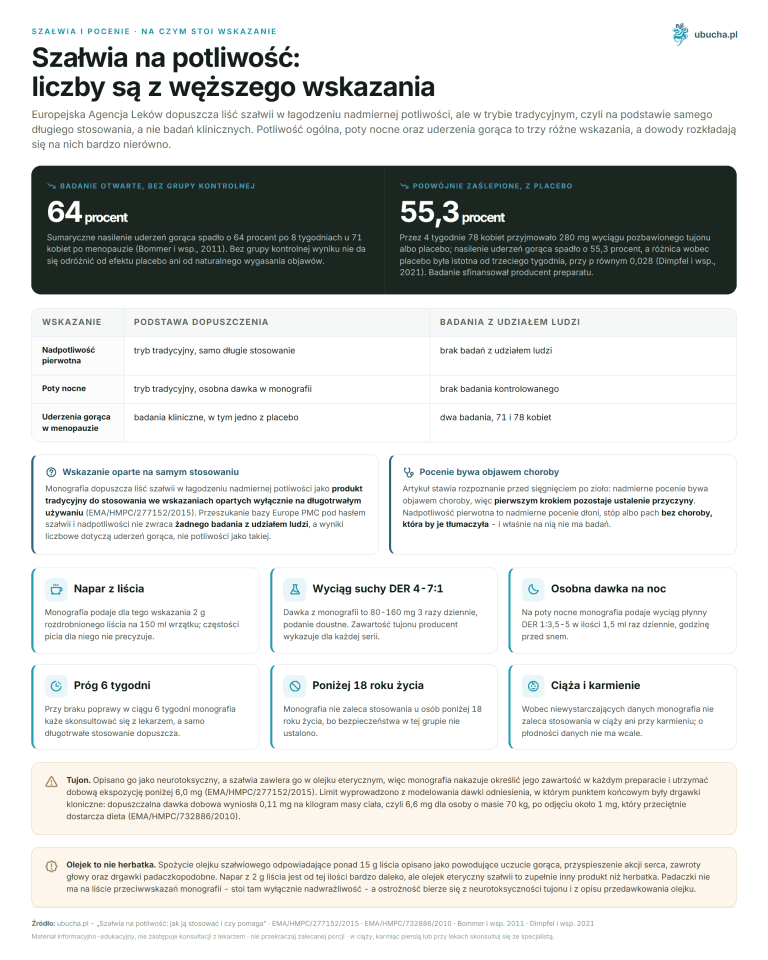
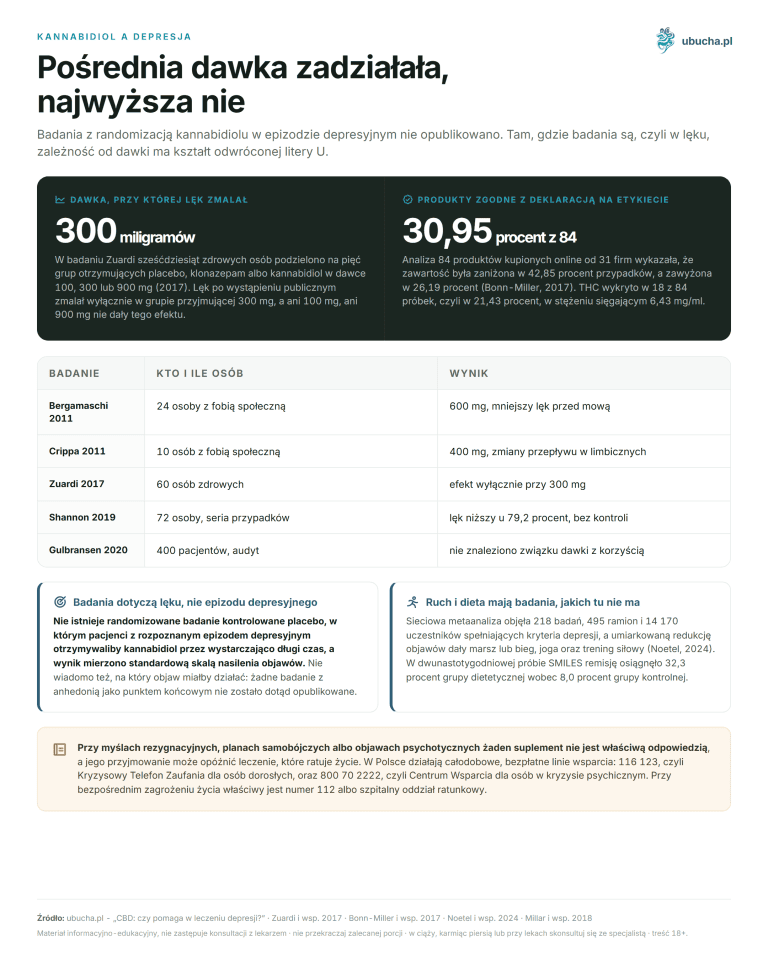
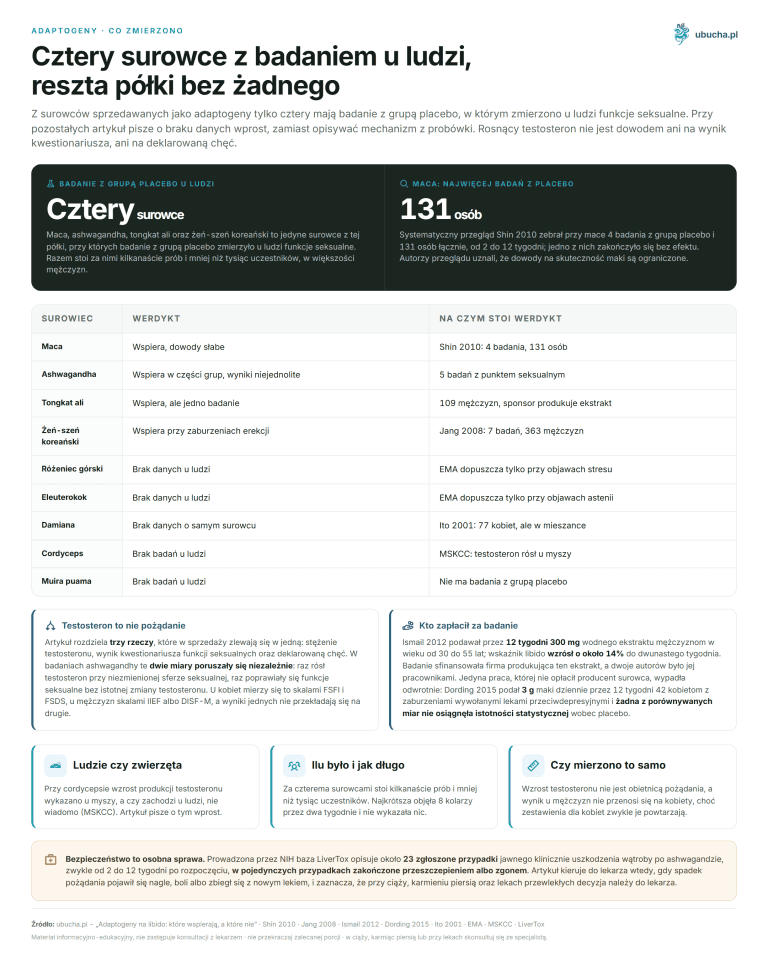
They talk about improvement measured in fractions of a point, not about the alleviation of symptoms. Three independent reviews of randomized works measured a decrease in pain intensity ranging from 0.23 to 1.59 points on a scale from 0 to 10, depending on the form of the preparation, and a simultaneous increase in the frequency of adverse events.
The most recent of them was published in 2026 in the Annals of Internal Medicine (PMID:41429020). It gathered 25 short trials with placebo and 2303 participants, of which 64 percent were diagnosed with neuropathic pain. Oral preparations, synthetic or purified, with a predominance of tetrahydrocannabinol over cannabidiol, showed an improvement of 0.78 points. Extracts applied to the mucous membrane of the oral cavity, with a similar ratio of both compounds, showed 0.54 points. Where the ratio was reversed, there might have been no result at all.
Two older reviews looked more broadly. A review with sequential analysis (PMID:36716312) included 65 randomized trials and 7017 participants, and for chronic pain calculated 0.43 points, with no effect on acute pain and cancer pain. A network meta-analysis from 2024 (PMID:38171632) placed cannabis alongside opioids based on 90 studies. These works differ in question and selection of preparations, so their results cannot be added together.
How Significant is an Improvement of 0.78 Points on the Pain Scale?
Small, and the authors themselves call it that. There is no agreed threshold for this scale, but published estimates of a noticeable difference perceived by the patient range roughly between one and two points, which is above the measured value for two of the three studied forms of the preparation.
The range within one group of preparations can be greater than the distance from placebo. In the same review, nabilone reduced pain by 1.59 points, while dronabinol by 0.23 points, although both contain only tetrahydrocannabinol and both are administered orally. The first of these numbers is almost seven times greater than the second, so the statement that cannabis helps with pain loses sight of what these measurements actually resolve.
The following table links each number with the study model from which it comes. Without this context, a fraction of a point looks like a more precise measurement than it actually is.
| Work | Model and Route of Administration | What Was Demonstrated |
|---|---|---|
| Barakji J et al., 2023 PLOS ONE PMID:36716312 |
systematic review with meta-analysis and sequential analysis of studies, 65 randomized and placebo-controlled studies, 7017 participants | Cannabinoids reduced chronic pain by 0.43 points on a numerical scale (98 percent confidence interval from minus 0.72 to minus 0.15) and improved sleep quality by 0.42 points, but did not reduce acute pain or cancer pain and did not improve quality of life. High risk of systematic error was found in 59 of the 65 included studies and in all results. |
| Jeddi HM et al., 2024 BMJ Open PMID:38171632 |
systematic review with network meta-analysis of randomized studies, 90 studies, 22,028 participants, observation from 28 to 180 days | Moderate certainty evidence indicated that opioids provide a small improvement in pain, physical function, and sleep quality compared to placebo, and low to moderate certainty evidence indicated a similar effect of cannabis compared to placebo. Neither was found to be more effective than placebo in functioning in social and emotional roles. There is likely no difference in physical function between cannabis and opioids. |
| Chou R et al., 2026 Annals of Internal Medicine PMID:41429020 |
systematic review of randomized and placebo-controlled studies, 25 short-term studies from 1 to 6 months, 2303 participants, 64 percent neuropathic pain | Oral synthetic or purified preparations with a high ratio of tetrahydrocannabinol to cannabidiol reduced pain intensity by an average of 0.78 points on a scale from 0 to 10, and extracts administered to the mucous membrane of the oral cavity with a comparable ratio of both compounds by 0.54 points. In both groups, dizziness, drowsiness, and nausea significantly increased. Among preparations containing only tetrahydrocannabinol, nabilone reduced pain by 1.59 points, and dronabinol by 0.23 points. Preparations with a low ratio of tetrahydrocannabinol to cannabidiol may not improve results at all. |
The row with the confidence interval requires a separate disclaimer. The authors of that review noted a high risk of systematic error in 59 of the 65 included trials and in all results. The improvement in sleep quality of 0.42 points was accompanied by a lack of impact on quality of life, and evidence regarding sleep alone is collected in a separate text about sleep.
Do Cannabis Perform Better Than Opioids?
No, but not worse either. The network meta-analysis from 2024 (PMID:38171632), based on 90 randomized studies and 22,028 participants observed from 28 to 180 days, did not show a clear advantage for either side. The comparison was a draw, not in favor of cannabis.
Moderate certainty evidence indicated that opioids provide a small improvement in pain, as well as physical function and sleep quality compared to placebo. For cannabis, the same picture was based on evidence of low to moderate certainty. Neither was found to be better than placebo in functioning in social and emotional roles, and there is likely no difference in physical function between them. The certainty of evidence speaks in this scale about how much further research may change the result, not about the magnitude of the improvement itself.
A draw does not mean interchangeability. Both groups of drugs have different risk profiles, different dispensing methods, and different pathways of dependence, and the network meta-analysis compares the results of trials that mostly did not directly compare these drugs with each other. The statement of superiority of one side over the other has no support in numbers, in either direction.
What Do These Reviews Not Resolve?
They do not resolve long-term treatment, flower described by strain name, or what a single person will experience. All three reviews provide averages from trials lasting at most half a year, and the best results were achieved with preparations with measured active substance content, which is something different than the plant raw material from the pharmacy.
The authors of the latest of these reviews themselves call the measured improvement small, and the studies lasted from one month to half a year, so they say nothing about long-term treatment. The comparison with opioids did not favor cannabis, only without a clear advantage for either side. None of these works concerned a single strain of flower or the assortment of a Polish pharmacy, and the products that performed best in them were established-dose medications, not flower.
Closing these questions would require randomized trials conducted on the raw plant material, longer than a year and with doses counted the same in each center. Such works for the assortment of Polish pharmacies have not been published. Observations from clinical practice usually do not have a comparison group, so they answer at most the question of who reaches for a prescription, not the question of treatment effectiveness.
What Strain Characteristics Matter in Chronic Pain?
From these studies, the ratio of two compounds is primarily important, not the strain name. Improvement was measured where tetrahydrocannabinol was clearly more than cannabidiol. None of the three cited reviews studied terpenes as a separate variable, so there are no answers about the scent profile in them.
Pharmaceutical raw material is described by the declared content of active substances, given with the manufacturer’s tolerance, not by the dose per administration. In the trials from which the above numbers come, preparations with measured doses were most often studied: oral or applied to the mucous membrane. Translating such a result to flower heated in a home device is an assumption of the reader, not a conclusion from the work.
Among registered items, the declared content of active substances and terpene composition differs, and databases describing this composition can be contradictory. The declaration itself is burdened with the manufacturer’s tolerance, so the same trade name from two suppliers can be a raw material of different potency. A separate study on neuropathic pain collects evidence for this narrower form of discomfort, as it concerned most participants in the cited trials. A list of items approved in Poland is maintained in a compilation of available strains.
How Quickly Does the Effect Start and How Long Does It Last?
This is determined by the route of administration, not the name of the preparation. With inhalation, the effect appears within a few minutes and subsides before evening, while after ingestion, one waits much longer, but the episode lasts a significant part of the day. This difference is greater than any difference between items from the pharmacy.
The route of administration determines the course more than the strain itself. After vaporization, the substance passes from the lungs to the blood almost immediately, so the first sensations appear after a few minutes, intensity increases for another ten to thirty minutes, and the whole effect passes within two to four hours. After ingestion, the raw material first passes through the intestine and liver, so the first sensations are waited for from half an hour to two, and the episode lasts six, sometimes eight hours. Hence the most common mistake with oral administration: those who think nothing is happening after thirty minutes and adjust the dose will receive both doses at once. The above ranges describe the route of administration, not the strain; pharmacokinetic studies for a single cultivar have not been published.
For chronic pain, this difference returns in another place. The reviews cited above studied oral preparations and those applied to the mucous membrane, which are routes with a slower onset and longer course, so the inhalation course described above is not what was measured in these works.
What Does the Doctor Decide, and What Does the Patient?
The final word lies with the attending physician, as this raw material reaches the patient only by prescription in the Rpw category. The patient is left with a description of the course of symptoms, reporting side effects, and a complete list of preparations taken daily. This dispensing method does not allow for independent selection from the list.
The decision about the form of the preparation, the route of administration, and the size of the dose results from the diagnosis and what else the patient is taking. The reviews mentioned above do not provide a rule that could be applied to one person, as they provide average differences compared to placebo burdened with uncertainty, not a course of action. The pharmacist dispensing the raw material checks the correctness of the prescription, but does not change the selection of the preparation.
The patient is left with self-observation, conducted so that it can be shown in the office: noting the intensity of symptoms on the same scale, times of administration, and what happened during the rest of the day. The availability of individual items in pharmacies changes from month to month, so the question of a substitute returns to the person issuing the prescription. The same person decides on the continuation or interruption of treatment, based on what the patient has recorded between visits.
What Adverse Effects Were Reported with Cannabis Use in This Indication?
The most common were dizziness, drowsiness, and nausea. In the 2026 review, their frequency significantly increased in both groups of preparations that improved the pain outcome at all. The comparison with sequential analysis of frequency did not provide, but noted a high risk of systematic error in 59 of the 65 included trials.
These symptoms are not a curiosity here, as they concern the same nervous system that the preparation is supposed to act on for pain relief. Adverse events were more frequent in the arms receiving the preparation than in the arms with placebo, and in the same schemes where improvement could be measured. The balance of benefits and harms is therefore resolved within one preparation, not between strain names.
Reports of adverse events are collected for the medicinal product with a batch number, not for the strain name, so the following concerns cannabis flower as a group of raw materials. The most frequently repeated are dry mouth, red eyes, and increased heart rate. Dizziness upon rapid standing, daytime drowsiness, and transient worsening of short-term memory are less frequently described, as well as anxiety increasing with the dose. A separate issue is medications taken concurrently, especially sedatives and those affecting coagulation: their assessment requires knowledge of the entire list of preparations, not just the description of the plant. We do not provide the frequency of these symptoms numerically, as public compilations for cannabis flower in Poland do not separate them by individual products.
Frequently Asked Questions
Do Cannabis Treat Chronic Pain?
No. Reviews of studies indicate a reduction in pain intensity by an average of a fraction of a point on a scale from 0 to 10 in observations counted in weeks and months, not about the alleviation of symptoms or treatment of their cause.
How Many Points Does Pain Decrease in These Studies?
From 0.23 points for dronabinol to 1.59 points for nabilone, with 0.78 points for oral preparations with a predominance of tetrahydrocannabinol and 0.54 points for extracts applied to the mucous membrane of the oral cavity. All these values come from a review published in 2026.
Do Cannabis Work Better Than Opioids?
No advantage was demonstrated for either side. The network meta-analysis of 90 studies with 22,028 participants found a similar, small improvement compared to placebo for both groups of drugs, and there is likely no difference in physical function between them.
Do the Results of These Studies Concern Pharmacy Flower?
Only indirectly. They studied preparations with measured doses, oral or applied to the mucous membrane, not flower described by strain name. None of the cited works included a single strain or the assortment of a Polish pharmacy.
How Long Did These Studies Last?
From one month to half a year in the 2026 review and from 28 to 180 days in the network meta-analysis. These works say nothing about the effects of use counted in years, as no one conducted observations that long.
Who Decides on the Choice of Strain for Chronic Pain?
The attending physician, as cannabis flower is a pharmaceutical raw material issued by a doctor’s prescription in the Rpw category. This text describes the state of evidence and is not a therapeutic recommendation or indication of any product.
Cannabis flower is a pharmaceutical raw material issued by a doctor’s prescription in the Rpw category. The material is informational and does not replace medical consultation nor encourage the use of anything. This entry is not a sales offer; the store category flower is managed by a separate page. Editorial text: editorial team ubucha.pl.