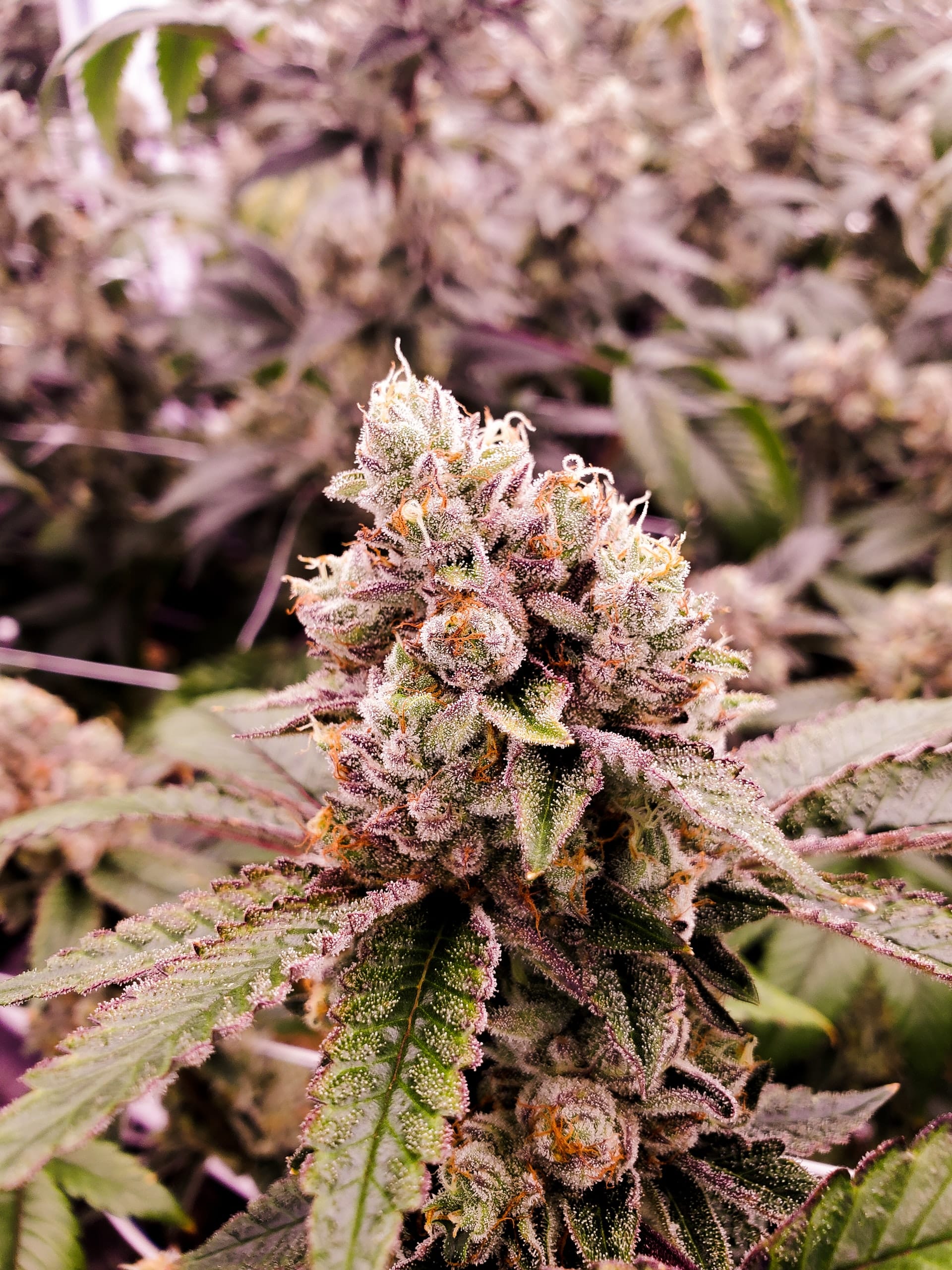

CBG, what kind of cannabinoid is it? The mother of all cannabinoids in 2026
CBG (cannabigerol) is a precursor of CBD and THC. We check what studies really show: MRSA, intestines, neurons, skin, and legal status in Poland.
Cannabigerol is a trace compound in the mature hemp plant, yet it is the starting point for everything else. THC, CBD, and CBC are formed from its acidic form, cannabigerolic acid (Walsh et al., Frontiers in Pharmacology, 2021). The nickname “mother of cannabinoids” sounds marketing-like but actually matches the plant’s biochemistry. This text organizes what is really known about cannabigerol as of August 2026 and what is overinterpretation repeated online. For each claim, we provide the source study and note whether it involved humans, animals, or cell cultures. In two places, the study result is opposite to what stores say about CBG, and these two are described in detail. You will learn why this compound is rare, which receptors it acts on, what studies on bacteria, intestines, and neurons showed, and what its legal status in Poland is.
KEY INFORMATION
- CBG is formed from cannabigerolic acid, a common precursor of THC, CBD, and CBC (Walsh et al., Frontiers in Pharmacology, 2021).
- In receptor studies, CBG is a partial agonist of CB2; its effect on CB1 is measurable but the mechanism remains unclear (Navarro et al., Frontiers in Pharmacology, 2018).
- The strongest result concerns bacteria: CBG killed methicillin-resistant Staphylococcus aureus and was effective in a mouse model of systemic infection (Farha et al., ACS Infectious Diseases, 2020).
- Contrary to cosmetic claims, CBG increased lipid synthesis in cultured human sebocytes, and the authors saw it rather for dry skin (Oláh et al., Experimental Dermatology, 2016).
- There is no study establishing a safe dose of CBG for humans.
What is CBG and where does it come from in the hemp plant?
CBG, or cannabigerol, is a non-psychoactive plant cannabinoid. It is formed by decarboxylation of cannabigerolic acid (CBGA), a compound from which plant enzymes produce the acidic forms of THC, CBD, and CBC. Hemp produces over 120 cannabinoids, and CBG belongs to the so-called minority cannabinoids, present in small amounts (Walsh et al., Frontiers in Pharmacology, 2021).
All this chemistry happens in one place: glandular hairs, or trichomes, covering the flower. This is where precursors accumulate, where synthases work, and where the finished cannabinoid deposits (Xie et al., Horticulture Research, 2023). The pathway looks like a river with a branch.
- The plant assembles two precursors into cannabigerolic acid, the first full cannabinoid in this sequence.
- Separate synthases convert CBGA into cannabidiolic acid, tetrahydrocannabinolic acid, or cannabichromenic acid.
- The longer the plant matures, the less unused CBGA remains, so the amount of ready CBG in the flower decreases.
- Varieties described as CBG-dominant are plants in which this conversion does not proceed at the normal rate, so the precursor accumulates.
The practical conclusion for the reader is simple. The rarity of CBG does not result from the plant producing little of it, but from it being immediately used up. Therefore, raw material rich in cannabigerol comes from varieties bred specifically for this compound, not from ordinary dried flower from which it could be profitably extracted.
How does CBG act on cannabinoid receptors?
The most detailed description comes from a study that examined CBG binding to both cannabinoid receptors in parallel. CBG competed for binding sites on CB1 and CB2 with Ki constants in the single micromolar range, and in living cells, where measurement was possible only for CB2, a value of 152 nM was obtained (Navarro et al., Frontiers in Pharmacology, 2018).
The authors’ conclusion is more cautious than commercial descriptions suggest. A set of signaling tests, from cAMP through ERK phosphorylation to beta-arrestin recruitment, showed that CBG is a partial agonist of the CB2 receptor. The effect on CB1 was measurable, but, quoting the study directly, the molecular mechanism of this effect remains uncertain. The statement “CBG directly activates CB1 and CB2,” which circulates in product descriptions, is therefore an oversimplification ahead of the data.
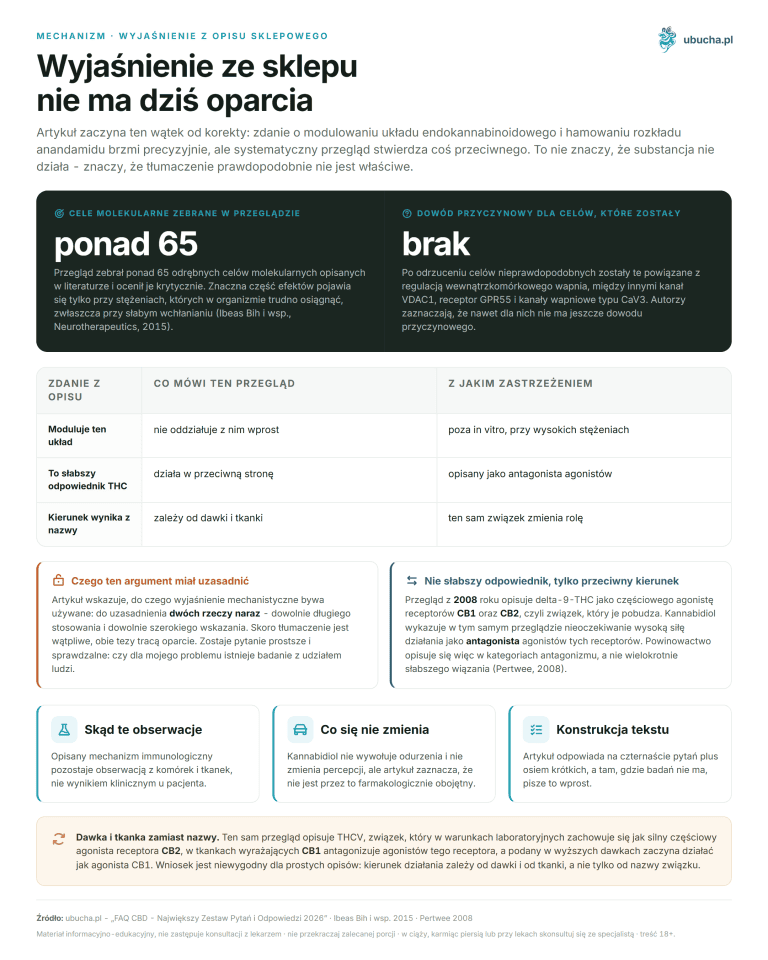
A broader review of minority cannabinoid pharmacology adds the rest of the picture. Compounds in this group act as agonists and antagonists on multiple targets simultaneously: CB1 and CB2 receptors, TRP channels, PPAR receptors, and serotonin 5-HT1a receptor. However, the same review begins with a caveat that knowledge of the pharmacology of these compounds is incomplete (Walsh et al., Frontiers in Pharmacology, 2021).
Why doesn’t CBG intoxicate? Receptor data indicate weak and ambiguous action on CB1, the receptor responsible for THC’s psychoactive effect. None of the studies we found describe intoxicating effects after cannabigerol.
How do cannabinoids formed from the same precursor differ?
A common start does not mean common action. Several compounds with completely different molecular profiles arise from cannabigerolic acid, and differences are best seen when comparing their targets rather than their names. A review of minority cannabinoid pharmacology describes this group as acting on CB1 and CB2 receptors, TRP channels, PPAR receptors, and serotonin 5-HT1a receptor (Walsh et al., Frontiers in Pharmacology, 2021).
| Compound | How it forms | What is known from reviewed studies |
|---|---|---|
| CBG | decarboxylation of CBGA | partial agonist of CB2, effect on CB1 measurable but mechanistically unresolved (Navarro 2018) |
| THC | from CBGA via THCA synthase | reference point for strong CB1 activity, hence psychoactive effect (Arnold 2025) |
| CBN | secondary oxidation of THC | CB1 activity much lower than its own metabolite 11-hydroxy-CBN (Arnold 2025) |
| CBC, CBDV, THCV | separate branches of the same pathway | these, not CBG, suppressed lipid synthesis in human sebocytes (Oláh 2016) |
One entry in this table deserves a separate sentence because it shows how easy it is to be off by an order of magnitude. In a study on cannabinol and sleep in rats, it turned out that the metabolite 11-hydroxy-CBN, formed from CBN, reaches brain concentrations comparable to the parent compound and acts on CB1 receptor with strength close to THC, while CBN itself acted much weaker there (Arnold et al., Neuropsychopharmacology, 2025). Thus, a cannabinoid’s profile can be shaped not by itself but by what the body converts it into.
Which hemp varieties yield the most CBG?
Raw material rich in cannabigerol comes from varieties in which the conversion of CBGA to other cannabinoids is impaired. The receptor study describes CBG as a compound “abundant in some industrial hemp varieties,” and that is all the certain knowledge we found about content (Navarro et al., Frontiers in Pharmacology, 2018).
The most frequently mentioned line in Europe is Santhica, an industrial hemp variety registered in the EU variety catalog. In Polish trade, it appears in hemp flower described as CBG. Across the ocean, names like White CBG, Jack Frost CBG, and Stem Cell CBG repeat, though data on their content come from breeders’ materials, not peer-reviewed studies.
Here is an honest caveat. The original version of this article contained specific numbers: the year Santhica was created, percentages of cannabigerol in various lines, yields in kilograms per plant. None of these could be confirmed in peer-reviewed databases, so they were removed rather than rewritten. The same applies to the sentence about how many grams of CBG a kilogram of flower yields.
The term “CBG-dominant” is neither a legal category nor standardized. No threshold has been set for its use, so on one label it may mean raw material with a clear predominance of cannabigerol, and on another simply the presence of this compound in the profile. Registered are varieties, not marketing slogans, and the variety register refers to plant identity, not the cannabinoid content of a given batch.
What does this mean when buying? The variety declaration on the label only means the producer knows the source of the raw material. The deciding factor is the certificate of analysis: a document from an independent laboratory showing measured content of individual cannabinoids and results for heavy metals, pesticides, and solvent residues. Without it, the percentage declaration is a promise, not a measurement.
What do studies on CBG show and which involved humans?
The research on cannabigerol is real but almost entirely preclinical. Of the studies we checked individually, only one involved humans, and it was a survey, not a clinical trial. The rest are animal models and cell cultures. The table below summarizes what each really showed.
| Study | Model | Findings |
|---|---|---|
| Farha 2020, ACS Infectious Diseases | bacteria, mouse | CBG killed methicillin-resistant Staphylococcus aureus and was effective in systemic infection in mice |
| Borrelli 2013, Biochemical Pharmacology | mouse | CBG alleviated DNBS-induced colitis |
| Valdeolivas 2015, Neurotherapeutics | mouse | CBG protected striatal neurons in two Huntington’s disease models |
| Oláh 2016, Experimental Dermatology | human sebocytes | CBG increased lipid synthesis; sebostatic effects were from CBC, CBDV, and THCV |
| Russo 2022, Cannabis and Cannabinoid Research | survey, 127 people | self-assessed efficacy for anxiety, chronic pain, depression, and insomnia |
What is missing from this table? Oncology and neurodegenerative diseases other than Huntington’s. Also missing is the gut microbiome. The earlier version of this text described studies in these areas with percentages, but none could be found in peer-reviewed databases, so this entire section was removed rather than corrected.
Does CBG act on antibiotic-resistant bacteria?
This is the most strongly documented action of cannabigerol. A 2020 study showed that cannabinoids inhibit growth of methicillin-resistant Staphylococcus aureus, block biofilm formation, and destroy already formed biofilm and stationary phase cells that survive antibiotic contact (Farha et al., ACS Infectious Diseases, 2020).
Among the compounds tested, CBG was described mechanistically. It acts on the cytoplasmic membrane of Gram-positive bacteria. The authors also demonstrated CBG’s efficacy in a mouse model of systemic MRSA infection, which is a significant step beyond test tube studies.
Gram-negative bacteria defend themselves with an additional outer membrane, so cannabinoids alone are weak against them. However, when this membrane was permeabilized, cannabinoids acted, and CBG attacked the inner membrane. Combined with polymyxin B, cannabinoids acted on multidrug-resistant Gram-negative rods, which the authors describe as a broad field for further research.
What must not be concluded? That CBG oil cures infections. The study describes an active substance in laboratory conditions and in mice, not a consumer product in humans. It also does not contain comparison with vancomycin or minimum inhibitory concentration values that circulated in the previous version of this article; both numbers were removed because they are not in the cited study.
Does CBG alleviate colitis?
In a mouse model, yes, and the description is quite detailed. After inducing colitis with dinitrobenzene sulfonic acid, cannabigerol reduced the ratio of colon weight to length, myeloperoxidase activity, and inducible nitric oxide synthase expression, while increasing superoxide dismutase activity (Borrelli et al., Biochemical Pharmacology, 2013).
The study went beyond markers. CBG normalized changes in interleukin 1-beta, interleukin 10, and interferon gamma levels induced by DNBS. In macrophages, it reduced nitric oxide production and iNOS protein amount, though not its matrix RNA, and in intestinal epithelial cells, it decreased reactive oxygen species formation.
A mechanistic curiosity worth knowing because it complicates the simple picture: blocking CB1 receptor did not change CBG’s effect on nitric oxide, and blocking CB2 receptor actually enhanced this effect. So the effect is not simply due to stimulation of cannabinoid receptors.
The authors conclude literally: CBG can be considered for clinical experiments in patients with inflammatory bowel disease. This means that at the time of publication, such studies did not exist. The previous version of this article described a clinical trial on 32 patients with Mayo index reduction; we found no such study and removed it along with the numbers.
Does CBG protect neurons in Huntington’s disease?
In two mouse models, it was protective, though the effect strength differed greatly. In mice intoxicated with 3-nitropropionic acid, cannabigerol was, in the authors’ words, exceptionally active as a neuroprotector: it improved motor deficits and protected striatal neurons from the toxin (Valdeolivas et al., Neurotherapeutics, 2015).
In the same model, CBG suppressed reactive microglial gliosis and proinflammatory markers, and improved antioxidant defense lowered by the toxin. This is a consistent picture of anti-inflammatory and antioxidant action in nervous tissue.
The second model, R6/2 mice with a genetic Huntington’s equivalent, showed a much smaller effect: improvement in the rotarod test was, quoting the study, much smaller but statistically significant. Microarray analysis showed partial normalization of expression of several disease-related genes and moderate improvement for BDNF, IGF-1, and PPAR-gamma receptor. A small but significant reduction in mutant huntingtin aggregation in the striatum was also noted.
How to interpret this? As a premise for further research, as the authors themselves call it, not as a basis for using cannabigerol in neurodegenerative disease. There are no human studies in this indication, and the difference between two models in one study shows how much the result depends on what exactly is modeled.
Does CBG help with oily skin and acne?
The result here is opposite to the cosmetic promise and must be stated clearly. In cultured human sebocytes SZ95, five non-psychotropic cannabinoids were tested, and each changed baseline lipid synthesis differently. CBC and THCV suppressed it, CBDV had minimal effect, and CBG and CBGV increased it (Oláh et al., Experimental Dermatology, 2016).
The authors’ conclusion is clear: CBG and CBGV may have potential in treating dry skin, while CBC, CBDV, and especially THCV are candidates against acne. These three compounds significantly reduced arachidonic acid-induced acne-type lipogenesis. If you want broader background on the first, we have a separate text about what CBC is and how cannabichromene works.
The previous version of this article claimed that CBG reduces sebum overproduction and supported it with this study. That was a reversal of the result, not an inaccuracy. It was corrected because a reader with oily skin who bought a serum with cannabigerol based on that sentence would get an ingredient acting in the opposite direction.
What speaks in favor of CBG in this study? Anti-inflammatory action. All tested cannabinoids clearly inhibited the inflammatory response of sebocytes stimulated with lipopolysaccharide, and the authors see them as tools in inflammatory skin conditions. They also noted a safety threshold: up to 10 micromolar cell viability changed slightly, but at 50 micromolar and above apoptosis occurred.
How does CBG differ from CBD and THC in user experience?
The only human data we could confirm come from a survey of 127 people using cannabis with a predominance of cannabigerol, i.e., raw material containing over half CBG in the cannabinoid profile. This is a self-report study, without a control group or objective measurement (Russo et al., Cannabis and Cannabinoid Research, 2022).
Reasons for use were as follows: anxiety in 51.2 percent, chronic pain in 40.9 percent, depression in 33.1 percent, and insomnia and sleep disorders in 30.7 percent. Most rated their condition as very improved or improved. Advantages over previous medications were declared by 73.9 percent for chronic pain, 80 percent for depression, 73 percent for insomnia, and 78.3 percent for anxiety.
The side effect profile was mild. No side effects were reported by 44 percent, dry mouth by 16.5 percent, drowsiness by 15 percent, increased appetite by 11.8 percent, and dry eyes by 8.7 percent. Withdrawal symptoms were not reported by 84.3 percent, with sleep difficulties being the most common.
Here is something that must be said separately. Popular marketing narrative positions CBG as the “focus cannabinoid,” opposed to the “sleep and relaxation cannabinoid,” i.e., CBD. In the only human study, concentration does not appear among reasons for use at all; the list is led by anxiety and pain. The previous version of this article gave percentages for concentration and muscle tension; these are not in this study or any other we found. We expand the comparison of the three compounds in the text about how CBD, THC, and CBG differ in properties and uses.
How much CBG to take and what is unknown about dosing?
There is no study establishing a safe or effective dose of cannabigerol for humans. The survey described above recorded that people use raw material with a predominance of CBG but did not measure milligrams under controlled conditions. Therefore, this article does not provide any starting dose, and the previous version gave several.
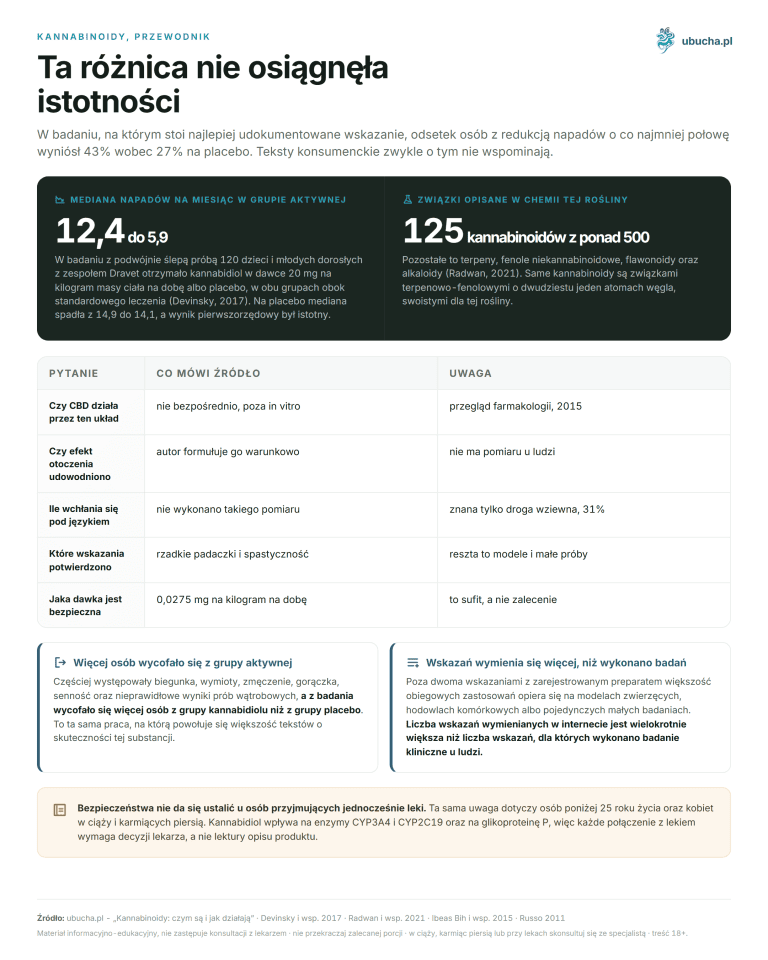
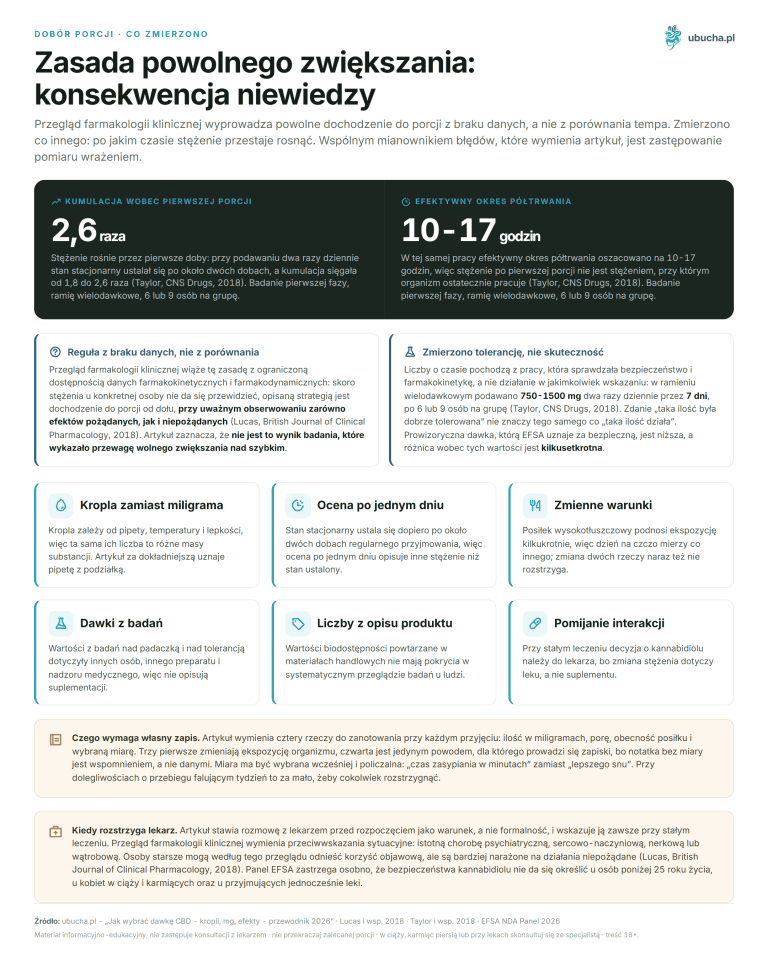
The closest reference point concerns CBD and is much lower than the market repeats. The European Food Safety Authority derived in 2026 a provisional safe dose of 0.0275 mg per kilogram body weight per day, about 2 mg daily for a 70-kilogram person, with an uncertainty factor of 400 (EFSA, EFSA Journal, 2026).
This value applies only to supplements with cannabidiol purity of at least 98 percent and without nanoparticles. The authority also states directly that safety cannot be established for people under 25 years old, pregnant and breastfeeding women, and those taking medications simultaneously. Animal studies showed consistent liver toxicity, and in humans, hepatotoxic signals increased with concurrent pharmacological treatment.
Another matter is absorption. A systematic review of cannabidiol pharmacokinetics in humans established absolute bioavailability only for inhalation, at 31 percent; no study measured this for oral or sublingual routes (Millar et al., Frontiers in Pharmacology, 2018). Percentage values circulating in product descriptions for sublingual drops have no support in this study. If you take medications regularly, discuss combining them with cannabinoids with a doctor, not a seller.
How to read a certificate of analysis for CBG oil?
A certificate of analysis, abbreviated COA, is a report on testing a batch of raw material performed by an external laboratory. It is the only document that turns a label declaration into a measurement. A producer who does not provide it asks for trust where it can simply be checked.
What to look for in such a document? The most important is the cannabinoid profile, i.e., a table with the content of individual compounds in the tested batch. It should include not only neutral forms but also acidic ones, because in unheated raw material most cannabinoids occur as acids. The sum of delta-9-THC and THCA corresponds exactly to what the law calls the threshold for industrial hemp, so this item, not delta-9-THC alone, indicates compliance with the regulation.
- Name and batch number and date of testing. A certificate from two years ago describes a different batch than the one in the bottle.
- Cannabinoid profile with acidic and neutral forms, including THC and THCA sum.
- Heavy metals, pesticide residues, and solvents used in extraction.
- Method of determination and detection limit, because a result “below threshold” means as much as the method’s sensitivity.
Label arithmetic is simpler than it seems and worth calculating yourself. The percentage refers to the mass of cannabinoid in the entire bottle content, so a ten-milliliter oil described as fifteen percent contains 1500 mg of cannabigerol, and one described as five percent contains 500 mg. This is a calculation of the package content, not a dosing guide: no study establishes a CBG dose for humans, and discrepancies between declaration and measurement appear only in the certificate.
What does a COA not tell you? Anything about efficacy or how the preparation will work for a particular person. It is a document about composition and purity of the batch, not proof of effect. A producer presenting a certificate as confirmation of health effect overinterprets their own document.
Is CBG legal in Poland in 2026?
The name cannabigerol does not appear on the list of psychotropic substances, narcotics, and new psychoactive substances. We checked this in the consolidated text of the Minister of Health’s regulation (Dz.U. 2024 item 1139); later amendments published as Dz.U. 2025 item 598 and Dz.U. 2026 item 934 concerned hexahydrocannabinol and the list of tetrahydrocannabinol isomers, not cannabigerol.
However, product legality is not determined by the compound’s name alone but by the raw material’s origin. Industrial hemp are Cannabis sativa L. plants in which the sum of delta-9-THC and tetrahydrocannabinolic acid in flower or fruiting tops, from which resin has not been removed, does not exceed 0.3 percent dry weight, rounded to one decimal place.
The basis is art. 4 point 5 of the Act of July 29, 2005 on counteracting drug addiction (consolidated text Dz.U. 2023 item 1939), as amended by the Act of March 24, 2022 (Dz.U. 2022 item 763), effective from May 7, 2022. Previously, the threshold was 0.20 percent. Two distinctions are often confused and both have practical significance: the threshold counts the sum of THC and THCA, not delta-9-THC alone, and it refers to the plant, not the finished product.
EU law has the same numerical value but is a separate regulation. Since January 1, 2023, hemp varieties eligible for support under the Common Agricultural Policy may contain up to 0.3 percent THC based on art. 4 sec. 4 of Regulation (EU) 2021/2115; previously it was 0.2 percent under Regulation 1307/2013, repealed the same day. The national threshold corresponds to the EU one but does not derive from it.
A limitation worth knowing before purchase concerns not possession but sale. Cannabinoids remain under the EU novel food procedure, so products enter the market as cosmetics or other categories than dietary supplements, and producers may not assign health claims not approved. The amendment to the Act on counteracting drug addiction effective August 27, 2026, does not change the THC threshold, substance classification, or retail sale rules.
Is the entourage effect really proven?
Not to the extent suggested by broad-spectrum product descriptions. The most cited work on the entourage effect is a review by one author, Ethan Russo, devoted to hemp terpenes and their possible interactions with cannabinoids (Russo, British Journal of Pharmacology, 2011). It is sometimes mistakenly attributed to two authors together with Raphael Mechoulam; Mechoulam appears in the text as the researcher who isolated THC in 1964.
The way the thesis is formulated in this work is important. Russo discusses limonene, myrcene, alpha-pinene, linalool, beta-caryophyllene, caryophyllene oxide, nerolidol, and phytol, points out interactions that could produce synergy, and proposes methods to test this in future experiments. He writes about synergy conditionally, in the mode “if proven.” This is not a report of a result but a research program.
What is solid in this review? That terpenes share a precursor with cannabinoids, have GRAS status as food ingredients, and affect animal and even human behavior at serum concentrations of single nanograms per milliliter after inhalation. Separately, it discusses potential antibacterial action, including against methicillin-resistant Staphylococcus aureus. You can find an expansion of this topic in our guide on what hemp terpenes are.
Three label terms are worth distinguishing because they concern composition, not action. Isolate is a single purified compound without the rest of the plant profile. Broad-spectrum preparation retains other cannabinoids and terpenes but has tetrahydrocannabinol removed. Full-spectrum preparation retains the entire raw material profile, including trace THC content within the legal threshold for industrial hemp. None of these three words is a declaration of efficacy.
The practical conclusion is less spectacular than the advertising slogan. Choosing a full- or broad-spectrum preparation instead of an isolate is a decision based on a hypothesis that sounds reasonable and has not yet been closed by a decisive human study.
Which claims about CBG lack support in studies?
We compiled them together because each repeats in product descriptions and each either lacks a source or has a source saying something else. All come from materials we encountered while checking this article, including its own previous version.
- “CBG gives an effect similar to THC.” Receptor data indicate weak and mechanistically unclear action on CB1, and no checked study describes intoxicating effects after CBG.
- “CBG is the focus cannabinoid.” In the only human study, concentration does not appear among reasons for use; the list is led by anxiety and chronic pain (Russo et al., 2022).
- “CBG regulates sebum and helps with oily skin.” The study supporting this shows increased lipid synthesis after CBG and indicates it for dry skin (Oláh et al., 2016).
- “CBG acts stronger than CBD.” There is no study comparing efficacy of both compounds in humans, so such a comparison has no basis.
- “CBG cures cancer.” We found no studies showing this. A person undergoing oncology treatment should discuss any supplement with their attending physician because cannabinoids may interact with pharmacotherapy.
- “Cannabinoids are safe up to 1500 mg per day according to WHO.” The source address for this statement does not work, and the latest European assessment gives a value three orders of magnitude lower (EFSA, 2026).
The common denominator of this list is simple. Cannabigerol has a real, interesting preclinical record that does not need embellishment; embellishment begins where test tube or mouse results are translated into statements about humans.
Frequently Asked Questions
What is CBG and why is it called the mother of cannabinoids?
CBG, or cannabigerol, is a non-psychoactive plant cannabinoid. The nickname comes from biosynthesis: THC, CBD, and CBC are formed in the plant from the same precursor as CBG, namely cannabigerolic acid (Walsh et al., Frontiers in Pharmacology, 2021). In the mature flower, the precursor is mostly used up.
Does CBG act on cannabinoid receptors like THC?
No. In binding studies, CBG was a partial agonist of the CB2 receptor, and its effect on the CB1 receptor was measurable but the mechanism remained unclear (Navarro et al., Frontiers in Pharmacology, 2018). This profile is completely different from the strong CB1 activation by THC.
Does CBG have antibacterial effects on MRSA?
In laboratory studies and in mice, yes. Cannabinoids killed methicillin-resistant Staphylococcus aureus, inhibited biofilm formation, and destroyed already formed biofilm, and CBG was also effective in a mouse model of systemic infection (Farha et al., ACS Infectious Diseases, 2020). This has not been studied in humans.
Does CBG help with intestinal inflammation?
Data come from a mouse model. Cannabigerol alleviated colitis induced by DNBS by reducing myeloperoxidase activity and iNOS expression and normalizing interleukin levels (Borrelli et al., Biochemical Pharmacology, 2013). The authors only propose clinical trials in patients.
Is CBG good for oily skin and acne?
A study on human sebocytes shows the opposite of cosmetic claims: CBG and CBGV increased baseline lipid synthesis, while CBC, CBDV, and THCV were indicated for acne (Oláh et al., Experimental Dermatology, 2016). The authors see CBG rather for dry skin.
What dose of CBG should be taken?
There is no study establishing a dose of CBG for humans, so this article cannot be turned into dosing instructions. For cannabidiol, the European assessment from 2026 gives a provisional safe dose of about 2 mg per day for a 70-kilogram person (EFSA, EFSA Journal, 2026). Discuss dosing with a doctor.
Is CBG legal in Poland in 2026?
The name cannabigerol does not appear on the list of controlled substances (consolidated text Dz.U. 2024 item 1139). The product’s status depends on whether it comes from industrial hemp, i.e., plants in which the sum of delta-9-THC and THCA does not exceed 0.3 percent of dry mass (art. 4 point 5 of the act, consolidated text Dz.U. 2023 item 1939).
What is worth remembering about cannabigerol?
CBG is rare in the plant not because little is produced but because it is immediately converted into other cannabinoids. Pharmacologically, it appears as a partial agonist of the CB2 receptor with unclear action on CB1, i.e., something completely different from THC and different from CBD.
The strongest record concerns bacteria: cannabigerol killed methicillin-resistant Staphylococcus aureus, disrupted biofilm, and acted in mice with systemic infection. Next are two mouse models: intestinal and neurological, promising and still preclinical. In humans, we have one survey of 127 people and nothing stronger.
Two statements must be reversed compared to what the market repeats. CBG does not reduce sebum secretion but increased it in cell culture, and its profile in the only human study is anxiety, pain, and insomnia, not concentration. No study establishes a safe dose of this compound, and the latest European cannabidiol assessment is orders of magnitude lower than numbers repeated online.
You can find products with this cannabinoid in the hemp oils category; before purchase, ask for a certificate of analysis and check the measured cannabinoid content.
This article is for informational and educational purposes and does not constitute medical advice. Before starting cannabis or CBD for therapeutic purposes, consult a doctor, especially if you take other medications, are pregnant, or breastfeeding.
Author: Michał Waluk · Published: 2026-05-04 · Updated: 2026-08-10