
Cannabinoids - What Are They and How Do They Work? Complete Guide 2026
The division of cannabinoids, the structure of the endocannabinoid system, differences between CB1 and CB2, the entourage effect, and the legal status in Poland, all with citations to research.
Hemp is one of the most chemically studied plants in the world, yet the most commonly repeated statements about it rarely have citations. The chemistry review of this species describes over 500 compounds, of which 125 are classified as cannabinoids (Radwan et al., Molecules, 2021). In this guide, we organize what these compounds are, how they are divided into groups, how they act in the body, and what can be said about them in light of Polish law. For each claim, we provide what exactly was measured and on what basis. We separately indicate when the result comes from cell culture or an animal model, as this is the most common place where consumer text jumps a level too high.
KEY INFORMATION
- Over 500 compounds have been described in cannabis, including 125 cannabinoids (Radwan et al., Molecules, 2021).
- CB1 receptors prevail in the brain, while CB2 receptors are on immune system cells (Nagarkatti et al., 2009).
- Cannabidiol probably does not interact directly with the endocannabinoid system outside of supra-physiological concentrations in vitro (Ibeas Bih et al., 2015).
- The entourage effect remains a hypothesis: the author of the concept writes conditionally about synergy and proposes methods to verify it (Russo, British Journal of Pharmacology, 2011).
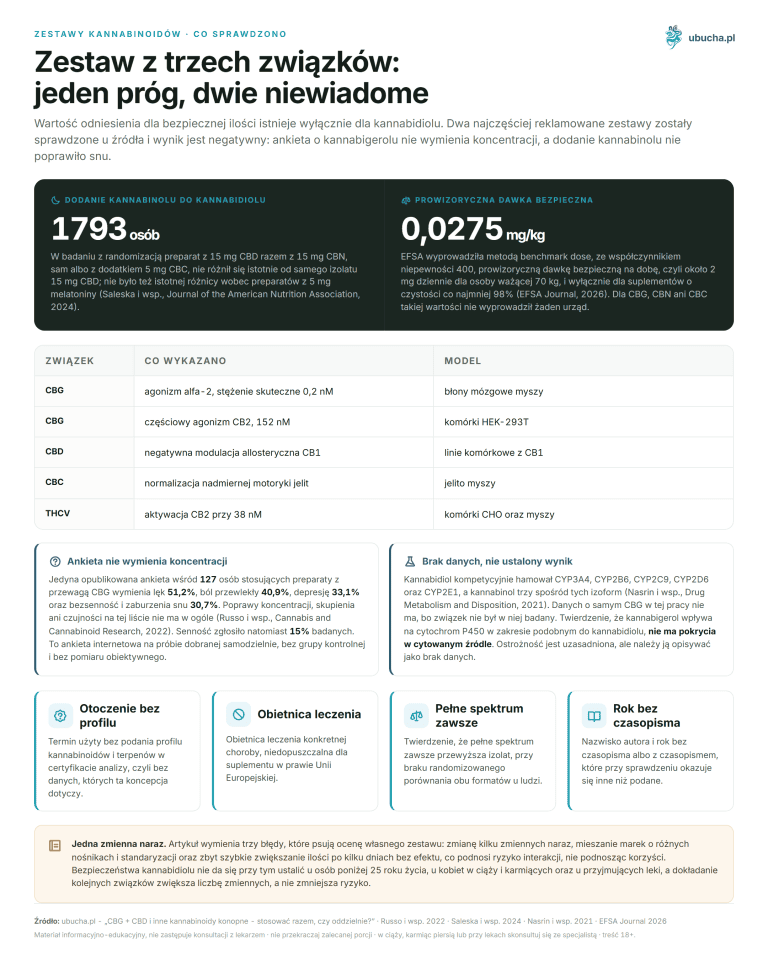
- EFSA provides a temporary safe dose of 0.0275 mg per kilogram of body weight per day, which is about 2 mg daily for a 70 kg person; this is a safety ceiling, not a recommendation.
What are cannabinoids and how are they divided into groups?
Cannabinoids are compounds that act on cannabinoid receptors, and they are divided by origin into three families with completely different risk profiles. Phytocannabinoids come from the plant. Endocannabinoids are produced by the body. Synthetic cannabinoids are created in the laboratory.
125 phytocannabinoids have been described in cannabis, among over 500 total compounds of this plant, which also include terpenes, non-cannabinoid phenols, flavonoids, and alkaloids. Cannabinoids themselves are terpenoid-phenolic compounds with twenty-one carbon atoms, unique to cannabis (Radwan et al., Molecules, 2021). The most well-known are tetrahydrocannabinol and cannabidiol, but they make up less than one percent of this list.
Endocannabinoids are lipid signaling molecules present in practically all tissues. They are not stored in vesicles like classical neurotransmitters; instead, they are produced on demand and quickly disappear. The best-described are anandamide and 2-arachidonoylglycerol.
The third family requires a separate warning. Synthetic cannabinoids include both substances registered as drugs and compounds sold as designer drugs. The latter act on the CB1 receptor much more strongly than anything derived from the plant, and they are responsible for most of the severe poisonings described in the literature. The term “cannabinoid” does not imply safety, as it encompasses both cannabidiol and a substance that can land someone in the emergency room.
It is worth noting that this list is not closed. The review from which the above numbers come is dedicated to the chemical structures and methods of isolating and identifying individual compounds, as new entries continue to emerge. For the reader, this means one thing: a statement about the number of cannabinoids always requires a date and source, and values given in texts without citation may be a decade old or rounded up for effect.
What are cannabinoid acids and how does heating change them?
In the living plant, cannabinoids exist almost exclusively in their acidic form, such as THCA, CBDA, or CBGA. Only decarboxylation, which is the removal of the carboxyl group under the influence of heat, transforms them into neutral forms. A review dedicated to this reaction emphasizes that the resulting analogs have pharmacology vastly different from their acidic counterparts (Filer, Cannabis and Cannabinoid Research, 2022).
This distinction has direct practical significance. Raw dry herb, an infusion of unheated herb, and an extract subjected to heat processing provide a different set of molecules. The author of the review points out that understanding the conditions under which decarboxylation occurs spontaneously allows it to be consciously induced or prevented at the stage of harvesting and storage.
Cannabinoid acids were long treated as inactive precursors, and this assumption has proven premature. In work using affinity selection and mass spectrometry, cannabinoid acids from cannabis were recognized as ligands for the spike protein of the SARS-CoV-2 virus, with micromolar affinity. In neutralization tests, cannabigerolic acid and cannabidiolic acid prevented infection of human epithelial cells by a pseudovirus and blocked the entry of live virus into cells, including alpha and beta variants (van Breemen et al., Journal of Natural Products, 2022).
How to read this? As a result from cell culture, not as information about the action of the preparation in humans. The authors themselves formulate the conclusion in a potential mode and speak of possibility, not proven efficacy. The distance between blocking the entry of a virus into a cell in a test tube and protecting a patient is standard in this field and rarely signaled in popular texts.
How is the endocannabinoid system structured?
It consists of three elements at once: receptors, endogenous lipid ligands, and enzymes that produce and break down these ligands. A pharmacological review describes this system as an emerging therapeutic target and links it to mood and anxiety disorders, movement diseases, neuropathic pain, multiple sclerosis, atherosclerosis, hypertension, glaucoma, obesity, and osteoporosis (Pacher et al., Pharmacological Reviews, 2006).
This list can be read as a promise, but it is a catalog of research directions. The presence of a receptor in tissue does not yet indicate the effect of administering a preparation to a human, and the 2006 review lists areas where research was ongoing, not indications where something has been proven.
The way the system operates is atypical and explains why it is described as a corrective mechanism rather than a constant signal. Ligands are produced only when a cell receives too strong stimulation, return to the signaling neuron, and silence it. This direction, opposite to normal signaling, is called retrograde signaling.
Enzymes close the entire cycle. Anandamide is broken down by fatty acid amide hydrolase, and 2-arachidonoylglycerol by monoacylglycerol lipase. Since ligands are not stored and their half-life is short, the system reacts locally and momentarily. It is present in practically every mammalian tissue, which distinguishes it from systems organized around a single organ and explains why its disorders can produce symptoms from very different areas.
What are the differences between CB1 and CB2 receptors?
Primarily their distribution. CB1 receptors are mainly found in the brain, while CB2 receptors are primarily on immune system cells, although the division is not binary (Nagarkatti et al., Future Medicinal Chemistry, 2009). This difference leads to everything else: CB1 activation alters consciousness, while CB2 activation alters the inflammatory response.
The second difference concerns how individual plant cannabinoids behave at these receptors. A pharmacological review of three of them describes this more precisely than popular shortcuts do.
| Compound | Behavior at CB1 and CB2 receptors |
|---|---|
| THC | partial agonist of both receptors; response depends on receptor expression level and current release of endocannabinoids |
| CBD | unexpectedly strong antagonist of CB1 and CB2 agonists in cells and tissues exhibiting these receptors |
| THCV | partial agonist of CB2 in vitro; antagonist in tissues with CB1, and at higher doses an agonist of CB1 |
This comparison comes from a review dedicated precisely to this issue (Pertwee, British Journal of Pharmacology, 2008). Note the last row, as it explains the apparent contradiction in descriptions of THCV: the same molecule blocks the receptor with one exposure and stimulates it with another, and the direction depends on the dose and tissue.
The author of the review also notes that all three compounds interact with targets other than cannabinoid receptors, and that THC induces pharmacodynamic tolerance. The distribution of the receptors themselves has been detailed in the text about CB1 and CB2 receptors.
Does CBD really work through this system?
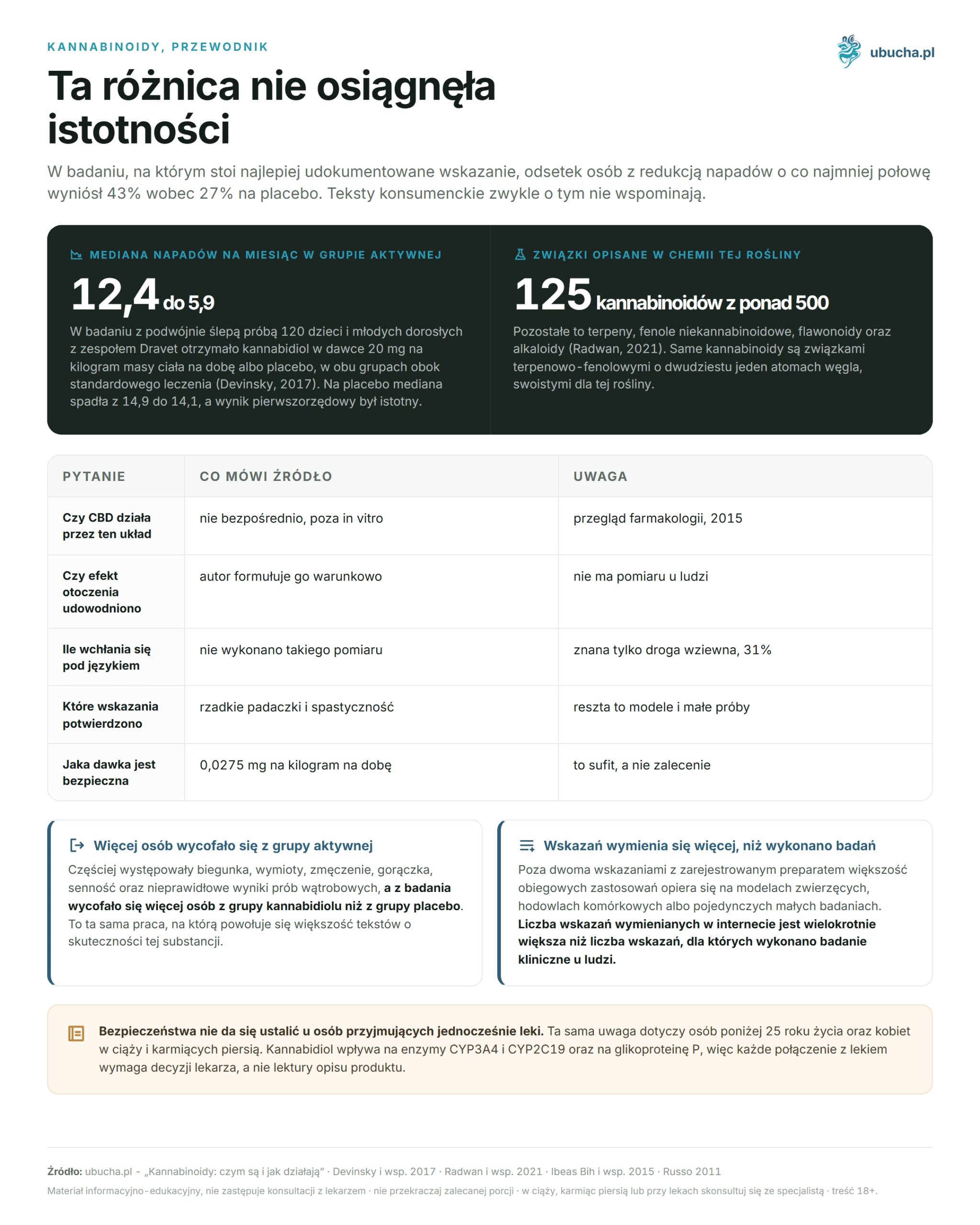
Probably not, at least not directly. A systematic review of the molecular pharmacology of cannabidiol states that this compound does not interact directly with the endocannabinoid system outside of supra-physiological concentrations in vitro (Ibeas Bih et al., Neurotherapeutics, 2015).
This statement is worth pausing on, as it contradicts the most common shortcut in texts about cannabidiol. The authors counted over 65 molecular targets attributed to this compound in the literature. After filtering out those that acted only at concentrations unattainable in the body, and those for which only correlation rather than causative relationship was demonstrated, a handful remained. The targets that survived this selection are related to intracellular calcium regulation.
The conclusion of the review is unequivocal. Cannabidiol very likely does not produce effects in neurological diseases through modulation of the endocannabinoid system, and for none of the remaining targets is there yet causal evidence. The mechanism of its action remains an open question, not a settled fact.
Why is this important in a text for the reader, and not just for the pharmacologist? Because a sentence like “cannabidiol supports your endocannabinoid system” sounds mechanistic and suggests that we understand what is happening. The effectiveness of this compound in rare pediatric epilepsies is clinically proven and does not depend on whether we can name the mechanism. However, two sentences must be kept separate: one speaks of the outcome, the other of how it arises.
The very number of attributed targets also says something. A molecule to which literature attributes over sixty points of action, but only a handful are confirmed, is a molecule with infinite pharmacology, not one with versatile action. These are two different interpretations of the same list, and only the first results from the review. A declaration of mechanism on the label is therefore not proof of action, even if it sounds specific.
Which minor cannabinoids are best described?
Three: cannabigerol, cannabinol, and tetrahydrocannabivarin, each for a different reason. The level of evidence varies among them enough that it is worth seeing this side by side.
| Compound | Strongest available material |
|---|---|
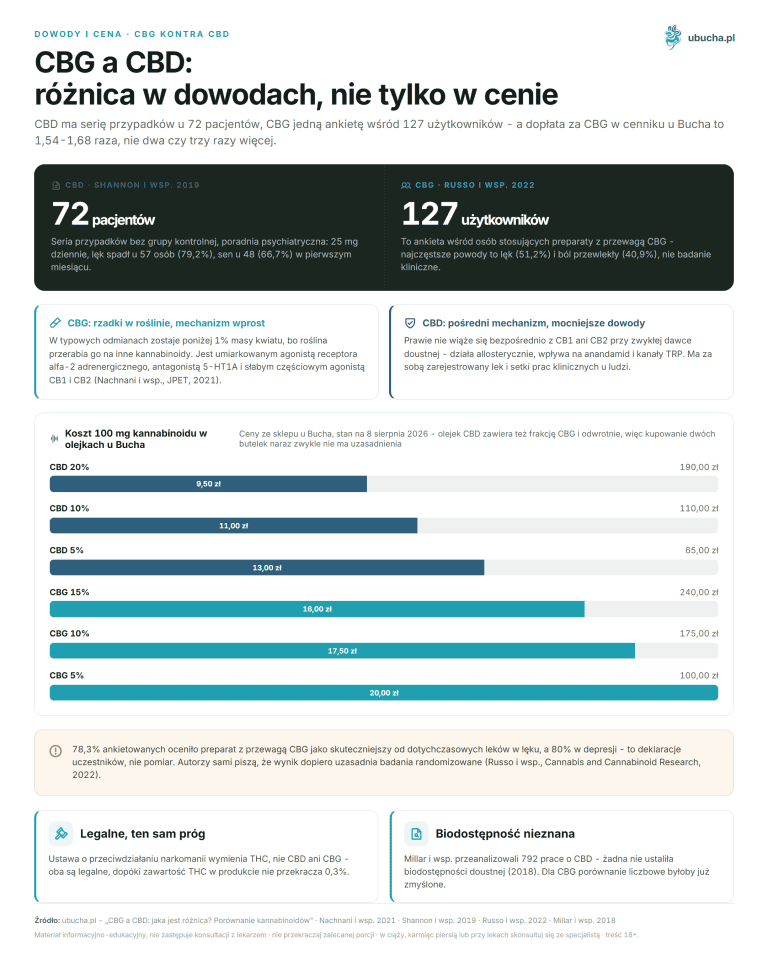
| CBG | microbiological studies and mouse infection model; separately a survey among 127 users |
| CBN | narrative review: no clinical studies with sleep as an endpoint |
| THCV | in vitro receptor pharmacology and after administration to animals |
Cannabigerol has the most interesting result outside the area in which it is advertised. Cannabinoids have shown activity against methicillin-resistant Staphylococcus aureus, inhibited biofilm formation, and removed already formed biofilm. The mechanism of cannabigerol involves action on the cytoplasmic membrane of Gram-positive bacteria, and its effectiveness has also been confirmed in a mouse model of systemic infection (Farha et al., ACS Infectious Diseases, 2020). Separately, a survey was conducted among 127 people using products with a predominance of cannabigerol: the most commonly treated ailments were anxiety in 51.2%, chronic pain in 40.9%, depression in 33.1%, and insomnia in 30.7% of respondents (Russo et al., Cannabis and Cannabinoid Research, 2022). This is a survey, not a randomized study, and the improvement in concentration attributed to this compound in commercial materials does not appear at all on the list of indications provided by respondents. More about the compound itself in the text about cannabigerol.
Cannabinol performs the weakest, despite its market position. A review checking the promise of sleep-inducing effects searched 99 abstracts of studies in humans and discussed eight works in detail. It found no clinical study assessing the impact of this compound on sleep using polysomnography or validated questionnaires, and the evidence for inducing effects typical of cannabis in humans is described as ambiguous (Corroon, Cannabis and Cannabinoid Research, 2021).
What is the entourage effect and is it proven?
It is based on the hypothesis that cannabinoids work together with terpenes more strongly than separately, and at this stage, it remains a hypothesis. The work from which the concept gained popularity was written by one author, not the duo attributed to it in most texts (Russo, British Journal of Pharmacology, 2011).
The content of this work is more cautious than suggested by citations. The author discusses cannabis terpenoids, mentioning limonene, myrcene, alpha-pinene, linalool, beta-caryophyllene, caryophyllene oxide, nerolidol, and phytol. He points out that they share a precursor with cannabinoids, that they are aromatic components present in the daily diet and recognized as safe by regulatory agencies, and that they act on animals and even humans at concentrations as low as single nanograms per milliliter of serum when inhaled from the environment.
The way the conclusion is formulated determines the status of the entire concept. The author writes that cannabinoid-terpenoid synergy, if proven, increases the chance of creating a long list of new preparations, and separately proposes methods that should be used to investigate it in future experiments. The work that is cited as evidence of the entourage effect is therefore a research program.
The practical conclusion is modest and worth stating directly. A full-spectrum preparation may act differently than a pure compound, but the statement “the extract is stronger than the sum of its components” has no support in a study that measures this in humans today. Terpenes are discussed more broadly in a separate text about cannabis terpenes.
Why is checking this hypothesis going so slowly? Because it is difficult to encapsulate it in a blinded study. The composition of the extract changes between batches of raw material, and the terpene profile carries a scent by which a study participant can recognize what they received. The author of the work devotes a separate section to this and proposes methods that could circumvent these obstacles. Since 2011, these proposals have seen few implementations.
What are the differences between full-spectrum, broad-spectrum, and isolate extracts?
By the range of what remains in the preparation after extraction. Full spectrum means a complete extract, along with trace amounts of THC within the limit for industrial hemp. Broad spectrum is an extract from which THC has been removed, retaining the remaining compounds. Isolate is a single cannabinoid with a purity close to one hundred percent.
The choice between them is often presented as a choice between potency and safety, and this simplification is worth dismantling. The argument for the superiority of extract over isolate is based on the entourage effect, which, as described above, remains a hypothesis requiring verification. The numbers circulating in this context, for example, the percentage of consumers allegedly choosing broad spectrum, came in this article from the homepage of an industry service and could not be linked to any study. They were removed along with the reference.
There are several practical differences that can be defended. Isolate allows knowing exactly what substance has been administered, and therefore it is used in clinical studies. THC-free preparations are often chosen by individuals undergoing drug testing. Full extract contains THC in trace but non-zero amounts, which can matter for test results with regular use.
What is worth remembering regardless of the chosen type? The certificate of analysis for the batch. It is the only document that states what is actually in the bottle, and its absence is information in itself. The declaration of spectrum on the label does not replace the result of a laboratory test of a specific batch.
Is endocannabinoid deficiency a disease?
No, it is a working hypothesis, and its author presents it as such. The concept of clinical endocannabinoid deficiency concerns three diagnoses: migraine, fibromyalgia, and irritable bowel syndrome. As support, the author points to documented differences in anandamide concentrations in cerebrospinal fluid in individuals with migraine and imaging evidence of reduced system activity in post-traumatic stress disorder (Russo, Cannabis and Cannabinoid Research, 2016).
It is important to keep the boundaries of this list in mind, as it is growing spontaneously in circulation. Depression, insomnia, and autoimmune diseases are sometimes added to the concept of deficiency, although the work does not mention them. The hypothesis remains an organizing model, not a diagnosis that can be made for a patient.
Separately stands the question of what actually increases the activity of this system in a healthy person. Here the material is modest but specific. In eleven trained cyclists, intense exercise raised anandamide levels in the blood during exercise and for fifteen minutes afterward, while the level of the second endocannabinoid remained unchanged. At the same time, the level of brain-derived neurotrophic factor increased, and both values were positively correlated (Heyman et al., Psychoneuroendocrinology, 2012).
What cannot be derived from this study? The statement that a supplement will replace training. The work describes the body’s response to exercise in eleven individuals, not a comparison of exercise with taking a preparation. Such a comparison simply was not conducted.
What is the legal status of cannabinoids in Poland?
The starting point is the definition of industrial hemp, not a list of allowed cannabinoids. According to Article 4 point 5 of the Act on Counteracting Drug Addiction, industrial hemp refers to plants of the species Cannabis sativa L., in which the sum of delta-9-THC and tetrahydrocannabinolic acid in the flowering or fruiting tops of the plants, from which the resin has not been removed, does not exceed 0.3% when calculated on dry weight, rounded to one decimal place (consolidated text Dz.U. 2023 poz. 1939, as amended by the Act of March 24, 2022, Dz.U. 2022 poz. 763).
Two details of this definition are lost in consumer texts, and both change the result of laboratory testing. The threshold concerns the sum of delta-9-THC and its acidic form, not delta-9-THC alone. It refers to the tops of the plant, not to the content in the finished product, although in commercial practice it is often cited in the latter role.
It is important to note that cannabidiol is not listed in any of the controlled substances lists maintained in the regulation of the Minister of Health regarding the list of psychotropic substances, narcotic drugs, and new psychoactive substances. Conversely, hexahydrocannabinol: HHC is a controlled substance in Poland. Tetrahydrocannabinols also remain on the list, and cannabis other than industrial hemp is available only by prescription, as a raw material for compounded medications.
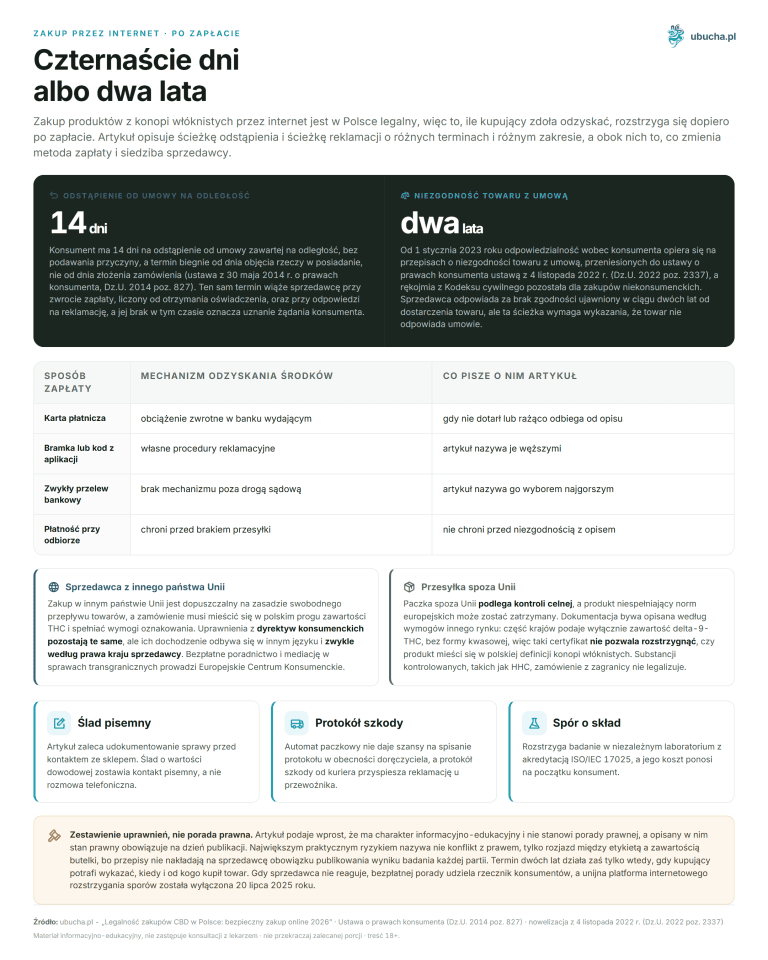
A separate matter is the food status. Cannabidiol is subject to the new food procedure in the EU, and it has not been completed, which is why products are sold as cosmetics or outside the dietary supplement category. Sanitary notification is not authorization for new food and does not change the status of the ingredient. The law also prohibits attributing therapeutic effects to cannabinoids in commercial communication, which is why product descriptions sound so cautious.
How much cannabidiol is absorbed into the body?
Less than suggested by tables circulating on the internet, and above all, it is not exactly known how much. A systematic review of pharmacokinetics in humans covered 24 studies and found that absolute bioavailability was measured only for the inhalation route, where it was 31% (Millar et al., Frontiers in Pharmacology, 2018).
For oral and sublingual routes, no study has established absolute bioavailability, even though injectable preparations were available and such measurement was technically possible. The popular table with values of a few percent for capsules and a dozen for drops under the tongue therefore has no source. In this article, it previously stood together with a citation that did not pertain to it, and it was removed entirely.
What does the review actually state? The half-life ranged from 1.4 to 10.9 hours after sublingual spray, from 2 to 5 days with chronic oral administration, 24 hours after intravenous administration, and 31 hours after smoking. Maximum concentration increased with dose and was higher after meals and in fat-based preparations. The time to maximum concentration ranged from zero to four hours.
The practical conclusion is modest but true. Meals and the type of carrier change the body’s exposure enough that two people taking the same number of milligrams may have different blood concentrations. The authors conclude with the statement that there is not enough data, and the available ones can be contradictory.
It is worth understanding the concept itself, as it determines the weight of the entire paragraph. Absolute bioavailability is the proportion of the administered dose that reaches circulation, and it is determined by comparison with intravenous administration of the same substance. Without an intravenous arm, one can at most provide the concentration in the blood after a given form of preparation, and that is not the same quantity. Tables attributing specific percentages to drops under the tongue confuse one with the other.
What dose of cannabidiol is considered safe?
The latest European assessment is more cautious than anything circulating in commercial materials. The panel of the European Food Safety Authority derived a temporary safe dose of 0.0275 mg per kilogram of body weight per day, which is about 2 mg daily for a person weighing 70 kilograms, with an uncertainty factor of 400 (EFSA, EFSA Journal, 2026).
This is a safety ceiling, not a recommended or therapeutic dose. The value applies only to supplements with a purity of cannabidiol of at least 98%, without nanoparticles, with a safe production process, and excluding genotoxicity. The number “1500 mg daily” repeated in texts about cannabis, attributed to the World Health Organization, is five hundred times higher than this, and its source address does not respond. We have removed it from this article.
One sentence from this assessment should stand in every text touching on dosing. The safety of cannabidiol cannot be established in individuals under 25 years of age, in pregnant and breastfeeding women, and in those taking medications simultaneously. The panel also lists warning signals: consistent liver toxicity in animal studies, crossing the placenta, hormonal disturbances, and a complete lack of studies on immunotoxicity.
Separately stands the issue of interactions, and it is the most common reason why a conversation with a doctor is not a formality. A review of registration data notes adverse effects in nearly half of those using cannabidiol, with a general dose-dependent relationship, including increased aminotransferase activity, drowsiness, and sleep disturbances. Since the compound affects the enzymes CYP3A4 and CYP2C19 and P-glycoprotein, the potential for interactions with commonly used drugs is high (Brown and Winterstein, Journal of Clinical Medicine, 2019). For this reason, you will not find a dosing protocol in milligrams in this article.
Which medical applications of cannabinoids are confirmed?
The best-documented are rare childhood epilepsies. In a double-blind study, 120 children and young adults with Dravet syndrome received cannabidiol at a dose of 20 mg per kilogram of body weight per day or placebo, in both groups alongside standard antiepileptic treatment (Devinsky et al., New England Journal of Medicine, 2017).
The primary outcome was significant. The median number of seizures per month decreased from 12.4 to 5.9 in the cannabidiol group compared to a decrease from 14.9 to 14.1 in the placebo group. The percentage of individuals with a reduction in seizures by at least half was 43% versus 27%, but this difference did not reach statistical significance, which consumer texts usually do not mention. Diarrhea, vomiting, fatigue, fever, drowsiness, and abnormal liver function tests occurred more frequently, and more individuals withdrew from the cannabidiol group.
The second area with a registered preparation is spasticity in multiple sclerosis, where a sublingual spray combining THC and cannabidiol is used. Beyond these two indications, most circulating applications are based on animal models, cell cultures, or single small studies.
A review system by system, from pain to sleep to skin, is conducted in a separate text about what impact cannabinoids have on health. Here, one organizing note suffices: the number of indications listed on the internet is many times greater than the number of indications for which clinical studies have been conducted in humans.
Frequently Asked Questions
How many cannabinoids are in cannabis?
The chemistry review of Cannabis sativa describes over 500 compounds, of which 125 are classified as cannabinoids. The rest are terpenes, non-cannabinoid phenols, flavonoids, and alkaloids. Cannabinoids themselves are terpenoid-phenolic compounds with twenty-one carbon atoms, unique to this plant.
What are the differences between CB1 and CB2 receptors?
Primarily their distribution. CB1 receptors are mainly found in the brain, while CB2 receptors are primarily on immune system cells, although the division is not binary. This difference means that CB1 activation alters consciousness, while CB2 activation primarily affects the inflammatory response.
Does CBD work through the endocannabinoid system?
Probably not directly. A systematic review of molecular pharmacology states that cannabidiol does not interact directly with this system outside of supra-physiological concentrations in vitro, and among over 65 described molecular targets, only a few remain credible, related to intracellular calcium regulation.
Has the entourage effect been proven?
No. The work from which the concept gained popularity formulates synergy conditionally, stating it in the mode of “if proven”, and separately proposes methods to investigate it in future experiments. The statement that a full extract works stronger than the sum of its components has no measurement in humans today.
Is CBD legal in Poland?
Cannabidiol is not listed in any of the controlled substances lists. The law uses the definition of industrial hemp, in which the sum of delta-9-THC and tetrahydrocannabinolic acid in the flowering tops of the plants does not exceed 0.3% dry weight. Hexahydrocannabinol, on the other hand, is a controlled substance in Poland.
How much cannabidiol is absorbed from drops under the tongue?
It is unknown. A systematic review of pharmacokinetics in humans established absolute bioavailability only for the inhalation route, which was 31%. For oral and sublingual administration, such measurements have not been made in any study, although it was technically possible.
What dose of cannabidiol is considered safe?
The European Food Safety Authority provides a temporary safe dose of 0.0275 mg per kilogram of body weight per day, which is about 2 mg daily for a 70 kg person. This is a safety ceiling, not a recommendation, and applies only to supplements with a purity of at least 98%.
Who should not use cannabidiol?
Safety cannot be established for individuals under 25 years of age, for pregnant and breastfeeding women, and for those taking medications simultaneously. Cannabidiol affects the enzymes CYP3A4 and CYP2C19 and P-glycoprotein, so any combination with a drug requires a doctor’s decision.
Products in this category can be found in the hemp oils section of the u Bucha store.
This article is for informational and educational purposes and does not constitute medical advice. Before starting to use cannabis or CBD for therapeutic purposes, consult a doctor, especially if you are taking other medications, are pregnant, or breastfeeding.
Author: Michał Waluk · Published: 2026-04-27 · Updated: 2026-08-10