
CBD - properties. What is CBD? Complete guide 2026
What is CBD, how it affects the body, which properties are confirmed by studies, the THC threshold in Poland, and how to choose product form and dose.
What is CBD? Cannabidiol is the second most abundant cannabinoid after THC in Cannabis sativa L. It has the same molecular formula as THC but does not cause psychoactive effects. The World Health Organization in a 2018 critical review recognized it as well tolerated and without addiction potential, and a year earlier the US FDA registered Epidiolex, the first drug based solely on cannabidiol. This guide leads from molecular structure through mechanism of action and scientific evidence to legal status in Poland, product forms, and dosing principles. It also shows which popular claims about CBD lack support in the studies cited.
KEY INFORMATION
• CBD and THC share the molecular formula C21H30O2 and molar mass 314.46 g/mol but differ in spatial structure (PubChem, NCBI).
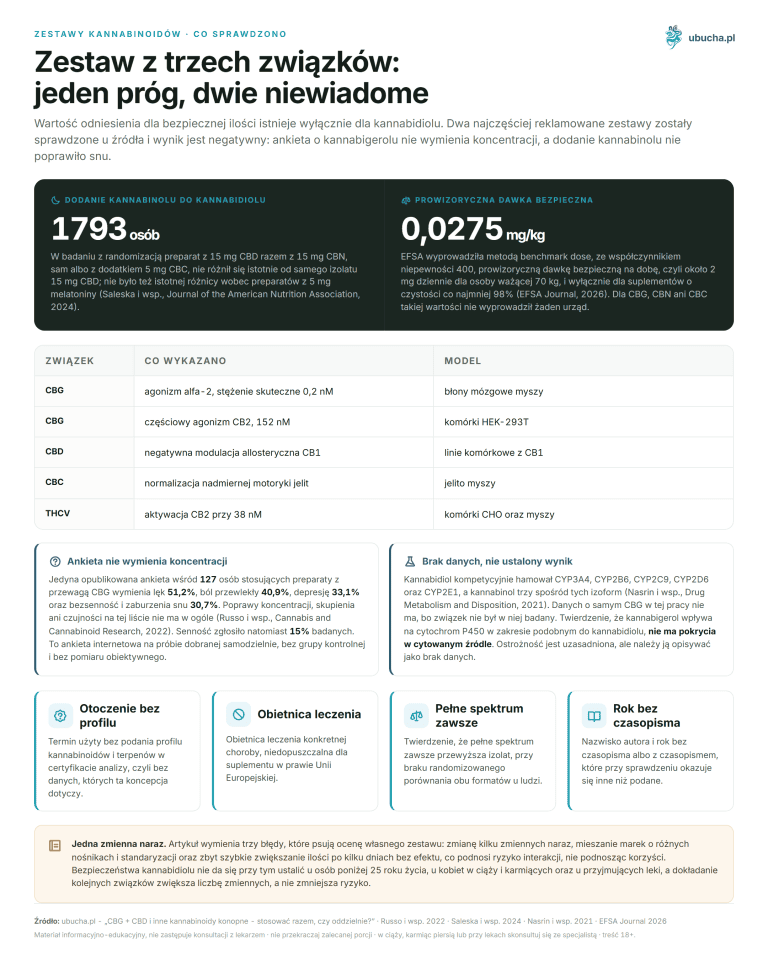
• A systematic review described over 65 molecular targets of CBD but considered effects via the endocannabinoid system alone unlikely (Ibeas Bih et al., Neurotherapeutics, 2015).
• In a study on children with Dravet syndrome, median seizures dropped from 12.4 to 5.9 monthly versus 14.9 to 14.1 on placebo (Devinsky et al., NEJM, 2017).
• The threshold for industrial hemp is 0.3%, calculated as the sum of delta-9-THC and THCA, not delta-9-THC alone.
• The only measured absolute bioavailability of CBD in humans is for smoking at 31%; for other administration routes it is unknown (Millar et al., Front Pharmacol, 2018).
What is CBD and how is its molecule structured?
CBD, or cannabidiol, is a phytocannabinoid with the molecular formula C21H30O2, composed of 21 carbon atoms, 30 hydrogen atoms, and 2 oxygen atoms. Its molar mass is 314.46 g/mol (PubChem, NCBI). In the plant, it mainly occurs in trichomes, the resin glands on female flower clusters.
In the living plant, cannabidiol is practically absent. Instead, its acidic form, cannabidiolic acid, is present, formed from the universal precursor cannabigerolic acid. Decarboxylation, caused by heating or long storage, removes the carboxyl group and converts the acid into CBD. The same precursor is at the start of other cannabinoids, as detailed in our article on cannabigerol.
CBD content in dried flower depends on the strain and cultivation conditions, so giving a single number for the whole category is meaningless. High-CBD strains have been developed through selection since the 1990s, with lines like Charlotte’s Web and ACDC as results. Actual content is provided only by the certificate of analysis for a specific batch.
The molecule’s discovery history is shorter than its popularity suggests. Cannabidiol was isolated in 1940 at the University of Illinois, but its full structure was described only in 1963 by Rafael Mechoulam’s team at the Hebrew University of Jerusalem. A year later, the same team determined THC’s structure, allowing the first spatial comparison of the two molecules.
Distinguishing between the acidic and decarboxylated forms is practically important, though rarely on labels. Lab results usually report both values separately, and producers may calculate total content accounting for mass lost during decarboxylation. Thus, two products with the same number on the package may describe different quantities. What matters is what exactly the certificate measures, not the number on the product.
How does CBD differ from THC?
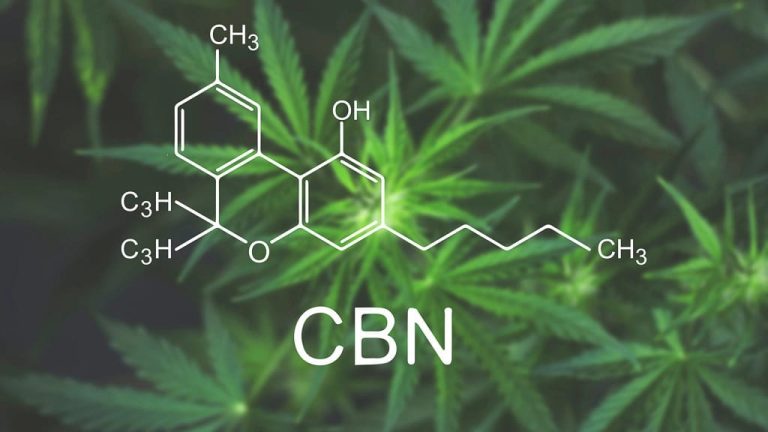
Both compounds have the same molecular formula and molar mass but differ in how the molecule folds. THC has a closed ring that fits the CB1 receptor binding pocket in the brain. CBD does not close this ring, so it does not fit CB1 and does not cause psychoactive effects.
This difference affects everything else. THC stimulates CB1, altering perception, causing euphoria, and impairing short-term memory. CBD instead modulates the receptor’s sensitivity to other molecules, including THC itself. It is described as a negative allosteric modulator of CB1, though the review of molecular targets notes many such effects were observed only in vitro at concentrations not achievable in the body (Ibeas Bih et al., Neurotherapeutics, 2015).
| Feature | CBD | THC |
|---|---|---|
| Molecular formula | C21H30O2 | C21H30O2 |
| Spatial structure | open ring | closed ring |
| Affinity for CB1 | minimal, indirect action | high, agonistic |
| Psychoactive effect | none | present |
| Status in Polish law | not listed in controlled substances | tetrahydrocannabinols are controlled substances |
One practical consequence is worth remembering. It is not the presence of CBD that determines product legality but the THC content in the plant material from which the product was made. Therefore, a label showing only cannabidiol content without THC results says less than it seems.
The identical molecular formula sometimes causes misunderstanding that labs cannot distinguish the two compounds. They can, because chromatographic separation is based on physicochemical properties, not atomic composition. Test results report separate values for cannabidiol, delta-9-THC, and tetrahydrocannabinolic acid, and the last two determine the legal classification of the material.
How does CBD affect the body?
Cannabidiol has no single binding site. A systematic literature review counted over 65 described molecular targets, including ion channels, receptors, transporters, and enzymes. The authors critically evaluated these reports and considered most unlikely at physiological concentrations (Ibeas Bih et al., Neurotherapeutics, 2015).
The same review concludes, rarely found in marketing materials, that CBD likely does not act in neurological diseases via modulation of the endocannabinoid system. The most credible targets were those related to intracellular calcium regulation, including the VDAC1 channel, GPR55 receptor, and CaV3-type calcium channels. Even for these, causal evidence is lacking.
| Molecular target | Attributed effect | Strength of evidence |
|---|---|---|
| 5-HT1A receptor | anxiolytic and antidepressant | confirmed in animal model, effect blocked by 5-HT1A antagonist |
| VDAC1 and CaV3 channels | intracellular calcium regulation | considered most likely, no causal proof |
| GPR55 receptor | modulation of neuronal excitability | credible, studied in epilepsy |
| TRPV1 receptor | analgesic via desensitization | mainly observed in vitro |
| CB1 and CB2 receptors | indirect action, allosteric modulation | direct effect considered unlikely physiologically |
The best documented single mechanism remains activation of the serotonin 5-HT1A receptor. In a mouse study, cannabidiol at 30 mg/kg reduced immobility time in the forced swim test similarly to imipramine, a classic antidepressant, and this effect was blocked by a 5-HT1A antagonist (Zanelati et al., Br J Pharmacol, 2010). This is an animal model, so direct extrapolation to humans would be an overreach.
A popular explanation that cannabidiol inhibits the enzyme breaking down anandamide, thus raising its levels, also comes from this list of targets. The review classifies it as a described but less well-proven mechanism and reminds that some such effects were observed at concentrations difficult to achieve in the body. This illustrates the difference between mechanisms described in literature and those demonstrated in humans.
What properties of CBD are confirmed by studies?
Evidence for cannabidiol’s effects forms a clear hierarchy. The strongest concern drug-resistant epilepsies and come from randomized human trials. Weaker but consistent evidence concerns anxiety. The rest, including anti-inflammatory and neuroprotective effects, rely on preclinical studies and isolated observations.
| Area | What was shown | Type of study |
|---|---|---|
| Drug-resistant epilepsy | median seizures dropped from 12.4 to 5.9 monthly vs. 14.9 to 14.1 on placebo; at least half seizures reduced in 43% treated vs. 27% placebo (Devinsky et al., NEJM, 2017) | randomized, 120 subjects, double-blind |
| Situational anxiety | only 300 mg dose reduced public speaking anxiety; 150 mg and 600 mg no different from placebo (Linares et al., Braz J Psychiatry, 2019) | randomized, 57 healthy volunteers |
| Mood | effect comparable to imipramine, dependent on 5-HT1A receptor | animal model |
| Neuroprotection and antioxidant | neuron protection from glutamate toxicity stronger than ascorbate and alpha-tocopherol (Hampson et al., PNAS, 1998) | rat neuron culture, in vitro |
| Anti-inflammatory | reported inhibition of pro-inflammatory cytokines and immune cell modulation | mainly preclinical, no decisive human studies |
Drug registration shows where proven effects end. In June 2018, the FDA approved Epidiolex, a standardized oral cannabidiol solution at 100 mg/ml, for treating Dravet and Lennox-Gastaut syndromes in children (FDA, 2018). A year later, the European Medicines Agency approved the same product as Epidyolex, and in 2020 added an indication for tuberous sclerosis.
Outside these indications, cannabidiol is not a drug and must not be attributed therapeutic effects. Consumer products contain doses orders of magnitude lower than those studied in epilepsy, where 20 mg per kilogram body weight daily was used.
How is CBD extracted from hemp?
Cannabidiol is extracted from hemp biomass by two main methods: supercritical carbon dioxide and ethanol. The method choice affects terpene profile, chlorophyll presence, and solvent residue risk - three factors consumers perceive in taste, color, and lab results.
Supercritical extraction uses carbon dioxide in a state between gas and liquid, achieved above about 74 bars and 31 degrees Celsius. In this state, it dissolves lipophilic cannabinoids and terpenes without thermal stress, and evaporates completely after decompression. The result is a solvent-free concentrate. The cost is equipment expense and process complexity.
The ethanol method immerses biomass in food-grade alcohol, which extracts cannabinoids along with chlorophyll, then evaporates it by distillation. It is cheaper and more efficient at large scale but requires thorough solvent removal and more often damages delicate terpenes. Additional freezing and filtration steps remove most unwanted components.
Hydrocarbon solvents like butane or hexane are a separate issue. They are not used in legal food or cosmetic production, and their residues are harmful. This is one reason why independent lab test results are more important than declared extraction method on the label.
After extraction, the crude extract undergoes purification. Freezing removes waxes and lipids, distillation increases cannabinoid content, and THC removal is an extra step for THC-free products. Each step changes terpene ratios, so full spectrum and broad spectrum oils from the same biomass may differ in taste and aroma more than THC content alone would suggest.
What is the difference between isolate, broad spectrum, and full spectrum?
After extraction, material can be further purified, and this purification level divides products into three categories. Isolate is nearly pure crystalline cannabidiol. Broad spectrum retains other cannabinoids and terpenes but has THC removed. Full spectrum preserves the plant’s natural profile including trace THC.
| Extract type | Composition | For whom |
|---|---|---|
| Isolate | pure cannabidiol, no terpenes or other cannabinoids | when neutral taste or certainty of no THC is needed |
| Broad spectrum | cannabinoids and terpenes with THC removed | when plant profile matters without THC detection risk |
| Full spectrum | full plant profile with trace THC | when trace THC within limits is acceptable |
The preference for broad and full spectrum is based on the entourage effect hypothesis, described by Ethan Russo in a paper on cannabinoid and terpene synergy (Russo, Br J Pharmacol, 2011). It assumes plant components act together differently than individually. This is a well-argued hypothesis, not a fact confirmed by clinical trials, and should be read as such in product descriptions. The role of terpenes is further discussed in our article on terpenes in hemp.
For those subject to drug testing, the difference is practical. Broad spectrum and isolate contain no THC, full spectrum contains trace amounts. The World Anti-Doping Agency removed cannabidiol from the banned substances list at the start of 2018, but THC remains banned.
Category names are not legally protected or defined. A producer may label a product as broad spectrum with THC removed to detection limits, while another may use the same name for a product with trace THC. The certificate of analysis number decides, not the package label. If the result says “below detection limit,” check the method’s detection threshold.
Is CBD legal in Poland?
Yes. Cannabidiol is not listed among narcotics, psychotropic substances, or new psychoactive substances, and products from industrial hemp are available without prescription. The limit is the THC content in the plant material from which the product was made, not the presence of CBD itself.
Industrial hemp are Cannabis sativa L. plants with a total delta-9-THC and tetrahydrocannabinolic acid (THCA) content in flower or fruiting tops, from which resin has not been removed, not exceeding 0.3% dry weight, rounded to one decimal place. This is based on Art. 4 point 5 of the Act of July 29, 2005 on Counteracting Drug Addiction, as amended by the Act of March 24, 2022 (Dz.U. 2022 item 763), effective May 7, 2022.
Two misunderstandings repeat often in CBD materials and should be named directly. First: the threshold is not divided into 0.3% for dried flower and 0.2% for extracts. No such division exists in any regulation, and 0.20% was valid until May 6, 2022, now only historical. Second: the threshold does not concern delta-9-THC alone. It is calculated as the sum of delta-9-THC and THCA, which changes lab test results.
A separate issue is the relation to EU law. Since January 1, 2023, hemp varieties eligible for support under the Common Agricultural Policy may contain up to 0.3% THC under Regulation (EU) 2021/2115. Previously, the EU threshold was 0.2% under Regulation 1307/2013, repealed at the end of 2022. The national threshold matches the EU one numerically but is a separate regulation.
When does CBD require a prescription and when not?
Products from industrial hemp sold as cosmetics, collectibles, or aromas are available without prescription. Pharmaceutical preparations with cannabidiol and cannabis herb other than industrial hemp, i.e., pharmaceutical raw material used in pharmacy compounding, require a prescription.
Access to pharmaceutical cannabis raw material was opened in Poland by the Act of July 7, 2017 (Dz.U. 2017 item 1458), effective November 1, 2017. Doctors issue prescriptions, and pharmacies prepare the medicine. Cannabidiol bought without prescription does not require this procedure but is not reimbursed or supervised as a drug.
The food status remains unresolved. Cannabidiol is undergoing novel food procedure in the EU, which is not completed, so it cannot be sold as a dietary supplement. This explains the category of collectible products, a consequence of legal status, not a sales trick. We discuss this in detail in our article on CBD product regulations.
From this status come communication limits. Producers cannot attribute therapeutic effects or use health claims not approved. Statements like “treats anxiety” or “prevents disease” are illegal regardless of research on the molecule itself.
For buyers, the collectible category has one real consequence. A product that is neither food nor drug formally is not subject to requirements for those categories, so quality depends solely on how the producer controls raw material and batches. Therefore, a certificate of analysis replaces supervision that does not exist. Without it, you buy a description, not a measurement.
Which CBD product form to choose?
Forms differ in onset speed, dosing convenience, and how much dose reaches the bloodstream. The last parameter is less studied than product descriptions suggest. A systematic review of human pharmacokinetics found absolute bioavailability only for smoking at 31%; for other routes it is unknown (Millar et al., Front Pharmacol, 2018).
| Form | Usage | What to watch for |
|---|---|---|
| Sublingual oil | drops held under tongue, then swallowed | easy dose titration; oil base affects taste and absorption |
| Capsules | swallowed like a pill | fixed dose and no taste, but slower onset |
| Gummies and edibles | oral | convenient; check sugar and colorants |
| Vaporizer flower | vaporizer, about 180-220 degrees Celsius | fastest onset; combustion not recommended |
| Cosmetics | topical on skin | local effect, no significant bloodstream absorption |
Pharmacokinetics suggests two practical points. Maximum concentration rises after a meal and with fat-based forms, so oil taken fasting and after eating behaves differently. Time to maximum concentration ranges from zero to four hours, explaining why assessing effect after twenty minutes is meaningless.
For oils, one simple calculation is useful before purchase. Divide total cannabidiol content in the bottle by the number of drops it contains. A 10 ml bottle has about 200 drops, so a product with 1000 mg cannabidiol gives about 5 mg per drop. This arithmetic also allows comparing products with different percentage concentrations. Available variants are collected in the oil category.
Is CBD safe?
The safety profile of cannabidiol is good but not zero. The World Health Organization in a 2018 critical review recognized CBD as well tolerated in humans, without addiction potential or abuse signal (WHO, 2018). We analyzed this document in detail in a separate article on the 2018 WHO report on CBD.
Clinical data review indicates the most common adverse effects are fatigue, diarrhea, and changes in appetite and body weight (Iffland and Grotenhermen, Cannabis Cannabinoid Res, 2017). Authors note that compared to drugs used for the same indications, CBD’s adverse effect profile is favorable but studies on its impact on liver enzymes and drug transporters are lacking.
This gap is directly relevant for people on chronic medications. Cannabidiol is often an add-on therapy, and interactions are most important then. The same review calls for further research on whether effects on other drug metabolism are beneficial, like reducing clobazam dose in epilepsy, or adverse.
Caution is advised during pregnancy and breastfeeding due to lack of safety data. People with liver diseases and those taking liver-metabolized drugs should consult a doctor or pharmacist before use. In children, cannabidiol is used only under medical supervision, with doses differing from adults.
The epilepsy registration study shows the source of liver caution. Among adverse events more frequent in the cannabidiol group than placebo were diarrhea, vomiting, fatigue, fever, drowsiness, and abnormal liver tests, with more withdrawals in the cannabidiol group (Devinsky et al., NEJM, 2017). This concerned therapeutic doses under medical supervision, much higher than consumer doses, but the signal direction is clear.
How much CBD to take and how to start?
The rule is gradual dose escalation. Start at a moderate level and increase over up to two weeks (MacCallum and Russo, Eur J Intern Med, 2018). The same authors remind that cannabidiol acts weaker than THC and requires much higher doses for supportive effects.
Increasing dose has a limit, not of safety but efficacy. In a randomized study with 57 healthy volunteers, only 300 mg reduced anxiety; 150 mg and 600 mg did not differ from placebo (Linares et al., Braz J Psychiatry, 2019). The dose-response curve is inverted U-shaped, so more is not better.
The practical conclusion is doses cannot be prescribed from an article. Instead, titrate sensibly: record amount and time, change one parameter at a time, give each dose several days before judging effectiveness. If no effect after reaching a clearly higher level, stepping back is more sensible than further increase.
Two situations require consulting a doctor before the first dose: chronic medication use and chronic illness. Clinical epilepsy studies used 20 mg per kilogram body weight daily under medical supervision, a level incomparable to consumer products. Transferring such doses to self-use is unjustified.
Timing may be more important than amount. A product taken after a meal yields higher maximum concentration than the same product fasting, so comparing two days with different eating patterns resolves nothing. Fix one time and meal pattern before judging dose effectiveness. Changing two things at once is the most common reason people quit after a week, not knowing what they tested.
Where did CBD’s popularity come from?
CBD’s popularity was built on three things: discovery of the endocannabinoid system, one publicized patient story, and drug registration. Each occurred in a different decade, together moving CBD from research margin to store shelves in about fifteen years.
The scientific basis came in the 1980s and 1990s. The CB1 receptor was identified, then CB2, then endogenous cannabinoids anandamide and 2-AG. It turned out the body has its own signaling system that phytocannabinoids can affect. Without this discovery, CBD would remain a chemical curiosity.
The image breakthrough was Charlotte Figi’s story, a girl with Dravet syndrome whose conventional treatment failed and whose parents used oil from a high-CBD, low-THC strain. The case aired on US national TV in 2013 and sparked a wave of interest. The strain used was named Charlotte’s Web. A single case is not proof of efficacy but changed public discussion direction.
Proof came later and elsewhere. A randomized study on children with Dravet syndrome published in 2017 showed cannabidiol’s superiority over placebo, and in 2018 the FDA registered Epidiolex. This was the first approved drug derived solely from cannabis, changing CBD’s status from alternative wellness to pharmacological substance with a defined indication.
Between these three moments and today’s store shelf lies a gap worth seeing. Registration covered one indication, one form, and doses in milligrams per kilogram body weight, while the consumer market grew around different uses and doses. Popularity outpaced evidence rather than arising from it, explaining most discrepancies between packaging promises and research findings.
How to recognize a good CBD product?
One document decides: the certificate of analysis from an independent lab for a specific batch. It reports cannabidiol and THC content, often also other cannabinoids and terpenes profile, plus pesticide, heavy metal, and solvent residue tests. A product without such a certificate is a declaration, not a measurement.
| What to check | Why it matters |
|---|---|
| Batch-specific certificate of analysis | only proof that declared content matches actual |
| Separate THC content | determines compliance with threshold and test risk |
| Extract type | isolate, broad or full spectrum are different products, not name variants |
| Extraction method | indicates solvent residue risk |
| Oil base | affects taste and product stability |
| Content in milligrams, not just percent | allows dose per drop calculation and product comparison |
Warning signs are fewer but clear. Lack of certificate, no THC content info, unreadable label without active substance mass, and price far from market average are reasons to avoid. Therapeutic claims on packaging additionally signal seller ignorance or disregard of regulations.
We noticed readers often ask about concentration choice, though the real problem is lack of comparable units. Two products with the same percent concentration but different volume contain different active amounts, and two with different concentrations may deliver the same dose per drop. Without converting both to milligrams, comparison is meaningless.
Also check test date and batch number on the certificate. A document two years old, attached to all batches indiscriminately, says nothing about what is actually on the shelf. A reputable producer publishes separate results for each batch and names the testing lab. If the certificate lacks date and batch number, treat it as advertising material.
Frequently Asked Questions
What is CBD and how does it differ from THC?
CBD, or cannabidiol, is a compound from Cannabis sativa L. with formula C21H30O2 and molar mass 314.46 g/mol. It has the same atomic composition as THC but a different spatial structure: it does not close the ring, so it does not fit the CB1 receptor and does not cause psychoactive effects.
What properties of CBD are confirmed by human studies?
The strongest evidence concerns drug-resistant epilepsies. In a study on children with Dravet syndrome, median seizures dropped from 12.4 to 5.9 monthly versus 14.9 to 14.1 on placebo (Devinsky et al., NEJM, 2017). For situational anxiety, a single 300 mg dose showed an effect in healthy volunteers.
Is CBD legal in Poland?
Yes. Cannabidiol is not listed in controlled substances, and products from industrial hemp are available without prescription. Industrial hemp plants have a total delta-9-THC and THCA content not exceeding 0.3% dry weight, according to Art. 4 point 5 of the Act on Counteracting Drug Addiction as amended in Dz.U. 2022 item 763.
Is the THC threshold 0.2% for extracts and 0.3% for dried flower?
No, such a division does not exist in any regulation. The law uses a single value of 0.3%, calculated as the sum of delta-9-THC and THCA, rounded to one decimal place. The 0.20% value was valid until May 6, 2022, and today has only historical significance.
How does CBD affect the body?
Multifaceted and weaker than product descriptions suggest. A systematic review described over 65 molecular targets but considered most unlikely at concentrations achieved in the body and excluded action through the endocannabinoid system alone (Ibeas Bih et al., Neurotherapeutics, 2015).
Does CBD cause side effects?
Most commonly reported are fatigue, diarrhea, and changes in appetite and body weight (Iffland and Grotenhermen, 2017). WHO in 2018 recognized cannabidiol as well tolerated and without addiction potential. However, studies on its effect on liver enzymes are lacking, so consultation is needed when taking medications regularly.
How much CBD to take initially?
Start with a moderate dose and increase gradually, even over two weeks (MacCallum and Russo, 2018). More is not better: in a situational anxiety study, only the 300 mg dose was effective, while 150 mg and 600 mg did not differ from placebo. For medications taken regularly, start by consulting a doctor.
What is the difference between broad spectrum and full spectrum oil?
Broad spectrum contains cannabinoids and terpenes with THC removed, full spectrum retains the plant’s natural profile including trace THC, and isolate is pure cannabidiol. The difference is practical for those subject to testing, as only full spectrum contains THC.
Summary
Cannabidiol is a compound with the same formula as THC but completely different action because its molecule does not fit the CB1 receptor. It acts multifacetedly but more cautiously than marketing claims: a systematic review of molecular targets rejected most described mechanisms as unlikely physiologically and excluded action through the endocannabinoid system alone.
The strongest evidence concerns drug-resistant epilepsies and led to drug registration. Outside this area, CBD remains a substance with a good tolerance profile and moderately documented effects, especially in situational anxiety. The dose-response curve is not increasing, so increasing dose without effect rarely helps.
In Poland, cannabidiol is legal without prescription, with a threshold of total delta-9-THC and THCA not exceeding 0.3% dry weight. When choosing a product, the certificate of analysis for a specific batch, separately reported THC content, and active substance amount in milligrams decide. The rest, including percent concentration on the label, is secondary.
If you are just starting, a sensible order is: choose a product with a certificate of analysis, calculate content in milligrams per serving, start with a small amount and change it every few days, noting effects. For chronic medications, the first step is consulting a doctor or pharmacist, not buying. This order is not a precaution ritual: with an inverted U-shaped dose-response curve, simply increasing dose can move away from effect instead of toward it.
This article is for informational and educational purposes and does not constitute medical advice. Before starting cannabis or CBD for therapeutic purposes, consult a doctor, especially if you take other medications, are pregnant, or breastfeeding.
Author: Michał Waluk · Published: 2026-04-27 · Updated: 2026-08-10