
Microdosing / Mikrodawkowanie 2026: What It Is, Which Substances, Legality in Poland
Microdosing without marketing: what placebo studies showed, which substances science studies, what is legal in Poland, and how to read oil labels.
Microdosing promises better mood and sharper focus without intoxication. This guide examines how much of that promise holds up against placebo-controlled studies and how much relies solely on user reports. We separate three things often conflated in media: full doses of psychedelics administered in clinical settings, the practice of microdosing substances illegal in Poland, and low doses of cannabinoids and adaptogens that are legal here. For each claim, we provide the source study, including participant numbers and observation duration. You will not find a dosing scheme for yourself here. We describe what was administered in specific studies, not how much you should take, as the latter is a medical decision, not an article’s.
KEY INFORMATION
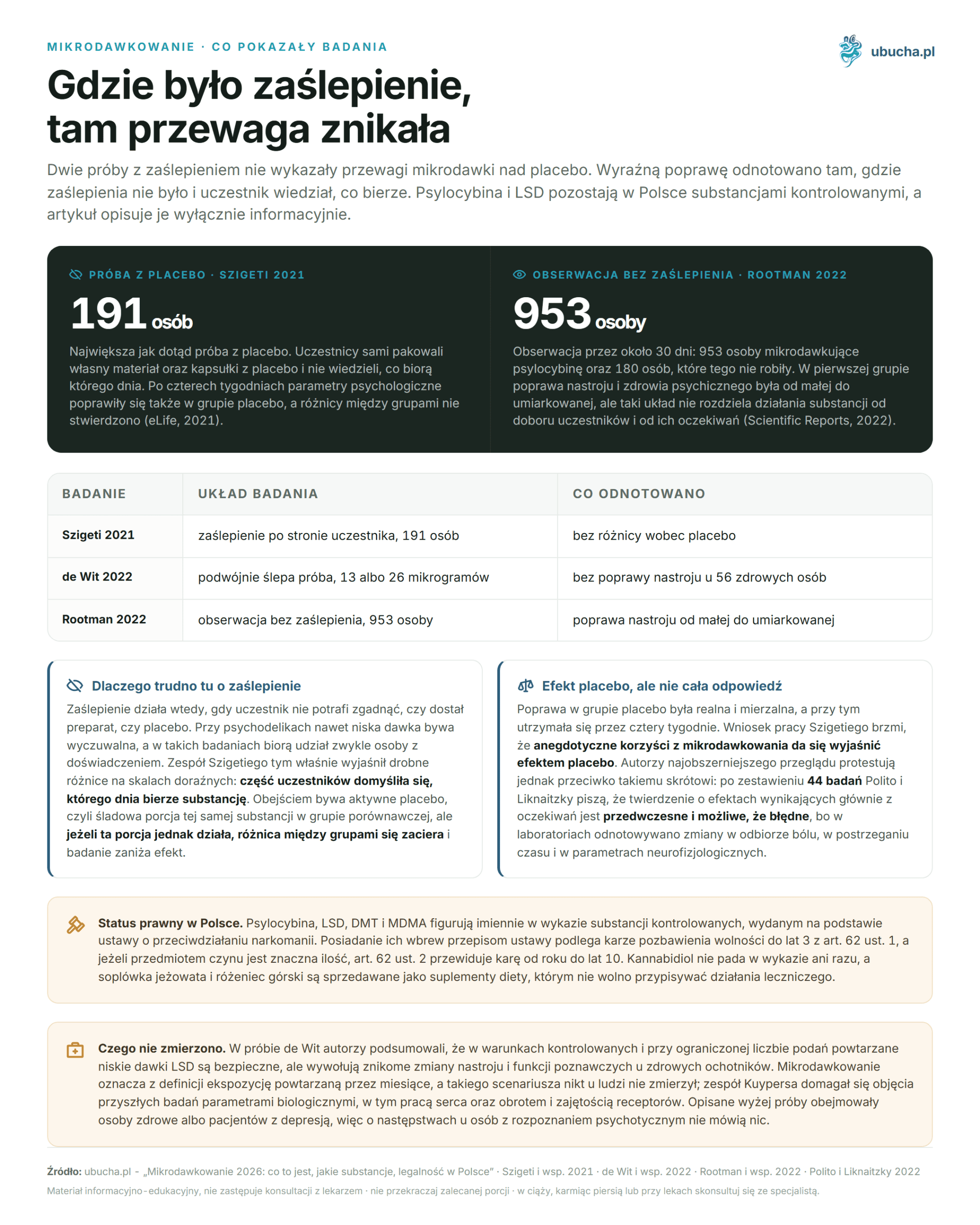
- The largest placebo trial, Szigeti 2021 with 191 participants, found no difference between microdose and placebo after four weeks (eLife, 2021).
- A controlled LSD trial at doses of 13 and 26 micrograms with 56 participants showed no improvement in mood or cognitive performance (Addiction Biology, 2022).
- Psilocybin, LSD, DMT, and MDMA are controlled substances in Poland, and possession is a crime under Article 62 of the Act on Counteracting Drug Addiction.
- EFSA in 2026 set a provisional safety ceiling for CBD at 0.0275 mg per kilogram of body weight per day, about 2 mg for a 70 kg person (EFSA Journal, 2026).
- CBD safety cannot currently be established for people under 25 years old, pregnant or breastfeeding women, or those taking medications.
What is microdosing and where did this practice come from?
Microdosing is the regular intake of a dose so low that it does not cause noticeable effects to the user. The term was popularized by American psychologist James Fadiman in his 2011 book, describing a schedule of one day with a dose and two days off. However, the practice predates the term. A systematic review by Polito and Liknaitzky covered 44 studies published between 1955 and 2021 and showed that low doses of psychedelics were experimentally studied even before bans were introduced (Neuroscience and Biobehavioral Reviews, 2022).
Public attention, however, came from the media, not laboratories. Kuypers’ team described this plainly: in recent years, public discussion about microdosing formulated claims about effects on mood and cognitive processes such as concentration, with very few scientific studies on the topic. Alongside this trend, there is an academic one concerning full doses of psilocybin in depression, and a commercial one where supplement producers have applied the word “microdosing” to cannabinoids and functional mushrooms without psychedelic effects.
For Polish readers, this third group is the only one legally available to buy and use. The rest of the text describes those substances purely for informational purposes, as possession is punishable in Poland. Distinguishing these contexts is not editorial formality: it determines whether a sentence is read as a study description or as encouragement.
Why does science lack a single definition of microdosing?
Because none has been established. Kuypers and colleagues’ review states plainly that there is no scientific consensus on what microdosing is, and that public discussion has outpaced research (Journal of Psychopharmacology, 2019). Polito and Liknaitzky call the same problem definitional inconsistency and propose dose ranges for specific substances as a starting point for future work.
The practical consequence is that when two studies mention microdosing, they may describe completely different protocols: different substances, portion sizes, frequencies, and verification methods of what participants actually took. The table below summarizes what was actually administered in the three most cited studies. The numbers describe those studies, not recommendations for readers.
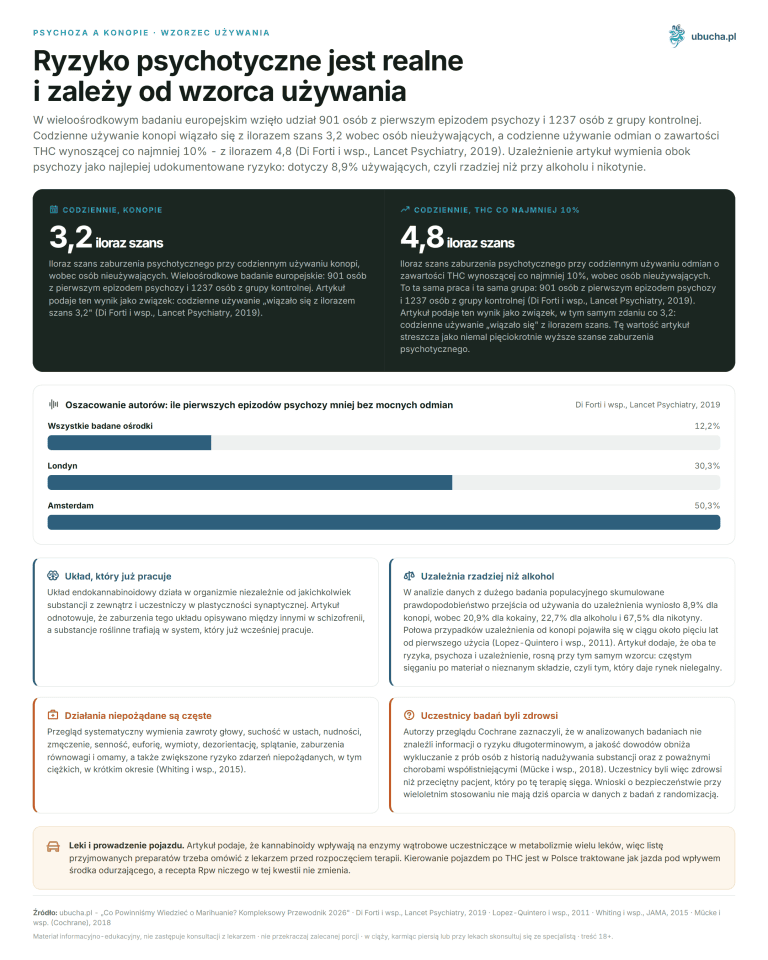
| Study | Substance and Dose | Participants | Observation Period |
|---|---|---|---|
| Szigeti 2021, eLife | LSD or psilocybin, participant-supplied material | 191 | 4 weeks |
| de Wit 2022, Addiction Biology | LSD tartrate, 13 or 26 micrograms | 56 (18 placebo, 19 and 19) | 4 sessions every 3-4 days |
| Rootman 2022, Scientific Reports | psilocybin, doses self-reported by participants | 953 and 180 non-microdosing individuals | about 30 days |
Where does the one-tenth dose ratio come from?
Not from pharmacological measurement, as none exists. The ratio functions as a practical rule in the community, not a threshold established in studies, as evidenced by the positions of the two reviews cited above. One states the lack of consensus on the concept itself, the other notes definitional inconsistency requiring clarification. If a threshold value existed, these statements would be meaningless.
This is visible in how doses were set in actual protocols. The Chicago team chose 13 and 26 micrograms of LSD tartrate - two values differing twofold - to test dose dependence. In a trial comparing psilocybin with escitalopram, the control received 1 mg versus 25 mg in the active group, a ratio of one to twenty-five. In a self-blinding study, participants set their own dose based on prior use.
This dispersion is not a technical detail. Until the dose corresponding to a microdose of a given substance is known, comparing study results is difficult, and user reports even more so. Polito and Liknaitzky considered the problem serious enough to propose dose ranges for substances as a future consensus. This is a proposal to organize scientific literature, not a reader’s instruction.
Which substances are studied for microdosing?
Scientific literature revolves around two classic substances, psilocybin and LSD, around which a looser family of agents has grown, included in the same conversation for market rather than pharmacological reasons. The table below organizes what mixes with what, along with legal status in Poland. Rows on controlled substances are informational.
| Substance | Type of Evidence at Low Doses | Status in Poland |
|---|---|---|
| Psilocybin | one large participant-led placebo trial, rest are unblinded observations | controlled substance |
| LSD | laboratory placebo trials with several dozen participants | controlled substance |
| DMT, MDMA | no studies on repeated low doses | controlled substances |
| CBD | case series and EU safety assessment | not listed as controlled substances |
| CBG | one placebo crossover trial | not listed as controlled substances |
| Hericium erinaceus, Rhodiola rosea | single clinical trials and low-quality evidence reviews | dietary supplements |
Note a semantic shift. For psilocybin and LSD, “micro” has pharmacological meaning, as there is a full dose of which the portion is a fraction. For CBD, CBG, and adaptogens, no full dose exists, so microdosing simply means spreading the portion over time. It is the same name used for two different things, not the same practice in two variants.
How do clinically studied full doses differ from microdoses?
In everything but the substance name. The most prominent comparative trial included 59 patients with long-term moderate to severe depression. Thirty received two 25 mg psilocybin doses three weeks apart plus six weeks of oral placebo; twenty-nine received two 1 mg psilocybin doses plus daily escitalopram. All received concurrent psychological support (The New England Journal of Medicine, 2021).
The primary endpoint, change in QIDS-SR-16 score after six weeks, showed no significant difference: an 8.0 point drop in the psilocybin group versus 6.0 in escitalopram, p = 0.17. Secondary points favored psilocybin, e.g., response rate 70% vs. 48%, but authors note these analyses were not corrected for multiple comparisons and call for larger, longer trials.
For this article’s topic, one design detail matters. The control group received 1 mg psilocybin, a dose commonly called a microdose, serving as a reference point rather than an intervention. Administration conditions also matter, as both groups worked with therapists throughout.
What did the largest placebo microdosing study show?
The largest placebo trial to date was by Szigeti’s team at Imperial College London. It included 191 participants who had previously microdosed. Participants prepared their own material and placebo capsules per online instructions, then were blind to what they took each day. This design is called self-blinding, as blinding is participant-organized, not by the research center (eLife, 2021).
The result is clear and inconvenient for both sides. All psychological parameters improved in the microdosing group after four weeks, but also in the placebo group, with no difference between groups. Minor differences in momentary mood, energy, and perceived effect intensity scales were explained by some participants guessing which days they took the substance. The study concludes anecdotal microdosing benefits can be explained by placebo effect.
Two aspects are as important as the result. First, placebo group improvement was real and measurable, lasting four weeks. Second, the study did not measure content or purity of what participants took, as material was self-supplied. This limitation stems directly from the design and is often omitted in press summaries.
Did the controlled LSD trial show mood improvement?
No. Harriet de Wit’s team at University of Chicago administered four repeated doses of LSD tartrate to healthy adults every 3-4 days in a double-blind design. Participants were randomized into three groups: 18 placebo, 19 at 13 micrograms, 19 at 26 micrograms. Each session lasted five hours, followed by a drug-free control session (Addiction Biology, 2022).
The higher dose caused moderate subjective effects. Participants more often reported feeling the substance and described sensations typical of stimulants and LSD. However, this did not translate into mood improvement or better psychomotor or most emotional task performance. No residual effects were detected in the drug-free session, which underpins the Fadiman protocol idea.
Authors concluded that repeated low LSD doses are safe under controlled conditions but produce minimal mood or cognitive changes in healthy volunteers. This statement means no harm was observed, nor the promised benefit.
Does this mean microdosing works only through expectations?
Evidence does not go that far, and the authors of the most comprehensive review protest such a shortcut. Polito and Liknaitzky, after reviewing 44 studies, write that claiming microdosing effects mainly stem from expectations is premature and possibly wrong. Laboratory studies noted changes in pain perception, time perception, consciousness state, and neurophysiological parameters - things not easily explained by expectations.
On the other hand, unblinded observations exist. Rootman et al. followed about 30 days of 953 psilocybin microdosers and 180 non-microdosers, noting mood and mental health improvements of small to moderate size, consistent across age and gender (Scientific Reports, 2022). However, this design does not separate substance effects from participant selection or expectations.
A fair summary: where blinding was applied, advantage over placebo vanished; where clear improvement was noted, no blinding was used. This methodological divergence is analyzed separately in microdosing and placebo. Until multicenter blinded trials with longer observation appear, any strong claim is ahead of data.
Why is reliable blinding so hard in this field?
Because the substance is recognizable. Blinding works when participants cannot guess if they received the substance or placebo. Even low psychedelic doses can be felt, and participants often have experience and know what to look for. Szigeti’s team described this problem and explained minor differences on momentary scales by breaking blinding.
One solution is active placebo: the control group receives a trace dose of the same substance so that feeling something does not reveal allocation. This was used in the escitalopram trial, where the control got 1 mg psilocybin instead of inert capsules. The downside: if the trace dose acts, group differences blur and the study underestimates effects.
A third approach is participant blinding, as in the self-blinding trial. This allowed recruiting 191 participants without clinical center costs but deprived researchers of control over capsule contents. None of these three methods is fully good, explaining why after a decade the field lacks resolution - not conspiracy.
How do Fadiman and Stamets protocols differ?
Both are non-scientific schedules without formal clinical validation. Fadiman’s protocol is one day with dose, two days off, justified by tolerance avoidance. Stamets’ protocol is four days with dose, three days off, combining psilocybin with Hericium erinaceus and niacin. Researchers confirm such combinations are practiced, listing psilocybin with Hericium and vitamin B3 among microdosing variations.
Stamets’ hypothesis was tested in Rootman’s study, where Stamets is coauthor. Supplementary analysis showed combining psilocybin with Hericium and niacin did not improve mood or mental health beyond psilocybin alone. The only difference was in older adults, where the three-component set linked to better psychomotor scores. Authors call this an observation needing confirmation, not an established effect.
| Feature | Fadiman Protocol | Stamets Protocol |
|---|---|---|
| Rhythm | 1 day with dose, 2 days off | 4 days with dose, 3 days off |
| Composition | single substance | psilocybin with Hericium and niacin |
| Justification | tolerance avoidance | presumed neuroplastic synergy |
| Validation | no residual effects in de Wit 2022 trial | no advantage over psilocybin alone in Rootman 2022 |
What is known about how much CBD reaches the blood?
Less than the market repeats. A systematic review by Millar et al. collected all available human CBD pharmacokinetic data. Of 792 articles reviewed, only 24 contained such parameters. Half-life ranged from 1.4 to 10.9 hours after aerosol administration on oral mucosa, 2 to 5 days with chronic oral dosing, about one day intravenously, and about 31 hours after smoking (Frontiers in Pharmacology, 2018).
The key sentence concerns bioavailability. The only route with measured absolute bioavailability in humans was smoking, at 31 percent. No such measurement exists for other routes, despite available intravenous forms for comparison. Authors note data scarcity and pharmacokinetic discrepancies despite widespread use.
The practical takeaway: sublingual bioavailability ranges cited in product descriptions and guides lack support from this review, and no other human study has such measurement. If a store states absorption percentage for sublingual drops, it cites a number no one measured.
Does administration route change how much CBD acts?
Yes, more than dose size itself. The same pharmacokinetic review noted that maximum concentration and area under the curve increase with dose, but peak concentration appears much faster after smoking and inhalation than oral or mucosal administration. Time to peak ranged from zero to four hours depending on preparation.
Two other observations have direct practical implications. Maximum concentration rose when the preparation was taken after a meal and when cannabidiol was delivered in a fat carrier. This means the same dose taken fasting or after a fatty meal yields different blood levels, complicating comparisons of different users’ experiences with the same product.
Authors summarize their work as indicating data scarcity and discrepancies, not as a set of ready values. This distinction matters for readers encountering store pages with percentage tables for four administration routes. Such tables suggest precision absent in literature, as for three of four common routes no human measurement of actual blood delivery exists.
What CBD dose is currently considered safe?
EFSA’s Nutrition Panel updated its stance in 2026 on cannabidiol as novel food, deriving a provisional safe dose of 0.0275 mg per kilogram body weight per day. For a 70 kg person, this is about 2 mg daily. The value was calculated using a reference dose method with an uncertainty factor of 400 (EFSA Journal, 2026).
This ceiling has narrow application conditions. It applies only to supplements with cannabidiol purity at least 98 percent, no nanoparticles, safe manufacturing, and excluded genotoxicity. It does not apply to other forms. The panel notes gaps identified in the 2022 assessment remain open, and newer studies have methodological limitations: protocols are often nonstandardized, observation short, and participants concurrently treated.
The strongest statement is also most often omitted. CBD safety cannot be established for people under 25, pregnant or breastfeeding women, or those taking medications. Animal studies showed consistent liver toxicity, placental transfer, and long-term neurodevelopmental effects after prenatal exposure. No study covered immunotoxicity.
What do clinical data show about CBD for anxiety and insomnia?
The most cited work is a retrospective case series from a psychiatric clinic where CBD was adjunctive to usual treatment. Records of 103 adults were reviewed; 72 entered analysis: 47 primarily with anxiety, 25 with sleep disorders. Anxiety scores dropped in the first month for 57 patients (79.2%) and remained lowered. Sleep improved in the first month for 48 (66.7%) but fluctuated in following months (The Permanente Journal, 2019).
Authors cautiously conclude cannabidiol may benefit anxiety disorders and call for controlled clinical trials. The case series lacks a comparison group and blinding, so it cannot separate preparation effects from natural symptom course, concurrent therapy, or patient expectations. Except for three individuals, the preparation was well tolerated.
For readers, this means two things simultaneously. The signal for anxiety is clearer than for sleep, a hierarchy seen in other reviews. At the same time, this is documentation from one clinic, not a randomized trial, so the gap between this result and clinical recommendation remains large.
Is CBG suitable for low doses?
CBG is a cannabinoid biosynthetically precursor to CBD and THC, without psychotomimetic effects. A pharmacological review by Calapai et al. describes it as a partial agonist of CB1 and CB2 receptors and regulator of endocannabinoid signaling. Potential molecular targets include TRP channels, COX-1 and COX-2 cyclooxygenases, and 5-HT1A and alpha-2 receptors. It is metabolized in the liver by CYP2J2 enzyme (Evidence-based Complementary and Alternative Medicine, 2022).
Preclinical data include lowering intraocular pressure, antioxidant, anti-inflammatory, anticancer, anxiolytic, and neuroprotective effects. Neuroprotection was studied in a mouse Huntington’s disease model (Neurotherapeutics, 2015), and anti-inflammatory effects in an experimental colitis model (Biochemical Pharmacology, 2013). These are animal models, so direct human extrapolation would be an overreach.
The first placebo-controlled clinical trial appeared in 2024. Thirty-four healthy adults participated in a crossover placebo study receiving a single 20 mg CBG dose in hemp tincture. Compared to placebo, significant reductions in anxiety and stress and better verbal memory test scores were observed, without subjective effects or impairment (Scientific Reports, 2024). This was a single dose, so repeated low-dose effects remain unknown.
What did studies on Hericium and Rhodiola really show?
Less and differently than most guides claim. A Japanese double-blind trial included 30 people aged 50-80 with mild cognitive impairment, split into two groups of 15. The active group took four 250 mg tablets three times daily for 16 weeks, i.e., 3 g daily, not a few hundred milligrams. HDS-R cognitive scale scores rose at weeks 8, 12, and 16, then dropped significantly four weeks after stopping (Phytotherapy Research, 2009).
Rhodiola fared even more cautiously. A systematic review included 11 trials meeting criteria. Effectiveness was confirmed in two of six trials on physical fatigue in healthy people and three of five on mental fatigue, but all included studies had high or unclear risk of bias. Authors conclude data are contradictory and well-designed trials are needed (BMC Complementary and Alternative Medicine, 2012).
Both raw materials are sold in Poland as dietary supplements, not medicines, and may not be attributed therapeutic effects. More on this plant group is in the article on adaptogens and when to use them. Calling them microdosing is marketing: they have no psychoactive dose of which a portion is a fraction.
What is legal and what is punishable in Poland?
Psilocybin, LSD, DMT, and MDMA are explicitly listed in the controlled substances schedule issued under the Act of July 29, 2005 on Counteracting Drug Addiction, consolidated text Dz.U. 2023 item 1939. Possession contrary to law is punishable by imprisonment up to 3 years under Article 62 paragraph 1. For significant amounts, Article 62 paragraph 2 prescribes imprisonment from 1 to 10 years, a lower limit often missing in guides. For lesser offenses, paragraph 3 allows fines or restriction of liberty.
Cultivation of non-fiber cannabis is a separate crime under Article 63, punishable by up to 3 years, or 6 months to 8 years if the crop can yield significant amounts. The law contains no plant number threshold, contrary to common belief. Article 62a allows discontinuing proceedings for small amounts intended for personal use, even before investigation starts, but only for Article 62 paragraphs 1 or 3.
On the legal side, the situation is simple. The word “cannabidiol” does not appear in the controlled substances list, and Hericium and Rhodiola are dietary supplements. HHC remains controlled after the schedule change introduced by regulation Dz.U. 2026 item 934, as reclassification is not legalization. Pharmacy hemp flower is a pharmaceutical raw material under Article 33a of the Act and requires a prescription, so it does not fit any standalone scheme.
Are low-dose pharmacy THC products microdosing?
Not in the sense used in this article, as these are prescription products, not self-experiments. Non-fiber cannabis flower can be a pharmaceutical raw material for magistral preparations under Article 33a of the Act on Counteracting Drug Addiction, after obtaining a permit from the President of the Office for Registration of Medicinal Products, issued for five years. The entire path runs through pharmacy and doctor.
Prescription regulations further narrow this. Prescriptions for narcotics group I-N and psychotropic substances group II-P may cover up to 90 days’ supply, and doctors may issue up to three such prescriptions consecutively, totaling also 90 days. Prescription fulfillment must occur within 30 days of issue, per Article 96a paragraph 7 point 4 of the Pharmaceutical Law consolidated text Dz.U. 2026 item 612.
There is another requirement often omitted in guides. Non-fiber cannabis flower and resin appear in Annex 2 to the regulation on narcotics, consolidated text Dz.U. 2025 item 1678, listing preparations requiring prior personal patient examination before prescription. Teleconsultation is not equivalent to a visit, except for primary care doctors continuing existing treatment.
What risks do low psychedelic doses carry?
Start with mechanism, as the rest depends on it. Psychedelics are serotonergic hallucinogens, pharmacology agrees they act as agonists or partial agonists of brain serotonin 5-HT2A receptors (Pharmacological Reviews, 2016). The same review notes these substances are considered physiologically safe and non-addictive, an important counterpoint to the following paragraphs.
However, a separate serotonin receptor family is 5-HT2B, present in heart valve tissue. It was identified as a molecular target leading to valve fibrosis after cases in people taking ergot-derived drugs and a popular 1990s weight-loss drug. Subsequent work showed this receptor stimulates many other molecules, and their use was linked to valvular disease, prompting screening programs for new compounds’ 5-HT2B activity (Pharmacology and Therapeutics, 2011).
Microdosing implies repeated exposure over months, a scenario not measured in humans. Kuypers’ team called for future studies to include biological parameters, including heart rate and receptor turnover and occupancy. Also note the above trials involved healthy people or depressed patients; they say nothing about effects in psychotic disorders. Full psilocybin doses studied clinically are a different situation, described in the article on psilocybin in psychotherapy.
How does CBD interact with medications?
Widely and unpredictably. A review by Balachandran, ElSohly, and Hill collected reports of cannabidiol interactions with drugs, intoxicants, and alcohol. Expected interactions with antiepileptics, antidepressants, opioid analgesics, and THC were confirmed, but interactions were also noted with unexpected agents, including paracetamol and alcohol (Journal of General Internal Medicine, 2021).
The mechanism is mostly the same: cannabidiol affects liver enzymes metabolizing many drugs, potentially raising or lowering their blood levels. This is especially important for drugs with narrow therapeutic windows, where small concentration changes cause side effects or loss of efficacy.
For this reason, EFSA does not set any safe dose for people taking medications. This is not a cautionary addendum but a conclusion from lack of data. If you take any prescription drug, the decision to add cannabidiol is made by your doctor, who knows your full medication list, not by a guide author who does not.
Who should avoid CBD and CBG?
EFSA explicitly identifies three groups, not as cautionary warnings but as populations where safety cannot be established: under 25 years old, pregnant and breastfeeding women, and people taking medications. No safe dose was derived for any of these groups due to lack of data.
Each group is backed by specific observations. Animal studies showed consistent liver toxicity, with liver mass and histopathological changes as sensitive endpoints. In humans, hepatotoxic potential is noted, increasing with concurrent medications. Cannabidiol crosses the placenta and accumulates in the body; prenatal exposure caused long-term, sex-dependent neurodevelopmental effects. Altered thyroid hormone levels and adrenal histopathological changes were also reported.
Additionally, the panel names a gap: none of the assessed studies addressed immunotoxicity. For CBG, the picture is even poorer, with only one single-dose placebo trial, so chronic use effects are unknown. If you belong to any of these groups, the decision is medical, not the article’s or seller’s.
How to verify what is really in the bottle?
Discrepancy between label and content is the rule, not exception, in this category. An analysis of 202 CBD products from the US market included 100 tinctures, 48 gummies, 34 vaping products, and 20 topical preparations. Twenty-six percent did not match the declared product type, and 74 percent deviated from declared potency by at least 10 percent (Frontiers in Pharmacology, 2024).
The same analysis found heavy metals 52 times in 44 products, mostly lead; solvent residues 446 times in 181 products; and 26 pesticides 55 times in 30 products. Regulatory limits were exceeded in 3% of heavy metal tests, 1% of solvents, and 1% of pesticides, meaning most findings were within norms but contamination profiles were common.
The European market is not free of this problem. In an analysis of 14 oils available in European countries, nine differed significantly from declared content, five were within reasonable limits (Molecules, 2018). The practical conclusion: without a current certificate of analysis for a specific batch, the percentage declaration on the label remains a declaration.
How to plan your own observation to get meaningful results?
Since expectations are the biggest problem in this field, the most valuable observation is one that can distinguish them from other effects. Szigeti’s study shows how to do this without a lab, and this method is its lasting contribution beyond the result. Start with a week of measurement without any substance, recording several simple parameters daily on the same scale and time.
The second element is one variable at a time. If you change sleep time, coffee amount, and training intensity simultaneously, after six weeks you won’t know what worked. The third element is stopping and observing what returns. Symptom return after a break is stronger evidence than improvement during use, as placebo group improvement also occurred in Szigeti’s study.
What this method cannot replace must be said plainly. It cannot replace doctor consultation for diagnosed illness, treatment for depression or anxiety, or determine your dose. Dose size for any prescription preparation or concurrent medication use is a medical decision. A journal tells you if something changed, not where to start.
What is missing to resolve this debate?
Researchers wrote this themselves and it’s worth reading their list instead of making your own. Kuypers’ team called for future studies to stop focusing only on positive experiences and include potential risks of repeated low doses. They specified biological parameters including heart rate and receptor turnover and occupancy, as well as cognitive ones like memory and attention. Without such measures, they argued, negative consequences will remain unknown.
Polito and Liknaitzky added methodological aspects. Their review ends with concrete study design proposals, preceded by an attempt to clarify the microdose concept. They note something easy to miss in heated debate: included studies varied greatly in risk of bias depending on design, participant age, and other features, so aggregate summaries average incomparable things.
The practical list of missing elements is short and measurable. Needed are multicenter blinded trials with verified material composition, longer than a few weeks observation, active comparator, and organ safety measurement during chronic exposure. None of the described results meets these criteria, which is the real answer to why after ten years of discussion there is still no clinical recommendation.
What does this mean for Polish readers?
First, microdosing psychedelics is a crime here, and its advantage over placebo has not been shown in any blinded study. The two strongest trials, Szigeti and de Wit, gave consistent negative results. This does not close the scientific topic, as the largest review authors warn against premature conclusions. It means no one today has grounds to promise effect.
Second, legal options have better-described safety profiles and less well-documented efficacy than marketing suggests. For cannabidiol, EFSA set a safety ceiling and a clear list of groups without established safety. For CBG, there is one single-dose placebo trial. For Hericium and Rhodiola, evidence is single or contradictory.
Third, product quality is a variable you can realistically control, unlike your body’s response. A certificate of analysis for the batch, a known manufacturer, and label-to-measurement consistency matter more than choosing between cannabinoids. If you seek raw materials from this last legal group, find them in the adaptogens category, sold as dietary supplements, not medicines.
Frequently Asked Questions
Does microdosing even work?
In the only large placebo-controlled study with 191 participants, both the microdosing group and the placebo group improved equally after four weeks, with no difference found between them. A controlled LSD trial with 56 participants also showed no improvement in mood or cognitive performance.
Is microdosing psilocybin and LSD legal in Poland?
No. Both are explicitly listed in the controlled substances schedule issued under the Act on Counteracting Drug Addiction. Possession contrary to the law is punishable by imprisonment up to 3 years under Article 62 paragraph 1, and for significant amounts by imprisonment from 1 to 10 years under Article 62 paragraph 2.
How much CBD can be taken safely?
In 2026, EFSA set a provisional ceiling at 0.0275 mg per kilogram of body weight per day, approximately 2 mg for a 70 kg person, exclusively for supplements with purity above 98 percent. Safety has not been established for people taking medications.
Does CBG act differently than CBD?
It has a different receptor profile, including 5-HT1A and alpha-2 receptors, and is a partial agonist of CB1 and CB2 receptors. In the only placebo-controlled crossover trial, a single 20 mg dose in 34 healthy individuals reduced anxiety and stress and improved verbal memory, without subjective effects.
Does Hericium erinaceus improve memory?
In a Japanese trial with 30 people with mild cognitive impairment, HDS-R scale scores increased over 16 weeks of taking 3 g of powder daily and decreased four weeks after discontinuation. This is a single small study, so conclusions should not be generalized.
Can CBD be combined with medications?
Not without consultation. Cannabidiol affects liver enzymes that metabolize many drugs and interactions have been described with antiepileptics, antidepressants, analgesics, and even paracetamol. EFSA does not establish any safe dose for people taking medications.
How to recognize a reliable hemp oil?
By a certificate of analysis issued for a specific batch by an independent laboratory. In an analysis of 202 products from the US market, 74 percent deviated from declared potency by at least 10 percent, and among 14 European oils, nine differed from the declaration.
Is it worth keeping a journal during such an experiment?
Yes, but with one condition: start with a week of measurement without any preparation and change only one thing at a time. Without a reference point, you cannot distinguish change from natural mood fluctuations, and with five changes at once, you cannot determine which did anything.
This article is informational and educational. It describes clinical studies where substances are administered under medical supervision after participant qualification; self-use does not replicate these conditions. These substances are controlled in Poland under the Act on Counteracting Drug Addiction. If you have suicidal thoughts, call free 24/7 numbers 116 123 or 800 70 2222. In life-threatening situations: 112.
Author: Michał Waluk · Published: 2026-05-04 · Updated: 2026-08-10