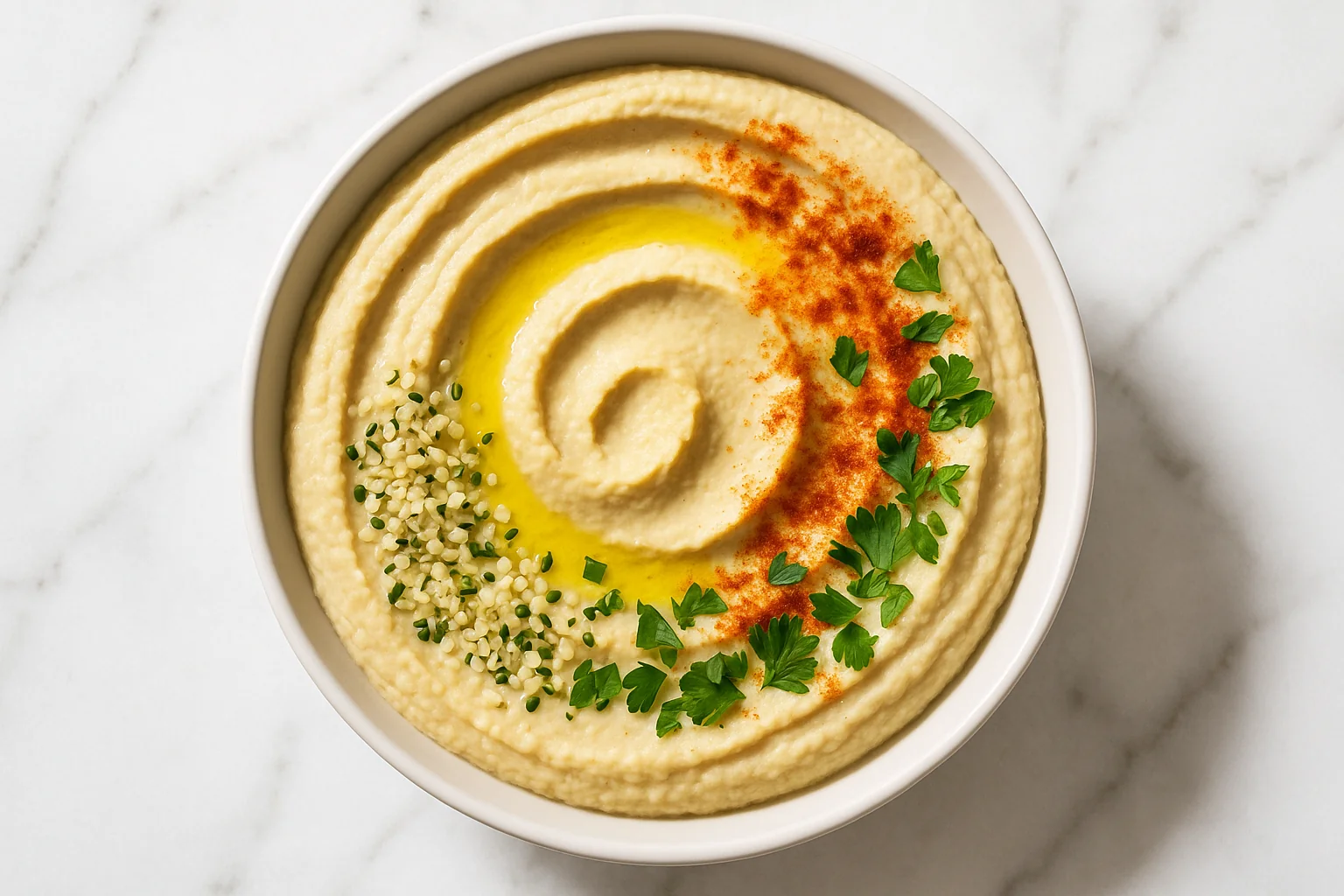

Classic Hummus with Hemp Seeds: Creamy and Protein-Rich
Classic hummus with hemp seeds in 10 minutes. Step-by-step recipe, measured seed composition, and protein quality according to House 2010 and Nosworthy 2017.
Everyone knows hummus if they have ever bought pita. However, few know that three tablespoons of hulled hemp seeds added to the blender not only change the nutritional value of this paste but also its consistency: the seeds add fat, which binds the mixture and suppresses graininess. The flavor change is subtle, as the nuttiness of the seeds blends into the sesame and lemon. Below you will find a recipe for 10 minutes, calculated numbers from measured sources, and an explanation of what most recipes omit, namely why homemade hummus turns out grainy even with good chickpeas. You will also find a correction to the statement that is most often repeated in recipes with hemp seeds and is actually inaccurate in this regard.
KEY INFORMATION
• Hulled hemp seeds average 35.9% protein and 46.7% fat (House et al., Journal of Agricultural and Food Chemistry, 2010).
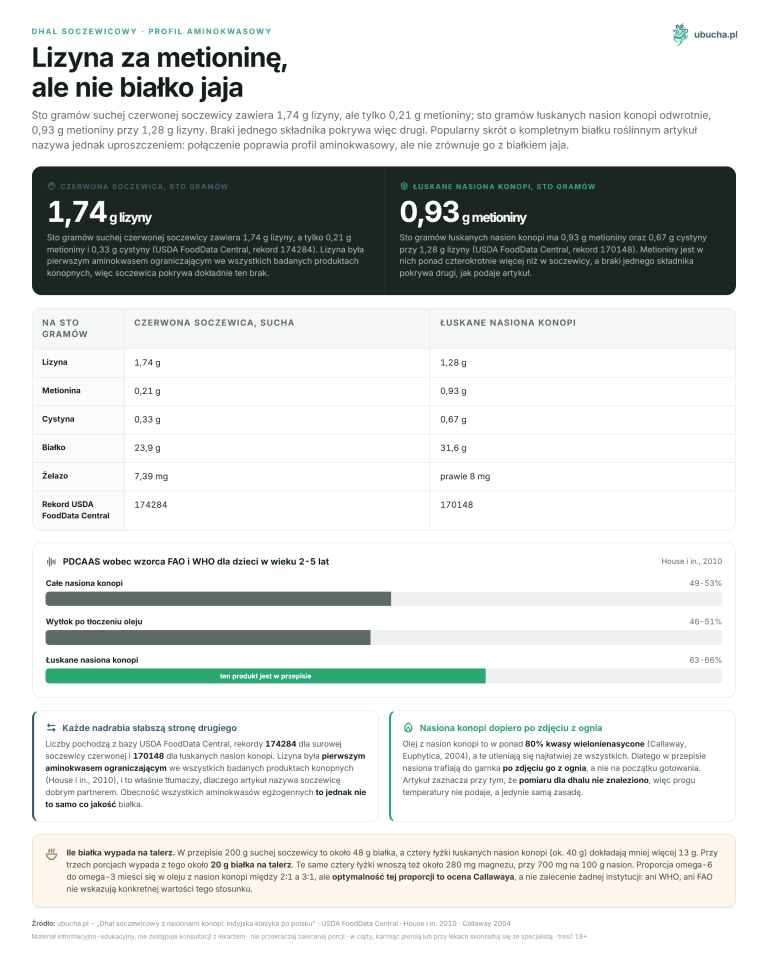
• The protein quality index PDCAAS is 63-66%, and lysine is the limiting amino acid.
• Hemp seed oil is over 80% polyunsaturated fatty acids (Callaway, Euphytica, 2004).
• Three tablespoons of seeds weigh about 30 g, contributing approximately 10.8 g of protein to the entire batch of paste.
What do hemp seeds provide in hummus?
They provide two things that chickpeas lack: fat and a nutty flavor. Hulled hemp seeds are almost half fat, exactly 46.7%, with 35.9% protein (House et al., Journal of Agricultural and Food Chemistry, 2010). Three tablespoons, or about 30 g, add roughly 10.8 g of protein and 14 g of fat to the entire batch of paste.
A clarification is needed here, as recipes with hemp seeds often state that they complement the amino acids lacking in legumes. House checked this on thirty commercial samples and found the opposite: lysine was indeed the first limiting amino acid in all hemp products, and the PDCAAS was 63-66% for hulled seeds. Legumes score similarly on this scale. Nosworthy et al. studied nine types of cooked legumes, including kabuli chickpeas, and all had digestibility above 70% and PDCAAS over 0.5 (Food Science and Nutrition, 2017).
The conclusion is therefore more modest than usually stated. No one has measured the protein of this paste, so we cannot say that hummus with hemp seeds becomes complete. What remains is what results from both measurements separately: a second source of protein with decent digestibility and plenty of fat.
The flavor of the seeds in the finished paste is noticeable but not intrusive: the nuttiness enhances the tahini instead of competing with it. The only practical rule concerns temperature, as hummus with seeds should not be heated. I do not have a measurement for the temperature at which fatty acid losses begin, so this is a kitchen rule rather than a threshold from research.
How much protein is in a serving of hummus?
A 70 g serving, or two full tablespoons, contains about 7 g of protein based on the recipe proportions: roughly half comes from chickpeas, the rest from hemp seeds and tahini. This is an estimate from the recipe, not a laboratory measurement of the finished paste, and should be treated as such.
The previous version of this entry stated the magnesium content at 210 mg per 100 g of seeds. This was an overestimation of more than three times. USDA FoodData Central lists in record 170148, described as hulled hemp seeds, 700 mg of magnesium, along with 553 kcal, 31.6 g of protein, and 48.8 g of fat per 100 g.
Hemp seed oil is over 80% polyunsaturated fatty acids, and the omega-6 to omega-3 ratio is between 2:1 and 3:1 (Callaway, Euphytica, 2004). Callaway calls this ratio optimal for human health, but that is his own formulation, not a recommendation from an institution. Simopoulos separately describes that in Western diets, this ratio has shifted from about 1:1 to 20:1 or higher, linking high values to inflammation and obesity risk (Nutrients, 2016).
What ingredients do you need?
The proportions yield about 400 g of paste, or 4-6 servings as a dip. Preparation time is 10 minutes, without cooking. We do not have hemp seeds or tahini in our assortment, so you will need to go to a health food store or the dried fruit section for both.
- 1 can of chickpeas, 400 g, with brine
- 5 tablespoons of hulled hemp seeds: 3 for blending, 2 for topping
- 3 tablespoons of tahini, or sesame paste
- 2 tablespoons of extra virgin olive oil
- 2 tablespoons of freshly squeezed lemon juice
- 1 clove of garlic
- 1/4 teaspoon of ground cumin
- salt to taste
- 3-4 tablespoons of aquafaba, or chickpea water
- for decoration: 1 tablespoon of oil, a pinch of sweet paprika, parsley
Tahini determines the texture more than the brand of chickpeas. Choose thick, smooth tahini without a layer of oil sitting on top. If the oil has separated, mix the jar thoroughly before measuring; otherwise, you will measure just the sediment or just the fat. Canned chickpeas are more convenient here than dried ones, as the brine from the can is also the aquafaba you need in the fourth step.
How to make hummus with hemp seeds step by step?
The whole process takes 10 minutes and one good blender. Nothing is cooked here, so the only thing you can mess up is the consistency. The length of blending determines it, not the quality of the chickpeas, and this is something most home recipes do not mention.
- Drain the chickpeas through a sieve over a bowl to keep the aquafaba. Rinse the beans with cold water. Optionally, remove the skins by squeezing each bean between your fingers: this takes an additional 5 minutes and gives a noticeably silkier paste.
- Add the chickpeas to a food processor. Add tahini, oil, lemon juice, garlic, cumin, and salt. Blend for 60 seconds. The mixture will be thick and lumpy at this stage, and that is how it should be.
- Add 3 tablespoons of hulled hemp seeds. Blend for another 30 seconds. The seeds add fat that binds the mixture and enhance the nutty tone of the tahini.
- Pour in the aquafaba tablespoon by tablespoon, blending continuously for a total of 2-3 minutes. Long blending aerates the mixture and makes it creamy. Stop when the paste flows slowly from the spoon but does not drip.
- Taste and season. Lemon brightens the flavor, salt sharpens it, garlic adds spiciness. If the paste is too thick, thin it with a tablespoon of aquafaba; if too thin, thicken it with a tablespoon of tahini and blend briefly.
- Transfer the hummus to a wide bowl. Use the back of a spoon to create a spiral indentation in the center to hold the oil. Drizzle with a tablespoon of oil, sprinkle with 2 tablespoons of hemp seeds and a pinch of paprika. Serve with pita, carrots, or crackers.
We have noticed in subsequent attempts that the blending time makes a bigger difference than anything else. The same chickpeas blended for 60 seconds come out grainy, while those blended for 3 minutes with added aquafaba are as smooth as from a deli. This is an observation from our kitchen, not a measurement.
What to change to make the hummus turn out differently?
This recipe is a base, not a canon. Three changes yield three completely different pastes, and none of them require different equipment or longer work. Just remember that every liquid addition requires a subsequent adjustment with aquafaba.
The version with hemp oil involves replacing the finishing oil with a tablespoon of cold-pressed hemp oil. The flavor becomes more distinctly nutty and darker. Do not use more than one tablespoon, as this oil has a strong character and in larger amounts overpowers the sesame. Like the seeds, the oil is drizzled over the finished paste, never heated.
The version with roasted garlic replaces the raw clove with 3-4 cloves roasted in their skins at 200°C for half an hour. Roasted garlic is sweeter and does not leave a pungent aftertaste, so the paste turns out milder. If you are looking for a completely different dip for the same party, we have gathered them in a text about hemp dips for parties, and separately described guacamole with hemp seeds.
The spicy version is made by adding half a teaspoon of hot paprika or a tablespoon of harissa to the blending process. The contrast of spiciness with the creamy base works best with root vegetables dipped in the paste. A more visually interesting option is beetroot hummus with hemp seeds, which turns out pink and sweeter.
Frequently Asked Questions
How much protein does hummus with hemp seeds have?
A 70 g serving contains about 7 g of protein, roughly half from chickpeas and half from hemp seeds and tahini. The hulled seeds themselves have 35.9% protein (House et al., 2010), so 3 tablespoons added to the blender contribute about 10.8 g to the entire paste.
When to add hemp seeds to hummus?
Three tablespoons go into the blender after blending the base, as they add fat and help with creaminess. Two tablespoons are reserved for topping and are sprinkled just before serving to keep them crunchy. Do not heat the seed paste; hummus is a cold dish.
How to achieve creamy hummus without lumps?
Blend for at least 3 minutes continuously after adding aquafaba, pouring it in tablespoon by tablespoon. Use thick tahini without a layer of oil on top. If you have the patience, remove the skins from the chickpeas before blending, as they are responsible for the residual graininess.
Does hummus with hemp seeds have complete protein?
No one has measured this paste, so you won’t read such a statement here. However, it is known that in hemp seeds, lysine is the first limiting amino acid, and their PDCAAS is 63-66% (House et al., 2010). Cooked chickpeas score above 0.5 on this scale (Nosworthy et al., 2017).
How long can hummus with hemp seeds be stored?
The paste itself without topping can be kept in the refrigerator in an airtight container for 5-7 days. Store the seeds separately, as they soften in the moist hummus after a few hours and lose their purpose. Do not freeze the prepared paste; it becomes watery and loses creaminess after thawing.
This article is for informational and educational purposes and does not replace consultation with a doctor. If you are pregnant, breastfeeding, taking medications, or have chronic conditions, consult a specialist about the use of supplements or herbs.
Author: Michał Waluk · Published: 2026-05-20 · Updated: 2026-08-16