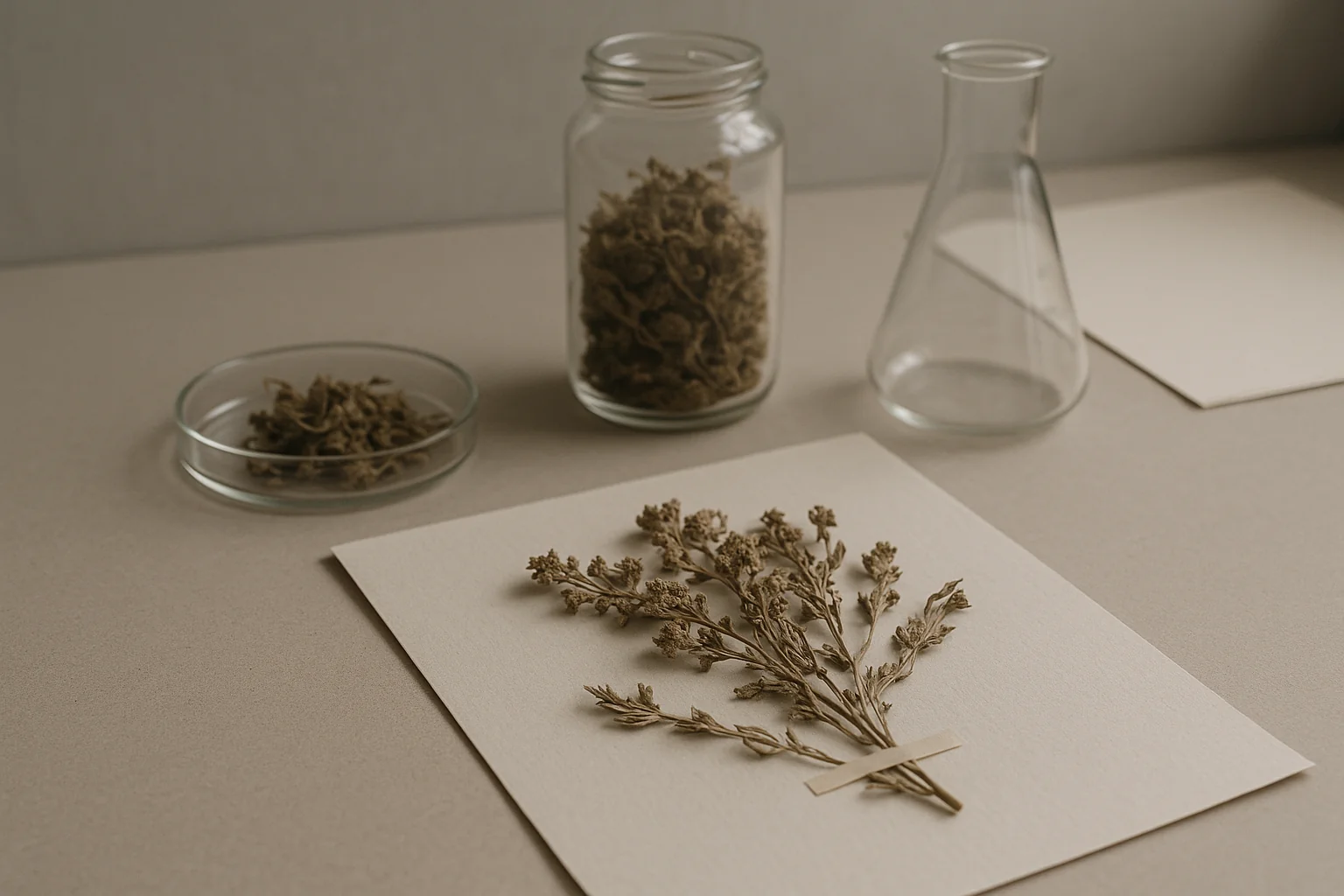

Electric Honeydew (Cannabis flos Aurora): mircene in the profile and lineage from Girl Scout Cookies
Electric Honeydew is a pharmacy position from Aurora with lineage confirmed by the breeder and a profile led by mircene. We gather what is known about it from public sources, and separately what is not known.
| Strain card | Electric Honeydew |
|---|---|
| Producers | Aurora (2 pharmacy positions) |
| Medical brand | the same as the producer |
| Alternative names | none |
| Category according to sources | hybrid / sativa (sources inconsistent) |
| Leading terpene | mircene |
| Other terpenes | caryophyllene limonene linalool nerolidol |
| Lineage | established Girl Scout Cookies × 91 Og Krypt Melon |
| Source consistency | one source |
- Who supplies it. Exclusively Aurora, so there is nothing to compare versions with, and a supply break means the absence of this strain, not another version of it.
- Profile. It leads with mircene, alongside caryophyllene, limonene, linalool, and nerolidol. We do not provide percentage shares because sources count them against different totals.
- Origin. The lineage is established, with parents being Girl Scout Cookies and 91 Og Krypt Melon.
- What is missing. The profile describes one source, so there is nothing to compare it with.
Where does Electric Honeydew come from and who cultivated it?
Electric Honeydew originates from Girl Scout Cookies crossed with the 91 OG Krypt Melon line, and the lineage is provided by the breeder, Canadian Aurora Cannabis, on their product page. In Polish pharmacies, this strain appears as hemp flower in the Rpw category, so it is only available by prescription.
The origin confirmed by the breeder is worth noting here, as it is not a rule in this comparison. Of the twenty-five cultivars out of eighty-five, the parents remain unestablished: the company does not disclose them or the available descriptions provide mutually exclusive versions. Here, the source is the product card issued by the manufacturer, not a secondary strain database copying someone else’s notes.
The name itself does not indicate any kinship. The Honeydew part refers to honey melon and was created in the marketing department, not in breeding, so treating it as a clue about the parents leads nowhere. The same mechanism undermines conclusions with popular components of trade names, which in this comparison bear both strains with established lineage and those without any.
However, the botanical classification remains ambiguous. One Polish database describes this position as sativa, another as hybrid, so we provide the plant type as disputed, not resolved. The breeder does not assign it any of these labels and stops at indicating two parental lines. We maintain a complete list of strains available in pharmacies in a separate review.
Who supplies Electric Honeydew to Polish pharmacies?
One producer: Aurora. In public listings of pharmacy positions, this strain appears exclusively under their name, in two registered variants differing in declared potency. The second database that describes it indicates the same supplier, and a third listing of pharmacy positions also does not mention anyone else under this name.
| Registered variant | THC content considering the producer’s tolerance | Availability at the time of data collection |
|---|---|---|
| Cannabis flos Aurora, variant with lower declared potency | 24.3-29.7% | high |
| Cannabis flos Aurora, variant with higher declared potency | 26.1-31.9% | low |
Two positions in the register do not represent two strains. They are separated by the number printed on the packaging, not by another plant: the same cultivar can be reported separately for batches with different declared contents. The range instead of a single number arises because producers are allowed to deviate from the declared value by one-tenth of it, so the number on the label describes the midpoint of the range, not the measurement result of that particular batch.
The availability from the table is a temporary state and should be read as such. The position can disappear from wholesalers for weeks despite a valid permit, as it depends on the producer’s delivery schedule, the size of the batch, and how many pharmacies ordered it earlier. We update the current state of what can be purchased only in the strain listings, not in texts about individual cultivars. We collect other positions from the same producer in a separate description of Aurora.
It is worth separating two different raw materials that can easily be confused by the word flower. The store category flower includes only material sold without a prescription, while Aurora’s pharmacy position belongs to the Rpw category and is not available online in any form.
What does Electric Honeydew smell and taste like?
- caryophyllene caryophyllene
- limonene limonene
- linalool linalool
- mircene mircene (leading in the pharmacy listing)
- nerolidol nerolidol
Descriptions of the aroma that can be attributed to this position speak of a citrus and fruity note with a distinct fuel and resinous, pine background. They come from one source describing the composition, so we treat them as a report from one database, not as a result of sensory evaluation conducted by a panel.
The profile composition is calculated by this database in the form of five named components: caryophyllene, limonene, linalool, mircene, and nerolidol. Mircene is considered the leading one, the same one that is behind the earthy, slightly musky background detectable in many strains. The fuel note is often associated with lines derived from the OG family, which Electric Honeydew has from one of its parents.
We do not provide percentage shares for these names, and this is not an excessive caution. When summing what Polish databases attribute to individual components of the same position, it results in forty-six percent in one listing, seventy-three in another, and eighty-three in a third. Since the sum never closes to one hundred, the denominator remains unknown and different in each source. A number without a denominator in a text about pharmacy raw material looks like a measurement, although it is not.
The smell does not predict the effect and it is not worth reading it as a prophecy. The nose recognizes volatile components present in amounts much smaller than cannabinoids, and they are responsible for most of what the patient feels. Aroma descriptions are mainly useful for batch recognition and checking whether the flower was stored properly.
How long does it take for Electric Honeydew to take effect and how long does it last?
Depending on how the raw material enters the body. For the strain itself, no one has measured this, and the interval between inhaling vapor and swallowing is greater than any differences between cultivars. The following ranges therefore describe the route of administration and apply equally to every pharmacy position.
The route of administration determines the course more than the strain itself, and the ranges below describe it, not this cultivar, because pharmacokinetic studies for a single cultivar have not been published.
| Vaporization | After swallowing | |
|---|---|---|
| First sensations | after a few minutes | from half an hour to two |
| Onset | another ten to thirty minutes | slowly, over several hours |
| Total duration | within two to four hours | after six, sometimes eight hours |
| Typical mistake | none | taking a dose after thirty minutes, which gives both doses at once |
The manufacturer’s card does not describe the effect of this strain, and the databases that mention it stop at one word about a possible stimulating effect. From such a label, nothing can be calculated, as it arises from surveys among users, not from measuring blood concentration or from observations conducted under supervision.
What has been shown and what has not been shown in studies on this profile?
Nothing that directly concerns Electric Honeydew. No clinical studies have been conducted on a single cultivar, so the evidence that can be cited here pertains to mircene as a single substance and comes from studies on rodents. This is a separate category of knowledge than patient reports and manufacturer materials.
Below are three studies on mircene that the project holds in its evidence base. The column with the model is as important as the column with the result, as a mouse after injection and a human inhaling vapor are two different situations. A broader review of what has been shown for mircene itself is conducted separately.
| Study | Model and route of administration | What was shown |
|---|---|---|
| Rao VS et al., 1990 Journal of Pharmacy and Pharmacology PMID:1983154 |
rodent (mouse) | Mircene (10-40 mg/kg) reduced pain responses in mice in hot plate and writhing tests induced by acetic acid; the effect was reversed by naloxone and yohimbine, indicating involvement of alpha2-adrenergic receptors and release of endogenous opioids. |
| do Vale TG et al., 2002 Phytomedicine PMID:12587690 |
rodent (mouse, intraperitoneal administration) | Mircene administered intraperitoneally (100-200 mg/kg) reduced the locomotor activity of mice in the open field test, prolonged sleep time induced by pentobarbital (at 200 mg/kg about 2.6 times), and reduced the number of entries into the open arms of the elevated plus maze, which the authors described as a weak anxiogenic effect, not anxiolytic. |
| Wagner JK et al., 2024 NeuroSci PMID:39728677 |
rodent (mouse, inhaled vapor) | With short puffs of vapor, mimicking inhalation in humans, beta-mircene acted anxiolytically in the elevated plus maze in female mice, and in males only with a single puff. Unlike linalool, mircene did not produce a synergistic effect with cannabidiol in either sex. |
In humans, it has not been shown that mircene alone alleviates insomnia at doses typical for inhalation of flower. The direction of the effect in rodents depends on the route of administration and the sex: after intraperitoneal injection in 2002, a slightly anxiogenic effect was described, and after inhalation in 2024, an anxiolytic effect in females. These two results do not cancel each other out, but show that the conclusion depends on conditions that no popular strain database provides.
Separately stands what the manufacturer and strain databases say about this position: the label of a stimulating effect and the assignment of the plant type, where both Polish databases provide different information. Such descriptions arise from surveys and commercial materials, not from studies with a control group, so they cannot replace evidence, although they may be the only information available about a newly introduced position. The profile has five named components, and the existing studies pertain to one of them administered separately; transferring them directly to inhaled flower would require assuming that the rest of the composition does not change anything, and that has not been verified by anyone.
What side effects have been reported from this strain?
None specifically for it. There is no public listing of events reported under this name, and what has been described for hemp flower pertains to the entire group of raw materials. With both registered variants, a high range of THC content is involved, and some of the described symptoms intensify with the dose.
Reports of side effects are collected for the medicinal product with a batch number, not for the strain name, so the following pertains to hemp flower as a group of raw materials. The most commonly reported symptoms are dry mouth, red eyes, and increased heart rate. Less frequently described are dizziness upon rapid standing, daytime drowsiness, and temporary worsening of short-term memory, as well as anxiety that increases with the dose. A separate issue is medications taken concurrently, especially sedatives and those affecting coagulation: their assessment requires knowledge of the entire list of preparations, not just the description of the plant. We do not provide the frequency of these symptoms numerically, as public listings for hemp flower in Poland do not separate them by individual products.
For Electric Honeydew, there is not even intermediate material. One source describes it as a new position on the Polish market, the number of registered variants is small, and strain databases do not collect reports. If someone were to compile symptoms under this name, they would rely on reports from forums, which is material that has not been verified and cannot be linked to a specific batch of raw material.
At what temperature do the components of this strain evaporate?
Mircene, the leading component of this profile, boils at atmospheric pressure around 166-167 degrees Celsius, and the other named components have higher values, reaching nearly 277 degrees. However, the setting of the vaporizer is not the same as the temperature of the flower in the chamber, and this difference accounts for most misunderstandings surrounding temperature tables.
For comparison: limonene boils around 176-178 degrees, linalool in the range of 194-198, caryophyllene only at 256-259, and nerolidol at 275-277. The gap between the first and last value is over one hundred degrees, which is more than the entire scale of a typical flower vaporizer.
These numbers are the boiling points of pure substances, not thresholds at which a given note appears in the vapor. Evaporation begins long before boiling is reached, and the higher the thermostat is set, the more components pass into the vapor simultaneously. Separately, we describe why terpene temperature tables provide for the same substance values that diverge by several dozen degrees, and that the number on the device display describes the heater, not the plant.
We do not provide settings for specific ailments, as this belongs to a conversation with the doctor conducting the therapy, not to the description of the strain. The values above were taken from public databases of physicochemical properties and describe substances in pure form, not the flower in which they occur together.
Which strains from Polish pharmacies are related to it?
| Strain | Common parent | Leading terpene | Producers |
|---|---|---|---|
| GMO | Girl Scout Cookies | mircene | Four 20 Pharma |
| Balasa (Gorilla Girl) | Girl Scout Cookies | caryophyllene | Cosma |
Two: GMO and Balasa, also sold under the name Gorilla Girl. They share one common parent with Electric Honeydew, Girl Scout Cookies, and that is all that can be inferred from the pedigree graph. The second parental line, 91 OG Krypt Melon, has no other offspring in this comparison.
GMO, supplied to pharmacies by Four 20 Pharma, was created by crossing Chemdawg with Girl Scout Cookies, which we describe in a separate description of this strain. Balasa comes from Gorilla Glue and Girl Scout Cookies, and reaches the Polish market from Cosma under both names simultaneously, which in itself can be a source of misunderstandings when filling prescriptions.
A common parent does not predict a common composition. The breeder selects the phenotype, and growing conditions add their own, so sister positions can have completely different leading components: sources indicate caryophyllene for Balasa, while here it is mircene. Kinship speaks of the plant’s origin, not what will be found in the batch testing.
The reverse mistake happens even more often. Two strains with similarly sounding names can be completely unrelated, and in this comparison, without an established lineage, just under one-third of positions remain, so for them, the answer to the question about siblings is simply: unknown.
Frequently asked questions
Is Electric Honeydew available without a prescription?
No. It is hemp flower in the Rpw category, issued only by a doctor’s prescription, and is not available online in any form.
How many producers supply this strain to Poland?
One. In public listings of pharmacy positions, only Aurora appears, in two registered variants differing in declared potency.
Why do you provide THC content as a range?
Because producers are allowed to deviate from the declared value by one-tenth of it. The number on the label is the midpoint of the range, not the measurement result of a specific batch.
Is Electric Honeydew a sativa?
Sources differ. One Polish database describes it as a sativa, another as a hybrid, and the breeder stops at indicating two parental lines.
What have studies shown about mircene?
Studies on rodents, with conflicting direction of effect depending on the route of administration and the sex of the animals. There are no studies on this strain in humans.
Which strains from pharmacies are related to it?
GMO and Balasa, also known as Gorilla Girl. All three share a common parent, which is Girl Scout Cookies.
Hemp flower is a pharmaceutical raw material issued by a doctor’s prescription in the Rpw category. The material is for informational purposes and does not replace the advice of a doctor or pharmacist. Editorial text: editorial team ubucha.pl.