
Collagen Peptides vs Collagen: Is There a Difference (Table)
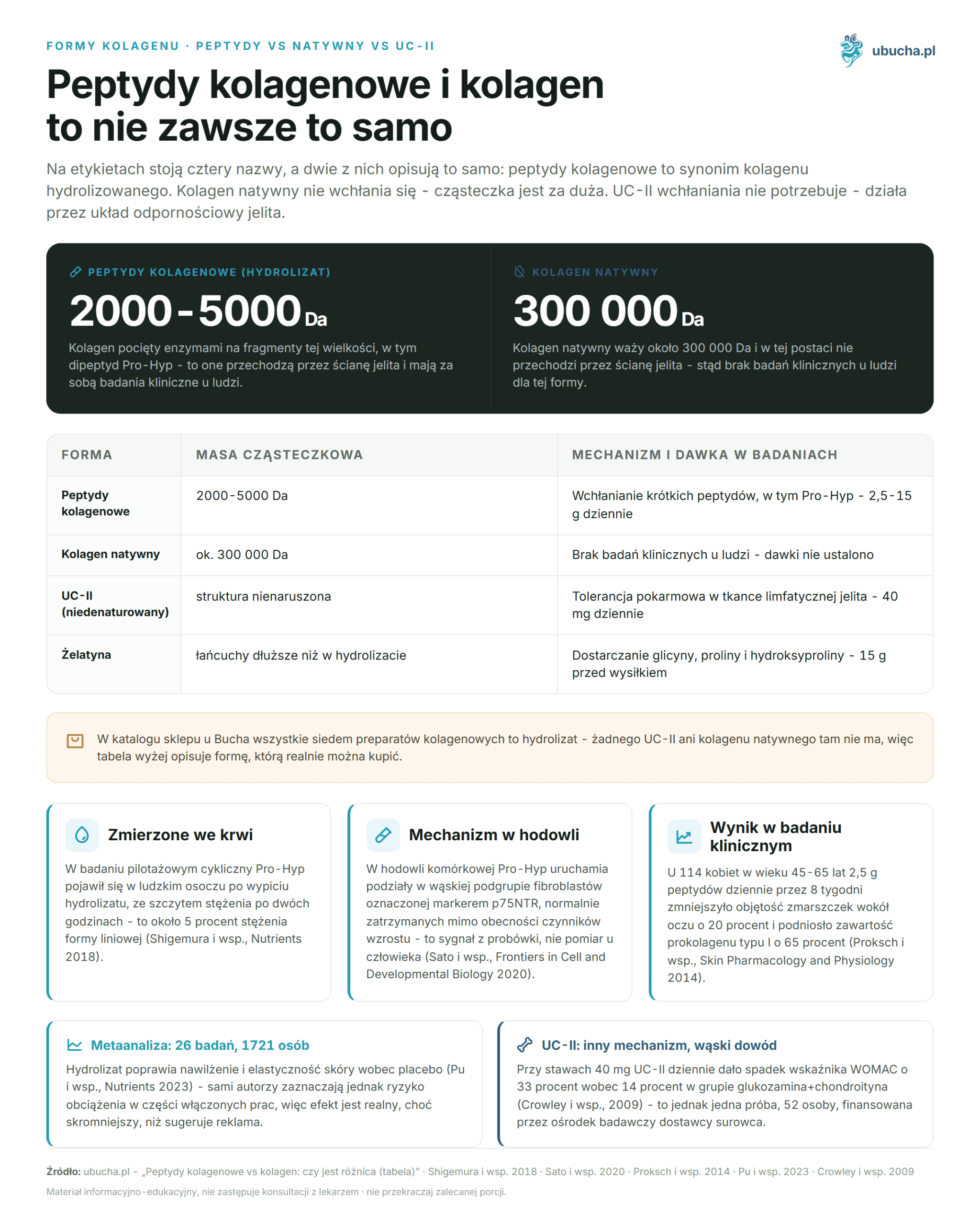
Collagen peptides are hydrolyzed collagen down to 2000-5000 Da. The table compares four forms and seven products from the store and the cost of 10 g of collagen.
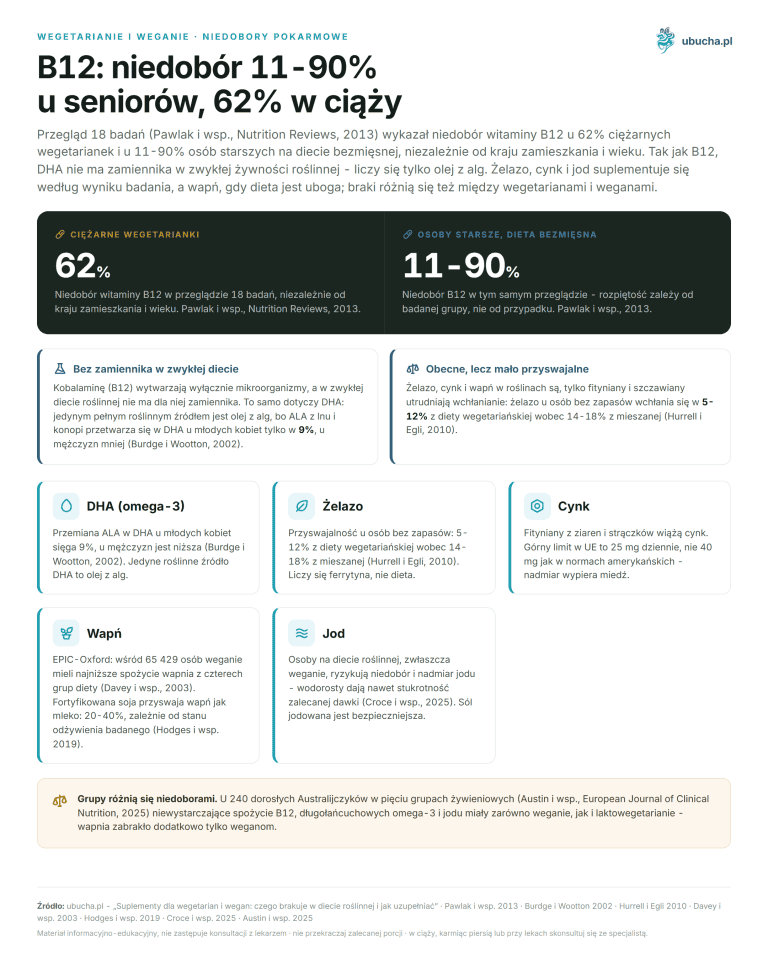
Collagen peptides, hydrolyzed collagen, native collagen, UC-II. Four names stand on the labels, and only two of them describe the same thing. A meta-analysis of 26 randomized studies involving 1721 people showed that hydrolyzed collagen improves skin hydration and elasticity compared to placebo (Pu et al., Nutrients 2023). Native collagen does not have such backing because a molecule weighing 300,000 Da does not pass through the intestinal wall intact. The difference between these two names comes down to one technological process, which determines whether the product has any chance of working at all. Below you will find a table of four forms, a second table with seven collagen products available in the store at Bucha, the cost of 10 g of collagen in each of them, and a verified source for each number.
KEY INFORMATION
• A meta-analysis of 26 randomized studies (1721 people) confirms the improvement of skin hydration and elasticity after hydrolyzed collagen (Pu et al., Nutrients 2023).
• Collagen peptides and hydrolyzed collagen are two names for the same raw material: fragments weighing 2000-5000 Da.
• All seven collagen products in the store catalog are hydrolysates; there is no UC-II or native collagen there.
• The cost of 10 g of collagen ranges from 3.97 PLN to 45.02 PLN, which is more than eleven times different.
• Collagen is exclusively an animal protein, so a vegan version does not exist.
What is the difference between collagen peptides and regular collagen?
Collagen peptides are the same collagen, cut by enzymes into fragments weighing 2000-5000 Da. Native collagen weighs about 300,000 Da and in this form does not pass through the intestinal wall. Hydrolysis is the only difference in the raw material, and it changes everything that happens to the product after swallowing.
Brand names mix on labels to the extent that a manufacturer writing “hydrolyzed collagen” and “collagen peptides” next to each other provides no additional information. They are synonyms. Gelatin is collagen broken down thermally, with longer chains than in hydrolysate. UC-II stands separately, which is type II collagen intentionally left in its undenatured form because its action is based on recognition by the immune system, not on the absorption of amino acids.
The table below compares four forms based on features that can be checked on the label.
| Form | Molecular Weight | Mechanism of Action | Dose in Studies |
|---|---|---|---|
| Collagen Peptides (Hydrolysate) | 2000-5000 Da | Absorption of short peptides, including Pro-Hyp | 2.5-15 g daily |
| Native Collagen | about 300,000 Da | No clinical studies in humans | not established |
| UC-II (Undenatured Type II) | intact structure | Food tolerance in the lymphatic tissue of the intestine | 40 mg daily |
| Gelatin | longer chains than in hydrolysate | Providing glycine, proline, and hydroxyproline | 15 g before exercise |
Which collagen product from the store has the most collagen per serving?
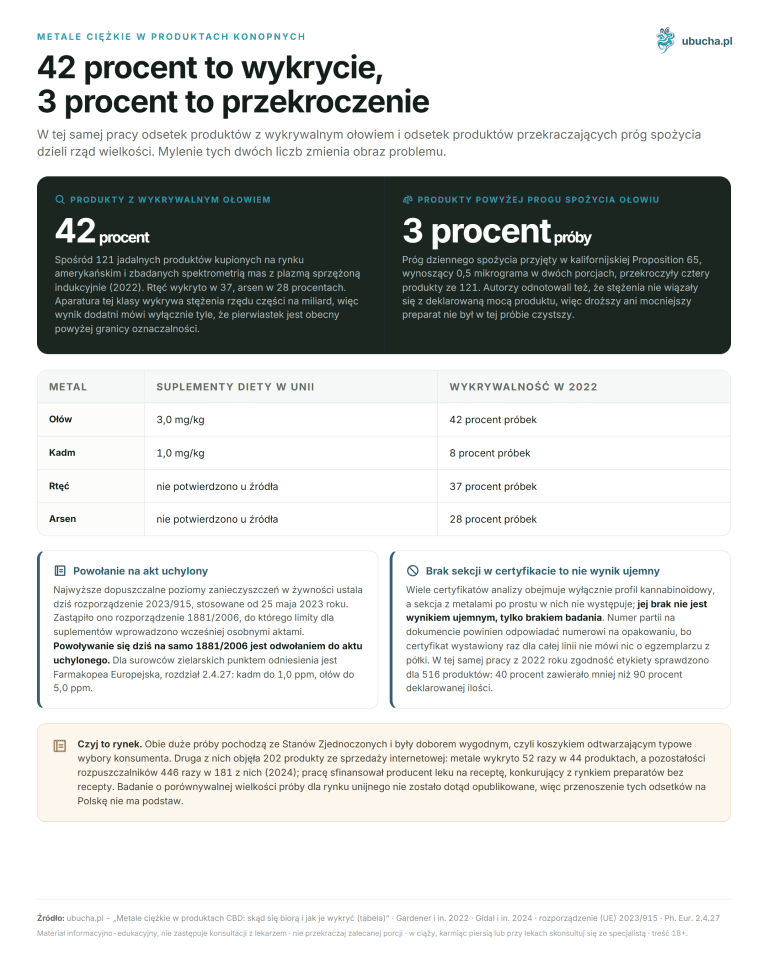
The most is claimed by Aura Care Collagen Moc Piękna: 12,000 mg of fish collagen peptides in a 25 ml serving. The least is in the Collagen Essence, which has 733 mg in a serving counted for 40 drops. All seven products in the catalog are hydrolysates, as the store does not carry native collagen or UC-II.
Milligrams alone are not enough for comparison, as packages have a different number of servings. Therefore, next to the price, the table shows the cost of one daily serving and the cost of 10 g of pure collagen, calculated from the manufacturers’ declarations.
| Product | What Stands Out | Collagen per Serving | Price | Cost per Serving | Cost of 10 g of Collagen |
|---|---|---|---|---|---|
| Divine Collagen, 315 g | grass-fed beef type I and III with tremella | 10,000 mg | 118.99 PLN | 3.97 PLN | 3.97 PLN |
| Collagen Moc Piękna, 500 ml | hyaluronic acid and silica from bamboo | 12,000 mg | 139.00 PLN | 6.95 PLN | 5.79 PLN |
| Collagen Moc Młodości, 500 ml | 1000 mg MSM plus five plant extracts | 11,000 mg | 139.00 PLN | 6.95 PLN | 6.32 PLN |
| Collagen PREMIUM Activity, 200 g | glucosamine, chondroitin, and MSM | 5500 mg | 129.00 PLN | 4.30 PLN | 7.82 PLN |
| Collagen PREMIUM Beauty, 200 g | organic silica at a dose of 100 mg | 5500 mg | 129.00 PLN | 4.30 PLN | 7.82 PLN |
| Collagen Coffee Arabica, 220 g | collagen in instant coffee | 2000 mg | 99.00 PLN | 2.75 PLN | 13.75 PLN |
| Collagen Essence, 50 ml | six B vitamins, dose in drops | 733 mg | 99.00 PLN | 3.30 PLN | 45.02 PLN |
Prices are from the store, as of August 8, 2026. The collagen content per serving is the manufacturer’s declaration from the product card, not a measurement result. You can find the entire set in the supplements category, and a separate shelf collagen currently collects one item.
Why does the cost of 10 g of collagen differ by eleven times?
Because the price of the package says nothing about the dose. Divine Collagen costs 118.99 PLN and comes out to 3.97 PLN for 10 g of collagen. Collagen Essence is cheaper to buy at 99.00 PLN, but the same 10 g costs 45.02 PLN. The prices are divided by one-fifth, while the conversion is eleven times.
This is determined by the role collagen plays in the formulation. In powders, it is the core, so a serving counts 5.5 g or 10 g. In essence in drops and in functional coffee, it serves as an addition to vitamins or caffeine, and the serving drops to 0.73 g and 2 g. Both types of products make sense, but they answer different questions. If you want a dose close to those in clinical studies, the conversion from the last column filters candidates faster than the price on the shelf.
What do studies say about collagen peptides and skin?
The strongest data concern wrinkles and elasticity, not hydration. In a double-blind study, 114 women aged 45-65 took 2.5 g of bioactive collagen peptides daily for 8 weeks. The volume of wrinkles around the eyes decreased by 20 percent compared to placebo, and in biopsies, the content of type I procollagen was higher by 65 percent (Proksch et al., Skin Pharmacology and Physiology 2014).
The second study by this team involved 69 women aged 35-55 who received 2.5 g or 5.0 g of hydrolysate for 8 weeks. Skin elasticity significantly improved in both dosing groups. Hydration and water loss through the epidermis favored collagen only in subgroup analyses and did not reach statistical significance (Proksch et al., 2014).
A set of all such trials provides a more coherent picture than a single study. A meta-analysis of 26 randomized trials with 1721 participants showed a significant improvement in both hydration and elasticity of the skin after hydrolysate compared to placebo, with the authors themselves noting the risk of bias in some included works (Pu et al., Nutrients 2023). The effect is real but more modest than marketing suggests.
How does a fragment of collagen reach the skin from the intestine?
Through the dipeptide Pro-Hyp, or prolyl-hydroxyproline. Short peptides containing hydroxyproline appear in the blood after drinking hydrolysate, and it is they, not free amino acids, that are responsible for the signal reaching the tissues. Collagen itself ceases to exist as a protein along the way, as digestive enzymes break it down into fragments shorter than three amino acids.
A pilot study also detected a cyclic form of Pro-Hyp in human plasma. Its concentration increased after consuming collagen hydrolysate, peaked after two hours, and constituted about 5 percent of the concentration of the linear form. In culture, the same molecule accelerated the growth of mouse skin fibroblasts growing on collagen gel (Shigemura et al., Nutrients 2018).
The mechanism has a reasonable explanation. Fibroblasts attached to collagen fibers normally stop dividing, even when protein growth factors are nearby. Pro-Hyp triggers divisions in a narrow subgroup of these cells, marked by the p75NTR marker, and appears naturally at the site of wound healing (Sato et al., Frontiers in Cell and Developmental Biology 2020). Supplementation with hydrolysate provides the same molecule through the diet.
Does undenatured collagen UC-II work differently?
Yes, and that is why it requires a dose measured in milligrams. UC-II reaches the intestine with an intact triple helix and induces food tolerance in the lymphatic tissue of the gastrointestinal tract. The immune system learns not to attack type II collagen in its own cartilage. Building amino acids have nothing to do with this.
In a randomized study of people with knee osteoarthritis, 40 mg of UC-II daily was compared with a combination of 1500 mg of glucosamine and 1200 mg of chondroitin for 90 days. The WOMAC index decreased by 33 percent in the UC-II group compared to 14 percent in the comparison group, pain assessment on the visual analog scale by 40 versus 15.4 percent, and the Lequesne index describing pain in daily activities by 20 versus 6 percent (Crowley et al., International Journal of Medical Sciences 2009).
It should be noted the scale of this work: one trial, 52 people, funding from the supplier’s research center. This is too little to determine a choice, although it is enough to treat UC-II as a separate category, not a variant of hydrolysate. What the numbering of collagen types promises on the label and what it does not, we break down in the text about types of collagen I, II, and III. There is currently no UC-II product in the store catalog at Bucha, so if you are looking for this form, you will not find it among the seven items in the table above.
How much collagen to take before training?
The protocol that has been realistically tested is based on gelatin, not hydrolysate. Eight healthy men in a crossover design drank 5 g or 15 g of gelatin enriched with vitamin C one hour before six minutes of jumping rope, three times a day for three days.
After a dose of 15 g, the concentration of type I procollagen propeptide in the blood doubled, indicating increased collagen synthesis. Serum taken one hour after consuming gelatin also increased collagen content and mechanical strength of ligaments grown in the laboratory (Shaw et al., American Journal of Clinical Nutrition 2017).
Two things are worth taking from this cautiously. The trial involved eight people, so the result is a premise, not a recommendation. The stimulus was intermittent activity with tendon load, not resistance training with weights. The one-hour lead time has mechanistic justification because amino acids from collagen peak in the blood around this time. Collagen remains an incomplete protein, low in tryptophan, so it does not replace post-workout protein supplements. The timing of intake and what to combine the serving with is discussed in the text about collagen at night and in the morning.
Why is vitamin C needed when supplementing collagen?
Without it, the body cannot build stable collagen, no matter how many amino acids are available. The hydroxylation of proline and lysine, which is the reaction that gives the triple helix stability, occurs with the help of enzymes that require ascorbate as a cofactor. Healthy skin maintains high concentrations of vitamin C precisely because it constantly synthesizes collagen (Pullar et al., Nutrients 2017).
The practical conclusion is simple: when supplementing with collagen, first ensure you meet your vitamin C needs before looking for more expensive collagen. Some manufacturers solve this for you. Collagen Essence adds six B vitamins, and Collagen PREMIUM Beauty adds zinc and biotin, while vitamin C itself is more likely to be found in separate products in the supplements category, from capsules to powdered rose hips.
It is also worth noting what vitamin C does not do. It does not increase the absorption of collagen peptides from the intestine nor does it raise their concentration in the blood. It only acts at the stage where the cell assembles a new collagen molecule from ready amino acids. Therefore, the timing of taking both ingredients does not have to coincide to the hour; what matters is constant coverage of needs over the course of the day.
Is there collagen for vegans?
No, in the literal sense. Collagen is produced only in animal bodies, so any product with that word on the label comes from fish, cattle, or poultry. All seven items in the store catalog confirm this rule: six are based on fish collagen, one on grass-fed beef. What these two raw materials differ in practice is compared in the text about grass-fed and marine collagen.
What is sold as “vegan collagen” is a set of substrates and cofactors: free proline, lysine, and glycine along with vitamin C and zinc. Such a preparation does not provide Pro-Hyp, which is the molecule that stimulates fibroblasts in studies. There are simply no direct comparisons with hydrolysate, so the honest answer is: it is unknown whether it works equally well, and one should not assume that it does.
For those on a plant-based diet, a more sensible approach seems to be the roundabout way. Instead of looking for a collagen substitute, ensure you meet your needs for vitamin C, zinc, and copper, and provide an adequate supply of plant protein. Endogenous collagen synthesis does not stop due to diet; it only slows down with age, and no supplement reverses that.
Frequently Asked Questions
What is the difference between collagen peptides and non-hydrolyzed collagen?
They are the same raw material processed differently. Native collagen has a mass of about 300,000 Da and does not pass through the intestinal wall intact. Collagen peptides are produced from it through enzymatic hydrolysis and have a mass of 2000-5000 Da. Clinical studies in humans concern almost exclusively this second form.
How much collagen do the products available in the store at Bucha contain?
From 733 mg to 12,000 mg per daily serving, according to manufacturers’ declarations. The lowest is the Collagen Essence in drops, the highest is the liquid Collagen Moc Piękna. The cost of 10 g of collagen ranges from 3.97 PLN to 45.02 PLN, which is more than eleven times different.
Does fish collagen work differently than beef collagen?
There are no studies that would favor one source. A meta-analysis of 26 randomized studies found no difference between collagen sources in terms of skin elasticity (Pu et al., Nutrients 2023). The choice of source is important in case of fish allergies and in diets excluding pork or beef.
After how long did the study show a reduction in wrinkles?
After four weeks, with the effect maintained after eight. In a double-blind study, 114 women aged 45-65 took 2.5 g of bioactive collagen peptides daily, and the volume of wrinkles around the eyes decreased by 20 percent compared to placebo (Proksch et al., 2014).
Do collagen peptides affect the intestinal barrier?
Data so far comes from cell cultures, not humans. Peptides from skin collagen of the pollock alleviated barrier damage caused by TNF-alpha in Caco-2 cell monolayers and protected tight junction proteins (Chen et al., Food and Function 2017). This is a premise for further research, not a basis for promises.
Are collagen peptides safe?
In clinical studies on skin, no adverse effects were reported throughout the supplementation period at doses of 2.5 g and 5.0 g daily (Proksch et al., 2014). Caution mainly concerns allergies: fish products are excluded in case of fish allergies, and beef products in diets excluding beef.
If you want to compare available hydrolysates on your own terms, a full shelf with descriptions of composition and current prices stands in the supplements category in the store at Bucha.
This article is for informational and educational purposes and does not replace consultation with a doctor. If you are pregnant, breastfeeding, taking medications, or have chronic conditions, consult the use of supplements or herbs with a specialist.
Author: Michał Waluk · Published: 2026-07-31 · Updated: 2026-08-08