
CBD for epilepsy and seizures: what medicine says and why CBD is legal
Cannabidiol is a registered drug for Dravet and Lennox-Gastaut syndromes at a dose of 10-20 mg/kg. Check how it differs from the oil from the store.
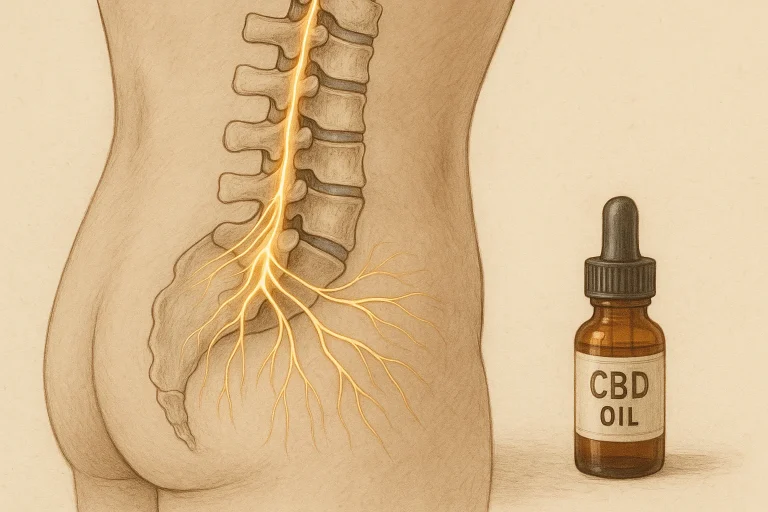
Drug-resistant epilepsy in children is the only indication for which cannabidiol has undergone a full research path with randomization and has been registered as a drug. The FDA approved it in June 2018, and the EMA in September 2019. The evidence is strong, but it only pertains to the pharmacy preparation administered at a dose of 10-20 mg per kilogram of body weight per day, under the supervision of a neurologist and together with clobazam. A typical store-bought oil dose contains several dozen times less. Below you will find what exactly the registration studies showed, how large the gap is between the study dose and the supplement dose, what interactions with antiepileptic drugs have been documented, and who in Poland can currently receive cannabidiol as a reimbursed drug.
KEY INFORMATION
• In Dravet syndrome, the median monthly number of seizures decreased from 12.4 to 5.9 with cannabidiol and from 14.9 to 14.1 with placebo (Devinsky et al., NEJM, 2017).
• The dose from the studies is 10-20 mg per kilogram of body weight per day, which is 700-1400 mg for an adult weighing 70 kg. A typical store-bought oil dose is 10-50 mg.
• Cannabidiol was an addition to treatment in studies, never a substitute. Sudden withdrawal of antiepileptic drugs risks status epilepticus.
• The concentration of the active metabolite of clobazam increased by an average of 500 percent (Geffrey et al., Epilepsia, 2015).
Does CBD treat epilepsy?
Cannabidiol does not cure epilepsy, but in three rare epilepsy syndromes, it reduces the number of seizures so significantly that it has been registered as a drug. The registration only includes the pharmacy preparation, added to the existing treatment. No dietary supplement with cannabidiol has such status or data.
In June 2018, the American FDA approved Epidiolex, an oral solution of purified cannabidiol at a concentration of 100 mg/ml, for the treatment of seizures in Dravet syndrome and Lennox-Gastaut syndrome in patients from the age of 2. In 2020, the indication was expanded to tuberous sclerosis. In the European Union, the same preparation is called Epidyolex and received marketing authorization on September 19, 2019..
The European indication is narrower than what the press headlines would suggest. Epidyolex has been registered as an adjunctive therapy for seizures in Lennox-Gastaut syndrome or Dravet syndrome, in patients from the age of 2 and exclusively in combination with clobazam. It is not a first-line drug, it is not monotherapy, and it is not a preparation that the patient chooses for themselves.
This boundary is often blurred in advertisements. The drug has a license number, a leaflet, a product characteristics document, and a dose calculated per kilogram of body weight. The supplement has a registration number for products introduced to the market and a declaration from the manufacturer. We described the differences between both categories in more detail in the post about this. What is the difference between a dietary supplement and a medicine?.
What did the registration studies of cannabidiol show?
The basis for registration was three phase three studies with randomization, double-blind, and placebo-controlled. They included a total of 516 patients with Dravet syndrome or Lennox-Gastaut syndrome. In each of them, cannabidiol was added to the treatment that the patient was already receiving, and the observation lasted 14 weeks.
In the study Devinsky i wsp. (New England Journal of Medicine, 2017) 120 patients with Dravet syndrome received 20 mg/kg per day or placebo. The median monthly number of seizures decreased from 12.4 to 5.9 in the cannabidiol group and from 14.9 to 14.1 in the placebo group. At least half of the seizures were lost by 43 percent of patients on cannabidiol compared to 27 percent on placebo, and complete cessation of seizures was recorded in 5 percent and in no one in the placebo group.
Two studies concerned Lennox-Gastaut syndrome and measured atonic seizures, i.e., sudden falls. Devinsky i wsp. (NEJM, 2018) In a group of 225 people, they achieved median reductions of 41.9 percent with 20 mg/kg and 37.2 percent with 10 mg/kg compared to 17.2 percent with placebo. Thiele i wsp. (Lancet, 2018) In a group of 171 people, they measured 43.9 percent compared to 21.8 percent.
It is important to read these numbers carefully. The difference compared to placebo is in the range of 20-25 percentage points, so the real effect of cannabidiol alone is moderate, not spectacular. No one in these studies discontinued their previous medications. Adverse effects occurred in 86 percent of those treated and 69 percent of the placebo group, most commonly drowsiness, diarrhea, and decreased appetite.
Ile CBD podawano w badaniach, a ile ma olejek ze sklepu?
In registration studies, 10-20 mg of cannabidiol per kilogram of body weight per day was administered. For a child weighing 20 kg, this is 200-400 mg daily, for an adult weighing 70 kg from 700 to 1400 mg. A typical store-bought oil dose is in the range of 10-50 mg. The difference is several dozen times.
| Parameter | Epidyolex (lek) | Olejek CBD (suplement) |
|---|---|---|
| Daily dose | 10-20 mg per kg of body weight | 10-50 mg, without converting to body weight |
| Dziecko 20 kg | 200-400 mg per day | 10-50 mg per day |
| Adult 70 kg | 700-1400 mg per day | 10-50 mg per day |
| Character | oral solution 100 mg/ml | olejek, zwykle 5-20 procent |
| Supervision | prescription, monitoring liver enzymes | none, over-the-counter sale |
| Dowody w padaczce | three phase 3 studies with randomization | no studies for this indication |
We calculated this based on the bottles from our offer to make the scale visible. A 10 ml bottle of 5 percent oil contains a total of 500 mg of cannabidiol. A child weighing 20 kg on the dose from the study would consume such a bottle within one to two days. An adult weighing 70 kg would need one and a half to three bottles daily, every day, for many months.
Hence the simple conclusion. The results of registration studies say nothing about the effect of the supplement because the supplement does not provide the dose that was studied. Citing Devinsky and Thiele when selling the oil is an abuse, even if the numbers themselves are presented correctly.
Can a CBD supplement replace antiepileptic drugs?
It cannot and should not. In all registration studies, cannabidiol was added to the existing treatment, not substituted for it. Abruptly stopping antiepileptic medications risks increasing seizures and status epilepticus, which is a prolonged seizure that is a life-threatening condition.
This warning is not a precautionary addition from the editorial team. The product characteristics of Epidyolex require that cannabidiol be gradually discontinued for exactly this reason. If such caution is required when withdrawing a drug that was only an adjunct, it is even more applicable to drugs that are the mainstay of therapy.
The risk also applies to adding a supplement on your own. Cannabidiol alters the concentrations of several antiepileptic drugs in the blood, so even without stopping anything, the therapy ceases to be what the neurologist planned. The result can be excessive drowsiness, and in an unfavorable scenario, loss of control over seizures.
Observational data are sometimes cited as a counterargument, but they say less than it seems. Tzadok i wsp. (Seizure, 2016) They described 74 children with drug-resistant epilepsy who were given hemp oil with a cannabidiol to THC ratio of 20 to 1. Caregivers reported a reduction in seizure frequency in 89 percent of the children, while in 7 percent, seizures intensified to the point that treatment was discontinued. This was a retrospective observation, without blinding and without a control group, based on parental reports.
Jak CBD wchodzi w interakcje z klobazamem i walproinianem?
The best-documented interaction of cannabidiol in epilepsy concerns clobazam. Cannabidiol inhibits the CYP2C19 enzyme, which converts clobazam into N-desmethylclobazam, its active metabolite. The concentration of the metabolite increases, along with its anticonvulsant effect and the risk of excessive drowsiness.
Geffrey i wsp. (Epilepsia, 2015) They measured this change in 13 children taking both medications. The average increase in N-desmethylclobazam concentration was 500 percent, and clobazam itself increased by 60 percent. Adverse effects were reported in 10 out of 13 patients and subsided after reducing the clobazam dose, which was done in 10 individuals. This interaction also explains why the European registration of Epidyolex requires its use together with clobazam.
The second issue is the liver and valproate. Gaston i wsp. (Epilepsia, 2017) They observed 81 patients taking cannabidiol at doses up to 50 mg/kg and found that the activity of ALT and AST aminotransferases was significantly higher in those simultaneously taking valproate. It is not about an increase in the concentration of valproate itself, but about the cumulative burden on the liver.
The scale of this phenomenon is evident in the open extension of studies on Lennox-Gastaut syndrome: elevated aminotransferases were recorded in 37 out of 366 patients, and 29 of them were taking valproate. The practical conclusion is clear. Any combination of cannabidiol with antiepileptic drugs requires monitoring of drug and liver enzyme concentrations. We discuss this in more detail in the guide on drug interactions with cannabidiol.
Who in Poland can receive cannabidiol as a reimbursed medication?
As of January 1, 2024, Epidyolex is reimbursed in Poland under the drug program, rather than being imported under targeted import. The Ministry of Health confirms that patients can access cannabidiol therapy in two drug programs: for Lennox-Gastaut syndrome and Dravet syndrome, as well as for seizures in the course of tuberous sclerosis.
The program for both epilepsy syndromes is designated B.154.FM and is funded by the Medical Fund. Patients from the age of 2, whose seizures are not adequately controlled despite the use of at least three antiepileptic drugs, qualify for the program, and therapy is conducted in conjunction with clobazam. From January 2025, fenfluramine will also be available in this program, so the neurologist chooses one of the two substances.
The pathway is shorter than it was before 2024, but it is not automatic. Qualification is conducted by a neurologist at the center implementing the program, based on documented treatment history. Effectiveness is then assessed based on a seizure diary maintained by the patient or caregiver, and treatment continues as long as it is effective.
A practical note for parents. The first step is to talk to the neurologist in charge, not to buy the oil and inform the doctor afterward. If the center does not implement the program, it is worth asking for a referral to one that does. Patient associations for epilepsy help navigate this process and know the current list of centers.
What are Dravet syndrome and Lennox-Gastaut syndrome?
These are two severe childhood epilepsy encephalopathies, in which seizures usually do not respond to standard treatment. That is why they were chosen as the first indications for cannabidiol: the medical need was greatest there, and the available options were the weakest.
Dravet syndrome most often results from a mutation in the SCN1A gene, which encodes the sodium channel. Seizures begin in the first year of life, often triggered by fever, and over time become polymorphic and frequent. The child's development slows down, and the risk of sudden death in epilepsy is increased. The situation is complicated by the fact that some classical sodium channel blockers may exacerbate seizures in this syndrome.
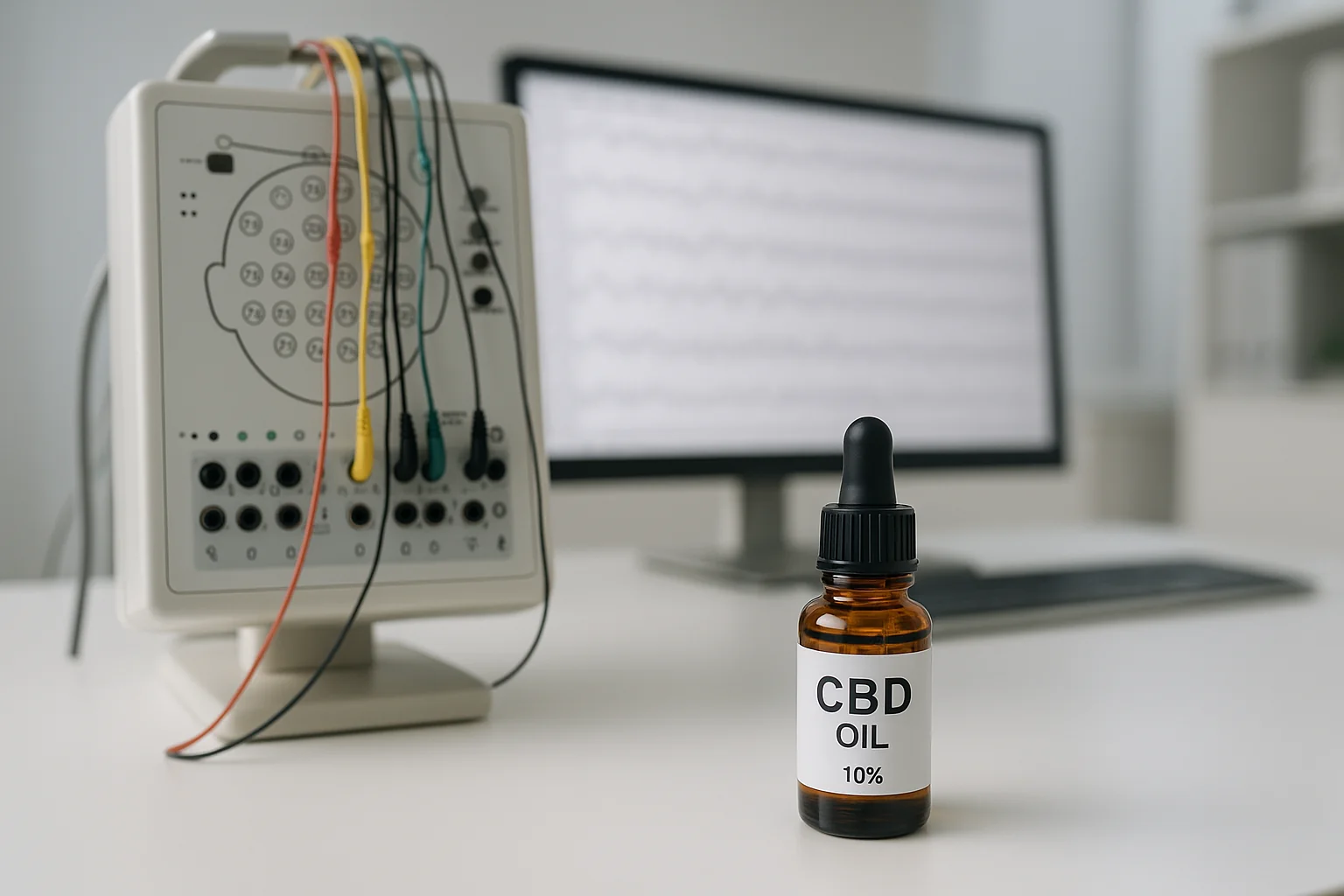
Lennox-Gastaut syndrome is diagnosed by the coexistence of several types of seizures, a characteristic slow spike-wave pattern in EEG, and cognitive development disorders. The biggest problem is atonic seizures, in which the child loses muscle tone and falls without warning, resulting in head and facial injuries. Most patients take several medications simultaneously and still do not achieve full seizure control.
Both syndromes meet the definition of drug-resistant epilepsy, meaning a lack of seizure control after two properly selected and dosed medications. For this group of patients, cannabidiol is a real complement to therapy, not a trend.
How does cannabidiol affect neurons?
The exact mechanism is not known. Gray i Whalley (Epileptic Disorders, 2020) They summarized preclinical data and stated directly that the way cannabidiol reduces the number of seizures in humans remains undetermined. However, the binding sites where the molecule shows affinity are known.
The first is the vanilloid receptor TRPV1. Cannabidiol stimulates it, and prolonged stimulation leads to desensitization of the channel, which limits excessive calcium influx into the neuron. The second is the orphan receptor GPR55, whose endogenous agonist is lysophosphatidylinositol. Cannabidiol acts here as an antagonist and suppresses increased synaptic excitability. The third is the nucleoside transporter ENT-1, whose inhibition raises the extracellular concentration of adenosine, which inhibits excitatory conduction.
It is worth noting what is not on this list. Cannabidiol is not a CB1 receptor agonist, so it does not act like THC, and it is not a classical sodium channel blocker like phenytoin or carbamazepine. This explains why it helps some patients for whom medications with those mechanisms have failed, and why its side effect profile is also different.
For a reader without medical training, the conclusion is simple. Since it is not exactly known how it works, it is even harder to predict the effects of mixing it with other medications without supervision. Similar reservations were described in connection with kannabidiolu w chorobie Parkinsona.
Dlaczego CBD jest legalne, skoro pochodzi z konopi?
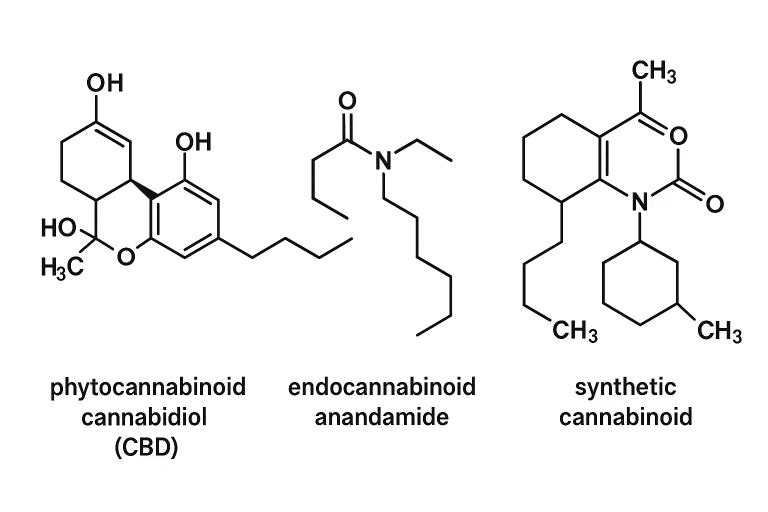
Because the controlled substance is THC, not cannabidiol. Pure cannabidiol has never been listed in the UN Convention on Narcotic Drugs of 1961, and the WHO expert committee in 2018 concluded that it does not exhibit addictive potential justifying such a listing.
The popular version of this story is often distorted. In December 2020 The UN Commission on Narcotic Drugs removed cannabis and cannabis resin from Schedule IV of the 1961 convention, recognizing their medicinal use. A separate recommendation regarding cannabidiol preparations was not adopted at that time, which did not change anything in practice, as cannabidiol itself was not listed in any schedule.
In Poland, the definition of industrial hemp matters. Since May 7, 2022, following the amendment to the Act on Counteracting Drug Addiction, these are varieties in which the sum of delta-9-THC and tetrahydrocannabinolic acid in the flowering tops does not exceed 0.3 percent of dry mass. Previously, the threshold was 0.2 percent, so older articles provide this lower value. Products from such hemp can be sold and possessed.
Legality does not say anything about effectiveness. Store-bought oil is legal to the same extent as flaxseed oil and is equally not an antiepileptic drug. A separate question concerns driving and screening tests, which we described in the entry about CBD a testach narkotykowych.
Frequently Asked Questions
Does CBD treat epilepsy?
It does not cure but reduces the number of seizures in three rare syndromes. Devinsky i wsp. (NEJM, 2017) they demonstrated a decrease in the median monthly number of seizures from 12.4 to 5.9 with cannabidiol and from 14.9 to 14.1 with placebo in Dravet syndrome. This concerns the drug added to therapy, not a supplement.
Will CBD oil from the store help with epilepsy?
There is no evidence for that. In studies, doses of 10-20 mg per kilogram of body weight per day were administered, which means 700-1400 mg for an adult weighing 70 kg. A typical dose of oil is 10-50 mg, several dozen times less. The results of studies on the drug do not transfer to the supplement.
Can antiepileptic drugs be discontinued after starting CBD?
No. In registration studies, cannabidiol has always been an adjunct to treatment. Antiepileptic drugs are only discontinued gradually and under supervision, as sudden withdrawal risks exacerbating seizures and status epilepticus, which is a life-threatening condition. Any changes in therapy are determined by a neurologist.
How does CBD affect clobazam?
It raises the concentration of N-desmethylclobazam, the active metabolite of clobazam, by inhibiting the CYP2C19 enzyme. Geffrey i wsp. (Epilepsia, 2015) they measured an average increase of 500 percent in children, and in 10 out of 13 patients, the clobazam dose had to be reduced due to drowsiness.
Who in Poland can receive reimbursed cannabidiol?
Patients from the age of 2 with Lennox-Gastaut syndrome or Dravet syndrome, whose seizures persist despite at least three antiepileptic drugs. The drug program B.154.FM has been in operation since January 1, 2024, therapy is conducted together with clobazam, and qualification is carried out by a neurologist at the center implementing the program.
Dlaczego CBD jest legalne, skoro pochodzi z konopi?
Pure cannabidiol has never been listed in the UN conventions of 1961, and the WHO expert committee in 2018 found no basis to change that. In Poland, since May 7, 2022, industrial hemp refers to varieties with THC content up to 0.3 percent of dry mass.
If you are looking for hemp products for everyday use, you will find them in the section oils in the u Bucha store. These are dietary supplements, not antiepileptic drugs, and do not replace therapy conducted by a neurologist.
This article is for informational and educational purposes and does not constitute medical advice. Before starting to use cannabis or CBD for therapeutic purposes, consult a doctor, especially if you are taking other medications, are pregnant, or breastfeeding.
Author: Michał Waluk · Opublikowano: 2026-06-22 · Aktualizacja: 2026-08-07