
Czy CBD wychodzi na testach narkotykowych? Co musisz wiedzieć przed pracą i za kierownicą
Czy CBD wychodzi na teście narkotykowym? Co wykazało badanie moczu po czystym CBD, czego szuka policyjny test śliny i jakie przepisy naprawdę obowiązują.
To jedno z tych pytań, w których odpowiedź „to zależy” nie jest wykrętem. Sam kannabidiol na standardowym teście nie wychodzi, bo test go nie szuka. Ale olejek pełnospektralny to nie jest sam kannabidiol i właśnie tam zaczyna się ryzyko. Jeśli pracujesz w zawodzie z regularnymi badaniami albo prowadzisz zawodowo, potrzebujesz konkretów: co dokładnie mierzy test, ile THC musiałoby się w Tobie znaleźć i na jakiej podstawie prawnej odbywa się kontrola. Poniżej znajdziesz jedno badanie, które zmierzyło to wprost, oraz przepisy odczytane u źródła, a nie z powtarzanych w sieci uproszczeń. Zobaczysz też, dlaczego dwie liczby powtarzane w niemal każdym poradniku o CBD za kierownicą nie znaczą tego, co się im przypisuje.
KLUCZOWE INFORMACJE
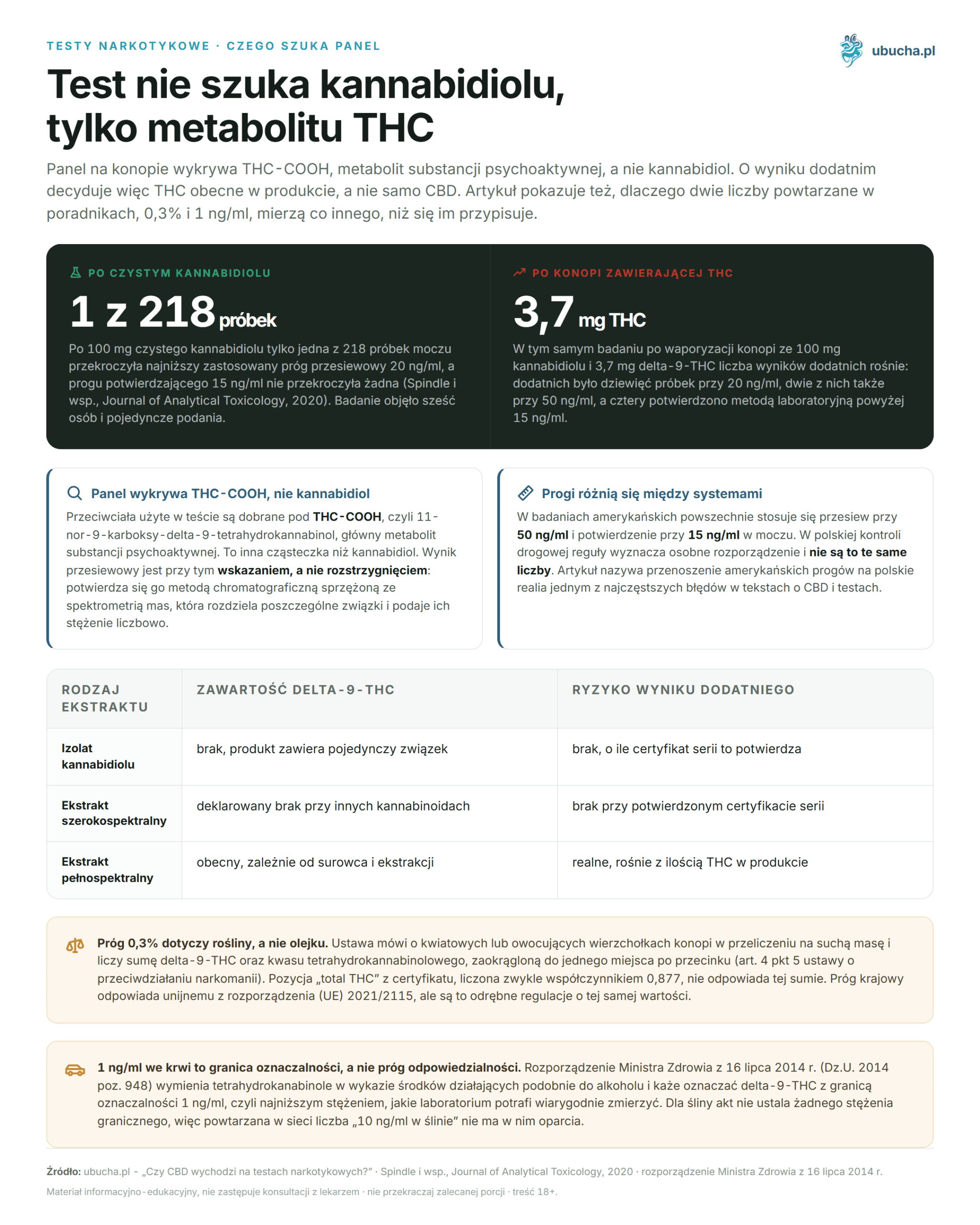
• Po podaniu czystego CBD tylko 1 z 218 próbek moczu przekroczyła najniższy próg przesiewowy, a progu potwierdzającego nie przekroczyła żadna (Spindle i wsp., Journal of Analytical Toxicology, 2020).
• Po waporyzacji konopi zawierających 100 mg CBD i 3,7 mg THC dodatnich było dziewięć próbek, a cztery potwierdzono metodą laboratoryjną.
• Próg 0,3% dotyczy rośliny, nie olejku, i liczy się jako suma delta-9-THC oraz THCA; wynika z art. 4 pkt 5 ustawy o przeciwdziałaniu narkomanii, nie z rozporządzenia unijnego.
• Wartość 1 ng/ml delta-9-THC we krwi to granica oznaczalności metody, a nie ustawowy próg odpowiedzialności.
Czego naprawdę szukają testy narkotykowe?
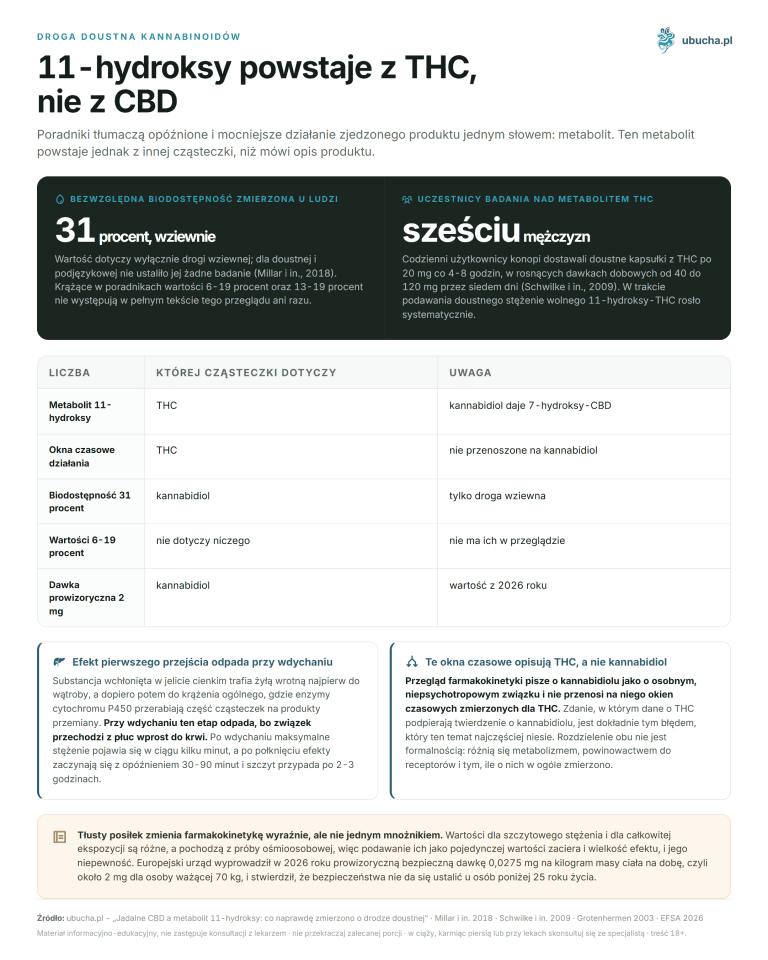
Standardowy test nie szuka kannabidiolu. Panel na konopie wykrywa THC-COOH, czyli 11-nor-9-karboksy-delta-9-tetrahydrokannabinol, główny metabolit substancji psychoaktywnej. To zupełnie inna cząsteczka niż kannabidiol, a przeciwciała użyte w teście są dobrane pod nią.
Testy przesiewowe działają immunologicznie: próbka reaguje z przeciwciałem, a urządzenie albo pasek pokazuje wynik powyżej lub poniżej ustalonego progu. Taki wynik jest wskazaniem, nie rozstrzygnięciem. Potwierdza się go metodą chromatograficzną sprzężoną ze spektrometrią mas, która rozdziela poszczególne związki i podaje ich stężenie liczbowo.
Progi przesiewu i potwierdzenia różnią się między krajami i między systemami. W badaniach amerykańskich powszechnie stosuje się przesiew przy 50 ng/ml i potwierdzenie przy 15 ng/ml w moczu. W polskiej kontroli drogowej reguły wyznacza osobne rozporządzenie, o którym piszemy niżej, i nie są to te same liczby. Przenoszenie amerykańskich progów na polskie realia jest jednym z najczęstszych błędów w tekstach o CBD i testach. Jeśli interesuje Cię sama farmakokinetyka, zebraliśmy ją w tekście o tym, ile CBD jest wykrywalne we krwi i w moczu.
Czy sam kannabidiol może dać wynik pozytywny?
Zmierzono to wprost. Spindle i współpracownicy opublikowali w Journal of Analytical Toxicology w 2020 roku badanie, w którym sześcioro zdrowych dorosłych w układzie krzyżowym otrzymywało kolejno 100 mg kannabidiolu doustnie, 100 mg w waporyzacji, waporyzowaną konopię bogatą w kannabidiol oraz placebo. Mocz zbierano przed podaniem i przez pięć kolejnych dni.
Wynik dla czystego kannabidiolu jest jednoznaczny. Spośród 218 próbek moczu tylko jedna przekroczyła najniższy zastosowany próg przesiewowy, czyli 20 ng/ml, i ani jedna nie przekroczyła progu potwierdzającego 15 ng/ml. Autorzy piszą wprost, że jednorazowe podanie czystego kannabidiolu nie daje wyniku dodatniego przy obowiązujących u nich progach badań pracowniczych.
Zmieniło się to natychmiast, gdy do gry weszło THC. Waporyzowana konopia zawierała 100 mg kannabidiolu i 3,7 mg delta-9-THC. Po niej dziewięć próbek wyszło dodatnio w przesiewie przy 20 ng/ml, dwie z nich także przy 50 ng/ml, a cztery potwierdziły się w badaniu laboratoryjnym powyżej 15 ng/ml. To jest cała odpowiedź na tytułowe pytanie: problemem nie jest kannabidiol, tylko THC, które mu towarzyszy.
Badanie objęło sześć osób i pojedyncze podania, więc nie mówi nic o wyniku po miesiącach codziennego stosowania. Autorzy kończą postulatem rzetelnego etykietowania zawartości THC w produktach z konopi, bo to od niej zależy wynik.
Ile THC wolno mieć w konopiach i czego ten próg dotyczy?
Próg 0,3% jest w polskich tekstach o CBD opisywany źle na trzy sposoby naraz, więc warto go rozłożyć na części. Wynika on z art. 4 pkt 5 ustawy z 29 lipca 2005 r. o przeciwdziałaniu narkomanii, w brzmieniu nadanym ustawą z 24 marca 2022 r. i obowiązującym od 7 maja 2022 r.
Po pierwsze, próg dotyczy rośliny, a nie produktu końcowego. Ustawa mówi o kwiatowych lub owocujących wierzchołkach konopi, z których nie usunięto żywicy, w przeliczeniu na suchą masę. Olejek nie jest rośliną i ustawa nie wyznacza dla niego takiej granicy.
Po drugie, liczy się nie sam delta-9-THC, tylko suma delta-9-THC oraz kwasu tetrahydrokannabinolowego, zaokrąglona do jednego miejsca po przecinku. Ma to praktyczny skutek przy czytaniu certyfikatu analizy: pozycja „total THC”, liczona zwykle współczynnikiem 0,877, nie odpowiada sumie z ustawy.
Po trzecie, próg krajowy nie wynika z rozporządzenia unijnego. Unia ustala własną granicę 0,3% dla odmian objętych dopłatami w art. 4 ust. 4 rozporządzenia (UE) 2021/2115, obowiązującą od 1 stycznia 2023 r. To dwie odrębne regulacje o tej samej wartości liczbowej, a poprawne zdanie brzmi: próg krajowy odpowiada progowi unijnemu.
Co grozi kierowcy po olejku pełnospektralnym?
Kannabidiol nie jest środkiem działającym podobnie do alkoholu i sam z siebie nie jest podstawą ani do zatrzymania, ani do postawienia zarzutu. Ryzyko dotyczy wyłącznie THC obecnego w produktach pełnospektralnych. Art. 45 ust. 1 pkt 1 ustawy Prawo o ruchu drogowym (t.j. Dz.U. 2024 poz. 1251) zabrania kierowania pojazdem po użyciu środka działającego podobnie do alkoholu, a badanie na jego obecność prowadzi się na podstawie art. 129j tej ustawy.
Wykaz tych środków i sposób badania określa rozporządzenie Ministra Zdrowia z 16 lipca 2014 r. (Dz.U. 2014 poz. 948). Wymienia ono tetrahydrokanabinole wprost, w wykazie środków objętych badaniem. Badanie przesiewowe polega na nieinwazyjnym pobraniu próbki śliny i oznaczeniu jej metodą immunologiczną w urządzeniu przeznaczonym do tego celu. Rozporządzenie nie podaje przy tym żadnego granicznego stężenia dla śliny, więc powtarzana w sieci liczba „10 ng/ml w ślinie” nie ma w nim oparcia.
Przy badaniu krwi rozporządzenie każe oznaczać delta-9-THC z granicą oznaczalności 1 ng/ml. To jest właśnie najczęściej mylona wartość: granica oznaczalności mówi, ile laboratorium potrafi wiarygodnie zmierzyć, a nie od ilu zaczyna się odpowiedzialność. Ustawodawca nie ustanowił dla THC odpowiednika promili.
Konsekwencje mają dwa poziomy. Kierowanie pod wpływem środka odurzającego jest przestępstwem z art. 178a par. 1 Kodeksu karnego, zagrożonym karą pozbawienia wolności do lat 3, a sąd orzeka też świadczenie pieniężne w wysokości co najmniej 5000 zł. Łagodniejszy stan po użyciu takiego środka jest wykroczeniem z art. 87 par. 1 Kodeksu wykroczeń, z grzywną nie niższą niż 2500 zł. Szerzej rozkładamy to w tekście o tym, czy można jeździć po wzięciu olejku.
Czy pracodawca może zbadać Cię na obecność THC?
Może, jeśli spełni warunki określone w Kodeksie pracy. Przepisy o kontroli trzeźwości oraz o badaniu na obecność środków działających podobnie do alkoholu wprowadziła do Kodeksu pracy ustawa z 1 grudnia 2022 r. o zmianie ustawy Kodeks pracy oraz niektórych innych ustaw (Dz.U. 2023 poz. 240). Wcześniejsze teksty o CBD w pracy odsyłają zwykle do ustawy o wychowaniu w trzeźwości i jest to odesłanie do niewłaściwego aktu.
Kontrola nie jest przy tym uprawnieniem swobodnym. Pracodawca wprowadza ją, gdy jest niezbędna do zapewnienia ochrony życia i zdrowia pracowników lub innych osób albo ochrony mienia, a grupy pracowników objętych kontrolą oraz sposób jej przeprowadzania musi ustalić w przepisach zakładowych i uprzedzić o nich zatrudnionych.
Badanie obejmuje te same środki co przy kontroli drogowej: opioidy, amfetaminę i jej analogi, kokainę, tetrahydrokanabinole oraz benzodiazepiny. Kannabidiolu w tym wykazie nie ma, więc pracownik stosujący izolat albo produkt bez THC nie ma się czego obawiać od strony analitycznej. Ryzyko wnosi wyłącznie produkt pełnospektralny, i to głównie przy dłuższym stosowaniu wyższych porcji.
Który rodzaj olejku wybrać przy regularnych testach?
Zasada jest prosta: jeśli podlegasz badaniom albo prowadzisz zawodowo, wybierz produkt bez THC i miej na to papier. Poniższa tabela zestawia trzy rodzaje ekstraktu pod kątem tego jednego kryterium, a nie ogólnej skuteczności.
| Rodzaj ekstraktu | Zawartość delta-9-THC | Ryzyko wyniku dodatniego |
|---|---|---|
| Izolat kannabidiolu | brak, produkt zawiera pojedynczy związek | brak, o ile certyfikat analizy serii to potwierdza |
| Ekstrakt szerokospektralny | deklarowany brak, przy zachowanych innych kannabinoidach i terpenach | brak przy potwierdzonym certyfikacie, ale deklaracja bez badania nie wystarcza |
| Ekstrakt pełnospektralny | obecny, w ilości zależnej od surowca i sposobu ekstrakcji | realne, tym większe, im więcej THC zawiera produkt i im więcej go przyjmujesz |
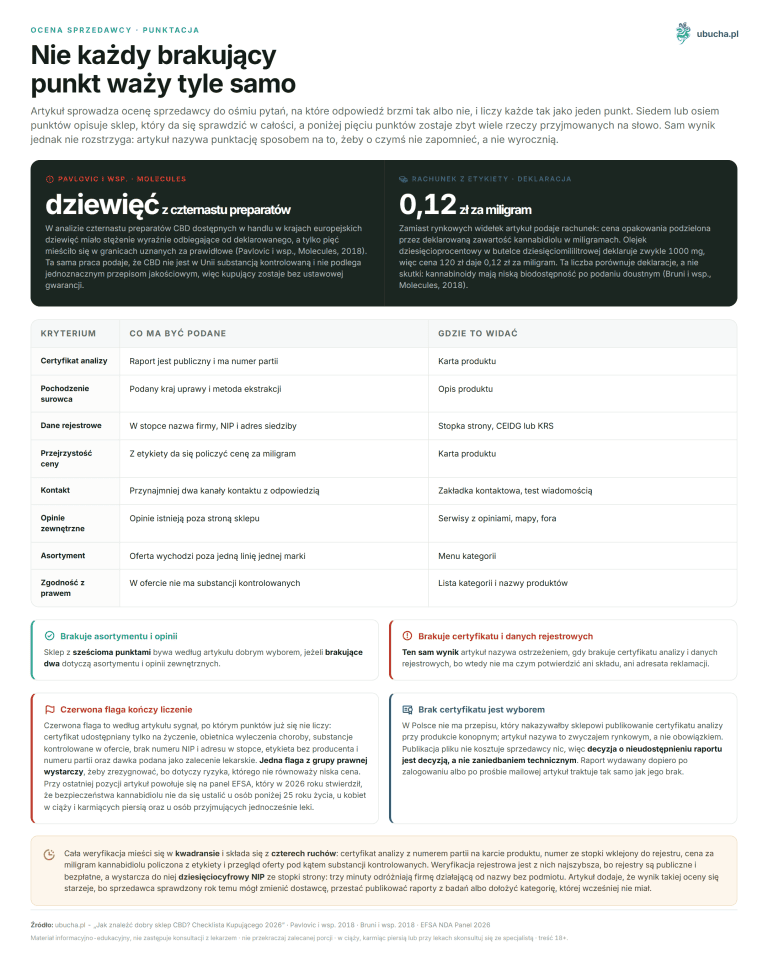
Certyfikat analizy jest tu ważniejszy od nazwy na etykiecie. Wyniki badania Spindle pokazują, dlaczego: różnicę między brakiem wyniku dodatniego a czterema potwierdzonymi próbkami zrobiło 3,7 mg THC, czyli ilość, której z etykiety nie da się odczytać. Proś o certyfikat dla konkretnej serii, bo skład zmienia się między partiami. Różnice między typami ekstraktu opisaliśmy dokładniej w tekście full spectrum a broad spectrum.
Co zrobić po pozytywnym wyniku testu?
Przede wszystkim potraktuj wynik przesiewowy jako wskazanie, a nie jako ustalenie. Masz prawo żądać badania potwierdzającego metodą chromatograficzną, która rozdziela kannabidiol od THC i podaje stężenie liczbowo. Przy kontroli drogowej to badanie krwi prowadzone w trybie z art. 129j Prawa o ruchu drogowym.
Zabezpiecz dowody, zanim zaczniesz cokolwiek tłumaczyć. Zachowaj opakowanie produktu z numerem serii, certyfikat analizy tej serii oraz dowód zakupu. Zapisz, od kiedy i jak często stosujesz preparat. Materiał zebrany po fakcie jest znacznie słabszy niż ten, który miałeś od początku.
Warto też uporządkować stan prawny w tle. Posiadanie i stosowanie produktów z kannabidiolem jest w Polsce legalne, a samo CBD w organizmie nie jest podstawą do jakiejkolwiek odpowiedzialności. Sprawa zaczyna się dopiero wtedy, gdy badanie wykaże obecność THC u osoby prowadzącej pojazd lub obsługującej maszyny, i to niezależnie od tego, czy odczuwałeś jakikolwiek efekt. W sporze z pracodawcą albo w postępowaniu po kontroli drogowej skorzystaj z pomocy prawnika, bo o kwalifikacji czynu decyduje całość opinii biegłego, a nie pojedyncza liczba z paska.
Najczęściej zadawane pytania
Czy sam kannabidiol wychodzi na teście narkotykowym?
Nie. Testy szukają THC-COOH, metabolitu delta-9-THC, a nie kannabidiolu. W badaniu Spindle i współpracowników (Journal of Analytical Toxicology, 2020) po podaniu czystego CBD tylko 1 z 218 próbek moczu przekroczyła najniższy próg przesiewowy 20 ng/ml, a próg potwierdzający nie został przekroczony ani razu.
Czy olejek pełnospektralny może dać wynik dodatni?
Tak, bo zawiera delta-9-THC. W tym samym badaniu po waporyzacji konopi z 100 mg CBD i 3,7 mg THC dziewięć próbek wyszło dodatnio w przesiewie, a cztery potwierdzono metodą LC-MS-MS. Ryzyko zależy od tego, ile THC zawiera produkt, a przy izolacie i przy ekstraktach bez THC praktycznie znika.
Czego szuka policyjny test przy kontroli drogowej?
Przesiewowe badanie polega na nieinwazyjnym pobraniu próbki śliny i oznaczeniu jej metodą immunologiczną. Podstawą jest rozporządzenie Ministra Zdrowia z 16 lipca 2014 r. (Dz.U. 2014 poz. 948), które wymienia tetrahydrokanabinole w wykazie środków działających podobnie do alkoholu. Stężenia granicznego dla śliny akt nie ustala.
Czy 1 ng/ml THC we krwi to próg odpowiedzialności?
Nie. Wartość 1 ng/ml przy delta-9-THC z rozporządzenia z 2014 roku to granica oznaczalności metody, czyli najniższe stężenie, jakie laboratorium potrafi wiarygodnie zmierzyć. Nie jest to ustawowa granica odpowiedzialności. O kwalifikacji czynu rozstrzyga sąd na podstawie całości opinii biegłego.
Który rodzaj olejku wybrać przy regularnych testach?
Izolat kannabidiolu albo produkt szerokospektralny, w obu przypadkach z certyfikatem analizy potwierdzającym brak delta-9-THC. Sama deklaracja na etykiecie nie wystarcza. Poproś sprzedawcę o certyfikat dla konkretnej serii, bo skład różni się między partiami tego samego produktu.
Olejki dostępne w sklepie u Bucha znajdziesz w kategorii olejki. Przed zakupem sprawdź w certyfikacie analizy konkretnej serii, ile zawiera delta-9-THC, bo tylko ten dokument odpowiada na pytanie postawione w tym artykule.
Artykuł ma charakter informacyjno-edukacyjny i nie stanowi porady prawnej. Stan prawny opisany w artykule obowiązuje na dzień publikacji: regulacje dotyczące konopi mogą ulec zmianie. Przed podjęciem decyzji konsultuj się z prawnikiem lub aktualnymi aktami prawnymi.
Autor: Michał Waluk · Opublikowano: 2026-06-15 · Aktualizacja: 2026-08-16