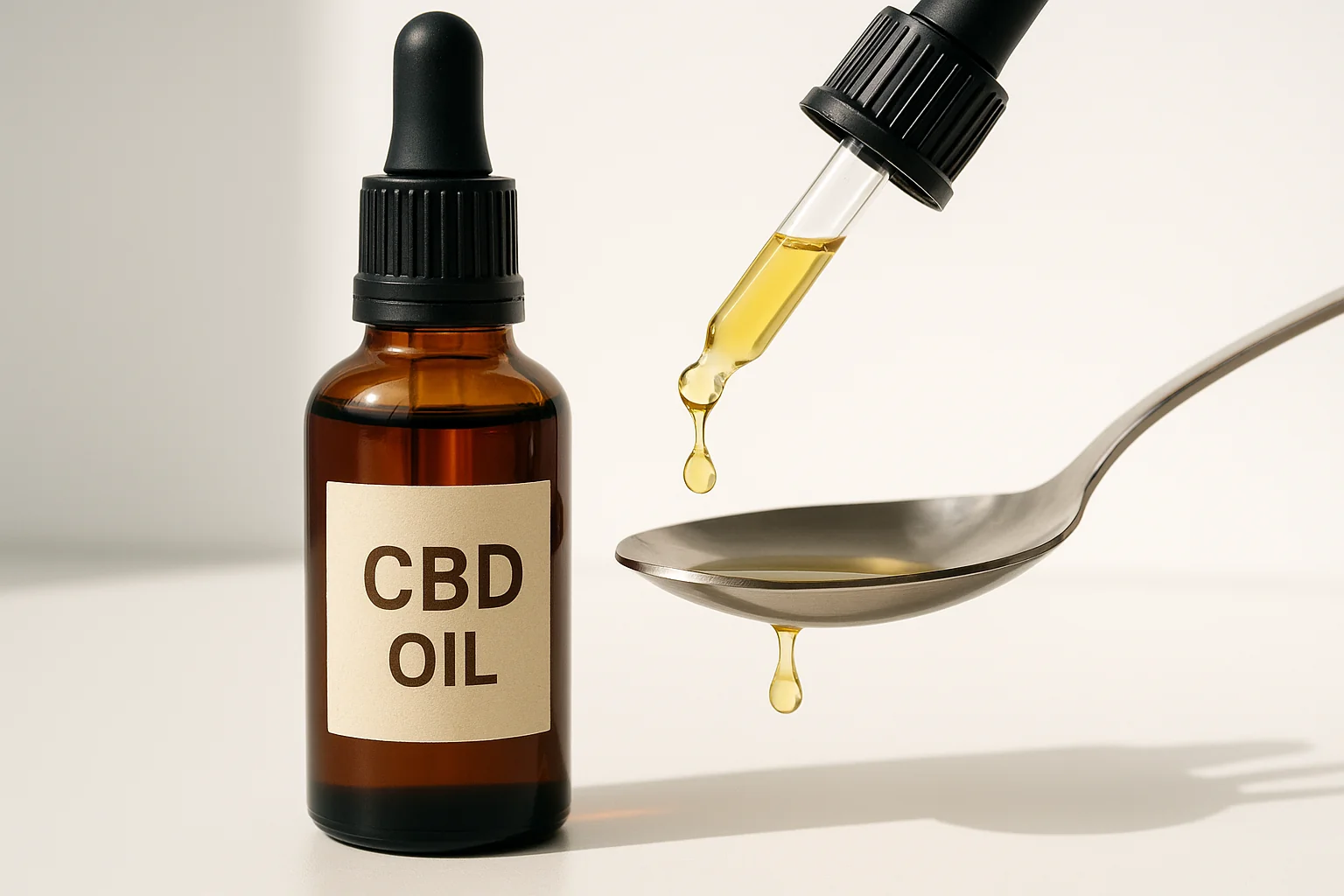

CBD dosing: how many drops of oil to take, when to take it, and how to start (2026)
How many drops of CBD oil to take, how to convert drops to milligrams, and what doses have really been studied in the clinic. The start low, go slow protocol step by step.
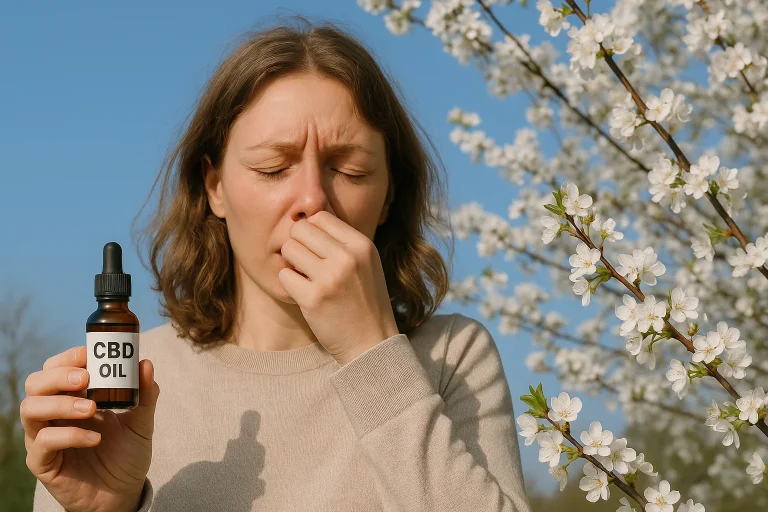
The question "how many drops of CBD to take" comes up more often than any other question about cannabis, and the answers circulating online share a common flaw: they attribute specific numbers of milligrams to research support that never used such doses. Anxiety studies administered 300 mg at once. That's about 120 drops of 5% oil, not three drops before bed. This difference in scale determines what can be expected from supplementation. In this guide, you will find the math for converting concentration to milligrams, a cautious dosing protocol, a fair comparison of doses from clinical studies, and what the data simply does not show.
KEY INFORMATION
• A review of 35 clinical studies included doses from below 1 to 50 mg of CBD per kilogram of body weight per day, and at doses around 2.4 mg/kg, there was no signal of effectiveness (Millar et al., British Journal of Clinical Pharmacology, 2019).
• 1 drop of 5% oil contains about 2.5 mg of CBD, 10% about 5 mg, 20% about 10 mg.
• A fatty meal raises the area under the CBD concentration curve by about 4 times, and the maximum concentration by 14 times (Birnbaum et al., Epilepsia, 2019).
• The WHO in 2018 found no potential for CBD to be addictive or any public health issues related to pure CBD.
• For anxiety, sleep, and pain, no supplemental dose with proven effectiveness has been established.
How does CBD work and what does the dose actually affect?
Cannabidiol does not bind strongly to CB1 and CB2 receptors, through which THC acts. Instead, it interacts with a broad range of other targets: ion channels, transporters, and enzymes. The dose determines which of these targets will even be reached, as some of them only respond at concentrations that are difficult to achieve in the body.
The endocannabinoid system is a network of receptors present in the brain, nervous system, immune system, and peripheral tissues, responsible for maintaining the body's internal balance. CB1 receptors are mainly concentrated in the central nervous system, where they modulate pain, mood, and appetite. CB2 receptors dominate in immune tissues. CBD affects this system indirectly, by modulating endogenous cannabinoids, rather than by directly binding to receptors.
A systematic review of the molecular pharmacology of CBD by Ibeas Bih i in. (Neurotherapeutics, 2015) collected numerous molecular targets: TRPV1 receptors related to pain and thermoreception, serotonin transporter SERT, adenosine receptors A1 and A2A, and PPAR-gamma receptors. However, the authors added a caveat that is often lost in dosing texts: some effects were observed under laboratory conditions at concentrations that are hard to expect in a living organism, precisely due to the poor bioavailability of CBD. In other words, the list of mechanisms is long, but not every one of them will activate after a few drops of oil.
How many milligrams of CBD are in one drop of oil?
One drop of 5% oil contains about 2.5 mg of CBD, 10% about 5 mg, and 20% about 10 mg. The formula is simple: multiply the percentage concentration by the capacity in milliliters and by 10, then divide the result by the number of drops in the bottle. A standard dropper gives about 20 drops per milliliter.
For 5% oil in a 10 ml package, the calculation looks like this: 5 times 10 times 10 gives 500 mg of CBD in the bottle, and 500 mg divided by 200 drops gives 2.5 mg per drop. The same method of calculation works for any capacity. In a 12 ml bottle containing 600 mg, there are 240 drops, and again about 2.5 mg per drop, as the concentration has not changed.
| Concentration | CBD w butelce 10 ml | CBD w kropli | Kropli na 25 mg |
|---|---|---|---|
| 5% | 500 mg | ok. 2,5 mg | ok. 10 |
| 10% | 1000 mg | ok. 5 mg | ok. 5 |
| 15% | 1500 mg | ok. 7,5 mg | 3-4 |
| 20% | 2000 mg | ok. 10 mg | 2-3 |
The values are approximate, as the number of drops depends on the viscosity of the carrier oil and the diameter of the dropper. We noticed when comparing packages that the simplest quality control is to check whether the declared percentage concentration matches the stated content in milligrams on the label. If the manufacturer states 10% and 500 mg in a 10 ml bottle, one of those numbers is false.
What does the "start low, go slow" protocol look like step by step?
You start with the smallest sensible dose, maintain it for a week, and only then add another 5 mg. The reason is practical, not magical: since it is not known in advance how much CBD a given person needs, the only method is to slowly reach the smallest dose that produces an effect.
Such a strategy was described by MacCallum i Russo (European Journal of Internal Medicine, 2018) in a practical discussion of cannabis dosing. They point out that individual differences in response are significant, so a protocol based on slow titration is safer than starting from a high dose. The schedule below applies this principle to 5% oil, not dosing with proven effectiveness.
| Period | Krople olejku 5% | Daily dose | What to look for |
|---|---|---|---|
| Week 1-2 | 2 rano, 2 wieczorem | ok. 10 mg | tolerance, drowsiness, digestion |
| Week 3-4 | 3 rano, 3 wieczorem | ok. 15 mg | pierwsze zmiany w dzienniku |
| Week 5-6 | 4-5 rano, 4-5 wieczorem | ok. 20-25 mg | does the increase change anything |
| Week 7-8 | no changes or higher concentration | ok. 25-30 mg | comparison with the baseline |
Slow titration has one more justification. The relationship between effect and dose does not have to be linear. In a study on anxiety, described in the next section, the average dose worked, but a dose twice as high did not. Since more does not always mean better, skipping several levels at once loses the information about where one's own optimum lies.
Jakie dawki CBD stosowano w badaniach klinicznych?
Significantly higher than what fits in a pipe. Systematic review Millar i in. (British Journal of Clinical Pharmacology, 2019) included 35 studies across 13 indications, with doses ranging from below 1 to 50 mg per kilogram of body weight per day. For a person weighing 70 kg, the lower limit of this range is already 70 mg per day.
This same review contains an observation that should be placed next to every table with drops: in small studies on diabetes, Crohn's disease, ocular hypertension, fatty liver, and chronic pain, no signal of efficacy was detected, with an average dose of 2.4 mg/kg per day, which is about 170 mg daily for 70 kg. This is still a multiple of what a few drops of oil provide.
| Study | Dose | Odpowiednik w kroplach 5% | Outcome |
|---|---|---|---|
| Linares et al., 2019, anxiety | 300 mg jednorazowo | ok. 120 | 300 mg worked, 150 and 600 mg did not |
| Vela et al., 2022, joint pain | 20-30 mg per day, 12 weeks | 8-12 | no difference compared to placebo |
| Shannon et al., 2019, sleep and anxiety | about 25 mg per day, capsules | ok. 10 | case series, no control group |
| Epidiolex, padaczka lekooporna | 10-20 mg/kg per day | 280-560 | prescription medication, under doctor's supervision |
Wniosek dla czytelnika jest niewygodny, ale uczciwy. Moore i in. (The Journal of Pain, 2024) they collected 16 randomized trials with CBD and a pain endpoint, conducted at doses ranging from 6 to 1600 mg. Fifteen of them showed no advantage over placebo. Therefore, for supplemental doses of oil, there is no confirmed efficacy in any of the popular applications, which does not mean that it is absent, only that no one has measured it.
When to take CBD oil: in the morning or in the evening?
There is no study that compared the timing of CBD intake at the same dose and with the same endpoint. Therefore, the choice of timing is based on observing one's own reaction rather than on data. A sensible practical rule is: take it when you notice an effect, and stick to that time throughout the observation period.
Pharmacokinetics provide one clue. Millar i in. (Frontiers in Pharmacology, 2018) they gathered available measurements and reported the half-life of CBD from 1.4 to 10.9 hours after administration via the oral mucosa, and from 2 to 5 days with chronic oral administration. The range is enormous, so no hourly schedule emerges from these numbers in an obvious way. If you use CBD daily, the substance accumulates in the body anyway, and a single timing is less important than regularity.
When using in the evening, it's worth remembering where popular recommendations come from. A retrospective case series Shannon i in. (The Permanente Journal, 2019) included 72 patients from a psychiatric clinic and noted improvement in sleep in the first month for 66.7% of them, with results varying in subsequent months. There was no control group or blinding, so this is an observation, not evidence. Our experience with customer inquiries is that those who reach for CBD in the evening often stick to one daily dose, and splitting the dose into morning and evening makes sense mainly for all-day ailments.
How to take CBD oil for better absorption?
The best-documented way to improve absorption is to take CBD with a fatty meal. The rest of the popular advice, including holding drops under the tongue, is based on pharmacological reasoning rather than measured numbers.
Birnbaum i in. (Epilepsia, 2019) they administered the same dose of pure CBD in a capsule to eight patients on an empty stomach and after a high-fat meal. The maximum concentration was on average 14 times higher when fed, and the area under the concentration curve was 4 times higher. A regression meta-analysis Moazen-Zadeh i in. (Cannabis and Cannabinoid Research, 2024), covering 112 study arms, confirmed this direction for all available literature.
The situation with sublingual administration is different from common belief. Millar et al. in a 2018 review stated outright that the only measured absolute bioavailability of CBD in humans is 31% after smoking, and for oral and sublingual routes, no such value has been established. The circulating numbers online, such as 13-19% versus 4-8%, lack a source. In a 2024 meta-analysis, oral mucosal administration was even associated with lower exposure than oral administration. Holding drops under the tongue for a minute won't hurt, but don't count on it to significantly increase the effective dose.
Does body weight affect the dose of CBD?
In treatment, yes, but there is no confirmation in supplementation. Dosing in milligrams per kilogram is used for drug-resistant epilepsy, where the range is usually 10-20 mg/kg per day. For doses around several milligrams daily, no one has shown that converting to body weight improves anything.
The popular heuristic suggesting 0.25-0.5 mg of CBD per kilogram of body weight circulates in marketing materials without reference to a study that would verify it. It is known that CBD is a lipophilic compound and accumulates in fatty tissue, but translating this property into a simple conversion rule remains unverified. The review by Millar et al. from 2019 shows that even in clinical studies, doses expressed per kilogram spanned two orders of magnitude.
The practical conclusion is that body weight can be a starting point when choosing the first dose, but it should not replace observation. MacCallum and Russo emphasize that the dose is determined by the reaction of the individual, not a conversion table. If you weigh 100 kg and respond well to 15 mg, there is no reason to increase the dose just because the formula suggests 40 mg. If you weigh 55 kg and feel nothing at 20 mg, converting to kilograms won't clarify anything.
What are the side effects and interactions of CBD with medications?
The most commonly reported side effects are drowsiness, diarrhea, and changes in appetite or body weight. A more serious issue is drug interactions, as CBD inhibits liver enzymes that metabolize a large portion of prescription medications and can increase their concentration in the blood.
The safety profile of CBD itself is favorable. WHO in the 2018 report reported a lack of signs of addictive potential in humans and did not note public health issues related to the use of pure CBD. The review Bergamaschi i in. (Current Drug Safety, 2011) states that doses up to 1500 mg per day were tolerated in studies. A compilation of adverse effects from clinical data was prepared by Iffland i Grotenhermen (Cannabis and Cannabinoid Research, 2017).
Interakcje to inna historia. Geffrey i in. (Epilepsia, 2015) measured a 60% increase in the concentration of this drug on average in thirteen children taking clobazam, and a staggering 500% increase in its active metabolite norclobazam. In ten of them, it was necessary to reduce the dose of clobazam. Caution is required with antiepileptic, anticoagulant, immunosuppressive medications, some statins, and benzodiazepines. We have noticed that the question about interactions is asked the least of all, yet it should be the first. If you take anything regularly, talking to a doctor or pharmacist before starting CBD is a minimum, not excessive caution. This also applies to pregnant and breastfeeding women, for whom safety data is simply lacking.
How to assess if the dose is appropriate?
An appropriate dose is the smallest one at which you see a change in your recorded observations, not just in your subjective feeling. Assessment requires at least four weeks of a consistent dose, as shorter periods do not distinguish the product's effects from natural fluctuations in well-being.
The time scale is worth taking from studies. The trial Vela i in. (Pain, 2022) conducted treatment for 12 weeks before comparing results, and the review Cochrane z 2018 roku regarding cannabis preparations in neuropathic pain also relies on several weeks of observation periods. An assessment after three days tells you nothing beyond whether you tolerate the product well.
A simple journal does the trick: date, time, dose in milligrams, oil concentration, what you ate before taking it, sleep rating, and discomfort on a scale from 1 to 10. Two weeks of such records before changing the dose and two weeks after provide a comparison that memory cannot supply. Signs that the dose is too high include daytime drowsiness, a feeling of sluggishness, and gastrointestinal discomfort. In such a case, return to the previous level and wait two weeks. If after eight weeks and a dose above 25 mg per day nothing changes, it makes more sense to give up than to increase further. A guide will help in choosing the concentration what concentration of CBD to choose.
Does full spectrum require a different dose than isolate?
Data suggesting that full-spectrum extract works at a lower dose than pure isolate come from one area and observational studies. Transferring them to any application lacks a basis, although the direction itself is interesting.
Metaanaliza danych obserwacyjnych Pamplona i in. (Frontiers in Neurology, 2018) gathered 670 patients with drug-resistant epilepsy. A reduction in seizure frequency was reported by 71% of those taking CBD-rich extracts compared to 46% taking pure CBD, with an average dose of 6.0 and 25.3 mg/kg per day, respectively. However, the authors add a caveat that is rarely mentioned: after applying the standard criterion of reducing seizures by at least half, the difference between the preparations disappeared. The entourage effect remains a hypothesis requiring controlled studies, not an established dosing rule.
When choosing the type of oil, one more thing matters. Full-spectrum preparations contain trace amounts of THC within the limits allowed by regulations, and at high daily doses, the amount of THC consumed increases proportionally. This will not cause intoxicating effects, but it may matter for individuals undergoing testing at work with sensitive immunochemical tests. In such a situation, a more sensible choice is an isolate or a broad-spectrum preparation without THC.
How to dose CBD for seniors, women, and athletes?
The biggest difference concerns seniors and arises not from different physiology but from the number of medications taken simultaneously. After the age of 65, both the risk of interactions and sensitivity to adverse effects increase, so starting from half a typical dose and increasing every two weeks makes practical sense.
Prospektywna obserwacja Abuhasira i in. (Journal of Clinical Medicine, 2019) included 184 patients over the age of 65 with an average age of 81.2 years, treated with medical cannabis, thus preparations containing THC as well, not just CBD. After six months, 58.1% of individuals continued therapy, 84.8% reported an improvement in overall condition, and 33.6% reported adverse effects, most commonly dizziness and drowsiness. The authors recommend particular caution due to polypharmacy and age-related pharmacokinetic changes.
In the case of women, there is a thesis about the dose depending on the phase of the cycle. Modulation of cannabinoid receptors by estrogens is described in preclinical studies, but there is no clinical study that would translate this into dosing recommendations. Those who notice a difference between phases can record it in a journal, while hard numbers currently lack support. The topic is further developed in the text about CBD for menstrual pain. Athletes, on the other hand, have a regulatory issue, not a dosing one: lista substancji zabronionych WADA exempts CBD from the ban, but other cannabinoids, including THC, are still listed. Therefore, when participating in doping-controlled events, an isolate is safer.
What does a practical plan for the first 8 weeks look like?
The plan has three elements: a defined goal, a constant dose maintained for at least two weeks, and a journal entry. Without a goal, it is impossible to assess whether anything has changed, and without a record, the evaluation boils down to impressions from a month ago.
Start by defining the problem in measurable terms. Instead of "I want to feel better," write "I want to fall asleep faster than in 30 minutes" or "I want to reduce knee pain from 6 to 4 on a ten-point scale." For the first two weeks, keep a record without changing the dose to establish a baseline. Only then do you begin to increase the dosage according to the schedule from the titration section.
In the third and fourth weeks, add one drop to the morning and evening doses. If you feel drowsy after the morning dose, move the entire dose to the evening instead of giving up. In the fifth and sixth weeks, you decide whether to continue increasing or to stick with what works. In the seventh and eighth weeks, compare the average ratings from the last two weeks with the baseline. We have noticed that individuals who keep a journal for the first month are significantly less likely to give up due to presumed lack of effects because they have numbers instead of memories. An improvement of two points on a ten-point scale is a signal that it is worth sticking with the current dose. No change at 25-30 mg per day means that further increases are unlikely to be beneficial, and it is better to discuss the issue with a doctor. You can find more about applications in the texts about CBD for back and joint pain oraz o CBD for neurosis and anxiety.
Frequently Asked Questions
How many drops of 5% CBD oil to take at the beginning?
A typical starting point is 1-2 drops of 5% oil twice a day, which is about 5-10 mg of CBD per day. After a week without side effects, you can add another 5 mg. This is a precautionary principle, not a dose with confirmed efficacy: MacCallum i Russo (European Journal of Internal Medicine, 2018) they recommend slow titration precisely because the response is individual.
How to convert CBD dosage from milligrams to drops?
Multiply the percentage concentration by the volume in ml and by 10, then divide the result by the number of drops in the bottle. For 5% oil in a 10 ml package, this gives 500 mg for about 200 drops, or roughly 2.5 mg per drop. For 10%, it's about 5 mg, for 20% about 10 mg.
Can you overdose on CBD?
The acute toxicity of CBD is low. WHO in the 2018 report it found no potential for addiction and a good safety profile, and the review Bergamaschi i in. (Current Drug Safety, 2011) describes tolerance to doses up to 1500 mg per day. With doses from oil, the risk of acute poisoning is negligible.
How long should you take CBD to assess the effect?
Count in weeks, not days. Clinical trials with a hard endpoint usually conduct treatment for 4-12 weeks: the trial Vela i in. (Pain, 2022) lasted 12 weeks, and the Cochrane review from 2018 considers several weeks as the minimum assessment period. An evaluation after three days says nothing.
Does CBD interact with medications?
Yes. CBD inhibits the enzymes CYP3A4 and CYP2C19, so it may increase the concentration of drugs metabolized through the same pathway. Geffrey i in. (Epilepsia, 2015) they measured an increase in the concentration of clobazam in children by an average of 60%, and norclobazam by 500%. Before combining CBD with prescription medications, consult your doctor.
Should the oil be held under the tongue or swallowed immediately?
Holding drops under the tongue for about a minute is a common practice, but the numerical advantage over swallowing has not been measured. Millar i in. (Frontiers in Pharmacology, 2018) they found that the only measured bioavailability of CBD in humans is 31% after inhalation. For oral and sublingual routes, such values do not exist.
Can the doses from anxiety studies be replicated with oil?
Nie w praktyce. Linares i in. (Revista Brasileira de Psiquiatria, 2019) they administered 300 mg at once, which corresponds to about 120 drops of 5% oil. Translating this result to a few drops daily has no basis, and no dose with proven efficacy for anxiety has been established in the supplemental range.
When should you switch to a higher concentration of oil?
When the number of drops becomes inconvenient, usually above 8-10 at a time. A higher concentration means the same dose in a smaller volume of oil, not a stronger effect. 25 mg of CBD is about 10 drops of 5% oil, 5 drops of 10% oil, or 2-3 drops of 20% oil.
We have gathered the full offer on this topic in the category hemp oils.
This article is for informational and educational purposes and does not constitute medical advice. Before starting to use cannabis or CBD for therapeutic purposes, consult a doctor, especially if you are taking other medications, are pregnant, or breastfeeding.
Author: Michał Waluk · Opublikowano: 2026-06-22 · Aktualizacja: 2026-08-07