
CBD for weight loss: how it works, does it help, and what do studies say 2026
CBD for weight loss: how it works, does it help you lose weight, and what do studies say 2026? Mechanism, dosing, and realistic expectations — without myths and marketing exaggerations.
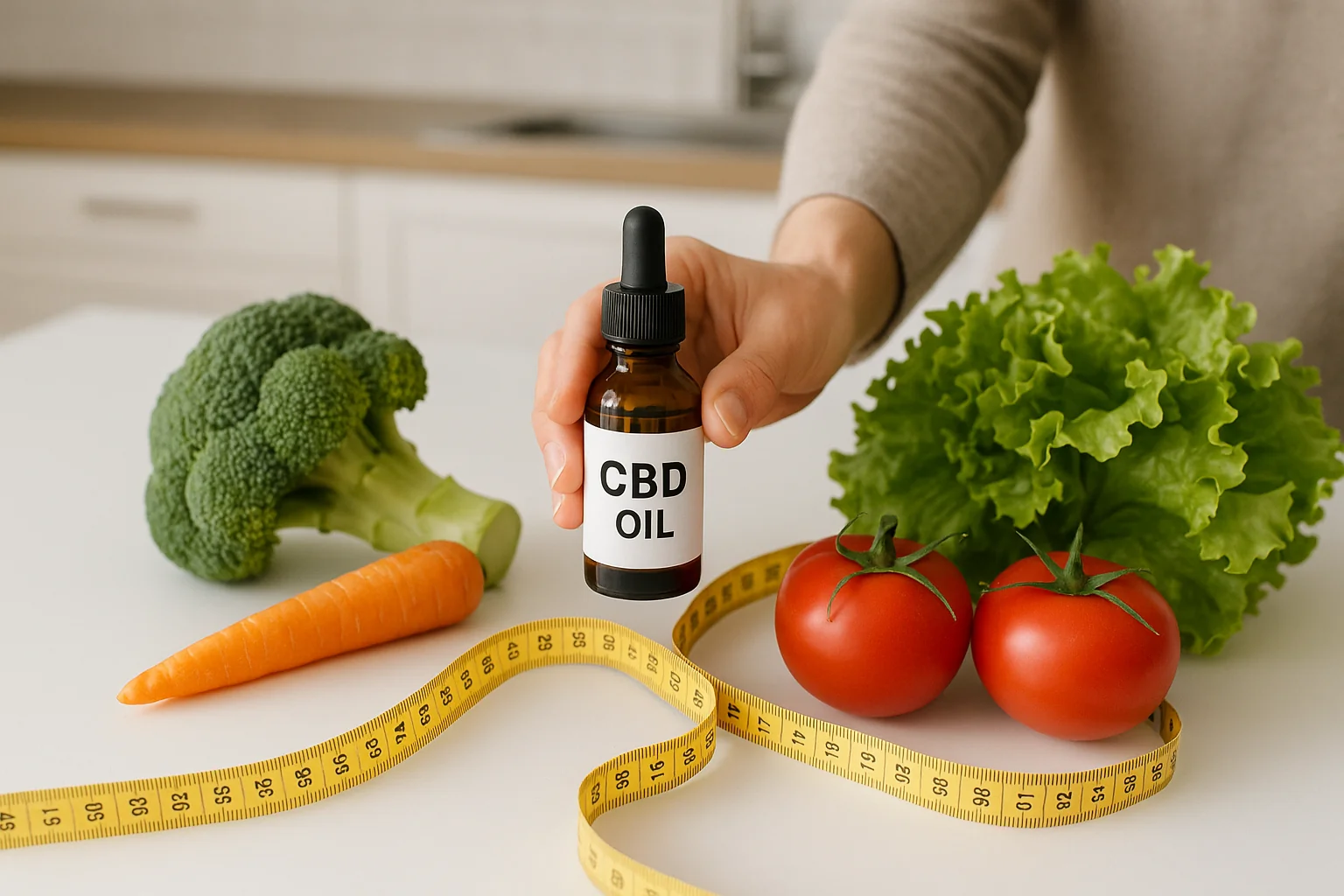
CBD and weight loss - this combination evokes many emotions and even more marketing exaggerations. On Google, you will find dozens of articles claiming that CBD "melts fat" or "speeds up metabolism." The facts are more subdued: CBD is not a weight loss agent in any classic sense of the word. It does not burn fat, does not speed up metabolism by several percent, nor does it block calorie absorption - and that should be stated plainly. However, preliminary scientific research suggests several mechanisms through which CBD may indirectly support healthy body weight - mainly through its effect on lipid metabolism, cortisol regulation, and sleep quality. In this article, I will show you what science actually says and what can realistically be expected - without unnecessary promises.
KEY INFORMATION
• CBD is not a weight loss agent - no large RCT has confirmed a direct fat-burning effect in humans.
• CBD may indirectly support weight reduction through the PPAR-γ receptor (lipid metabolism), cortisol reduction, and improved sleep.
• CBD is a CB1 antagonist - it does not increase appetite like THC; it may slightly reduce it.
• High cortisol (chronic stress) is associated with abdominal fat accumulation; CBD modulates the HPA stress axis.
• WHO (2018): CBD is safe at doses up to 1500 mg/day; it is non-addictive and does not affect the heart or blood pressure at supplemental doses.
What is the endocannabinoid system and what does it have to do with weight?
The endocannabinoid system (ECS) is a network of receptors and endogenous ligands that plays an important role in regulating appetite, metabolism, and energy storage. CB1 receptors are present not only in the brain (where they influence the sensation of hunger and food rewards) but also in adipose tissue, the pancreas, and the liver - organs directly involved in lipid and glucose metabolism.
Overactivity of the endocannabinoid system - particularly CB1 receptors - is associated with obesity and metabolic syndrome. Badanie Di Marzo i Matias (Nature Neuroscience, 2005) It has been shown that in individuals with obesity, the levels of endogenous cannabinoids (anandamide and 2-AG) are elevated in adipose tissue and the liver - indicating ECS overactivity affecting appetite and fat storage. This is a key context for understanding how CBD may modulate body weight.
CBD is an antagonist (blocker) of CB1 receptors - which means it can inhibit the overactivity of the ECS responsible for increased appetite and fat accumulation. At the same time, CBD activates PPAR-γ receptors - receptors involved in the "browning" of white adipose tissue (the conversion of stored fat into thermogenic fat). Both mechanisms are theoretically beneficial for weight reduction, but clinical evidence in humans is still limited.
What do studies say about CBD and body mass?
Preclinical studies (on animal models) are relatively convincing. Farrimond et al. (Psychopharmacology, 2012) showed that CBD administered to rats reduced food intake and body weight compared to the control group. A study from 2016 published in Molecular and Cellular Biochemistry showed that CBD stimulates the "browning" of white adipose tissue cells - which theoretically should increase calorie burning through thermogenesis.
Data from human studies is significantly more modest and does not allow for strong conclusions. A large epidemiological study Le Strat i Le Foll (American Journal of Epidemiology, 2011) analyzed data from 52,000 individuals and found that cannabis users had a lower obesity rate (16.1%) compared to non-users (22.0%) - even though THC increases appetite. Interpretations are cautious: correlation does not imply causation, and confounding variables (lifestyle, age, physical activity) may explain this difference.
Cortisol, stress, and abdominal fat - where CBD comes in
One of the most compelling mechanisms linking CBD to weight control is its effect on the stress-cortisol-abdominal fat axis. Cortisol - the stress hormone - when chronically elevated stimulates fat deposition particularly around the abdomen (visceral fat) and increases cravings for high-calorie, sugar- and fat-rich foods. This is a well-documented biochemical relationship.
CBD modulates the hypothalamic-pituitary-adrenal (HPA) axis, reducing the cortisol response to stressors. A review by Haller et al. (Neuropsychopharmacology, 2018) indicated that CBD reduced serum cortisol in several clinical studies by 15-30%. If chronic stress is your main issue with weight gain, CBD may indirectly support reduction by normalizing cortisol - although it is not a weight loss agent in any direct sense.
It's worth looking at this more broadly: cortisol in chronic stress not only promotes the accumulation of abdominal fat but also disrupts dietary decisions - studies from Health Psychology (2013) showed that individuals with chronic stress are more likely to reach for high-calorie, processed foods as a mechanism of emotional compensation. CBD, by reducing cortisol and improving mood, may decrease this tendency - which is a noticeable, practical effect even without changes in fat metabolism itself.
CBD and sleep and weight - hormonal connection
Sleep deprivation is one of the strongest risk factors for weight gain - and this is due to a specific hormonal mechanism. With too little or poor-quality sleep, ghrelin (the hunger hormone) levels rise and leptin (the satiety hormone) levels drop. The results of a study Spiegel et al. (PLoS Medicine, 2004) showed that just two days of 4 hours of sleep instead of 8 caused a 24% increase in ghrelin and an 18% decrease in leptin - which translates to a real increase in appetite and poorer food choices.
CBD improves sleep quality in individuals with stress and anxiety - a study Shannon et al. (Permanente Journal, 2019) showed improved sleep quality in 66.7% of participants at 25 mg CBD/day. If your weight issue has a sleep deprivation component - CBD as sleep support may indirectly improve hunger and satiety hormones, making appetite control easier.
This is not a simple path "CBD → weight loss". It’s a multi-step connection: CBD → better sleep → normalization of ghrelin/leptin → better appetite control → easier adherence to diet → possible weight reduction. Each step in this cascade is documented, but the chain is long, and breaking it at any stage eliminates the final effect. For many people, this chain will work - especially if stress and poor sleep are key barriers to weight loss. For others (with good sleep and low stress), the impact of CBD on weight will be minimal or none.
Our observations: Individuals using CBD as support for a weight loss diet most often describe the effects not as "fat burning" but as "less obsession with food" and "easier adherence to the plan in the evenings." Evening snacking is a problem for most dieters - and an evening dose of CBD may reduce impulsive snacking by modulating the reward system.
CBD and insulin resistance and glucose regulation
Insulin resistance - reduced sensitivity of cells to insulin - is closely linked to obesity and is one of the key mechanisms through which excess fat tissue leads to type 2 diabetes. CBD is attracting researchers' interest in the context of insulin resistance through two mechanisms: activation of PPAR-γ receptors (which improve insulin sensitivity) and reduction of inflammation in adipose tissue (chronic inflammation is one of the causes of insulin resistance).
Badanie Jadoon et al. (Diabetes Care, 2016) conducted on patients with type 2 diabetes (not taking insulin) showed that CBD had no significant effect on glycemia and insulinemia - but improved some markers of inflammation. The authors emphasized that CBD might be more effective in the prediabetes or insulin resistance phase, before full metabolic changes develop.
Another study from American Journal of Medicine (2006) - an analysis of NHANES data involving 9,000 adult Americans - showed that cannabis users had a 17% lower fasting insulin level and a 30% lower insulin resistance than non-users. These are epidemiological data with many confounding variables, so the causal relationship is not confirmed - but the direction of the effect is consistent with preclinical results of CBD.
CBD a mikrobiom jelitowy i metabolizm
A new and interesting line of research connects CBD with the gut microbiome - which is fundamental for metabolism, nutrient absorption, and body weight regulation. Badanie Shen et al. (Cannabis and Cannabinoid Research, 2020) showed that CBD affected the composition of gut bacteria in obese mice - increasing populations of Akkermansia muciniphila (associated with better insulin sensitivity and lower intestinal permeability) and decreasing the Firmicutes to Bacteroidetes ratio (elevated in individuals with obesity).
Microbiome studies in humans are still in the early stages, and the effect of CBD on the microbiome in humans is not well documented. However, the mechanism is biologically plausible - CB1 and CB2 receptors are present in the intestinal wall and regulate motility and intestinal inflammation. CBD, through these receptors, may indirectly modulate the gut environment conducive to healthy metabolism. More about CBD and its overall action in the body is described in the article CBD Dosage.
How much CBD to take - dosing for metabolic support
There is no proven "weight loss dose" of CBD. Studies that noted positive metabolic effects in humans used doses of 25-50 mg/day as part of overall health support. This aligns with the ranges used for anxiety and sleep.
Practical approach: use CBD as you would for any other health goal - the titration protocol "start low, go slow". Start with 15 mg/day (6 drops of 5% oil or 3 drops of 10%) for 2 weeks. If you do not feel clear effects on appetite and stress - increase to 25 mg. An evening intake time (30-60 minutes before sleep) is logical for issues with nighttime snacking and poor sleep quality.
CBD dosing - how much to take and when - is detailed in the pillar article CBD Dosage.
Realistic expectations: what CBD won't do and what it can
CBD is not a substitute for diet or exercise. No supplement - natural or synthetic - can replace a negative calorie balance as the basis for weight reduction. If someone tells you that CBD "melts fat" or "speeds up metabolism by X%" - that is marketing without scientific basis. Such communication not only misrepresents the truth but also creates unrealistic expectations leading to disappointment.
However, CBD can be genuinely helpful as support in the weight loss process for specific individuals - those for whom the barrier is not a lack of motivation, but chronic stress hindering diet adherence, poor sleep disrupting hunger hormones, or impulsive eating in the evenings as a way to cope with tension. In these scenarios, CBD, by reducing cortisol, improving sleep, and modulating the reward system, can be a real, helpful element of the strategy - not a miracle cure.
Individuals with metabolic diseases (diabetes, insulin resistance, PCOS) should consult CBD supplementation with a doctor - CBD may affect the enzymes metabolizing medications used for these conditions (e.g., metformin is metabolized by OCT1, and CBD inhibits several liver transporters). More about CBD for various health goals is described in the article CBD for Pain.
Frequently Asked Questions
Does CBD help with weight loss?
CBD is not a weight loss agent in the direct sense. Preliminary studies suggest that it may indirectly support weight reduction by modulating lipid metabolism (PPAR-γ), reducing cortisol, and improving sleep. However, no large clinical study in humans has confirmed a direct weight loss effect of CBD.
How does CBD affect appetite?
CBD is a CB1 antagonist - it may reduce appetite, unlike THC, which increases it. A study Farrimond et al. (Psychopharmacology, 2012) showed a reduction in food intake in rats under the influence of CBD. Human data is limited, but the effect of "reducing cravings for unhealthy snacks" is often reported by users - and is consistent with the mechanism of CB1 antagonism and the reduction of cortisol-induced "stress hunger."
Czy CBD przyspiesza metabolizm?
There is no direct clinical data confirming the acceleration of basal metabolism by CBD in humans. Preclinical studies suggest stimulation of brown fat tissue by PPAR-γ - which theoretically increases thermogenesis. However, the scale of this effect in humans is unknown and likely minimal. A more realistic effect is the indirect improvement of metabolism through the normalization of cortisol and sleep.
How long do you need to use CBD to feel effects when losing weight?
Indirect effects of CBD (better sleep quality, reduced stress, decreased evening cravings) may appear after 2-4 weeks of regular use. The study by Shannon et al. (2019) showed improvement in sleep after just one month at 25 mg/day. Subjective improvement in well-being and reduction of stress eating requires consistency - a minimum of 4-6 weeks.
How much CBD to take when trying to lose weight?
There is no proven dose of CBD specifically for weight reduction. Doses used in metabolic studies range from 25-50 mg/day. As a starting point: 15-25 mg/day through a titration protocol, preferably in the evening with a fatty meal - the bioavailability of CBD with food is 9.7× higher than on an empty stomach according to Saals et al. (Scientific Reports, 2025).
Does CBD increase appetite like marijuana?
No. THC stimulates CB1 receptors and causes the "munchies" effect. CBD is a CB1 antagonist and works in the opposite way - it may slightly reduce appetite. CBD products with THC < 0.3% do not cause an increase in appetite.
Can CBD be combined with a weight loss diet and exercise?
Yes - CBD is safe as a supplement to diet and physical activity. WADA removed CBD from the list of prohibited substances in 2018. CBD may support recovery after exercise and sleep quality - indirectly improving the effectiveness of the weight loss process.
This article is for informational and educational purposes and does not constitute medical advice. Before starting to use cannabis or CBD for therapeutic purposes, consult a doctor, especially if you are taking other medications, are pregnant, or breastfeeding.
Author: Michał Waluk · Published: 2026-05-04 · Updated: 2026-05-04