
CBD for sleep without melatonin: is the oil enough or is it worth combining
What research has really shown about CBD and sleep, how it differs from melatonin, how to dose it in the evening, and when the oil is not enough. Only verified sources.
Half of adult Poles have trouble sleeping. In a representative NATPOL study, 50.5% of respondents reported sleep complaints, and among women over sixty, nearly three-quarters (Nowicki i in., Psychiatria Polska, 2016). It's no wonder that CBD oil and melatonin end up in the same bathroom drawer, even though they do completely different things. Is the oil enough on its own? When is melatonin a more sensible choice? And what actually came out in the studies, as popular summaries can diverge from the original data? Below you will find answers based solely on works that can be found by their PubMed number, along with results that do not fit the marketing narrative.
KEY INFORMATION
• Sleep improved in 48 out of 72 patients (66.7%) at about 25 mg of CBD daily, but the study was retrospective and without placebo (Shannon et al., Permanente Journal, 2019).
• A systematic review of 26 studies deemed the evidence insufficient for routine use (Suraev et al., 2020).
• Melatonin shortens the time to fall asleep by an average of 4 minutes (Brzezinski et al., 2005). This is a real but small change.
• 300 mg of CBD did not change sleep architecture in healthy volunteers, and 15 mg was more likely to wake them up.
How does CBD affect sleep?
CBD does not induce sleep like benzodiazepines or zolpidem. It does not open the chloride channel in the GABA-A receptor and does not extinguish wakefulness. It works indirectly by reducing tension and pain, which are the two obstacles that most often stand between you and falling asleep. Therefore, it helps when insomnia has a clear cause.
The summary of target points comes from a review Ibeas Bih i in. (Neurotherapeutics, 2015), which described several dozen molecular targets of CBD. None of them are sleep receptors in the classical sense.
| Punkt uchwytu | Co robi CBD | Translation to sleep |
|---|---|---|
| 5-HT1A Receptor | acts as a partial agonist | reduces anxiety, which is the most common obstacle to falling asleep |
| Enzym FAAH | inhibits the breakdown of anandamide | increases the body's own endocannabinoid signal, with an indirect effect on sleep |
| Transporter ENT1 | hamuje wychwyt zwrotny adenozyny | adenosine builds sleep pressure, but the effect has been described in cells, not in sleeping people |
| TRPV1 Channel | modulates pain conduction | less pain at night means fewer awakenings |
The adenosine pathway is often presented online as a certainty, so to be fair: it comes from a study Carrier i in. (PNAS, 2006), where CBD inhibited the nucleoside transporter in mouse cell cultures. From this to the statement that an evening dose of oil increases sleep pressure in humans, the distance is great. The most well-documented effect is the anxiolytic effect, described in a review Blessing i in. (Neurotherapeutics, 2015), with the authors noting that it pertains to single doses, as there were few studies on chronic CBD use at that time.
What do studies say about CBD and insomnia?
The most frequently cited work is Shannon i in. (Permanente Journal, 2019). Sleep improved in the first month for 48 out of 72 adults, or 66.7%, with a dose of about 25 mg of CBD daily. Anxiety severity decreased in 57 people, or 79.2%.
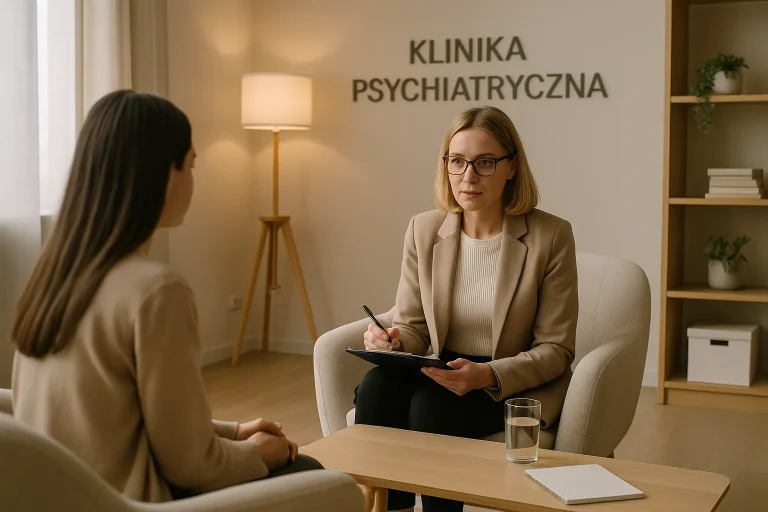
It's worth knowing what this work really is, as it is sometimes described as a clinical study. It is a retrospective review of patient records from one psychiatric clinic: 103 adults, of which 72 were included in the analysis, without placebo, without randomization, and without polysomnography. The authors themselves state that sleep outcomes varied in subsequent months, and the final conclusion is a proposal for controlled studies. CBD was well tolerated by all except for three individuals.
Szerszy obraz daje systematic review by Suraev et al. (Sleep Medicine Reviews, 2020), which included 14 preclinical studies and 12 clinical studies. The authors' conclusion is more cautious than what most Polish texts about CBD suggest: the evidence is insufficient to recommend cannabinoids in the routine treatment of any sleep disorder, as in most studies the risk of systematic error was assessed as moderate to high. Promising preliminary results justify further randomized studies in sleep apnea, insomnia, nightmares in PTSD, restless legs syndrome, and narcolepsy.
This leads to a practical consequence. If someone promises you that CBD "works for sleep", they are relying on a series of cases, not on clinical evidence. This does not mean it won't work for you. It means that the only way to find out is an honest trial on yourself, conducted over four weeks and recorded, not assessed from memory.
How does CBD differ from melatonin?
Melatonin is the dusk hormone that shifts the biological clock. CBD does nothing to the circadian rhythm: it alleviates tension and pain that prevent you from falling asleep at the right time. The first answers the question "when", the second answers the question "why can't I".
The effectiveness of melatonin is often overestimated. A meta-analysis Brzezinski i in. (Sleep Medicine Reviews, 2005) included 17 studies and 284 people. Melatonin shortened the time to fall asleep by 4.0 minutes, extended sleep by 12.8 minutes, and increased sleep efficiency by 2.2 percentage points. The effects are statistically significant and clinically modest.
| Feature | Melatonin | CBD |
|---|---|---|
| What does it affect | rytm dobowy, pora zasypiania | anxiety, tension, pain |
| When it makes sense | jet lag, shift work, delayed sleep phase syndrome | insomnia secondary to stress or pain |
| Strength of evidence | meta-analyses of randomized studies, small effect | case series, lack of large studies with placebo |
| Typowa dawka wieczorna | 0.5 to 1 mg | 25 mg |
The choice is simpler than it seems. If your thought is "I lie for an hour thinking about work," the first candidate is CBD. If it is "I only fall asleep at three and I can't shift that," then melatonin. If both at once, move on to the next section.
Is it worth combining CBD with melatonin?
Mechanistically, yes, but there is no evidence. There is no randomized study in humans that has tested this specific combination. We only know that the substances act in different parts of the body and no significant interactions have been described between them, so combining them is justified, although not confirmed.
If you decide to try, less is more on the melatonin side. In a polysomnographic study Zhdanova i in. (Clinical Pharmacology and Therapeutics, 1995) doses of 0.3 mg and 1.0 mg taken in the evening shortened the time to fall asleep, did not suppress REM phase, and did not leave a morning hangover. Popular tablets of 5 mg or 10 mg often exceed physiological concentrations, and Brzezinski's meta-analysis did not show that a higher dose provided a greater effect.
Practically, it looks like this: CBD in a dose of 15 to 25 mg taken 45 to 60 minutes before sleep, melatonin 0.5 to 1 mg 30 minutes before sleep. However, the most important thing is a consistent bedtime, even on weekends. Irregular bedtimes can negate the effects of both preparations, and with a meta-analytical gain of 4 minutes from melatonin, there is nothing to subtract from.
From our conversations with readers, there is another distinction you won't find in abstracts. People who describe their problem as "a race of thoughts" more often return satisfied after using CBD. Those who say "I lie down and I'm just not sleepy at this time" more often after melatonin. This is an editorial observation, not data, but it can be a better guide than a list of ingredients on the label.
How much CBD to take for sleep?
Start with 25 mg in the evening, 30 to 60 minutes before sleep. This dose is not the result of calculations, but a reflection of Shannon's 2019 study, in which most patients took exactly that much. Treat it as a starting point, not as a therapeutic recommendation.
Eat something fatty with it. In a study Birnbaum i in. (Epilepsia, 2019) the same dose of CBD taken after a fatty meal resulted in an average of 14 times higher maximum concentration in the blood and about four times greater total exposure than on an empty stomach. No other detail of administration changes so much.
The popular advice to hold the oil under your tongue for "bioavailability of 13 to 19 percent" is not supported by data. A systematic review Millar i in. (Frontiers in Pharmacology, 2018) analyzed 24 studies with pharmacokinetic parameters of CBD in humans and found the only measured absolute bioavailability: 31% after smoking. For oral and sublingual routes, no one has determined it, as they were not compared with intravenous administration. Holding it under the tongue won't hurt, but the numbers circulating in store guides are fabricated.
Increase slowly. If after four weeks at 25 mg you don't see a difference, add 10 to 15 mg weekly and record four things: sleep rating on a scale from 1 to 10, time to fall asleep, number of awakenings, and how you feel in the morning. Four weeks is the minimum, as the first days can bring more vivid dreams or worse sleep before the body adjusts. We described the full dosage breakdown in the text Dosage of CBD, how many drops of oil to take.
Does CBD change REM sleep phases and deep sleep?
In healthy adults, probably not. Two studies with polysomnography, which involves real measurement of sleep phases, provide a consistent picture: CBD does not extend deep sleep, and at a low dose, it tends to increase alertness. This is the exact opposite of what most product descriptions promise.
Nicholson i in. (Journal of Clinical Psychopharmacology, 2004) administered placebo to eight volunteers, 15 mg of THC, and two combinations of THC with CBD. The 15 mg of THC alone did not change nighttime sleep. The combinations reduced the amount of sleep in stage 3, and with the higher one, alertness increased. The authors concluded that 15 mg of CBD exhibits awakening properties and alleviates residual sleepiness after THC.
A higher dose also didn't help. In a randomized crossover study Linares i in. (Frontiers in Pharmacology, 2018) 27 healthy volunteers received 300 mg of CBD or placebo half an hour before an eight-hour polysomnographic recording. No sleep parameter changed significantly. The authors considered this good news for safety: the anxiolytic dose of CBD does not disrupt normal sleep architecture, unlike benzodiazepines.
How to reconcile this with a 66.7% improvement in Shannon's study? Probably by understanding that CBD does not change the structure of sleep, but removes what hinders falling asleep. A person with anxiety will fall asleep faster and rate the night better, even though the EEG recording would look similar. If after starting to take it you have intense dreams, don't stop immediately. Lower the evening dose by 10 to 15 mg and observe for two weeks.
When is CBD not enough and you need to see a specialist?
There are four situations in which increasing the dose of oil moves you away from a solution rather than bringing you closer. They all share one thing: the cause lies beyond the reach of CBD, and every month of delay has a real health cost. The table below collects warning signals and the appropriate next step.
| Situation | Warning signal | What to do |
|---|---|---|
| Obturacyjny bezdech senny | loud snoring, breathing pauses noticed by a partner, fatigue despite eight hours in bed | referral for polysomnography |
| Depression | waking up early, lack of pleasure, low mood for most of the day | psychiatric consultation, because you treat the disease, not the symptom |
| Delayed Sleep Phase Syndrome | falling asleep in the morning and normal sleep when no one wakes you for work | light therapy and light, here melatonin beats CBD |
| Chronic primary insomnia | difficulty sleeping for over three months without an identifiable cause | terapia poznawczo-behawioralna CBT-I jako leczenie pierwszego rzutu |
The last line is not the opinion of the editorial team. Wytyczne American College of Physicians (Qaseem i in., Annals of Internal Medicine, 2016) they recommend that every adult with chronic insomnia first receive cognitive-behavioral therapy, and pharmacotherapy should only be considered if CBT-I alone is insufficient. No supplement replaces this pathway. If you are looking for context for safe amounts, you will find it in the article How much CBD can you take daily.
Frequently Asked Questions
Does CBD help with insomnia?
The data is preliminary. In the study Shannon i in. (Permanente Journal, 2019) sleep improved in the first month for 48 out of 72 patients, or 66.7%, with about 25 mg of CBD daily. There was no placebo or randomization, and the review by Suraev et al. from 2020 deemed the overall evidence insufficient for routine use.
How much CBD to take for sleep?
The starting point is 25 mg in the evening, taken 30 to 60 minutes before sleep, along with a fatty meal. If after four weeks you see no difference, increase by 10 to 15 mg weekly and keep a sleep diary. Without notes, the assessment after a month will be guesswork.
Can CBD be combined with melatonin?
There is no study checking this combination in humans, so we are talking about mechanistic justification, not evidence. The substances act in different places and no significant interactions between them have been described. Typically, 15 to 25 mg of CBD is used 45 to 60 minutes before sleep and 0.5 to 1 mg of melatonin 30 minutes before sleep.
Does CBD prolong deep sleep?
This has not been demonstrated in healthy adults. In the study Linares i in. (Frontiers in Pharmacology, 2018) a single dose of 300 mg did not change any polysomnographic parameter in 27 volunteers. Previously, Nicholson et al. observed that 15 mg of CBD tends to awaken, as it increased activity during sleep.
Kiedy CBD nie wystarczy na problemy ze snem?
In obstructive sleep apnea, depression, delayed sleep phase syndrome, and primary chronic insomnia. In the latter, the American College of Physicians recommends cognitive-behavioral therapy CBT-I as the first step. Loud snoring and pauses in breathing at night indicate the need for polysomnography, not a higher dose of oil.
When to take CBD for sleep, in the morning or evening?
In the evening, 30 to 60 minutes before planned sleep. The only polysomnographic study with a low dose suggests the opposite effect, as 15 mg of CBD increased activity during sleep. If you wake up groggy after the evening dose, lower it instead of shifting the intake time.
If you are looking for specific products for your evening routine, check the section hemp oils.
This article is for informational and educational purposes and does not constitute medical advice. Before starting to use cannabis or CBD for therapeutic purposes, consult a doctor, especially if you are taking other medications, are pregnant, or breastfeeding.
Author: Michał Waluk · Opublikowano: 2026-06-22 · Aktualizacja: 2026-08-07