
CBD and the serotonin receptor 5-HT1A: the mechanism of anxiolytic action
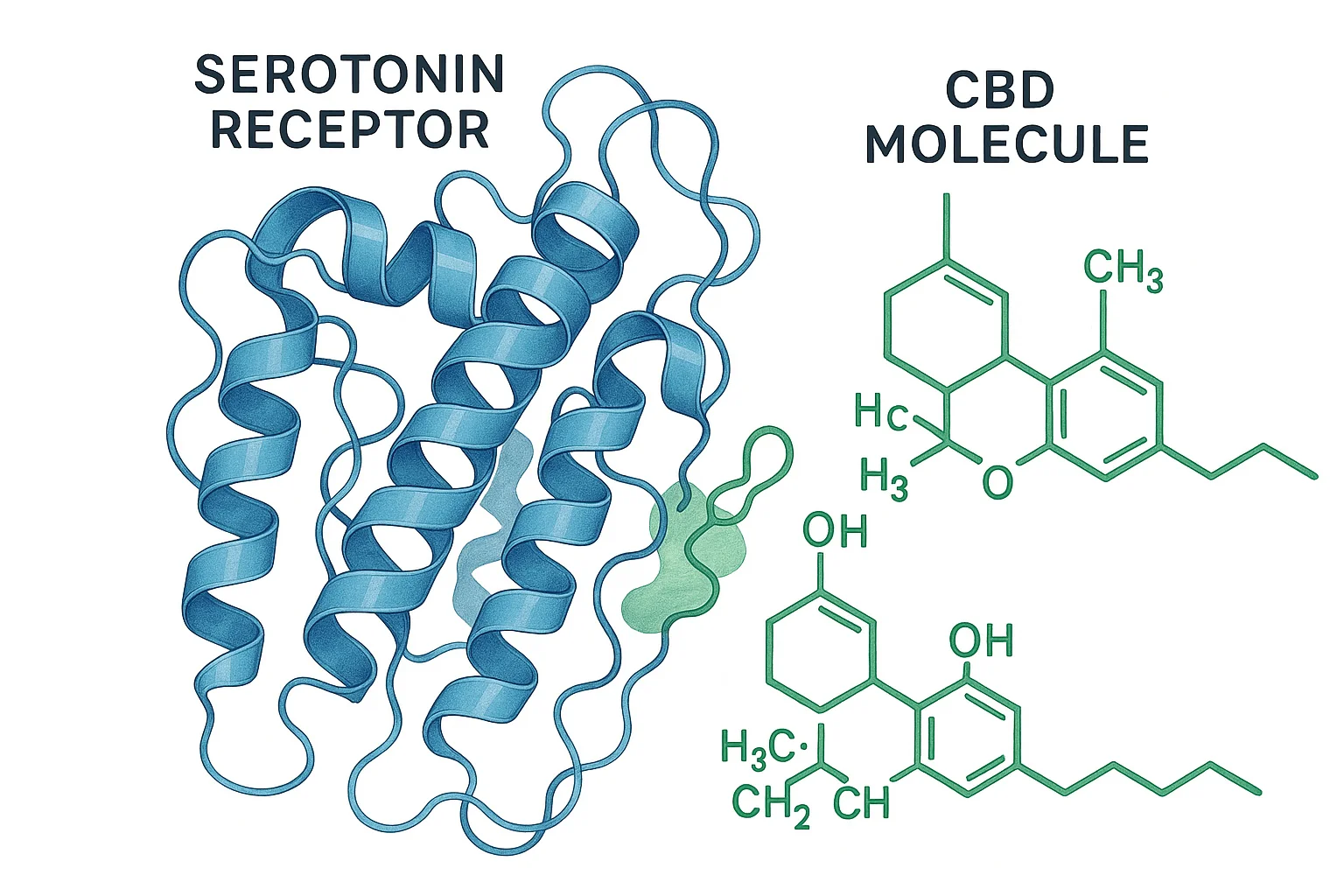
CBD binds to the serotonin receptor 5-HT1A as an agonist with moderate affinity. What does this mean for anxiety and what are the limits of this evidence.
The question of why CBD is often described as calming usually leads to the serotonin receptor 5-HT1A. The basis for this trail is a paper from twenty years ago: in cell culture with a cloned human 5-HT1a receptor, cannabidiol displaced an agonist marker and behaved as an agonist itself, albeit with moderate affinity (Russo et al., Neurochemical Research, 2005). Since then, animal studies have added strong evidence, while human studies have lagged far behind. This imbalance is crucial here, as popular descriptions transfer conclusions from one level to another without indicating that they skip species and dose scale. Below you will find what has been shown at each of these levels, where the evidence ends, and why no one can currently determine a safe dose when taking medications simultaneously.
KEY INFORMATION
• CBD is an agonist of the 5-HT1A receptor with moderate affinity, THC does not displace the agonist at the same concentration range (Russo et al., Neurochemical Research, 2005).
• In rats, the anxiolytic effect of CBD is negated by the 5-HT1A antagonist, while the analgesic effect follows a different pathway (De Gregorio et al., Pain, 2019).
• A review of 40 randomized studies found no evidence that cannabinoids treat anxiety disorders; there were few studies on CBD alone (Black et al., The Lancet Psychiatry, 2019).
• EFSA cannot determine the safety of CBD in individuals taking medications (EFSA, EFSA Journal, 2026).
What is the 5-HT1A receptor and where does it act?
It is a G protein-coupled receptor, with serotonin as its natural ligand. It serves two roles. In the neurons of the raphe nuclei, it acts as an autoreceptor, or brake on its own system: its activation reduces serotonin release. In the hippocampus, prefrontal cortex, and amygdala, it sits on the postsynaptic side and suppresses neuronal excitability.
This duality explains why the effects of 5-HT1A activation depend on the location, not the molecule itself. This is evident in electrophysiological data. A single intravenous dose of CBD reduced the firing rate of serotonin neurons in the dorsal raphe nucleus in rats, while seven days of subcutaneous administration increased it, due to desensitization of 5-HT1A receptors (De Gregorio et al., Pain, 2019). The same receptor, two opposite directions, the difference lies solely in the duration of exposure.
It is worth keeping this receptor separate from the endocannabinoid system. 5-HT1A is not part of this system and has nothing to do with how CB1 and CB2 receptors work. This is why CBD’s interaction with serotonin is often cited as an example of action outside its own cannabinoid system.
Does CBD really activate the 5-HT1A receptor?
In cell culture, yes, and this is known quite precisely. Cannabidiol displaced an agonist marker from the cloned human 5-HT1a receptor, and it did so in a concentration-dependent manner. THC at the same micromolar concentration range did not displace it, which immediately separates the two cannabinoids (Russo et al., Neurochemical Research, 2005).
Two independent measurements confirmed that this is agonism, not mere binding. Cannabidiol increased the binding of labeled GTP, just as serotonin does, and reduced cyclic AMP levels, thus activating the same signaling pathway as the natural ligand. The authors summarize this cautiously: CBD is an agonist of the 5-HT1A receptor with moderate affinity.
Two things from this work are often misrepresented. First, it has not been shown anywhere that CBD acts more strongly than serotonin; with comparable receptor occupancy, both compounds reduced cyclic AMP to a similar extent. Second, since CBD displaces the agonist from the binding site, it competes with it directly, rather than acting from a separate allosteric pocket. The same work also notes weaker activity at the rat 5-HT2a receptor, which we discuss in the context of the 5-HT2A receptor.
What have animal studies shown?
That without a functioning 5-HT1A receptor, the anxiolytic action of CBD weakens or disappears completely. This is the strongest argument in this entire discourse and comes from two independent animal models, in which administration of a receptor antagonist took away CBD’s influence on anxiety-related behaviors.
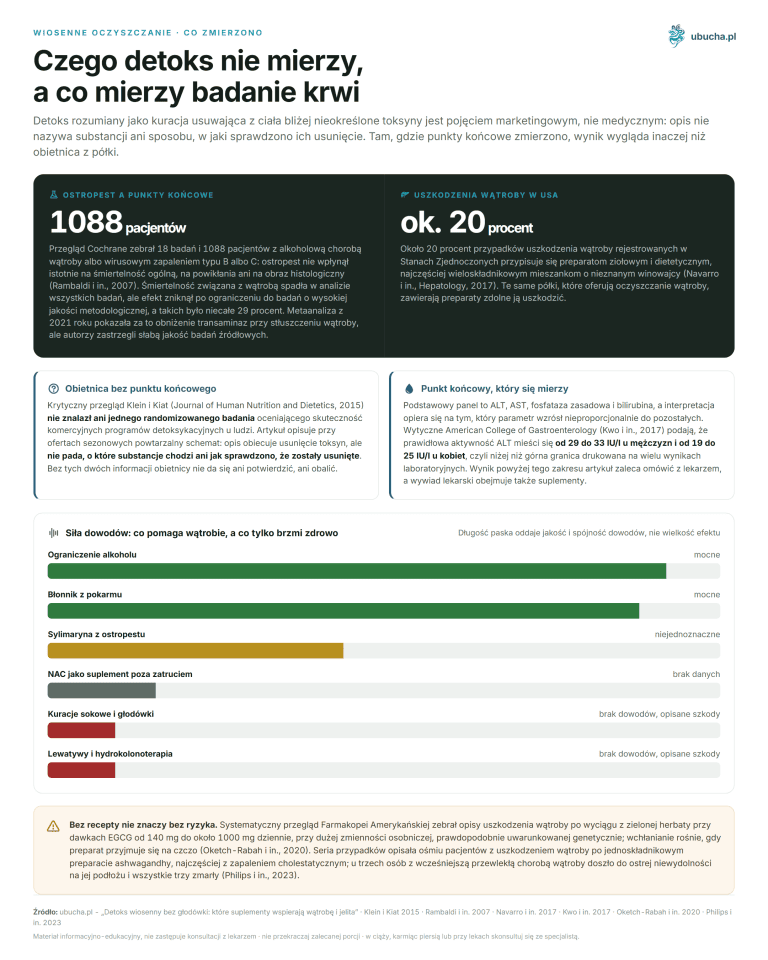
Wistar rats were exposed to contact with a cat, which in this model induces a prolonged increase in anxiety. Repeated administration of CBD prevented this effect, while prior administration of the 5-HT1A antagonist named WAY100635 weakened the effect of cannabidiol. Seven days after exposure, the expression of the 5-HT1A receptor gene was elevated in the frontal cortex and hippocampus, which was not reversed by either CBD or paroxetine (Campos et al., Journal of Psychiatric Research, 2012).
The second model involved neuropathic pain following nerve injury. Seven days of CBD administration reduced allodynia, lowered anxiety, and restored normal activity of serotonin neurons. The pathways were clearly separated here: the analgesic effect was negated by the TRPV1 channel antagonist, while the anxiolytic effect was solely negated by the 5-HT1A antagonist (De Gregorio et al., Pain, 2019). We noted that both studies are often described as related to depression, although neither modeled it.
What is known about CBD and anxiety in humans?
Much less than the popularity of the topic suggests. The two most frequently cited studies involved a total of 34 patients with social phobia, used single doses, and did not check the 5-HT1A receptor in humans. A systematic review of the entire field found no evidence that cannabinoids treat anxiety disorders.
| Study | Who and how many | What was found |
|---|---|---|
| Russo et al. 2005 | cell culture, human 5-HT1a receptor | CBD is an agonist with moderate affinity, THC without displacing |
| Campos et al. 2012 | Wistar rats, predator stress model | repeated CBD prevented anxiety, 5-HT1A antagonist weakened this effect |
| De Gregorio et al. 2019 | rats, neuropathic pain model | anxiolytic effect negated solely by the 5-HT1A antagonist |
| Bergamaschi et al. 2011 | 24 patients with social phobia, 12 healthy individuals | single 600 mg reduced anxiety before public speaking compared to placebo |
| Crippa et al. 2011 | 10 patients with social phobia | single 400 mg reduced anxiety and changed blood flow in limbic structures |
In the Bergamaschi study, twelve patients received a single 600 mg dose of cannabidiol, twelve placebo, and twelve healthy individuals underwent the test without medication; CBD reduced anxiety, discomfort, and cognitive disturbances during a simulated public speaking event (Bergamaschi et al., Neuropsychopharmacology, 2011). Crippa studied ten patients using SPECT after a single 400 mg dose: anxiety decreased, and blood flow changed in the parahippocampal gyrus, hippocampus, and inferior temporal gyrus (Crippa et al., Journal of Psychopharmacology, 2011). The amygdala was not among these structures, contrary to what is often written about this work.
A broader picture is provided by a review of 83 studies, including 40 randomized studies and 3067 participants. For anxiety, 17 randomized studies and 605 participants were collected. The only detected signal regarding anxiety related to pharmaceutical THC in individuals with other conditions: the standardized mean difference was -0.25 with a 95% confidence interval from -0.49 to -0.01, with very low quality of evidence. There were too few studies on pharmaceutical CBD alone to calculate anything (Black et al., The Lancet Psychiatry, 2019).
How does this differ from antidepressants?
The point of reference. SSRI drugs block the serotonin transporter, thereby increasing its concentration in the synaptic cleft and only after weeks do they cause a shift in receptors. CBD does not act on the transporter, but binds to the 5-HT1A receptor itself (Russo et al., Neurochemical Research, 2005).
However, this difference does not imply equivalence of action. A systematic review states this directly: there is a lack of evidence that cannabinoids improve the course of depressive or anxiety disorders, and the data are too weak to base regulatory recommendations on (Black et al., The Lancet Psychiatry, 2019). No CBD product is registered in Poland for the treatment of anxiety or depression.
There is also a difference in what we know about the molecule itself. For SSRIs, the dose, time to effect, and side effect profile are known. For CBD, data in humans mainly come from single doses administered in experimental conditions, not from treatment lasting weeks. The practical consequences of this gap have been described separately in the text about combining cannabis with antidepressants.
Can CBD be combined with medications?
Not without a doctor, and this is now an official position, not a precautionary formula. The European Food Safety Authority states directly that the safety of cannabidiol cannot be established in individuals under 25 years of age, in pregnant and breastfeeding women, and in individuals taking medications (EFSA, EFSA Journal, 2026).
The reason is specific. In human studies, the signal of liver damage primarily appeared when CBD was administered together with other medications. Pharmacological reviews have pointed to the same area of uncertainty for years: the effect of cannabidiol on liver enzymes and drug transporters requires further research, as it determines whether the concentration of a concurrently taken medication will increase (Iffland and Grotenhermen, Cannabis and Cannabinoid Research, 2017).
Separately, it is worth knowing the reference point for the amount. EFSA derived a provisional safe dose of 0.0275 mg per kilogram of body weight per day, which is about 2 mg for a person weighing 70 kg, using an uncertainty factor of 400. This value applies only to supplements with a purity of cannabidiol of at least 98 percent and without nanoparticles. This is a ceiling that should not be exceeded, not a recommendation or portion to be measured.
Frequently Asked Questions
How does CBD act on the 5-HT1A receptor?
It binds to it and activates the same signaling pathway as serotonin. In cell culture, cannabidiol displaced an agonist marker from the human 5-HT1a receptor, increased binding of labeled GTP, and reduced cyclic AMP levels. The authors describe it as an agonist with moderate affinity (Russo et al., Neurochemical Research, 2005).
Does CBD increase serotonin levels?
Not like SSRI drugs, because it does not block the serotonin transporter. It acts on the receptor itself (Russo et al., Neurochemical Research, 2005). In rats, the direction of change depended on the time of administration: a single dose reduced the activity of serotonin neurons, while administration over a week increased it (De Gregorio et al., Pain, 2019).
Does blocking the 5-HT1A receptor negate the anxiolytic effect of CBD?
In animal models, yes. In the neuropathic pain model, the anxiolytic effect of cannabidiol was negated solely by the 5-HT1A antagonist, while the analgesic effect was blocked by the TRPV1 channel antagonist (De Gregorio et al., Pain, 2019). In the predator stress model, the 5-HT1A antagonist weakened the effect of CBD (Campos et al., Journal of Psychiatric Research, 2012).
Do human studies confirm the anxiolytic effect of CBD?
Only to a limited extent. Two small studies on social phobia showed a decrease in anxiety after a single dose (Bergamaschi et al., Neuropsychopharmacology, 2011, Crippa et al., Journal of Psychopharmacology, 2011). However, a review of 40 randomized studies found no evidence for the treatment of anxiety disorders with cannabinoids, and there were too few studies on CBD alone (Black et al., The Lancet Psychiatry, 2019).
Can CBD be combined with antidepressants?
Not without consulting the attending physician. EFSA states that the safety of cannabidiol cannot be established in individuals taking medications, and the signal of liver damage in human studies mainly concerned combined use (EFSA, EFSA Journal, 2026). The effect of CBD on liver enzymes requires further research (Iffland and Grotenhermen, Cannabis and Cannabinoid Research, 2017).
This article is for informational and educational purposes and does not constitute medical advice. Before starting to use cannabis or CBD for therapeutic purposes, consult your doctor, especially if you are taking other medications, are pregnant, or breastfeeding.
Author: Michał Waluk · Published: 2026-08-09 · Updated: 2026-08-11